Catalysts and Equilibrium Constants
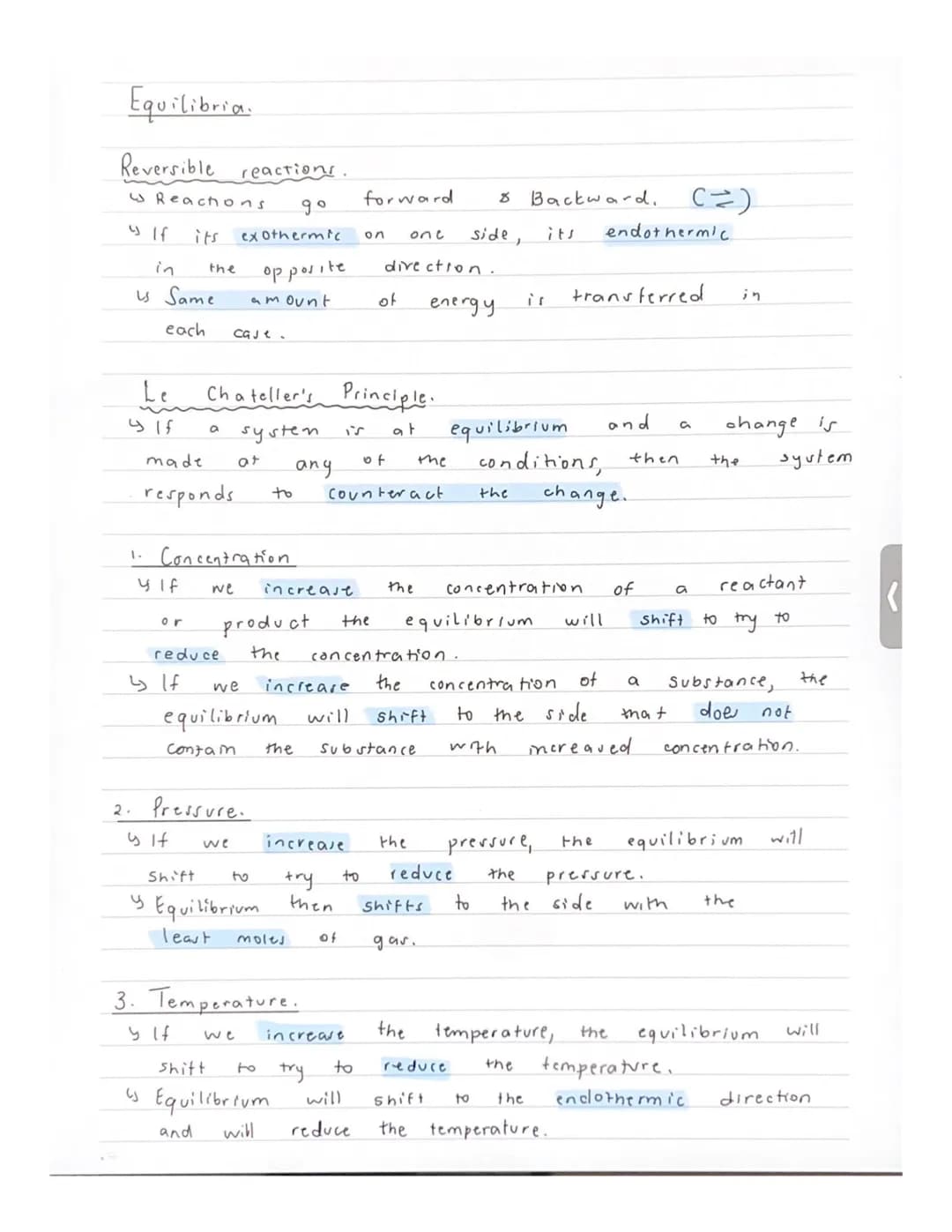
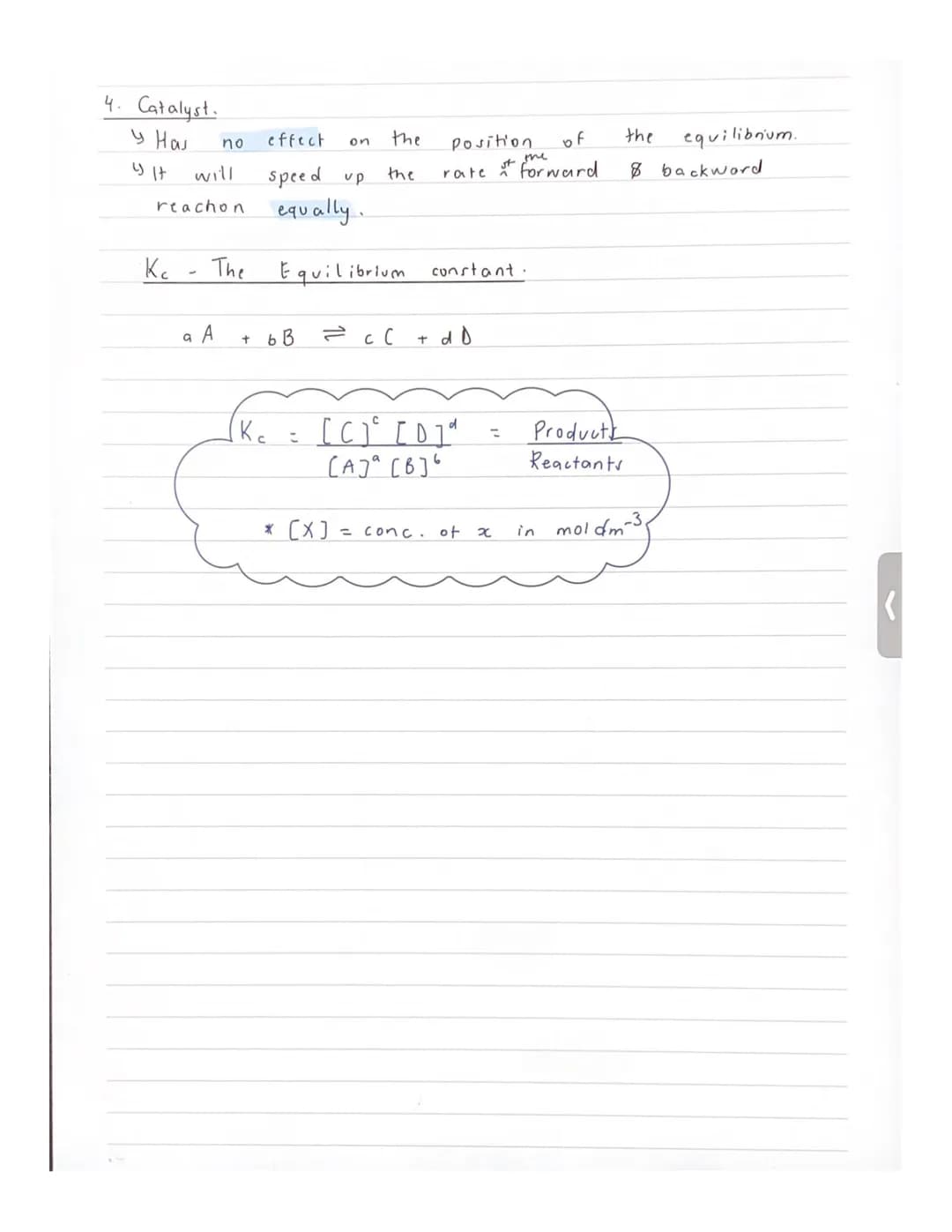
Here's something that catches many students out: catalysts don't affect equilibrium position at all. They're like a fair referee - they speed up both the forward and backward reactions equally, helping you reach equilibrium faster without favouring either side.
The equilibrium constant (Kc) is your mathematical tool for describing equilibrium quantitatively. For any reaction aA + bB ⇌ cC + dD, you calculate it as: Kc = Products/Reactants, where each concentration is raised to the power of its coefficient in the balanced equation.
Understanding Kc values helps predict reaction behaviour. A large Kc means products are favoured at equilibrium, whilst a small Kc indicates reactants dominate the mixture.
Exam Insight: Remember that Kc only changes with temperature - not concentration, pressure, or catalysts. This is a common exam question that trips up many students!
The square brackets X represent concentration in mol dm⁻³, and you'll need to use the balanced chemical equation to get the correct powers for your calculation.


 Chemistry
 English Literature
 Biology
 Sociology