Crooks' Character and Living Space
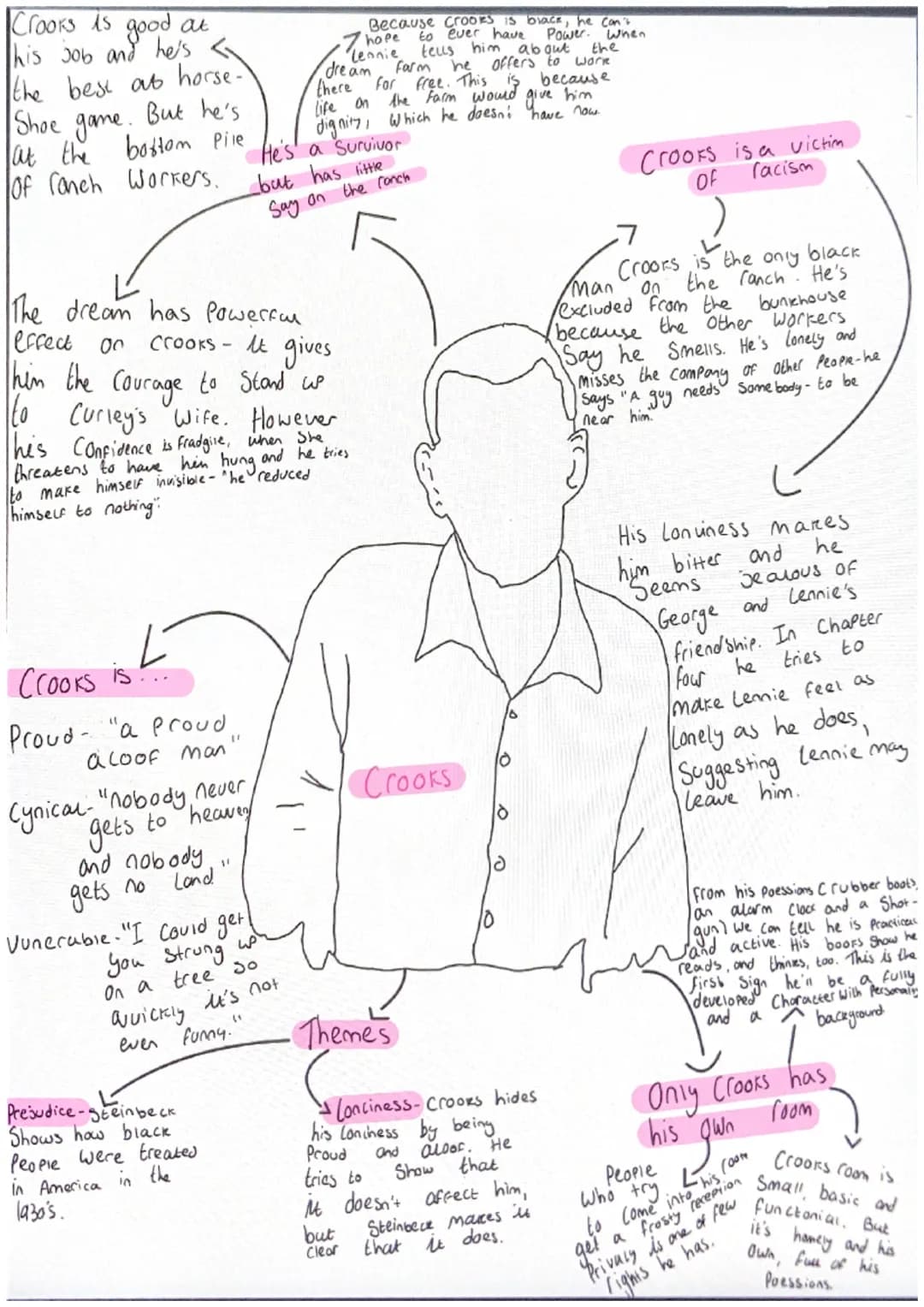
Steinbeck presents Crooks as a complex character whose life reflects the harsh realities of racial discrimination in 1930s America. His living quarters, though basic and functional, serve as both a sanctuary and a symbol of his isolation from the other ranch workers.
Highlight: Crooks maintains his own private space, which is filled with personal possessions including books, rubber boots, an alarm clock, and a shotgun, indicating his practical nature and intellectual interests.
Quote: "A guy needs somebody to be near him" - revealing Crooks' deep loneliness despite his attempts to maintain dignity through isolation.
Example: Crooks' reaction to others entering his room demonstrates how he guards his privacy fiercely, as it represents one of the few rights he possesses.
Definition: Crooks' position as the stable buck makes him responsible for the horses and equipment, showcasing his skill with animals despite his marginalized status.
Vocabulary: "Aloof" - deliberately distant or reserved in manner, a characteristic Crooks adopts as a defense mechanism against discrimination.
The character's interactions with others, particularly during the pivotal scene with Lennie and Curley's wife, reveal both his yearning for connection and his vulnerability to racial threats. His initial courage in standing up to Curley's wife crumbles when she threatens him with lynching, demonstrating the precarious nature of his existence on the ranch.



 Sociology
 Biology