
Ever wondered how energy moves around in the world? In... Show more
 Chemistry
 English Literature
 Biology
 Sociology
Sign up to see the contentIt's free!
Access to all documents
Improve your grades
Join milions of students
By signing up you accept Terms of Service and Privacy Policy
Subjects
Triangle Congruence and Similarity Theorems
Triangle Properties and Classification
Linear Equations and Graphs
Geometric Angle Relationships
Trigonometric Functions and Identities
Equation Solving Techniques
Circle Geometry Fundamentals
Division Operations and Methods
Basic Differentiation Rules
Exponent and Logarithm Properties
Show all topics
Human Organ Systems
Reproductive Cell Cycles
Biological Sciences Subdisciplines
Cellular Energy Metabolism
Autotrophic Energy Processes
Inheritance Patterns and Principles
Biomolecular Structure and Organization
Cell Cycle and Division Mechanics
Cellular Organization and Development
Biological Structural Organization
Show all topics
Chemical Sciences and Applications
Atomic Structure and Composition
Molecular Electron Structure Representation
Atomic Electron Behavior
Matter Properties and Water
Mole Concept and Calculations
Gas Laws and Behavior
Periodic Table Organization
Chemical Thermodynamics Fundamentals
Chemical Bond Types and Properties
Show all topics
European Renaissance and Enlightenment
European Cultural Movements 800-1920
American Revolution Era 1763-1797
American Civil War 1861-1865
Global Imperial Systems
Mongol and Chinese Dynasties
U.S. Presidents and World Leaders
Historical Sources and Documentation
World Wars Era and Impact
World Religious Systems
Show all topics
Classic and Contemporary Novels
Literary Character Analysis
Rhetorical Theory and Practice
Classic Literary Narratives
Reading Analysis and Interpretation
Narrative Structure and Techniques
English Language Components
Influential English-Language Authors
Basic Sentence Structure
Narrative Voice and Perspective
Show all topics
332
•
Dec 25, 2025
•

Reuben Cowell
@reubencowell
Ever wondered how energy moves around in the world? In... Show more
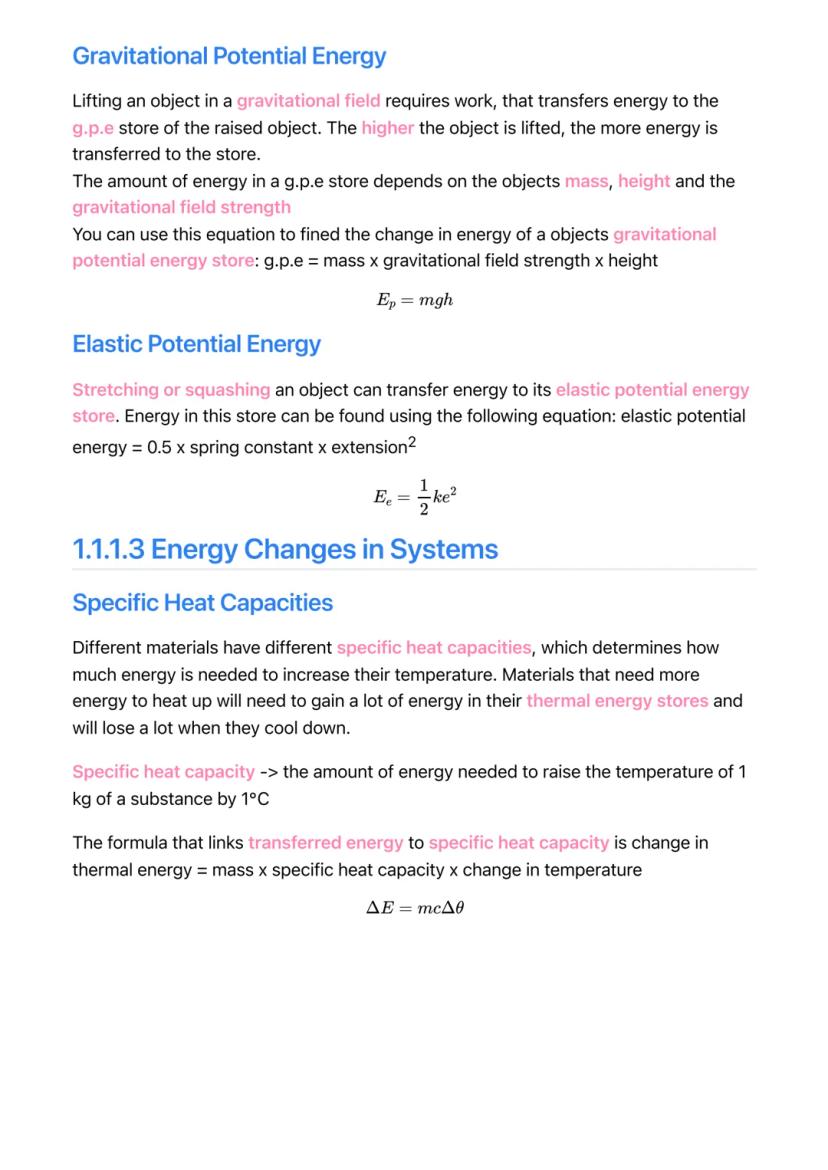
Your phone battery, a bouncing ball, and even your hot cup of tea all have one thing in common - they're storing energy in different ways. There are eight energy stores you need to master for your exams.
Thermal energy exists because of temperature, whilst kinetic energy appears when objects move. Gravitational potential energy builds up when you lift something high, and elastic potential energy gets stored in stretched springs or rubber bands.
The remaining four are chemical energy (found in food, fuel, and batteries), magnetic energy (between magnets), electrostatic energy (between charged objects), and nuclear energy (locked inside atoms). Once you recognise these stores, you'll start spotting them everywhere in exam questions.
Quick Tip: Think of energy stores like different bank accounts - energy moves between them but the total amount stays the same!
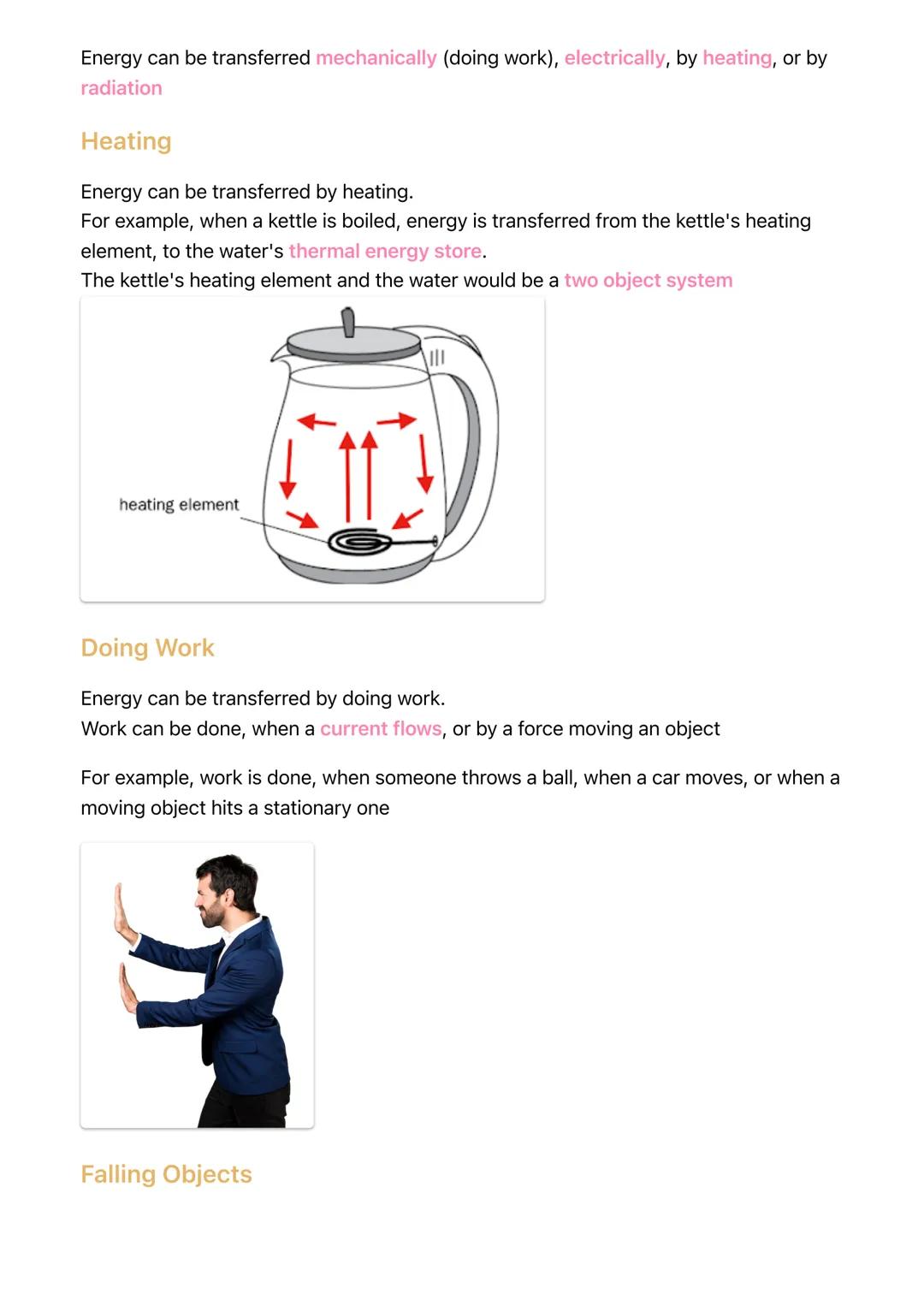
Energy doesn't teleport between stores - it needs specific pathways to move around. There are four main transfer methods that crop up constantly in your physics papers.
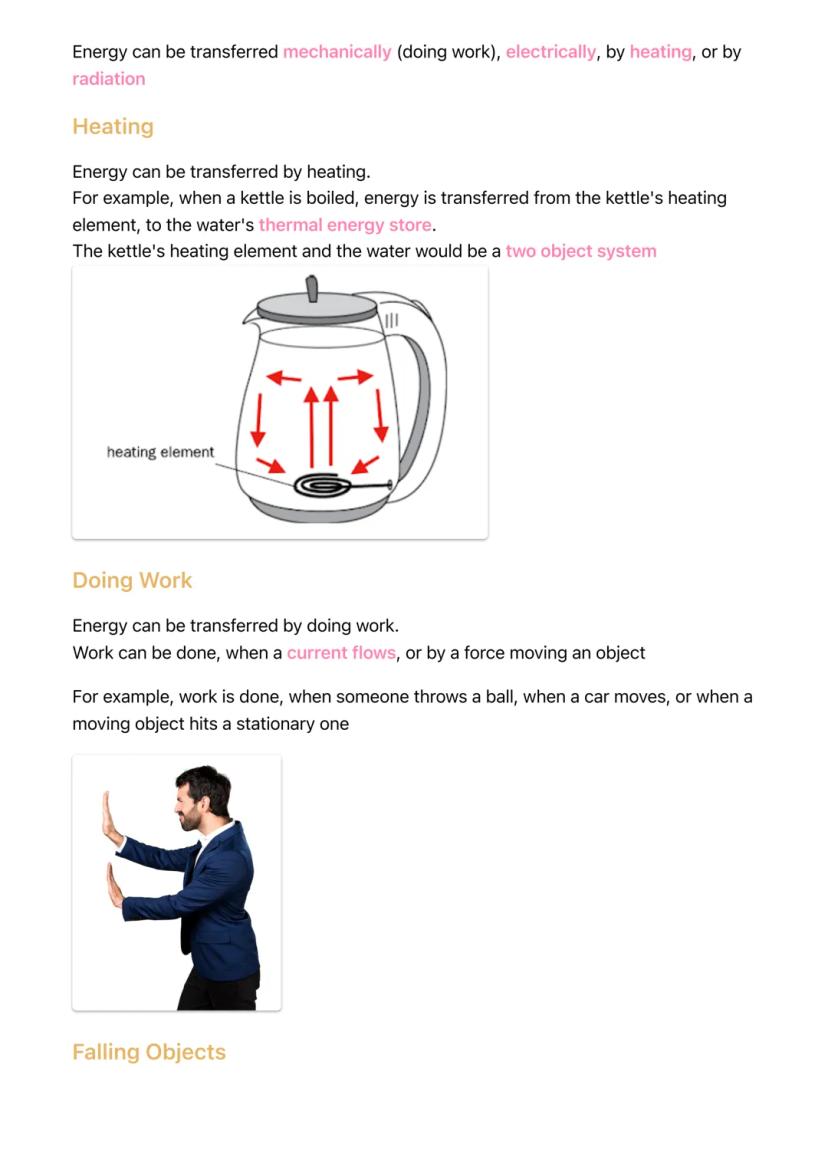
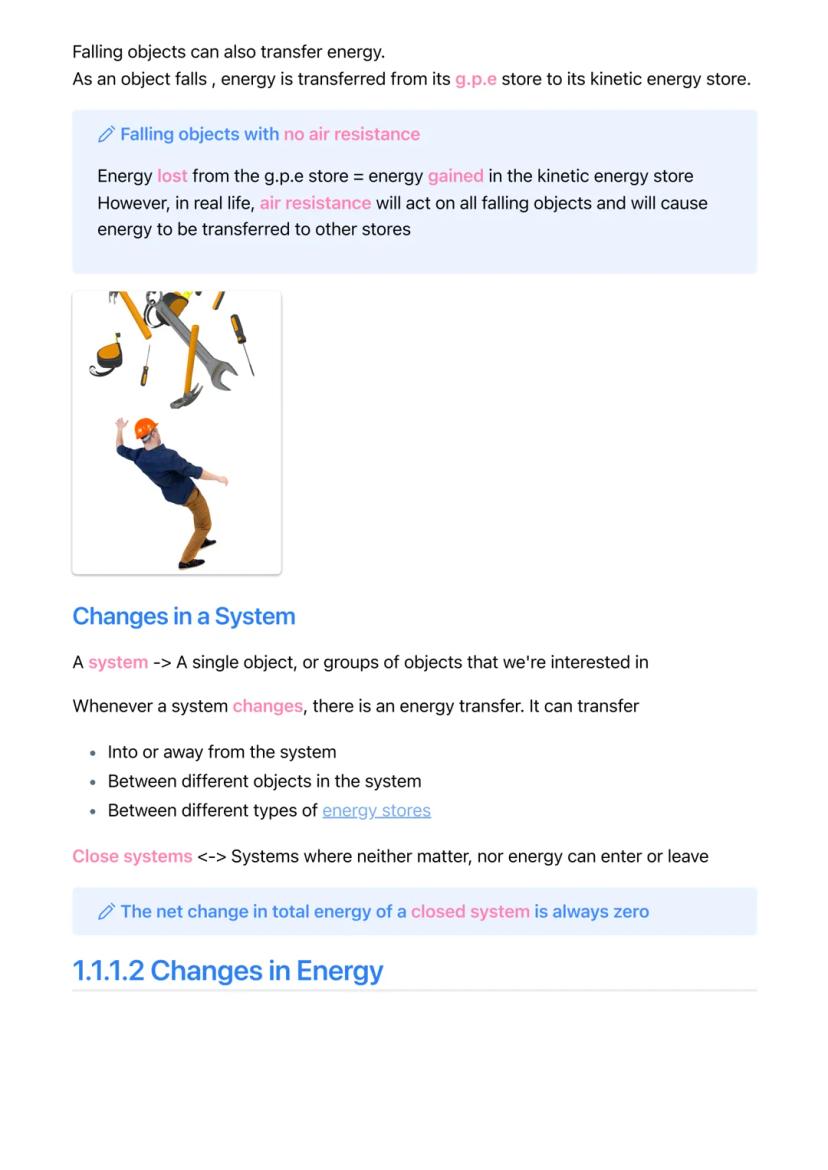
Heating transfers energy from hot objects to cooler ones, like when a kettle's element warms up water. Doing work happens when forces move objects or when electrical current flows - think throwing a ball or a car accelerating.
Radiation moves energy through electromagnetic waves (like light warming your face), whilst electrical transfer occurs when current flows through circuits. Understanding these pathways helps you tackle energy problems systematically.
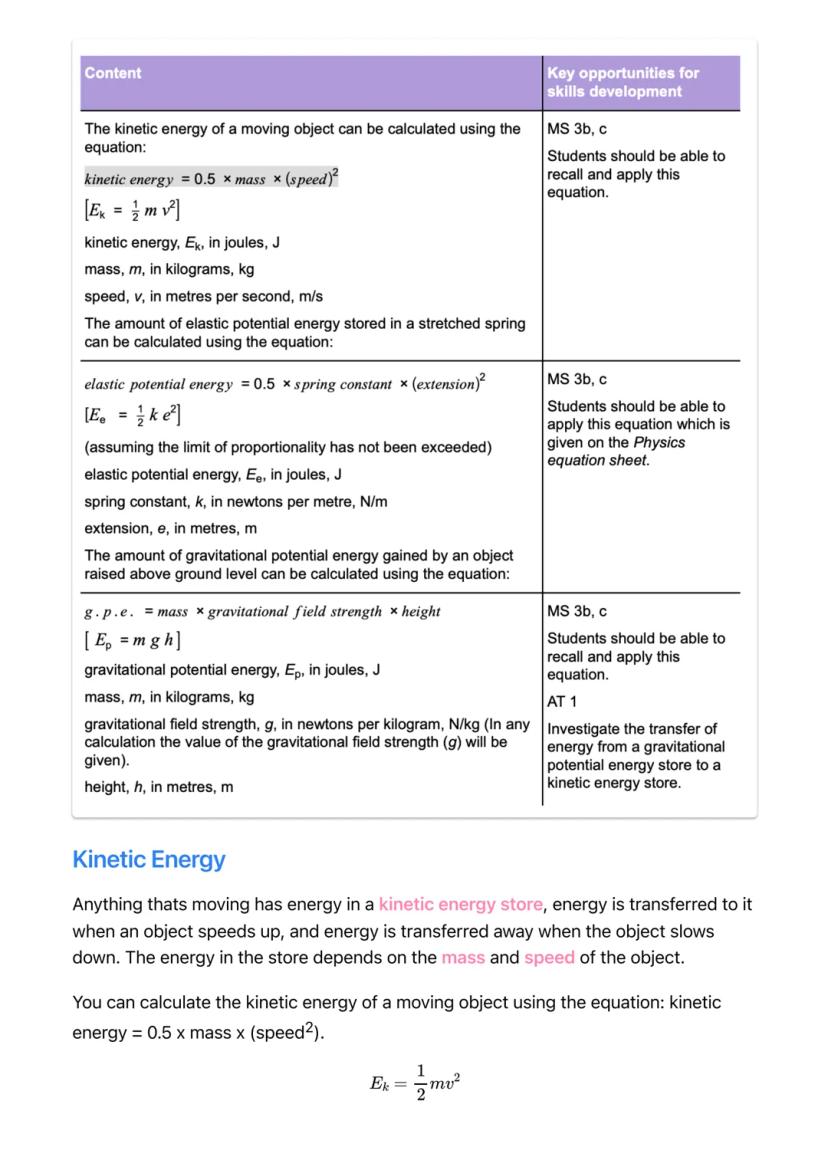
When objects fall, energy shifts from their gravitational potential energy store to their kinetic energy store. In reality, air resistance means some energy also transfers to thermal stores in the surrounding air.
Remember: A system can be a single object or multiple objects you're focusing on - energy can transfer into it, out of it, or between different parts within it.
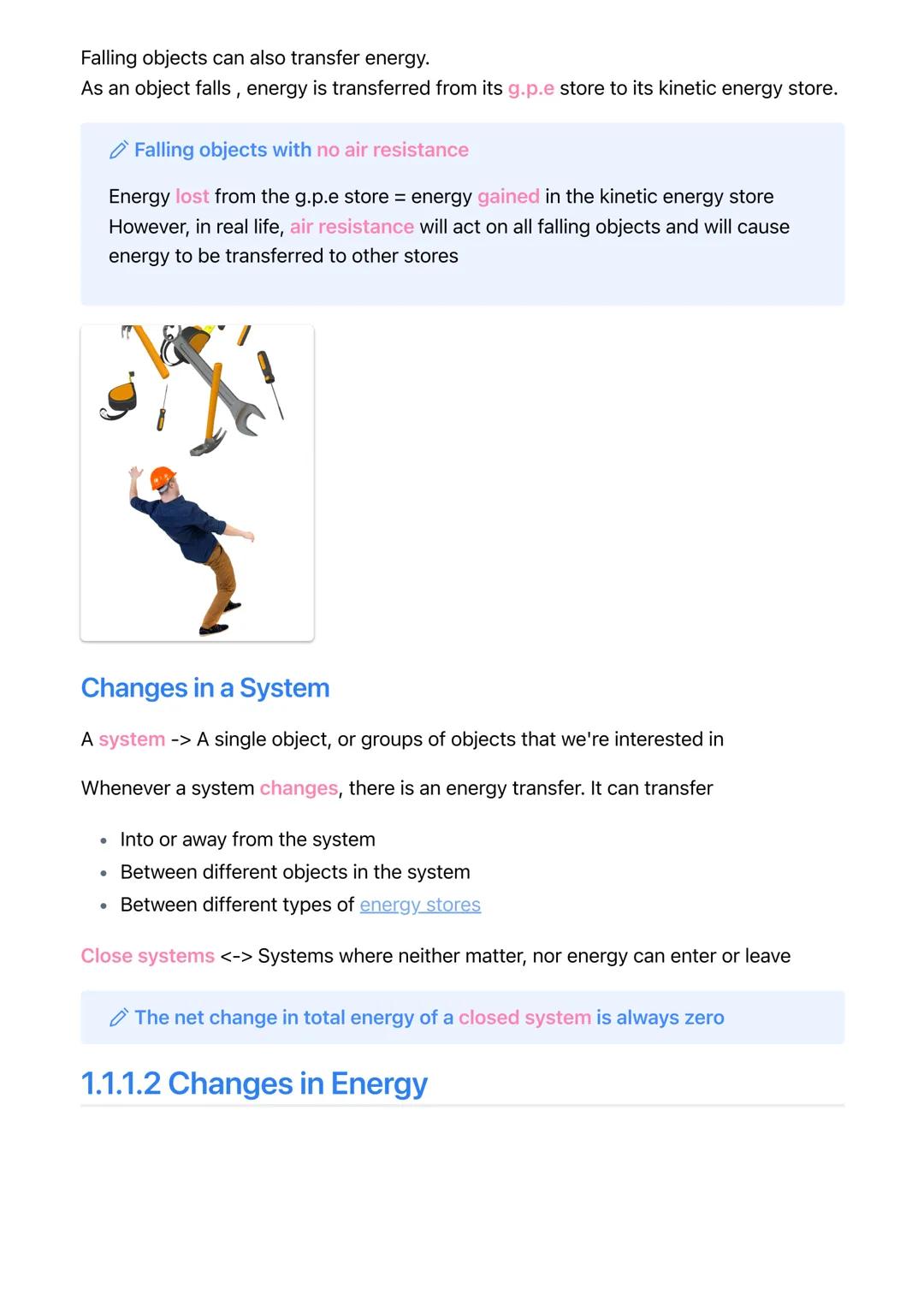
Here's the golden rule that'll save you marks in every energy question: the total energy in a closed system never changes. This means energy can't be created or destroyed, only moved around.
A closed system is one where neither matter nor energy can enter or leave - think of it like a sealed box. Even when dramatic changes happen inside, the total energy remains constant.
This principle helps you solve problems systematically. If a ball loses gravitational potential energy whilst falling, it must gain exactly the same amount of kinetic energy (ignoring air resistance). The numbers always balance out.
Exam Strategy: When stuck on energy questions, list what energy stores increase and decrease - they must equal each other!
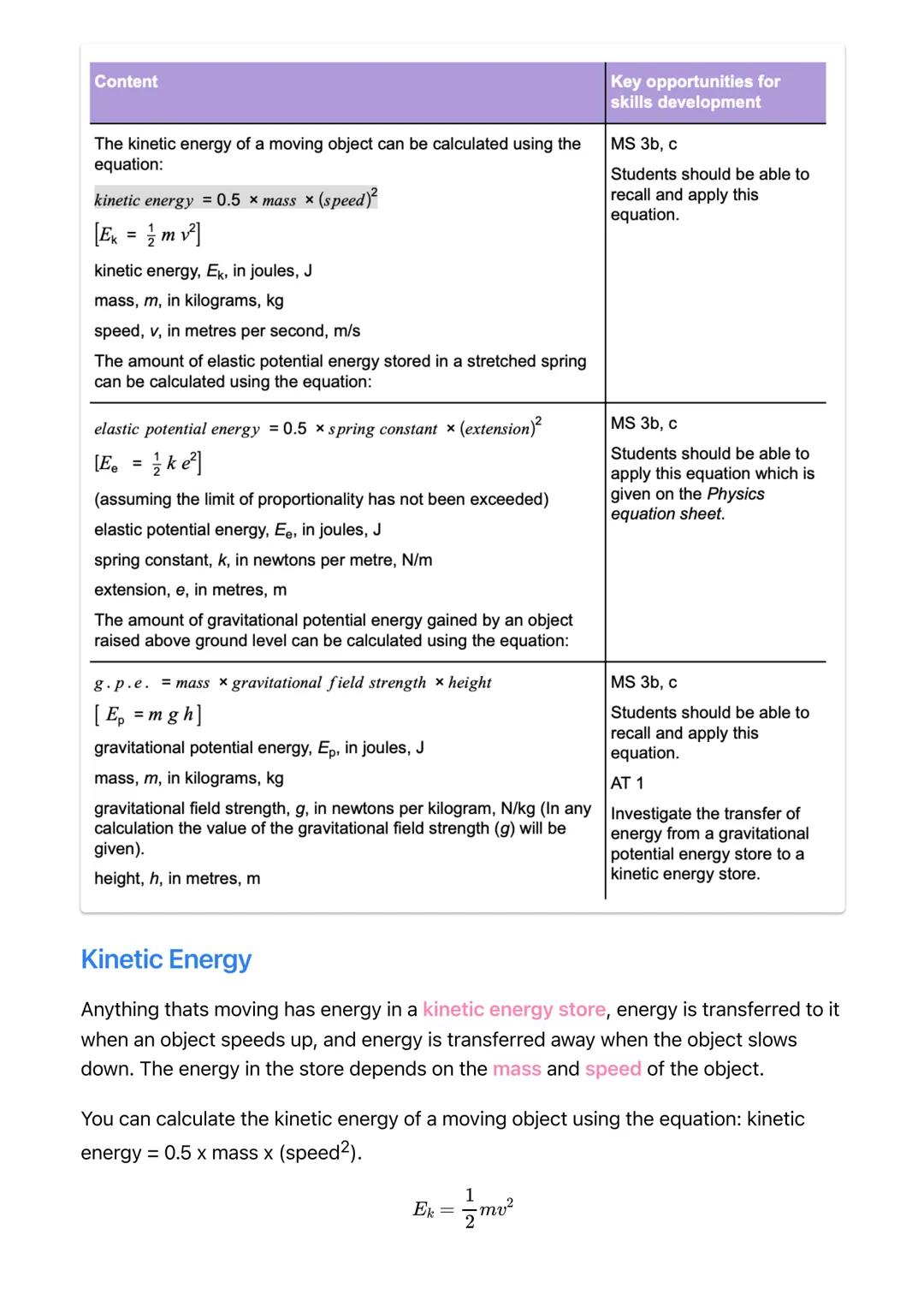
Time for the maths bit - but don't worry, these equations are your friends once you practise them. Kinetic energy calculations pop up constantly, so memorise this formula: Ek = ½mv².
The equation tells you that doubling an object's speed actually quadruples its kinetic energy (because you're squaring the velocity). Mass matters too - heavier objects store more kinetic energy at the same speed.
For elastic potential energy, use Ee = ½ke². Here, 'k' represents the spring constant (how stiff the spring is), whilst 'e' shows how much you've stretched it. Stretch a spring twice as far, and you store four times more energy.
Gravitational potential energy uses the simpler formula Ep = mgh. This one's straightforward - more mass, greater height, or stronger gravity all mean more stored energy.
Calculator Tip: Watch out for that ½ in the kinetic and elastic energy equations - it's easy to forget under exam pressure!
Different materials need different amounts of energy to heat up - this property is called specific heat capacity. Water needs loads of energy to warm up, which is why the sea stays cool in summer and warm in winter.
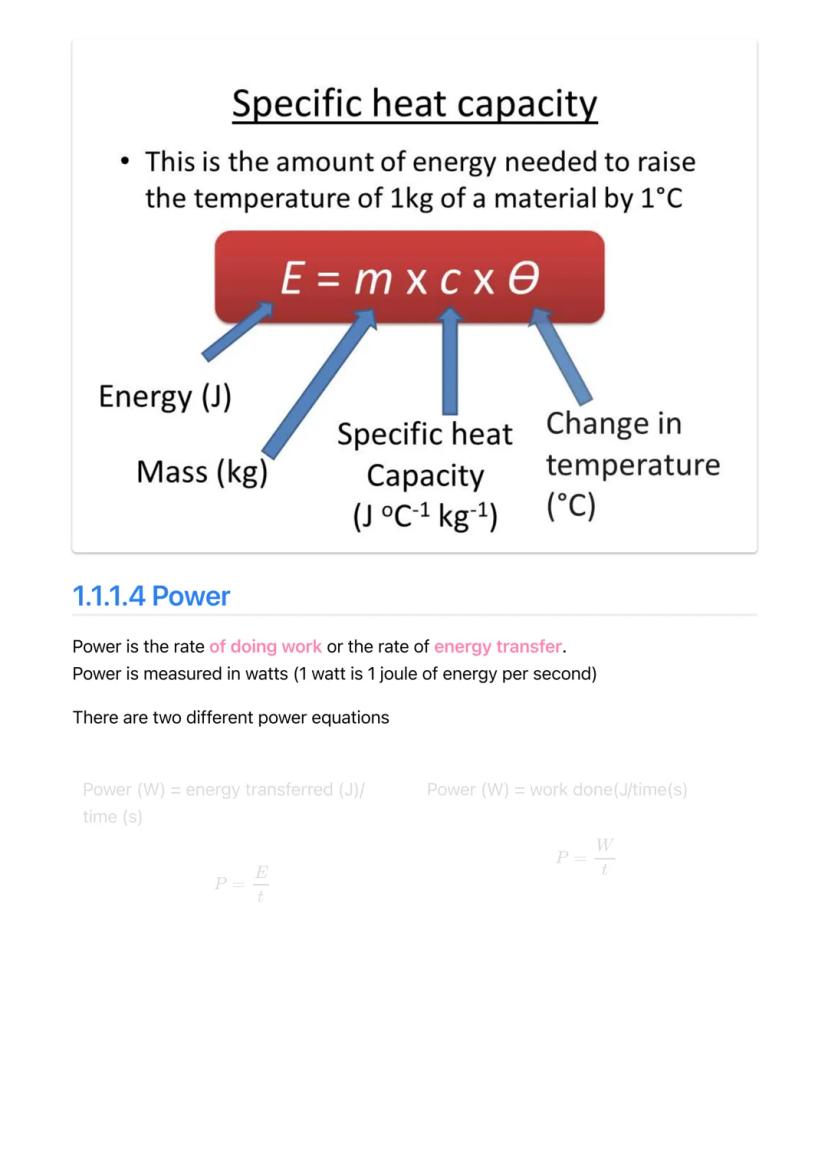
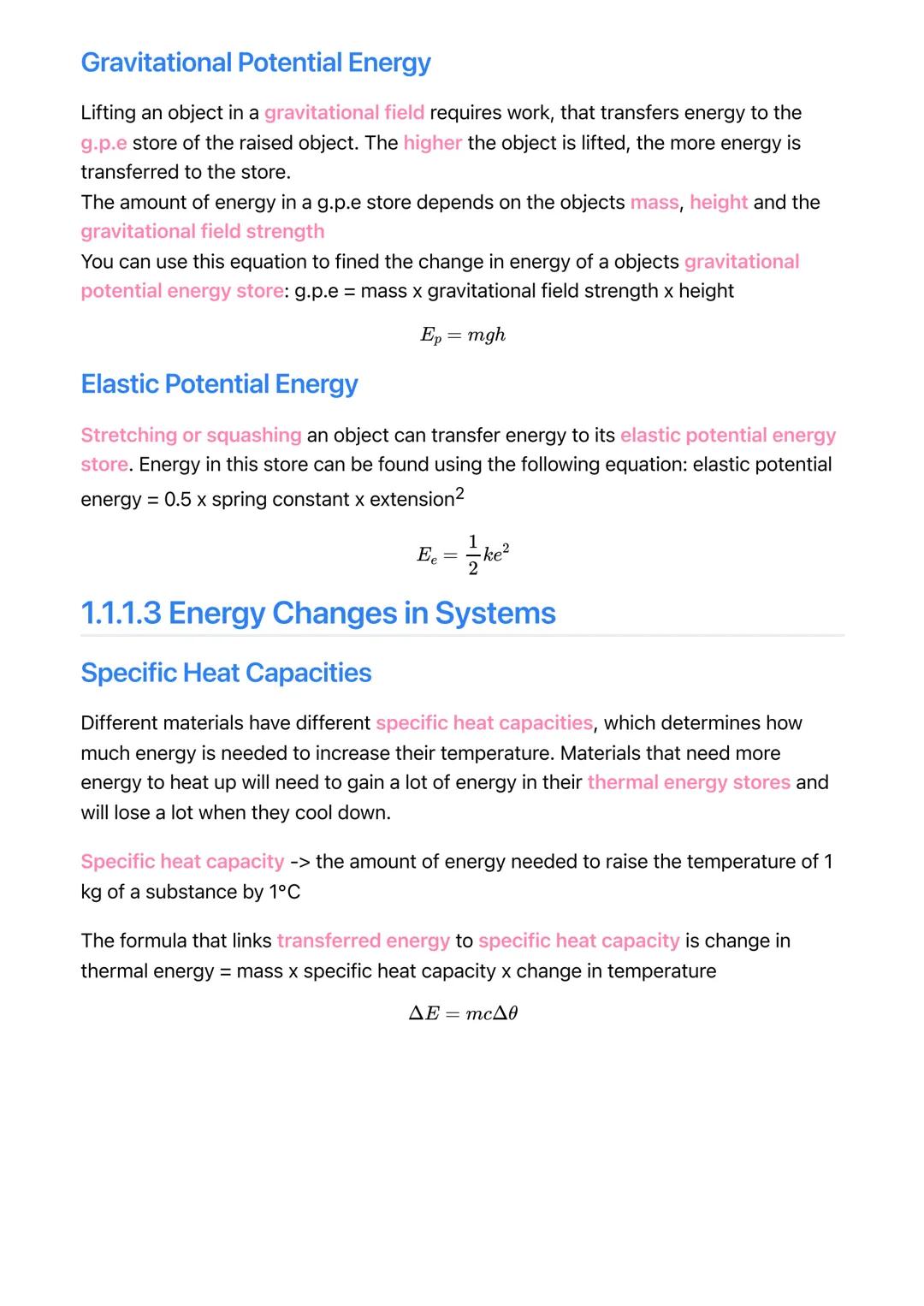
Specific heat capacity measures how much energy you need to raise 1kg of a substance by 1°C. Materials with high specific heat capacities are excellent for storing thermal energy - that's why water works brilliantly in central heating systems.
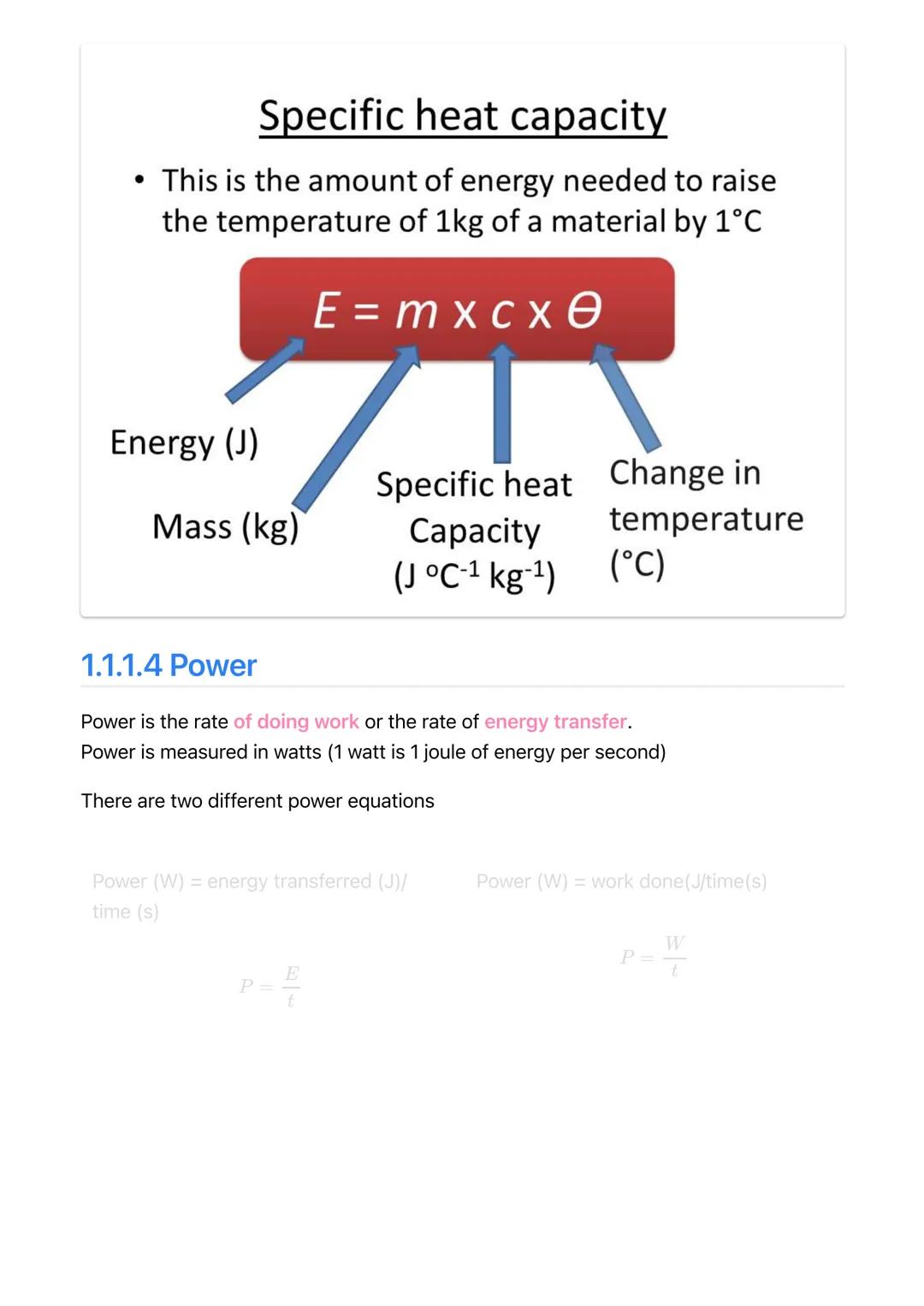
The formula ΔE = mcΔθ connects energy transfer to temperature changes. 'ΔE' represents energy change, 'm' is mass, 'c' is specific heat capacity, and 'Δθ' shows temperature change.
This equation works both ways - heating up and cooling down. When substances cool, they release exactly the same amount of energy they absorbed when warming up.
Real-world Connection: Metal car seats heat up quickly in summer (low specific heat capacity), whilst the plastic dashboard stays cooler (higher specific heat capacity).
Our AI companion is specifically built for the needs of students. Based on the millions of content pieces we have on the platform we can provide truly meaningful and relevant answers to students. But its not only about answers, the companion is even more about guiding students through their daily learning challenges, with personalised study plans, quizzes or content pieces in the chat and 100% personalisation based on the students skills and developments.
You can download the app in the Google Play Store and in the Apple App Store.
That's right! Enjoy free access to study content, connect with fellow students, and get instant help – all at your fingertips.
App Store
Google Play
The app is very easy to use and well designed. I have found everything I was looking for so far and have been able to learn a lot from the presentations! I will definitely use the app for a class assignment! And of course it also helps a lot as an inspiration.
Stefan S
iOS user
This app is really great. There are so many study notes and help [...]. My problem subject is French, for example, and the app has so many options for help. Thanks to this app, I have improved my French. I would recommend it to anyone.
Samantha Klich
Android user
Wow, I am really amazed. I just tried the app because I've seen it advertised many times and was absolutely stunned. This app is THE HELP you want for school and above all, it offers so many things, such as workouts and fact sheets, which have been VERY helpful to me personally.
Anna
iOS user
I think it’s very much worth it and you’ll end up using it a lot once you get the hang of it and even after looking at others notes you can still ask your Artificial intelligence buddy the question and ask to simplify it if you still don’t get it!!! In the end I think it’s worth it 😊👍 ⚠️Also DID I MENTION ITS FREEE YOU DON’T HAVE TO PAY FOR ANYTHING AND STILL GET YOUR GRADES IN PERFECTLY❗️❗️⚠️
Thomas R
iOS user
Knowunity is the BEST app I’ve used in a minute. This is not an ai review or anything this is genuinely coming from a 7th grade student (I know 2011 im young) but dude this app is a 10/10 i have maintained a 3.8 gpa and have plenty of time for gaming. I love it and my mom is just happy I got good grades
Brad T
Android user
Not only did it help me find the answer but it also showed me alternative ways to solve it. I was horrible in math and science but now I have an a in both subjects. Thanks for the help🤍🤍
David K
iOS user
The app's just great! All I have to do is enter the topic in the search bar and I get the response real fast. I don't have to watch 10 YouTube videos to understand something, so I'm saving my time. Highly recommended!
Sudenaz Ocak
Android user
In school I was really bad at maths but thanks to the app, I am doing better now. I am so grateful that you made the app.
Greenlight Bonnie
Android user
I found this app a couple years ago and it has only gotten better since then. I really love it because it can help with written questions and photo questions. Also, it can find study guides that other people have made as well as flashcard sets and practice tests. The free version is also amazing for students who might not be able to afford it. Would 100% recommend
Aubrey
iOS user
Best app if you're in Highschool or Junior high. I have been using this app for 2 school years and it's the best, it's good if you don't have anyone to help you with school work.😋🩷🎀
Marco B
iOS user
THE QUIZES AND FLASHCARDS ARE SO USEFUL AND I LOVE THE SCHOOLGPT. IT ALSO IS LITREALLY LIKE CHATGPT BUT SMARTER!! HELPED ME WITH MY MASCARA PROBLEMS TOO!! AS WELL AS MY REAL SUBJECTS ! DUHHH 😍😁😲🤑💗✨🎀😮
Elisha
iOS user
This app is phenomenal down to the correct info and the various topics you can study! I greatly recommend it for people who struggle with procrastination and those who need homework help. It has been perfectly accurate for world 1 history as far as I’ve seen! Geometry too!
Paul T
iOS user
The app is very easy to use and well designed. I have found everything I was looking for so far and have been able to learn a lot from the presentations! I will definitely use the app for a class assignment! And of course it also helps a lot as an inspiration.
Stefan S
iOS user
This app is really great. There are so many study notes and help [...]. My problem subject is French, for example, and the app has so many options for help. Thanks to this app, I have improved my French. I would recommend it to anyone.
Samantha Klich
Android user
Wow, I am really amazed. I just tried the app because I've seen it advertised many times and was absolutely stunned. This app is THE HELP you want for school and above all, it offers so many things, such as workouts and fact sheets, which have been VERY helpful to me personally.
Anna
iOS user
I think it’s very much worth it and you’ll end up using it a lot once you get the hang of it and even after looking at others notes you can still ask your Artificial intelligence buddy the question and ask to simplify it if you still don’t get it!!! In the end I think it’s worth it 😊👍 ⚠️Also DID I MENTION ITS FREEE YOU DON’T HAVE TO PAY FOR ANYTHING AND STILL GET YOUR GRADES IN PERFECTLY❗️❗️⚠️
Thomas R
iOS user
Knowunity is the BEST app I’ve used in a minute. This is not an ai review or anything this is genuinely coming from a 7th grade student (I know 2011 im young) but dude this app is a 10/10 i have maintained a 3.8 gpa and have plenty of time for gaming. I love it and my mom is just happy I got good grades
Brad T
Android user
Not only did it help me find the answer but it also showed me alternative ways to solve it. I was horrible in math and science but now I have an a in both subjects. Thanks for the help🤍🤍
David K
iOS user
The app's just great! All I have to do is enter the topic in the search bar and I get the response real fast. I don't have to watch 10 YouTube videos to understand something, so I'm saving my time. Highly recommended!
Sudenaz Ocak
Android user
In school I was really bad at maths but thanks to the app, I am doing better now. I am so grateful that you made the app.
Greenlight Bonnie
Android user
I found this app a couple years ago and it has only gotten better since then. I really love it because it can help with written questions and photo questions. Also, it can find study guides that other people have made as well as flashcard sets and practice tests. The free version is also amazing for students who might not be able to afford it. Would 100% recommend
Aubrey
iOS user
Best app if you're in Highschool or Junior high. I have been using this app for 2 school years and it's the best, it's good if you don't have anyone to help you with school work.😋🩷🎀
Marco B
iOS user
THE QUIZES AND FLASHCARDS ARE SO USEFUL AND I LOVE THE SCHOOLGPT. IT ALSO IS LITREALLY LIKE CHATGPT BUT SMARTER!! HELPED ME WITH MY MASCARA PROBLEMS TOO!! AS WELL AS MY REAL SUBJECTS ! DUHHH 😍😁😲🤑💗✨🎀😮
Elisha
iOS user
This app is phenomenal down to the correct info and the various topics you can study! I greatly recommend it for people who struggle with procrastination and those who need homework help. It has been perfectly accurate for world 1 history as far as I’ve seen! Geometry too!
Paul T
iOS user
Reuben Cowell
@reubencowell
Ever wondered how energy moves around in the world? In physics, energy never actually disappears - it just keeps moving between different places and changing forms. Understanding energy stores and transfers is crucial for your GCSE physics success.
Access to all documents
Improve your grades
Join milions of students
By signing up you accept Terms of Service and Privacy Policy
Your phone battery, a bouncing ball, and even your hot cup of tea all have one thing in common - they're storing energy in different ways. There are eight energy stores you need to master for your exams.
Thermal energy exists because of temperature, whilst kinetic energy appears when objects move. Gravitational potential energy builds up when you lift something high, and elastic potential energy gets stored in stretched springs or rubber bands.
The remaining four are chemical energy (found in food, fuel, and batteries), magnetic energy (between magnets), electrostatic energy (between charged objects), and nuclear energy (locked inside atoms). Once you recognise these stores, you'll start spotting them everywhere in exam questions.
Quick Tip: Think of energy stores like different bank accounts - energy moves between them but the total amount stays the same!
Access to all documents
Improve your grades
Join milions of students
By signing up you accept Terms of Service and Privacy Policy
Energy doesn't teleport between stores - it needs specific pathways to move around. There are four main transfer methods that crop up constantly in your physics papers.
Heating transfers energy from hot objects to cooler ones, like when a kettle's element warms up water. Doing work happens when forces move objects or when electrical current flows - think throwing a ball or a car accelerating.
Radiation moves energy through electromagnetic waves (like light warming your face), whilst electrical transfer occurs when current flows through circuits. Understanding these pathways helps you tackle energy problems systematically.
When objects fall, energy shifts from their gravitational potential energy store to their kinetic energy store. In reality, air resistance means some energy also transfers to thermal stores in the surrounding air.
Remember: A system can be a single object or multiple objects you're focusing on - energy can transfer into it, out of it, or between different parts within it.
Access to all documents
Improve your grades
Join milions of students
By signing up you accept Terms of Service and Privacy Policy
Here's the golden rule that'll save you marks in every energy question: the total energy in a closed system never changes. This means energy can't be created or destroyed, only moved around.
A closed system is one where neither matter nor energy can enter or leave - think of it like a sealed box. Even when dramatic changes happen inside, the total energy remains constant.
This principle helps you solve problems systematically. If a ball loses gravitational potential energy whilst falling, it must gain exactly the same amount of kinetic energy (ignoring air resistance). The numbers always balance out.
Exam Strategy: When stuck on energy questions, list what energy stores increase and decrease - they must equal each other!
Access to all documents
Improve your grades
Join milions of students
By signing up you accept Terms of Service and Privacy Policy
Time for the maths bit - but don't worry, these equations are your friends once you practise them. Kinetic energy calculations pop up constantly, so memorise this formula: Ek = ½mv².
The equation tells you that doubling an object's speed actually quadruples its kinetic energy (because you're squaring the velocity). Mass matters too - heavier objects store more kinetic energy at the same speed.
For elastic potential energy, use Ee = ½ke². Here, 'k' represents the spring constant (how stiff the spring is), whilst 'e' shows how much you've stretched it. Stretch a spring twice as far, and you store four times more energy.
Gravitational potential energy uses the simpler formula Ep = mgh. This one's straightforward - more mass, greater height, or stronger gravity all mean more stored energy.
Calculator Tip: Watch out for that ½ in the kinetic and elastic energy equations - it's easy to forget under exam pressure!
Access to all documents
Improve your grades
Join milions of students
By signing up you accept Terms of Service and Privacy Policy
Different materials need different amounts of energy to heat up - this property is called specific heat capacity. Water needs loads of energy to warm up, which is why the sea stays cool in summer and warm in winter.
Specific heat capacity measures how much energy you need to raise 1kg of a substance by 1°C. Materials with high specific heat capacities are excellent for storing thermal energy - that's why water works brilliantly in central heating systems.
The formula ΔE = mcΔθ connects energy transfer to temperature changes. 'ΔE' represents energy change, 'm' is mass, 'c' is specific heat capacity, and 'Δθ' shows temperature change.
This equation works both ways - heating up and cooling down. When substances cool, they release exactly the same amount of energy they absorbed when warming up.
Real-world Connection: Metal car seats heat up quickly in summer (low specific heat capacity), whilst the plastic dashboard stays cooler (higher specific heat capacity).
Access to all documents
Improve your grades
Join milions of students
By signing up you accept Terms of Service and Privacy Policy
Our AI companion is specifically built for the needs of students. Based on the millions of content pieces we have on the platform we can provide truly meaningful and relevant answers to students. But its not only about answers, the companion is even more about guiding students through their daily learning challenges, with personalised study plans, quizzes or content pieces in the chat and 100% personalisation based on the students skills and developments.
You can download the app in the Google Play Store and in the Apple App Store.
That's right! Enjoy free access to study content, connect with fellow students, and get instant help – all at your fingertips.
7
Smart Tools NEW
Transform this note into: ✓ 50+ Practice Questions ✓ Interactive Flashcards ✓ Full Mock Exam ✓ Essay Outlines
Work and Energy explanation. Work done by a constant force. Work done by a variable force.
 AP Physics 1
Formulas, concepts of work, practice problem, and kinetic energy
AP Physics 1A presentation and discussion of the concepts of power, work, and energy.
AP Physics 1This describes a fundamental physics concept.
AP Physics 1App Store
Google Play
The app is very easy to use and well designed. I have found everything I was looking for so far and have been able to learn a lot from the presentations! I will definitely use the app for a class assignment! And of course it also helps a lot as an inspiration.
Stefan S
iOS user
This app is really great. There are so many study notes and help [...]. My problem subject is French, for example, and the app has so many options for help. Thanks to this app, I have improved my French. I would recommend it to anyone.
Samantha Klich
Android user
Wow, I am really amazed. I just tried the app because I've seen it advertised many times and was absolutely stunned. This app is THE HELP you want for school and above all, it offers so many things, such as workouts and fact sheets, which have been VERY helpful to me personally.
Anna
iOS user
I think it’s very much worth it and you’ll end up using it a lot once you get the hang of it and even after looking at others notes you can still ask your Artificial intelligence buddy the question and ask to simplify it if you still don’t get it!!! In the end I think it’s worth it 😊👍 ⚠️Also DID I MENTION ITS FREEE YOU DON’T HAVE TO PAY FOR ANYTHING AND STILL GET YOUR GRADES IN PERFECTLY❗️❗️⚠️
Thomas R
iOS user
Knowunity is the BEST app I’ve used in a minute. This is not an ai review or anything this is genuinely coming from a 7th grade student (I know 2011 im young) but dude this app is a 10/10 i have maintained a 3.8 gpa and have plenty of time for gaming. I love it and my mom is just happy I got good grades
Brad T
Android user
Not only did it help me find the answer but it also showed me alternative ways to solve it. I was horrible in math and science but now I have an a in both subjects. Thanks for the help🤍🤍
David K
iOS user
The app's just great! All I have to do is enter the topic in the search bar and I get the response real fast. I don't have to watch 10 YouTube videos to understand something, so I'm saving my time. Highly recommended!
Sudenaz Ocak
Android user
In school I was really bad at maths but thanks to the app, I am doing better now. I am so grateful that you made the app.
Greenlight Bonnie
Android user
I found this app a couple years ago and it has only gotten better since then. I really love it because it can help with written questions and photo questions. Also, it can find study guides that other people have made as well as flashcard sets and practice tests. The free version is also amazing for students who might not be able to afford it. Would 100% recommend
Aubrey
iOS user
Best app if you're in Highschool or Junior high. I have been using this app for 2 school years and it's the best, it's good if you don't have anyone to help you with school work.😋🩷🎀
Marco B
iOS user
THE QUIZES AND FLASHCARDS ARE SO USEFUL AND I LOVE THE SCHOOLGPT. IT ALSO IS LITREALLY LIKE CHATGPT BUT SMARTER!! HELPED ME WITH MY MASCARA PROBLEMS TOO!! AS WELL AS MY REAL SUBJECTS ! DUHHH 😍😁😲🤑💗✨🎀😮
Elisha
iOS user
This app is phenomenal down to the correct info and the various topics you can study! I greatly recommend it for people who struggle with procrastination and those who need homework help. It has been perfectly accurate for world 1 history as far as I’ve seen! Geometry too!
Paul T
iOS user
The app is very easy to use and well designed. I have found everything I was looking for so far and have been able to learn a lot from the presentations! I will definitely use the app for a class assignment! And of course it also helps a lot as an inspiration.
Stefan S
iOS user
This app is really great. There are so many study notes and help [...]. My problem subject is French, for example, and the app has so many options for help. Thanks to this app, I have improved my French. I would recommend it to anyone.
Samantha Klich
Android user
Wow, I am really amazed. I just tried the app because I've seen it advertised many times and was absolutely stunned. This app is THE HELP you want for school and above all, it offers so many things, such as workouts and fact sheets, which have been VERY helpful to me personally.
Anna
iOS user
I think it’s very much worth it and you’ll end up using it a lot once you get the hang of it and even after looking at others notes you can still ask your Artificial intelligence buddy the question and ask to simplify it if you still don’t get it!!! In the end I think it’s worth it 😊👍 ⚠️Also DID I MENTION ITS FREEE YOU DON’T HAVE TO PAY FOR ANYTHING AND STILL GET YOUR GRADES IN PERFECTLY❗️❗️⚠️
Thomas R
iOS user
Knowunity is the BEST app I’ve used in a minute. This is not an ai review or anything this is genuinely coming from a 7th grade student (I know 2011 im young) but dude this app is a 10/10 i have maintained a 3.8 gpa and have plenty of time for gaming. I love it and my mom is just happy I got good grades
Brad T
Android user
Not only did it help me find the answer but it also showed me alternative ways to solve it. I was horrible in math and science but now I have an a in both subjects. Thanks for the help🤍🤍
David K
iOS user
The app's just great! All I have to do is enter the topic in the search bar and I get the response real fast. I don't have to watch 10 YouTube videos to understand something, so I'm saving my time. Highly recommended!
Sudenaz Ocak
Android user
In school I was really bad at maths but thanks to the app, I am doing better now. I am so grateful that you made the app.
Greenlight Bonnie
Android user
I found this app a couple years ago and it has only gotten better since then. I really love it because it can help with written questions and photo questions. Also, it can find study guides that other people have made as well as flashcard sets and practice tests. The free version is also amazing for students who might not be able to afford it. Would 100% recommend
Aubrey
iOS user
Best app if you're in Highschool or Junior high. I have been using this app for 2 school years and it's the best, it's good if you don't have anyone to help you with school work.😋🩷🎀
Marco B
iOS user
THE QUIZES AND FLASHCARDS ARE SO USEFUL AND I LOVE THE SCHOOLGPT. IT ALSO IS LITREALLY LIKE CHATGPT BUT SMARTER!! HELPED ME WITH MY MASCARA PROBLEMS TOO!! AS WELL AS MY REAL SUBJECTS ! DUHHH 😍😁😲🤑💗✨🎀😮
Elisha
iOS user
This app is phenomenal down to the correct info and the various topics you can study! I greatly recommend it for people who struggle with procrastination and those who need homework help. It has been perfectly accurate for world 1 history as far as I’ve seen! Geometry too!
Paul T
iOS user