Tropical Storms
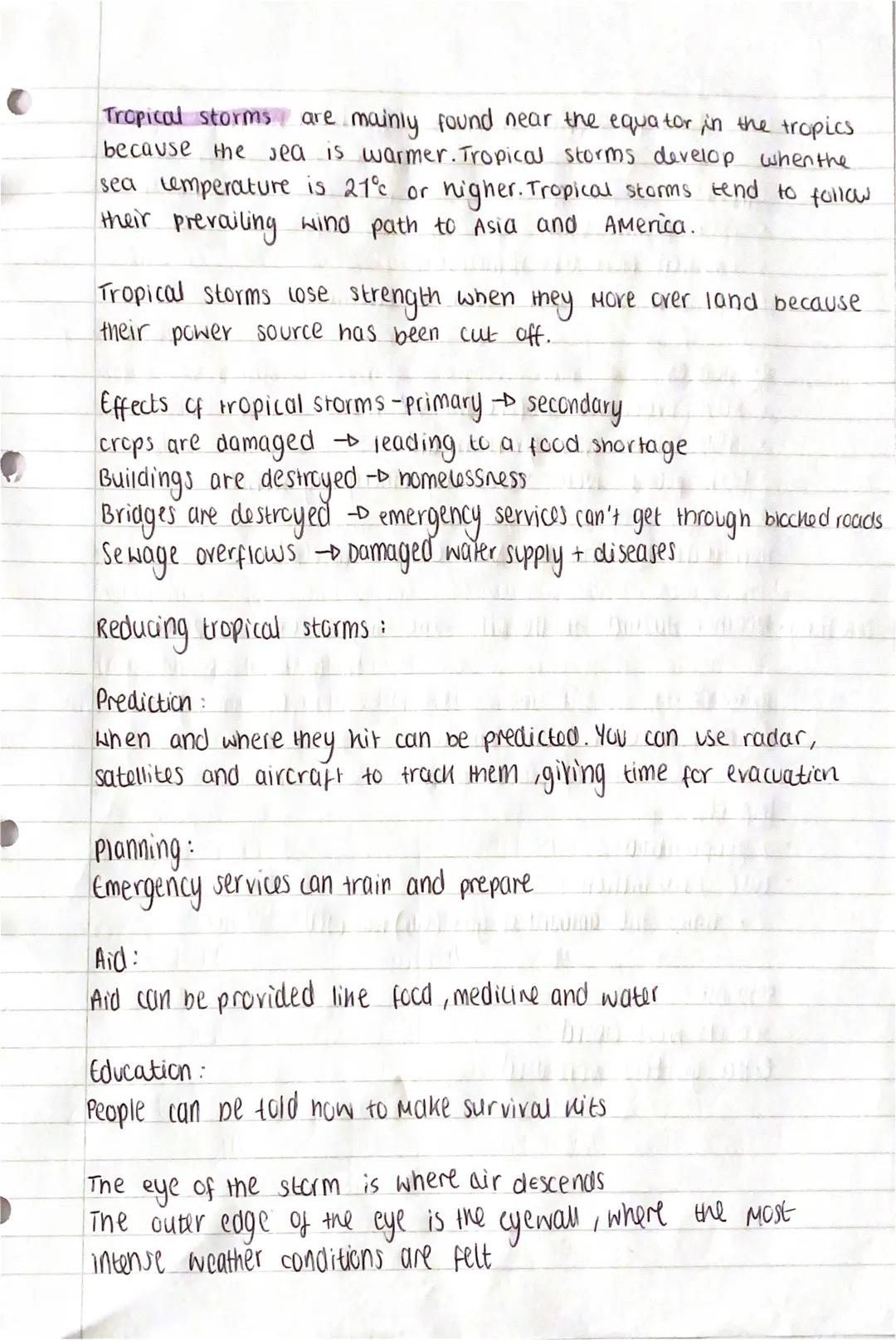
Tropical storms are nature's most powerful weather machines, and they're not random - they follow specific rules that you can actually predict and prepare for.
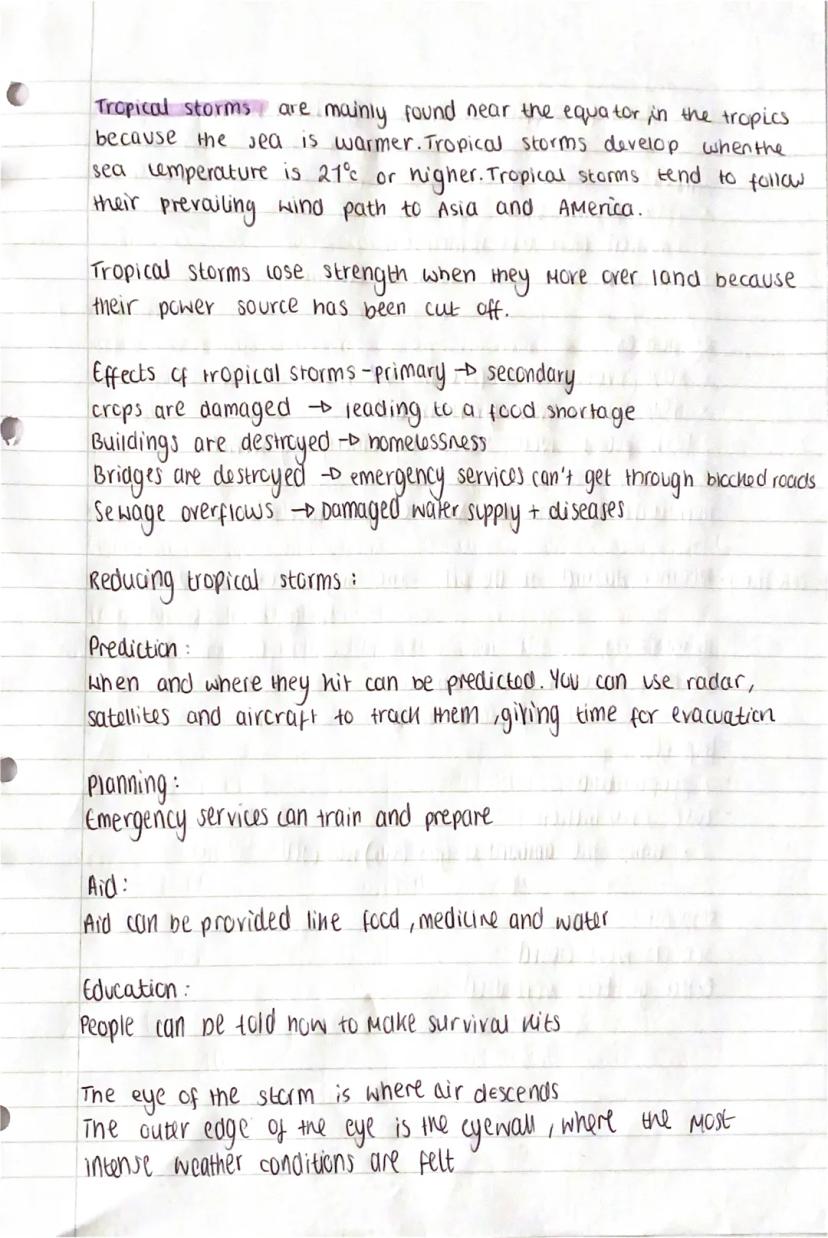
These massive storms mainly develop near the equator in the tropics where sea temperatures reach 27°C or higher. Think of warm ocean water as fuel - the hotter it is, the more powerful the storm becomes. Once formed, tropical storms follow prevailing wind paths towards Asia and America, but they lose strength quickly when they hit land because their power source (warm ocean water) gets cut off.
The anatomy of a tropical storm is fascinating: the centre is called the eye, where air descends and conditions are surprisingly calm. But don't be fooled - the eyewall around the eye is where you'll experience the most intense and dangerous weather.
Primary effects hit immediately: buildings destroyed, crops damaged, bridges washed away. Secondary effects follow later: food shortages, diseases from contaminated water, and blocked emergency services.
Remember: Tropical storms need warm ocean water 27°C+ to survive - this is why they weaken over land.
We can fight back through prediction (satellites and radar give evacuation time), planning (training emergency services), providing aid (food, medicine, water), and education (teaching people to make survival kits).


 Biology
 Biology
 English Literature
 Sociology