Elements of a Short Story
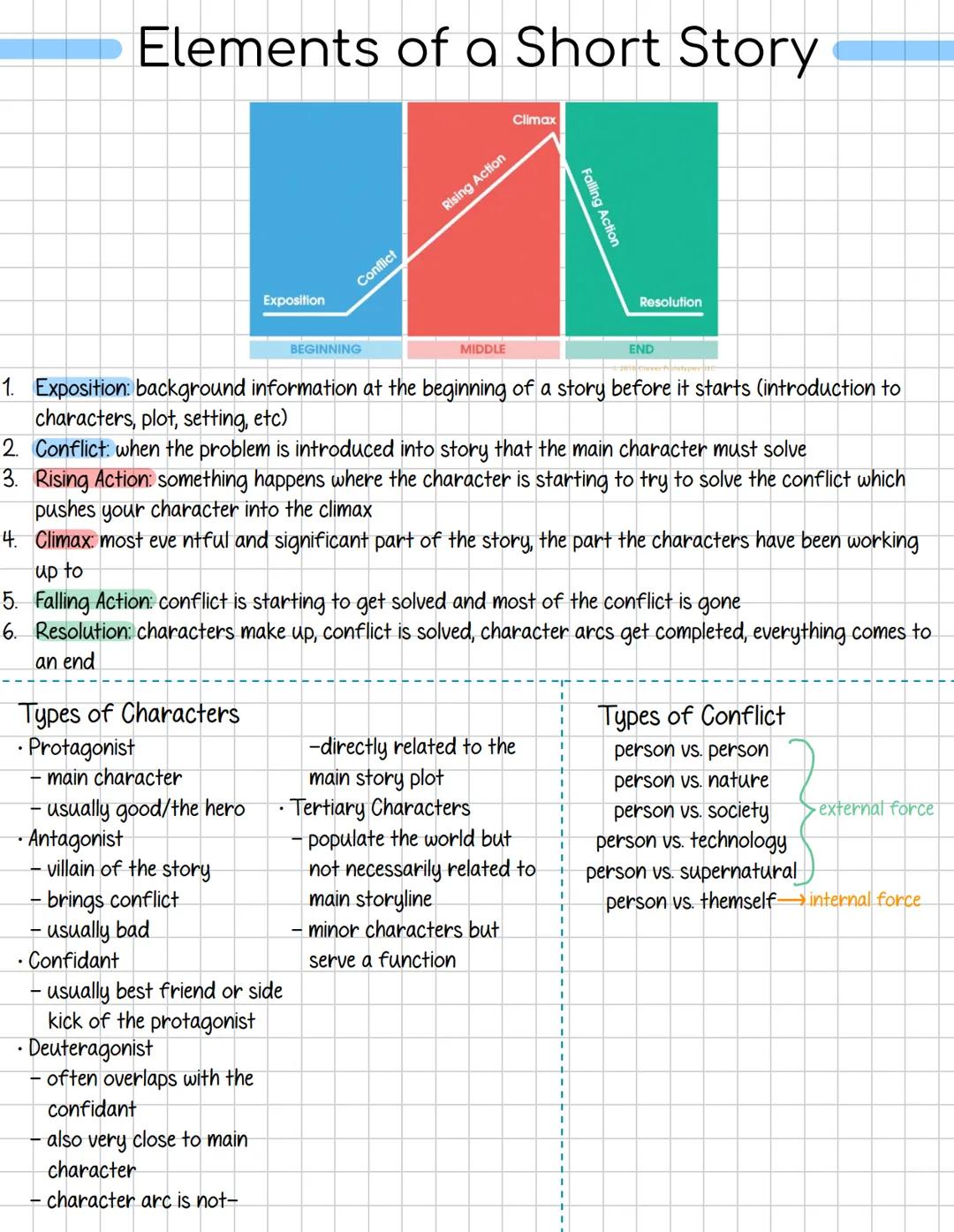
Stories have a natural flow with a beginning, middle, and end that keeps readers hooked. The exposition kicks things off by introducing characters and setting the scene before the real action begins. When the conflict appears, the main character faces a problem they must solve, which drives the entire story forward.
As the story progresses into the rising action, characters make attempts to solve their problems, building tension along the way. Everything builds toward the climax - the most exciting and important moment that everything has been leading up to. After this peak, the falling action shows how things start settling down as conflicts begin resolving.
Finally, the resolution wraps everything up nicely. Characters reconcile, problems get solved, and character arcs complete their journey. Every great story needs compelling characters to bring it to life. The protagonist is your main character and hero, while the antagonist creates the obstacles and conflict. Supporting roles like the confidant (usually the best friend) and deuteragonist (another important character with their own storyline) help develop the story, while tertiary characters fill out the world.
Try This! Think about your favorite story or movie - can you identify all six story elements? Where exactly does the climax happen, and how do you know it's the most exciting part?
Conflicts drive stories forward and come in different forms. Characters might struggle against other people (person vs. person), against natural forces like storms or wilderness (person vs. nature), or against societal rules and expectations (person vs. society). They might also face technology gone wrong, supernatural elements, or even their own inner demons (person vs. self). The best stories often combine several types of conflict!


 English
 Algebra
 Overige
 Algebra 1