The Historical Context of Capitalism vs Socialism in An Inspector Calls
The play's setting during the Edwardian era provides crucial context for understanding the historical comparison of capitalism and socialism. Priestley deliberately sets his critique against the backdrop of pre-WWI Britain, when social inequality reached extreme levels and labor movements gained momentum.
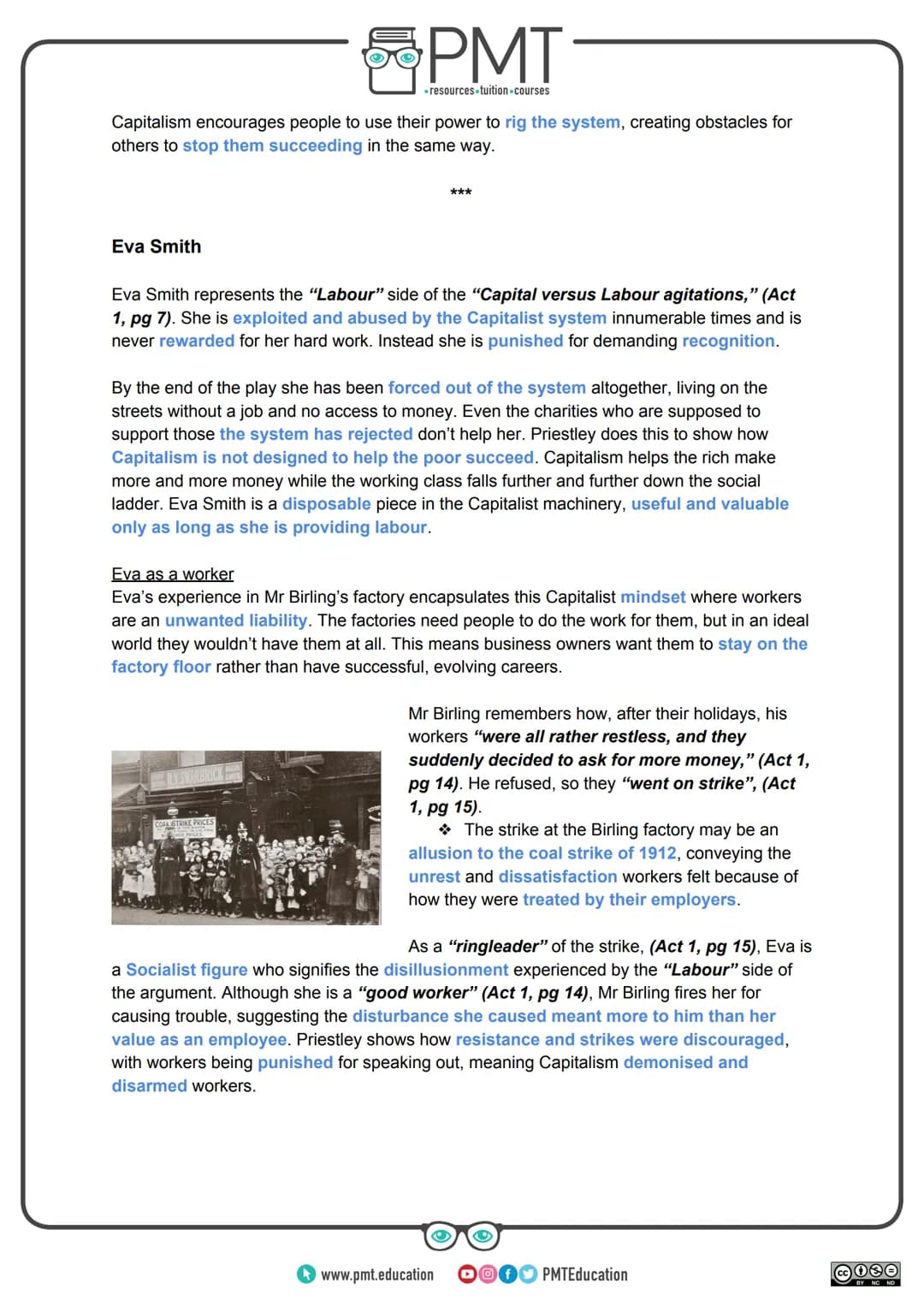
Highlight: The 1912 coal strike, which likely inspired Eva's strike storyline, represents actual historical tensions between capitalism vs socialism before World War 2.
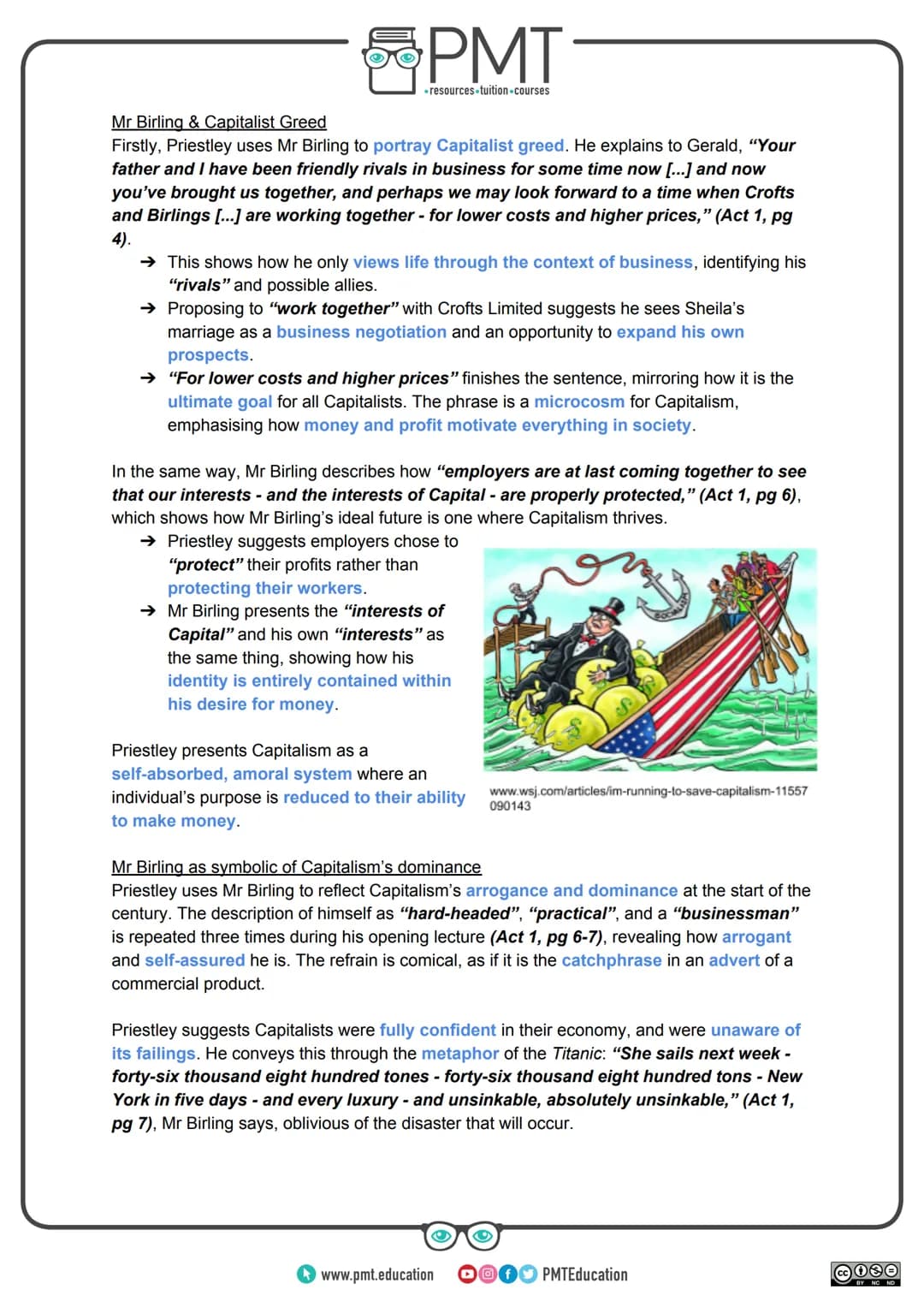
The systematic destruction of Eva Smith's life serves as Priestley's powerful indictment of capitalist society. From losing her factory job to being rejected by charitable institutions, Eva's downward spiral demonstrates how capitalism creates a cycle of poverty that's nearly impossible to escape. This narrative directly addresses the question of which is better capitalism or socialism, with Priestley clearly highlighting capitalism's failures.
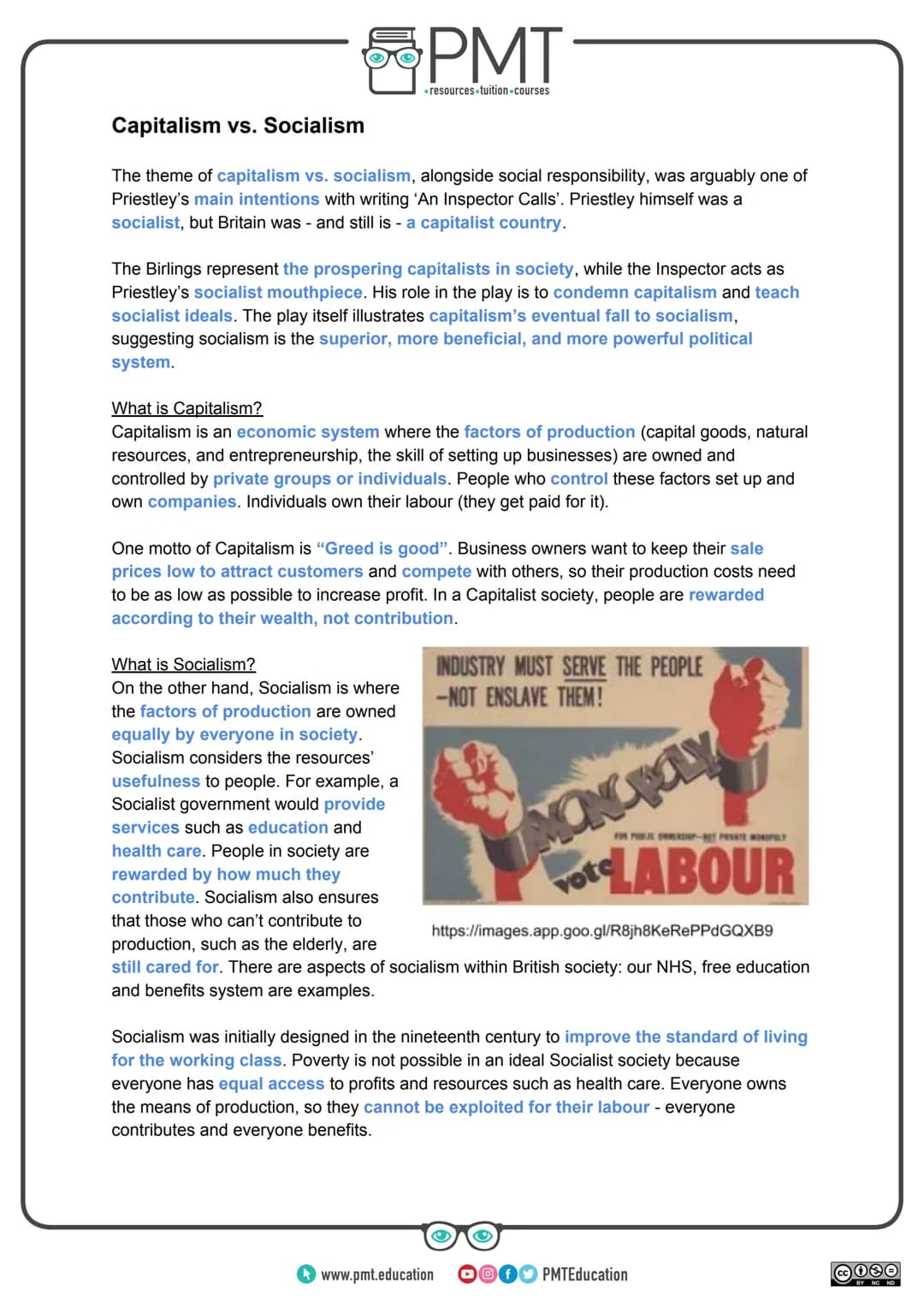
The similarities between capitalism and socialism become apparent through the play's exploration of how both systems attempt to address social welfare, though with drastically different approaches. While capitalism relies on private charity and individual responsibility, socialism advocates for systematic support and collective responsibility - a contrast that becomes evident through Eva's interactions with various characters.
Example: Eva's rejection by the charity committee, influenced by Mrs. Birling, shows how capitalist philanthropy often fails those most in need, supporting the socialist argument for systematic social support.



 Sociology
 Biology