
Welcome to this comprehensive guide to Mark Klimek's lectures, an... Show more
 Health
 Fun Stuff
 Algebra
 Overige
 Algebra 1
 Biology
Sign up to see the contentIt's free!
Access to all documents
Improve your grades
Join milions of students
By signing up you accept Terms of Service and Privacy Policy
Subjects
Triangle Congruence and Similarity Theorems
Triangle Properties and Classification
Linear Equations and Graphs
Geometric Angle Relationships
Trigonometric Functions and Identities
Equation Solving Techniques
Circle Geometry Fundamentals
Division Operations and Methods
Basic Differentiation Rules
Exponent and Logarithm Properties
Show all topics
Human Organ Systems
Reproductive Cell Cycles
Biological Sciences Subdisciplines
Cellular Energy Metabolism
Autotrophic Energy Processes
Inheritance Patterns and Principles
Biomolecular Structure and Organization
Cell Cycle and Division Mechanics
Cellular Organization and Development
Biological Structural Organization
Show all topics
Chemical Sciences and Applications
Atomic Structure and Composition
Molecular Electron Structure Representation
Atomic Electron Behavior
Matter Properties and Water
Mole Concept and Calculations
Gas Laws and Behavior
Periodic Table Organization
Chemical Thermodynamics Fundamentals
Chemical Bond Types and Properties
Show all topics
European Renaissance and Enlightenment
European Cultural Movements 800-1920
American Revolution Era 1763-1797
American Civil War 1861-1865
Global Imperial Systems
Mongol and Chinese Dynasties
U.S. Presidents and World Leaders
Historical Sources and Documentation
World Wars Era and Impact
World Religious Systems
Show all topics
Classic and Contemporary Novels
Literary Character Analysis
Rhetorical Theory and Practice
Classic Literary Narratives
Reading Analysis and Interpretation
Narrative Structure and Techniques
English Language Components
Influential English-Language Authors
Basic Sentence Structure
Narrative Voice and Perspective
Show all topics
47
•
Jan 1, 2026
•
Caylah Penn-Rankins
@caylahpennranki
Welcome to this comprehensive guide to Mark Klimek's lectures, an... Show more
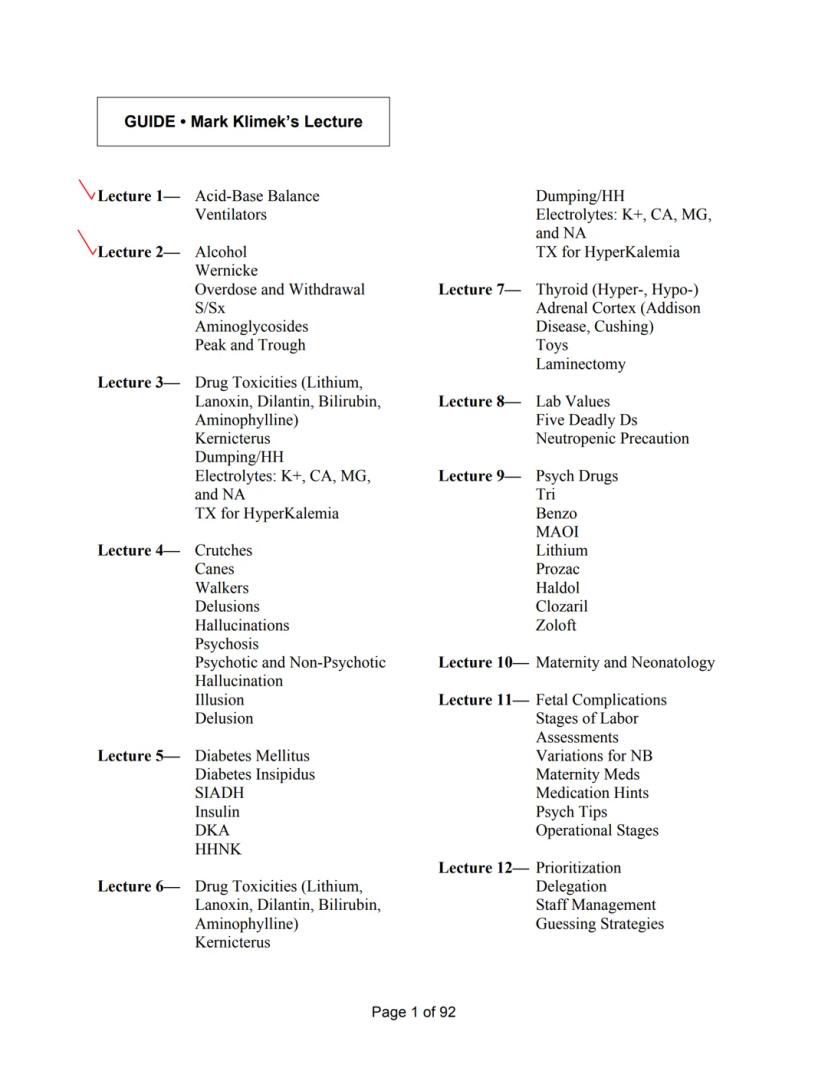

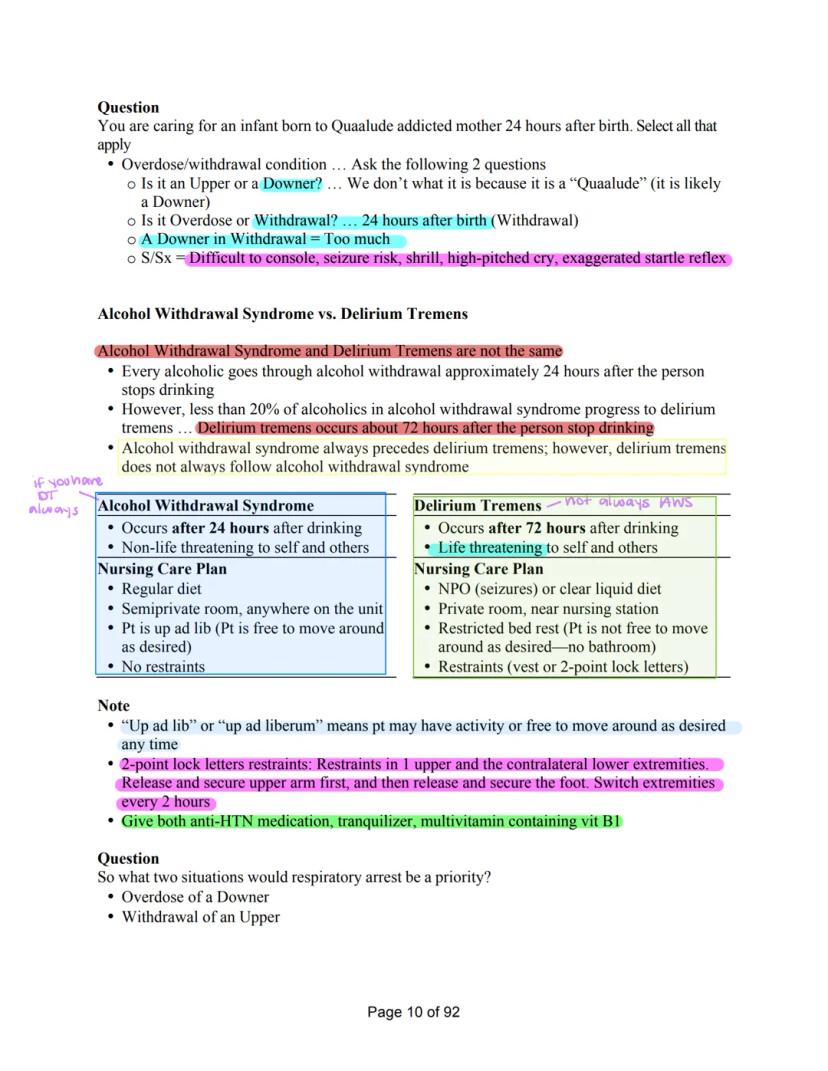
Mark Klimek's lectures are organized into 12 comprehensive sessions covering the most critical topics for the NCLEX exam. Each lecture focuses on high-yield content that frequently appears on the test.
The lectures cover:
Study Tip: Focus on understanding the principles behind each topic rather than memorizing facts. Mark Klimek's approach emphasizes critical thinking skills that help you apply nursing knowledge to any question format.
This guide compiles essential points from all lectures to help you efficiently review key concepts and prepare for success on your NCLEX examination.

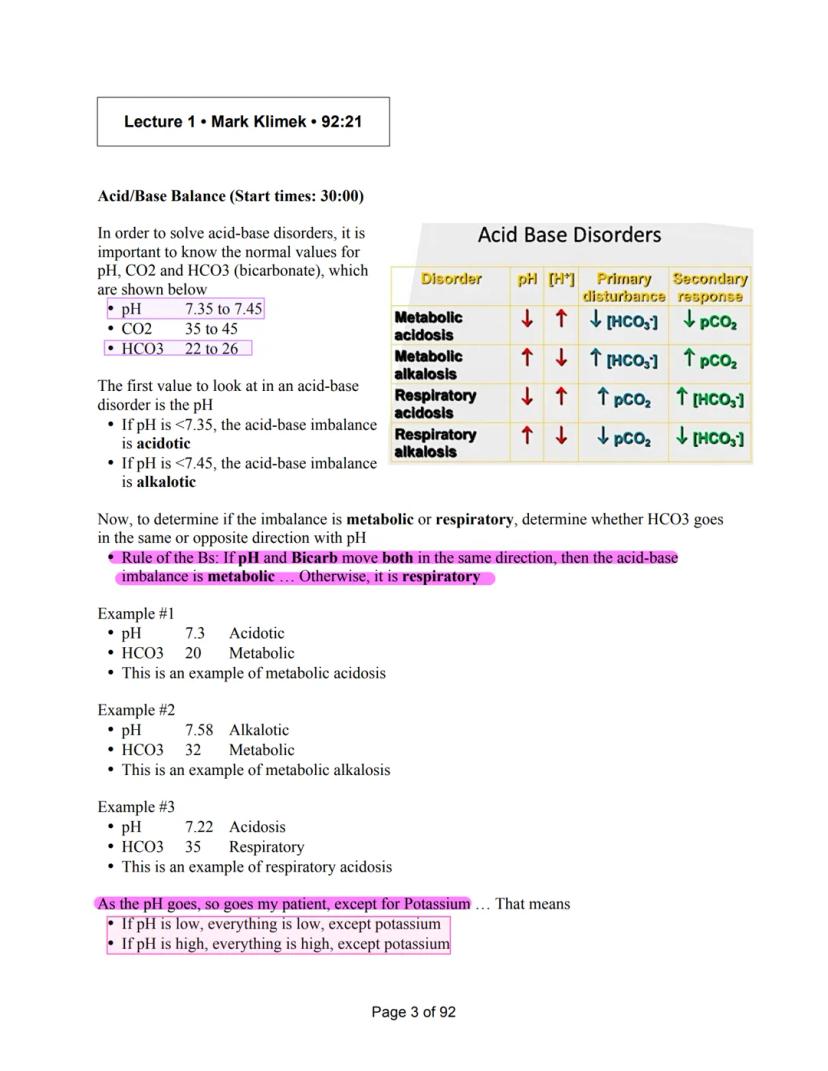
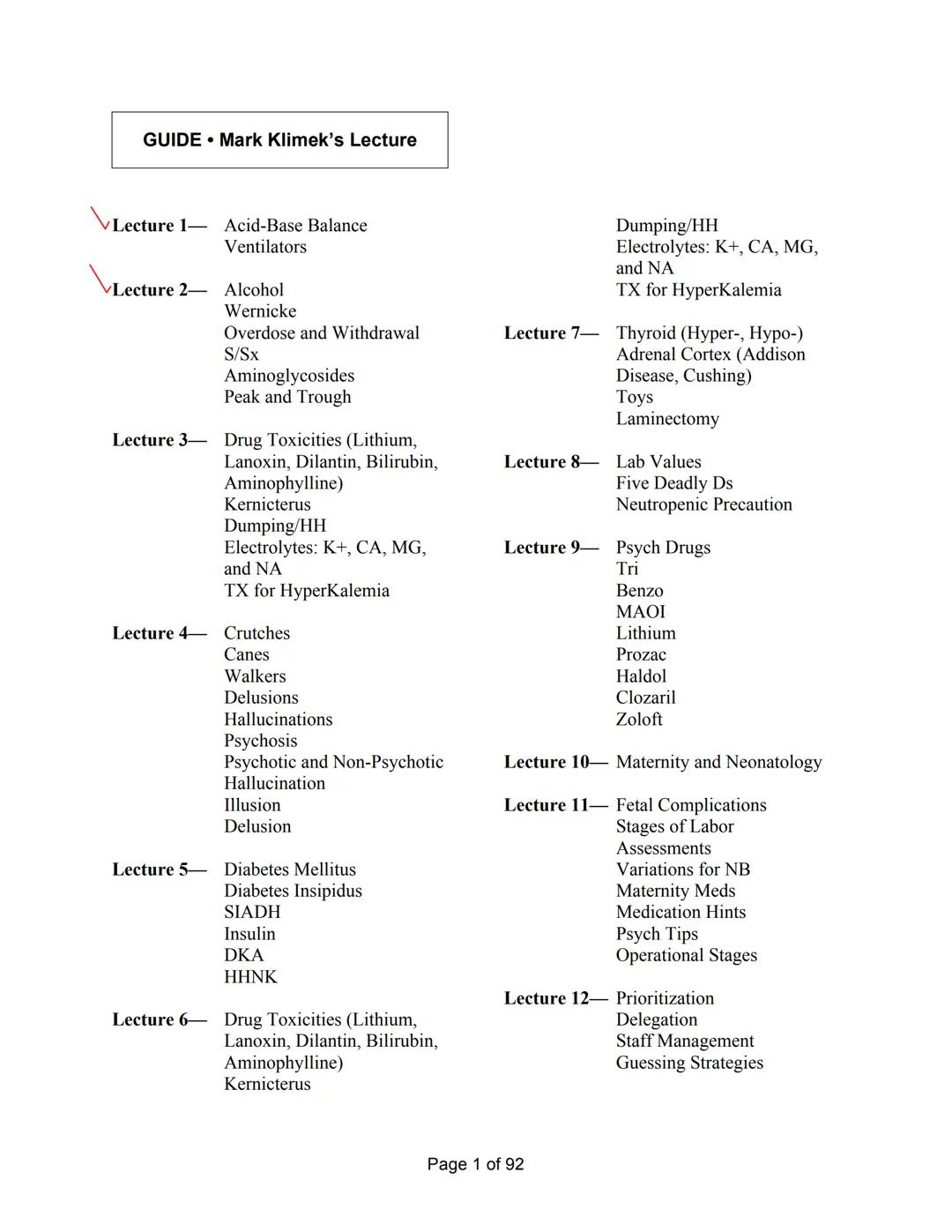
Understanding acid-base balance is crucial for interpreting lab values and determining appropriate interventions. The key values to remember are:
To determine acid-base imbalances, follow these steps:
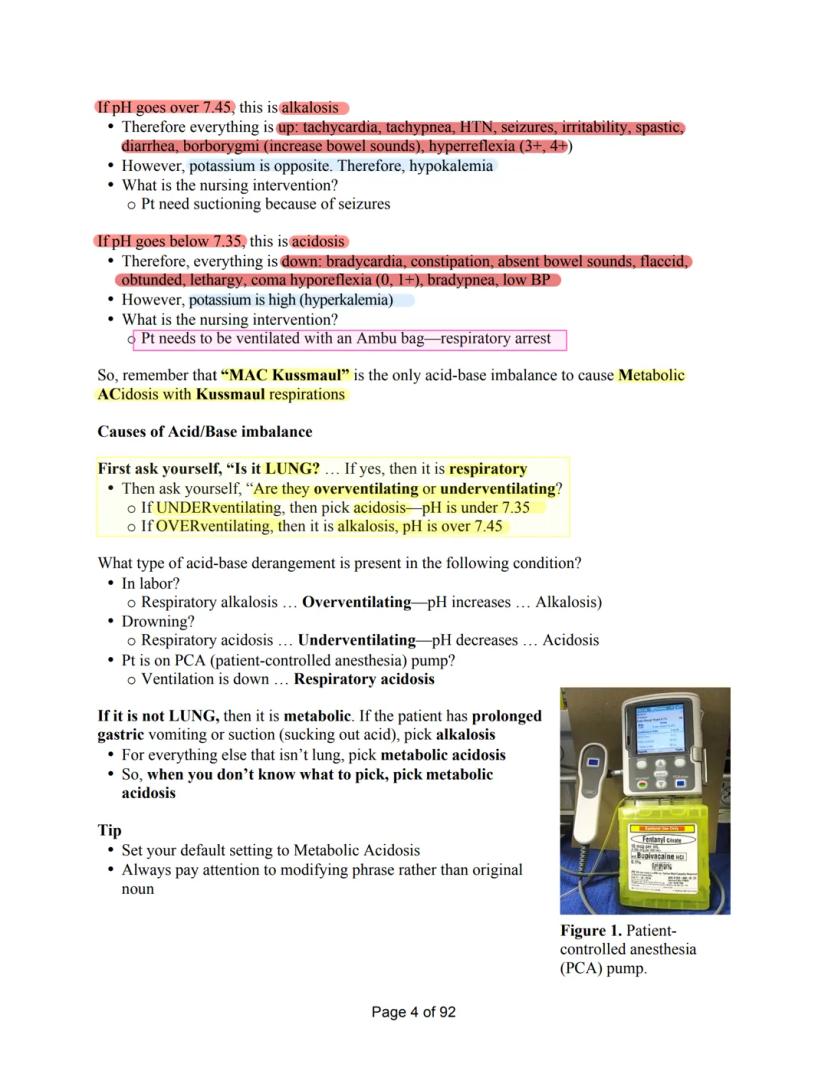
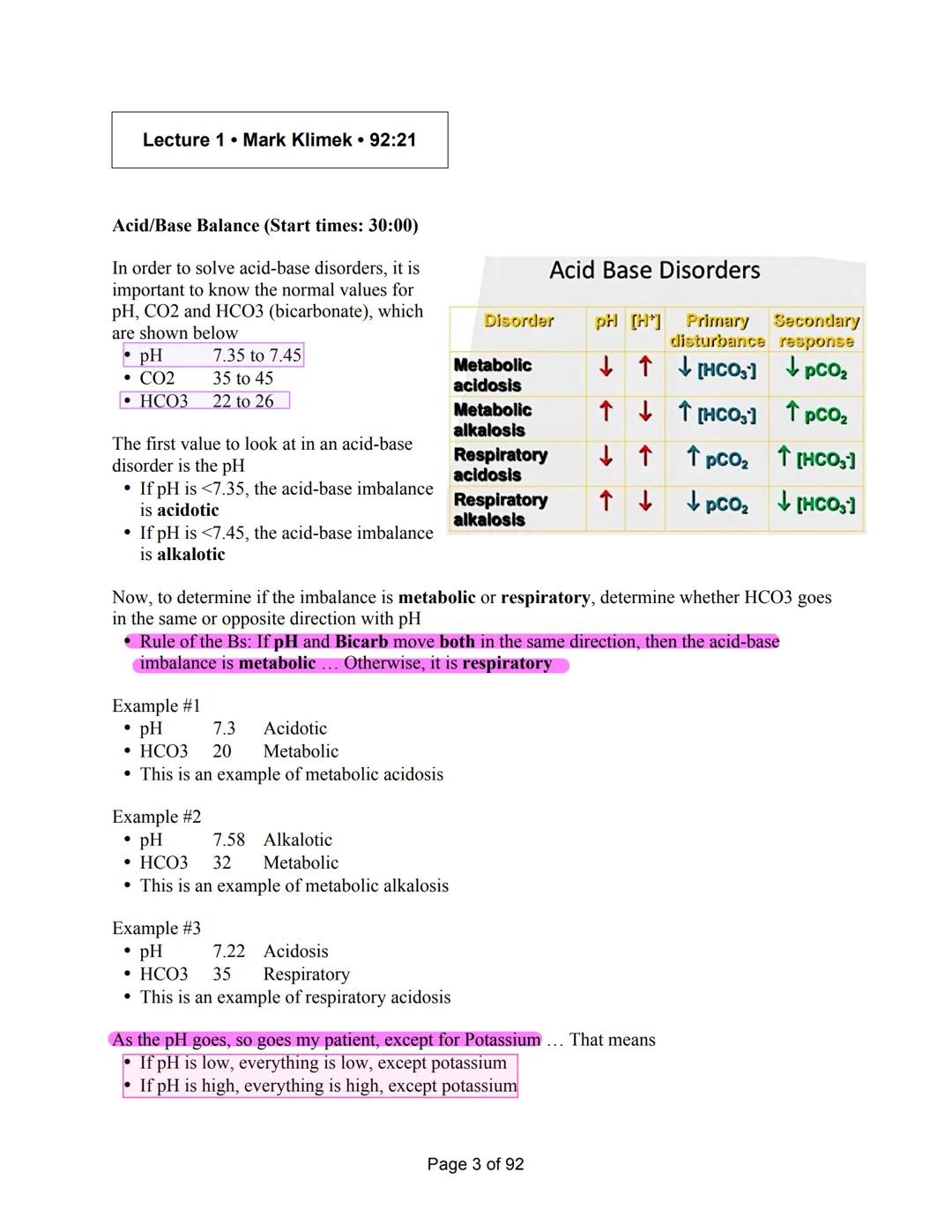
Remember that as pH changes, so do other physiological responses:
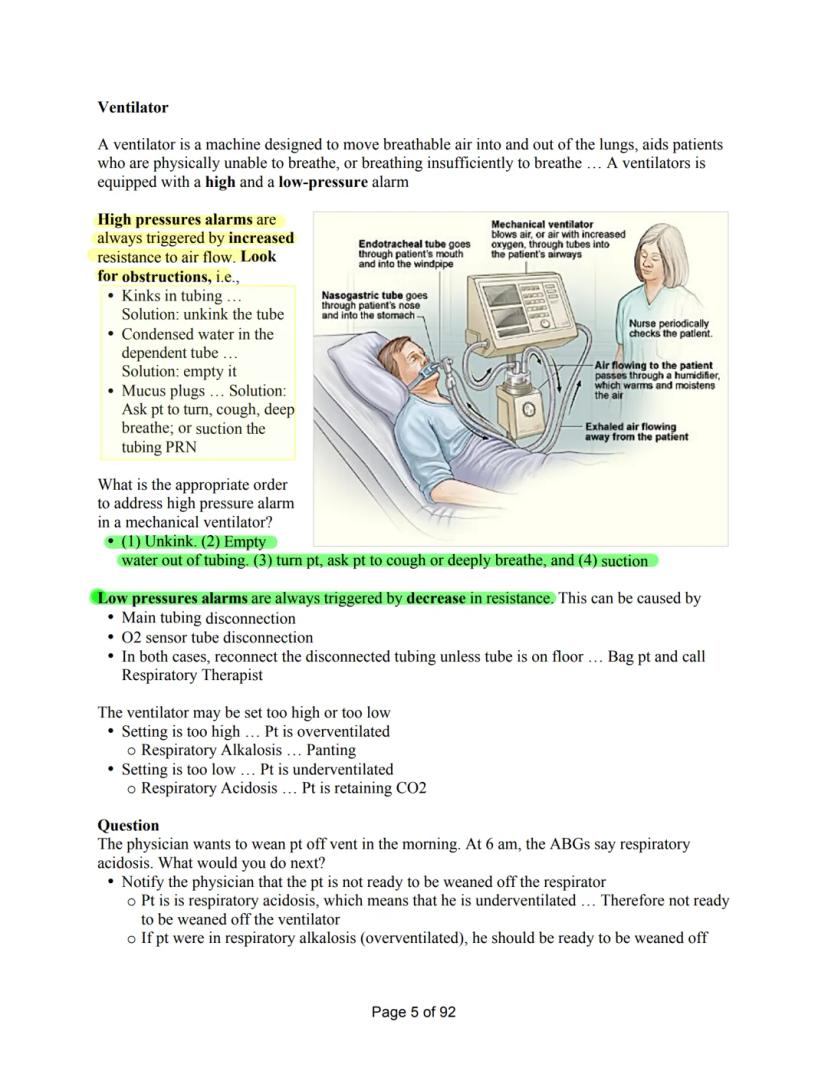
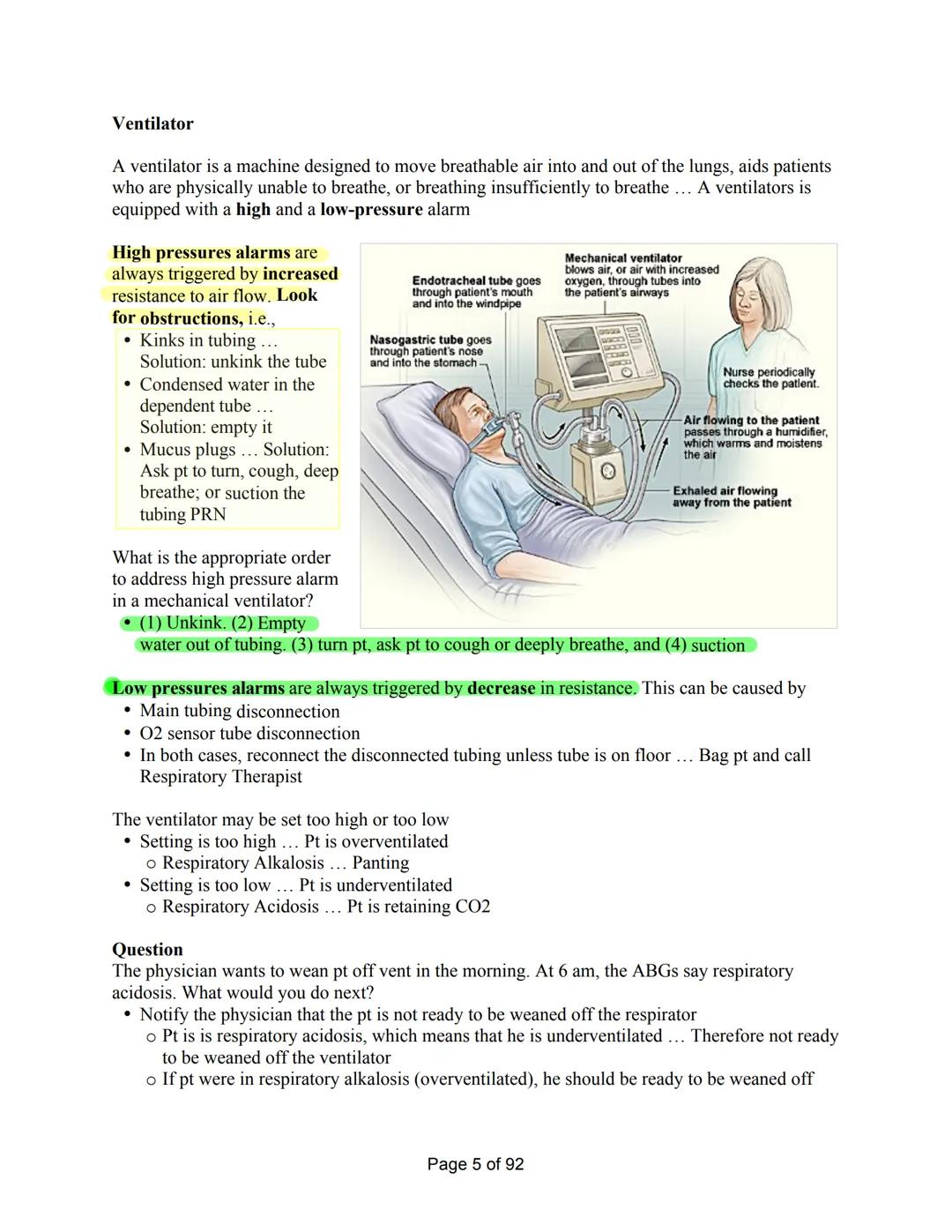
Ventilator Management:
Clinical Pearl: "MAC Kussmaul" is the only acid-base imbalance to cause both Metabolic ACidosis and Kussmaul respirations (deep, rapid breathing).
When weaning a patient off a ventilator, ensure respiratory acidosis isn't present, as this indicates the patient isn't ready to breathe independently.
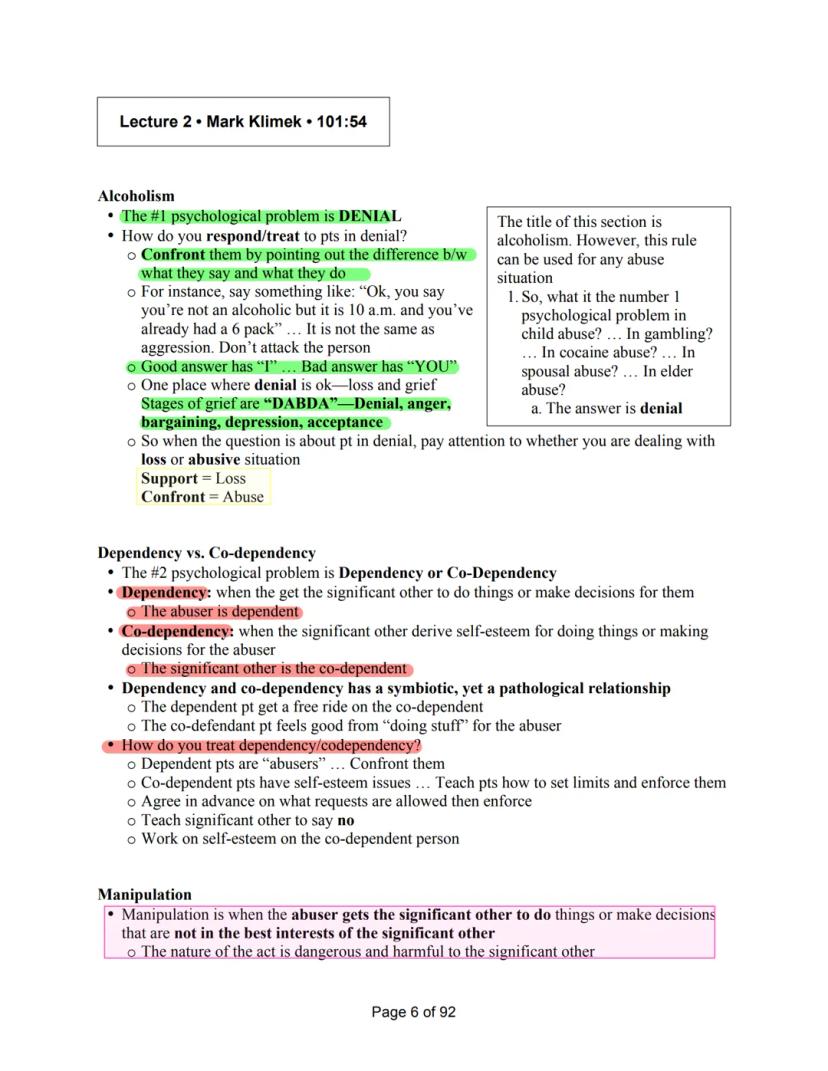
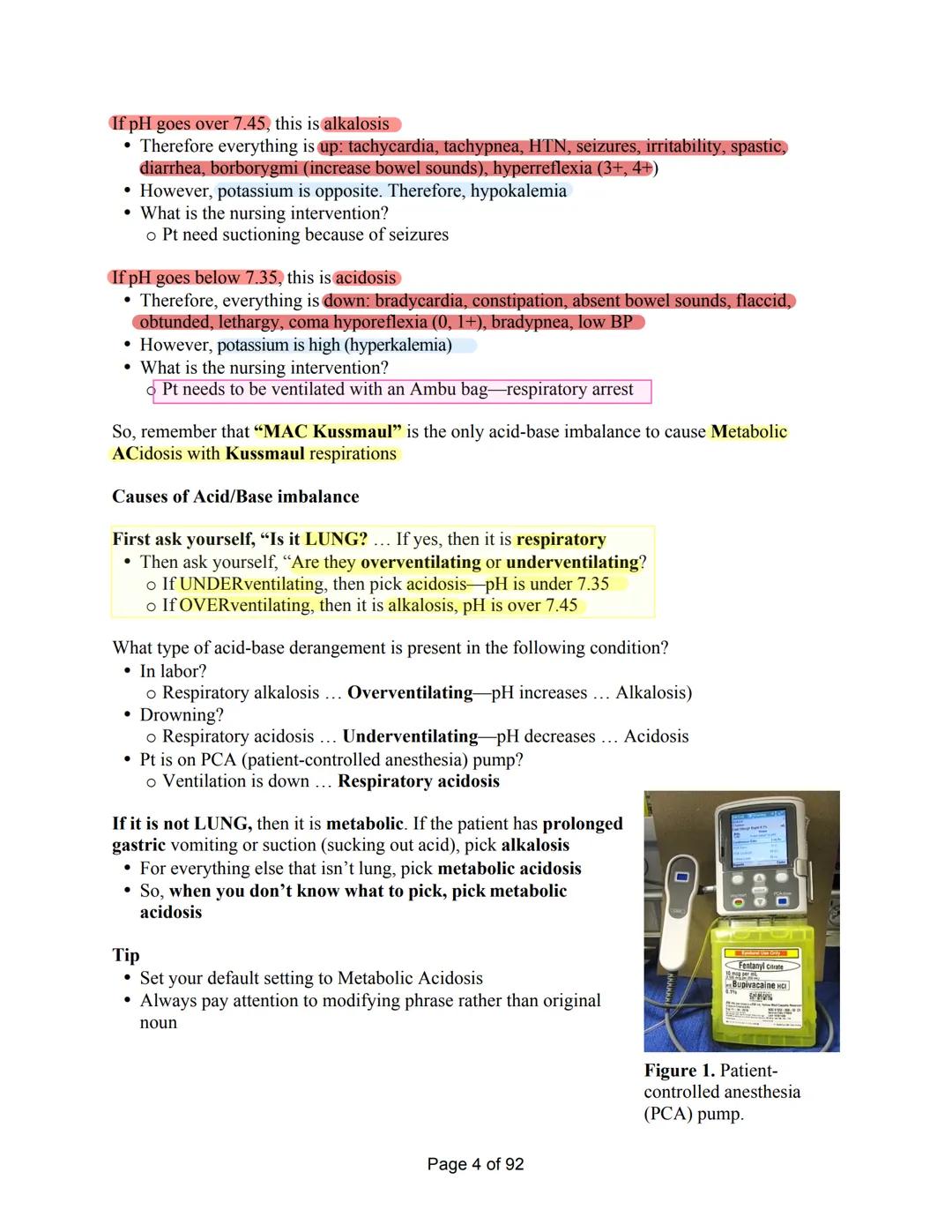
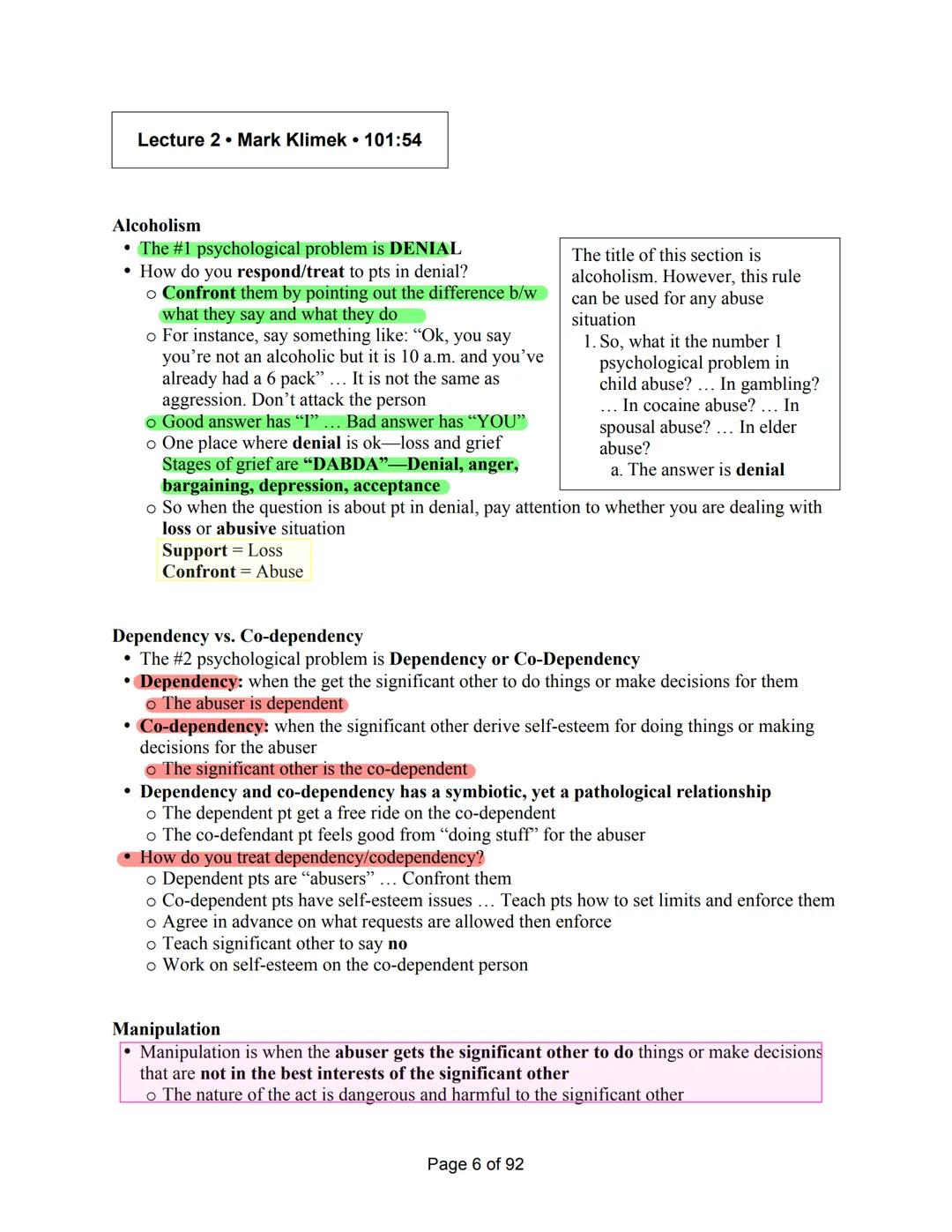
Alcoholism presents unique nursing challenges, with denial being the #1 psychological problem. Your approach should differ based on whether you're dealing with:
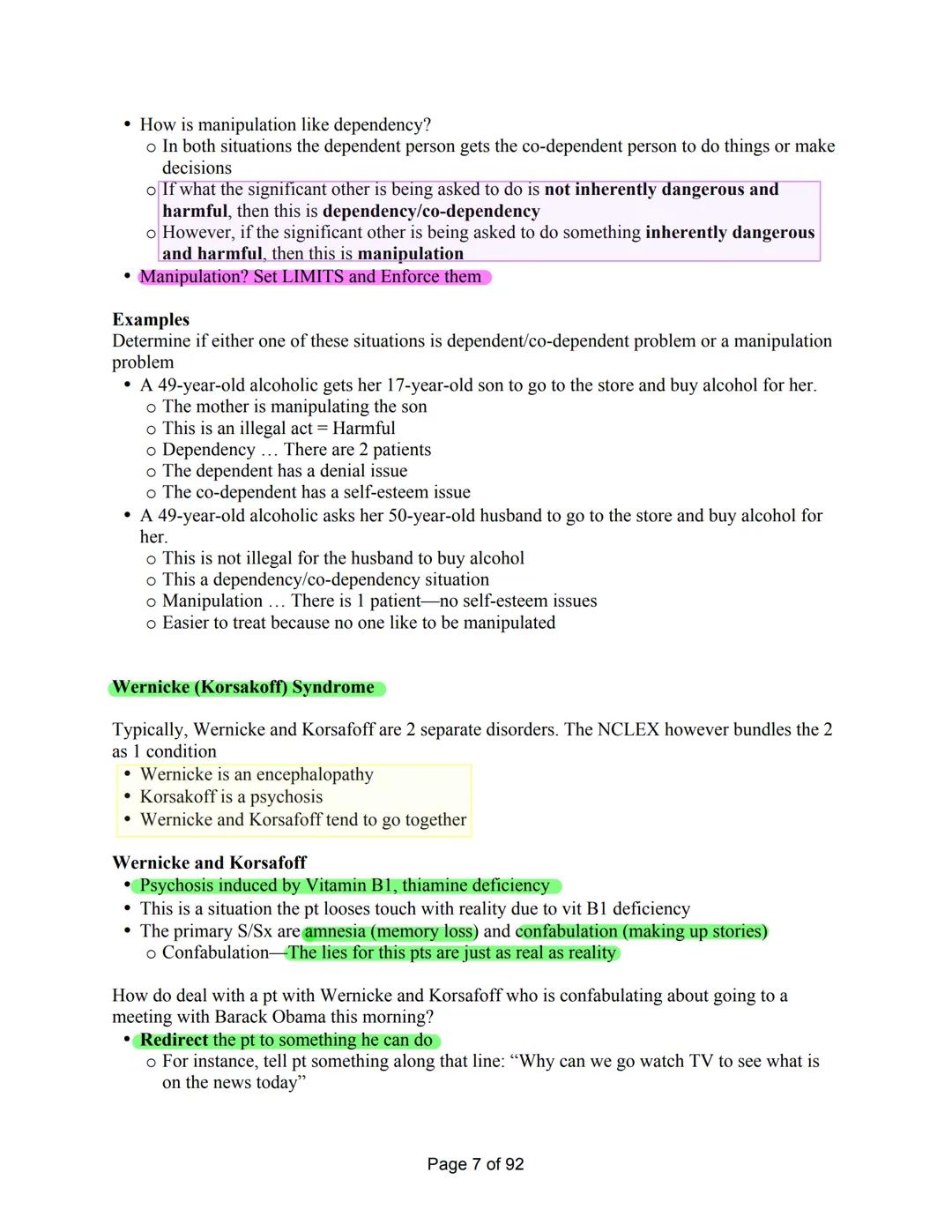
Key Addiction Concepts:
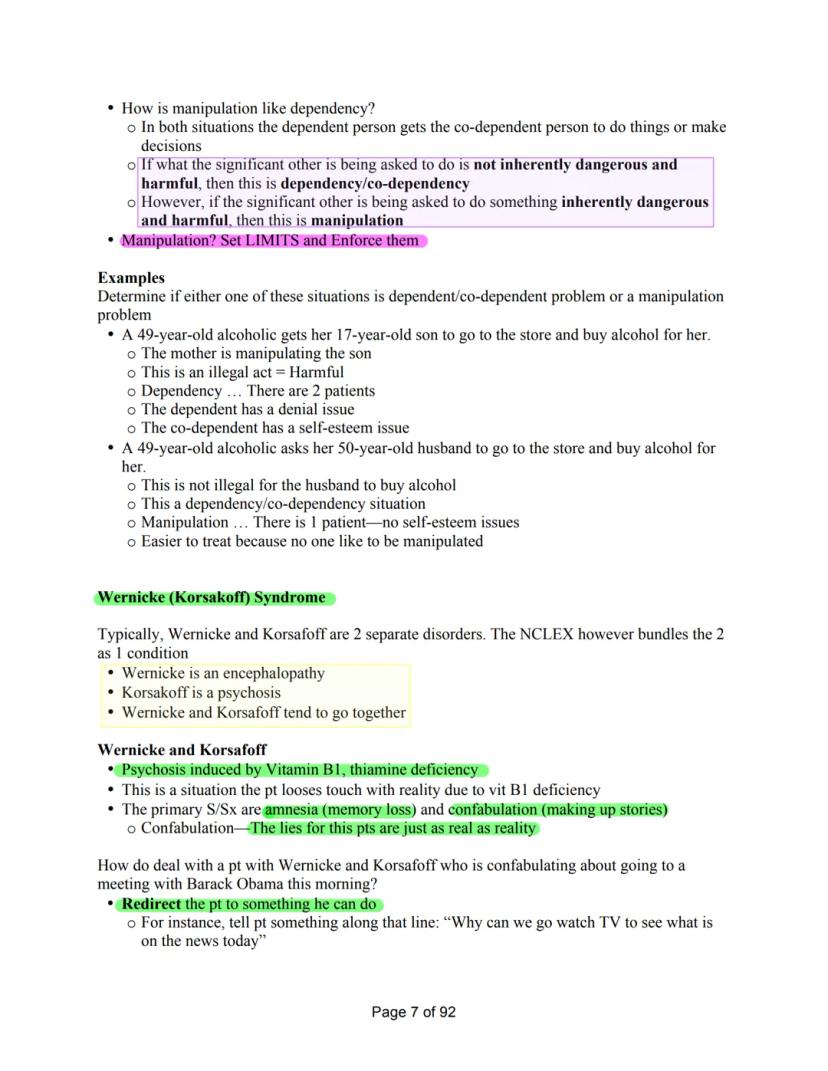
Wernicke-Korsakoff Syndrome:
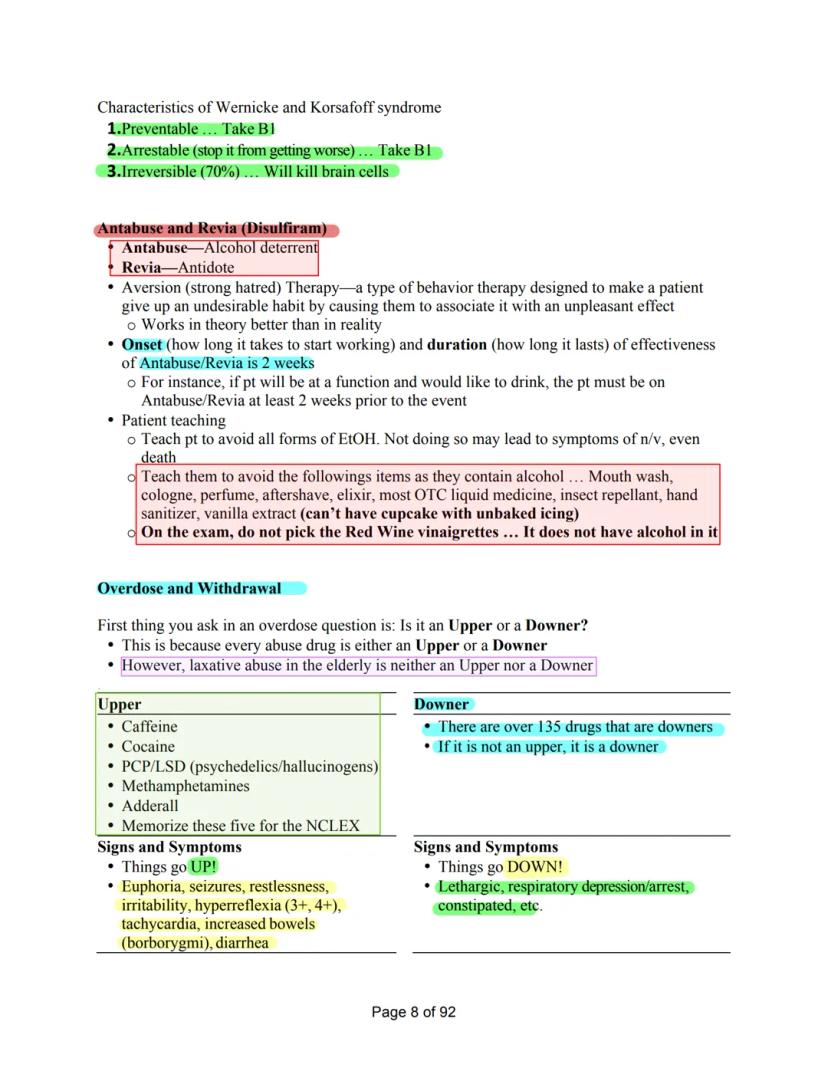
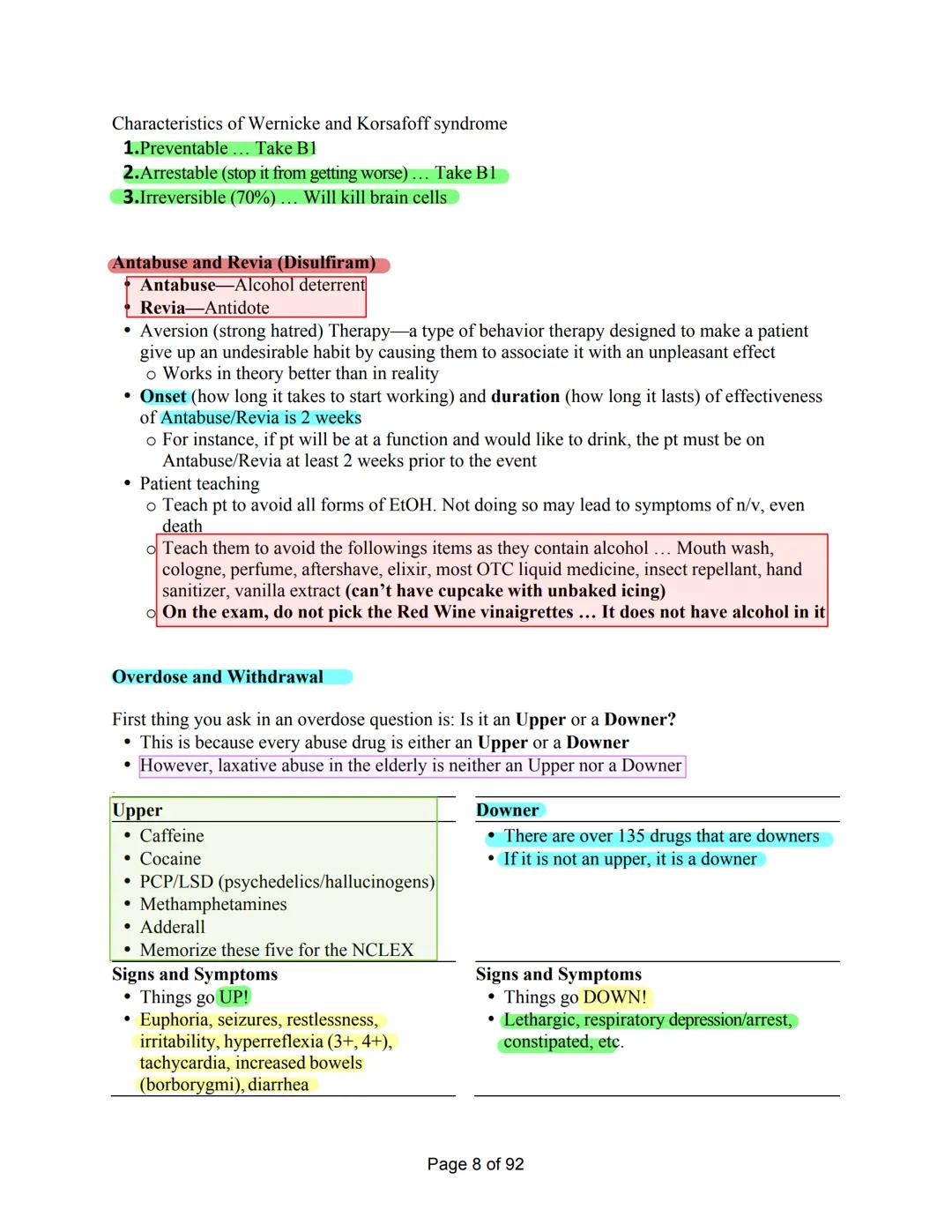
Antabuse (Disulfiram):
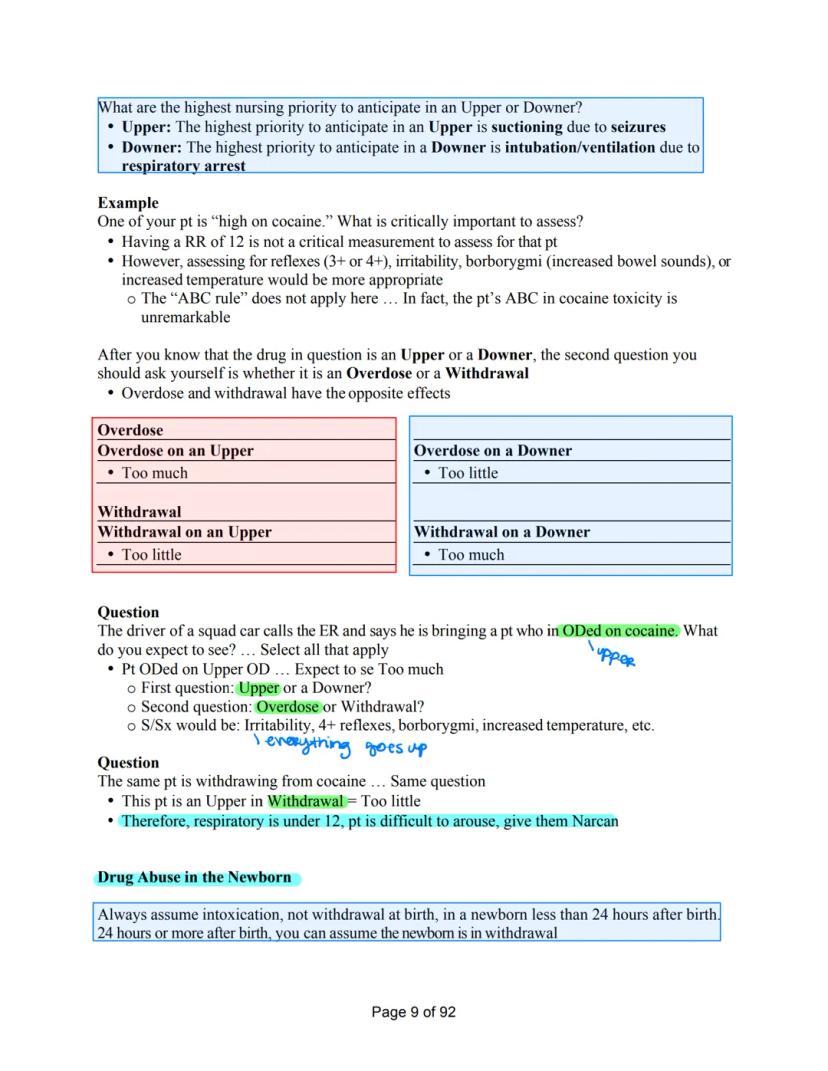
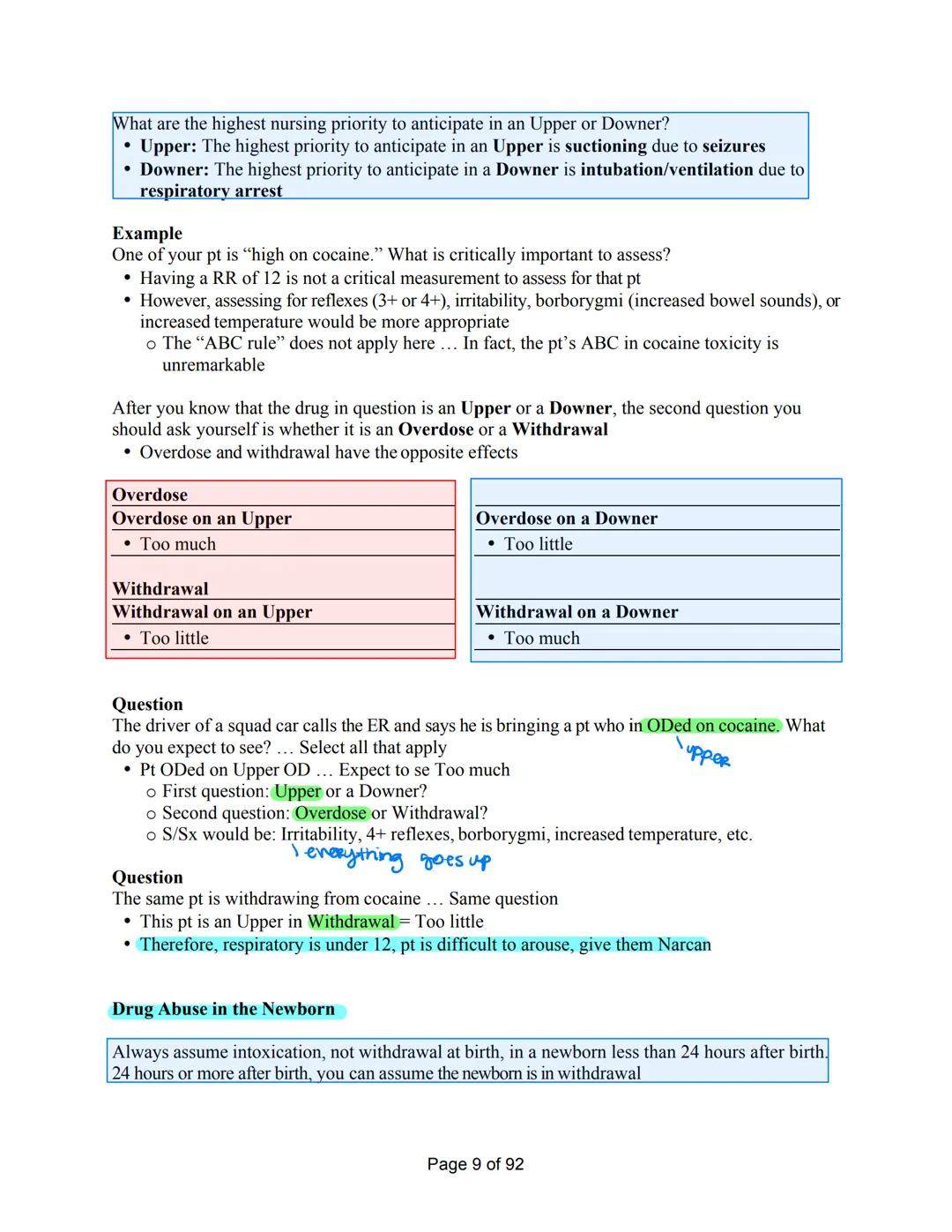
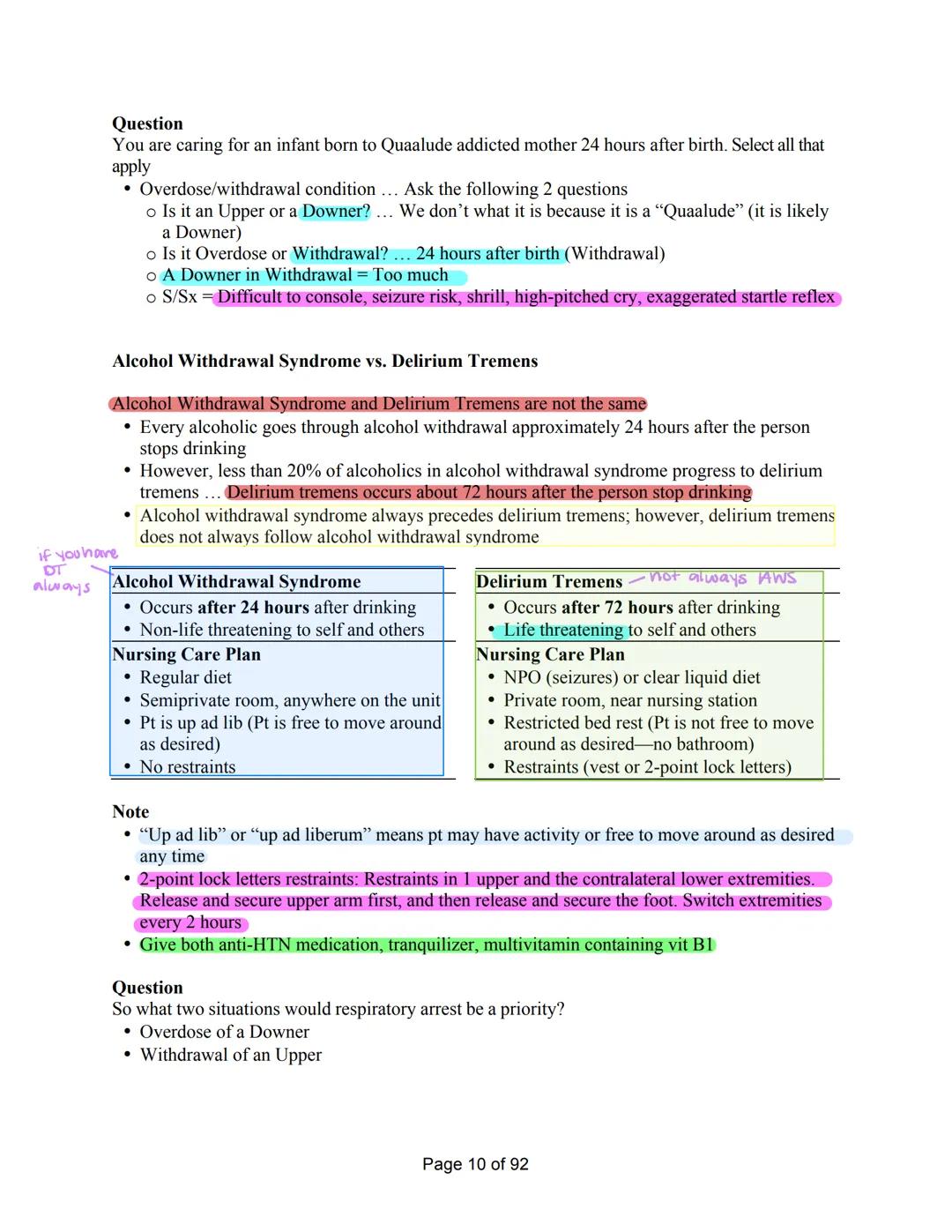
Important: When assessing drug overdose, first determine if it's an Upper or Downer. "Uppers" cause elevated vital signs and symptoms, while "Downers" cause depression of vital signs and symptoms.
For newborns of substance-abusing mothers: assume intoxication in the first 24 hours after birth, and withdrawal after 24 hours.
Aminoglycosides are powerful antibiotics used when other options fail. They're among the top 5 most tested drugs on NCLEX, but require careful monitoring due to their narrow therapeutic index.
Key Aminoglycosides:
Not in this family are drugs with "THRO" in the middle (Azithromycin, Clarithromycin, Erythromycin).
Major Side Effects:
Administration Details:
When to Draw Levels:
Clinical Tip: Remember "Mean Old Mycin" for aminoglycosides. They treat "mean old infections" like TB, septic peritonitis, and severe wound infections. The therapeutic window is narrow, so careful monitoring is essential.
When asking about peak timing, always go with the latest time that doesn't exceed the window.
Calcium Channel Blockers (CCBs):
Cardiac Arrhythmias: The six most tested rhythms on NCLEX:
Treatment Approaches:
Chest Tube Management:
Critical Nursing Action: If a chest tube water seal breaks, immediately: 1) Clamp the tube, 2) Cut the tube, 3) Submerge end in sterile water, 4) Unclamp. This sequence must be completed in under 15 seconds.
Watch for bubbling patterns - continuous bubbling in the water seal chamber indicates a leak, while intermittent bubbling is normal. Conversely, continuous bubbling in the suction control chamber is expected.
Congenital Heart Defects: Memorize "TRouBLe" defects - these are serious conditions requiring immediate intervention:
Patients with these defects:
"No TRouBLe" defects (less severe):
Transmission-Based Precautions:
Contact Precautions:
Droplet Precautions:
Airborne Precautions ("Air MTV"):
Remember: Put PPE on with "Gs" in reverse alphabetical order (Gown, Mask, Goggle, Gloves) and remove in alphabetical order (Gloves, Goggle, Gown, Mask).
All children with congenital heart defects have murmurs, but an echocardiogram is needed to identify the specific defect.
Crutch Measurement:
Crutch Gaits:
Remember: "Up with the Good, Down with the Bad" for stairs.
Cane & Walker Use:
Psychiatric Assessment: The first question to ask: Is the patient psychotic or non-psychotic?
Non-psychotic patients:
Psychotic patients:
Clinical Approach: For functional psychosis, use the 4-step process: (1) Acknowledge feelings, (2) Present reality, (3) Set limits, (4) Enforce limits. For dementia, acknowledge feelings and redirect. For delirium, acknowledge feelings and provide reassurance.
The approach differs based on the type of psychosis: functional (chemical imbalance), dementia (brain damage), or delirium (temporary due to medical issues).
Types of Diabetes:
Treatment Approaches:
Insulin Types:
Regular (R): Clear solution, IV drip
NPH (N): Cloudy, intermediate
Lispro (Humalog): Given with meals
Glargine (Lantus): Long-acting, no peak
Acute Complications:
Hypoglycemia: Too much insulin, not enough food, excess exercise
DKA (Type 1): Dehydration, Ketones, Acidosis
HHNK/HHS (Type 2): Severe dehydration, no ketones
Remember: Exercise potentiates insulin action. During illness, patients need insulin even when not eating due to rising glucose levels. The Hb A1C test is the best indicator of long-term glucose control (normal <6, poor control >8).
When monitoring for hypoglycemia after insulin administration, check at the peak time of the specific insulin type.
Five Critical Medications to Monitor:
Lithium (for bipolar disorder)
Lanoxin/Digoxin (for atrial fibrillation, CHF)
Aminophylline (bronchodilator)
Dilantin/Phenytoin (seizure medication)
Bilirubin (in newborns)
Pattern to remember:
Gastrointestinal Disorders:
Hiatal Hernia:
Dumping Syndrome:
Clinical Tip: Hiatal hernia = everything HIGH (elevate, increase). Dumping syndrome = everything LOW (lower, decrease).
Adding protein to the diet has opposite effects of carbohydrates - it slows digestion. So give low protein for hiatal hernia and high protein for dumping syndrome.
Understanding electrolyte imbalances requires memorizing these key rules:
Potassium (Kalemia): Symptoms move in the same direction as the prefix, except HR and urine output go opposite.
Hyperkalemia:
Hypokalemia:
Calcium (Calcemia): Symptoms move in the opposite direction of the prefix.
Hypercalcemia: everything goes down - bradycardia, bradypnea, flaccidity, lethargy
Hypocalcemia: everything goes up - agitation, tachycardia, spasm, seizures, Chvostek's sign, Trousseau's sign
Magnesium (Magnesemia): Symptoms also move opposite to the prefix.
Sodium (Natremia):
Remember: The earliest sign of any electrolyte imbalance is paresthesia (numbness and tingling), especially around the mouth.
Emergency Treatment for Hyperkalemia:
Never push potassium IV! Always dilute to <40 mEq/L of fluid.
Our AI companion is specifically built for the needs of students. Based on the millions of content pieces we have on the platform we can provide truly meaningful and relevant answers to students. But its not only about answers, the companion is even more about guiding students through their daily learning challenges, with personalised study plans, quizzes or content pieces in the chat and 100% personalisation based on the students skills and developments.
You can download the app in the Google Play Store and in the Apple App Store.
That's right! Enjoy free access to study content, connect with fellow students, and get instant help – all at your fingertips.
App Store
Google Play
The app is very easy to use and well designed. I have found everything I was looking for so far and have been able to learn a lot from the presentations! I will definitely use the app for a class assignment! And of course it also helps a lot as an inspiration.
Stefan S
iOS user
This app is really great. There are so many study notes and help [...]. My problem subject is French, for example, and the app has so many options for help. Thanks to this app, I have improved my French. I would recommend it to anyone.
Samantha Klich
Android user
Wow, I am really amazed. I just tried the app because I've seen it advertised many times and was absolutely stunned. This app is THE HELP you want for school and above all, it offers so many things, such as workouts and fact sheets, which have been VERY helpful to me personally.
Anna
iOS user
I think it’s very much worth it and you’ll end up using it a lot once you get the hang of it and even after looking at others notes you can still ask your Artificial intelligence buddy the question and ask to simplify it if you still don’t get it!!! In the end I think it’s worth it 😊👍 ⚠️Also DID I MENTION ITS FREEE YOU DON’T HAVE TO PAY FOR ANYTHING AND STILL GET YOUR GRADES IN PERFECTLY❗️❗️⚠️
Thomas R
iOS user
Knowunity is the BEST app I’ve used in a minute. This is not an ai review or anything this is genuinely coming from a 7th grade student (I know 2011 im young) but dude this app is a 10/10 i have maintained a 3.8 gpa and have plenty of time for gaming. I love it and my mom is just happy I got good grades
Brad T
Android user
Not only did it help me find the answer but it also showed me alternative ways to solve it. I was horrible in math and science but now I have an a in both subjects. Thanks for the help🤍🤍
David K
iOS user
The app's just great! All I have to do is enter the topic in the search bar and I get the response real fast. I don't have to watch 10 YouTube videos to understand something, so I'm saving my time. Highly recommended!
Sudenaz Ocak
Android user
In school I was really bad at maths but thanks to the app, I am doing better now. I am so grateful that you made the app.
Greenlight Bonnie
Android user
I found this app a couple years ago and it has only gotten better since then. I really love it because it can help with written questions and photo questions. Also, it can find study guides that other people have made as well as flashcard sets and practice tests. The free version is also amazing for students who might not be able to afford it. Would 100% recommend
Aubrey
iOS user
Best app if you're in Highschool or Junior high. I have been using this app for 2 school years and it's the best, it's good if you don't have anyone to help you with school work.😋🩷🎀
Marco B
iOS user
THE QUIZES AND FLASHCARDS ARE SO USEFUL AND I LOVE THE SCHOOLGPT. IT ALSO IS LITREALLY LIKE CHATGPT BUT SMARTER!! HELPED ME WITH MY MASCARA PROBLEMS TOO!! AS WELL AS MY REAL SUBJECTS ! DUHHH 😍😁😲🤑💗✨🎀😮
Elisha
iOS user
This app is phenomenal down to the correct info and the various topics you can study! I greatly recommend it for people who struggle with procrastination and those who need homework help. It has been perfectly accurate for world 1 history as far as I’ve seen! Geometry too!
Paul T
iOS user
The app is very easy to use and well designed. I have found everything I was looking for so far and have been able to learn a lot from the presentations! I will definitely use the app for a class assignment! And of course it also helps a lot as an inspiration.
Stefan S
iOS user
This app is really great. There are so many study notes and help [...]. My problem subject is French, for example, and the app has so many options for help. Thanks to this app, I have improved my French. I would recommend it to anyone.
Samantha Klich
Android user
Wow, I am really amazed. I just tried the app because I've seen it advertised many times and was absolutely stunned. This app is THE HELP you want for school and above all, it offers so many things, such as workouts and fact sheets, which have been VERY helpful to me personally.
Anna
iOS user
I think it’s very much worth it and you’ll end up using it a lot once you get the hang of it and even after looking at others notes you can still ask your Artificial intelligence buddy the question and ask to simplify it if you still don’t get it!!! In the end I think it’s worth it 😊👍 ⚠️Also DID I MENTION ITS FREEE YOU DON’T HAVE TO PAY FOR ANYTHING AND STILL GET YOUR GRADES IN PERFECTLY❗️❗️⚠️
Thomas R
iOS user
Knowunity is the BEST app I’ve used in a minute. This is not an ai review or anything this is genuinely coming from a 7th grade student (I know 2011 im young) but dude this app is a 10/10 i have maintained a 3.8 gpa and have plenty of time for gaming. I love it and my mom is just happy I got good grades
Brad T
Android user
Not only did it help me find the answer but it also showed me alternative ways to solve it. I was horrible in math and science but now I have an a in both subjects. Thanks for the help🤍🤍
David K
iOS user
The app's just great! All I have to do is enter the topic in the search bar and I get the response real fast. I don't have to watch 10 YouTube videos to understand something, so I'm saving my time. Highly recommended!
Sudenaz Ocak
Android user
In school I was really bad at maths but thanks to the app, I am doing better now. I am so grateful that you made the app.
Greenlight Bonnie
Android user
I found this app a couple years ago and it has only gotten better since then. I really love it because it can help with written questions and photo questions. Also, it can find study guides that other people have made as well as flashcard sets and practice tests. The free version is also amazing for students who might not be able to afford it. Would 100% recommend
Aubrey
iOS user
Best app if you're in Highschool or Junior high. I have been using this app for 2 school years and it's the best, it's good if you don't have anyone to help you with school work.😋🩷🎀
Marco B
iOS user
THE QUIZES AND FLASHCARDS ARE SO USEFUL AND I LOVE THE SCHOOLGPT. IT ALSO IS LITREALLY LIKE CHATGPT BUT SMARTER!! HELPED ME WITH MY MASCARA PROBLEMS TOO!! AS WELL AS MY REAL SUBJECTS ! DUHHH 😍😁😲🤑💗✨🎀😮
Elisha
iOS user
This app is phenomenal down to the correct info and the various topics you can study! I greatly recommend it for people who struggle with procrastination and those who need homework help. It has been perfectly accurate for world 1 history as far as I’ve seen! Geometry too!
Paul T
iOS user
Caylah Penn-Rankins
@caylahpennranki
Welcome to this comprehensive guide to Mark Klimek's lectures, an essential resource for nursing students preparing for the NCLEX exam. These lectures cover critical nursing concepts, from acid-base balance to prioritization strategies, presented in an approachable format designed to help... Show more
Access to all documents
Improve your grades
Join milions of students
By signing up you accept Terms of Service and Privacy Policy
Mark Klimek's lectures are organized into 12 comprehensive sessions covering the most critical topics for the NCLEX exam. Each lecture focuses on high-yield content that frequently appears on the test.
The lectures cover:
Study Tip: Focus on understanding the principles behind each topic rather than memorizing facts. Mark Klimek's approach emphasizes critical thinking skills that help you apply nursing knowledge to any question format.
This guide compiles essential points from all lectures to help you efficiently review key concepts and prepare for success on your NCLEX examination.
Access to all documents
Improve your grades
Join milions of students
By signing up you accept Terms of Service and Privacy Policy
Understanding acid-base balance is crucial for interpreting lab values and determining appropriate interventions. The key values to remember are:
To determine acid-base imbalances, follow these steps:
Remember that as pH changes, so do other physiological responses:
Ventilator Management:
Clinical Pearl: "MAC Kussmaul" is the only acid-base imbalance to cause both Metabolic ACidosis and Kussmaul respirations (deep, rapid breathing).
When weaning a patient off a ventilator, ensure respiratory acidosis isn't present, as this indicates the patient isn't ready to breathe independently.
Access to all documents
Improve your grades
Join milions of students
By signing up you accept Terms of Service and Privacy Policy
Alcoholism presents unique nursing challenges, with denial being the #1 psychological problem. Your approach should differ based on whether you're dealing with:
Key Addiction Concepts:
Wernicke-Korsakoff Syndrome:
Antabuse (Disulfiram):
Important: When assessing drug overdose, first determine if it's an Upper or Downer. "Uppers" cause elevated vital signs and symptoms, while "Downers" cause depression of vital signs and symptoms.
For newborns of substance-abusing mothers: assume intoxication in the first 24 hours after birth, and withdrawal after 24 hours.
Access to all documents
Improve your grades
Join milions of students
By signing up you accept Terms of Service and Privacy Policy
Aminoglycosides are powerful antibiotics used when other options fail. They're among the top 5 most tested drugs on NCLEX, but require careful monitoring due to their narrow therapeutic index.
Key Aminoglycosides:
Not in this family are drugs with "THRO" in the middle (Azithromycin, Clarithromycin, Erythromycin).
Major Side Effects:
Administration Details:
When to Draw Levels:
Clinical Tip: Remember "Mean Old Mycin" for aminoglycosides. They treat "mean old infections" like TB, septic peritonitis, and severe wound infections. The therapeutic window is narrow, so careful monitoring is essential.
When asking about peak timing, always go with the latest time that doesn't exceed the window.
Access to all documents
Improve your grades
Join milions of students
By signing up you accept Terms of Service and Privacy Policy
Calcium Channel Blockers (CCBs):
Cardiac Arrhythmias: The six most tested rhythms on NCLEX:
Treatment Approaches:
Chest Tube Management:
Critical Nursing Action: If a chest tube water seal breaks, immediately: 1) Clamp the tube, 2) Cut the tube, 3) Submerge end in sterile water, 4) Unclamp. This sequence must be completed in under 15 seconds.
Watch for bubbling patterns - continuous bubbling in the water seal chamber indicates a leak, while intermittent bubbling is normal. Conversely, continuous bubbling in the suction control chamber is expected.
Access to all documents
Improve your grades
Join milions of students
By signing up you accept Terms of Service and Privacy Policy
Congenital Heart Defects: Memorize "TRouBLe" defects - these are serious conditions requiring immediate intervention:
Patients with these defects:
"No TRouBLe" defects (less severe):
Transmission-Based Precautions:
Contact Precautions:
Droplet Precautions:
Airborne Precautions ("Air MTV"):
Remember: Put PPE on with "Gs" in reverse alphabetical order (Gown, Mask, Goggle, Gloves) and remove in alphabetical order (Gloves, Goggle, Gown, Mask).
All children with congenital heart defects have murmurs, but an echocardiogram is needed to identify the specific defect.
Access to all documents
Improve your grades
Join milions of students
By signing up you accept Terms of Service and Privacy Policy
Crutch Measurement:
Crutch Gaits:
Remember: "Up with the Good, Down with the Bad" for stairs.
Cane & Walker Use:
Psychiatric Assessment: The first question to ask: Is the patient psychotic or non-psychotic?
Non-psychotic patients:
Psychotic patients:
Clinical Approach: For functional psychosis, use the 4-step process: (1) Acknowledge feelings, (2) Present reality, (3) Set limits, (4) Enforce limits. For dementia, acknowledge feelings and redirect. For delirium, acknowledge feelings and provide reassurance.
The approach differs based on the type of psychosis: functional (chemical imbalance), dementia (brain damage), or delirium (temporary due to medical issues).
Access to all documents
Improve your grades
Join milions of students
By signing up you accept Terms of Service and Privacy Policy
Types of Diabetes:
Treatment Approaches:
Insulin Types:
Regular (R): Clear solution, IV drip
NPH (N): Cloudy, intermediate
Lispro (Humalog): Given with meals
Glargine (Lantus): Long-acting, no peak
Acute Complications:
Hypoglycemia: Too much insulin, not enough food, excess exercise
DKA (Type 1): Dehydration, Ketones, Acidosis
HHNK/HHS (Type 2): Severe dehydration, no ketones
Remember: Exercise potentiates insulin action. During illness, patients need insulin even when not eating due to rising glucose levels. The Hb A1C test is the best indicator of long-term glucose control (normal <6, poor control >8).
When monitoring for hypoglycemia after insulin administration, check at the peak time of the specific insulin type.
Access to all documents
Improve your grades
Join milions of students
By signing up you accept Terms of Service and Privacy Policy
Five Critical Medications to Monitor:
Lithium (for bipolar disorder)
Lanoxin/Digoxin (for atrial fibrillation, CHF)
Aminophylline (bronchodilator)
Dilantin/Phenytoin (seizure medication)
Bilirubin (in newborns)
Pattern to remember:
Gastrointestinal Disorders:
Hiatal Hernia:
Dumping Syndrome:
Clinical Tip: Hiatal hernia = everything HIGH (elevate, increase). Dumping syndrome = everything LOW (lower, decrease).
Adding protein to the diet has opposite effects of carbohydrates - it slows digestion. So give low protein for hiatal hernia and high protein for dumping syndrome.
Access to all documents
Improve your grades
Join milions of students
By signing up you accept Terms of Service and Privacy Policy
Understanding electrolyte imbalances requires memorizing these key rules:
Potassium (Kalemia): Symptoms move in the same direction as the prefix, except HR and urine output go opposite.
Hyperkalemia:
Hypokalemia:
Calcium (Calcemia): Symptoms move in the opposite direction of the prefix.
Hypercalcemia: everything goes down - bradycardia, bradypnea, flaccidity, lethargy
Hypocalcemia: everything goes up - agitation, tachycardia, spasm, seizures, Chvostek's sign, Trousseau's sign
Magnesium (Magnesemia): Symptoms also move opposite to the prefix.
Sodium (Natremia):
Remember: The earliest sign of any electrolyte imbalance is paresthesia (numbness and tingling), especially around the mouth.
Emergency Treatment for Hyperkalemia:
Never push potassium IV! Always dilute to <40 mEq/L of fluid.
Our AI companion is specifically built for the needs of students. Based on the millions of content pieces we have on the platform we can provide truly meaningful and relevant answers to students. But its not only about answers, the companion is even more about guiding students through their daily learning challenges, with personalised study plans, quizzes or content pieces in the chat and 100% personalisation based on the students skills and developments.
You can download the app in the Google Play Store and in the Apple App Store.
That's right! Enjoy free access to study content, connect with fellow students, and get instant help – all at your fingertips.
1
Smart Tools NEW
Transform this note into: ✓ 50+ Practice Questions ✓ Interactive Flashcards ✓ Full Mock Exam ✓ Essay Outlines
App Store
Google Play
The app is very easy to use and well designed. I have found everything I was looking for so far and have been able to learn a lot from the presentations! I will definitely use the app for a class assignment! And of course it also helps a lot as an inspiration.
Stefan S
iOS user
This app is really great. There are so many study notes and help [...]. My problem subject is French, for example, and the app has so many options for help. Thanks to this app, I have improved my French. I would recommend it to anyone.
Samantha Klich
Android user
Wow, I am really amazed. I just tried the app because I've seen it advertised many times and was absolutely stunned. This app is THE HELP you want for school and above all, it offers so many things, such as workouts and fact sheets, which have been VERY helpful to me personally.
Anna
iOS user
I think it’s very much worth it and you’ll end up using it a lot once you get the hang of it and even after looking at others notes you can still ask your Artificial intelligence buddy the question and ask to simplify it if you still don’t get it!!! In the end I think it’s worth it 😊👍 ⚠️Also DID I MENTION ITS FREEE YOU DON’T HAVE TO PAY FOR ANYTHING AND STILL GET YOUR GRADES IN PERFECTLY❗️❗️⚠️
Thomas R
iOS user
Knowunity is the BEST app I’ve used in a minute. This is not an ai review or anything this is genuinely coming from a 7th grade student (I know 2011 im young) but dude this app is a 10/10 i have maintained a 3.8 gpa and have plenty of time for gaming. I love it and my mom is just happy I got good grades
Brad T
Android user
Not only did it help me find the answer but it also showed me alternative ways to solve it. I was horrible in math and science but now I have an a in both subjects. Thanks for the help🤍🤍
David K
iOS user
The app's just great! All I have to do is enter the topic in the search bar and I get the response real fast. I don't have to watch 10 YouTube videos to understand something, so I'm saving my time. Highly recommended!
Sudenaz Ocak
Android user
In school I was really bad at maths but thanks to the app, I am doing better now. I am so grateful that you made the app.
Greenlight Bonnie
Android user
I found this app a couple years ago and it has only gotten better since then. I really love it because it can help with written questions and photo questions. Also, it can find study guides that other people have made as well as flashcard sets and practice tests. The free version is also amazing for students who might not be able to afford it. Would 100% recommend
Aubrey
iOS user
Best app if you're in Highschool or Junior high. I have been using this app for 2 school years and it's the best, it's good if you don't have anyone to help you with school work.😋🩷🎀
Marco B
iOS user
THE QUIZES AND FLASHCARDS ARE SO USEFUL AND I LOVE THE SCHOOLGPT. IT ALSO IS LITREALLY LIKE CHATGPT BUT SMARTER!! HELPED ME WITH MY MASCARA PROBLEMS TOO!! AS WELL AS MY REAL SUBJECTS ! DUHHH 😍😁😲🤑💗✨🎀😮
Elisha
iOS user
This app is phenomenal down to the correct info and the various topics you can study! I greatly recommend it for people who struggle with procrastination and those who need homework help. It has been perfectly accurate for world 1 history as far as I’ve seen! Geometry too!
Paul T
iOS user
The app is very easy to use and well designed. I have found everything I was looking for so far and have been able to learn a lot from the presentations! I will definitely use the app for a class assignment! And of course it also helps a lot as an inspiration.
Stefan S
iOS user
This app is really great. There are so many study notes and help [...]. My problem subject is French, for example, and the app has so many options for help. Thanks to this app, I have improved my French. I would recommend it to anyone.
Samantha Klich
Android user
Wow, I am really amazed. I just tried the app because I've seen it advertised many times and was absolutely stunned. This app is THE HELP you want for school and above all, it offers so many things, such as workouts and fact sheets, which have been VERY helpful to me personally.
Anna
iOS user
I think it’s very much worth it and you’ll end up using it a lot once you get the hang of it and even after looking at others notes you can still ask your Artificial intelligence buddy the question and ask to simplify it if you still don’t get it!!! In the end I think it’s worth it 😊👍 ⚠️Also DID I MENTION ITS FREEE YOU DON’T HAVE TO PAY FOR ANYTHING AND STILL GET YOUR GRADES IN PERFECTLY❗️❗️⚠️
Thomas R
iOS user
Knowunity is the BEST app I’ve used in a minute. This is not an ai review or anything this is genuinely coming from a 7th grade student (I know 2011 im young) but dude this app is a 10/10 i have maintained a 3.8 gpa and have plenty of time for gaming. I love it and my mom is just happy I got good grades
Brad T
Android user
Not only did it help me find the answer but it also showed me alternative ways to solve it. I was horrible in math and science but now I have an a in both subjects. Thanks for the help🤍🤍
David K
iOS user
The app's just great! All I have to do is enter the topic in the search bar and I get the response real fast. I don't have to watch 10 YouTube videos to understand something, so I'm saving my time. Highly recommended!
Sudenaz Ocak
Android user
In school I was really bad at maths but thanks to the app, I am doing better now. I am so grateful that you made the app.
Greenlight Bonnie
Android user
I found this app a couple years ago and it has only gotten better since then. I really love it because it can help with written questions and photo questions. Also, it can find study guides that other people have made as well as flashcard sets and practice tests. The free version is also amazing for students who might not be able to afford it. Would 100% recommend
Aubrey
iOS user
Best app if you're in Highschool or Junior high. I have been using this app for 2 school years and it's the best, it's good if you don't have anyone to help you with school work.😋🩷🎀
Marco B
iOS user
THE QUIZES AND FLASHCARDS ARE SO USEFUL AND I LOVE THE SCHOOLGPT. IT ALSO IS LITREALLY LIKE CHATGPT BUT SMARTER!! HELPED ME WITH MY MASCARA PROBLEMS TOO!! AS WELL AS MY REAL SUBJECTS ! DUHHH 😍😁😲🤑💗✨🎀😮
Elisha
iOS user
This app is phenomenal down to the correct info and the various topics you can study! I greatly recommend it for people who struggle with procrastination and those who need homework help. It has been perfectly accurate for world 1 history as far as I’ve seen! Geometry too!
Paul T
iOS user