Building Responsibility and Understanding Development
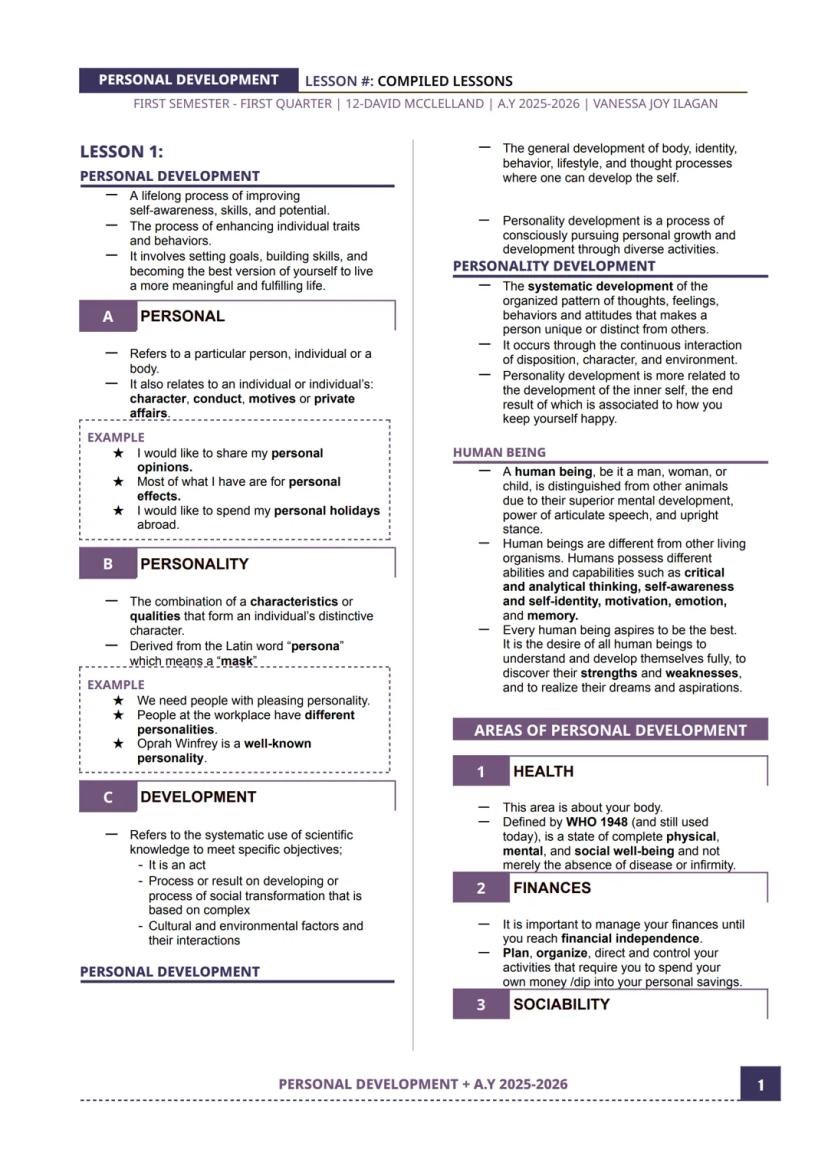
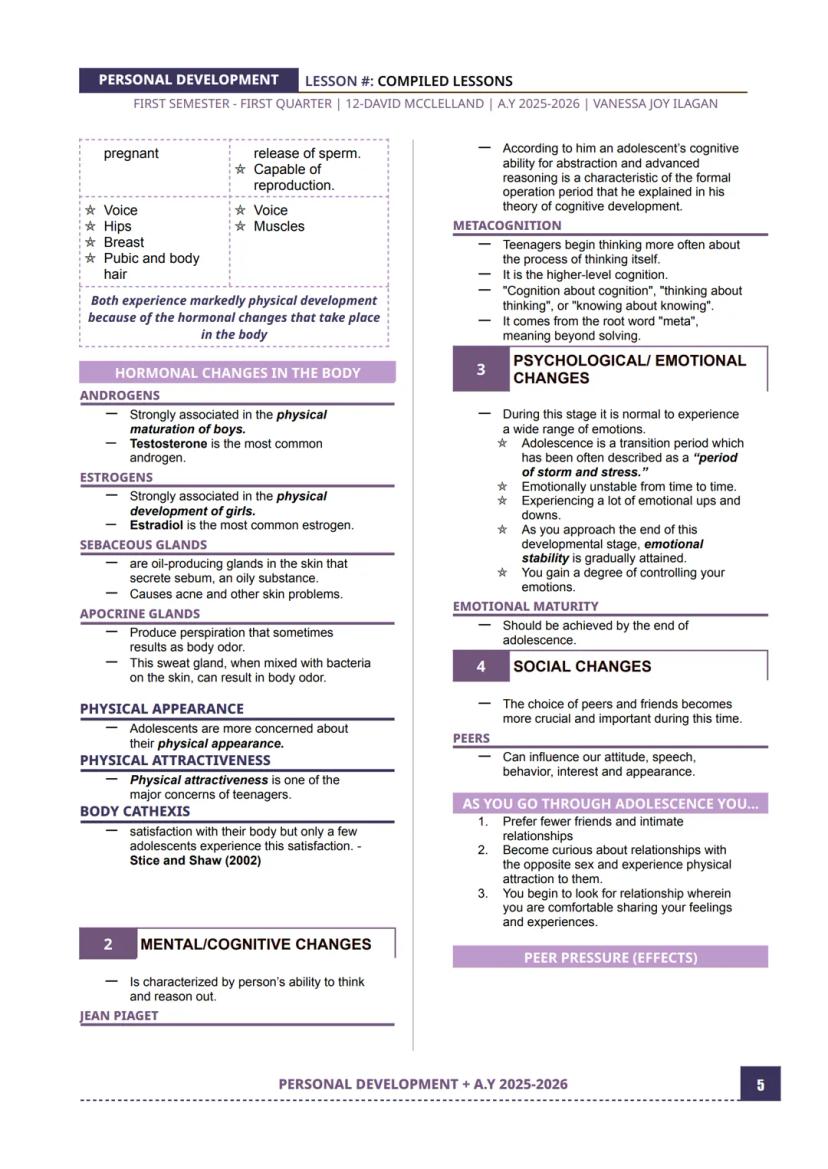
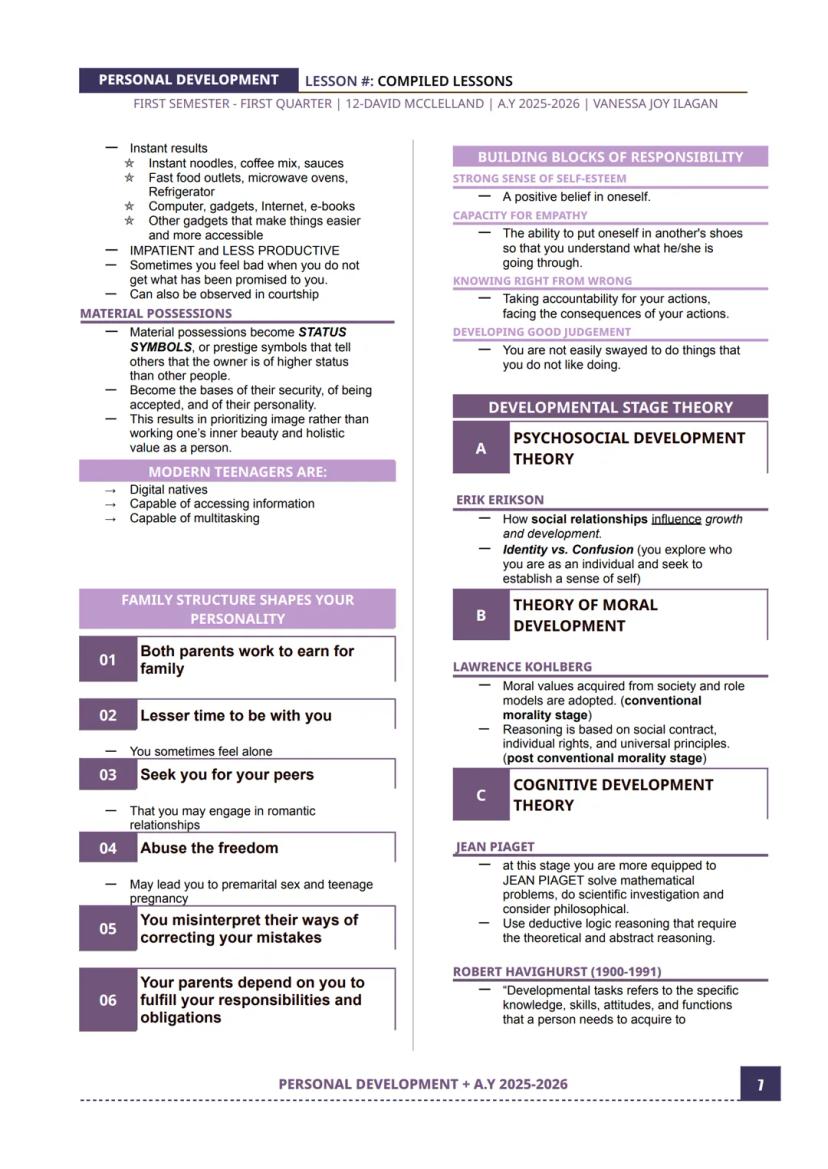
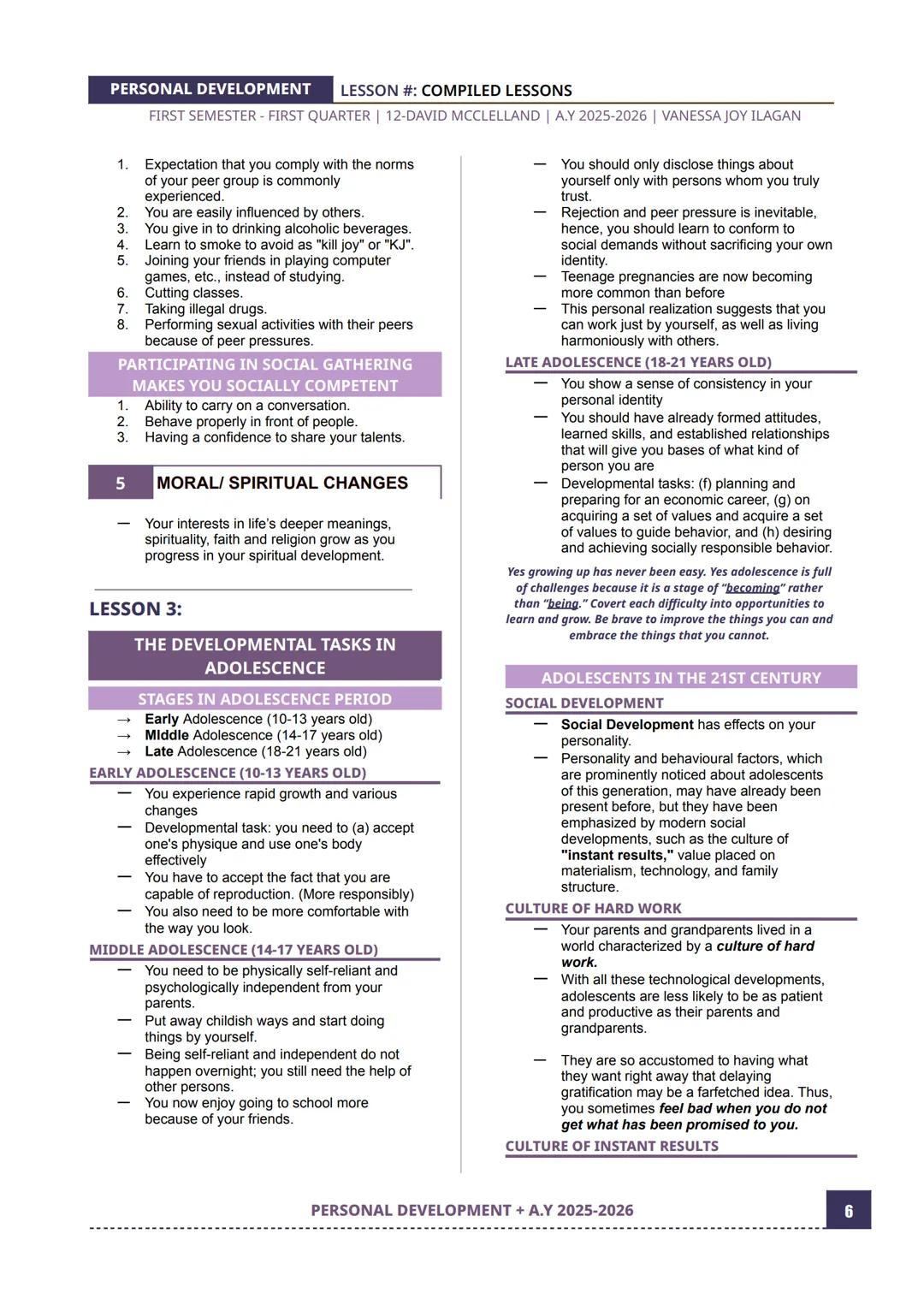
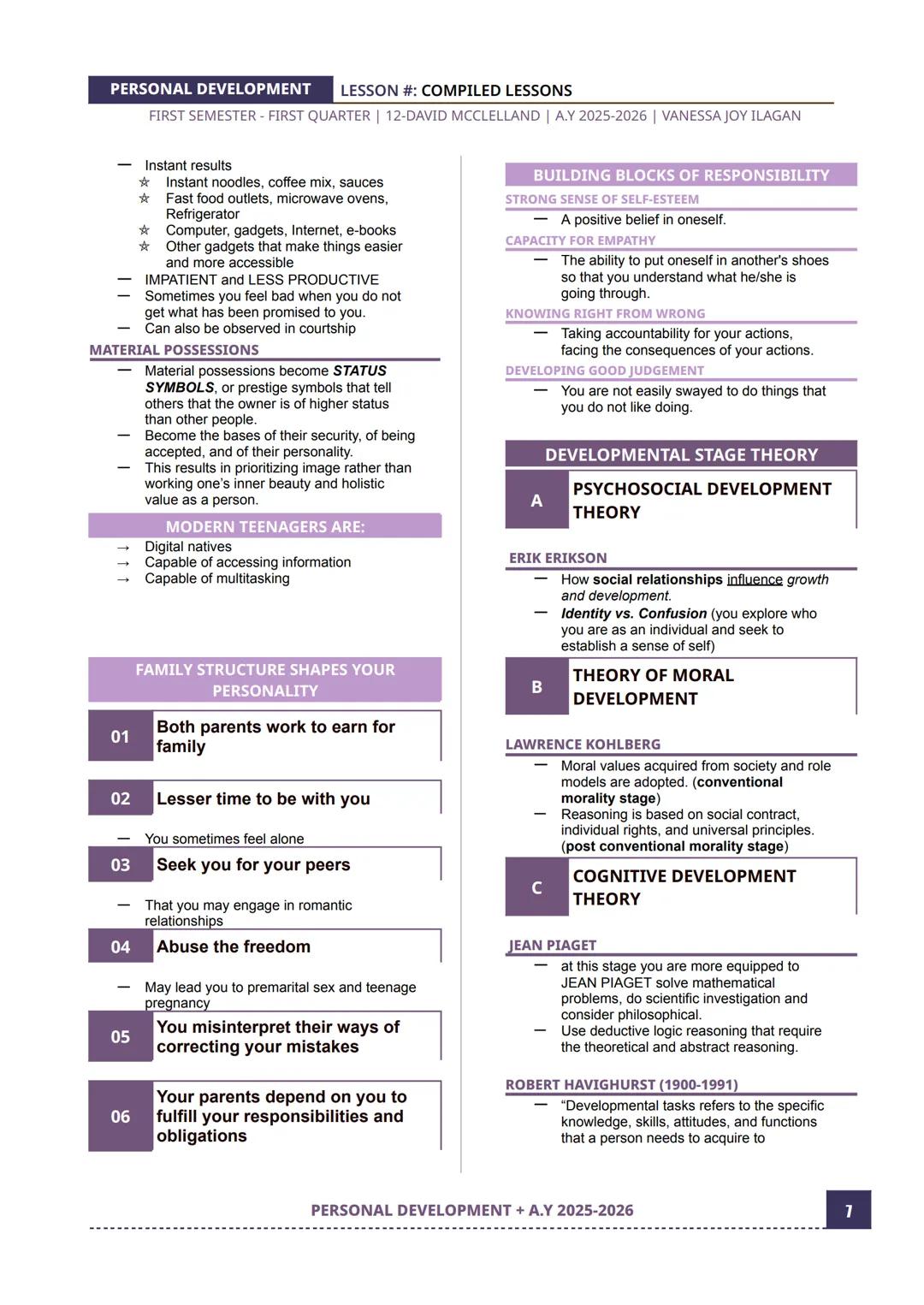
Modern teenagers are digital natives with unique advantages and challenges. You're likely skilled at accessing information and multitasking, but family structures have changed—with both parents often working, you might have more freedom but less supervision. This can lead to seeking validation from peers instead of family.
Building responsibility requires several key foundations:
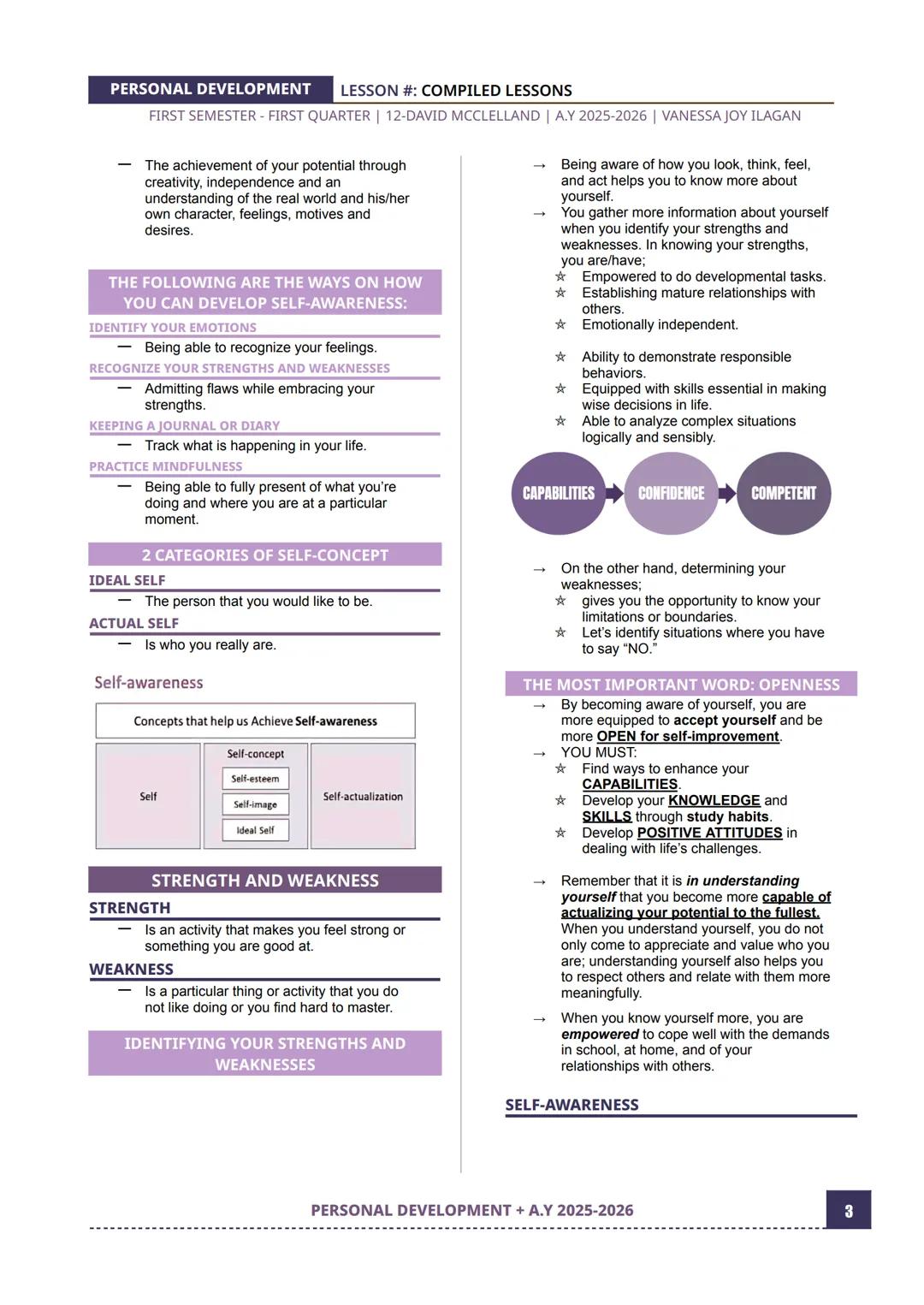
- A strong sense of self-esteem (positive belief in yourself)
- Capacity for empathy (understanding others' perspectives)
- Knowing right from wrong (and taking accountability for your actions)
- Developing good judgment (not being easily swayed)
Growth Mindset: Responsibility isn't about never making mistakes—it's about owning your choices and learning from them to make better decisions next time.
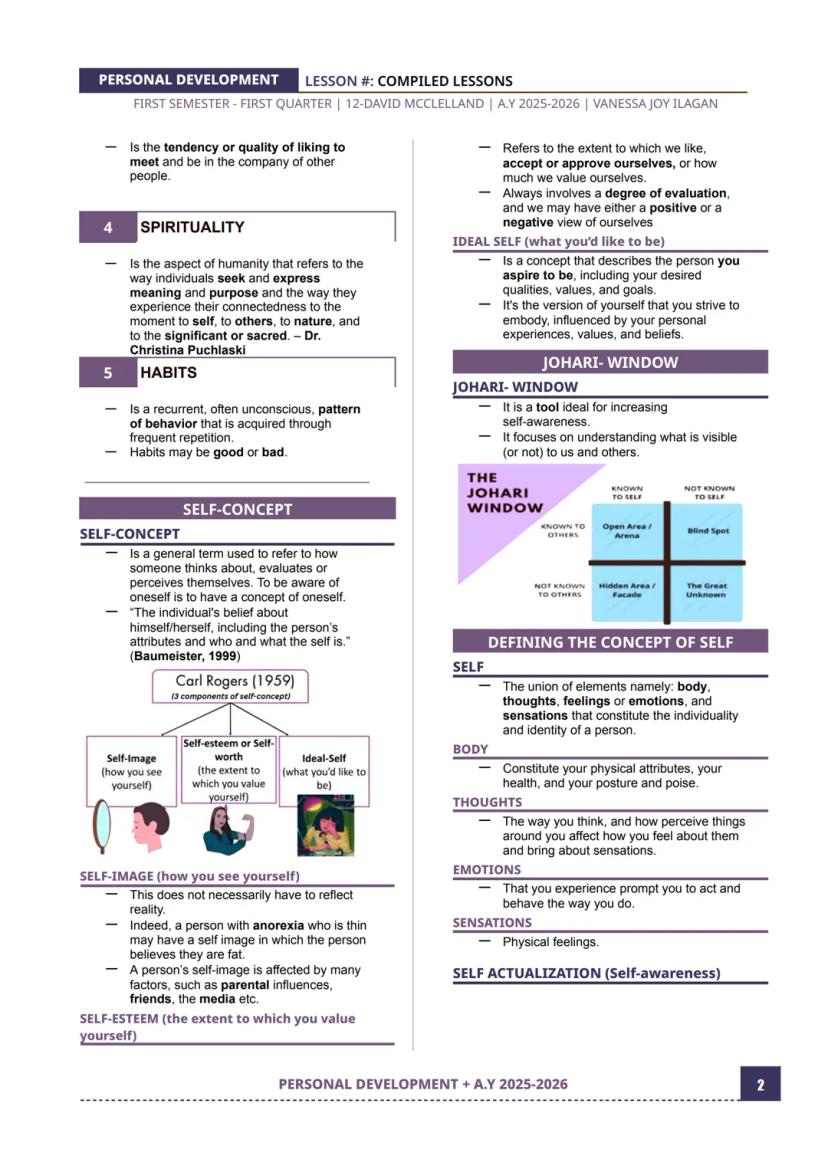
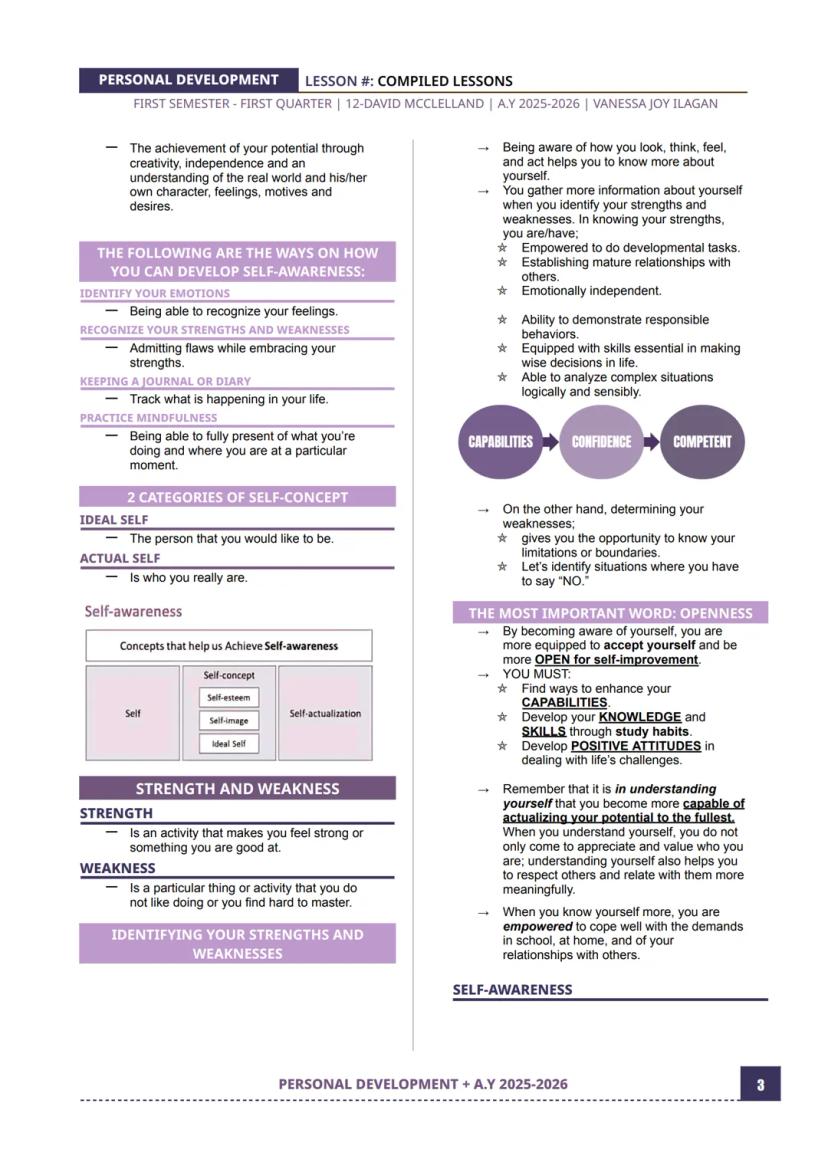
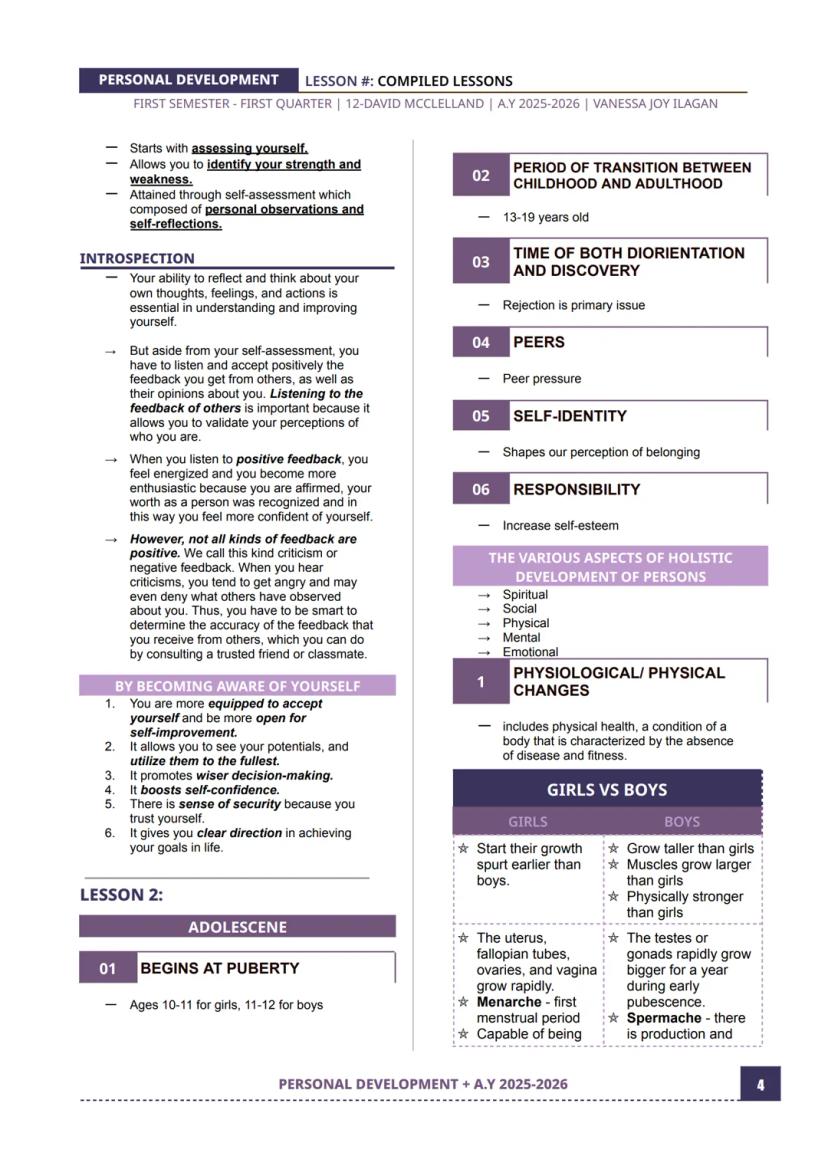
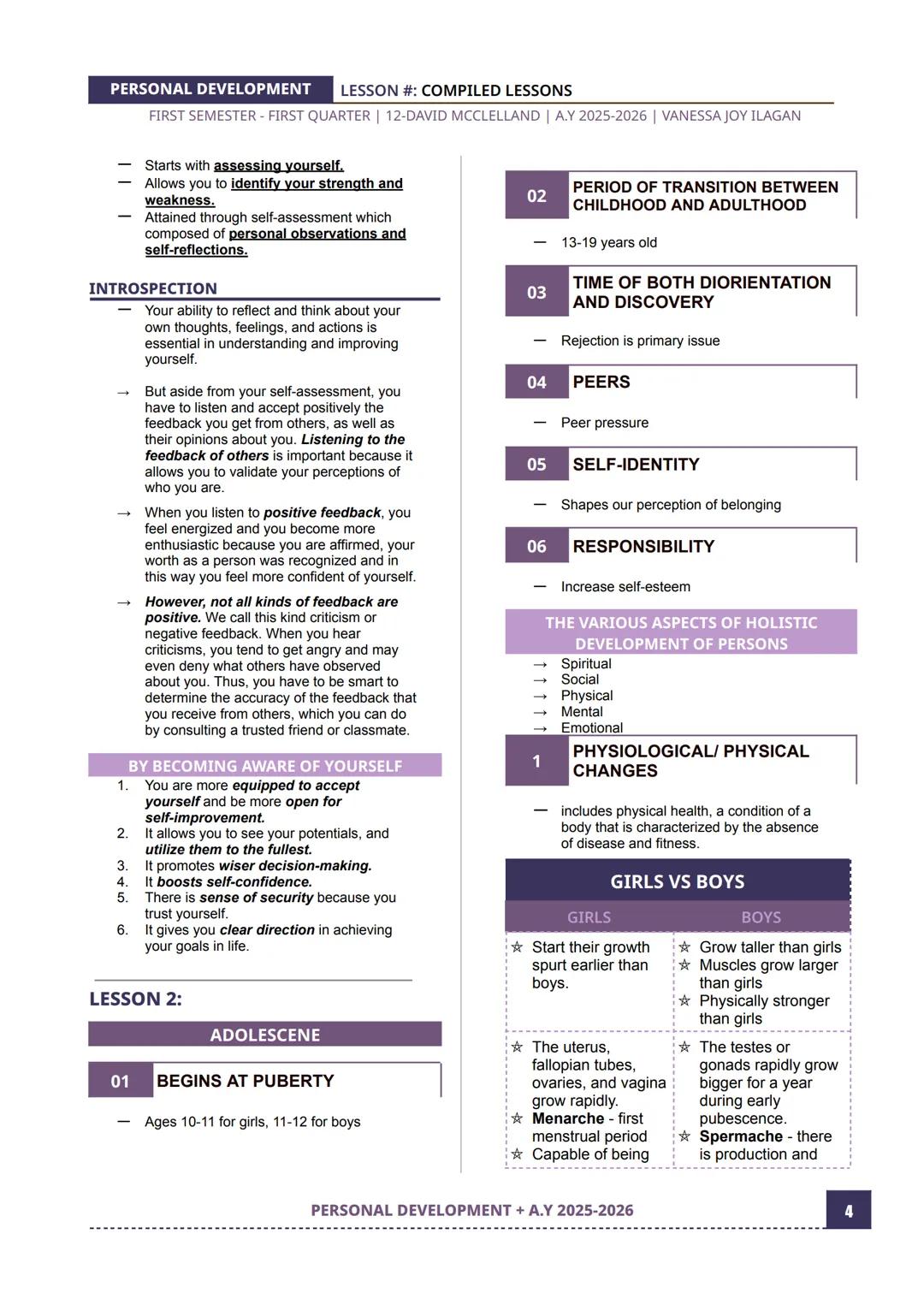
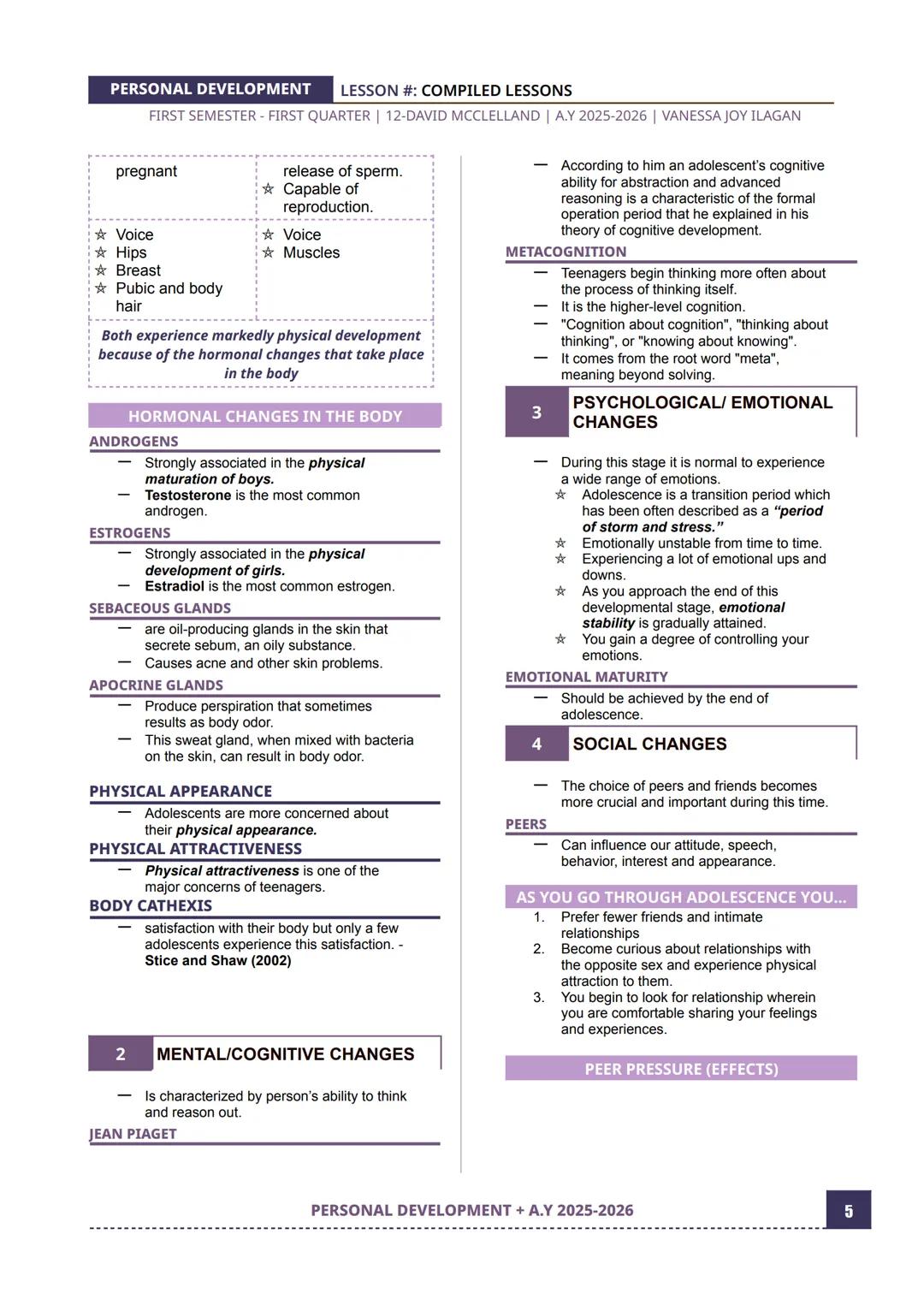
Several major theories help explain adolescent development:
Erik Erikson's Psychosocial Theory focuses on how social relationships influence growth. During adolescence, you navigate the crisis of "Identity vs. Confusion" as you explore who you are as an individual.
Lawrence Kohlberg's Moral Development Theory explains how you move from conventional morality (adopting values from society) to post-conventional morality (reasoning based on individual rights and universal principles).
Jean Piaget's Cognitive Development Theory describes how adolescents develop the ability to solve complex problems and engage in abstract, theoretical reasoning.
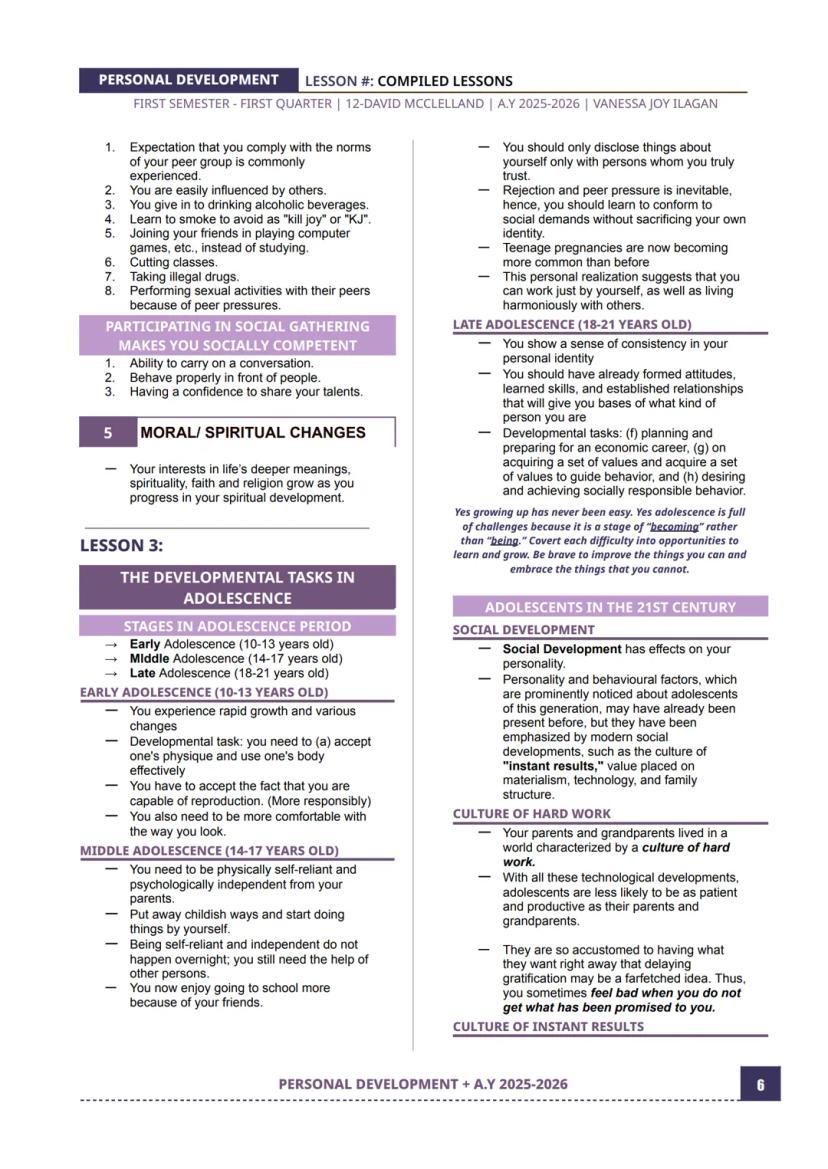
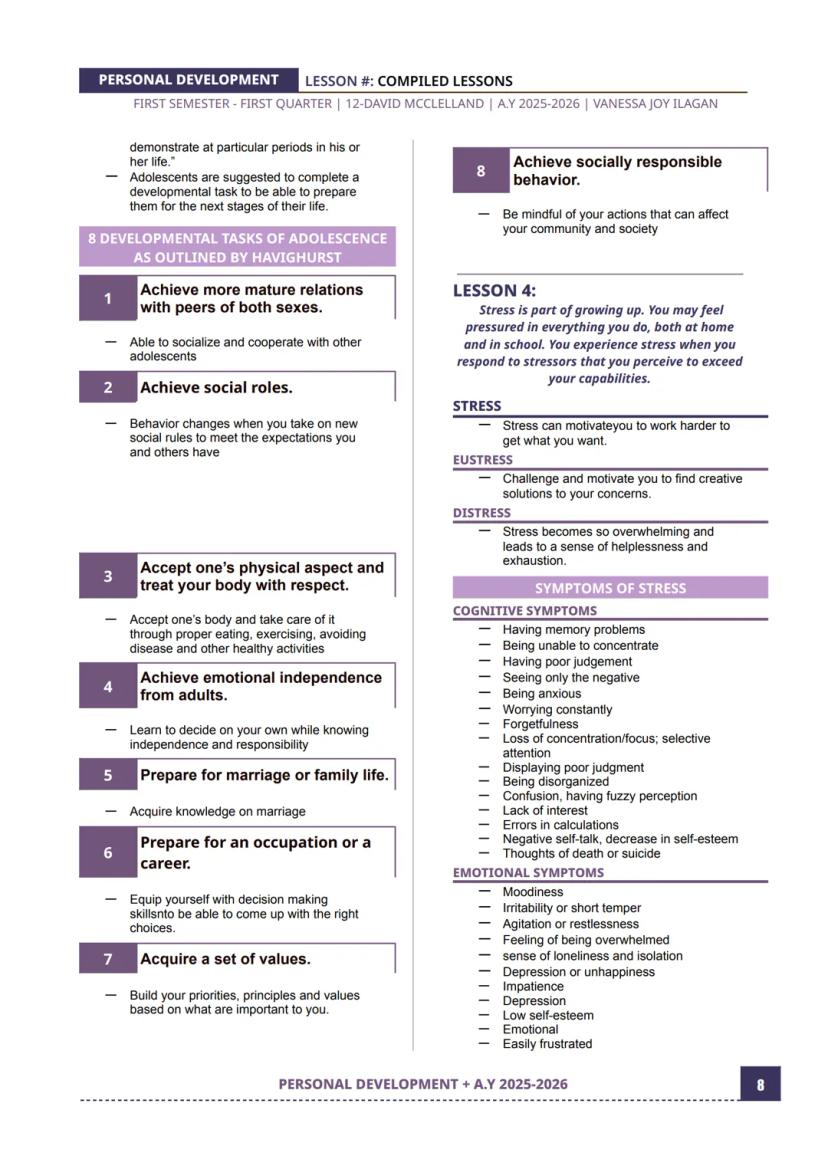
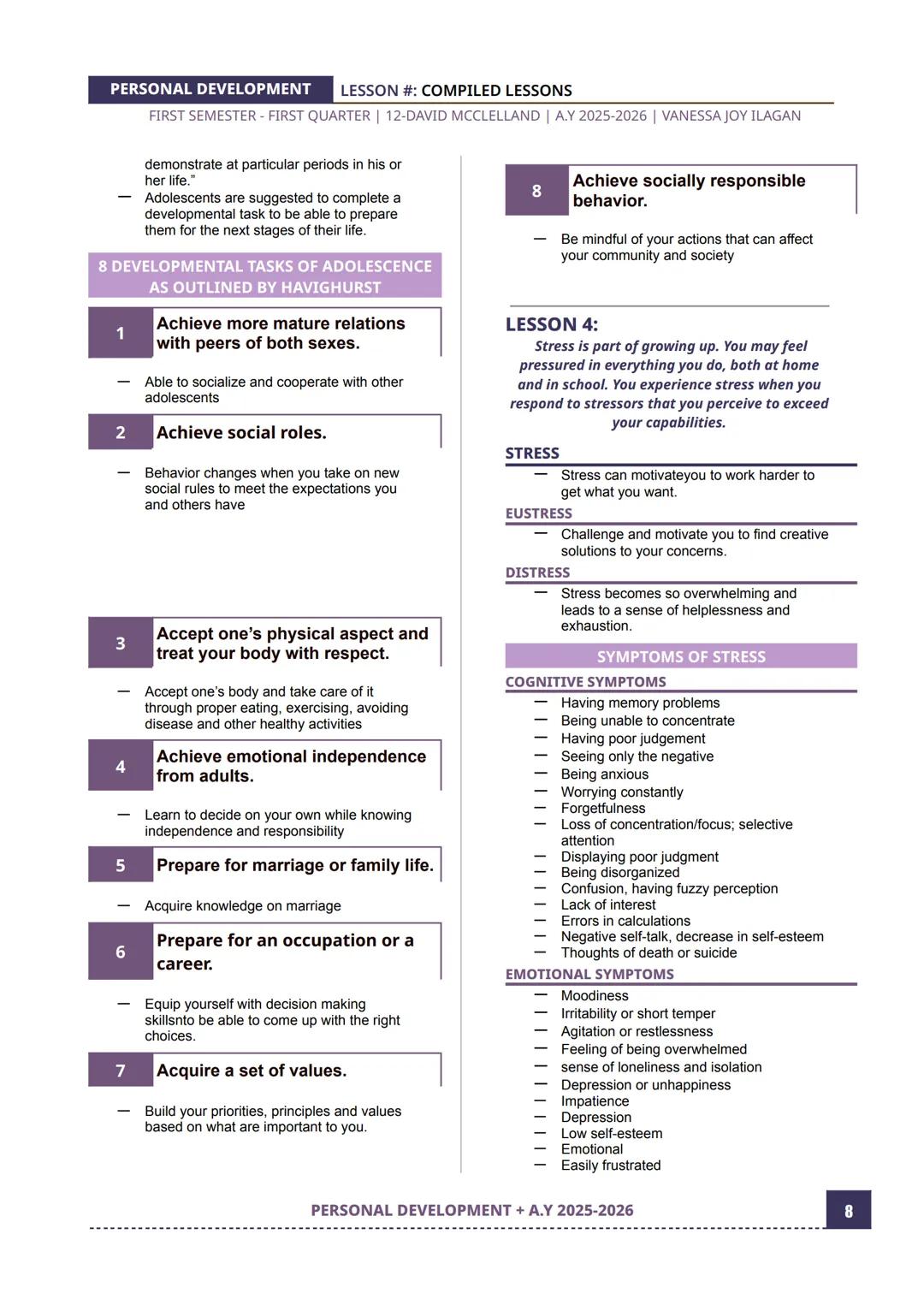
Robert Havighurst defined developmental tasks as specific knowledge, skills, attitudes, and functions needed at particular life stages. For adolescents, these include building peer relationships, preparing for careers and family life, achieving independence, and developing values and socially responsible behavior.

 Health
 Fun Stuff
 Algebra
 Overige
 Algebra 1
 Biology