Postmodern Families and Individual Choice
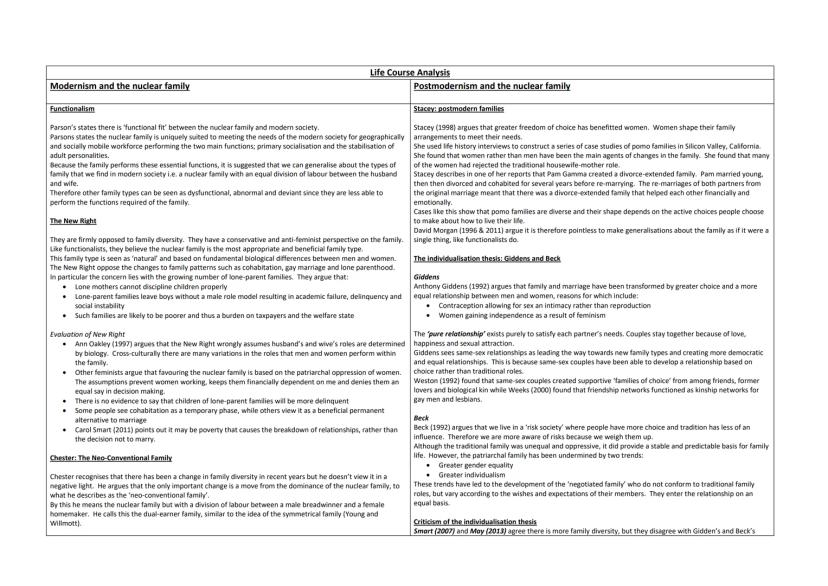
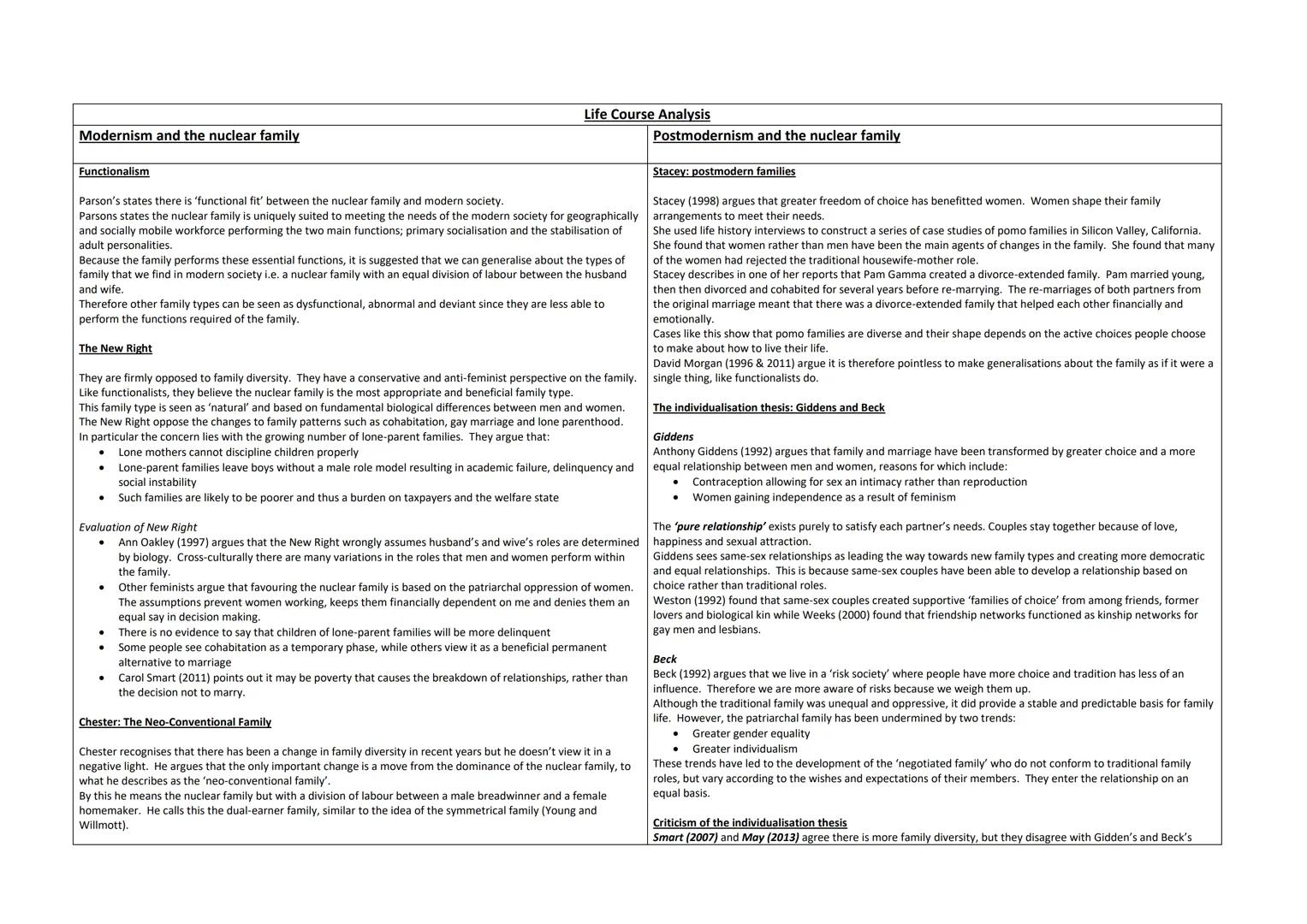
Here's where it gets interesting - postmodernist researchers like Stacey argue that women are driving massive changes in family life by rejecting traditional housewife roles. She found examples of "divorce-extended families" where ex-spouses, new partners, and kids all support each other emotionally and financially.
Giddens and Beck developed the individualisation thesis, claiming we now live in a world of pure relationships based purely on love and satisfaction rather than duty. Same-sex couples are leading the way, creating families of choice from friends and chosen kin because they're not stuck with traditional gender roles.
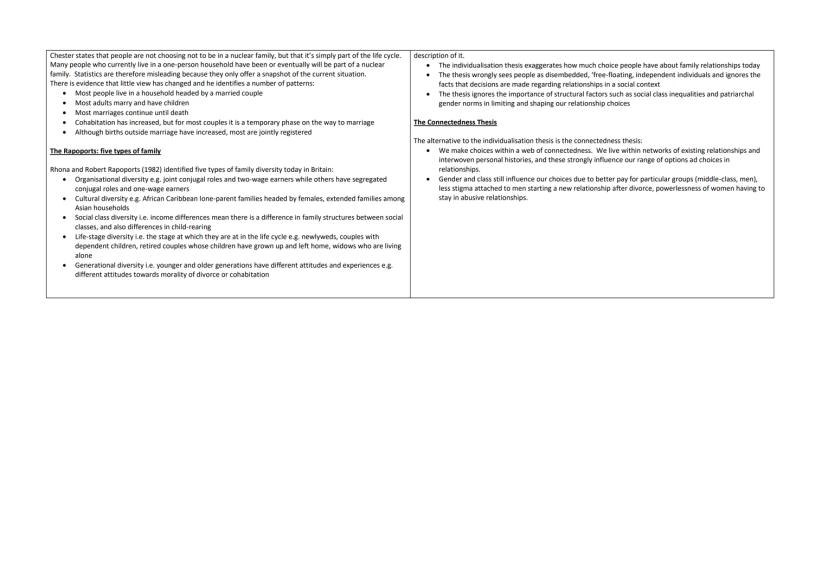
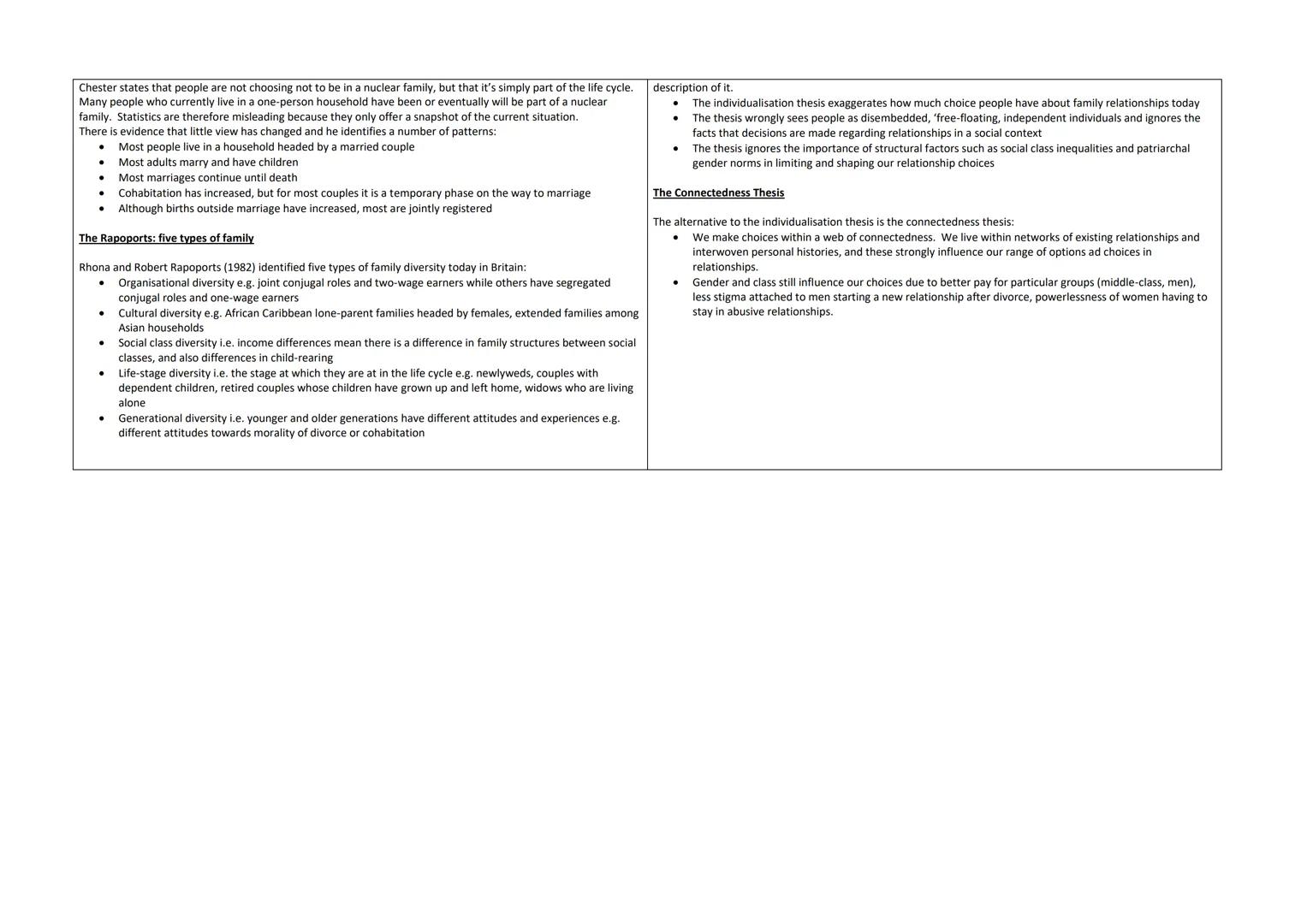
But critics like Smart argue this individualisation thesis is bollocks - it ignores how social class, gender inequality, and existing relationships still massively limit our choices. The connectedness thesis suggests we make decisions within webs of existing relationships and social pressures.
The Rapoports identified five types of diversity - organisational, cultural, social class, life-stage, and generational - showing that family variety isn't just about individual choice but reflects deeper social patterns.
Key Point: Your family choices feel personal, but they're shaped by your social class, gender, ethnicity, and the relationships already around you.


 Sociology
 Combined Science
 English Literature
 Biology