

This document provides a comprehensive review of Spanish verb conjugations...
 Spanish841 views·Updated Jul 7, 2026·16 pages
Learn AR ER IR Verbs in Spanish 2: Easy Translation and Examples
1 / 10
1
of 10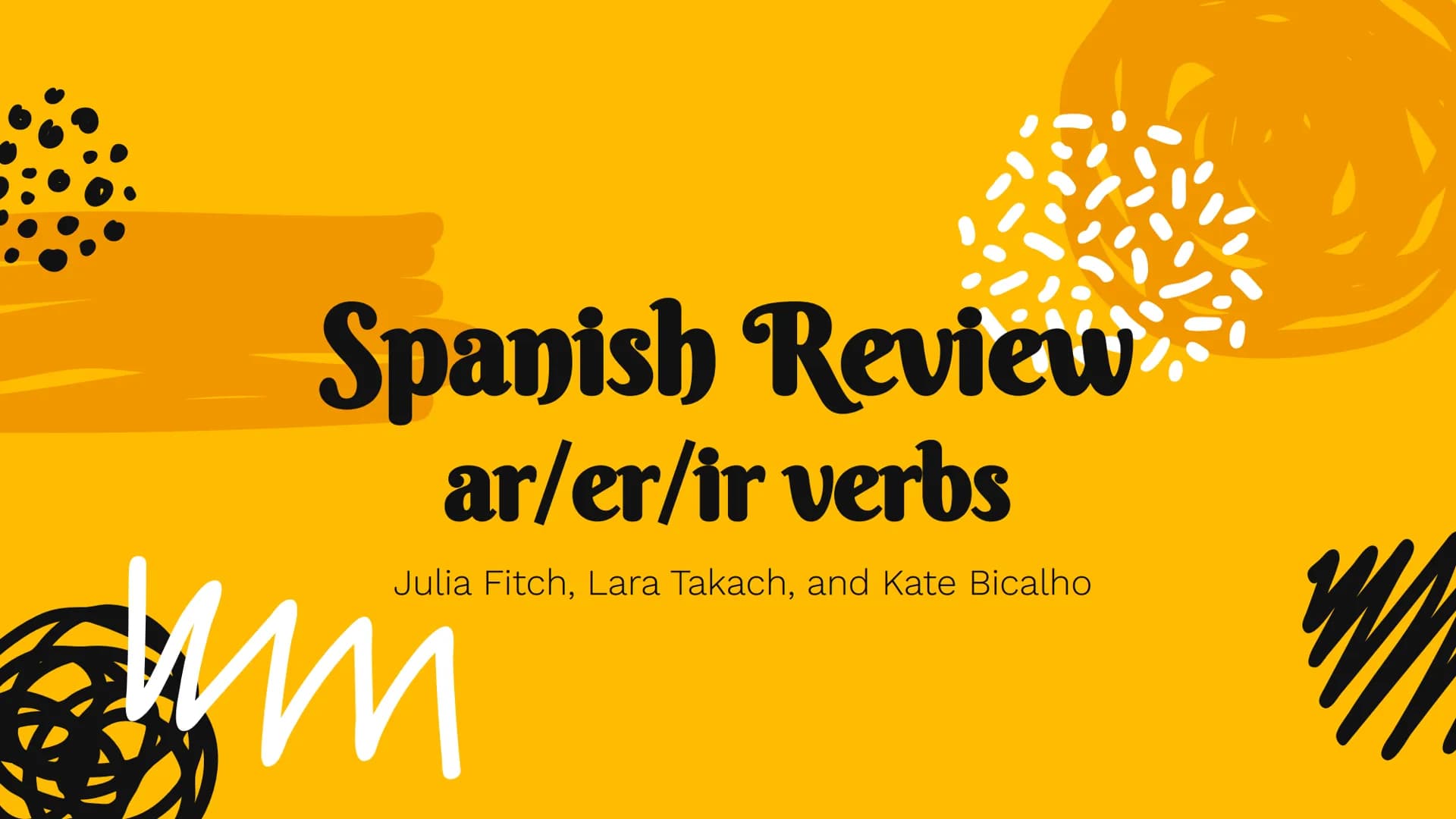
Conjugation Chart for -ar, -er, and -ir Verbs
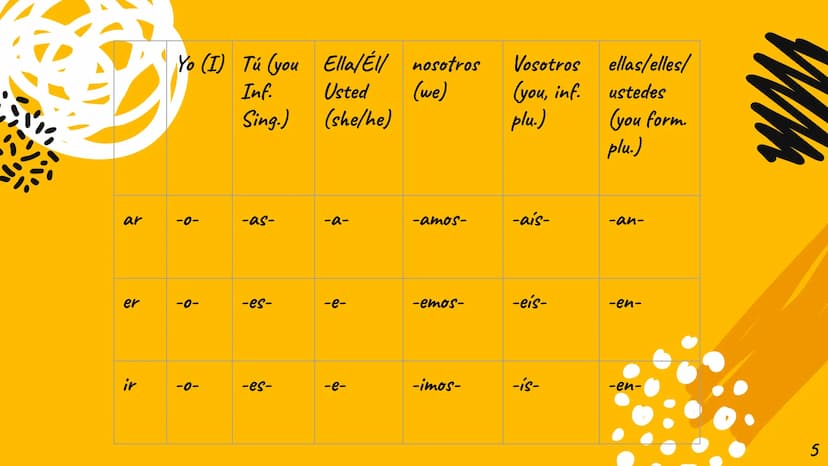
This page presents a comprehensive conjugation chart for regular -ar, -er, and -ir verbs in Spanish. The chart is organized by verb type and subject pronoun, providing a clear visual representation of conjugación de verbos en español.
Highlight: The chart includes all subject pronouns: yo, tú, ella/él/usted, nosotros, vosotros, and ellas/ellos/ustedes, covering both formal and informal, singular and plural forms.
Vocabulary:
- "Inf." stands for informal
- "Sing." stands for singular
- "Plu." stands for plural
- "Form." stands for formal
This tabla de conjugación de verbos en español serves as a quick reference for students to understand the pattern of endings for each verb type and subject pronoun.
2
of 10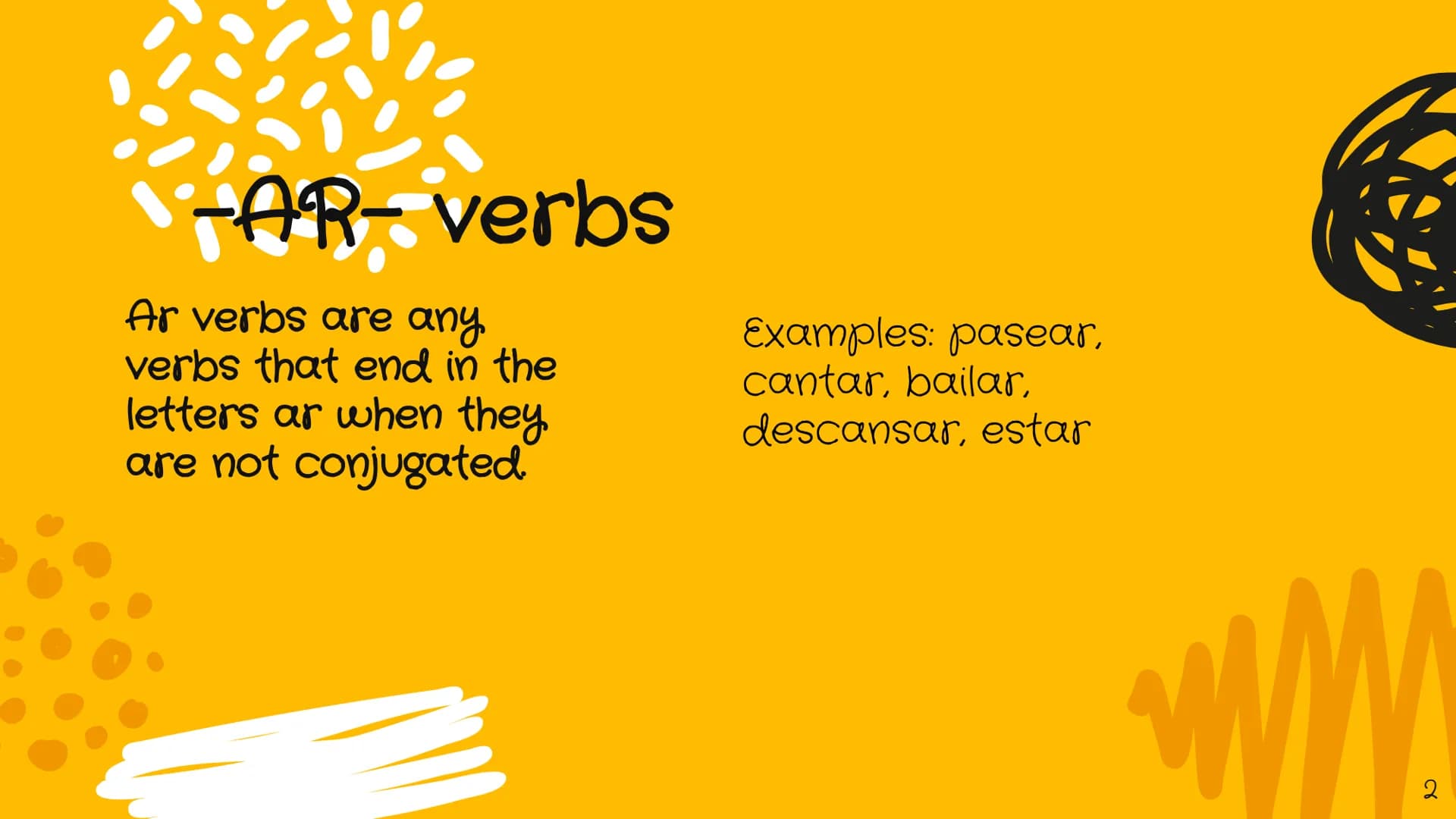
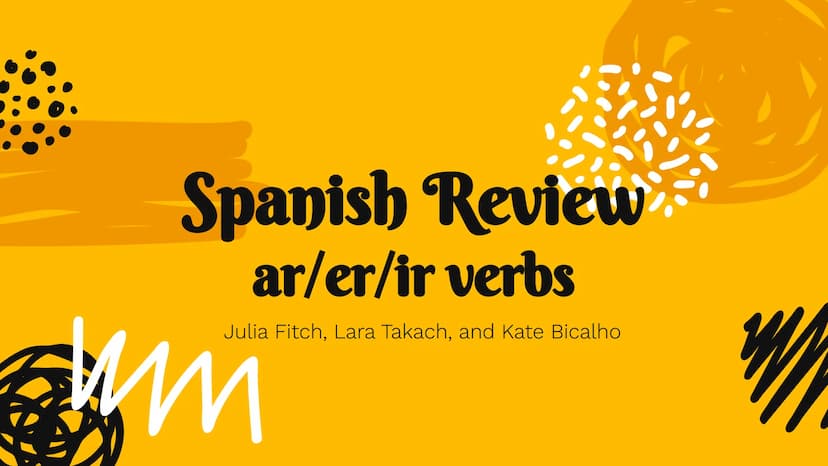
Title Page: Spanish Review ar/er/ir verbs
This page serves as the title page for the guide, indicating that it's a review of Spanish -ar, -er, and -ir verbs. It also credits the authors: Julia Fitch, Lara Takach, and Kate Bicalho.
Definition: Revisión de verbos ar er ir para español 2 refers to a comprehensive review of the three main categories of Spanish verbs (-ar, -er, -ir) typically studied in second-year Spanish courses.
This title page sets the expectation for students that the following content will cover a thorough review of verbos conjugados ejemplos across all three verb types.
3
of 10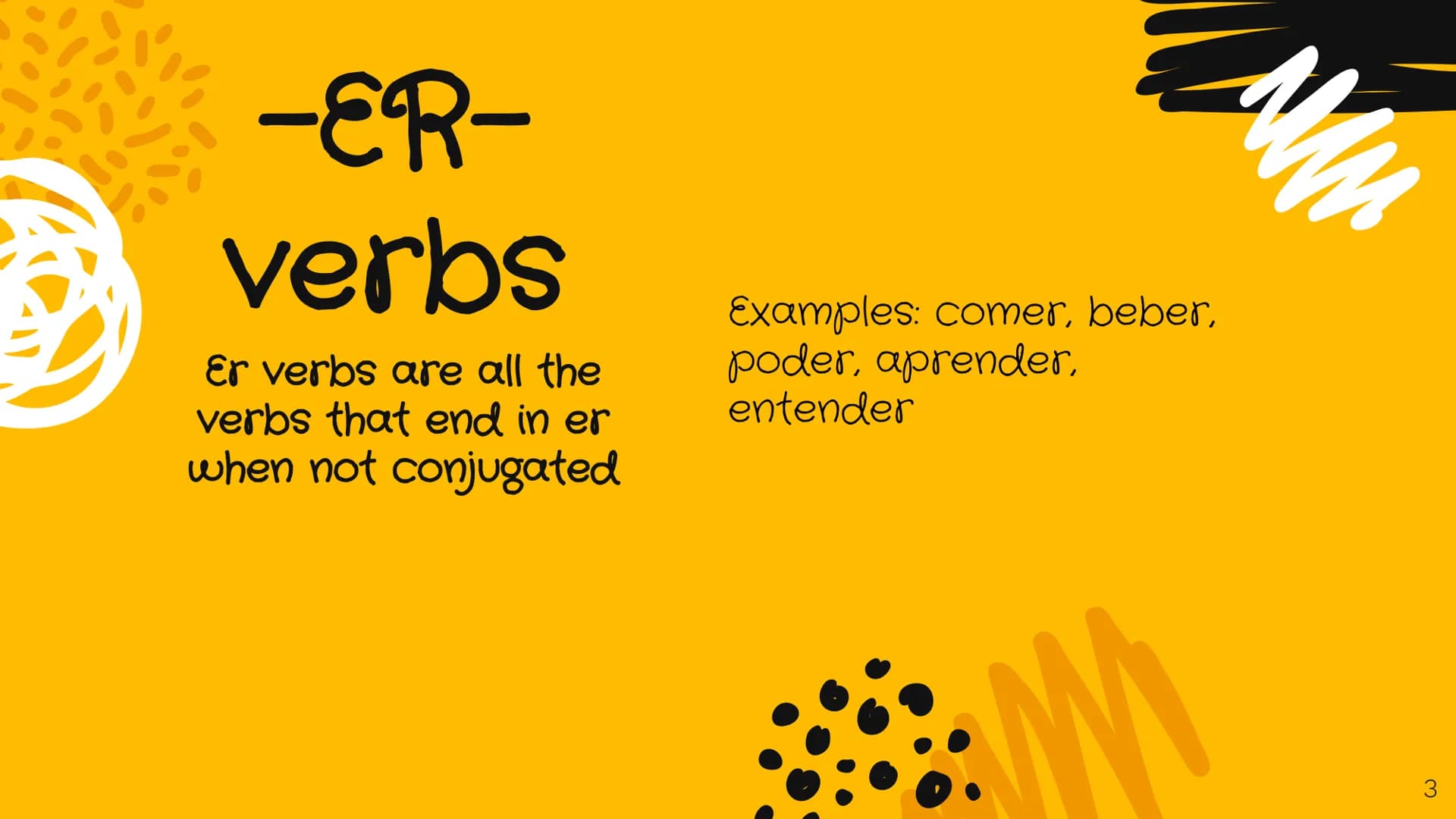
Conjugation Endings Quiz
This page presents a quiz-style question focusing on specific conjugation endings. It asks students to identify which pronoun and verb type correspond to particular endings.
Example:
- "-as-" ending corresponds to "tú" for -ar verbs
- "-eís-" ending corresponds to "vosotros" for -er verbs
This interactive element helps reinforce the recognition of conjugación de verbos en español, encouraging students to actively recall the patterns they've learned.
4
of 10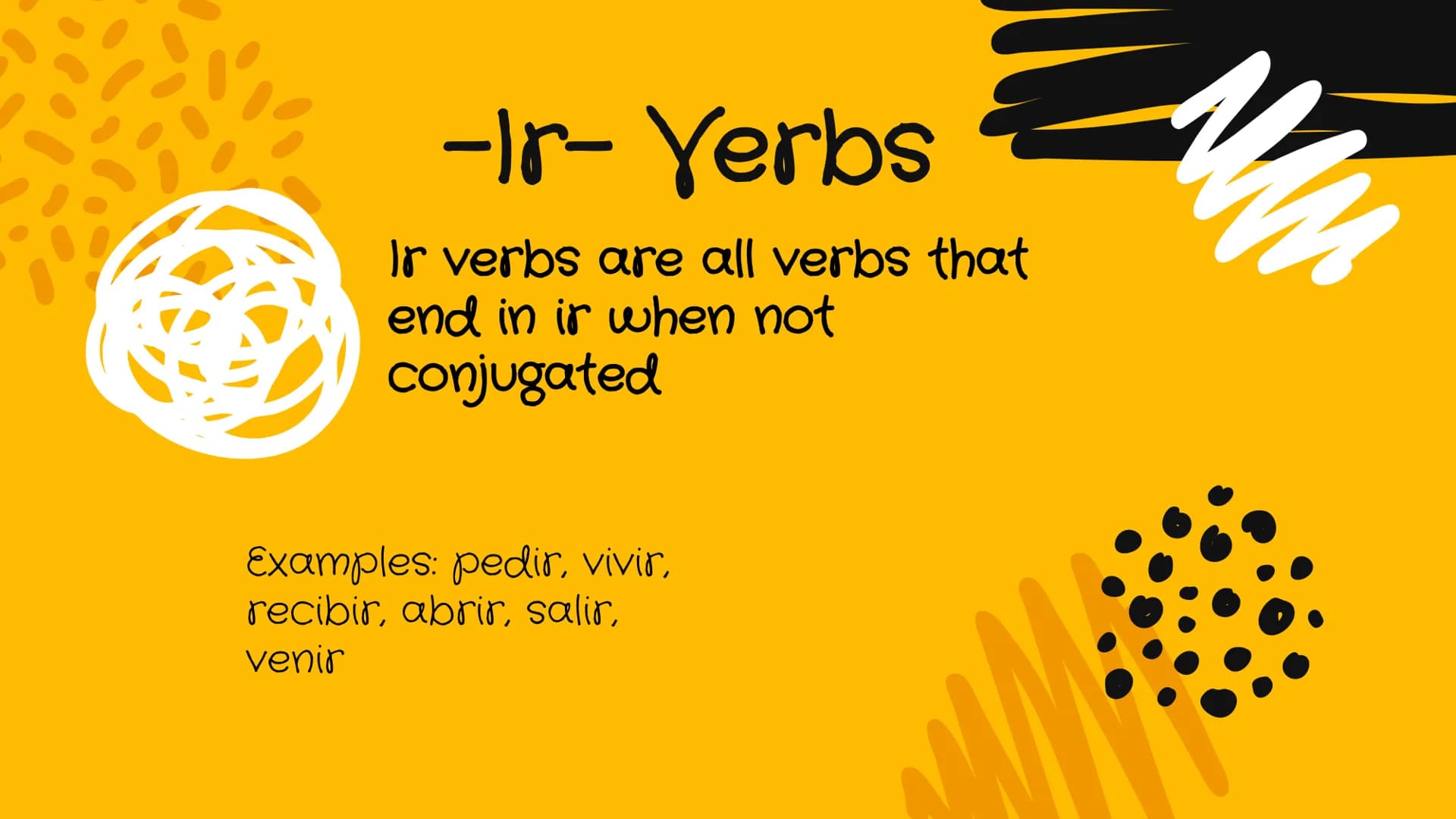
Exceptions to Regular Conjugations
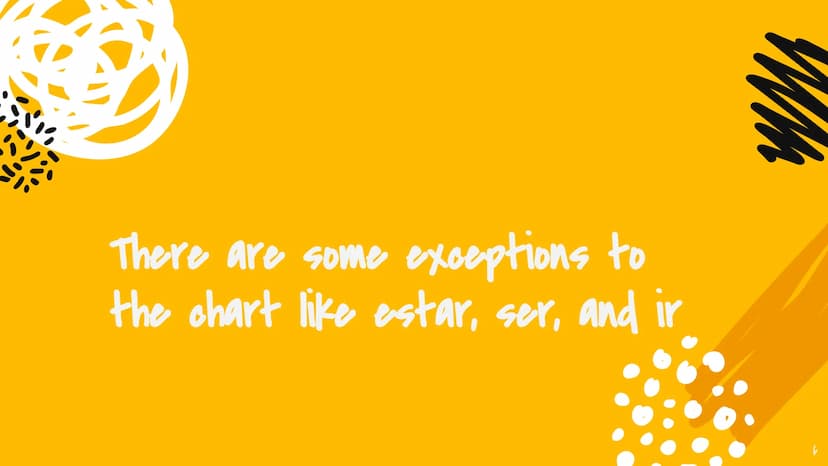
This page introduces the concept of irregular verbs in Spanish conjugation. It specifically mentions "estar," "ser," and "ir" as examples of verbs that don't follow the regular conjugation patterns presented in the earlier chart.
Highlight: Understanding that there are exceptions to the regular conjugation rules is crucial for mastering Spanish verb usage.
This information prepares students for the complexity of Spanish verb conjugations beyond the basic patterns, emphasizing that verbos conjugados ejemplos aren't always straightforward.
5
of 10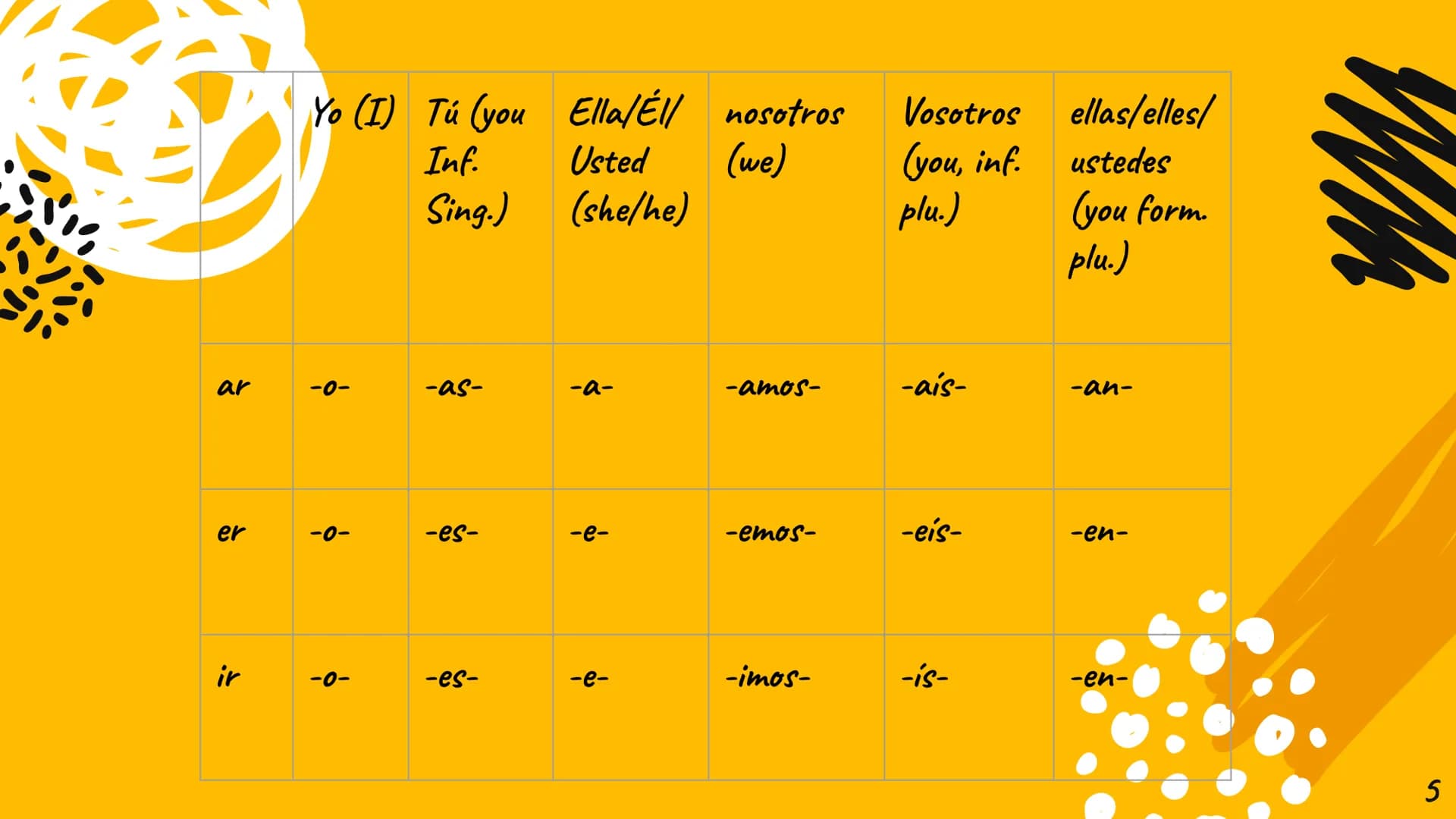
Error Correction Exercise
This page presents an error correction exercise, challenging students to identify and fix mistakes in verb conjugations within sentences.
Example:
- Incorrect: "Yo comes la comida"
- Correct: "Yo como la comida"
Example:
- Incorrect: "usted viva en la casa"
- Correct: "usted vive en la casa"
This exercise reinforces the importance of correct conjugation and helps students practice identifying que es un verbo conjugado in context.
6
of 10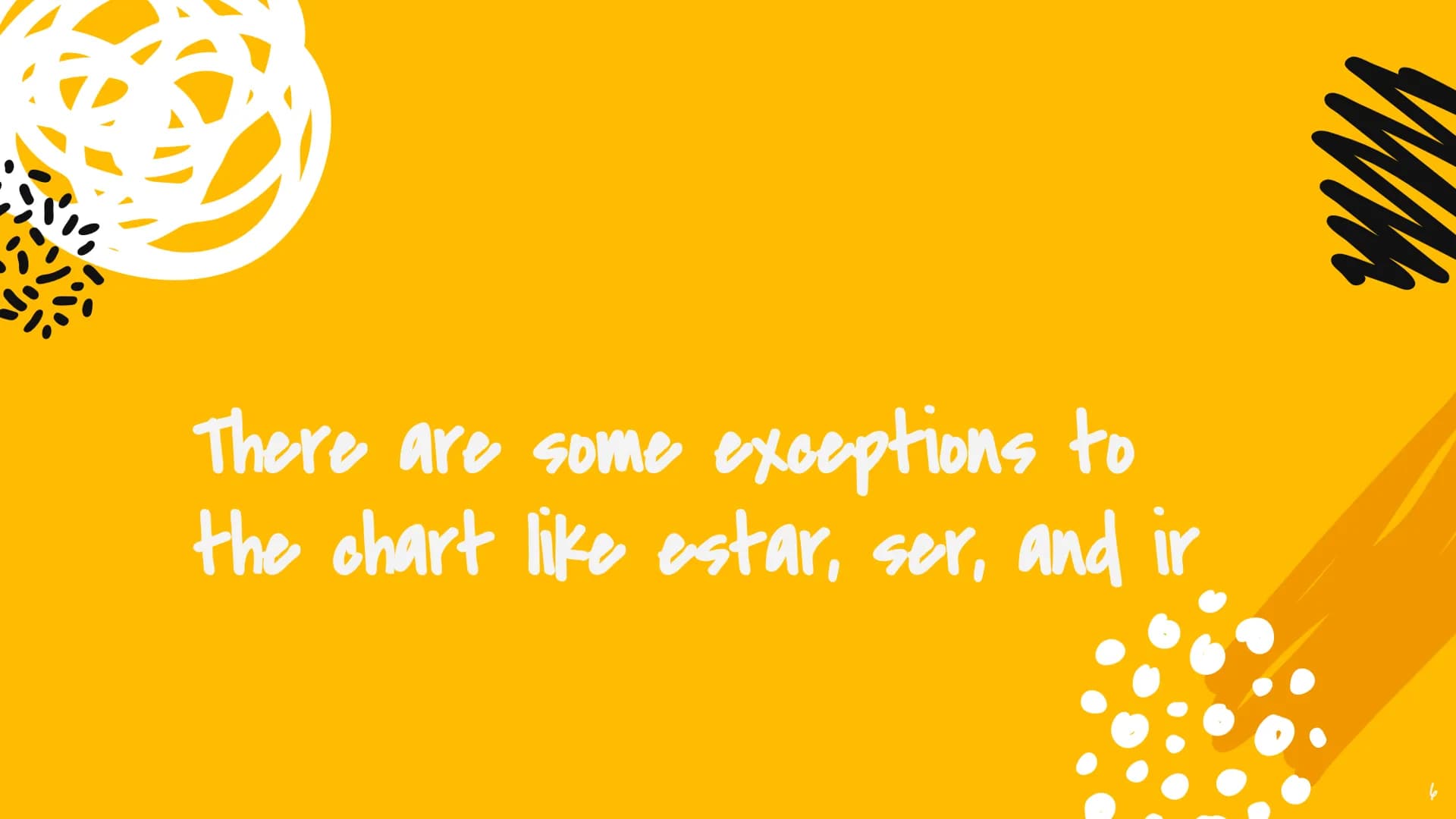
Dialogue Practice
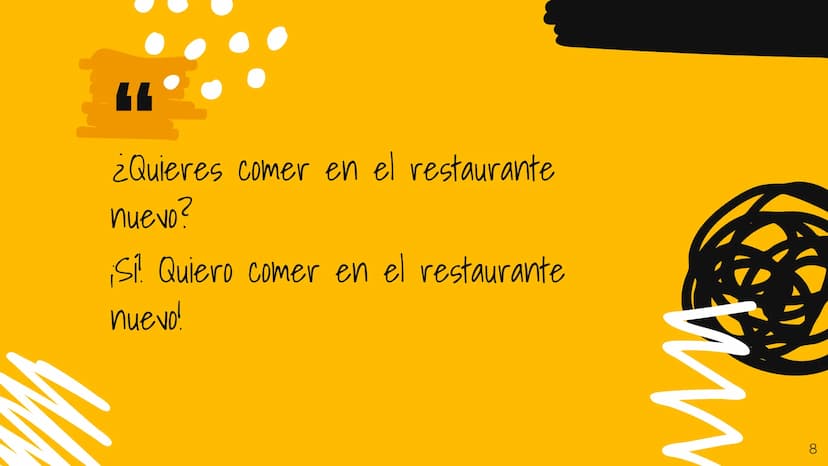
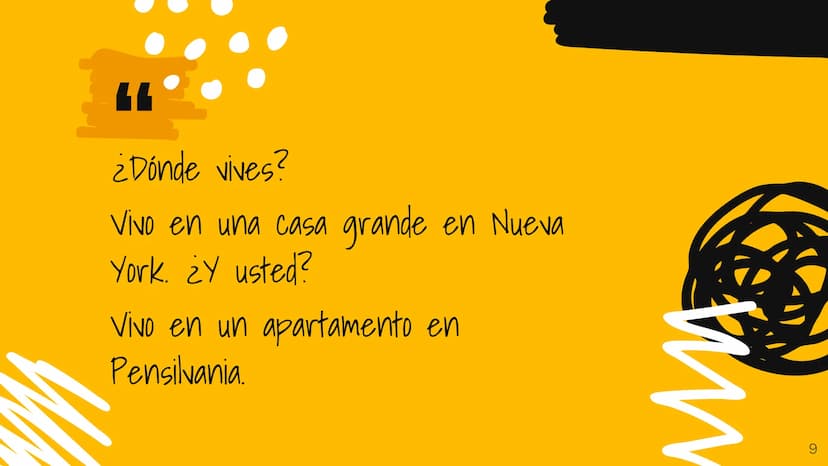
This page features a short dialogue demonstrating the use of the verb "vivir" (to live) conjugated in different persons.
Example: "¿Dónde vives?" (Where do you live?) "Vivo en una casa grande en Nueva York. ¿Y usted?" (I live in a big house in New York. And you?) "Vivo en un apartamento en Pensilvania." (I live in an apartment in Pennsylvania.)
This dialogue provides practical verbos conjugados ejemplos in a conversational context, helping students understand how these conjugations are used in real-life situations.
7
of 10
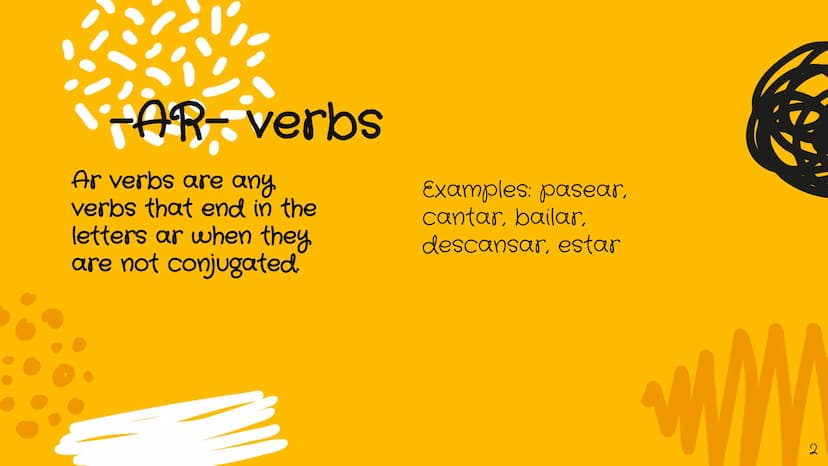
-AR Verbs Overview
This page focuses on -ar verbs, providing a definition and examples of common -ar verbs in Spanish.
Definition: AR-verbs are any verbs that end in the letters "ar" when they are not conjugated.
Example: Some common -ar verbs include:
- pasear (to walk)
- cantar (to sing)
- bailar (to dance)
- descansar (to rest)
- estar (to be - location/condition)
This overview helps students recognize and categorize -ar verbs, which is essential for proper conjugación de verbos en español.
8
of 10
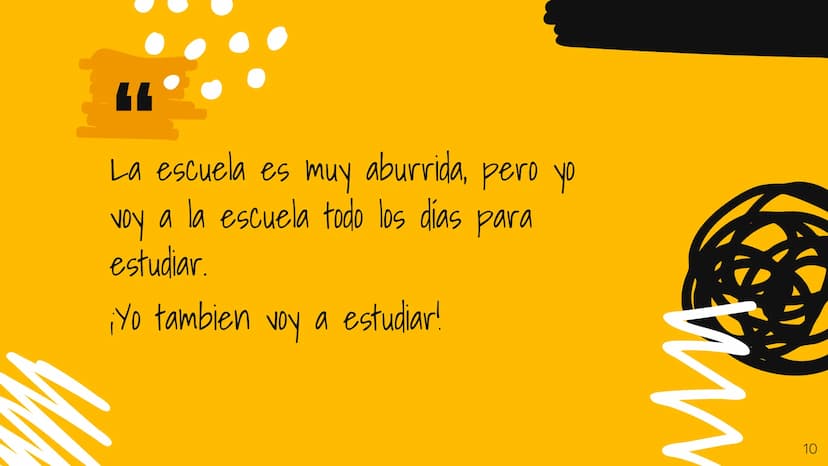
Contextual Sentence Practice
This page presents a contextual sentence using multiple conjugated verbs, demonstrating how different verbs are used together in a single statement.
Example: "La escuela es muy aburrida, pero yo voy a la escuela todo los días para estudiar." (School is very boring, but I go to school every day to study.)
Example: "¡Yo tambien voy a estudiar!" (I'm going to study too!)
These sentences showcase 10 ejemplos de verbos in context, including "ser" (is), "ir" (to go), and "estudiar" (to study), helping students understand how different verb types are used together in everyday speech.
9
of 10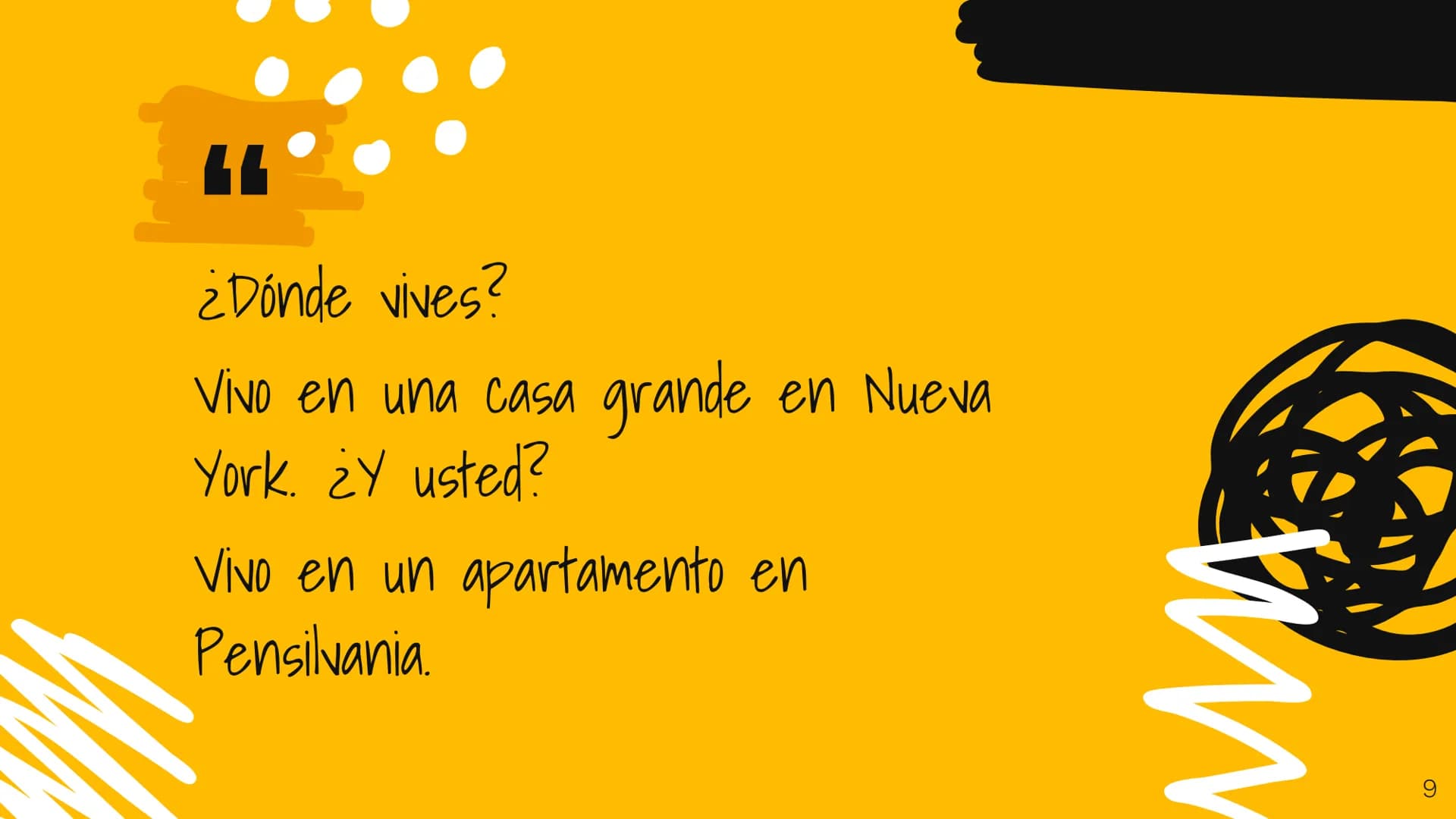
True or False Quiz
This page presents a true or false quiz about -er and -ir verbs, testing students' understanding of verb conjugation patterns.
Example:
- True: ER and IR verbs have many same conjugated endings
- False: All verbs are AR verbs
This quiz reinforces key concepts about verb types and conjugation patterns, helping students differentiate between verbos conjugados ejemplos for different verb categories.
10
of 10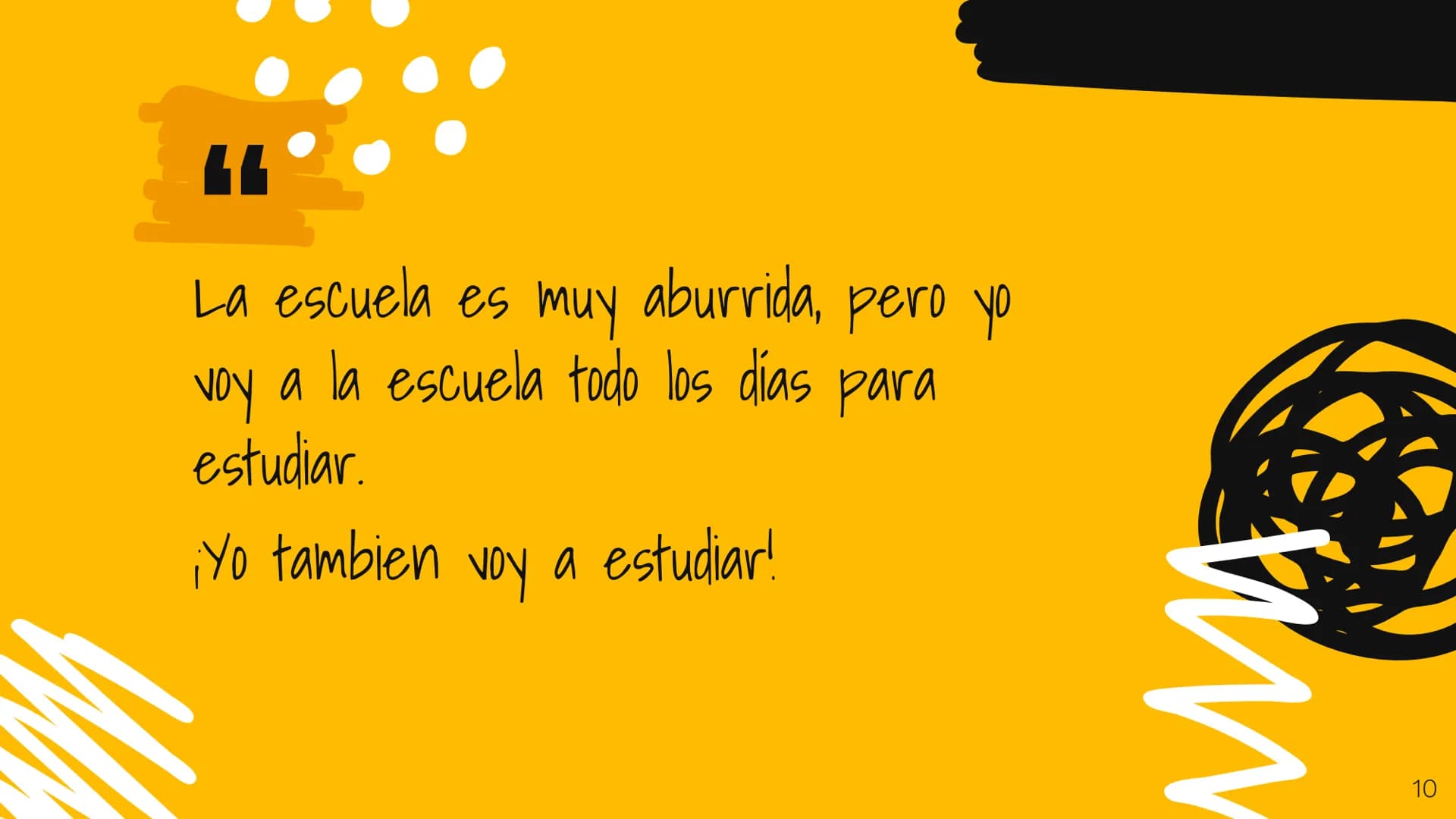
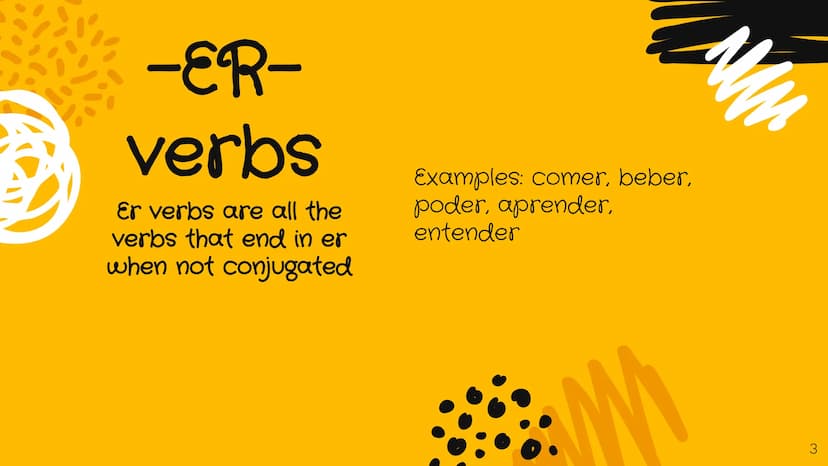
-ER Verbs Overview
This page provides an overview of -er verbs in Spanish, including a definition and examples.
Definition: ER verbs are all the verbs that end in "er" when not conjugated.
Example: Common -er verbs include:
- comer (to eat)
- beber (to drink)
- poder (to be able to)
- aprender (to learn)
- entender (to understand)
This overview helps students identify and categorize -er verbs, which is crucial for mastering conjugación de verbos en español.
We thought you’d never ask...
Our AI companion is specifically built for the needs of students. Based on the millions of content pieces we have on the platform we can provide truly meaningful and relevant answers to students. But its not only about answers, the companion is even more about guiding students through their daily learning challenges, with personalised study plans, quizzes or content pieces in the chat and 100% personalisation based on the students skills and developments.
You can download the app in the Google Play Store and in the Apple App Store.
That's right! Enjoy free access to study content, connect with fellow students, and get instant help – all at your fingertips.
Similar Content
Most popular content in Spanish
2SpanishExpressing Past, Present, and Future Tense in Spanish
This Know shows how to make sentences using past, present, and future tense terms in Spanish with verbs. The verbs used are bailar (to dance), correr (to run), and escribír (to write).
74382
SpanishSpanish Speaking countries
how u say Spanish-speaking countries in Spanish and English
777132
Most popular content
9O
 AP US History
Origins and Dynamics of the Columbian Exchange
Analyze the ecological and economic motivations behind the initial transfer of goods, people, and diseases between the Old and New Worlds.
9th3,1280
I
AP US HistoryIntroduction to Early Cultural Interactions
Analyze the initial social and religious encounters between Europeans, Africans, and Indigenous peoples in the colonial Americas.
9th2,7730
O
 AP World History
Origins of Ancient River Civilizations
Analyze the environmental factors and technological innovations that led to the rise of early states in Mesopotamia, Egypt, and the Indus Valley.
9th3,1870
M
AP US HistoryMotivations for European Exploration
Analyze the economic, religious, and political factors that drove European powers to the Americas during the 15th and 16th centuries.
9th1,7780
F
 AP Psychology
Foundations of Ethical Guidelines in Research
Practice the core principles of the APA ethical code including informed consent, debriefing, and the role of Institutional Review Boards.
9th1,3360
I
AP US HistoryIntroduction to Native American Societies
Examine the diverse social, political, and economic structures of North American indigenous groups prior to European contact.
9th1,1100
I
AP US HistoryIntroduction to the Spanish Encomienda System
Explore the fundamental economic and social structures of the Spanish colonial system, focusing on the encomienda and the casta social hierarchy.
9th8890
I
 AP Biology
Introduction to Biological Elements of Life
Practice identifying the essential elements including carbon, nitrogen, phosphorus, and sulfur that compose biological macromolecules.
9th1,7410
O
AP US Government & PoliticsOrigins of the Articles of Confederation
Practice identifying the motivations for a weak central government and the specific powers granted to the states under the first U.S. constitution.
9th9370
Students love us — and so will you.
4.6/5App Store
4.7/5Google Play
The app is very easy to use and well designed. I have found everything I was looking for so far and have been able to learn a lot from the presentations! I will definitely use the app for a class assignment! And of course it also helps a lot as an inspiration.
Stefan SiOS user
This app is really great. There are so many study notes and help [...]. My problem subject is French, for example, and the app has so many options for help. Thanks to this app, I have improved my French. I would recommend it to anyone.
Samantha KlichAndroid user
Wow, I am really amazed. I just tried the app because I've seen it advertised many times and was absolutely stunned. This app is THE HELP you want for school and above all, it offers so many things, such as workouts and fact sheets, which have been VERY helpful to me personally.
AnnaiOS user
Spanish841 views·Updated Jul 7, 2026·16 pagesLearn AR ER IR Verbs in Spanish 2: Easy Translation and Examples
This document provides a comprehensive review of Spanish verb conjugations for -ar, -er, and -ir verbs, aimed at Spanish 2 students. It includes conjugation tables, examples, and interactive learning activities.
- The guide covers regular verb conjugations for -ar, -er, and...
1
of 10
Sign up to see the content. It's free!
- Access to all documents
- Improve your grades
- Join milions of students
Conjugation Chart for -ar, -er, and -ir Verbs
This page presents a comprehensive conjugation chart for regular -ar, -er, and -ir verbs in Spanish. The chart is organized by verb type and subject pronoun, providing a clear visual representation of conjugación de verbos en español.
Highlight: The chart includes all subject pronouns: yo, tú, ella/él/usted, nosotros, vosotros, and ellas/ellos/ustedes, covering both formal and informal, singular and plural forms.
Vocabulary:
- "Inf." stands for informal
- "Sing." stands for singular
- "Plu." stands for plural
- "Form." stands for formal
This tabla de conjugación de verbos en español serves as a quick reference for students to understand the pattern of endings for each verb type and subject pronoun.
2
of 10Sign up to see the content. It's free!
- Access to all documents
- Improve your grades
- Join milions of students
Title Page: Spanish Review ar/er/ir verbs
This page serves as the title page for the guide, indicating that it's a review of Spanish -ar, -er, and -ir verbs. It also credits the authors: Julia Fitch, Lara Takach, and Kate Bicalho.
Definition: Revisión de verbos ar er ir para español 2 refers to a comprehensive review of the three main categories of Spanish verbs (-ar, -er, -ir) typically studied in second-year Spanish courses.
This title page sets the expectation for students that the following content will cover a thorough review of verbos conjugados ejemplos across all three verb types.
3
of 10Sign up to see the content. It's free!
- Access to all documents
- Improve your grades
- Join milions of students
Conjugation Endings Quiz
This page presents a quiz-style question focusing on specific conjugation endings. It asks students to identify which pronoun and verb type correspond to particular endings.
Example:
- "-as-" ending corresponds to "tú" for -ar verbs
- "-eís-" ending corresponds to "vosotros" for -er verbs
This interactive element helps reinforce the recognition of conjugación de verbos en español, encouraging students to actively recall the patterns they've learned.
4
of 10Sign up to see the content. It's free!
- Access to all documents
- Improve your grades
- Join milions of students
Exceptions to Regular Conjugations
This page introduces the concept of irregular verbs in Spanish conjugation. It specifically mentions "estar," "ser," and "ir" as examples of verbs that don't follow the regular conjugation patterns presented in the earlier chart.
Highlight: Understanding that there are exceptions to the regular conjugation rules is crucial for mastering Spanish verb usage.
This information prepares students for the complexity of Spanish verb conjugations beyond the basic patterns, emphasizing that verbos conjugados ejemplos aren't always straightforward.
5
of 10Sign up to see the content. It's free!
- Access to all documents
- Improve your grades
- Join milions of students
Error Correction Exercise
This page presents an error correction exercise, challenging students to identify and fix mistakes in verb conjugations within sentences.
Example:
- Incorrect: "Yo comes la comida"
- Correct: "Yo como la comida"
Example:
- Incorrect: "usted viva en la casa"
- Correct: "usted vive en la casa"
This exercise reinforces the importance of correct conjugation and helps students practice identifying que es un verbo conjugado in context.
6
of 10Sign up to see the content. It's free!
- Access to all documents
- Improve your grades
- Join milions of students
Dialogue Practice
This page features a short dialogue demonstrating the use of the verb "vivir" (to live) conjugated in different persons.
Example: "¿Dónde vives?" (Where do you live?) "Vivo en una casa grande en Nueva York. ¿Y usted?" (I live in a big house in New York. And you?) "Vivo en un apartamento en Pensilvania." (I live in an apartment in Pennsylvania.)
This dialogue provides practical verbos conjugados ejemplos in a conversational context, helping students understand how these conjugations are used in real-life situations.
7
of 10Sign up to see the content. It's free!
- Access to all documents
- Improve your grades
- Join milions of students
-AR Verbs Overview
This page focuses on -ar verbs, providing a definition and examples of common -ar verbs in Spanish.
Definition: AR-verbs are any verbs that end in the letters "ar" when they are not conjugated.
Example: Some common -ar verbs include:
- pasear (to walk)
- cantar (to sing)
- bailar (to dance)
- descansar (to rest)
- estar (to be - location/condition)
This overview helps students recognize and categorize -ar verbs, which is essential for proper conjugación de verbos en español.
8
of 10Sign up to see the content. It's free!
- Access to all documents
- Improve your grades
- Join milions of students
Contextual Sentence Practice
This page presents a contextual sentence using multiple conjugated verbs, demonstrating how different verbs are used together in a single statement.
Example: "La escuela es muy aburrida, pero yo voy a la escuela todo los días para estudiar." (School is very boring, but I go to school every day to study.)
Example: "¡Yo tambien voy a estudiar!" (I'm going to study too!)
These sentences showcase 10 ejemplos de verbos in context, including "ser" (is), "ir" (to go), and "estudiar" (to study), helping students understand how different verb types are used together in everyday speech.
9
of 10Sign up to see the content. It's free!
- Access to all documents
- Improve your grades
- Join milions of students
True or False Quiz
This page presents a true or false quiz about -er and -ir verbs, testing students' understanding of verb conjugation patterns.
Example:
- True: ER and IR verbs have many same conjugated endings
- False: All verbs are AR verbs
This quiz reinforces key concepts about verb types and conjugation patterns, helping students differentiate between verbos conjugados ejemplos for different verb categories.
10
of 10Sign up to see the content. It's free!
- Access to all documents
- Improve your grades
- Join milions of students
-ER Verbs Overview
This page provides an overview of -er verbs in Spanish, including a definition and examples.
Definition: ER verbs are all the verbs that end in "er" when not conjugated.
Example: Common -er verbs include:
- comer (to eat)
- beber (to drink)
- poder (to be able to)
- aprender (to learn)
- entender (to understand)
This overview helps students identify and categorize -er verbs, which is crucial for mastering conjugación de verbos en español.
We thought you’d never ask...
Our AI companion is specifically built for the needs of students. Based on the millions of content pieces we have on the platform we can provide truly meaningful and relevant answers to students. But its not only about answers, the companion is even more about guiding students through their daily learning challenges, with personalised study plans, quizzes or content pieces in the chat and 100% personalisation based on the students skills and developments.
You can download the app in the Google Play Store and in the Apple App Store.
That's right! Enjoy free access to study content, connect with fellow students, and get instant help – all at your fingertips.
Similar Content
Most popular content in Spanish
2SpanishExpressing Past, Present, and Future Tense in Spanish
This Know shows how to make sentences using past, present, and future tense terms in Spanish with verbs. The verbs used are bailar (to dance), correr (to run), and escribír (to write).
74382
SpanishSpanish Speaking countries
how u say Spanish-speaking countries in Spanish and English
777132
Most popular content
9O
AP US HistoryOrigins and Dynamics of the Columbian Exchange
Analyze the ecological and economic motivations behind the initial transfer of goods, people, and diseases between the Old and New Worlds.
9th3,1280
I
AP US HistoryIntroduction to Early Cultural Interactions
Analyze the initial social and religious encounters between Europeans, Africans, and Indigenous peoples in the colonial Americas.
9th2,7730
O
AP World HistoryOrigins of Ancient River Civilizations
Analyze the environmental factors and technological innovations that led to the rise of early states in Mesopotamia, Egypt, and the Indus Valley.
9th3,1870
M
AP US HistoryMotivations for European Exploration
Analyze the economic, religious, and political factors that drove European powers to the Americas during the 15th and 16th centuries.
9th1,7780
F
AP PsychologyFoundations of Ethical Guidelines in Research
Practice the core principles of the APA ethical code including informed consent, debriefing, and the role of Institutional Review Boards.
9th1,3360
I
AP US HistoryIntroduction to Native American Societies
Examine the diverse social, political, and economic structures of North American indigenous groups prior to European contact.
9th1,1100
I
AP US HistoryIntroduction to the Spanish Encomienda System
Explore the fundamental economic and social structures of the Spanish colonial system, focusing on the encomienda and the casta social hierarchy.
9th8890
I
AP BiologyIntroduction to Biological Elements of Life
Practice identifying the essential elements including carbon, nitrogen, phosphorus, and sulfur that compose biological macromolecules.
9th1,7410
O
AP US Government & PoliticsOrigins of the Articles of Confederation
Practice identifying the motivations for a weak central government and the specific powers granted to the states under the first U.S. constitution.
9th9370
Students love us — and so will you.
4.6/5App Store
4.7/5Google Play
The app is very easy to use and well designed. I have found everything I was looking for so far and have been able to learn a lot from the presentations! I will definitely use the app for a class assignment! And of course it also helps a lot as an inspiration.
Stefan SiOS user
This app is really great. There are so many study notes and help [...]. My problem subject is French, for example, and the app has so many options for help. Thanks to this app, I have improved my French. I would recommend it to anyone.
Samantha KlichAndroid user
Wow, I am really amazed. I just tried the app because I've seen it advertised many times and was absolutely stunned. This app is THE HELP you want for school and above all, it offers so many things, such as workouts and fact sheets, which have been VERY helpful to me personally.
AnnaiOS user