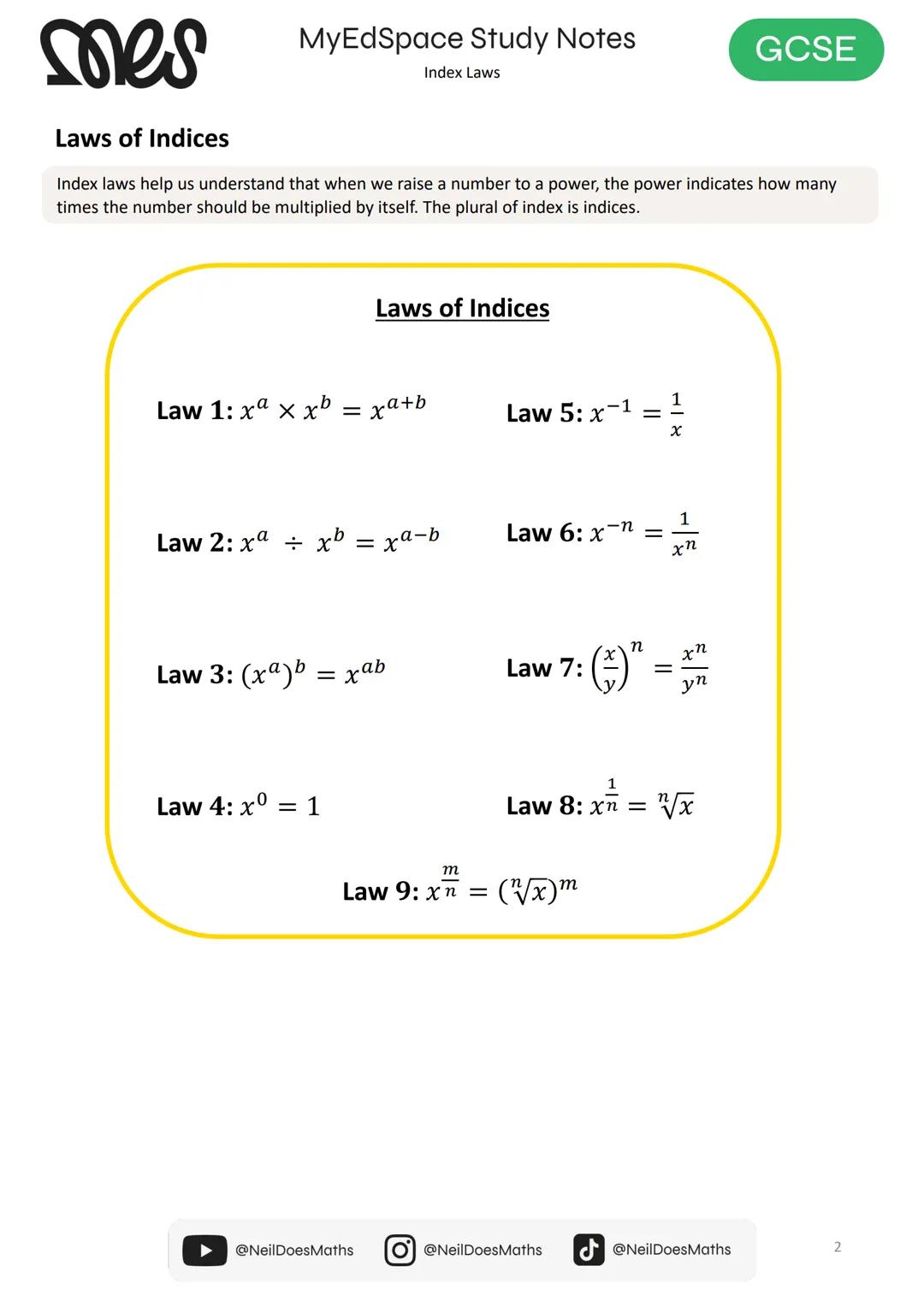
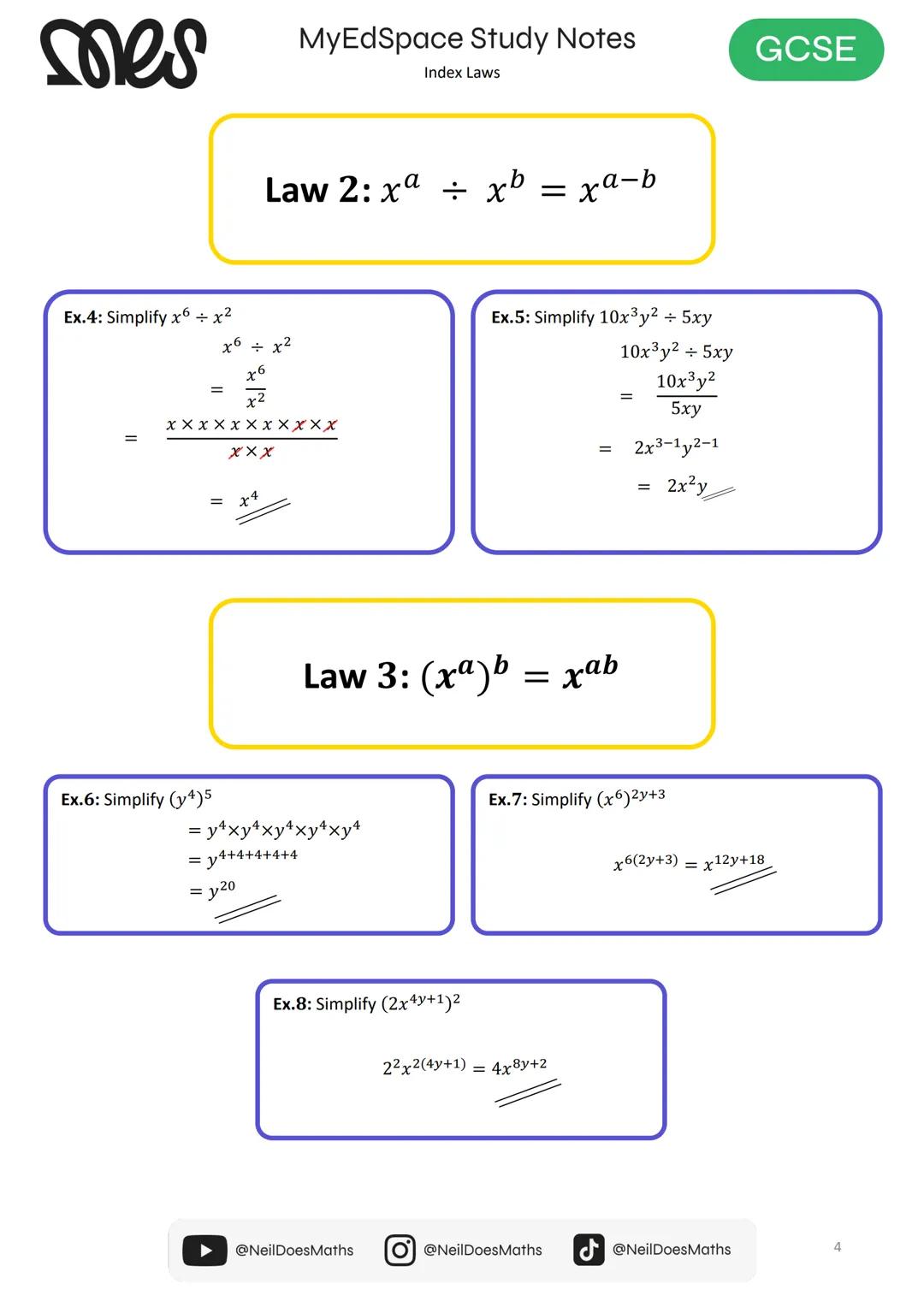
Law 2: Dividing Powers
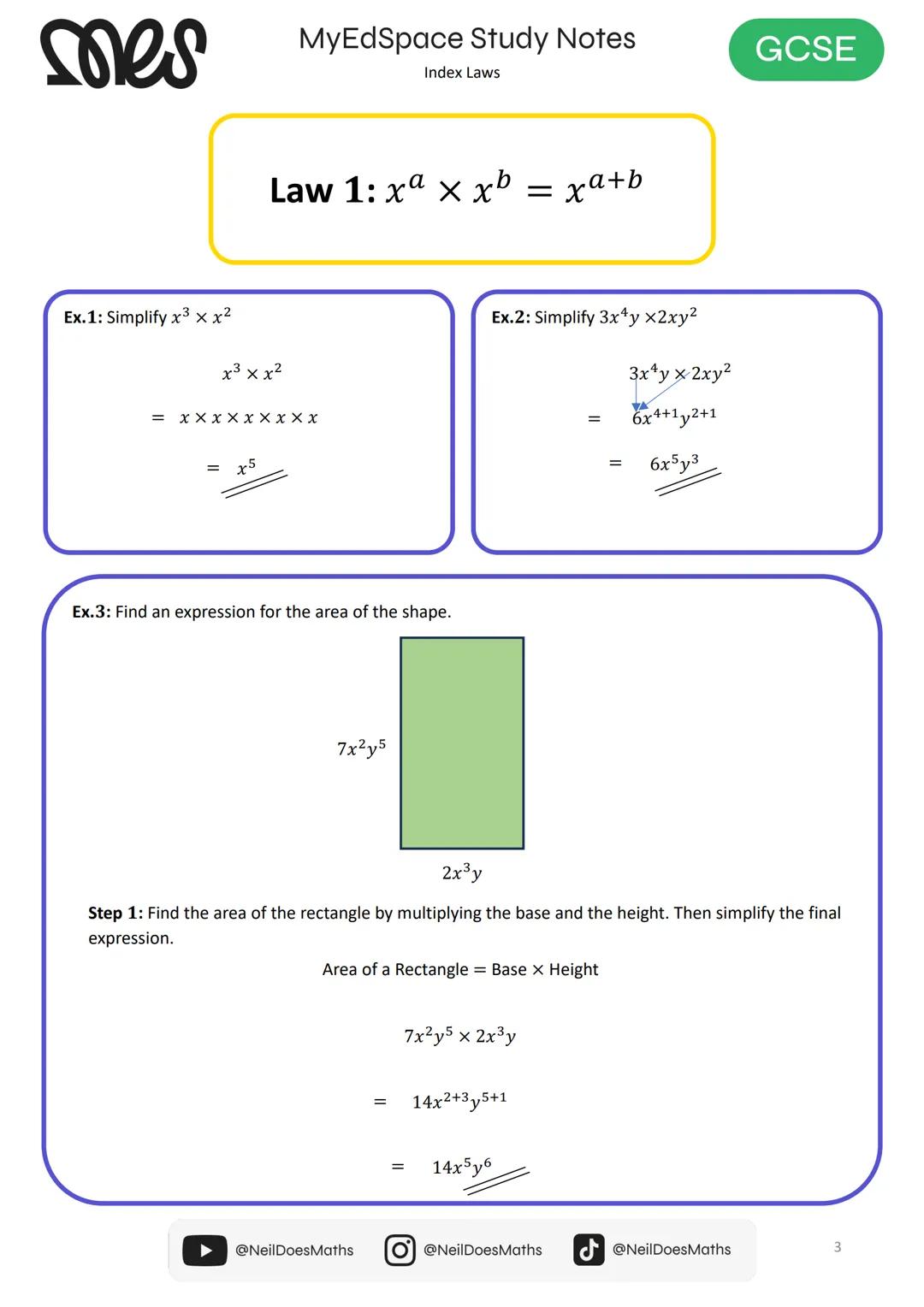
Division with indices follows the opposite pattern to multiplication: x^a ÷ x^b = x^a−b. You subtract the bottom index from the top index, which makes sense when you think about cancelling out common factors.
Take x⁶ ÷ x² as an example. When written as a fraction, you can cancel out two x's from the top and bottom, leaving you with x⁴. This subtraction rule saves you from writing out all those x's every time.
The same principle applies to more complex expressions like 10x³y² ÷ 5xy. First, divide the numbers (10 ÷ 5 = 2), then subtract indices for each variable separately, giving you 2x²y.
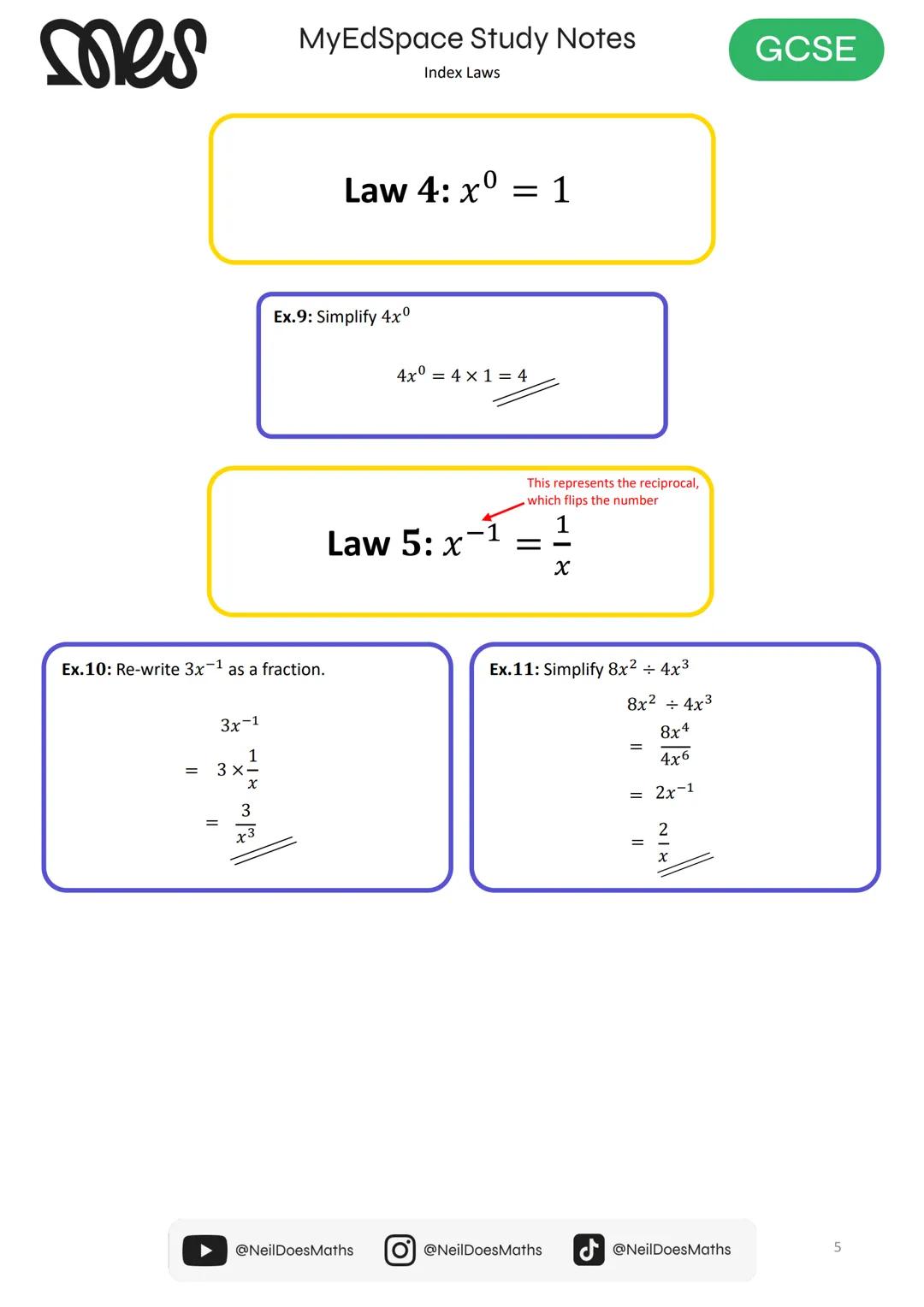
Watch Out: When the bottom index is larger than the top index, you'll end up with a negative power - but don't panic, there are laws to handle those too!




 Maths
Maths Sociology
 Biology