

Everything around you - from your phone to the air... Show more
 English Literature
 Biology
 Sociology
Sign up to see the contentIt's free!
Access to all documents
Improve your grades
Join milions of students
By signing up you accept Terms of Service and Privacy Policy
Subjects
Triangle Congruence and Similarity Theorems
Triangle Properties and Classification
Linear Equations and Graphs
Geometric Angle Relationships
Trigonometric Functions and Identities
Equation Solving Techniques
Circle Geometry Fundamentals
Division Operations and Methods
Basic Differentiation Rules
Exponent and Logarithm Properties
Show all topics
Human Organ Systems
Reproductive Cell Cycles
Biological Sciences Subdisciplines
Cellular Energy Metabolism
Autotrophic Energy Processes
Inheritance Patterns and Principles
Biomolecular Structure and Organization
Cell Cycle and Division Mechanics
Cellular Organization and Development
Biological Structural Organization
Show all topics
Chemical Sciences and Applications
Atomic Structure and Composition
Molecular Electron Structure Representation
Atomic Electron Behavior
Matter Properties and Water
Mole Concept and Calculations
Gas Laws and Behavior
Periodic Table Organization
Chemical Thermodynamics Fundamentals
Chemical Bond Types and Properties
Show all topics
European Renaissance and Enlightenment
European Cultural Movements 800-1920
American Revolution Era 1763-1797
American Civil War 1861-1865
Global Imperial Systems
Mongol and Chinese Dynasties
U.S. Presidents and World Leaders
Historical Sources and Documentation
World Wars Era and Impact
World Religious Systems
Show all topics
Classic and Contemporary Novels
Literary Character Analysis
Rhetorical Theory and Practice
Classic Literary Narratives
Reading Analysis and Interpretation
Narrative Structure and Techniques
English Language Components
Influential English-Language Authors
Basic Sentence Structure
Narrative Voice and Perspective
Show all topics
135
•
Jan 2, 2026
•
Everything around you - from your phone to the air... Show more
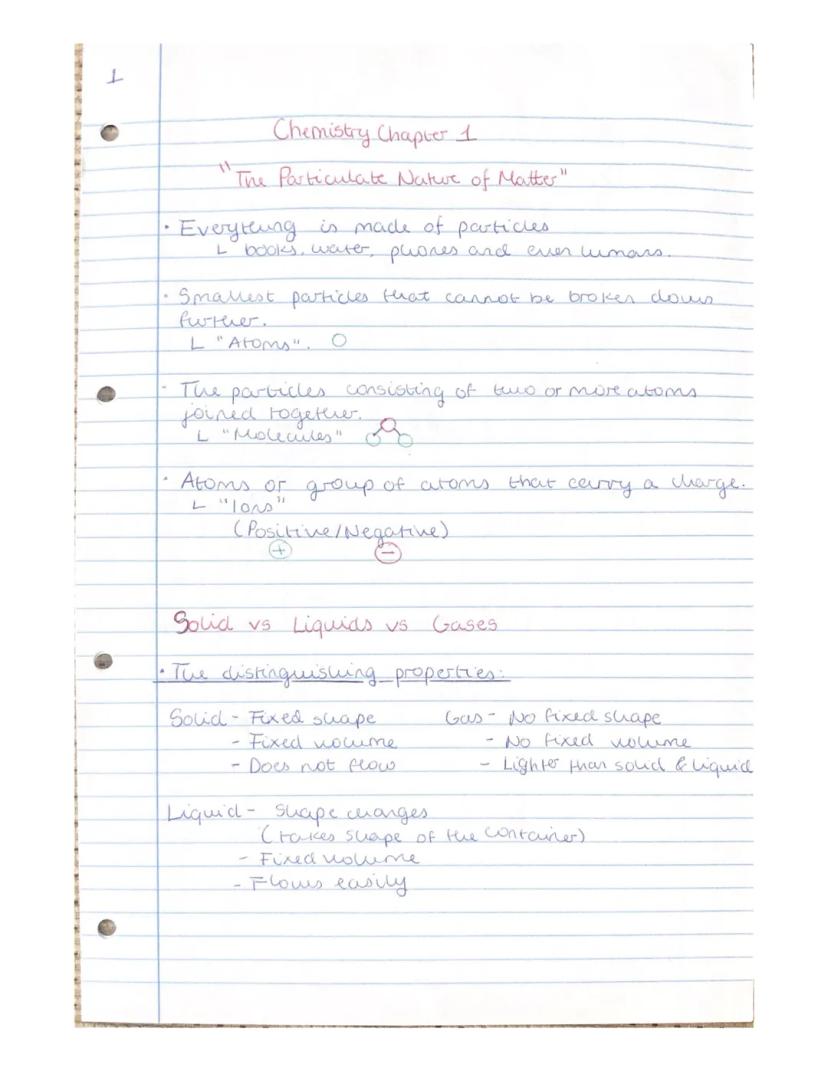
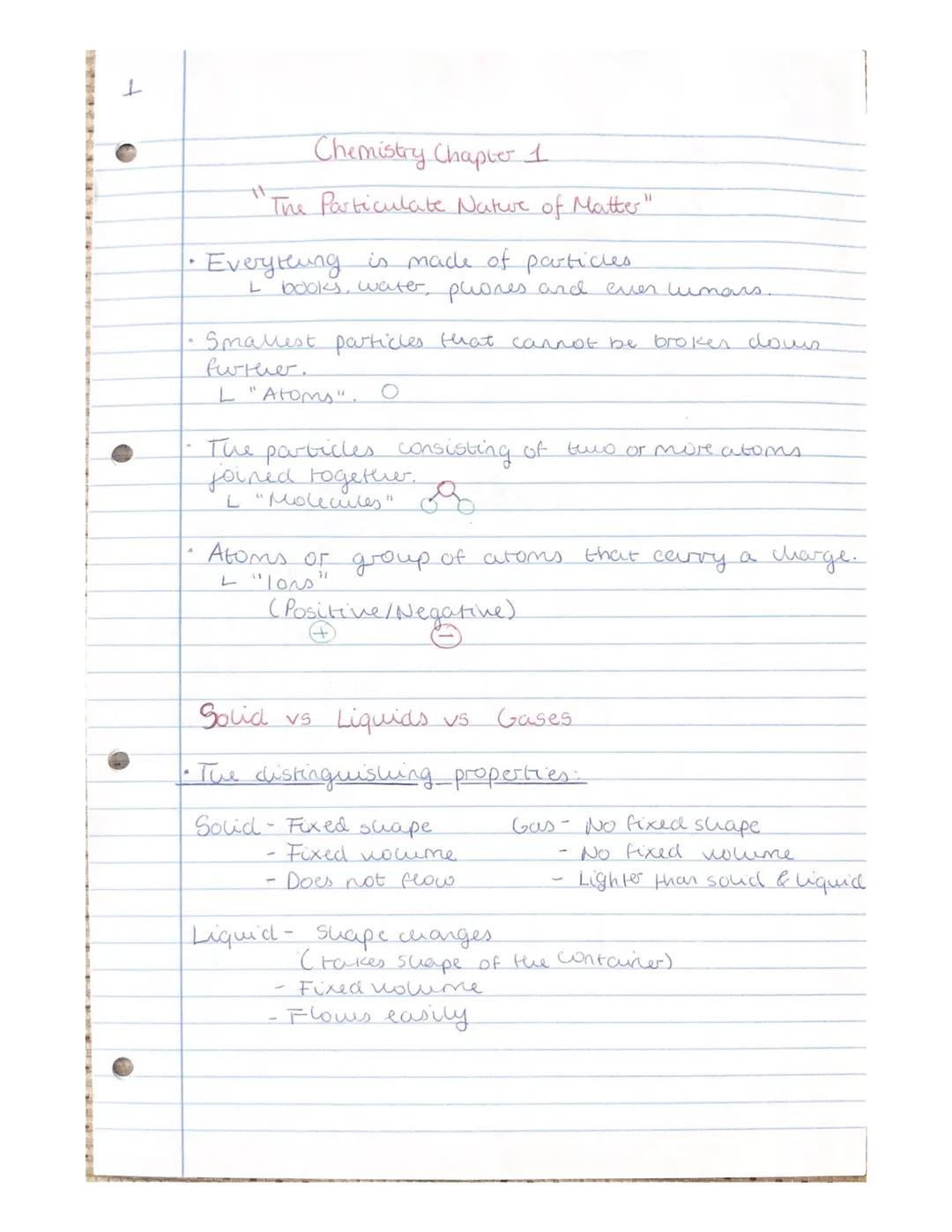
Atoms are the smallest particles that can't be broken down any further - think of them as nature's Lego blocks. When two or more atoms stick together, they form molecules. Sometimes these particles carry an electric charge, making them ions (which can be positive or negative).
You already know that matter exists as solids, liquids, and gases, but what makes them different? Solids keep their shape and volume and don't flow. Liquids change shape to fit their container but keep the same volume and flow easily. Gases have no fixed shape or volume and are much lighter than solids and liquids.
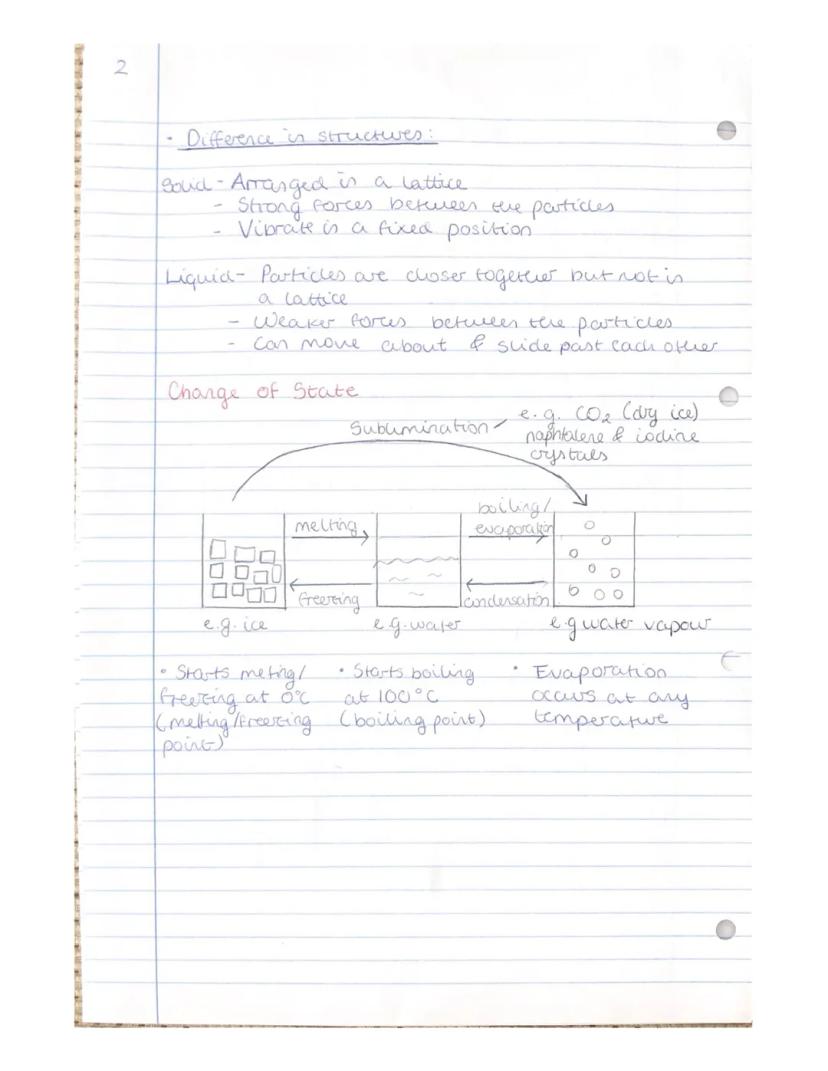
The secret lies in how the particles are arranged and how strongly they're attracted to each other. In solids, particles are packed in a neat lattice structure with strong forces holding them together - they can only vibrate in fixed positions.
Key Point: The state of matter depends entirely on how particles are arranged and how they move!
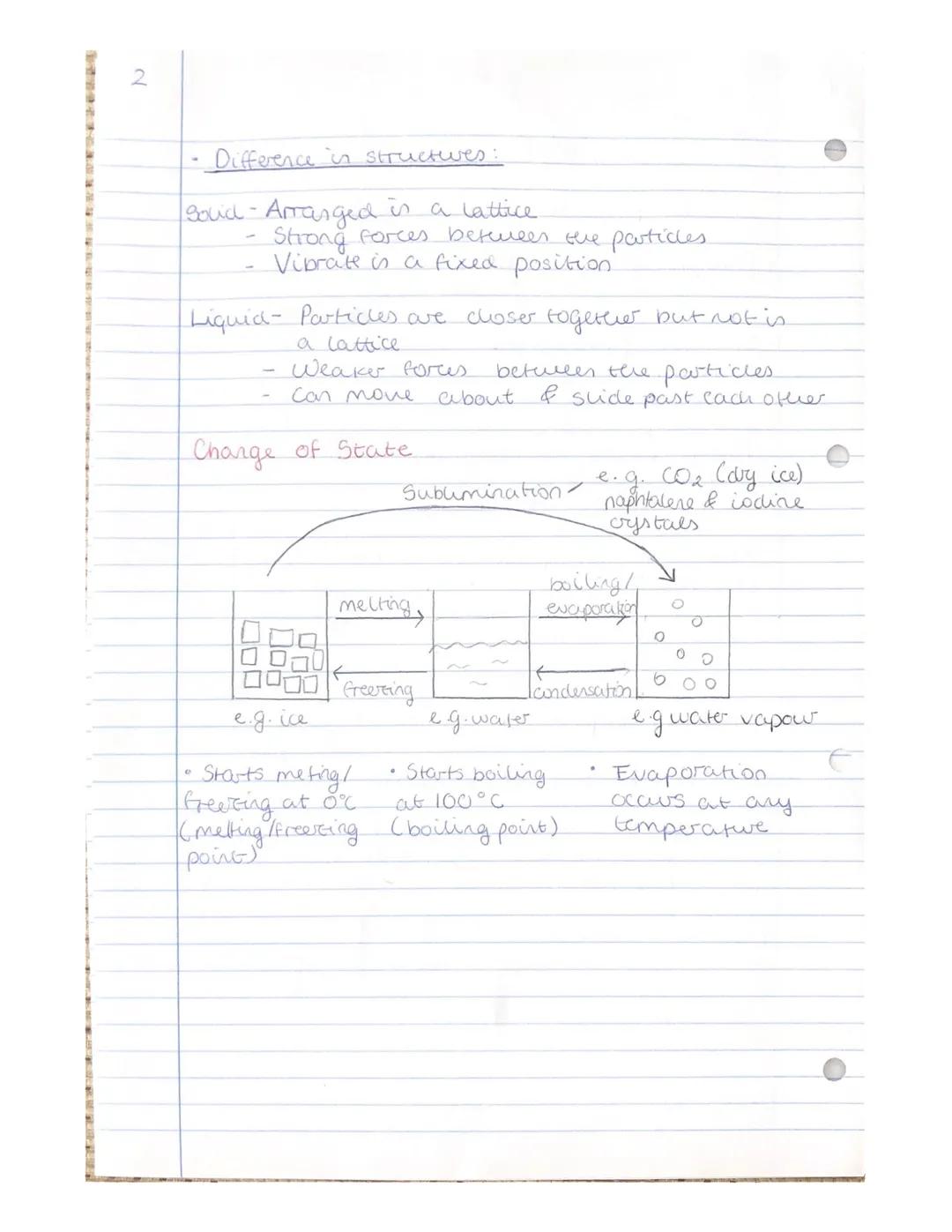
In liquids, particles are still close together but not in a rigid pattern. The forces between them are weaker, so they can slide past each other and move about more freely.
Changes of state happen when you add or remove energy. Melting turns solids into liquids, whilst boiling and evaporation turn liquids into gases. Going the other way, freezing turns liquids solid and condensation turns gases back to liquids. Some solids can jump straight to gas through sublimation - dry ice does this brilliantly!
Water melts and freezes at 0°C and boils at 100°C. But here's something cool: evaporation can happen at any temperature, which is why puddles dry up even on cold days.
Remember: Each substance has its own specific melting and boiling points - they're like fingerprints for different materials!
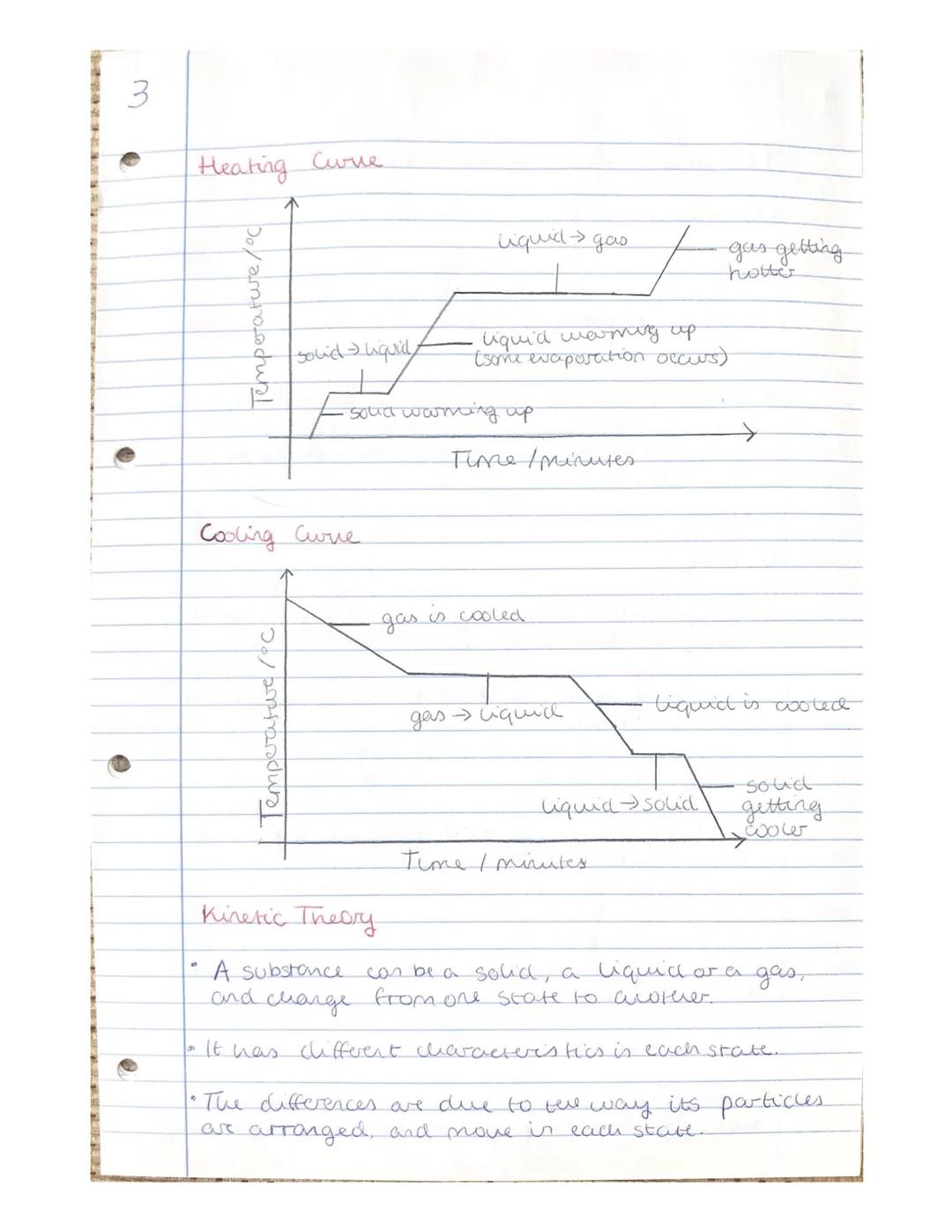
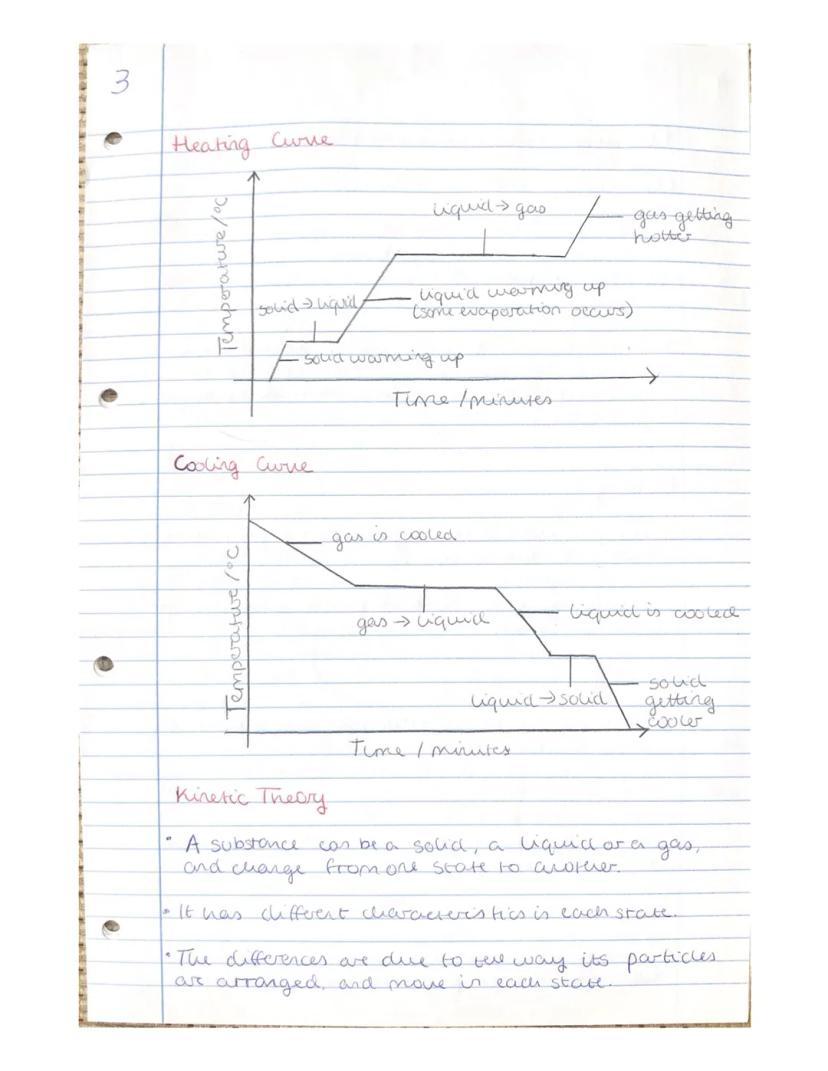
Heating curves show what happens when you continuously heat a substance. The temperature rises steadily until it hits the melting point, then stays flat whilst the solid melts. Once it's all liquid, the temperature rises again until the boiling point, where it flattens out again.
Cooling curves work in reverse - temperature drops steadily, then plateaus during condensation and freezing.
The kinetic theory explains why this happens. It states that substances can exist as solid, liquid, or gas, and the differences come down to how particles are arranged and how they move. More energy means more movement, which affects the state.
Test Tip: You'll often see heating and cooling curve graphs in exams - remember that flat sections show state changes happening!
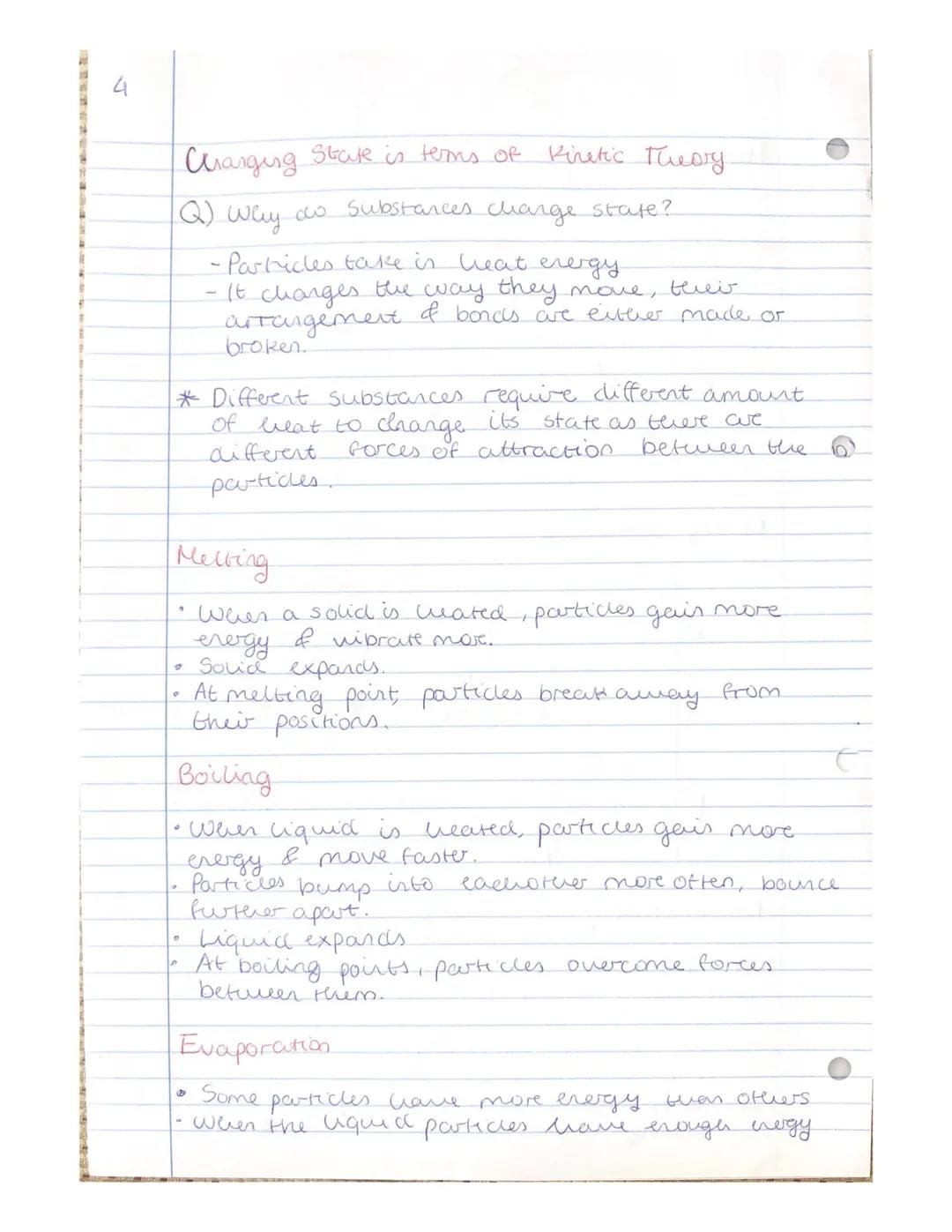
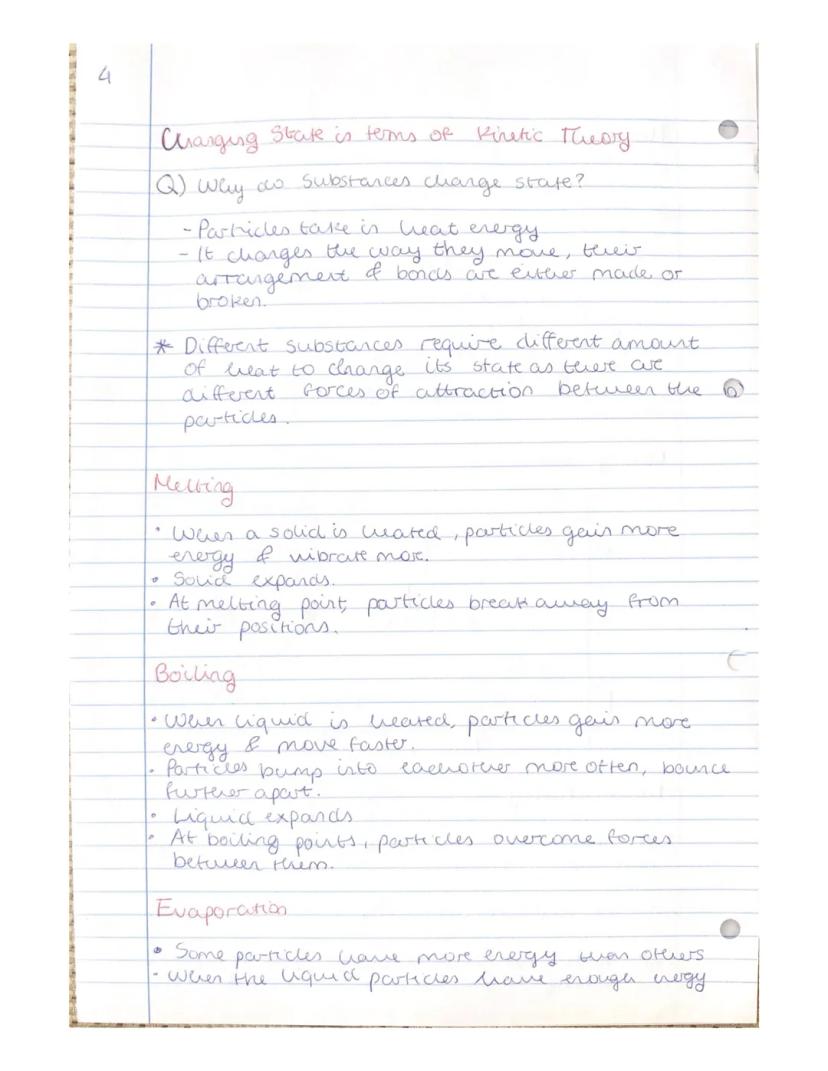
When substances change state, it's all about energy transfer. Particles absorb heat energy, which changes how they move and whether bonds form or break between them.
During melting, solid particles gain energy and vibrate more vigorously. The solid expands until particles break free from their fixed positions at the melting point.
Boiling works similarly - liquid particles gain energy and move faster, bumping into each other more often and bouncing further apart. The liquid expands until particles overcome the forces holding them together.
Evaporation is different because it happens at any temperature below boiling point. Some particles naturally have more energy than others and can escape from the liquid surface.
Real-world Connection: This is why wet clothes dry even in cold weather - some water molecules always have enough energy to escape!
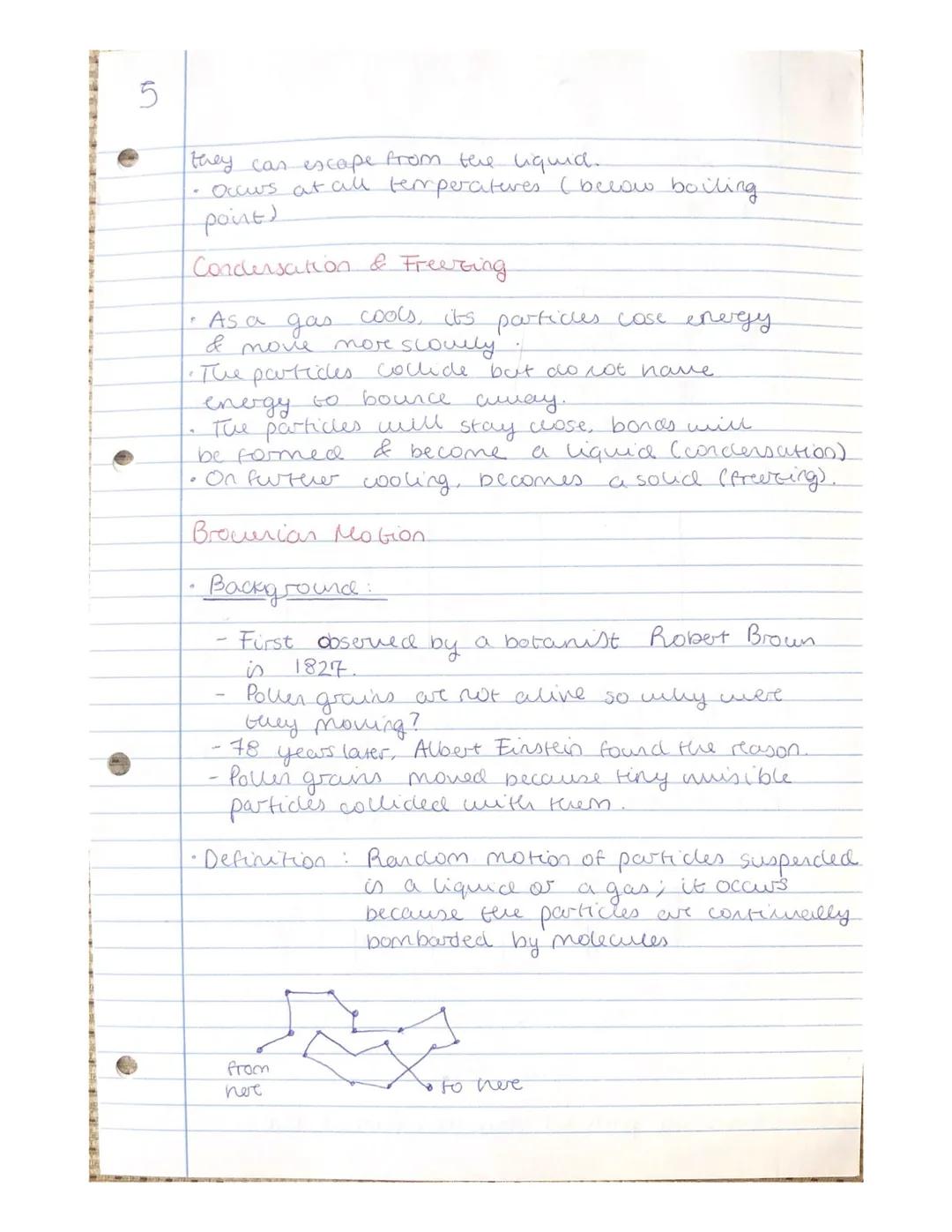
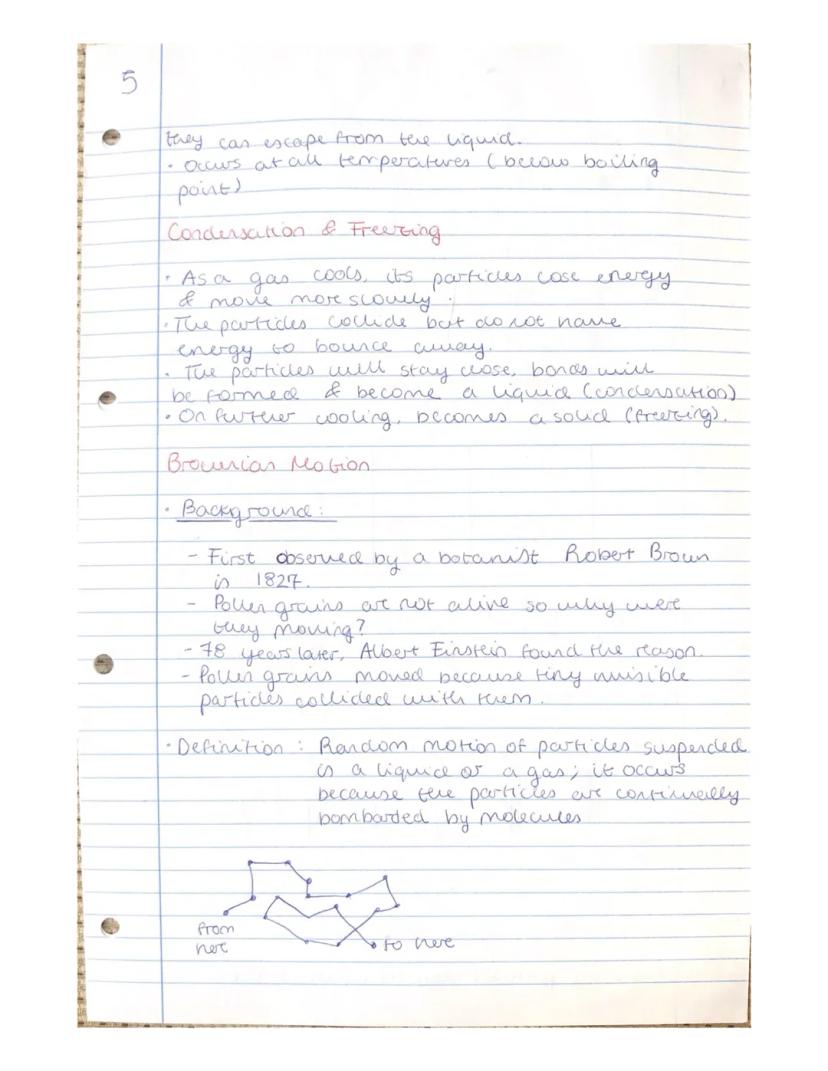
Condensation and freezing happen when particles lose energy. As gas cools, particles move more slowly and don't have enough energy to bounce away after collisions. They stay close together, bonds form, and the gas becomes liquid. Further cooling creates a solid.
Brownian motion has a fascinating history. In 1827, botanist Robert Brown noticed pollen grains moving randomly in water, even though they weren't alive. Einstein solved this puzzle 78 years later - the pollen moved because invisible water molecules were constantly bombarding it.
Brownian motion is the random movement of particles suspended in liquid or gas, caused by continuous bombardment from surrounding molecules. You can see this effect when dust particles dance in a sunbeam.
Fun Fact: Einstein's explanation of Brownian motion helped prove that atoms and molecules actually exist - something scientists weren't certain about back then!
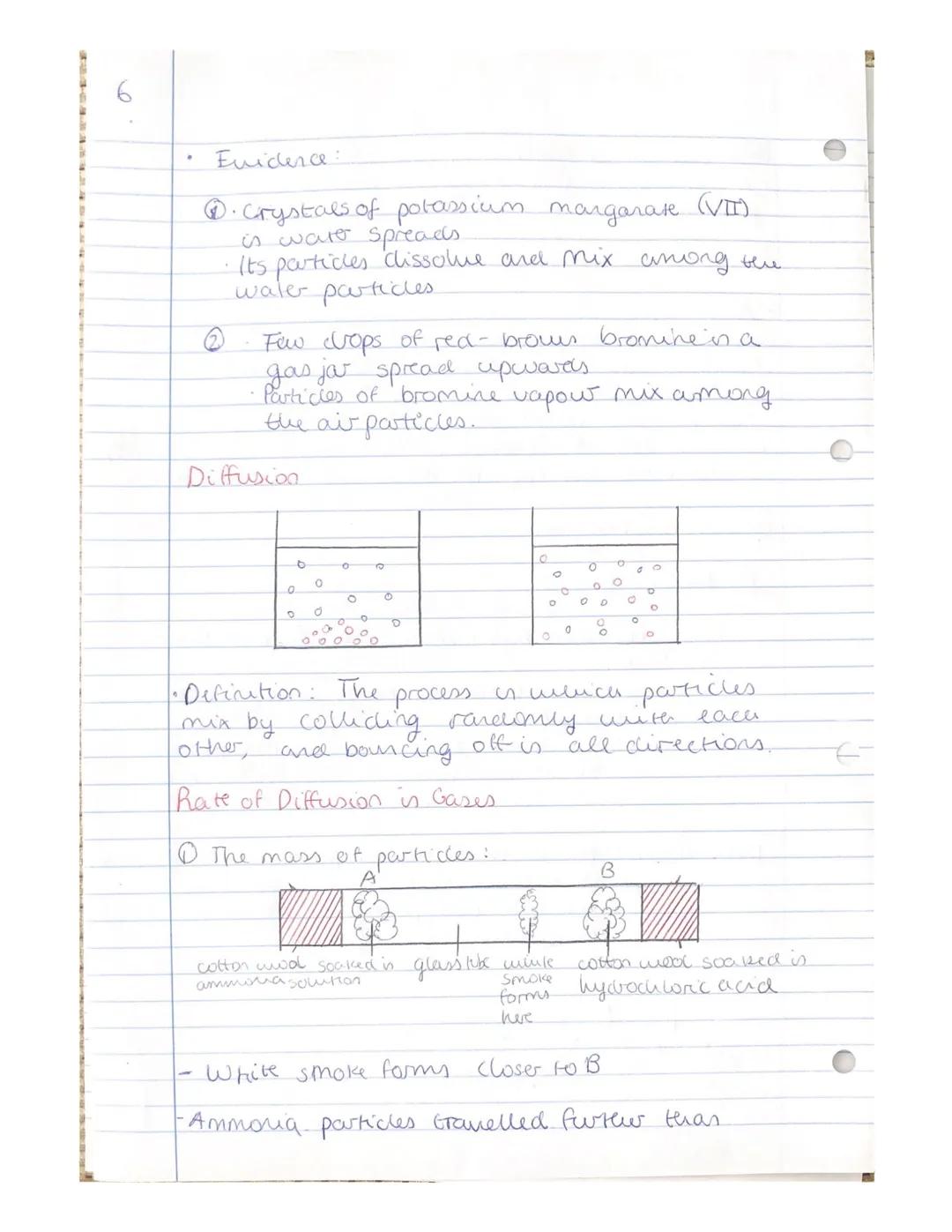
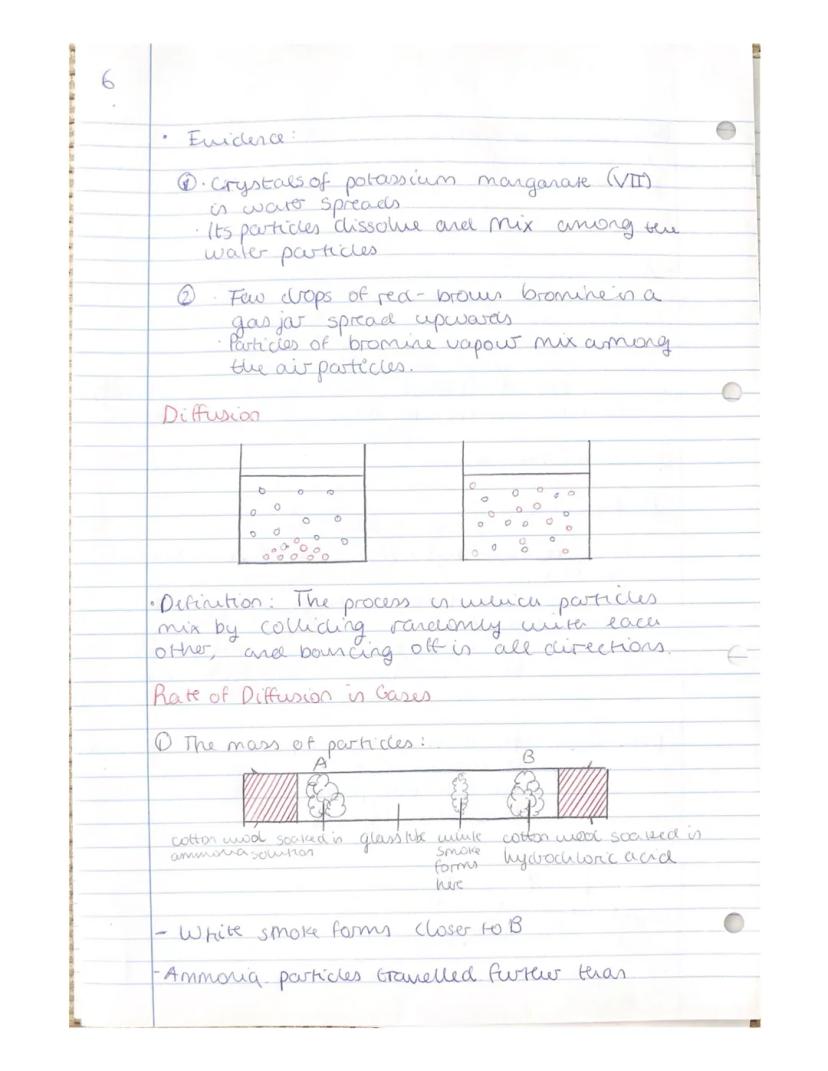
Diffusion explains how particles spread out by randomly colliding and bouncing in all directions. Drop food colouring in water and watch it spread - that's diffusion at work.
You can see brilliant examples with potassium permanganate crystals dissolving and spreading through water, or bromine vapour mixing upwards through air in a gas jar.
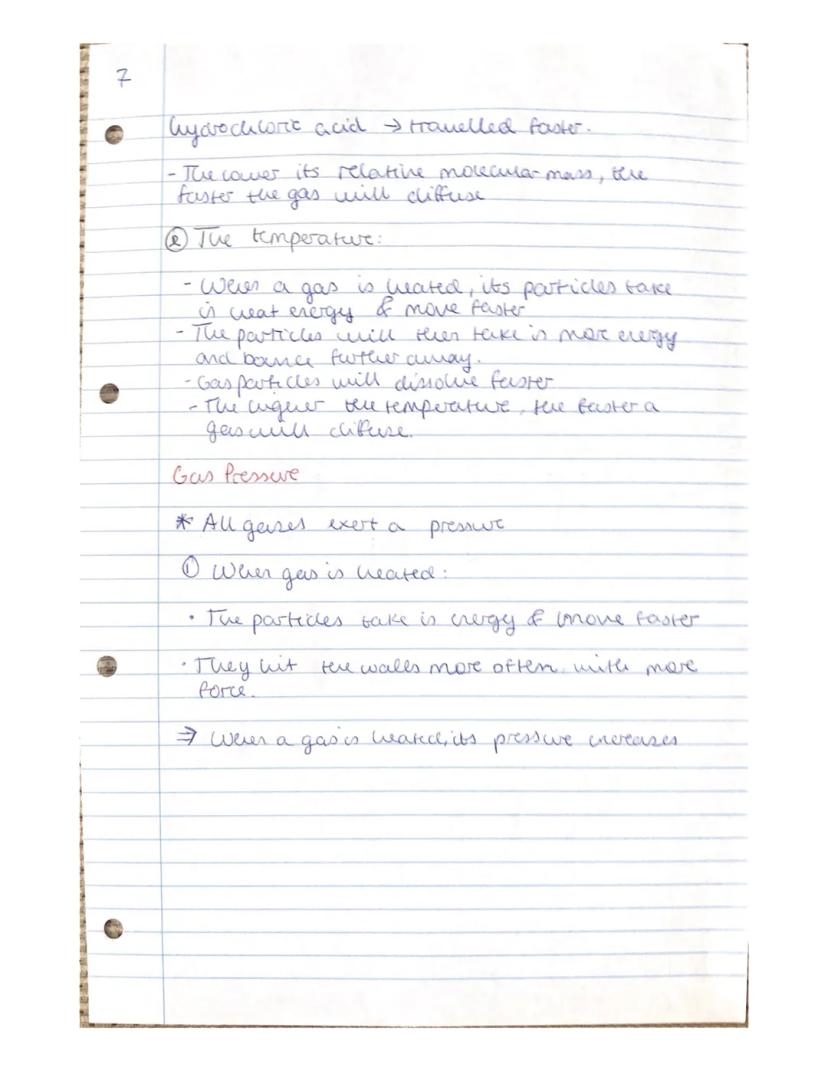
The rate of diffusion in gases depends on two main factors. First, particle mass matters - lighter particles move faster. In the classic experiment with ammonia and hydrochloric acid meeting in a glass tube, ammonia particles travel further because they're lighter.
Temperature also affects diffusion speed. When gas particles are heated, they gain energy and move faster, bouncing further apart and mixing more quickly.
Memory Trick: Think "Light and Hot = Fast Diffusion" - lighter particles at higher temperatures always diffuse faster!
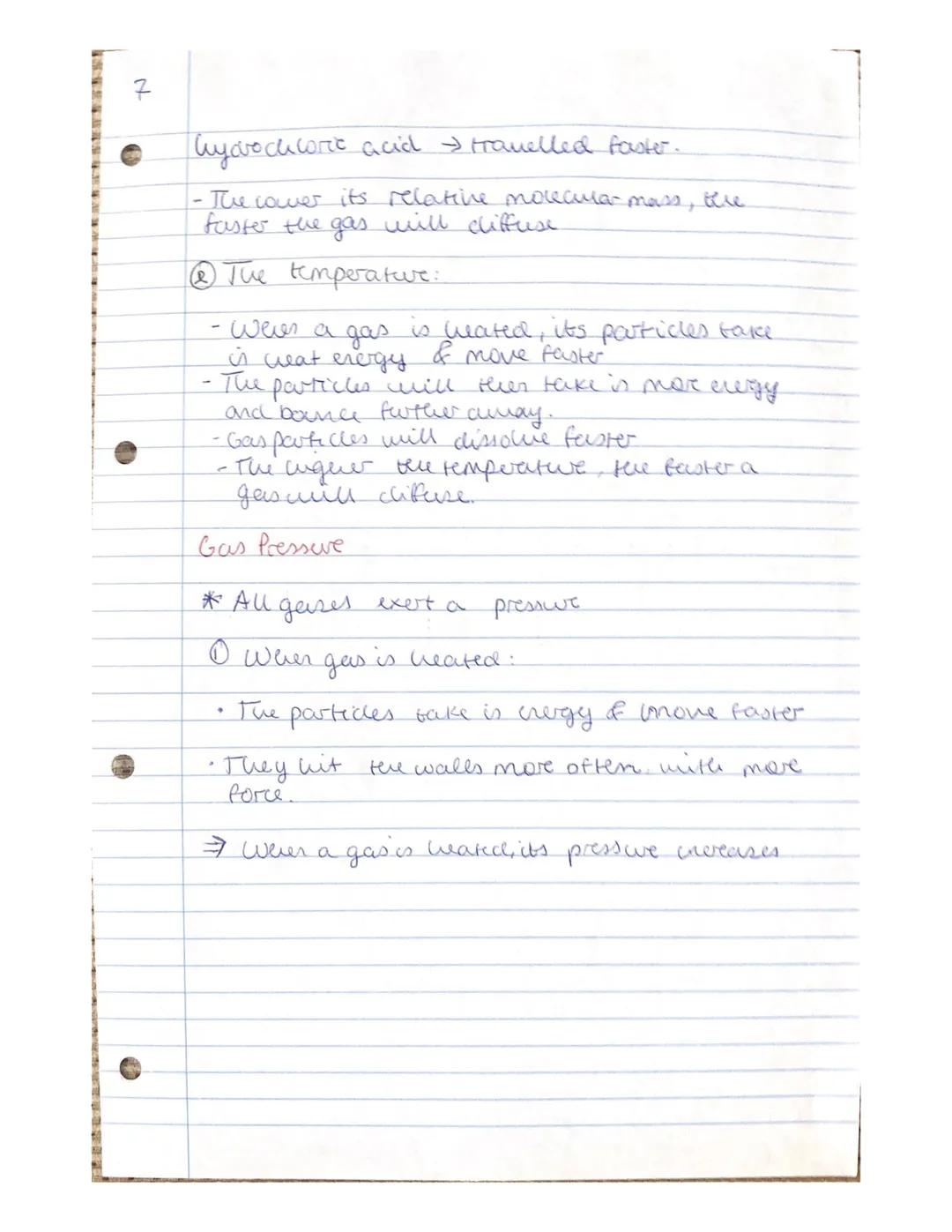
All gases exert pressure on their surroundings because moving particles constantly hit container walls. It's like being inside a room where invisible tennis balls are flying everywhere, constantly bouncing off the walls.
When you heat a gas, particles gain energy and move faster. They hit the walls more frequently and with greater force, increasing the pressure. This explains why balloons burst in hot cars or why aerosol cans have warning labels about heat.
Understanding gas pressure helps explain everyday phenomena, from why car tyres need more air in winter to how pressure cookers work.
Safety Note: This is why you should never heat sealed containers - the increasing gas pressure can cause dangerous explosions!
Our AI companion is specifically built for the needs of students. Based on the millions of content pieces we have on the platform we can provide truly meaningful and relevant answers to students. But its not only about answers, the companion is even more about guiding students through their daily learning challenges, with personalised study plans, quizzes or content pieces in the chat and 100% personalisation based on the students skills and developments.
You can download the app in the Google Play Store and in the Apple App Store.
That's right! Enjoy free access to study content, connect with fellow students, and get instant help – all at your fingertips.
App Store
Google Play
The app is very easy to use and well designed. I have found everything I was looking for so far and have been able to learn a lot from the presentations! I will definitely use the app for a class assignment! And of course it also helps a lot as an inspiration.
Stefan S
iOS user
This app is really great. There are so many study notes and help [...]. My problem subject is French, for example, and the app has so many options for help. Thanks to this app, I have improved my French. I would recommend it to anyone.
Samantha Klich
Android user
Wow, I am really amazed. I just tried the app because I've seen it advertised many times and was absolutely stunned. This app is THE HELP you want for school and above all, it offers so many things, such as workouts and fact sheets, which have been VERY helpful to me personally.
Anna
iOS user
I think it’s very much worth it and you’ll end up using it a lot once you get the hang of it and even after looking at others notes you can still ask your Artificial intelligence buddy the question and ask to simplify it if you still don’t get it!!! In the end I think it’s worth it 😊👍 ⚠️Also DID I MENTION ITS FREEE YOU DON’T HAVE TO PAY FOR ANYTHING AND STILL GET YOUR GRADES IN PERFECTLY❗️❗️⚠️
Thomas R
iOS user
Knowunity is the BEST app I’ve used in a minute. This is not an ai review or anything this is genuinely coming from a 7th grade student (I know 2011 im young) but dude this app is a 10/10 i have maintained a 3.8 gpa and have plenty of time for gaming. I love it and my mom is just happy I got good grades
Brad T
Android user
Not only did it help me find the answer but it also showed me alternative ways to solve it. I was horrible in math and science but now I have an a in both subjects. Thanks for the help🤍🤍
David K
iOS user
The app's just great! All I have to do is enter the topic in the search bar and I get the response real fast. I don't have to watch 10 YouTube videos to understand something, so I'm saving my time. Highly recommended!
Sudenaz Ocak
Android user
In school I was really bad at maths but thanks to the app, I am doing better now. I am so grateful that you made the app.
Greenlight Bonnie
Android user
I found this app a couple years ago and it has only gotten better since then. I really love it because it can help with written questions and photo questions. Also, it can find study guides that other people have made as well as flashcard sets and practice tests. The free version is also amazing for students who might not be able to afford it. Would 100% recommend
Aubrey
iOS user
Best app if you're in Highschool or Junior high. I have been using this app for 2 school years and it's the best, it's good if you don't have anyone to help you with school work.😋🩷🎀
Marco B
iOS user
THE QUIZES AND FLASHCARDS ARE SO USEFUL AND I LOVE THE SCHOOLGPT. IT ALSO IS LITREALLY LIKE CHATGPT BUT SMARTER!! HELPED ME WITH MY MASCARA PROBLEMS TOO!! AS WELL AS MY REAL SUBJECTS ! DUHHH 😍😁😲🤑💗✨🎀😮
Elisha
iOS user
This app is phenomenal down to the correct info and the various topics you can study! I greatly recommend it for people who struggle with procrastination and those who need homework help. It has been perfectly accurate for world 1 history as far as I’ve seen! Geometry too!
Paul T
iOS user
The app is very easy to use and well designed. I have found everything I was looking for so far and have been able to learn a lot from the presentations! I will definitely use the app for a class assignment! And of course it also helps a lot as an inspiration.
Stefan S
iOS user
This app is really great. There are so many study notes and help [...]. My problem subject is French, for example, and the app has so many options for help. Thanks to this app, I have improved my French. I would recommend it to anyone.
Samantha Klich
Android user
Wow, I am really amazed. I just tried the app because I've seen it advertised many times and was absolutely stunned. This app is THE HELP you want for school and above all, it offers so many things, such as workouts and fact sheets, which have been VERY helpful to me personally.
Anna
iOS user
I think it’s very much worth it and you’ll end up using it a lot once you get the hang of it and even after looking at others notes you can still ask your Artificial intelligence buddy the question and ask to simplify it if you still don’t get it!!! In the end I think it’s worth it 😊👍 ⚠️Also DID I MENTION ITS FREEE YOU DON’T HAVE TO PAY FOR ANYTHING AND STILL GET YOUR GRADES IN PERFECTLY❗️❗️⚠️
Thomas R
iOS user
Knowunity is the BEST app I’ve used in a minute. This is not an ai review or anything this is genuinely coming from a 7th grade student (I know 2011 im young) but dude this app is a 10/10 i have maintained a 3.8 gpa and have plenty of time for gaming. I love it and my mom is just happy I got good grades
Brad T
Android user
Not only did it help me find the answer but it also showed me alternative ways to solve it. I was horrible in math and science but now I have an a in both subjects. Thanks for the help🤍🤍
David K
iOS user
The app's just great! All I have to do is enter the topic in the search bar and I get the response real fast. I don't have to watch 10 YouTube videos to understand something, so I'm saving my time. Highly recommended!
Sudenaz Ocak
Android user
In school I was really bad at maths but thanks to the app, I am doing better now. I am so grateful that you made the app.
Greenlight Bonnie
Android user
I found this app a couple years ago and it has only gotten better since then. I really love it because it can help with written questions and photo questions. Also, it can find study guides that other people have made as well as flashcard sets and practice tests. The free version is also amazing for students who might not be able to afford it. Would 100% recommend
Aubrey
iOS user
Best app if you're in Highschool or Junior high. I have been using this app for 2 school years and it's the best, it's good if you don't have anyone to help you with school work.😋🩷🎀
Marco B
iOS user
THE QUIZES AND FLASHCARDS ARE SO USEFUL AND I LOVE THE SCHOOLGPT. IT ALSO IS LITREALLY LIKE CHATGPT BUT SMARTER!! HELPED ME WITH MY MASCARA PROBLEMS TOO!! AS WELL AS MY REAL SUBJECTS ! DUHHH 😍😁😲🤑💗✨🎀😮
Elisha
iOS user
This app is phenomenal down to the correct info and the various topics you can study! I greatly recommend it for people who struggle with procrastination and those who need homework help. It has been perfectly accurate for world 1 history as far as I’ve seen! Geometry too!
Paul T
iOS user
Everything around you - from your phone to the air you breathe - is made up of tiny particles that are constantly moving. Understanding how these particles behave helps explain why ice melts, why you can smell food cooking from... Show more
Access to all documents
Improve your grades
Join milions of students
By signing up you accept Terms of Service and Privacy Policy
Atoms are the smallest particles that can't be broken down any further - think of them as nature's Lego blocks. When two or more atoms stick together, they form molecules. Sometimes these particles carry an electric charge, making them ions (which can be positive or negative).
You already know that matter exists as solids, liquids, and gases, but what makes them different? Solids keep their shape and volume and don't flow. Liquids change shape to fit their container but keep the same volume and flow easily. Gases have no fixed shape or volume and are much lighter than solids and liquids.
The secret lies in how the particles are arranged and how strongly they're attracted to each other. In solids, particles are packed in a neat lattice structure with strong forces holding them together - they can only vibrate in fixed positions.
Key Point: The state of matter depends entirely on how particles are arranged and how they move!
Access to all documents
Improve your grades
Join milions of students
By signing up you accept Terms of Service and Privacy Policy
In liquids, particles are still close together but not in a rigid pattern. The forces between them are weaker, so they can slide past each other and move about more freely.
Changes of state happen when you add or remove energy. Melting turns solids into liquids, whilst boiling and evaporation turn liquids into gases. Going the other way, freezing turns liquids solid and condensation turns gases back to liquids. Some solids can jump straight to gas through sublimation - dry ice does this brilliantly!
Water melts and freezes at 0°C and boils at 100°C. But here's something cool: evaporation can happen at any temperature, which is why puddles dry up even on cold days.
Remember: Each substance has its own specific melting and boiling points - they're like fingerprints for different materials!
Access to all documents
Improve your grades
Join milions of students
By signing up you accept Terms of Service and Privacy Policy
Heating curves show what happens when you continuously heat a substance. The temperature rises steadily until it hits the melting point, then stays flat whilst the solid melts. Once it's all liquid, the temperature rises again until the boiling point, where it flattens out again.
Cooling curves work in reverse - temperature drops steadily, then plateaus during condensation and freezing.
The kinetic theory explains why this happens. It states that substances can exist as solid, liquid, or gas, and the differences come down to how particles are arranged and how they move. More energy means more movement, which affects the state.
Test Tip: You'll often see heating and cooling curve graphs in exams - remember that flat sections show state changes happening!
Access to all documents
Improve your grades
Join milions of students
By signing up you accept Terms of Service and Privacy Policy
When substances change state, it's all about energy transfer. Particles absorb heat energy, which changes how they move and whether bonds form or break between them.
During melting, solid particles gain energy and vibrate more vigorously. The solid expands until particles break free from their fixed positions at the melting point.
Boiling works similarly - liquid particles gain energy and move faster, bumping into each other more often and bouncing further apart. The liquid expands until particles overcome the forces holding them together.
Evaporation is different because it happens at any temperature below boiling point. Some particles naturally have more energy than others and can escape from the liquid surface.
Real-world Connection: This is why wet clothes dry even in cold weather - some water molecules always have enough energy to escape!
Access to all documents
Improve your grades
Join milions of students
By signing up you accept Terms of Service and Privacy Policy
Condensation and freezing happen when particles lose energy. As gas cools, particles move more slowly and don't have enough energy to bounce away after collisions. They stay close together, bonds form, and the gas becomes liquid. Further cooling creates a solid.
Brownian motion has a fascinating history. In 1827, botanist Robert Brown noticed pollen grains moving randomly in water, even though they weren't alive. Einstein solved this puzzle 78 years later - the pollen moved because invisible water molecules were constantly bombarding it.
Brownian motion is the random movement of particles suspended in liquid or gas, caused by continuous bombardment from surrounding molecules. You can see this effect when dust particles dance in a sunbeam.
Fun Fact: Einstein's explanation of Brownian motion helped prove that atoms and molecules actually exist - something scientists weren't certain about back then!
Access to all documents
Improve your grades
Join milions of students
By signing up you accept Terms of Service and Privacy Policy
Diffusion explains how particles spread out by randomly colliding and bouncing in all directions. Drop food colouring in water and watch it spread - that's diffusion at work.
You can see brilliant examples with potassium permanganate crystals dissolving and spreading through water, or bromine vapour mixing upwards through air in a gas jar.
The rate of diffusion in gases depends on two main factors. First, particle mass matters - lighter particles move faster. In the classic experiment with ammonia and hydrochloric acid meeting in a glass tube, ammonia particles travel further because they're lighter.
Temperature also affects diffusion speed. When gas particles are heated, they gain energy and move faster, bouncing further apart and mixing more quickly.
Memory Trick: Think "Light and Hot = Fast Diffusion" - lighter particles at higher temperatures always diffuse faster!
Access to all documents
Improve your grades
Join milions of students
By signing up you accept Terms of Service and Privacy Policy
All gases exert pressure on their surroundings because moving particles constantly hit container walls. It's like being inside a room where invisible tennis balls are flying everywhere, constantly bouncing off the walls.
When you heat a gas, particles gain energy and move faster. They hit the walls more frequently and with greater force, increasing the pressure. This explains why balloons burst in hot cars or why aerosol cans have warning labels about heat.
Understanding gas pressure helps explain everyday phenomena, from why car tyres need more air in winter to how pressure cookers work.
Safety Note: This is why you should never heat sealed containers - the increasing gas pressure can cause dangerous explosions!
Our AI companion is specifically built for the needs of students. Based on the millions of content pieces we have on the platform we can provide truly meaningful and relevant answers to students. But its not only about answers, the companion is even more about guiding students through their daily learning challenges, with personalised study plans, quizzes or content pieces in the chat and 100% personalisation based on the students skills and developments.
You can download the app in the Google Play Store and in the Apple App Store.
That's right! Enjoy free access to study content, connect with fellow students, and get instant help – all at your fingertips.
3
Smart Tools NEW
Transform this note into: ✓ 50+ Practice Questions ✓ Interactive Flashcards ✓ Full Mock Exam ✓ Essay Outlines
Explore the relationship between bonding, structure, and the properties of substances in this detailed overview of states of matter. Understand the characteristics of solids, liquids, and gases, and learn about phase changes, melting points, and the significance of state symbols in chemical reactions. Ideal for chemistry students seeking to grasp fundamental concepts in chemical bonding and phase transitions.
 Chemistry
This is a review over almost all of AP Chemistry's Unit 3 content. Some snips of AP Classroom's progress check questions are in here for practice. ⬜ Fiveable and AP Classroom were used to create this review. Credit is to them.
AP ChemistryThese study notes will help you explain the type of matter such as solid, liquid, and gas, there are other definitions or terms that are part of the matter too.
ChemistryThese notes cover intermolecular forces, dispersion forces, dipole-dipole, properties of liquid, and hydrogen bonding.
ChemistryThis contains a short description about intermolecular forces, classification of hydrocarbons and etc.
ChemistryExplore the key concepts of chemical bonding, including ionic, covalent, and intermolecular forces. This summary covers essential topics such as hydrogen bonding, London dispersion forces, and the properties of water, providing a comprehensive overview for SQA Higher Chemistry students. Ideal for exam preparation and understanding molecular interactions.
ChemistryApp Store
Google Play
The app is very easy to use and well designed. I have found everything I was looking for so far and have been able to learn a lot from the presentations! I will definitely use the app for a class assignment! And of course it also helps a lot as an inspiration.
Stefan S
iOS user
This app is really great. There are so many study notes and help [...]. My problem subject is French, for example, and the app has so many options for help. Thanks to this app, I have improved my French. I would recommend it to anyone.
Samantha Klich
Android user
Wow, I am really amazed. I just tried the app because I've seen it advertised many times and was absolutely stunned. This app is THE HELP you want for school and above all, it offers so many things, such as workouts and fact sheets, which have been VERY helpful to me personally.
Anna
iOS user
I think it’s very much worth it and you’ll end up using it a lot once you get the hang of it and even after looking at others notes you can still ask your Artificial intelligence buddy the question and ask to simplify it if you still don’t get it!!! In the end I think it’s worth it 😊👍 ⚠️Also DID I MENTION ITS FREEE YOU DON’T HAVE TO PAY FOR ANYTHING AND STILL GET YOUR GRADES IN PERFECTLY❗️❗️⚠️
Thomas R
iOS user
Knowunity is the BEST app I’ve used in a minute. This is not an ai review or anything this is genuinely coming from a 7th grade student (I know 2011 im young) but dude this app is a 10/10 i have maintained a 3.8 gpa and have plenty of time for gaming. I love it and my mom is just happy I got good grades
Brad T
Android user
Not only did it help me find the answer but it also showed me alternative ways to solve it. I was horrible in math and science but now I have an a in both subjects. Thanks for the help🤍🤍
David K
iOS user
The app's just great! All I have to do is enter the topic in the search bar and I get the response real fast. I don't have to watch 10 YouTube videos to understand something, so I'm saving my time. Highly recommended!
Sudenaz Ocak
Android user
In school I was really bad at maths but thanks to the app, I am doing better now. I am so grateful that you made the app.
Greenlight Bonnie
Android user
I found this app a couple years ago and it has only gotten better since then. I really love it because it can help with written questions and photo questions. Also, it can find study guides that other people have made as well as flashcard sets and practice tests. The free version is also amazing for students who might not be able to afford it. Would 100% recommend
Aubrey
iOS user
Best app if you're in Highschool or Junior high. I have been using this app for 2 school years and it's the best, it's good if you don't have anyone to help you with school work.😋🩷🎀
Marco B
iOS user
THE QUIZES AND FLASHCARDS ARE SO USEFUL AND I LOVE THE SCHOOLGPT. IT ALSO IS LITREALLY LIKE CHATGPT BUT SMARTER!! HELPED ME WITH MY MASCARA PROBLEMS TOO!! AS WELL AS MY REAL SUBJECTS ! DUHHH 😍😁😲🤑💗✨🎀😮
Elisha
iOS user
This app is phenomenal down to the correct info and the various topics you can study! I greatly recommend it for people who struggle with procrastination and those who need homework help. It has been perfectly accurate for world 1 history as far as I’ve seen! Geometry too!
Paul T
iOS user
The app is very easy to use and well designed. I have found everything I was looking for so far and have been able to learn a lot from the presentations! I will definitely use the app for a class assignment! And of course it also helps a lot as an inspiration.
Stefan S
iOS user
This app is really great. There are so many study notes and help [...]. My problem subject is French, for example, and the app has so many options for help. Thanks to this app, I have improved my French. I would recommend it to anyone.
Samantha Klich
Android user
Wow, I am really amazed. I just tried the app because I've seen it advertised many times and was absolutely stunned. This app is THE HELP you want for school and above all, it offers so many things, such as workouts and fact sheets, which have been VERY helpful to me personally.
Anna
iOS user
I think it’s very much worth it and you’ll end up using it a lot once you get the hang of it and even after looking at others notes you can still ask your Artificial intelligence buddy the question and ask to simplify it if you still don’t get it!!! In the end I think it’s worth it 😊👍 ⚠️Also DID I MENTION ITS FREEE YOU DON’T HAVE TO PAY FOR ANYTHING AND STILL GET YOUR GRADES IN PERFECTLY❗️❗️⚠️
Thomas R
iOS user
Knowunity is the BEST app I’ve used in a minute. This is not an ai review or anything this is genuinely coming from a 7th grade student (I know 2011 im young) but dude this app is a 10/10 i have maintained a 3.8 gpa and have plenty of time for gaming. I love it and my mom is just happy I got good grades
Brad T
Android user
Not only did it help me find the answer but it also showed me alternative ways to solve it. I was horrible in math and science but now I have an a in both subjects. Thanks for the help🤍🤍
David K
iOS user
The app's just great! All I have to do is enter the topic in the search bar and I get the response real fast. I don't have to watch 10 YouTube videos to understand something, so I'm saving my time. Highly recommended!
Sudenaz Ocak
Android user
In school I was really bad at maths but thanks to the app, I am doing better now. I am so grateful that you made the app.
Greenlight Bonnie
Android user
I found this app a couple years ago and it has only gotten better since then. I really love it because it can help with written questions and photo questions. Also, it can find study guides that other people have made as well as flashcard sets and practice tests. The free version is also amazing for students who might not be able to afford it. Would 100% recommend
Aubrey
iOS user
Best app if you're in Highschool or Junior high. I have been using this app for 2 school years and it's the best, it's good if you don't have anyone to help you with school work.😋🩷🎀
Marco B
iOS user
THE QUIZES AND FLASHCARDS ARE SO USEFUL AND I LOVE THE SCHOOLGPT. IT ALSO IS LITREALLY LIKE CHATGPT BUT SMARTER!! HELPED ME WITH MY MASCARA PROBLEMS TOO!! AS WELL AS MY REAL SUBJECTS ! DUHHH 😍😁😲🤑💗✨🎀😮
Elisha
iOS user
This app is phenomenal down to the correct info and the various topics you can study! I greatly recommend it for people who struggle with procrastination and those who need homework help. It has been perfectly accurate for world 1 history as far as I’ve seen! Geometry too!
Paul T
iOS user