Energy Changes in Chemical Reactions
Ever wondered why some reactions make things hot whilst others make them cold? It all comes down to whether the reaction takes in energy or gives it out.
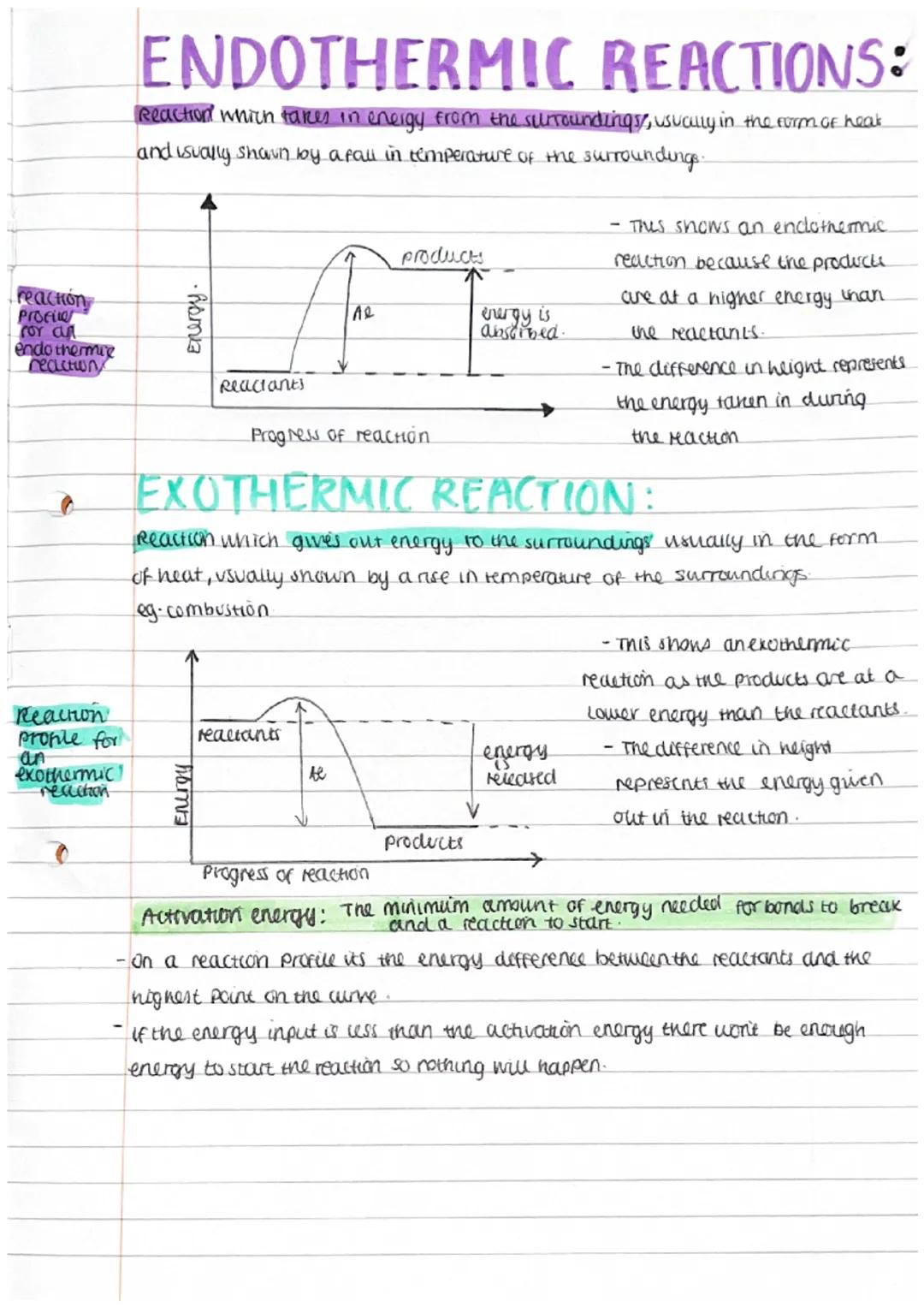
Endothermic reactions are the energy absorbers - they take in heat from their surroundings, which is why the temperature around them drops. Think of those instant ice packs used for sports injuries. When you activate them, the chemical reaction inside absorbs heat from your skin, creating that cooling effect.
On the flip side, exothermic reactions are the energy givers. They release heat to their surroundings, causing temperatures to rise. Combustion reactions like burning wood or the chemical reaction in hand warmers are perfect examples - they pump out heat energy.
The key difference shows up clearly on reaction profile diagrams. For endothermic reactions, the products sit higher on the energy scale than the reactants (they've absorbed energy to get there). For exothermic reactions, it's the opposite - products are lower because energy has been released.
Activation energy is like the energy barrier every reaction must overcome to get started. It's the minimum energy needed to break bonds and kick off the reaction. On a reaction profile, you'll spot it as the peak - the highest point between reactants and products. Without enough energy to reach this peak, reactions simply won't happen, no matter how long you wait.
Quick Check: If products are higher than reactants on an energy diagram, you're looking at an endothermic reaction that absorbs energy!



 Sociology
 Biology