Strong vs. Weak Acids & Bases
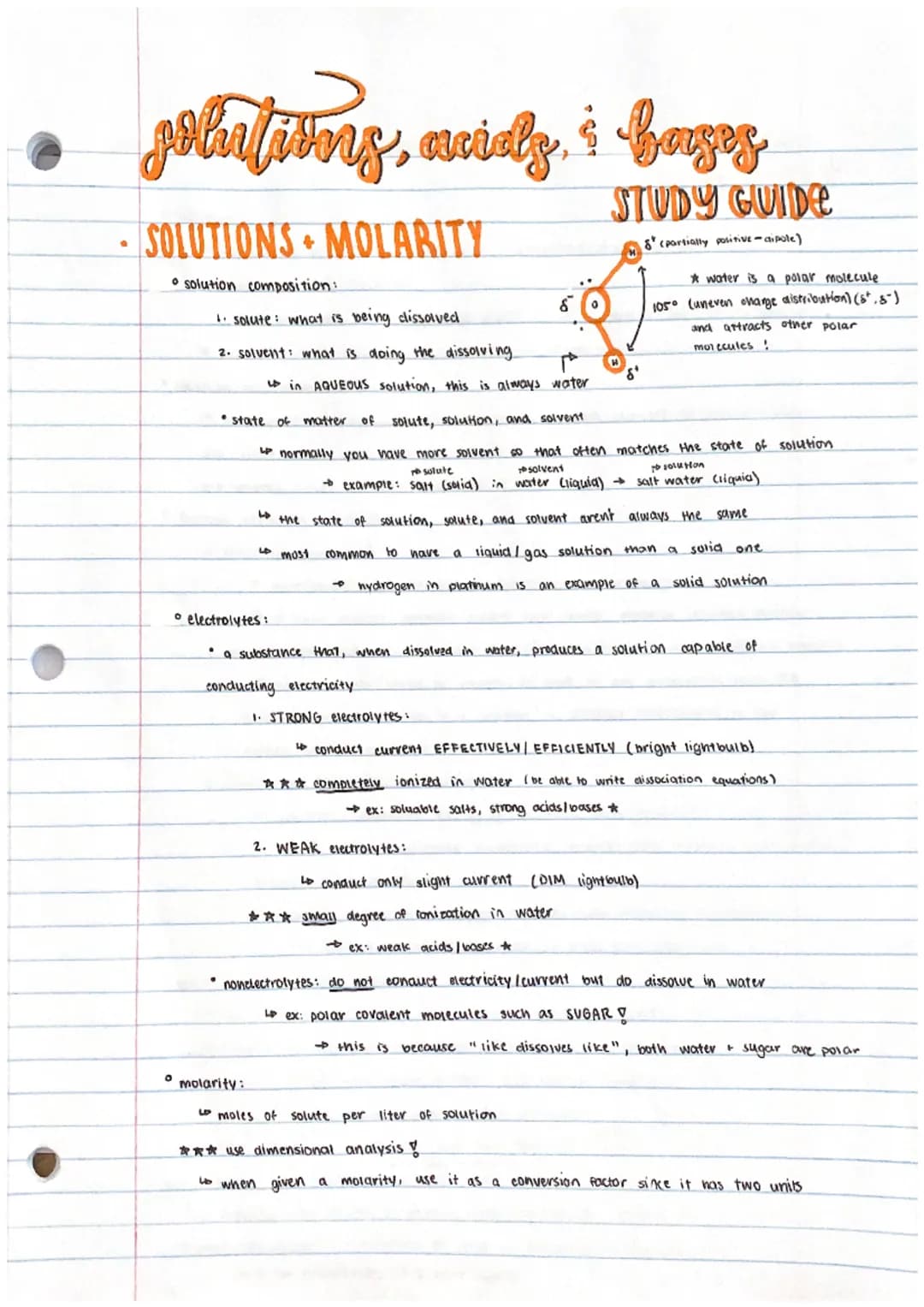
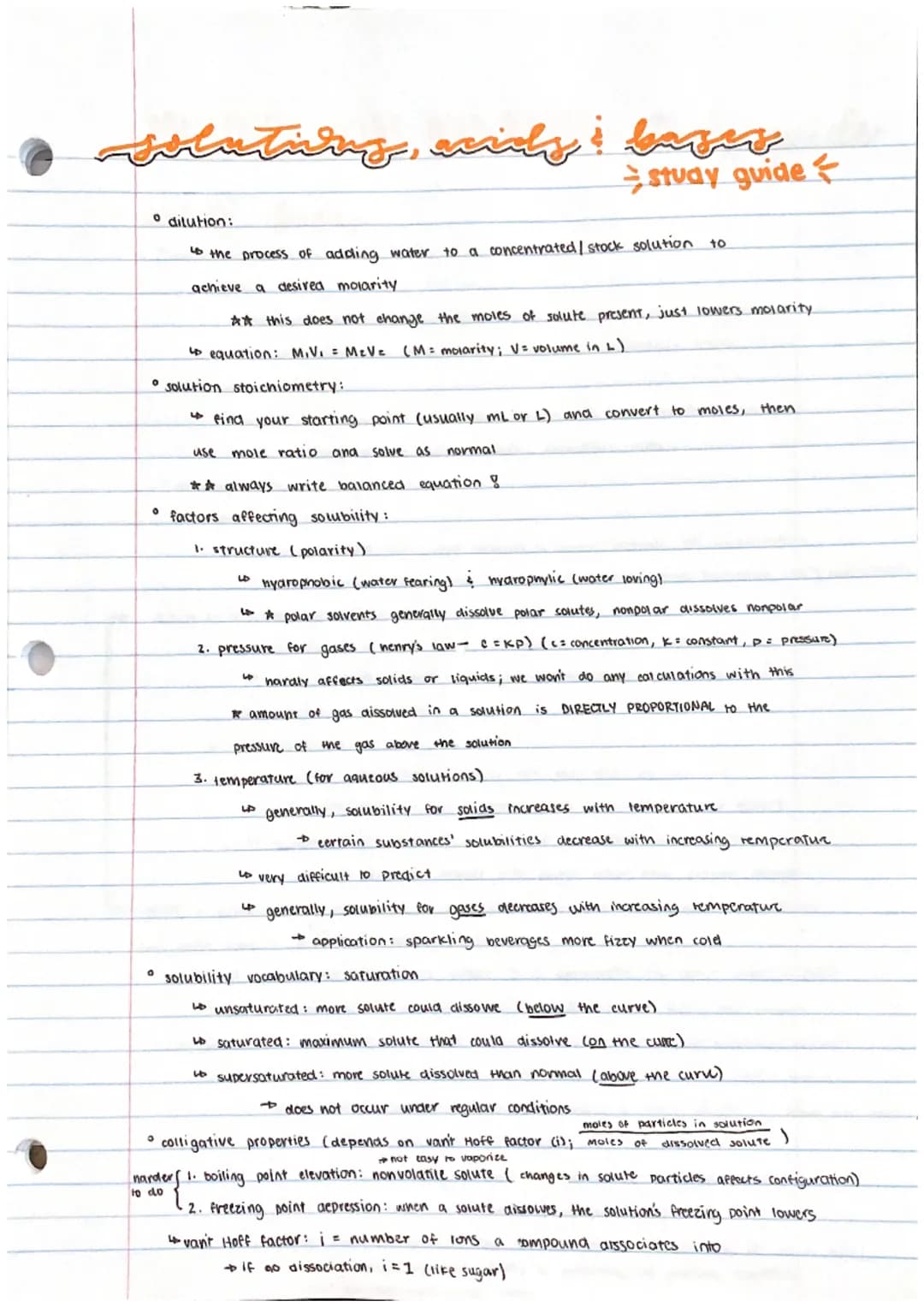
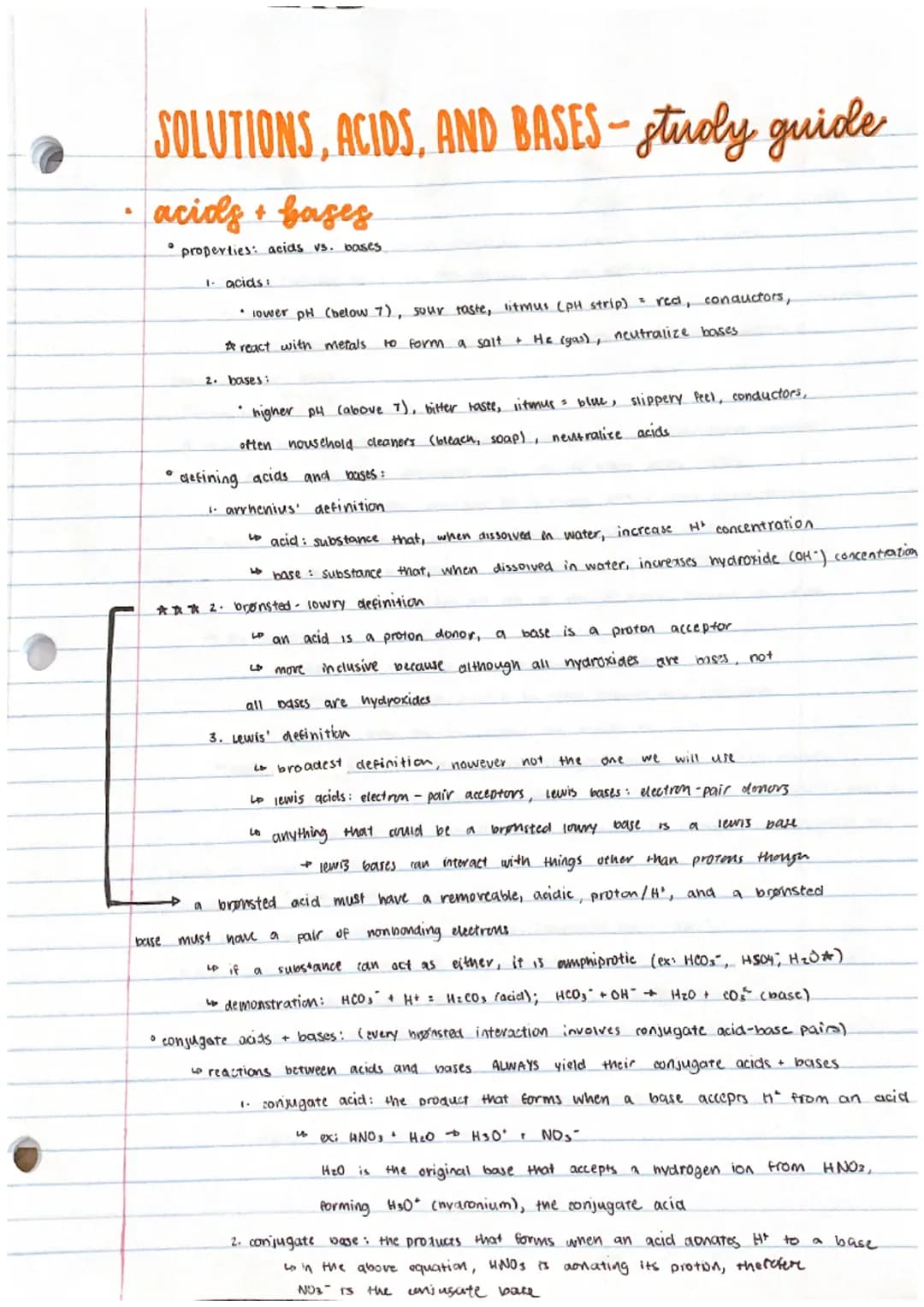
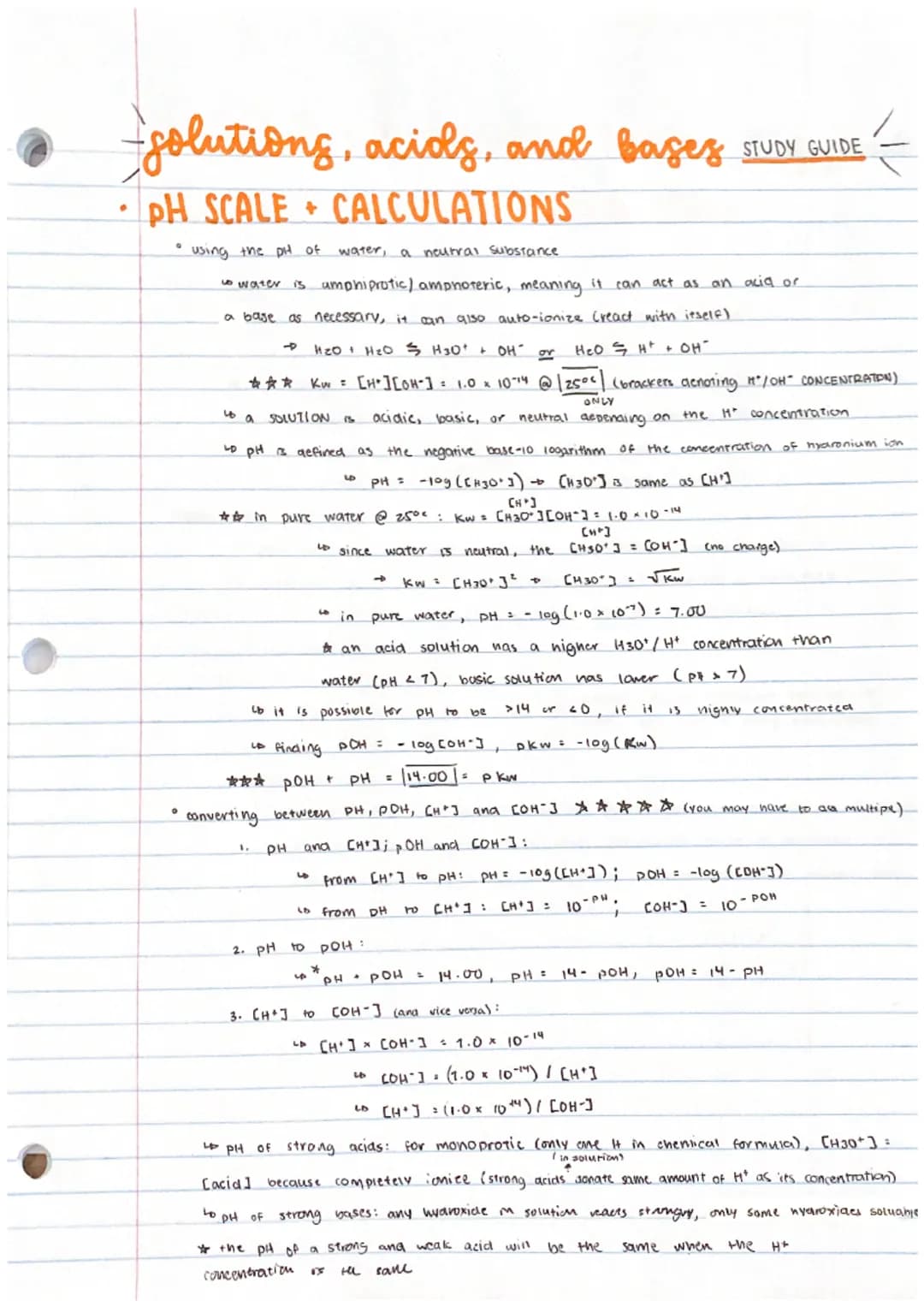
Not all acids and bases are created equal! The difference between strong and weak is all about how completely they ionize in water.
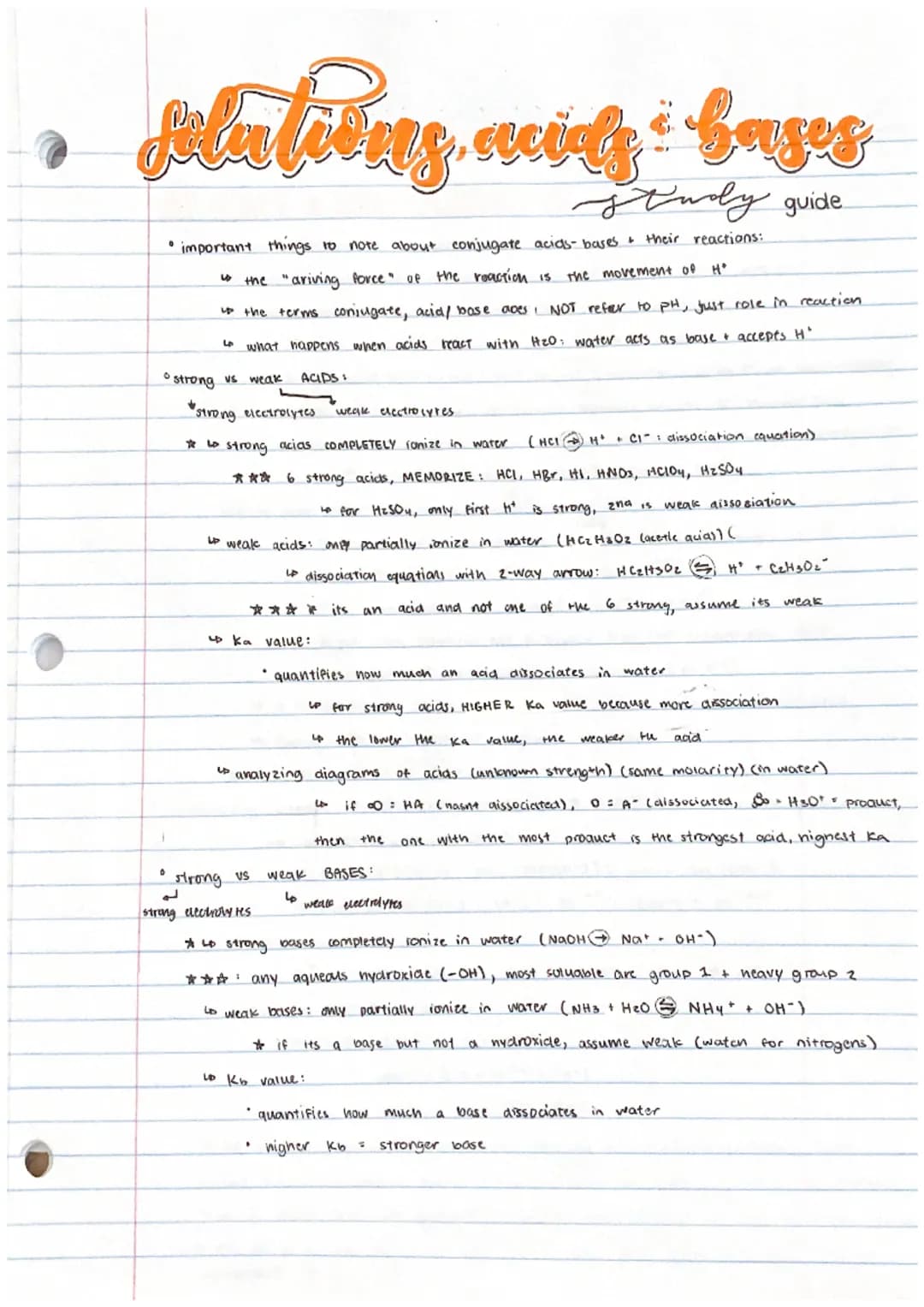
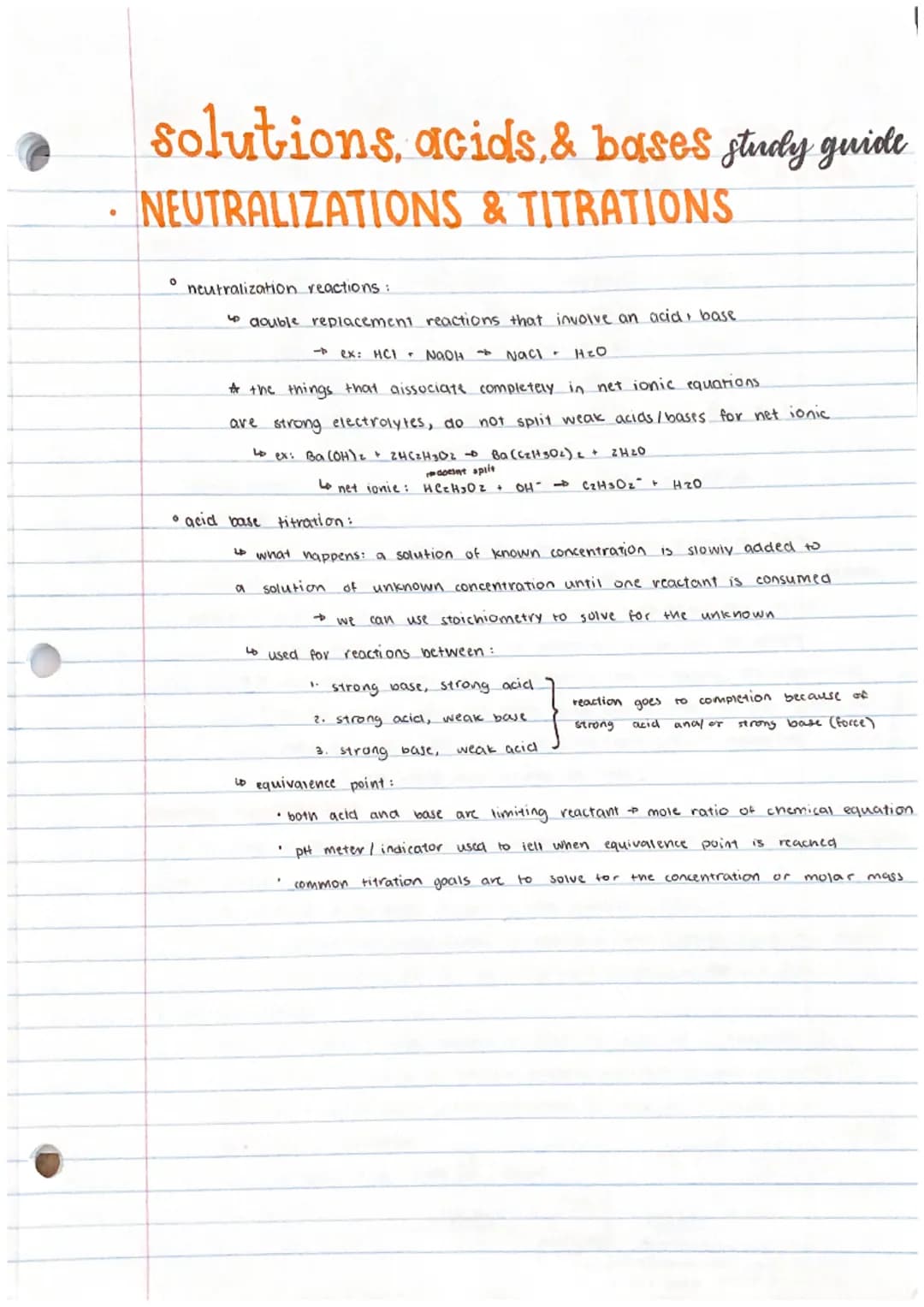
Strong acids completely ionize in water and are strong electrolytes. There are just 6 you need to remember: HCl, HBr, HI, HNO₃, HClO₄, and H₂SO₄ (though only the first hydrogen in sulfuric acid is considered strong). We write their dissociation with a one-way arrow: HCl → H⁺ + Cl⁻.
Weak acids only partially ionize and are weak electrolytes. We write their dissociation with a two-way arrow showing equilibrium: HC₂H₃O₂ ⇌ H⁺ + C₂H₃O₂⁻. If an acid isn't one of the six strong ones, assume it's weak!
Similarly, strong bases completely ionize likeNaOH→Na++OH−. Most soluble hydroxides −OH from Group 1 and heavy Group 2 elements are strong bases. Weak bases only partially ionize, like ammonia: NH₃ + H₂O ⇌ NH₄⁺ + OH⁻. If it's a base but not a hydroxide, it's probably weak.
Pro Tip: The strength of acids and bases is measured by Ka and Kb values. The higher the Ka, the stronger the acid; the higher the Kb, the stronger the base.
When analyzing diagrams of acids with equal molarity, look at how much has dissociated. More dissociation (more products) means a stronger acid with a higher Ka value.