Time of Flight Mass Spectrometry
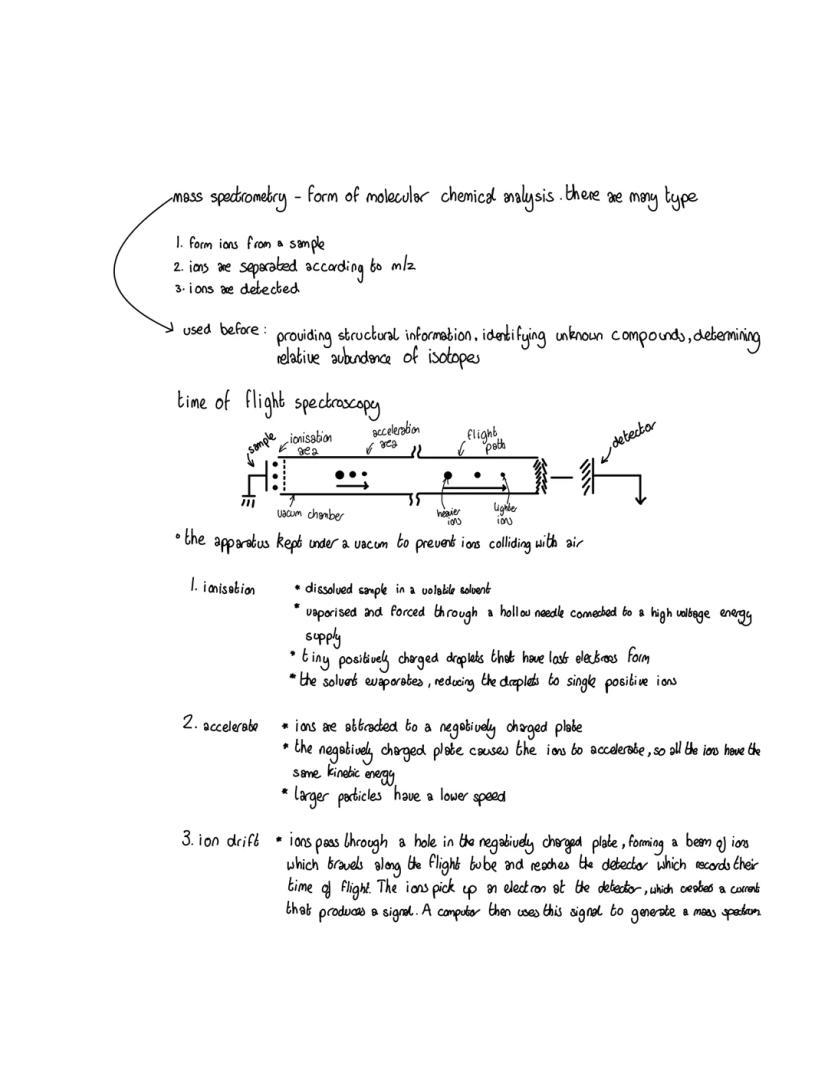
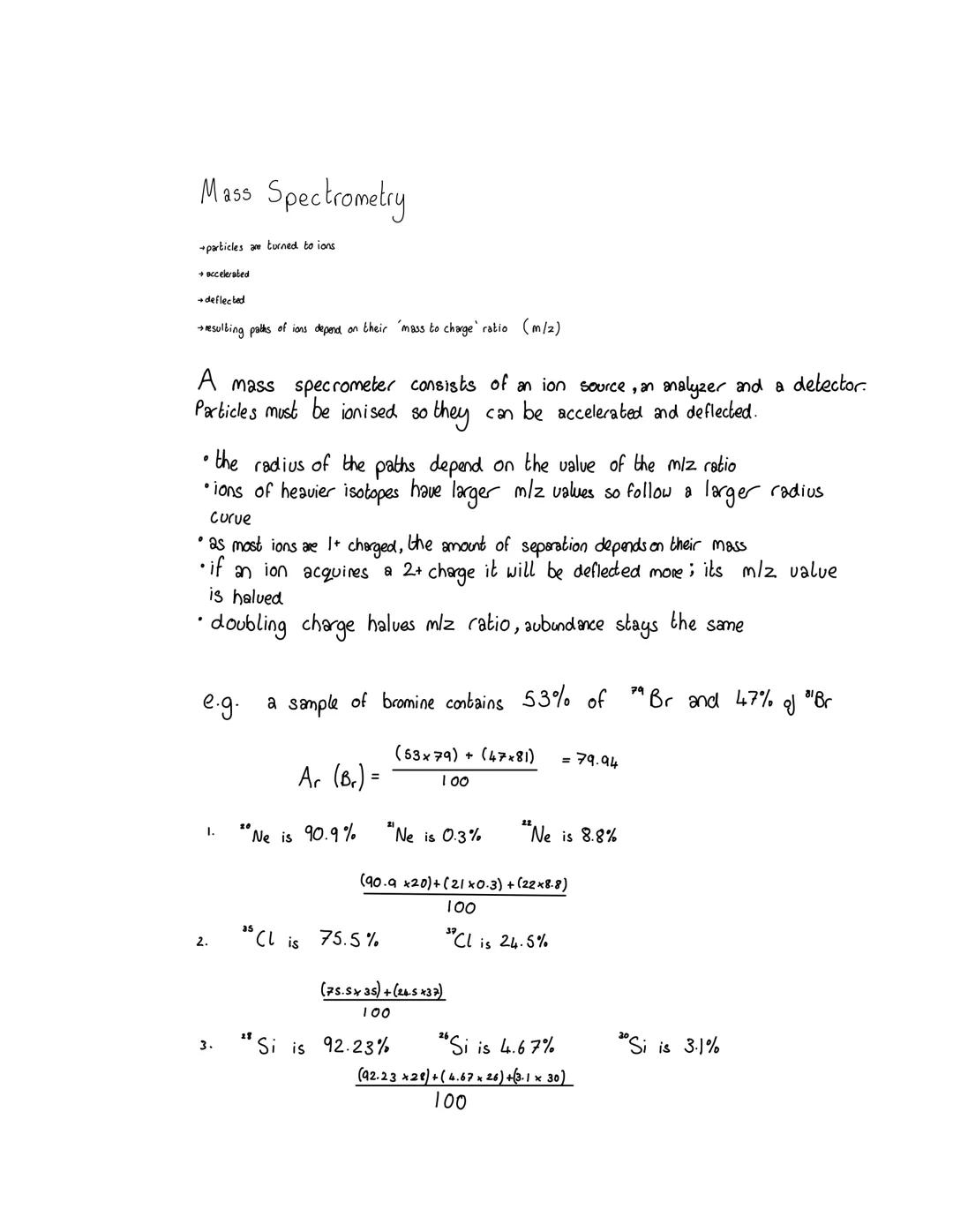
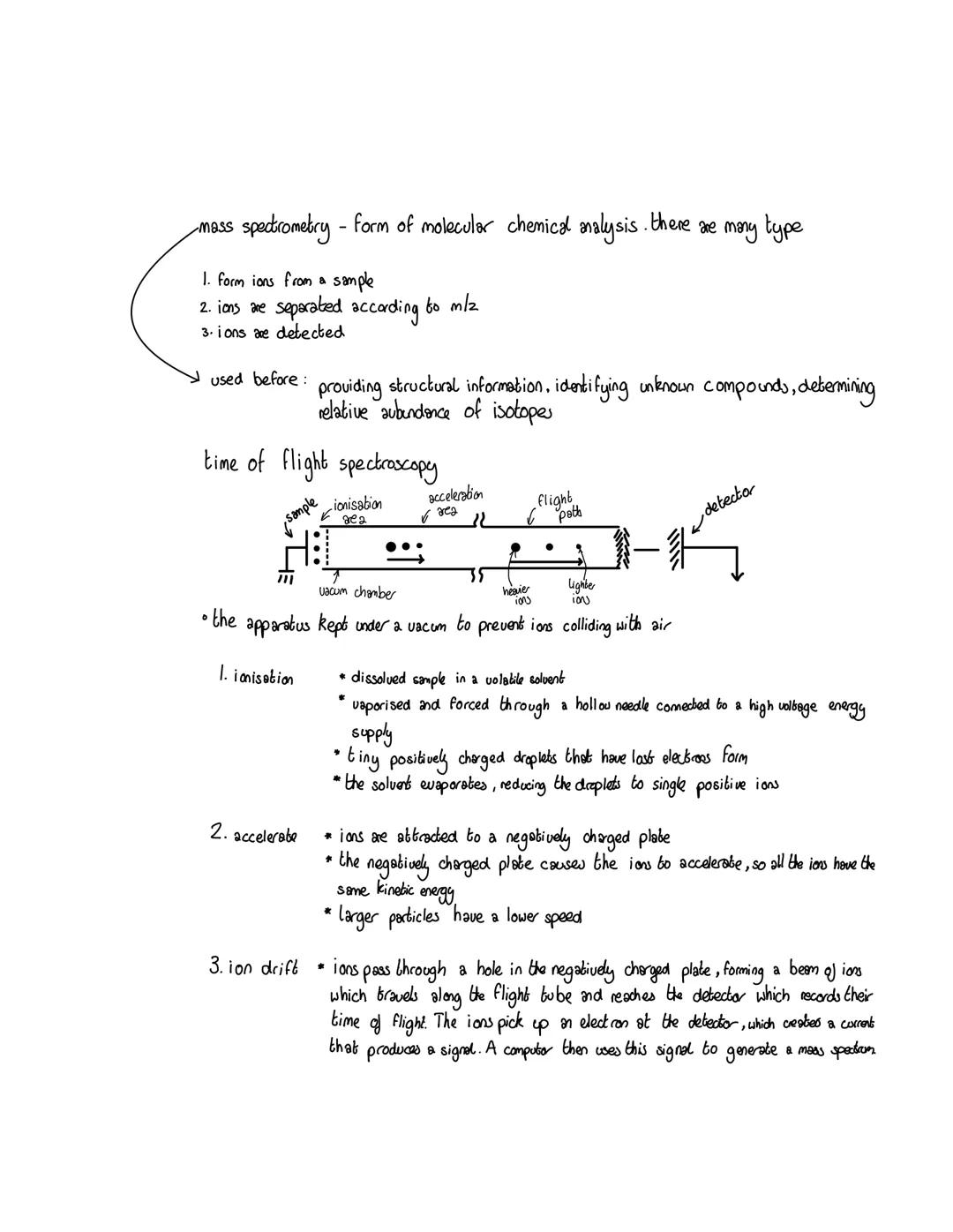
Time of flight spectroscopy is the most common type of mass spectrometry you'll encounter. The entire apparatus operates under vacuum to prevent ions colliding with air molecules, which would mess up the results.
The process has three main stages: ionisation, acceleration, and ion drift. During ionisation, the sample dissolves in a volatile solvent and gets forced through a needle connected to high voltage. This creates tiny charged droplets that eventually become single positive ions.
All ions receive the same kinetic energy during acceleration, but heavier particles move slower than lighter ones. As ions travel down the flight tube, they separate based on their speed. The detector measures their arrival time and converts this into electrical signals.
Finally, a computer processes these signals to generate a mass spectrum - essentially a graph showing which masses are present and in what amounts. The whole system works because lighter ions reach the detector first.
Real-World Connection: Mass spectrometry is used everywhere from drug testing in sports to identifying explosives at airports!



 Sociology
 Biology