Chemical Measurements and Conservation of Mass
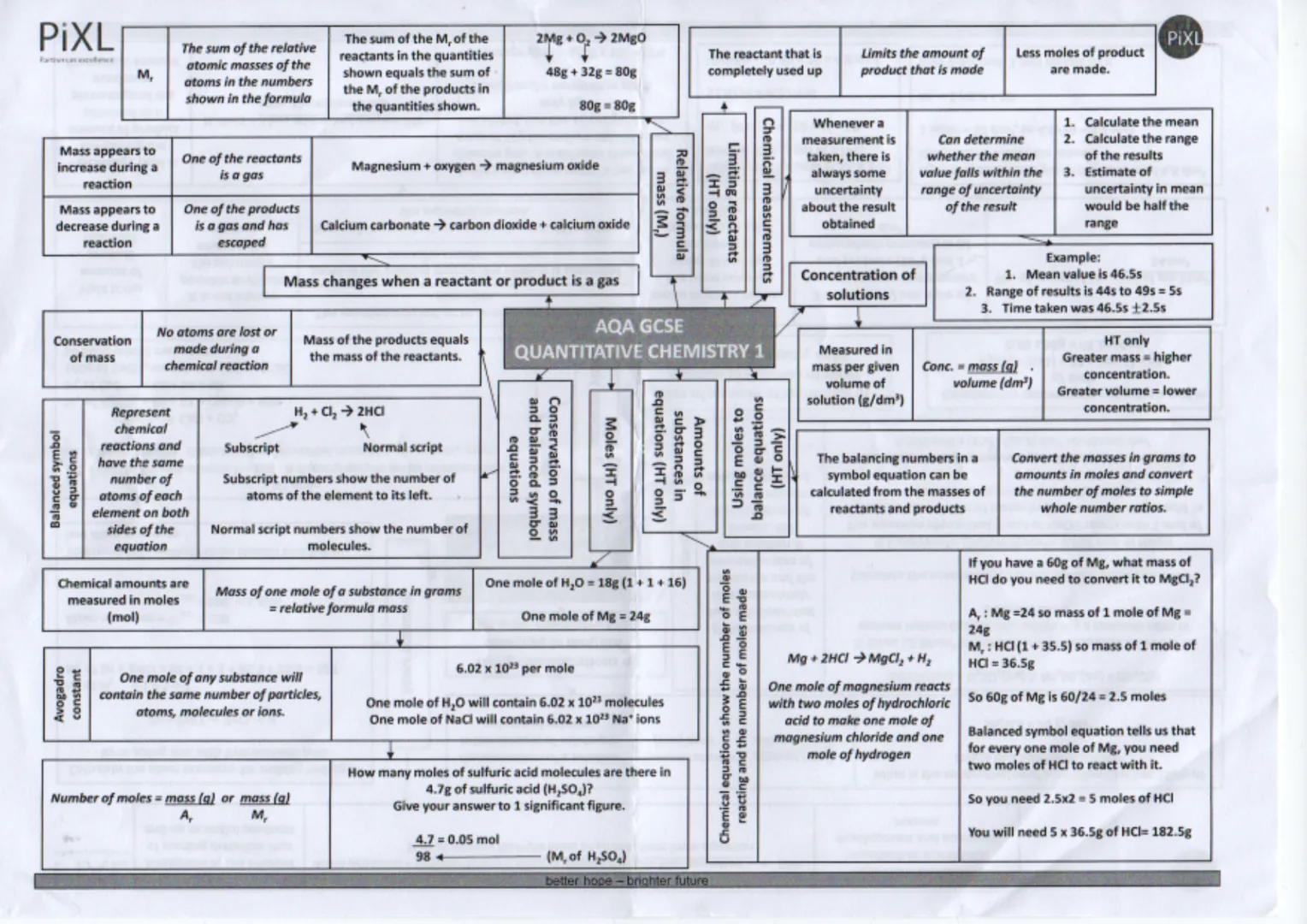
Ever wonder why your chemistry teacher insists that "atoms can't just disappear"? Conservation of mass is the golden rule - during any chemical reaction, the total mass of reactants always equals the total mass of products. No atoms are lost or created, they just get rearranged.
Relative formula mass (Mr) is simply adding up all the atomic masses in a compound's formula. For water (H₂O), that's 1+1+16 = 18. This number becomes crucial when you're working out how much product you'll get from your reactants.
Sometimes it looks like mass changes during reactions - usually because one of your reactants or products is a gas that escapes or gets absorbed from the air. The mass is still conserved; you just can't see where it's gone!
Key insight: In balanced equations like 2Mg + O₂ → 2MgO, the numbers tell you exactly how many moles react together - master this and you'll never struggle with chemical calculations again.
Limiting reactants determine how much product you can actually make. Just like making sandwiches, if you run out of bread first, that's your limiting factor - even if you have loads of cheese left over.

 Chemistry
 English Literature
 Biology
 Sociology