The Periodic Table and Atomic Models
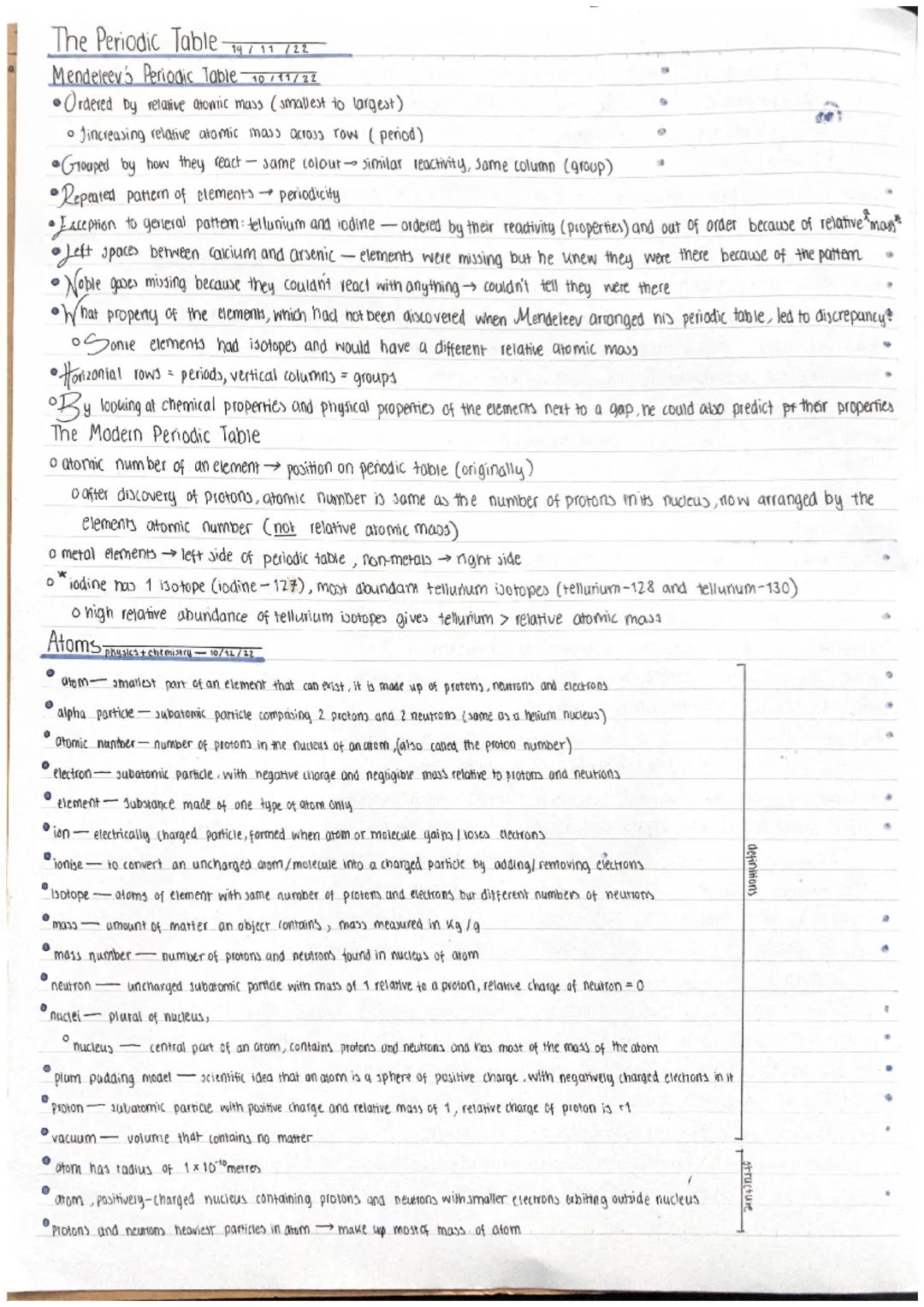
Mendeleev's periodic table was brilliant for its time - he arranged elements by increasing relative atomic mass and spotted repeating patterns (periodicity). He even left gaps for undiscovered elements and predicted their properties! The only hiccup was tellurium and iodine, which he had to swap based on their chemical properties rather than mass.
Today's modern periodic table arranges elements by atomic number (number of protons) rather than mass, solving Mendeleev's tellurium-iodine problem. Metals live on the left, non-metals on the right, with horizontal rows called periods and vertical columns called groups.
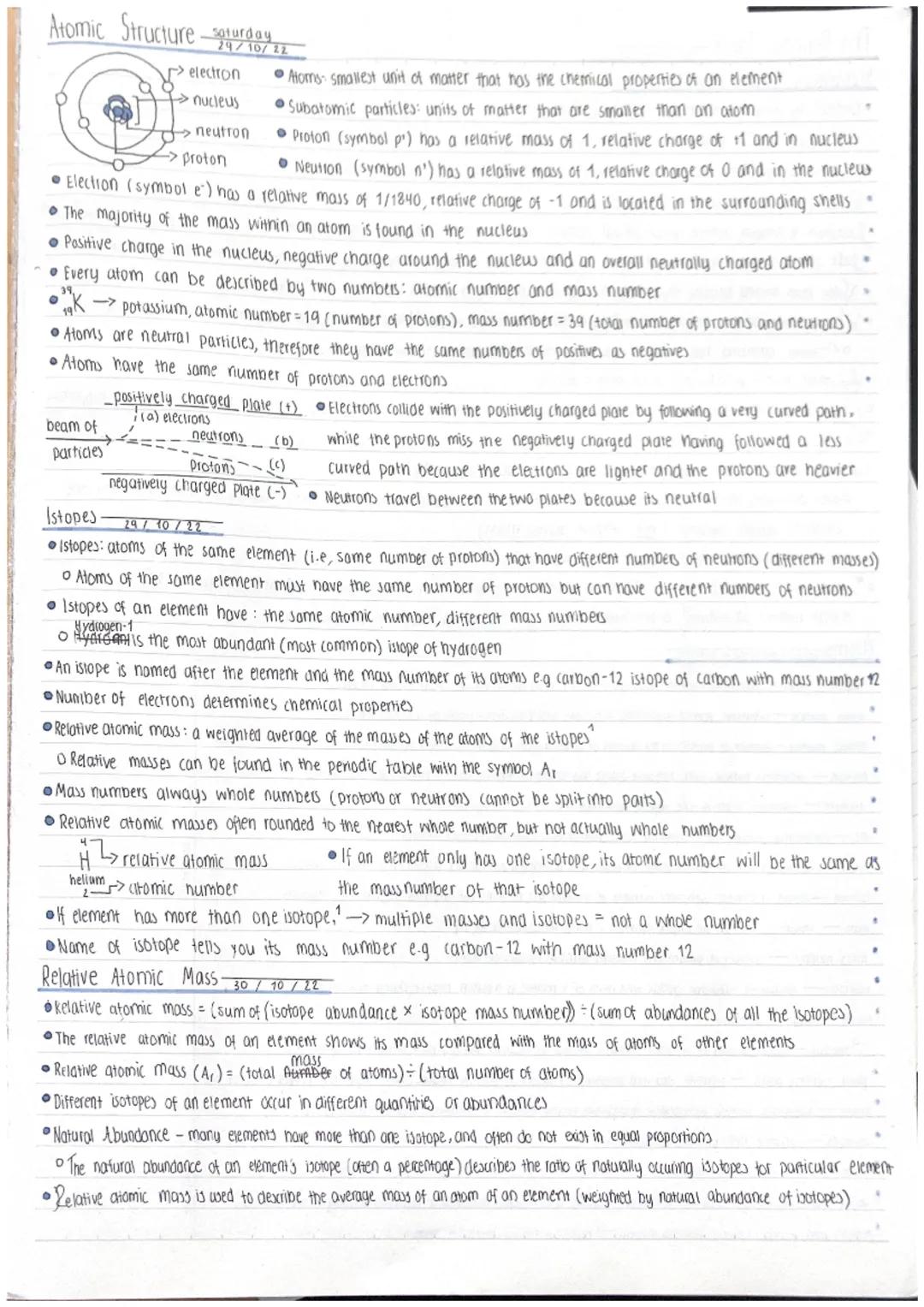
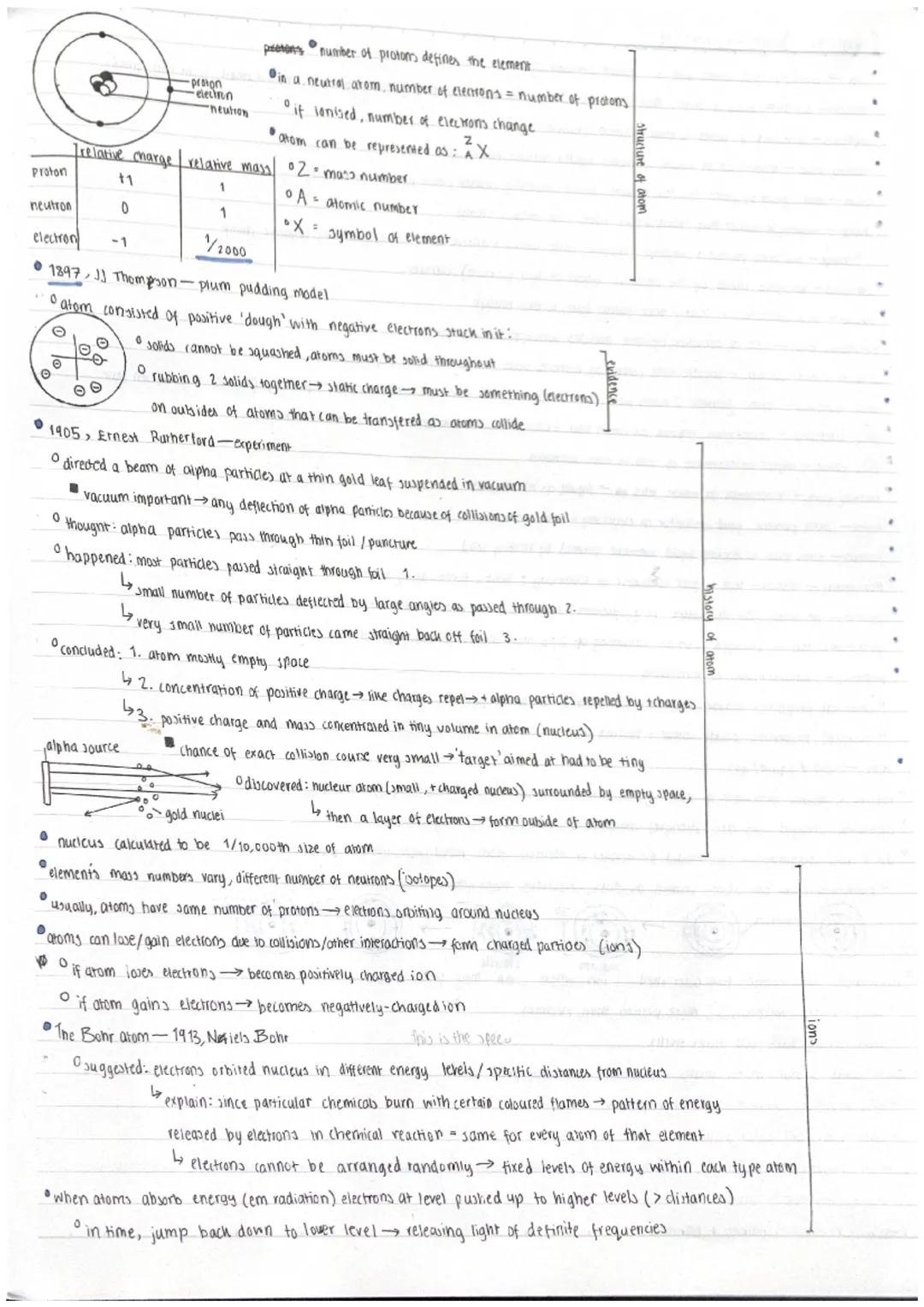
The journey from plum pudding model (1897) to nuclear atom was revolutionary. Rutherford's gold foil experiment (1905) showed that atoms are mostly empty space with a tiny, dense, positive nucleus. When alpha particles bounced back, it proved the nucleus was incredibly small but contained all the positive charge and most of the mass.
Bohr's model (1913) suggested electrons orbit in specific energy levels, explaining why different elements produce distinct flame colours. When electrons absorb energy, they jump to higher levels, then release light of definite frequencies when dropping back down.
Remember: The nucleus is about 1/10,000th the size of the whole atom - imagine a marble in a football stadium!



 Sociology
 Biology