The Night Before Murder
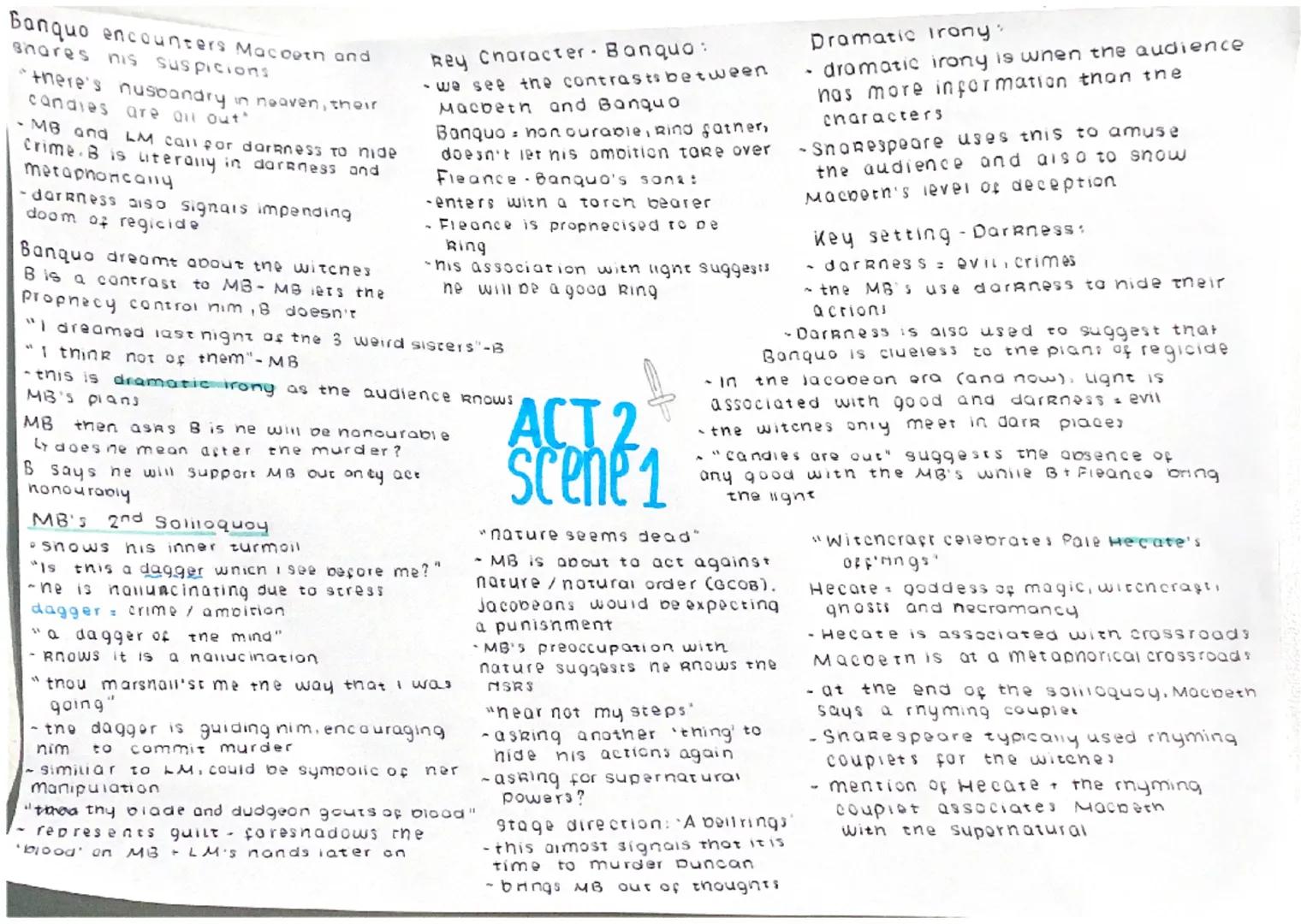
Darkness dominates this scene - literally and symbolically. Banquo mentions that "their candles are all out," creating an atmosphere where evil thrives whilst good is snuffed out. Shakespeare uses this darkness to hide the Macbeths' crimes while showing that Banquo remains completely unaware of their murderous plans.
The contrast between Banquo and Macbeth couldn't be clearer here. Banquo dreamt about the witches but isn't letting their prophecies control him - he stays honourable and loyal. Meanwhile, Macbeth lies straight to his face, claiming "I think not of them" when the witches are literally all he thinks about.
Fleance enters carrying a torch - brilliant symbolism from Shakespeare. Since he's prophesied to father future kings, his association with light suggests he'll be a good ruler, unlike the darkness-dwelling Macbeth.
Key Point: The dramatic irony here is intense - we know Macbeth's about to commit regicide whilst Banquo chatters away, completely oblivious.
Banquo promises to support Macbeth, but only if he can do so "honourably" - Shakespeare's hinting that this support won't last long once Banquo discovers what Macbeth's really like.
Macbeth's famous dagger soliloquy reveals his complete mental breakdown. "Is this a dagger which I see before me?" shows he's hallucinating from stress and guilt - even before he's committed the murder! The dagger guides him toward Duncan's room, possibly symbolising Lady Macbeth's manipulation.
The scene ends with supernatural references to Hecate, goddess of witchcraft, and Macbeth speaking in rhyming couplets like the witches. Shakespeare's showing us that Macbeth has fully embraced the dark side - there's no going back now.



 Sociology
 Biology