Act One: Setting Up the Social Divide
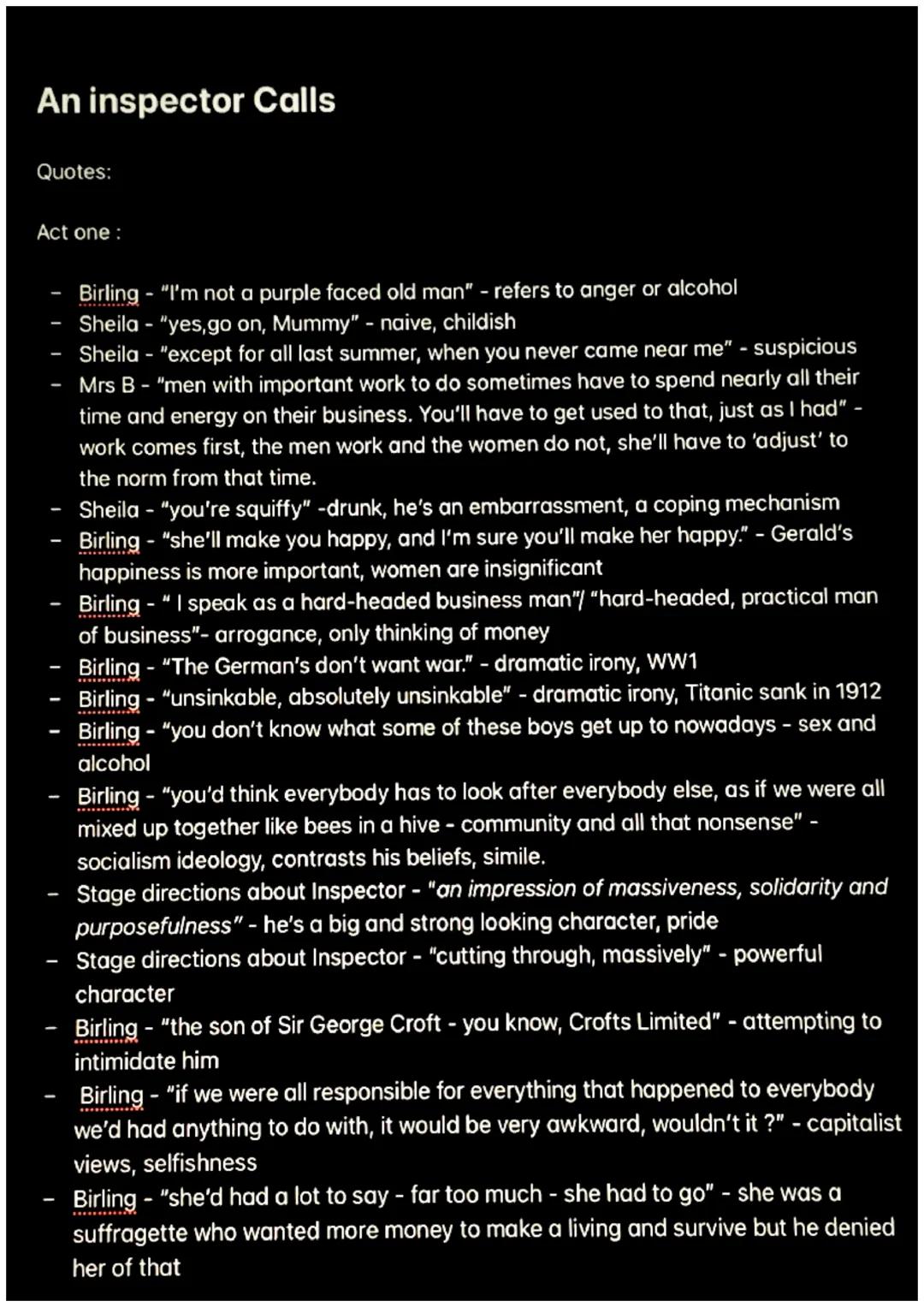
The opening act cleverly establishes each character's worldview through their language and attitudes. You'll spot dramatic irony everywhere as Priestley makes Birling look foolish with hindsight.
Birling's arrogance comes through in his confident predictions about the Germans not wanting war and the Titanic being "absolutely unsinkable." These historically incorrect statements make him appear unreliable and short-sighted. His capitalist philosophy is summed up when he dismisses community spirit as "bees in a hive" nonsense.
The Inspector's introduction through stage directions is crucial - described as having "massiveness, solidarity and purposefulness." He represents moral authority and socialist values, cutting through Birling's attempts at intimidation with class connections.
Gender expectations are clear from the start. Mrs Birling tells Sheila she must accept that men's work comes first, whilst Birling treats his daughter's happiness as secondary to Gerald's. These attitudes set up the social criticism that runs throughout the play.
Exam tip: The dramatic irony in Birling's speeches about war and the Titanic immediately undermines his credibility - use this to show how Priestley makes audiences distrust capitalism!



 Sociology
 Biology