Generational Divide in An Inspector Calls
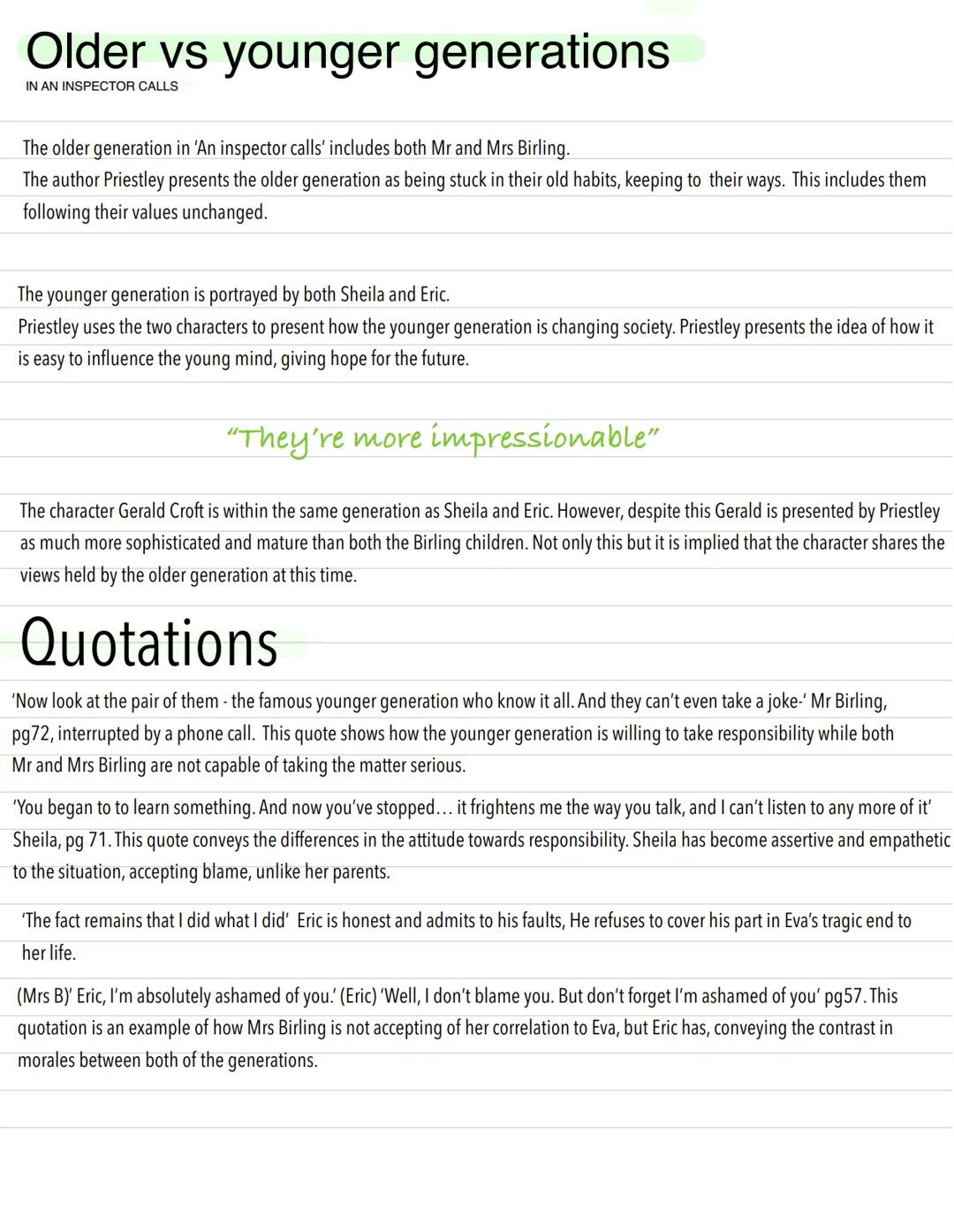
You'll quickly notice that Priestley splits his characters into two distinct camps based on age. The older generation (Mr and Mrs Birling) represents people who are completely stuck in their old-fashioned ways and refuse to budge on their traditional values.
On the flip side, the younger generation (Sheila and Eric) shows how young people can actually drive social change. Priestley deliberately makes them "more impressionable" because he believes young minds are easier to influence - and that's exactly where hope for a better future lies.
Here's where it gets interesting: Gerald Croft is technically the same age as Sheila and Eric, but he acts way more sophisticated and mature. More importantly, he actually agrees with the older generation's outdated views, showing that age doesn't always determine your mindset.
Key insight: Priestley uses these generational differences to argue that young people are society's best chance for positive change, but only if they're willing to learn and take responsibility.



 Sociology
 Biology