Duncan's Fatal Trust and Noble Character
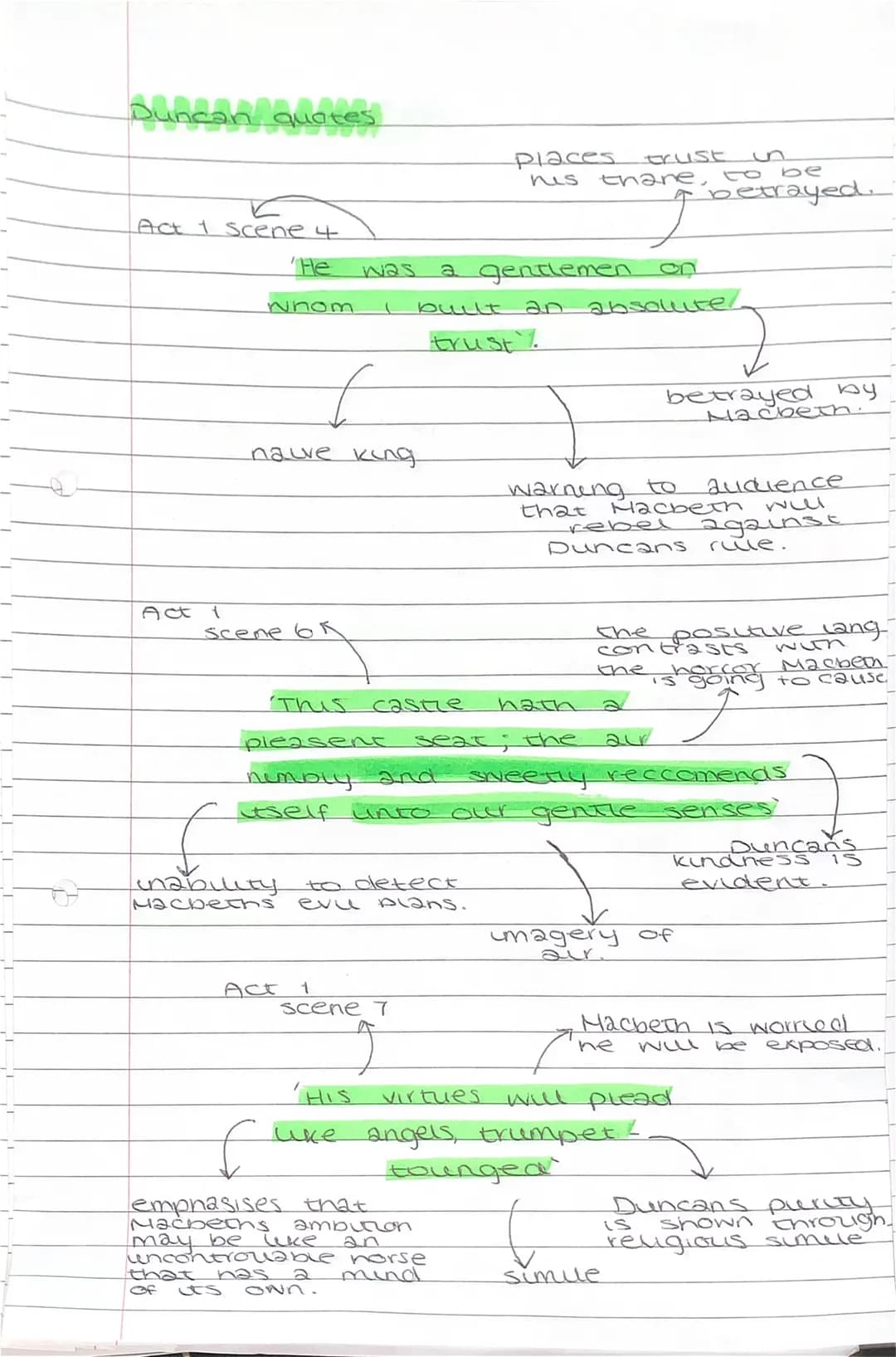
Duncan's biggest weakness is also his greatest virtue - he trusts people completely, even when he shouldn't. When he says "He was a gentleman on whom I built an absolute trust" about the previous Thane of Cawdor, Shakespeare is dropping a massive hint that Duncan will make the same mistake with Macbeth.
The king's inability to detect evil becomes painfully obvious when he arrives at Macbeth's castle. He comments on how pleasant and sweet the air smells, completely unaware that he's walking into a death trap. The positive, gentle language he uses creates dramatic irony - we know what's coming, but Duncan doesn't have a clue.
Macbeth himself recognises Duncan's goodness, describing his virtues as "angels, trumpet-tongued". This religious imagery emphasises Duncan's purity and makes Macbeth's planned betrayal seem even more horrific.
Key Point: Duncan's trusting nature and moral purity make him the perfect victim for Macbeth's ambition - his goodness highlights just how evil Macbeth's actions really are.