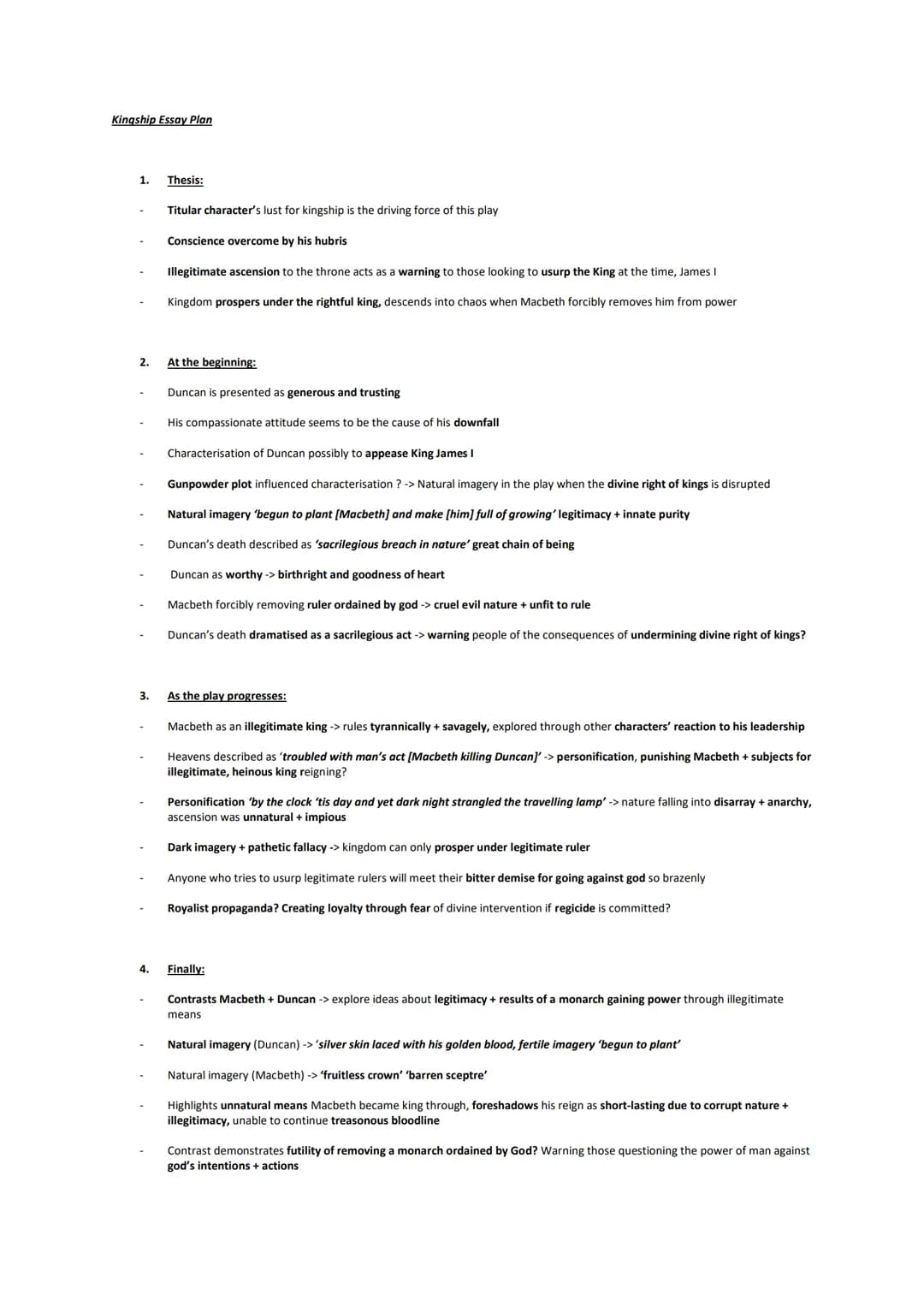
Kingship Essay Analysis
This comprehensive analysis explores the central themes of kingship and power in Macbeth, focusing on the stark contrast between legitimate and illegitimate rule. The document presents a detailed examination of how Shakespeare portrays different styles of leadership and their consequences.
Definition: The divine right of kings was the belief that monarchs derived their authority directly from God and could not be held accountable by earthly authority.
Highlight: The play serves as a political warning against regicide, particularly relevant during James I's reign following the Gunpowder Plot.
Quote: "Natural imagery 'begun to plant Macbeth and make him full of growing'" demonstrates the legitimate and pure nature of proper succession.
Example: The contrast between Duncan and Macbeth's reigns is illustrated through natural imagery: Duncan's rule is associated with growth and fertility, while Macbeth's is linked to barrenness and decay.
Vocabulary: Pathetic fallacy - the attribution of human emotions and conduct to nature, used extensively to reflect the kingdom's state under different rulers.
The analysis concludes by examining how Shakespeare uses natural imagery to contrast legitimate and illegitimate rule, with phrases like 'fruitless crown' and 'barren sceptre' emphasizing the futility of opposing divine right.