Poetic Analysis: Imagery of Poverty and Social Division
Ever wondered how poets use simple objects like eggs in a wire basket to reveal complex social problems? This imagery analysis shows you exactly how powerful metaphors work in literature.
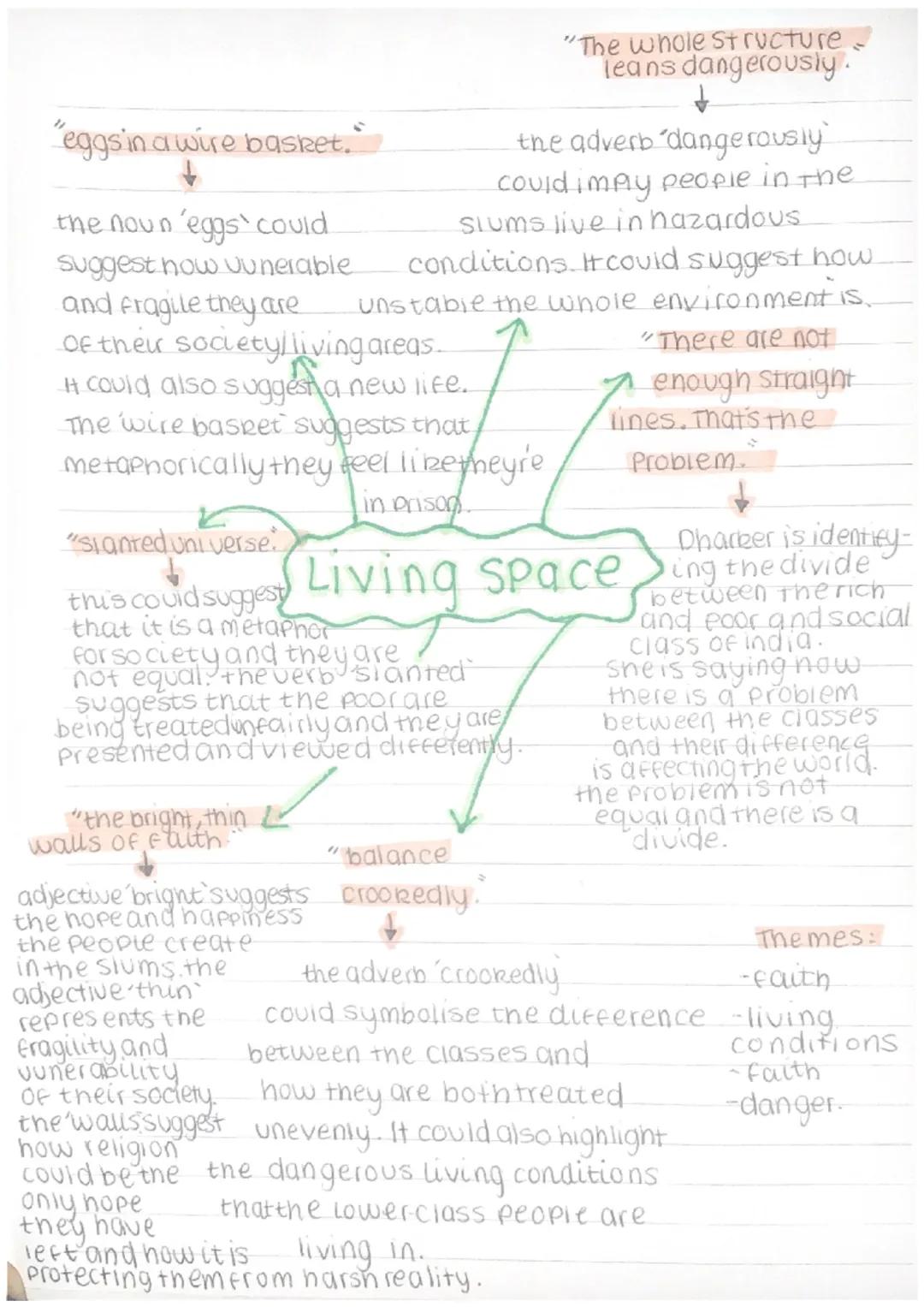
The eggs in a wire basket creates a dual meaning that's brilliant in its simplicity. The eggs represent both the vulnerability and fragility of people living in poor conditions, whilst also symbolising new life and hope. Meanwhile, the wire basket becomes a metaphor for feeling imprisoned by circumstances.
When the poet describes a "slanted universe," they're not talking about actual physics. This metaphor represents an unequal society where the poor are treated unfairly. The verb "slanted" suggests everything is tilted against certain groups of people.
The phrase "bright, thin walls of faith" combines hope with fragility perfectly. The brightness represents the hope and happiness people create even in slums, but the thinness shows how delicate this hope really is. These walls of faith might be the only protection people have from harsh reality.
Key Insight: Notice how the poet uses physical descriptions (slanted, thin, crooked) to represent social and emotional realities - this is called extended metaphor.
The dangerous living conditions become clear through phrases like "leans dangerously" and "balance crookedly." The adverb "dangerously" emphasises the unstable, hazardous environment, whilst "crookedly" symbolises how different social classes are treated unequally. The poet identifies this as the fundamental problem - there aren't enough "straight lines" of equality in society.



 Sociology
 Biology