The Great Depression and Nazi Rise
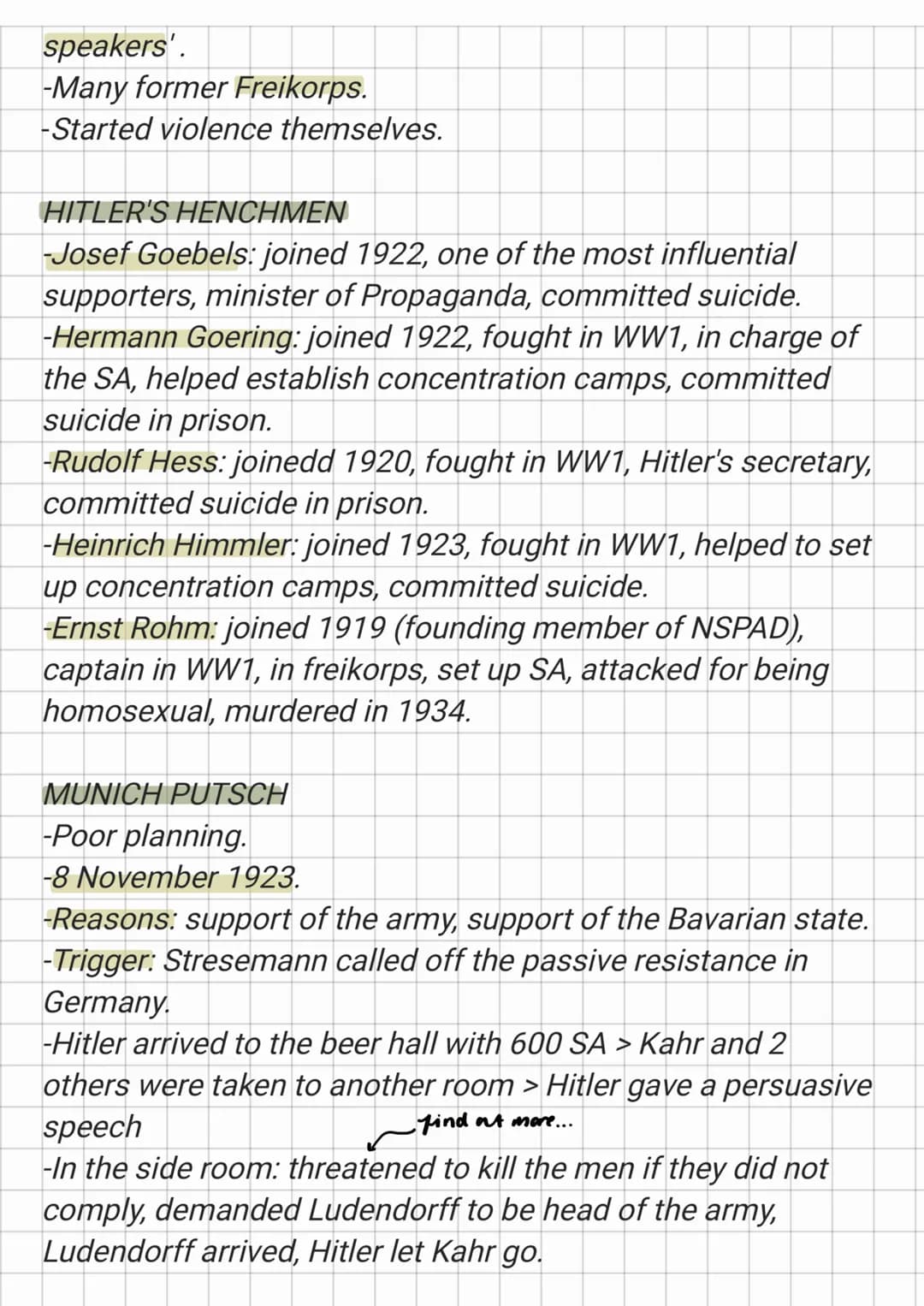
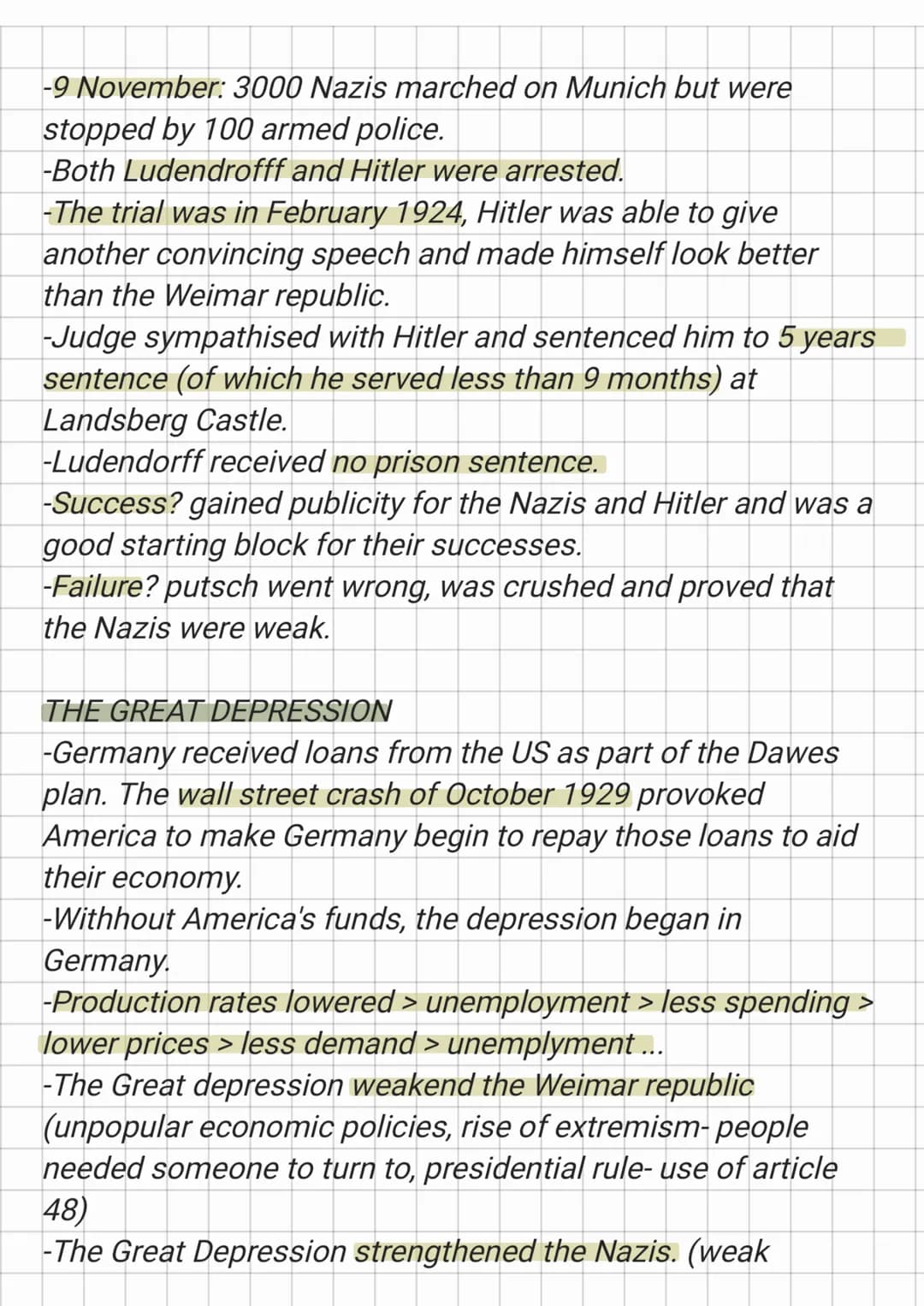
The Wall Street Crash of October 1929 devastated Germany when America recalled loans provided under the Dawes Plan. This triggered a devastating cycle: production fell, unemployment soared, consumer spending dropped, prices declined, demand decreased, leading to more unemployment—a classic economic death spiral.
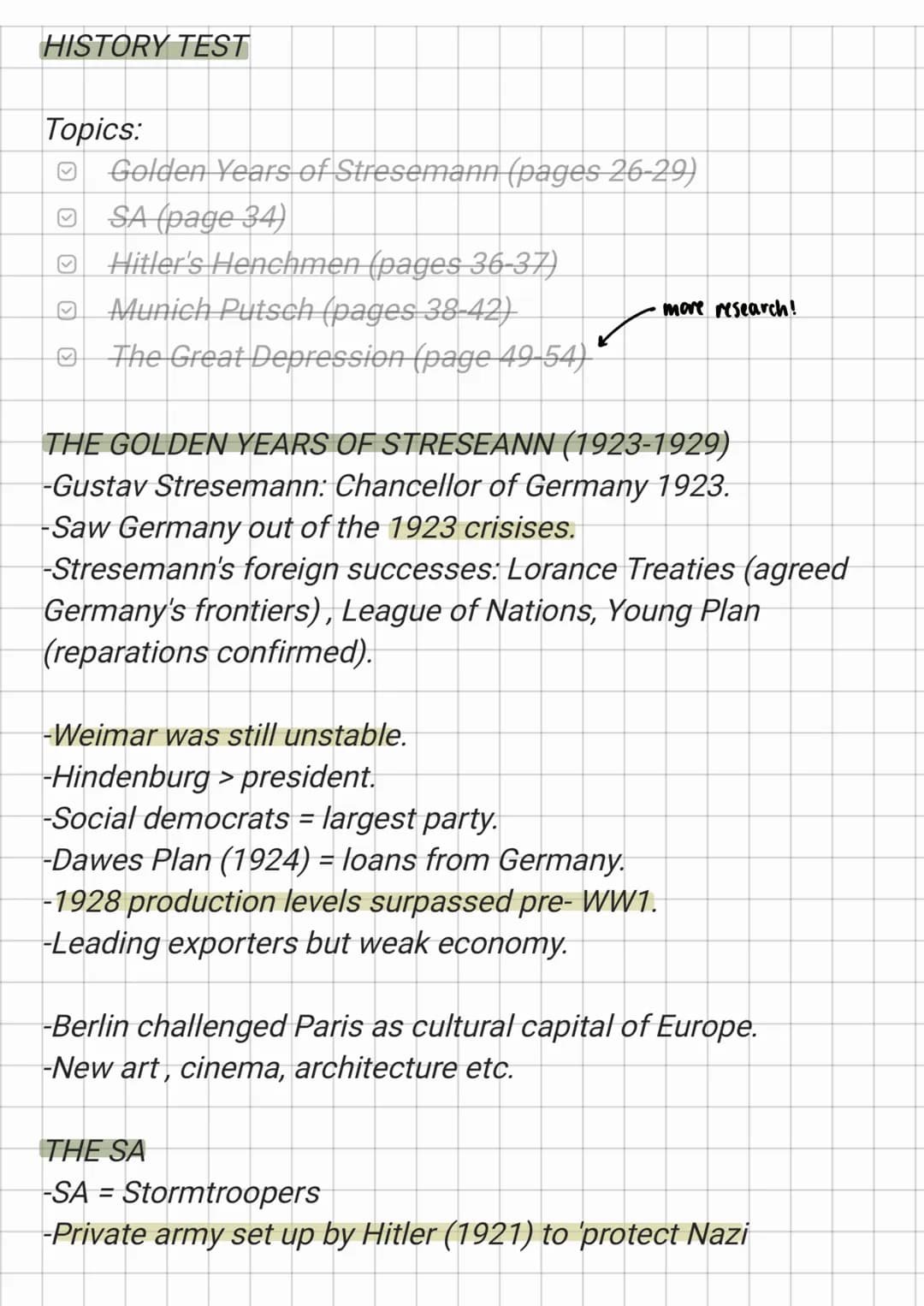
The Great Depression fatally weakened the Weimar Republic through unpopular economic policies and rising extremism. As people grew desperate, they looked for alternative leadership. The government increasingly relied on Presidential rule using Article 48, undermining democratic processes.
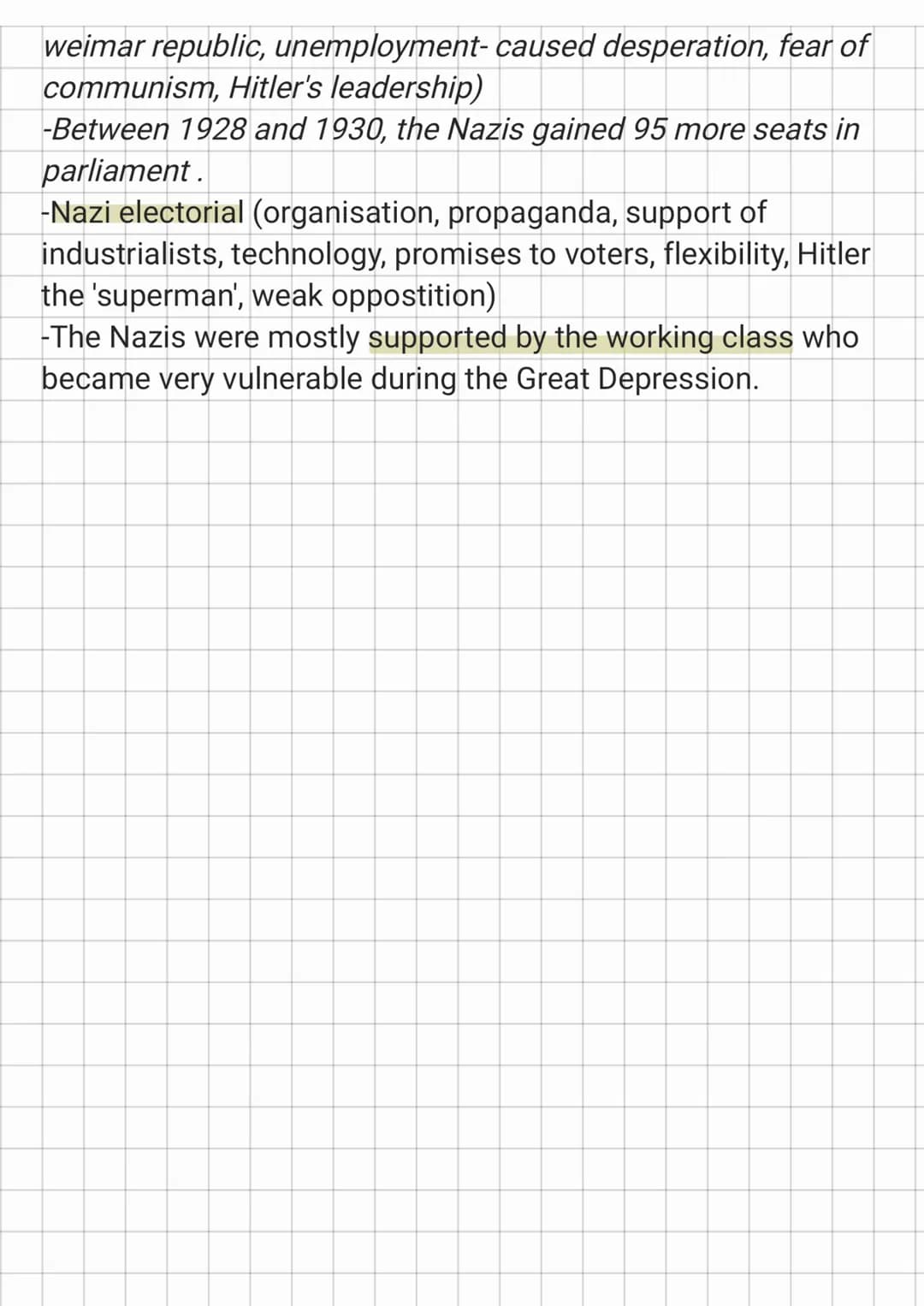
Meanwhile, the Nazis capitalized on these conditions brilliantly. Their electoral success stemmed from superior organization, effective propaganda, support from industrialists, innovative use of technology, and Hitler's charismatic leadership. Between 1928 and 1930, the Nazi party gained an astonishing 95 more seats in parliament.
Remember this: Though we often think of Nazis as being supported primarily by the middle class, during the Great Depression they actually gained significant support from working-class Germans who became especially vulnerable to economic hardship and found Hitler's promises appealing.


 Sociology
 Biology