The Recovery of Weimar Germany (1924-29)
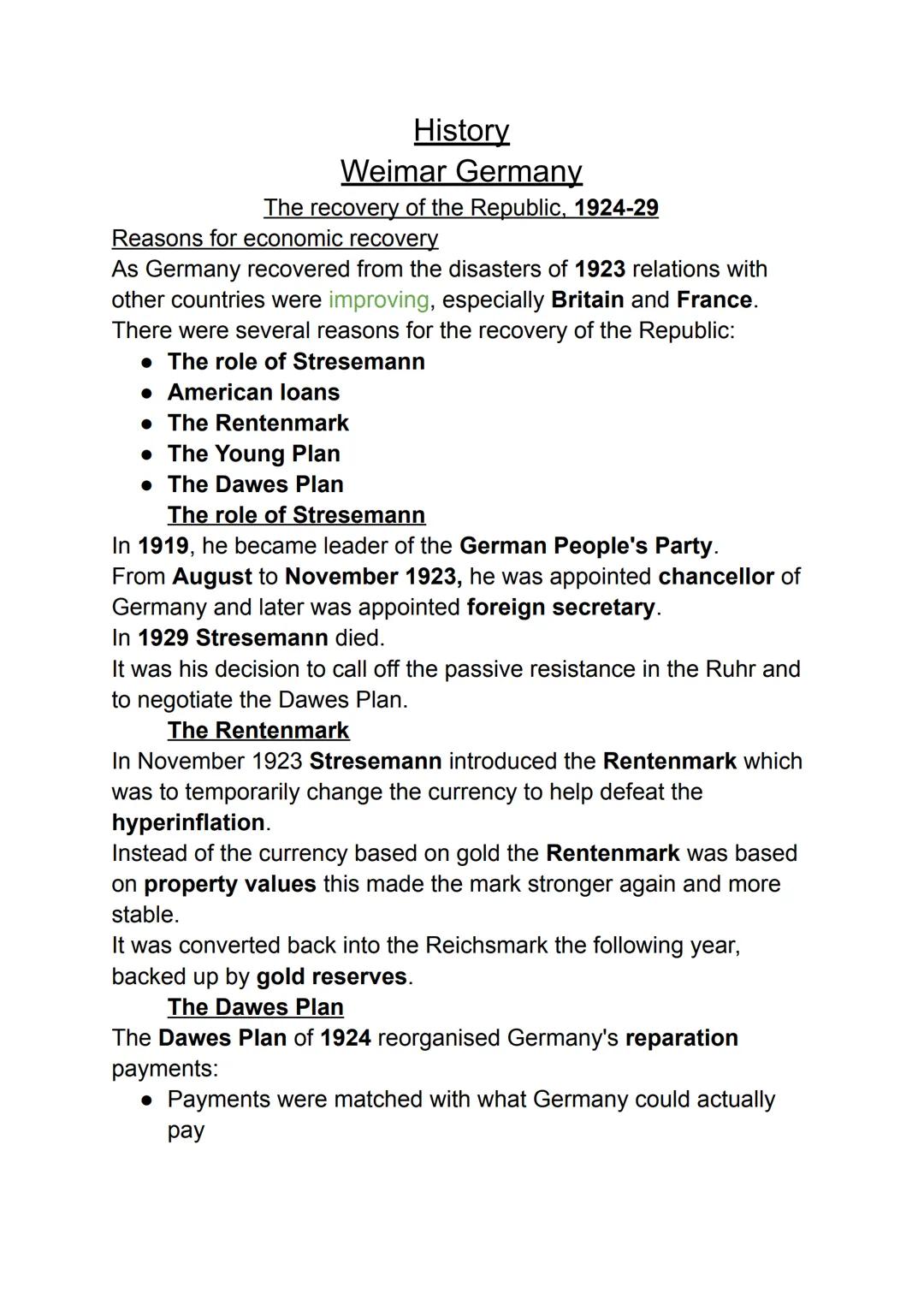
Germany's recovery from the hyperinflation crisis of 1923 didn't happen by accident. Gustav Stresemann played a crucial role in this turnaround as leader of the German People's Party, serving briefly as chancellor in 1923 before becoming foreign secretary until his death in 1929. His decision to end passive resistance in the Ruhr and negotiate with foreign powers marked a turning point.
The introduction of the Rentenmark in November 1923 was a masterstroke against hyperinflation. Unlike the previous currency based on gold, the Rentenmark was backed by property values, creating immediate stability. By 1924, it was converted to the stronger, gold-backed Reichsmark.
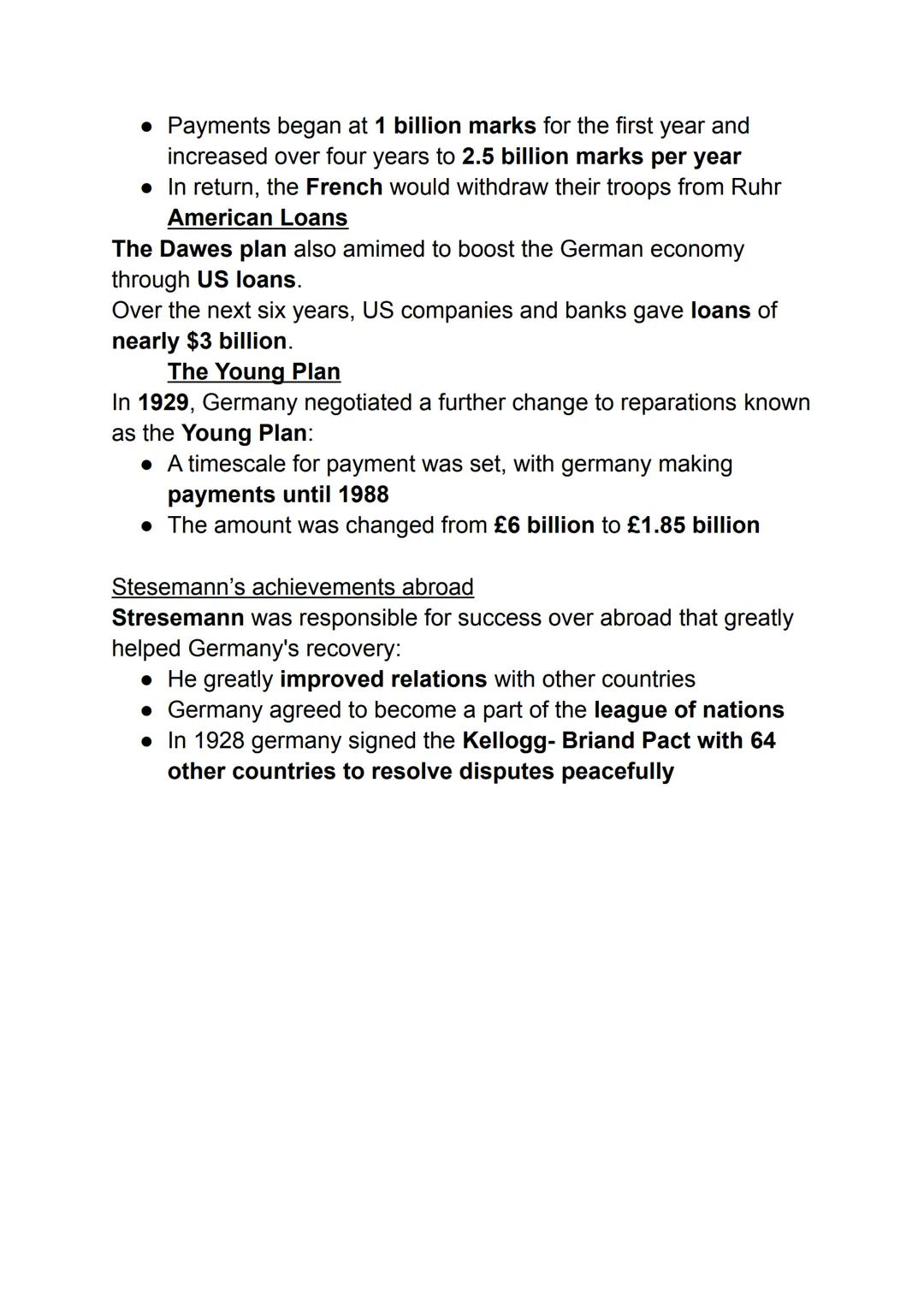
The Dawes Plan of 1924 dramatically reorganised Germany's reparation payments in a more realistic way. Instead of impossible demands, payments were matched to Germany's actual capacity, starting at 1 billion marks and gradually increasing to 2.5 billion marks over four years. In return, France agreed to withdraw troops from the Ruhr.
Did you know? The Rentenmark was only intended as a temporary solution to hyperinflation, but it worked so effectively that it restored confidence in German currency almost immediately.


 Sociology
 Biology