Calculating Event Probabilities
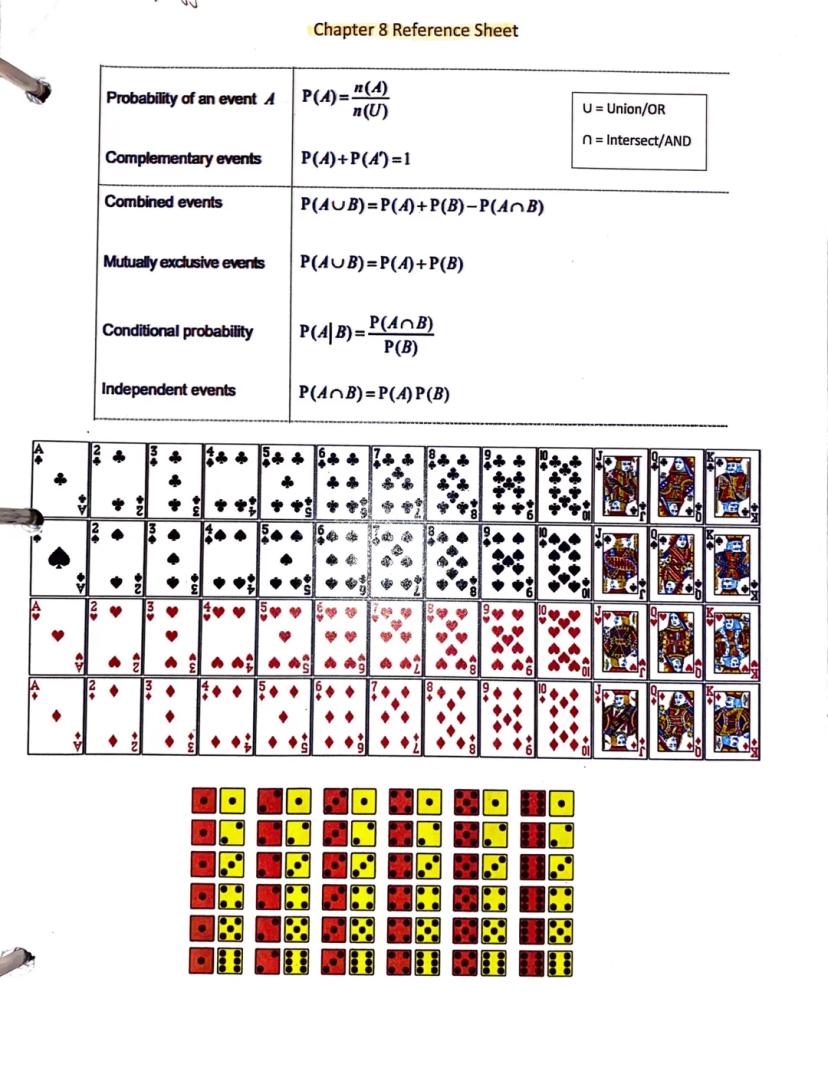
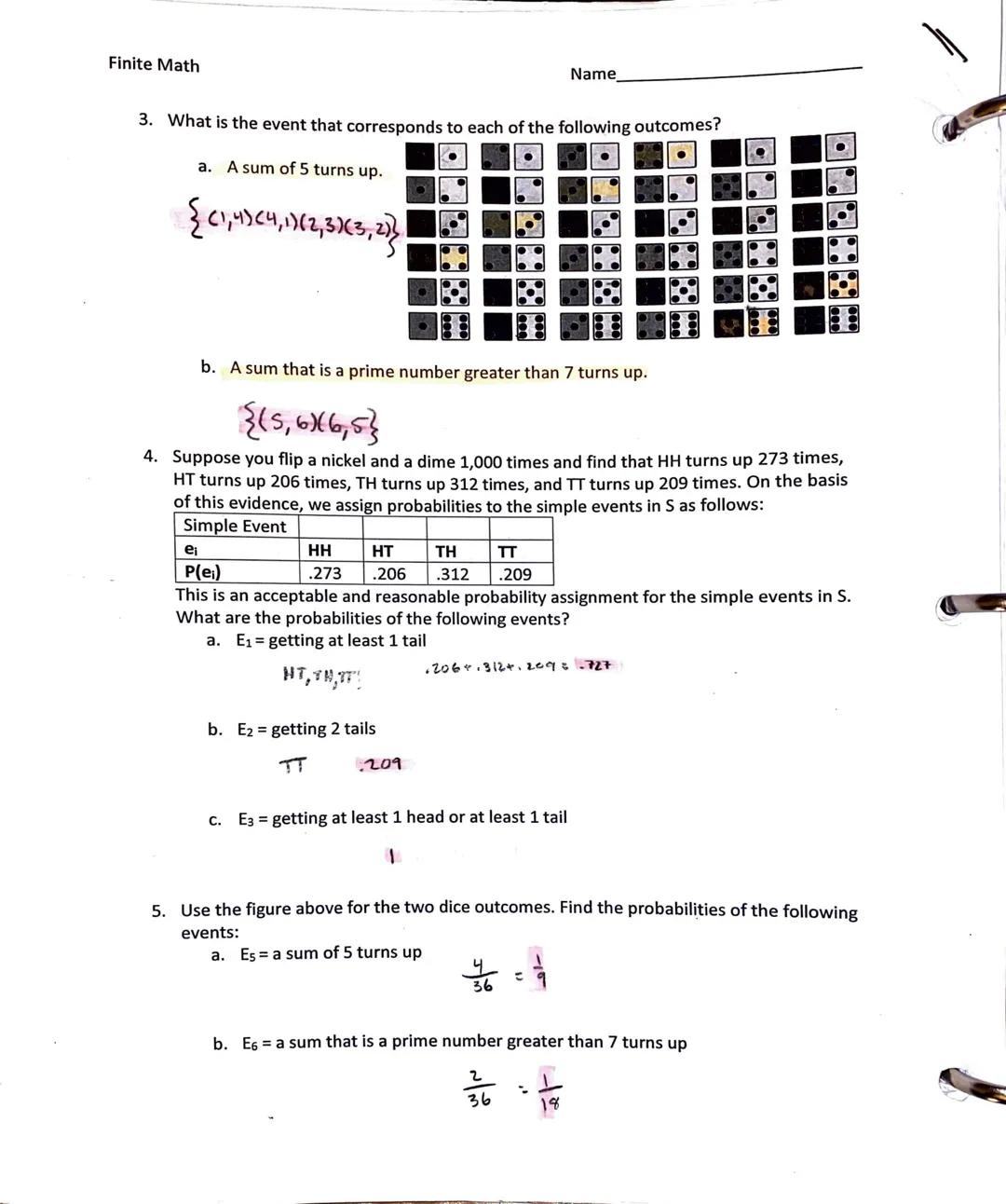
When working with dice or similar random experiments, we can map out all possible outcomes to find probabilities. For instance, when rolling two dice, there are 36 possible outcomes, and the event "sum equals 5" includes four possibilities: (1,4), (4,1), (2,3), and (3,2).
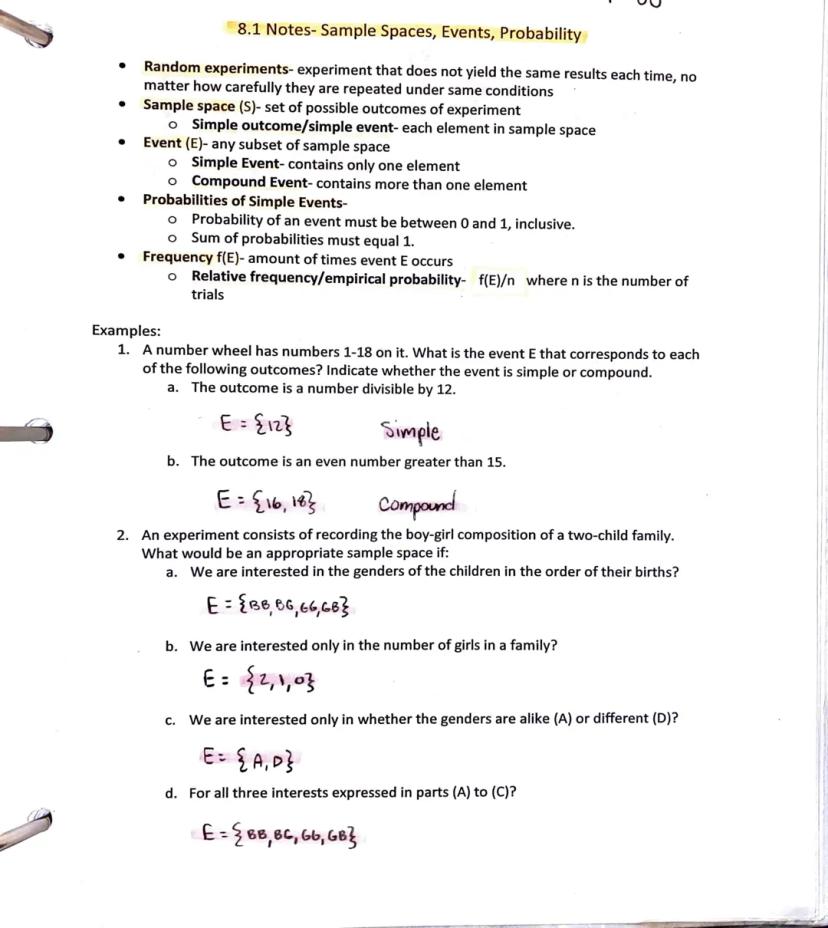
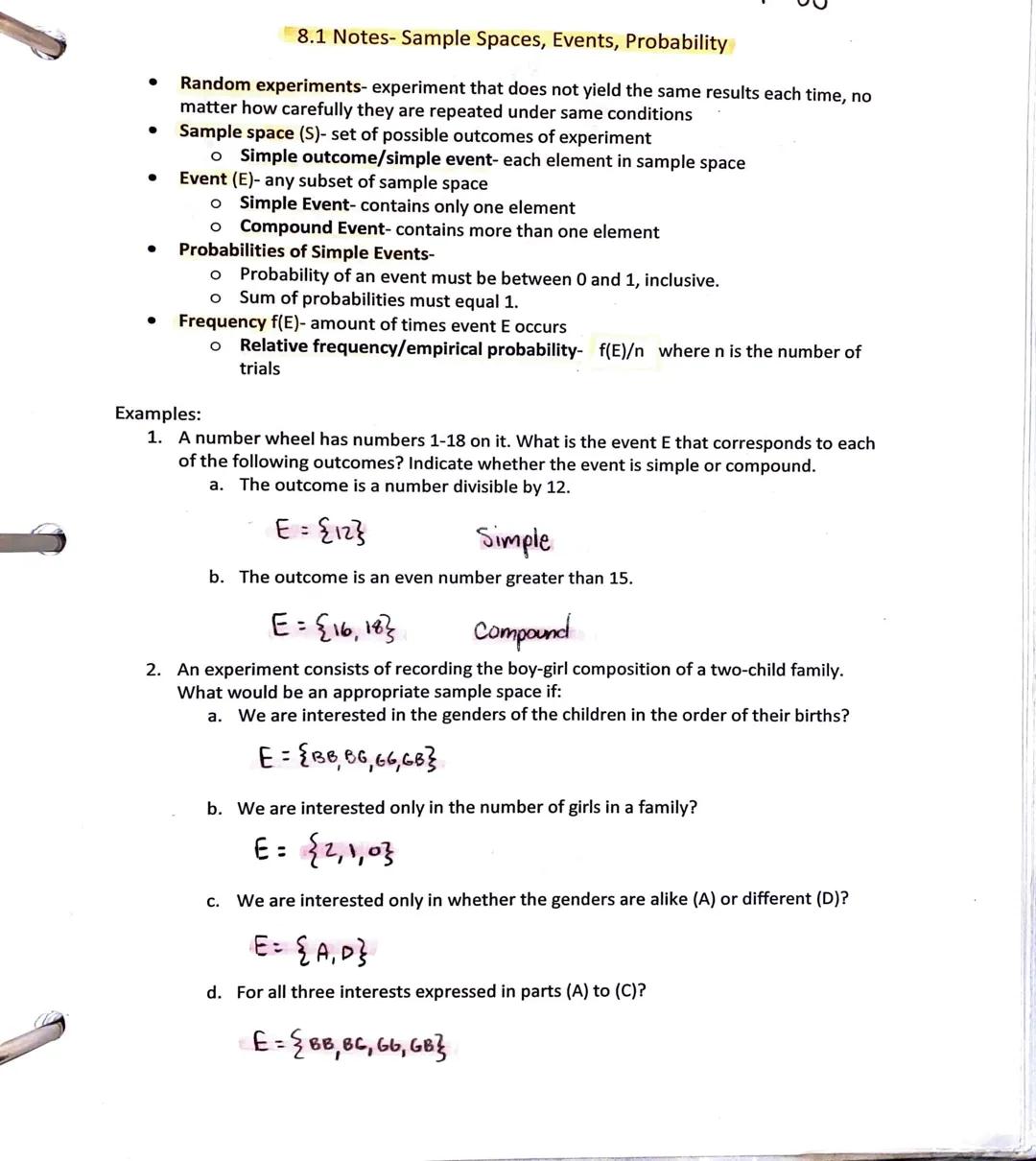
Experimental probabilities come from observed data rather than theoretical calculations. If you flip two coins 1,000 times and HH appears 273 times, you might assign P(HH) = 0.273. From this experimental data, you can calculate compound event probabilities by adding the relevant simple event probabilities.
Finding probabilities often involves identifying the relevant outcomes in your sample space, then dividing by the total number of possible outcomes. For example, the probability of rolling a prime number greater than 7 with two dice is 2/36 or 1/18.
👉 When calculating probabilities from experimental data, make sure your assigned probabilities for all simple events add up to exactly 1. This is a quick way to check your work!



 Statistics
 Algebra