

Biology is the fascinating study of life and living systems,... Show more
 Algebra
Sign up to see the contentIt's free!
Access to all documents
Improve your grades
Join milions of students
Knowunity AI
Subjects
Triangle Congruence and Similarity Theorems
Triangle Properties and Classification
Linear Equations and Graphs
Geometric Angle Relationships
Trigonometric Functions and Identities
Equation Solving Techniques
Circle Geometry Fundamentals
Division Operations and Methods
Basic Differentiation Rules
Exponent and Logarithm Properties
Show all topics
Human Organ Systems
Reproductive Cell Cycles
Biological Sciences Subdisciplines
Cellular Energy Metabolism
Autotrophic Energy Processes
Inheritance Patterns and Principles
Biomolecular Structure and Organization
Cell Cycle and Division Mechanics
Cellular Organization and Development
Biological Structural Organization
Show all topics
Chemical Sciences and Applications
Atomic Structure and Composition
Molecular Electron Structure Representation
Atomic Electron Behavior
Matter Properties and Water
Mole Concept and Calculations
Gas Laws and Behavior
Periodic Table Organization
Chemical Thermodynamics Fundamentals
Chemical Bond Types and Properties
Show all topics
European Renaissance and Enlightenment
European Cultural Movements 800-1920
American Revolution Era 1763-1797
American Civil War 1861-1865
Global Imperial Systems
Mongol and Chinese Dynasties
U.S. Presidents and World Leaders
Historical Sources and Documentation
World Wars Era and Impact
World Religious Systems
Show all topics
Classic and Contemporary Novels
Literary Character Analysis
Rhetorical Theory and Practice
Classic Literary Narratives
Reading Analysis and Interpretation
Narrative Structure and Techniques
English Language Components
Influential English-Language Authors
Basic Sentence Structure
Narrative Voice and Perspective
Show all topics
249
•
Feb 17, 2026
•
Biology is the fascinating study of life and living systems,... Show more
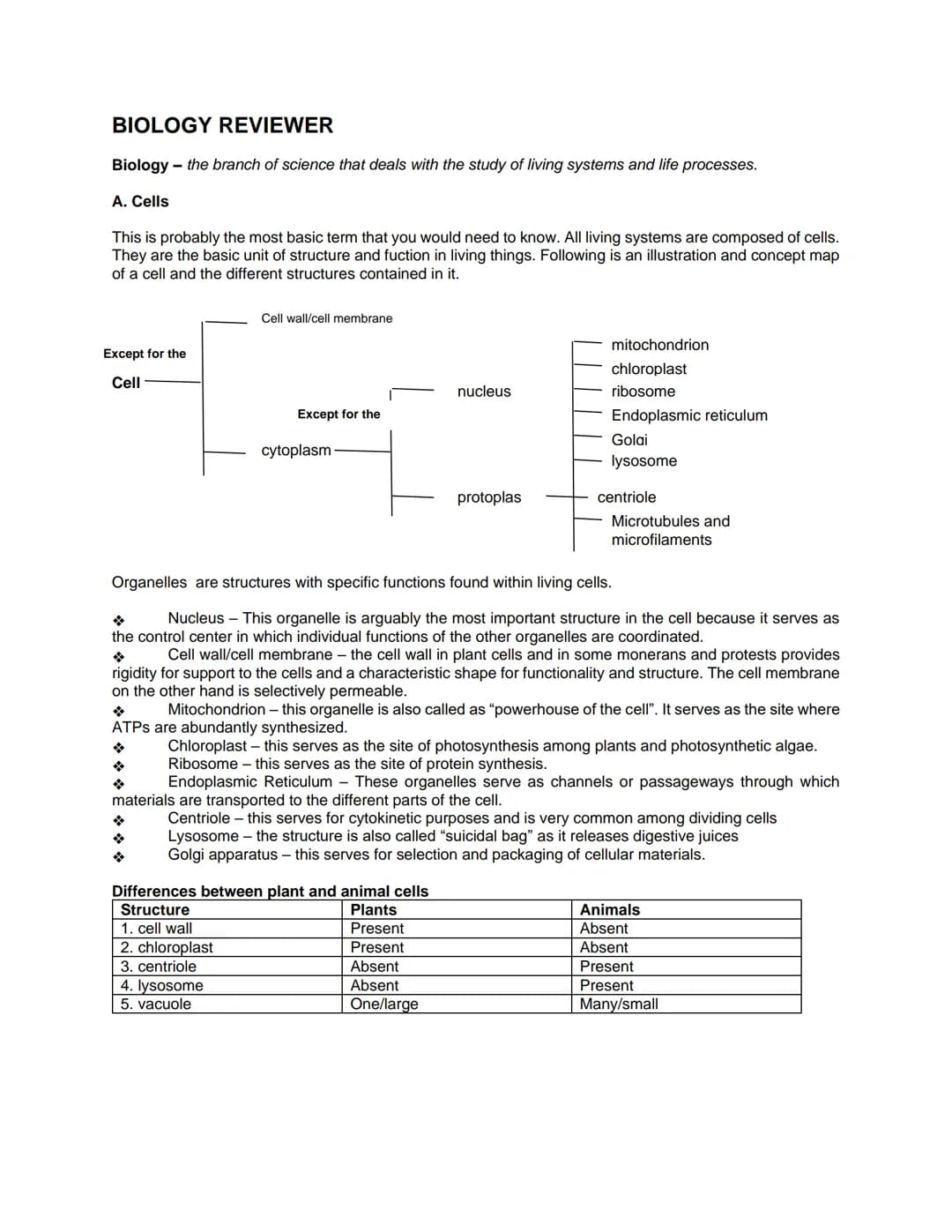
Ever wondered what makes up everything that's alive? Cells are the answer! They're the basic units of structure and function in all living organisms. Think of cells as tiny factories where life's essential processes happen.
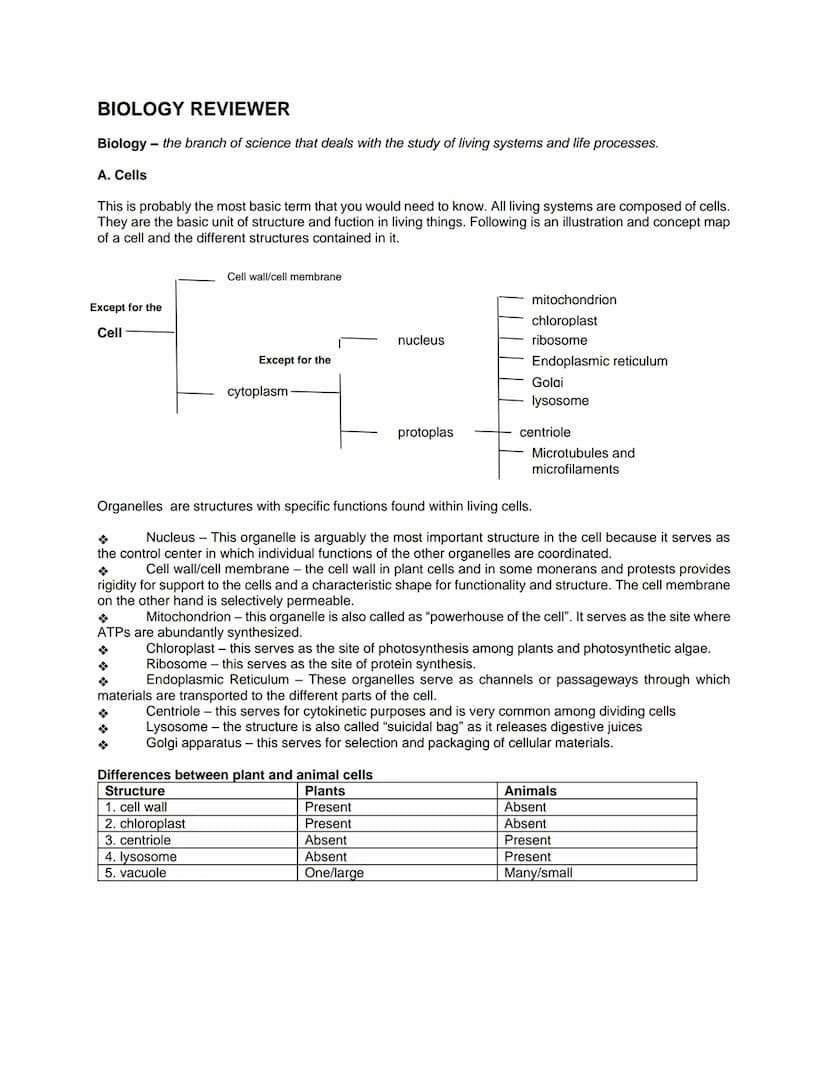
Cells contain specialized structures called organelles, each with specific jobs. The nucleus serves as the control center, coordinating all cellular activities. Other important organelles include the mitochondria (the powerhouse that produces energy), chloroplasts (where plants make food through photosynthesis), and ribosomes (which build proteins). The cell membrane acts like a security guard, controlling what enters and exits the cell.
Plant and animal cells have key differences. Plant cells have rigid cell walls and large vacuoles for water storage, while animal cells have centrioles for cell division and lysosomes for breaking down materials. Both types contain cytoplasm, but only plants have chloroplasts for photosynthesis.
Quick Fact: The discovery of cells revolutionized biology! When Robert Hooke first observed cork under a microscope in 1665, he saw tiny compartments he called "cells" because they reminded him of small rooms where monks lived.
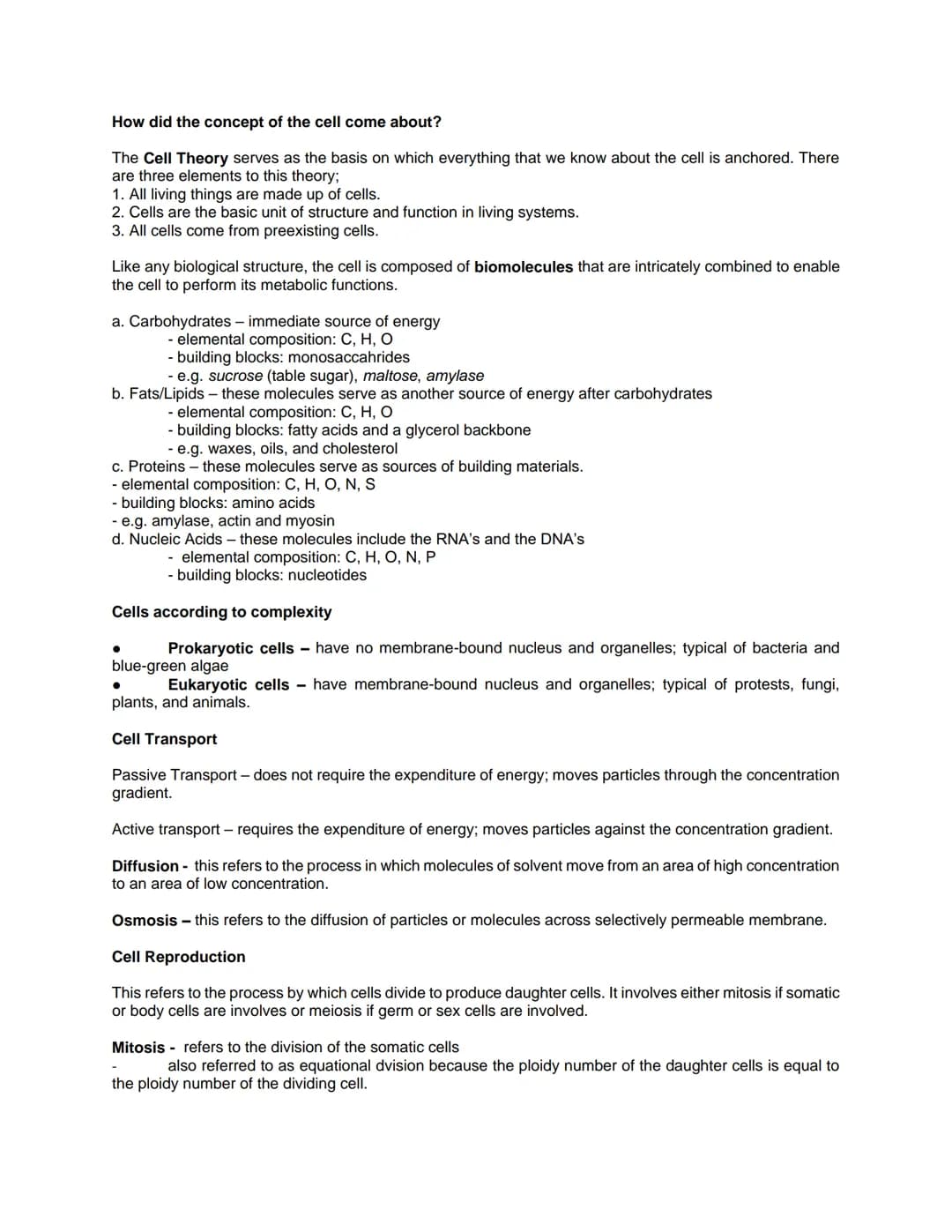
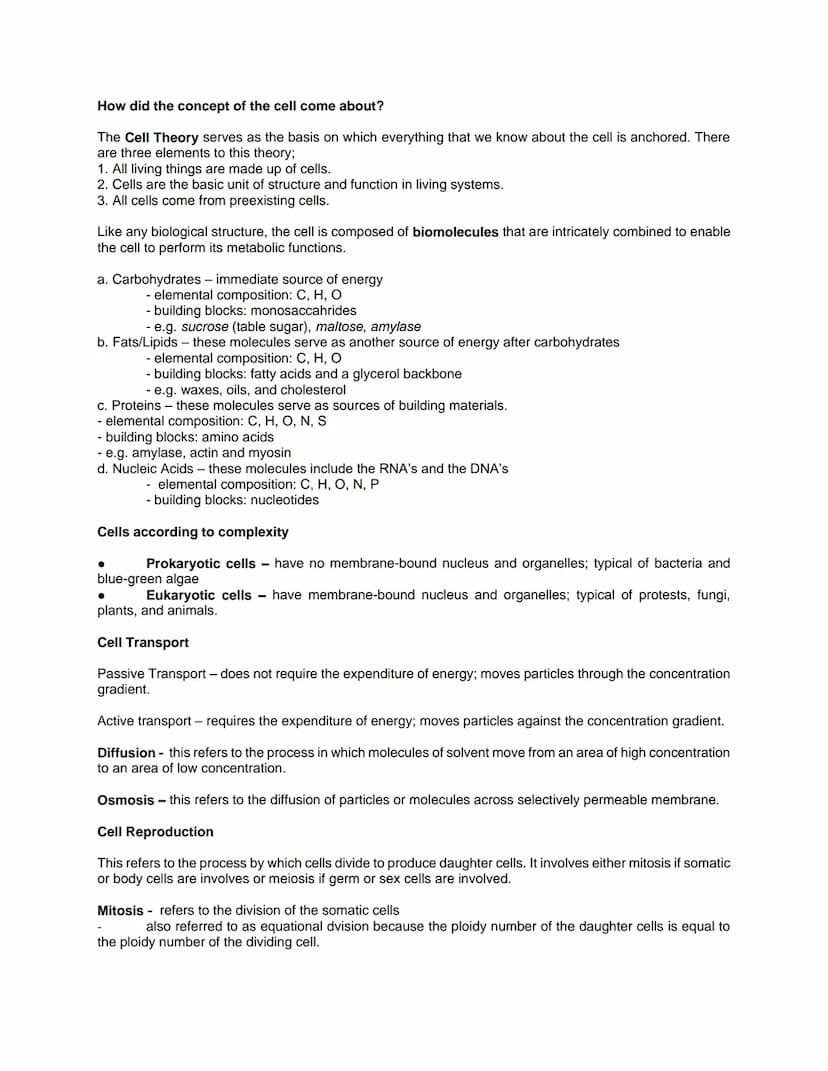
The Cell Theory forms the foundation of our understanding of life. Remember these three key points: all living things are made of cells, cells are the basic units of structure and function, and all cells come from pre-existing cells. This simple theory explains how life continues from generation to generation!
Cells are built from important biological molecules, each with specific functions:
Carbohydrates (made of C, H, O) provide immediate energy for cells. Think of glucose that powers your brain or the starch in potatoes. These molecules are built from simple sugar building blocks called monosaccharides.
Lipids serve as energy storage and make up cell membranes. They contain carbon, hydrogen and oxygen like carbohydrates, but in different arrangements. Fats, oils, and waxes are all examples of lipids.
Proteins (containing C, H, O, N, S) are the workhorses of cells, built from amino acid building blocks. They form enzymes, muscles, and structural components throughout your body.
Nucleic acids (DNA and RNA) contain the genetic instructions that make you unique. These complex molecules are built from nucleotides and contain carbon, hydrogen, oxygen, nitrogen, and phosphorus.
Cell types vary in complexity. Prokaryotic cells (like bacteria) lack a nuclear membrane and most organelles, while eukaryotic cells (found in animals, plants, fungi, and protists) have membrane-bound nuclei and organelles. Cells can transport materials either through passive transport (no energy required) or active transport (requires energy).
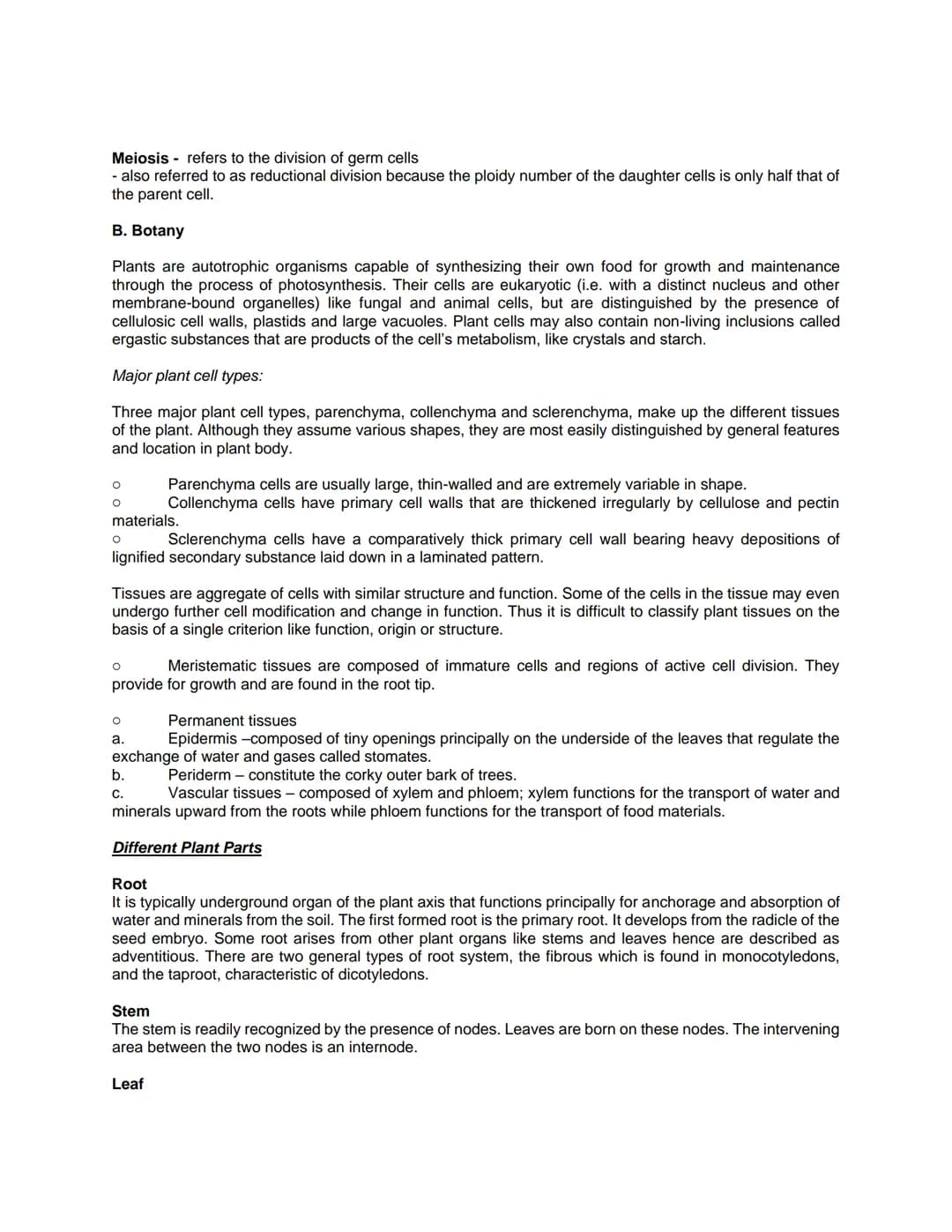
Plants are amazing organisms that can make their own food through photosynthesis. Unlike animals, plant cells have cellulose cell walls, plastids, and large vacuoles that help them maintain structure and store materials.
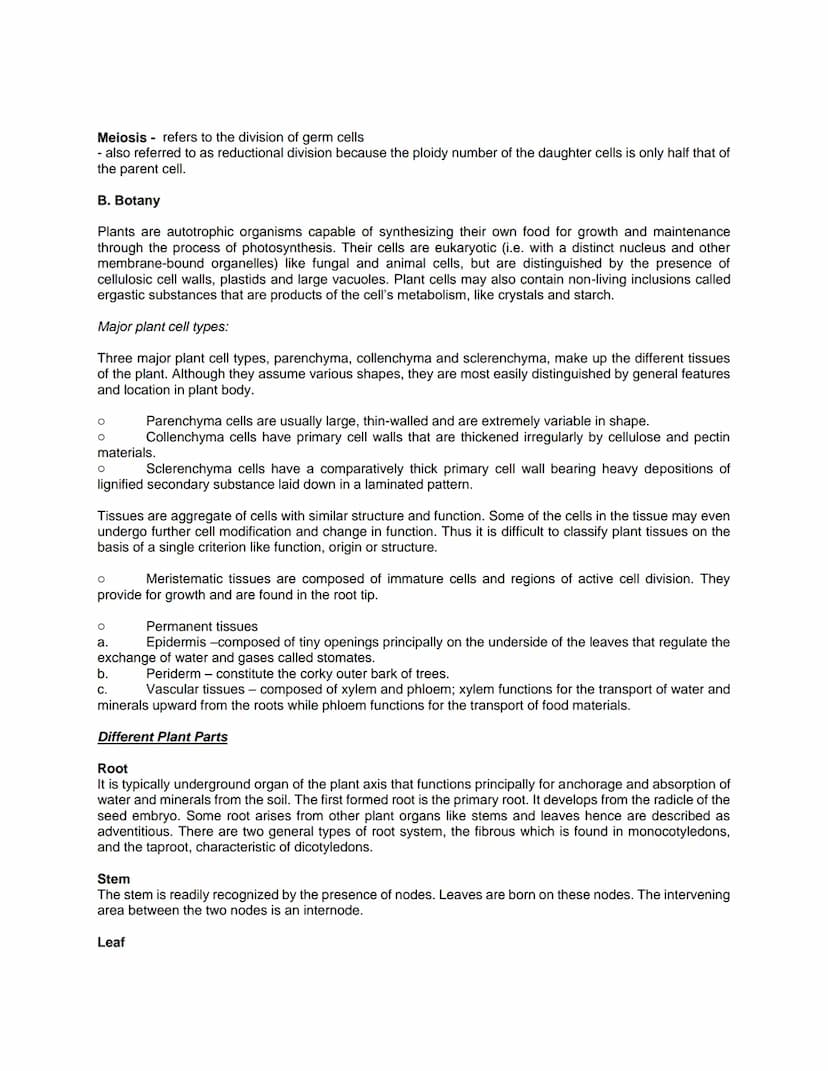
Plant cells come in three main types that give plants their structure. Parenchyma cells are thin-walled and variable in shape, making up most of the plant's soft tissues. Collenchyma cells have thickened walls that provide flexible support. Sclerenchyma cells have tough, lignified walls that provide rigid support and protection.
These cells organize into different tissues with specific functions. Meristematic tissues contain actively dividing cells that allow plants to grow throughout their lives. Permanent tissues include the epidermis (outer protective layer with stomates for gas exchange), periderm (the corky outer bark), and vascular tissues (xylem carries water upward, phloem transports food).
Plant parts each perform vital functions. Roots anchor the plant and absorb water and minerals from soil. Stems support the plant and contain nodes where leaves attach. Leaves are flat, green structures that perform photosynthesis and transpiration.
Try This: Next time you look at a plant, identify its parts and think about how each one helps the plant survive. The structure and function of plant parts is a perfect example of how biology connects form to purpose!
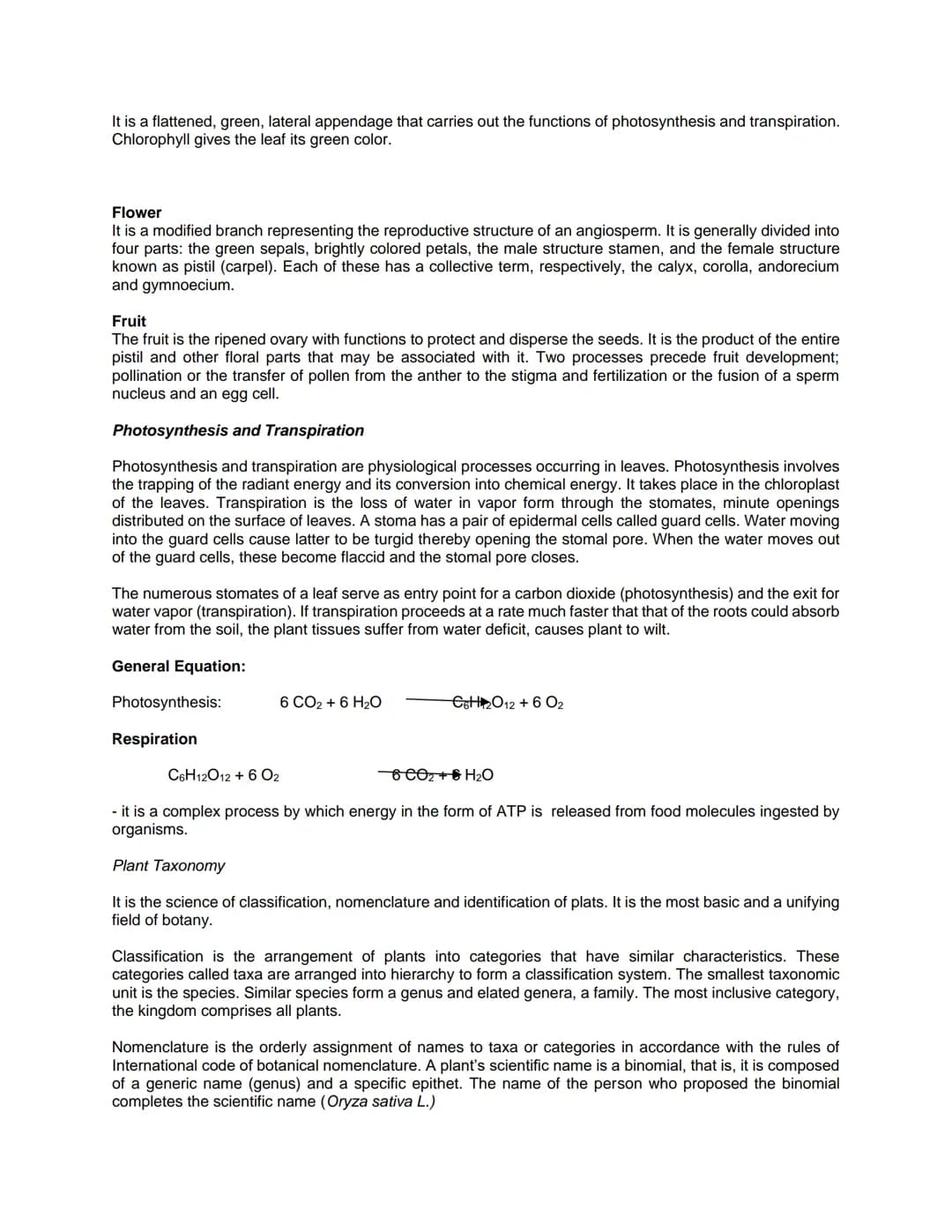
Flowers are more than just beautiful—they're the reproductive structures of flowering plants. Each flower typically has four main parts: sepals (the green outer covering), petals (often colorful to attract pollinators), stamens , and pistils (female parts that develop into fruits).
After pollination and fertilization, the flower's ovary develops into a fruit that protects and helps disperse the seeds inside. Next time you eat an apple or tomato, remember you're eating a plant's reproductive structure!
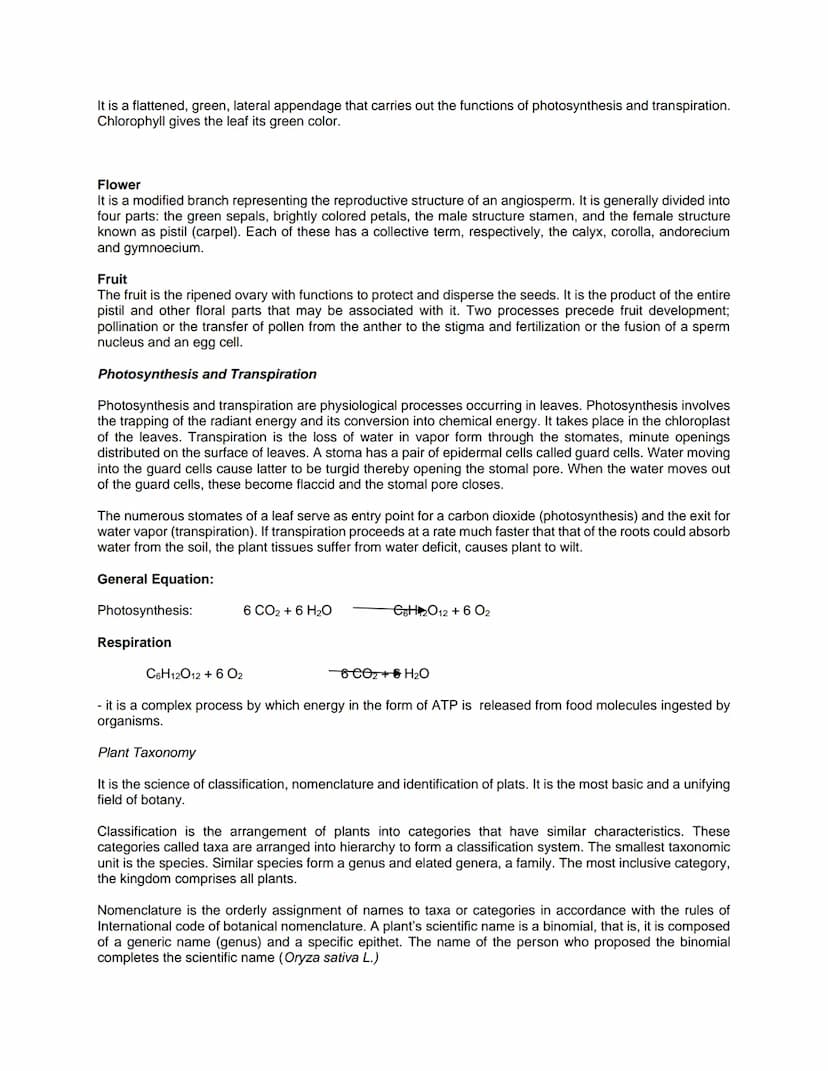
Plants perform two crucial physiological processes in their leaves. Photosynthesis converts sunlight energy into chemical energy (sugar), taking place in the chloroplasts. The basic equation summarizes this process: 6CO₂ + 6H₂O → C₆H₁₂O₆ + 6O₂
Transpiration is the evaporation of water through tiny openings called stomates on leaf surfaces. These openings are regulated by special guard cells that open and close based on water availability. Transpiration helps pull water up from the roots and cools the plant.
These processes are connected—stomates must open to let in carbon dioxide for photosynthesis, but this also allows water vapor to escape. If a plant loses water faster than its roots can absorb it, the plant will wilt.
Plant respiration is essentially the reverse of photosynthesis: C₆H₁₂O₆ + 6O₂ → 6CO₂ + 6H₂O. This process releases energy from food molecules as ATP.
In plant taxonomy, scientists classify plants based on shared characteristics. Each plant has a two-part scientific name (genus and species), like Oryza sativa L. (rice), following the binomial system.
Genetics explains why you might have your mom's eyes or your dad's hair color. Genetics is the study of heredity (trait transmission between generations) and variation (differences between organisms), with cell division playing a central role in both processes.
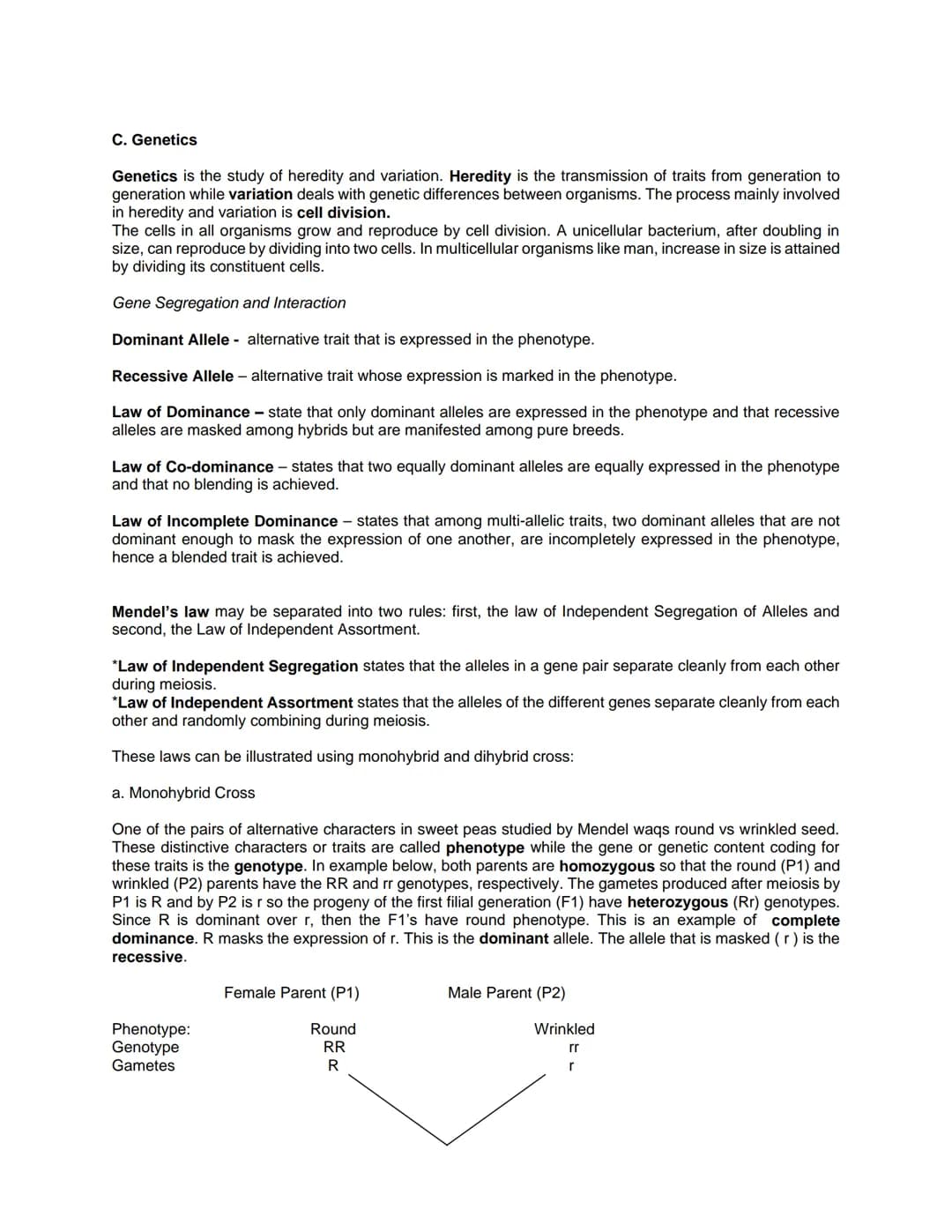
Genes come in alternative forms called alleles that determine traits. When one allele masks another in an organism, it's called dominant (like brown eyes), while the hidden allele is recessive (like blue eyes). Sometimes, both alleles can be expressed equally (co-dominance) or can blend together (incomplete dominance).
Mendel's Laws explain how traits are passed from parents to offspring:
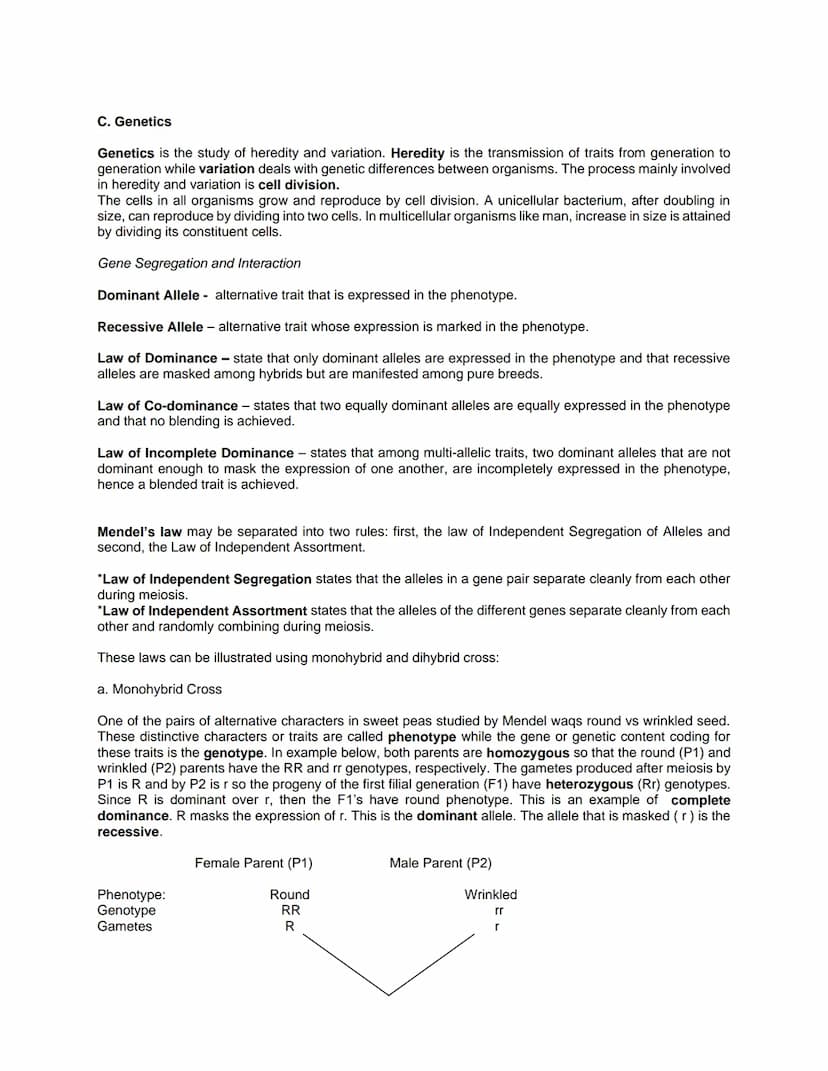
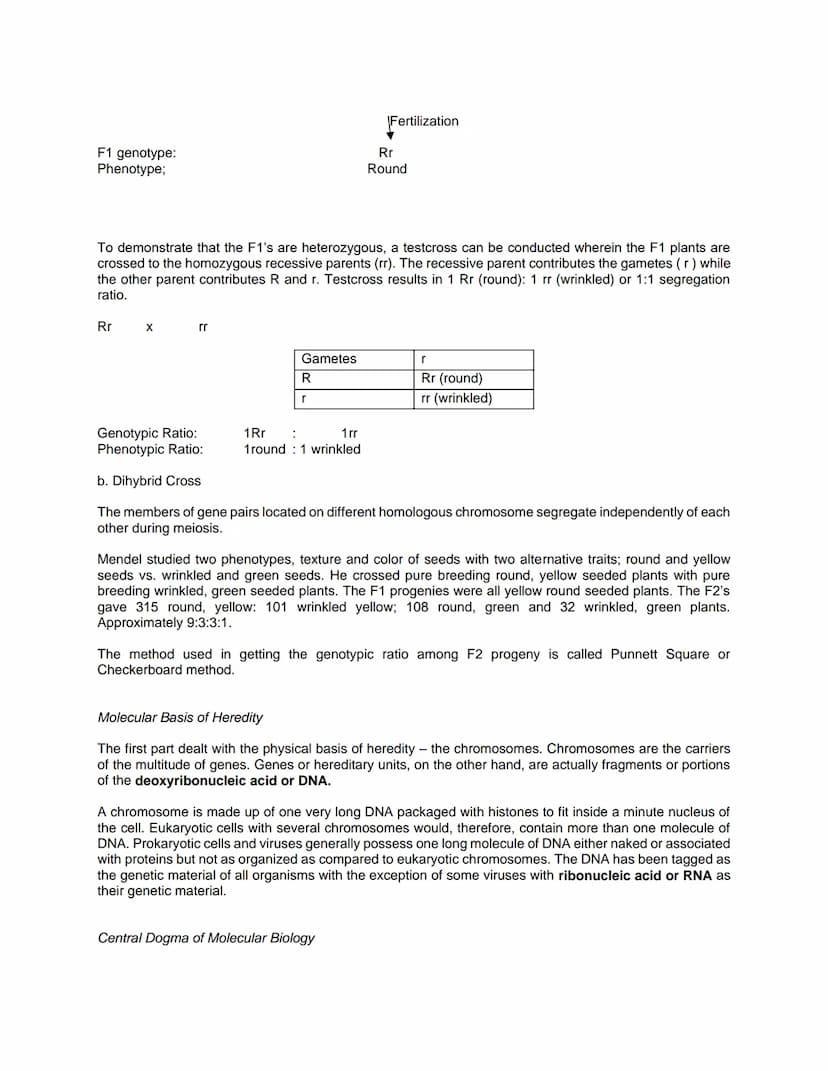
These laws explain the patterns we see in monohybrid crosses (tracking one trait) and dihybrid crosses (tracking two traits). For example, crossing pure-breeding round peas (RR) with wrinkled peas (rr) produces all round peas in the first generation (Rr), but when these are crossed, the second generation shows a 3:1 ratio of round to wrinkled.
Real-World Connection: Understanding genetics helps explain why certain diseases run in families and how genetic testing can predict health risks. It also explains why siblings can look different despite having the same parents!
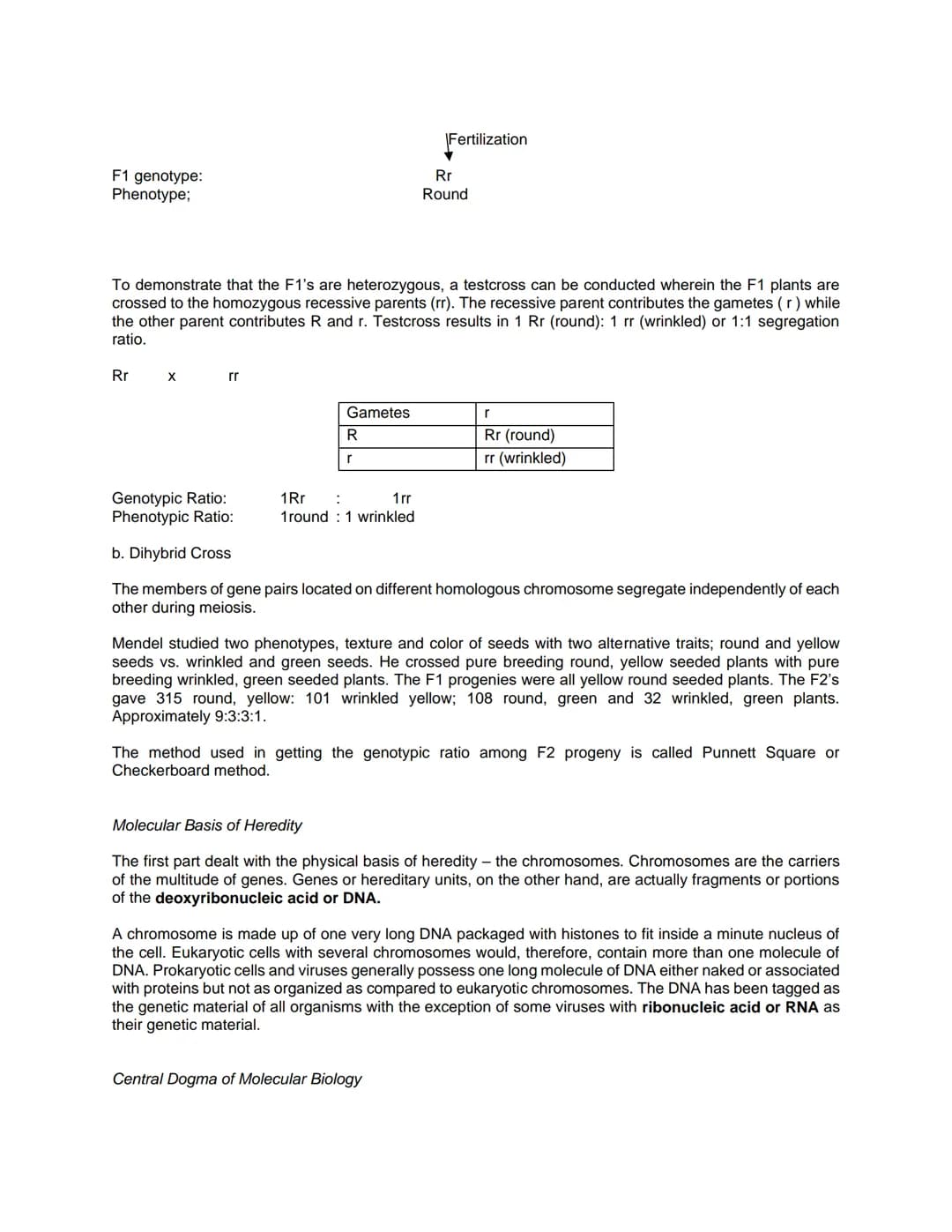
DNA is the incredible molecule that makes you uniquely you! Inside each of your cells, chromosomes are made of tightly packed DNA (deoxyribonucleic acid) wrapped around proteins. This DNA contains all the instructions needed to build and maintain your body.
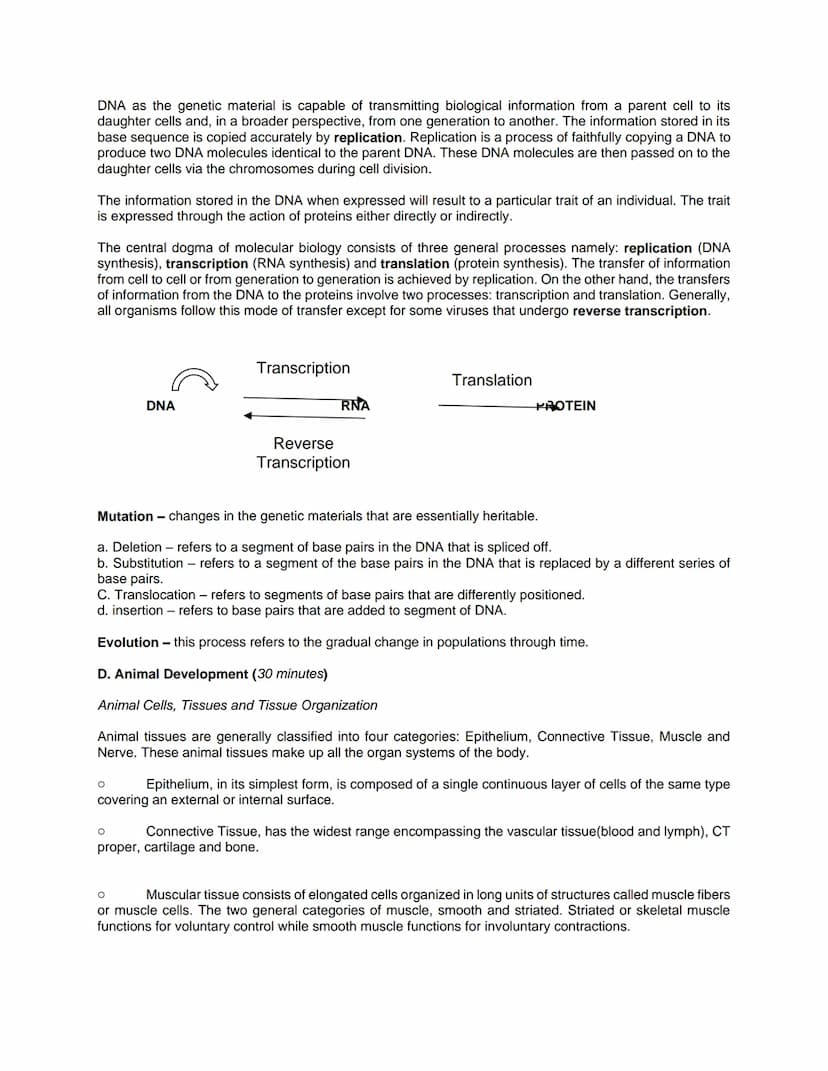
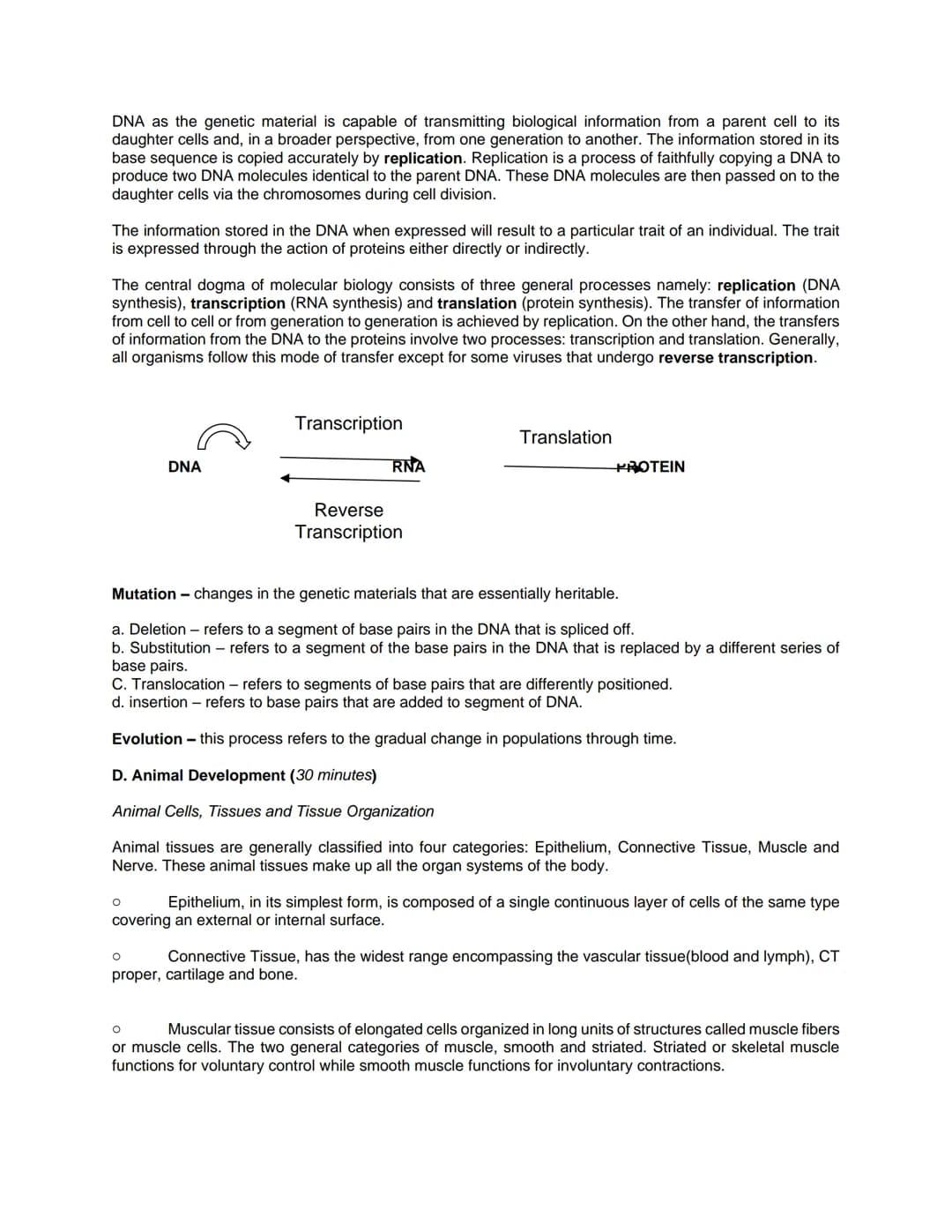
The Central Dogma of Molecular Biology explains how genetic information flows in cells:
Think of DNA as a cookbook with recipes for every protein your body needs. During transcription, a working copy (RNA) of a recipe is made. During translation, cellular machinery follows that RNA recipe to build a specific protein. These proteins then determine your traits.
Sometimes errors occur in DNA, called mutations. These can be:
Mutations can be harmful, neutral, or even beneficial. Over time, beneficial mutations can spread through a population, contributing to evolution - the gradual change in populations over time.
When studying genetic inheritance, scientists use special diagrams called Punnett squares to predict the possible combinations of genes offspring might receive from their parents. This helps explain why traits often appear in predictable ratios in families.
Your body contains four main types of tissues working together to keep you alive. Epithelial tissue forms protective coverings and linings. Connective tissue (including blood, cartilage, and bone) supports and connects other tissues. Muscle tissue enables movement through contraction. Nervous tissue transmits signals throughout your body.
Animal development is an amazing process that transforms a single fertilized egg into a complex organism! This journey follows several distinct stages:
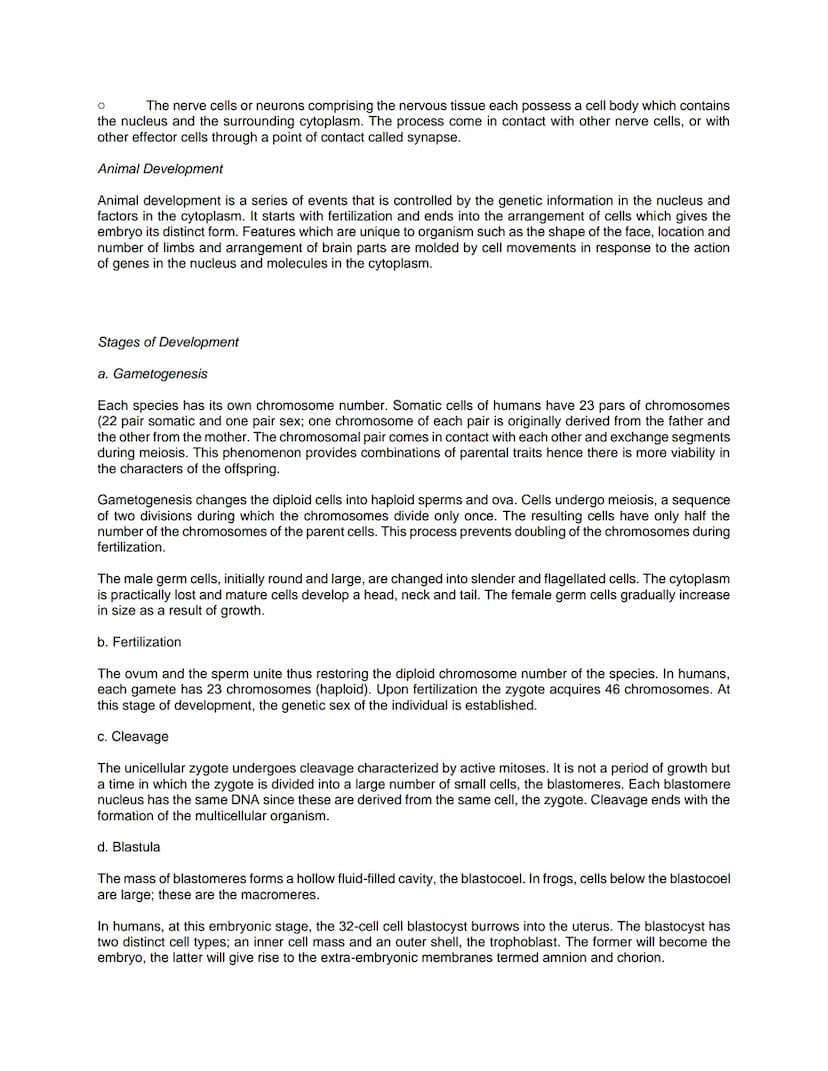
Gametogenesis is where it all begins—the production of sperm and egg cells through meiosis. This special cell division reduces the chromosome number by half, ensuring that when sperm and egg unite during fertilization, the normal chromosome number is restored. In humans, each gamete has 23 chromosomes, and the fertilized egg has 46.
After fertilization, the single-celled zygote undergoes rapid divisions called cleavage, creating many smaller cells called blastomeres. These cells form a hollow ball called a blastula, which has a fluid-filled cavity. In humans, this stage is called a blastocyst, with an inner cell mass that becomes the embryo and an outer layer that forms supportive membranes.
The embryo then undergoes gastrulation, where cells migrate and rearrange to form three primary cell layers: ectoderm (outer layer), mesoderm (middle layer), and endoderm (inner layer). Each layer will develop into specific body systems—ectoderm forms skin, nervous system, and sensory organs; mesoderm forms muscles, bones, and circulatory system; endoderm forms digestive and respiratory systems.
Amazing Fact: The genes that control your development are highly conserved across species. Many of the same genes that shape a human embryo also shape a fruit fly embryo!
The journey from embryo to fully formed organism continues with neurulation, where the neural plate forms along the embryo's dorsal side. This plate folds and closes to form the neural tube, which will develop into your brain and spinal cord. The closure starts at the head region and progresses toward the tail.
As development continues, the three primary germ layers (ectoderm, mesoderm, and endoderm) formed during gastrulation differentiate into specific organs. Initially, these are just masses of undifferentiated cells, but they gradually take on their unique characteristics and positions.
Brain development begins with the neural tube dividing into three regions: the prosencephalon (forebrain), mesencephalon (midbrain), and rhombencephalon (hindbrain). In humans, the brain undergoes complex folding and twisting, unlike in frogs where it remains as a straight tube.
Limb formation starts with small buds on the embryo's sides that develop into paddle-shaped structures. These gradually form distinct segments through controlled cell death that "carves out" fingers and toes. The limbs then rotate—upper limbs turning outward (placing thumbs on the outside) and lower limbs turning inward (placing big toes on the inside).
Throughout development, genes control which cells develop into which structures. Neighboring cells communicate with chemical signals that trigger specific developmental pathways. This complex choreography ensures that organs form in the right places and with the right connections.
The entire process is remarkably precise—a testament to the power of genetic programming and cellular communication that guides development from a single cell to a complex organism.
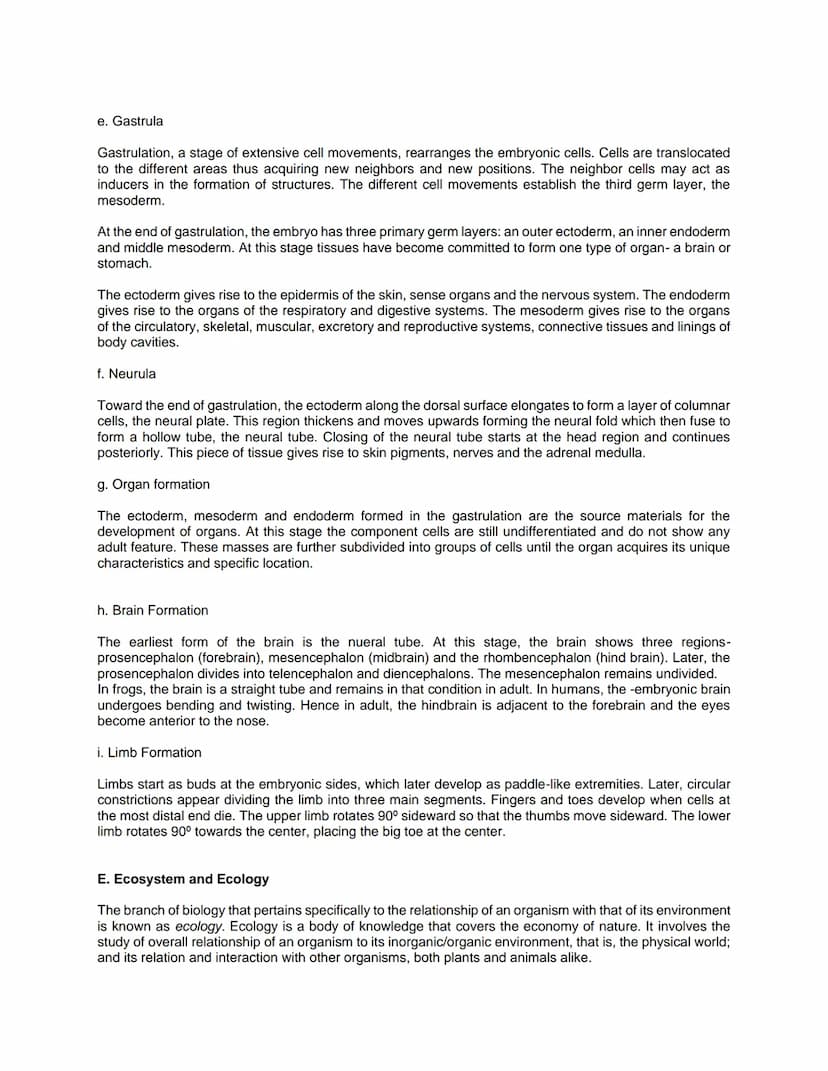
Ecology connects all living things with their environment. Ecology is the study of how organisms interact with each other and their physical surroundings. The most important concept in ecology is the ecosystem—a community of living organisms interacting with their physical environment.
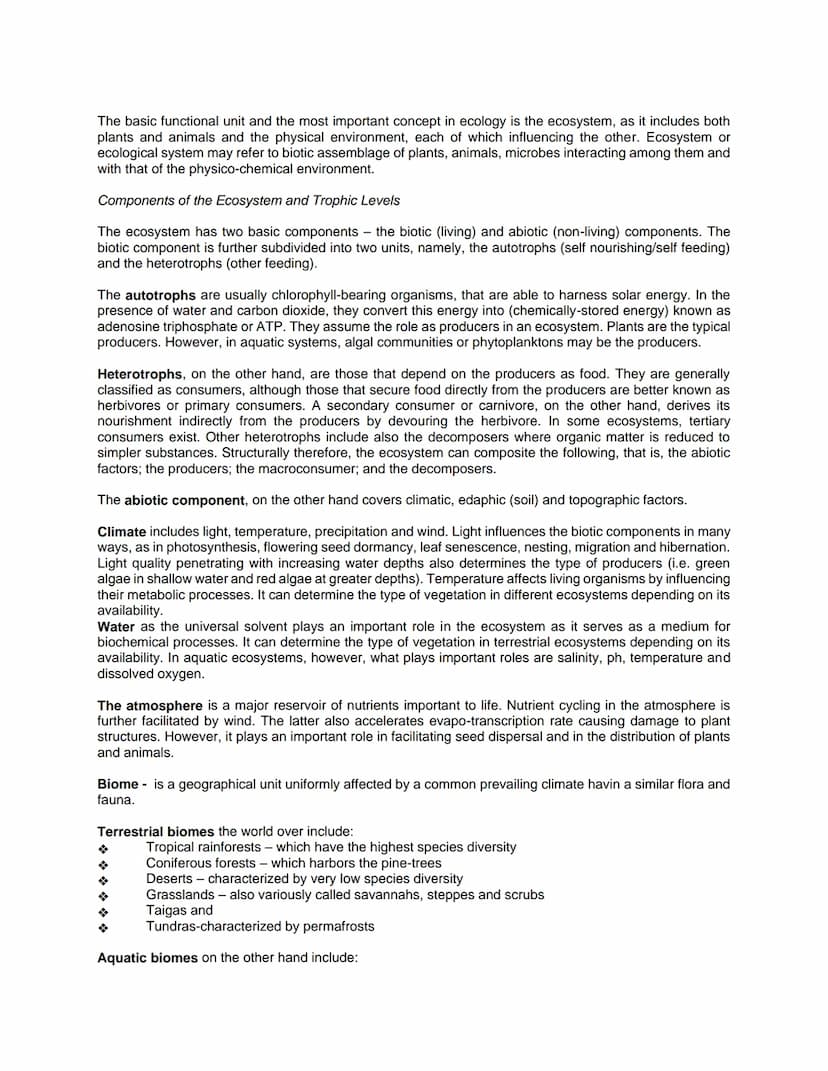
Every ecosystem has two main components: biotic (living) and abiotic . The biotic component includes autotrophs (organisms that make their own food, like plants) and heterotrophs (organisms that consume other organisms for food). Autotrophs are the producers in an ecosystem, converting solar energy into chemical energy through photosynthesis. Heterotrophs include primary consumers (herbivores that eat plants), secondary consumers (carnivores that eat herbivores), and decomposers (organisms that break down dead matter).
Abiotic components include climate factors like light, temperature, water, and wind. Light affects processes like photosynthesis, flowering, and animal behaviors like migration. Temperature influences metabolic rates and can determine which organisms can survive in an area. Water is essential for all life processes and can determine vegetation types in different ecosystems. The atmosphere supplies crucial nutrients, while wind helps with seed dispersal and affects plant structure.
These components interact in complex ways. For example, plants (producers) capture sunlight energy and convert it to chemical energy, which flows through the ecosystem as herbivores eat plants, carnivores eat herbivores, and decomposers recycle nutrients back to the soil.
Think About It: Next time you're outside, try to identify the producers, consumers, and decomposers in that ecosystem. How might changes in abiotic factors (like less rainfall) affect these organisms?
Our planet has amazing diversity across different regions, forming distinct biomes—large geographical areas with similar climate, plants, and animals. These natural communities are shaped primarily by temperature and rainfall patterns.
Terrestrial biomes include:
Aquatic biomes include freshwater systems like lakes and rivers, and marine systems like oceans and estuaries. Each biome supports unique communities of organisms specifically adapted to those conditions.
Within ecosystems, energy flows in one direction—from the sun to producers to various levels of consumers. This creates a trophic structure where each level represents the energy transfer in the food chain. Unlike energy, nutrients cycle between organisms and the environment in processes known as nutrient cycles.
Ecosystems aren't static—they change over time through a process called ecological succession. After a disturbance like a fire or flood, ecosystems gradually rebuild through predictable stages, often resulting in a stable community.
Understanding ecosystems helps us recognize how human activities impact natural systems and how we can work to preserve the incredible diversity of life on Earth.
Our AI companion is specifically built for the needs of students. Based on the millions of content pieces we have on the platform we can provide truly meaningful and relevant answers to students. But its not only about answers, the companion is even more about guiding students through their daily learning challenges, with personalised study plans, quizzes or content pieces in the chat and 100% personalisation based on the students skills and developments.
You can download the app in the Google Play Store and in the Apple App Store.
That's right! Enjoy free access to study content, connect with fellow students, and get instant help – all at your fingertips.
App Store
Google Play
The app is very easy to use and well designed. I have found everything I was looking for so far and have been able to learn a lot from the presentations! I will definitely use the app for a class assignment! And of course it also helps a lot as an inspiration.
Stefan S
iOS user
This app is really great. There are so many study notes and help [...]. My problem subject is French, for example, and the app has so many options for help. Thanks to this app, I have improved my French. I would recommend it to anyone.
Samantha Klich
Android user
Wow, I am really amazed. I just tried the app because I've seen it advertised many times and was absolutely stunned. This app is THE HELP you want for school and above all, it offers so many things, such as workouts and fact sheets, which have been VERY helpful to me personally.
Anna
iOS user
I think it’s very much worth it and you’ll end up using it a lot once you get the hang of it and even after looking at others notes you can still ask your Artificial intelligence buddy the question and ask to simplify it if you still don’t get it!!! In the end I think it’s worth it 😊👍 ⚠️Also DID I MENTION ITS FREEE YOU DON’T HAVE TO PAY FOR ANYTHING AND STILL GET YOUR GRADES IN PERFECTLY❗️❗️⚠️
Thomas R
iOS user
Knowunity is the BEST app I’ve used in a minute. This is not an ai review or anything this is genuinely coming from a 7th grade student (I know 2011 im young) but dude this app is a 10/10 i have maintained a 3.8 gpa and have plenty of time for gaming. I love it and my mom is just happy I got good grades
Brad T
Android user
Not only did it help me find the answer but it also showed me alternative ways to solve it. I was horrible in math and science but now I have an a in both subjects. Thanks for the help🤍🤍
David K
iOS user
The app's just great! All I have to do is enter the topic in the search bar and I get the response real fast. I don't have to watch 10 YouTube videos to understand something, so I'm saving my time. Highly recommended!
Sudenaz Ocak
Android user
In school I was really bad at maths but thanks to the app, I am doing better now. I am so grateful that you made the app.
Greenlight Bonnie
Android user
I found this app a couple years ago and it has only gotten better since then. I really love it because it can help with written questions and photo questions. Also, it can find study guides that other people have made as well as flashcard sets and practice tests. The free version is also amazing for students who might not be able to afford it. Would 100% recommend
Aubrey
iOS user
Best app if you're in Highschool or Junior high. I have been using this app for 2 school years and it's the best, it's good if you don't have anyone to help you with school work.😋🩷🎀
Marco B
iOS user
THE QUIZES AND FLASHCARDS ARE SO USEFUL AND I LOVE Knowunity AI. IT ALSO IS LITREALLY LIKE CHATGPT BUT SMARTER!! HELPED ME WITH MY MASCARA PROBLEMS TOO!! AS WELL AS MY REAL SUBJECTS ! DUHHH 😍😁😲🤑💗✨🎀😮
Elisha
iOS user
This app is phenomenal down to the correct info and the various topics you can study! I greatly recommend it for people who struggle with procrastination and those who need homework help. It has been perfectly accurate for world 1 history as far as I’ve seen! Geometry too!
Paul T
iOS user
The app is very easy to use and well designed. I have found everything I was looking for so far and have been able to learn a lot from the presentations! I will definitely use the app for a class assignment! And of course it also helps a lot as an inspiration.
Stefan S
iOS user
This app is really great. There are so many study notes and help [...]. My problem subject is French, for example, and the app has so many options for help. Thanks to this app, I have improved my French. I would recommend it to anyone.
Samantha Klich
Android user
Wow, I am really amazed. I just tried the app because I've seen it advertised many times and was absolutely stunned. This app is THE HELP you want for school and above all, it offers so many things, such as workouts and fact sheets, which have been VERY helpful to me personally.
Anna
iOS user
I think it’s very much worth it and you’ll end up using it a lot once you get the hang of it and even after looking at others notes you can still ask your Artificial intelligence buddy the question and ask to simplify it if you still don’t get it!!! In the end I think it’s worth it 😊👍 ⚠️Also DID I MENTION ITS FREEE YOU DON’T HAVE TO PAY FOR ANYTHING AND STILL GET YOUR GRADES IN PERFECTLY❗️❗️⚠️
Thomas R
iOS user
Knowunity is the BEST app I’ve used in a minute. This is not an ai review or anything this is genuinely coming from a 7th grade student (I know 2011 im young) but dude this app is a 10/10 i have maintained a 3.8 gpa and have plenty of time for gaming. I love it and my mom is just happy I got good grades
Brad T
Android user
Not only did it help me find the answer but it also showed me alternative ways to solve it. I was horrible in math and science but now I have an a in both subjects. Thanks for the help🤍🤍
David K
iOS user
The app's just great! All I have to do is enter the topic in the search bar and I get the response real fast. I don't have to watch 10 YouTube videos to understand something, so I'm saving my time. Highly recommended!
Sudenaz Ocak
Android user
In school I was really bad at maths but thanks to the app, I am doing better now. I am so grateful that you made the app.
Greenlight Bonnie
Android user
I found this app a couple years ago and it has only gotten better since then. I really love it because it can help with written questions and photo questions. Also, it can find study guides that other people have made as well as flashcard sets and practice tests. The free version is also amazing for students who might not be able to afford it. Would 100% recommend
Aubrey
iOS user
Best app if you're in Highschool or Junior high. I have been using this app for 2 school years and it's the best, it's good if you don't have anyone to help you with school work.😋🩷🎀
Marco B
iOS user
THE QUIZES AND FLASHCARDS ARE SO USEFUL AND I LOVE Knowunity AI. IT ALSO IS LITREALLY LIKE CHATGPT BUT SMARTER!! HELPED ME WITH MY MASCARA PROBLEMS TOO!! AS WELL AS MY REAL SUBJECTS ! DUHHH 😍😁😲🤑💗✨🎀😮
Elisha
iOS user
This app is phenomenal down to the correct info and the various topics you can study! I greatly recommend it for people who struggle with procrastination and those who need homework help. It has been perfectly accurate for world 1 history as far as I’ve seen! Geometry too!
Paul T
iOS user
Biology is the fascinating study of life and living systems, from the smallest cells to the largest ecosystems. This subject helps us understand how organisms function, interact, and evolve. As you explore biology, you'll discover the amazing complexity and interconnection... Show more
Access to all documents
Improve your grades
Join milions of students
Ever wondered what makes up everything that's alive? Cells are the answer! They're the basic units of structure and function in all living organisms. Think of cells as tiny factories where life's essential processes happen.
Cells contain specialized structures called organelles, each with specific jobs. The nucleus serves as the control center, coordinating all cellular activities. Other important organelles include the mitochondria (the powerhouse that produces energy), chloroplasts (where plants make food through photosynthesis), and ribosomes (which build proteins). The cell membrane acts like a security guard, controlling what enters and exits the cell.
Plant and animal cells have key differences. Plant cells have rigid cell walls and large vacuoles for water storage, while animal cells have centrioles for cell division and lysosomes for breaking down materials. Both types contain cytoplasm, but only plants have chloroplasts for photosynthesis.
Quick Fact: The discovery of cells revolutionized biology! When Robert Hooke first observed cork under a microscope in 1665, he saw tiny compartments he called "cells" because they reminded him of small rooms where monks lived.
Access to all documents
Improve your grades
Join milions of students
The Cell Theory forms the foundation of our understanding of life. Remember these three key points: all living things are made of cells, cells are the basic units of structure and function, and all cells come from pre-existing cells. This simple theory explains how life continues from generation to generation!
Cells are built from important biological molecules, each with specific functions:
Carbohydrates (made of C, H, O) provide immediate energy for cells. Think of glucose that powers your brain or the starch in potatoes. These molecules are built from simple sugar building blocks called monosaccharides.
Lipids serve as energy storage and make up cell membranes. They contain carbon, hydrogen and oxygen like carbohydrates, but in different arrangements. Fats, oils, and waxes are all examples of lipids.
Proteins (containing C, H, O, N, S) are the workhorses of cells, built from amino acid building blocks. They form enzymes, muscles, and structural components throughout your body.
Nucleic acids (DNA and RNA) contain the genetic instructions that make you unique. These complex molecules are built from nucleotides and contain carbon, hydrogen, oxygen, nitrogen, and phosphorus.
Cell types vary in complexity. Prokaryotic cells (like bacteria) lack a nuclear membrane and most organelles, while eukaryotic cells (found in animals, plants, fungi, and protists) have membrane-bound nuclei and organelles. Cells can transport materials either through passive transport (no energy required) or active transport (requires energy).
Access to all documents
Improve your grades
Join milions of students
Plants are amazing organisms that can make their own food through photosynthesis. Unlike animals, plant cells have cellulose cell walls, plastids, and large vacuoles that help them maintain structure and store materials.
Plant cells come in three main types that give plants their structure. Parenchyma cells are thin-walled and variable in shape, making up most of the plant's soft tissues. Collenchyma cells have thickened walls that provide flexible support. Sclerenchyma cells have tough, lignified walls that provide rigid support and protection.
These cells organize into different tissues with specific functions. Meristematic tissues contain actively dividing cells that allow plants to grow throughout their lives. Permanent tissues include the epidermis (outer protective layer with stomates for gas exchange), periderm (the corky outer bark), and vascular tissues (xylem carries water upward, phloem transports food).
Plant parts each perform vital functions. Roots anchor the plant and absorb water and minerals from soil. Stems support the plant and contain nodes where leaves attach. Leaves are flat, green structures that perform photosynthesis and transpiration.
Try This: Next time you look at a plant, identify its parts and think about how each one helps the plant survive. The structure and function of plant parts is a perfect example of how biology connects form to purpose!
Access to all documents
Improve your grades
Join milions of students
Flowers are more than just beautiful—they're the reproductive structures of flowering plants. Each flower typically has four main parts: sepals (the green outer covering), petals (often colorful to attract pollinators), stamens , and pistils (female parts that develop into fruits).
After pollination and fertilization, the flower's ovary develops into a fruit that protects and helps disperse the seeds inside. Next time you eat an apple or tomato, remember you're eating a plant's reproductive structure!
Plants perform two crucial physiological processes in their leaves. Photosynthesis converts sunlight energy into chemical energy (sugar), taking place in the chloroplasts. The basic equation summarizes this process: 6CO₂ + 6H₂O → C₆H₁₂O₆ + 6O₂
Transpiration is the evaporation of water through tiny openings called stomates on leaf surfaces. These openings are regulated by special guard cells that open and close based on water availability. Transpiration helps pull water up from the roots and cools the plant.
These processes are connected—stomates must open to let in carbon dioxide for photosynthesis, but this also allows water vapor to escape. If a plant loses water faster than its roots can absorb it, the plant will wilt.
Plant respiration is essentially the reverse of photosynthesis: C₆H₁₂O₆ + 6O₂ → 6CO₂ + 6H₂O. This process releases energy from food molecules as ATP.
In plant taxonomy, scientists classify plants based on shared characteristics. Each plant has a two-part scientific name (genus and species), like Oryza sativa L. (rice), following the binomial system.
Access to all documents
Improve your grades
Join milions of students
Genetics explains why you might have your mom's eyes or your dad's hair color. Genetics is the study of heredity (trait transmission between generations) and variation (differences between organisms), with cell division playing a central role in both processes.
Genes come in alternative forms called alleles that determine traits. When one allele masks another in an organism, it's called dominant (like brown eyes), while the hidden allele is recessive (like blue eyes). Sometimes, both alleles can be expressed equally (co-dominance) or can blend together (incomplete dominance).
Mendel's Laws explain how traits are passed from parents to offspring:
These laws explain the patterns we see in monohybrid crosses (tracking one trait) and dihybrid crosses (tracking two traits). For example, crossing pure-breeding round peas (RR) with wrinkled peas (rr) produces all round peas in the first generation (Rr), but when these are crossed, the second generation shows a 3:1 ratio of round to wrinkled.
Real-World Connection: Understanding genetics helps explain why certain diseases run in families and how genetic testing can predict health risks. It also explains why siblings can look different despite having the same parents!
Access to all documents
Improve your grades
Join milions of students
DNA is the incredible molecule that makes you uniquely you! Inside each of your cells, chromosomes are made of tightly packed DNA (deoxyribonucleic acid) wrapped around proteins. This DNA contains all the instructions needed to build and maintain your body.
The Central Dogma of Molecular Biology explains how genetic information flows in cells:
Think of DNA as a cookbook with recipes for every protein your body needs. During transcription, a working copy (RNA) of a recipe is made. During translation, cellular machinery follows that RNA recipe to build a specific protein. These proteins then determine your traits.
Sometimes errors occur in DNA, called mutations. These can be:
Mutations can be harmful, neutral, or even beneficial. Over time, beneficial mutations can spread through a population, contributing to evolution - the gradual change in populations over time.
When studying genetic inheritance, scientists use special diagrams called Punnett squares to predict the possible combinations of genes offspring might receive from their parents. This helps explain why traits often appear in predictable ratios in families.
Access to all documents
Improve your grades
Join milions of students
Your body contains four main types of tissues working together to keep you alive. Epithelial tissue forms protective coverings and linings. Connective tissue (including blood, cartilage, and bone) supports and connects other tissues. Muscle tissue enables movement through contraction. Nervous tissue transmits signals throughout your body.
Animal development is an amazing process that transforms a single fertilized egg into a complex organism! This journey follows several distinct stages:
Gametogenesis is where it all begins—the production of sperm and egg cells through meiosis. This special cell division reduces the chromosome number by half, ensuring that when sperm and egg unite during fertilization, the normal chromosome number is restored. In humans, each gamete has 23 chromosomes, and the fertilized egg has 46.
After fertilization, the single-celled zygote undergoes rapid divisions called cleavage, creating many smaller cells called blastomeres. These cells form a hollow ball called a blastula, which has a fluid-filled cavity. In humans, this stage is called a blastocyst, with an inner cell mass that becomes the embryo and an outer layer that forms supportive membranes.
The embryo then undergoes gastrulation, where cells migrate and rearrange to form three primary cell layers: ectoderm (outer layer), mesoderm (middle layer), and endoderm (inner layer). Each layer will develop into specific body systems—ectoderm forms skin, nervous system, and sensory organs; mesoderm forms muscles, bones, and circulatory system; endoderm forms digestive and respiratory systems.
Amazing Fact: The genes that control your development are highly conserved across species. Many of the same genes that shape a human embryo also shape a fruit fly embryo!
Access to all documents
Improve your grades
Join milions of students
The journey from embryo to fully formed organism continues with neurulation, where the neural plate forms along the embryo's dorsal side. This plate folds and closes to form the neural tube, which will develop into your brain and spinal cord. The closure starts at the head region and progresses toward the tail.
As development continues, the three primary germ layers (ectoderm, mesoderm, and endoderm) formed during gastrulation differentiate into specific organs. Initially, these are just masses of undifferentiated cells, but they gradually take on their unique characteristics and positions.
Brain development begins with the neural tube dividing into three regions: the prosencephalon (forebrain), mesencephalon (midbrain), and rhombencephalon (hindbrain). In humans, the brain undergoes complex folding and twisting, unlike in frogs where it remains as a straight tube.
Limb formation starts with small buds on the embryo's sides that develop into paddle-shaped structures. These gradually form distinct segments through controlled cell death that "carves out" fingers and toes. The limbs then rotate—upper limbs turning outward (placing thumbs on the outside) and lower limbs turning inward (placing big toes on the inside).
Throughout development, genes control which cells develop into which structures. Neighboring cells communicate with chemical signals that trigger specific developmental pathways. This complex choreography ensures that organs form in the right places and with the right connections.
The entire process is remarkably precise—a testament to the power of genetic programming and cellular communication that guides development from a single cell to a complex organism.
Access to all documents
Improve your grades
Join milions of students
Ecology connects all living things with their environment. Ecology is the study of how organisms interact with each other and their physical surroundings. The most important concept in ecology is the ecosystem—a community of living organisms interacting with their physical environment.
Every ecosystem has two main components: biotic (living) and abiotic . The biotic component includes autotrophs (organisms that make their own food, like plants) and heterotrophs (organisms that consume other organisms for food). Autotrophs are the producers in an ecosystem, converting solar energy into chemical energy through photosynthesis. Heterotrophs include primary consumers (herbivores that eat plants), secondary consumers (carnivores that eat herbivores), and decomposers (organisms that break down dead matter).
Abiotic components include climate factors like light, temperature, water, and wind. Light affects processes like photosynthesis, flowering, and animal behaviors like migration. Temperature influences metabolic rates and can determine which organisms can survive in an area. Water is essential for all life processes and can determine vegetation types in different ecosystems. The atmosphere supplies crucial nutrients, while wind helps with seed dispersal and affects plant structure.
These components interact in complex ways. For example, plants (producers) capture sunlight energy and convert it to chemical energy, which flows through the ecosystem as herbivores eat plants, carnivores eat herbivores, and decomposers recycle nutrients back to the soil.
Think About It: Next time you're outside, try to identify the producers, consumers, and decomposers in that ecosystem. How might changes in abiotic factors (like less rainfall) affect these organisms?
Access to all documents
Improve your grades
Join milions of students
Our planet has amazing diversity across different regions, forming distinct biomes—large geographical areas with similar climate, plants, and animals. These natural communities are shaped primarily by temperature and rainfall patterns.
Terrestrial biomes include:
Aquatic biomes include freshwater systems like lakes and rivers, and marine systems like oceans and estuaries. Each biome supports unique communities of organisms specifically adapted to those conditions.
Within ecosystems, energy flows in one direction—from the sun to producers to various levels of consumers. This creates a trophic structure where each level represents the energy transfer in the food chain. Unlike energy, nutrients cycle between organisms and the environment in processes known as nutrient cycles.
Ecosystems aren't static—they change over time through a process called ecological succession. After a disturbance like a fire or flood, ecosystems gradually rebuild through predictable stages, often resulting in a stable community.
Understanding ecosystems helps us recognize how human activities impact natural systems and how we can work to preserve the incredible diversity of life on Earth.
Our AI companion is specifically built for the needs of students. Based on the millions of content pieces we have on the platform we can provide truly meaningful and relevant answers to students. But its not only about answers, the companion is even more about guiding students through their daily learning challenges, with personalised study plans, quizzes or content pieces in the chat and 100% personalisation based on the students skills and developments.
You can download the app in the Google Play Store and in the Apple App Store.
That's right! Enjoy free access to study content, connect with fellow students, and get instant help – all at your fingertips.
11
Smart Tools NEW
Transform this note into: ✓ 50+ Practice Questions ✓ Interactive Flashcards ✓ Full Practice Test ✓ Essay Outlines
generations, important terms
 Biology
Different methods and how to do Divybrid Crosses.
BiologyThis topic includes cells, different plant parts and genetics.
Science (ACT®)These are notes from the genetics unit of biology
BiologyNotes describing the biological laws of inheritance
BiologyHonors Biology notes
BiologyApp Store
Google Play
The app is very easy to use and well designed. I have found everything I was looking for so far and have been able to learn a lot from the presentations! I will definitely use the app for a class assignment! And of course it also helps a lot as an inspiration.
Stefan S
iOS user
This app is really great. There are so many study notes and help [...]. My problem subject is French, for example, and the app has so many options for help. Thanks to this app, I have improved my French. I would recommend it to anyone.
Samantha Klich
Android user
Wow, I am really amazed. I just tried the app because I've seen it advertised many times and was absolutely stunned. This app is THE HELP you want for school and above all, it offers so many things, such as workouts and fact sheets, which have been VERY helpful to me personally.
Anna
iOS user
I think it’s very much worth it and you’ll end up using it a lot once you get the hang of it and even after looking at others notes you can still ask your Artificial intelligence buddy the question and ask to simplify it if you still don’t get it!!! In the end I think it’s worth it 😊👍 ⚠️Also DID I MENTION ITS FREEE YOU DON’T HAVE TO PAY FOR ANYTHING AND STILL GET YOUR GRADES IN PERFECTLY❗️❗️⚠️
Thomas R
iOS user
Knowunity is the BEST app I’ve used in a minute. This is not an ai review or anything this is genuinely coming from a 7th grade student (I know 2011 im young) but dude this app is a 10/10 i have maintained a 3.8 gpa and have plenty of time for gaming. I love it and my mom is just happy I got good grades
Brad T
Android user
Not only did it help me find the answer but it also showed me alternative ways to solve it. I was horrible in math and science but now I have an a in both subjects. Thanks for the help🤍🤍
David K
iOS user
The app's just great! All I have to do is enter the topic in the search bar and I get the response real fast. I don't have to watch 10 YouTube videos to understand something, so I'm saving my time. Highly recommended!
Sudenaz Ocak
Android user
In school I was really bad at maths but thanks to the app, I am doing better now. I am so grateful that you made the app.
Greenlight Bonnie
Android user
I found this app a couple years ago and it has only gotten better since then. I really love it because it can help with written questions and photo questions. Also, it can find study guides that other people have made as well as flashcard sets and practice tests. The free version is also amazing for students who might not be able to afford it. Would 100% recommend
Aubrey
iOS user
Best app if you're in Highschool or Junior high. I have been using this app for 2 school years and it's the best, it's good if you don't have anyone to help you with school work.😋🩷🎀
Marco B
iOS user
THE QUIZES AND FLASHCARDS ARE SO USEFUL AND I LOVE Knowunity AI. IT ALSO IS LITREALLY LIKE CHATGPT BUT SMARTER!! HELPED ME WITH MY MASCARA PROBLEMS TOO!! AS WELL AS MY REAL SUBJECTS ! DUHHH 😍😁😲🤑💗✨🎀😮
Elisha
iOS user
This app is phenomenal down to the correct info and the various topics you can study! I greatly recommend it for people who struggle with procrastination and those who need homework help. It has been perfectly accurate for world 1 history as far as I’ve seen! Geometry too!
Paul T
iOS user
The app is very easy to use and well designed. I have found everything I was looking for so far and have been able to learn a lot from the presentations! I will definitely use the app for a class assignment! And of course it also helps a lot as an inspiration.
Stefan S
iOS user
This app is really great. There are so many study notes and help [...]. My problem subject is French, for example, and the app has so many options for help. Thanks to this app, I have improved my French. I would recommend it to anyone.
Samantha Klich
Android user
Wow, I am really amazed. I just tried the app because I've seen it advertised many times and was absolutely stunned. This app is THE HELP you want for school and above all, it offers so many things, such as workouts and fact sheets, which have been VERY helpful to me personally.
Anna
iOS user
I think it’s very much worth it and you’ll end up using it a lot once you get the hang of it and even after looking at others notes you can still ask your Artificial intelligence buddy the question and ask to simplify it if you still don’t get it!!! In the end I think it’s worth it 😊👍 ⚠️Also DID I MENTION ITS FREEE YOU DON’T HAVE TO PAY FOR ANYTHING AND STILL GET YOUR GRADES IN PERFECTLY❗️❗️⚠️
Thomas R
iOS user
Knowunity is the BEST app I’ve used in a minute. This is not an ai review or anything this is genuinely coming from a 7th grade student (I know 2011 im young) but dude this app is a 10/10 i have maintained a 3.8 gpa and have plenty of time for gaming. I love it and my mom is just happy I got good grades
Brad T
Android user
Not only did it help me find the answer but it also showed me alternative ways to solve it. I was horrible in math and science but now I have an a in both subjects. Thanks for the help🤍🤍
David K
iOS user
The app's just great! All I have to do is enter the topic in the search bar and I get the response real fast. I don't have to watch 10 YouTube videos to understand something, so I'm saving my time. Highly recommended!
Sudenaz Ocak
Android user
In school I was really bad at maths but thanks to the app, I am doing better now. I am so grateful that you made the app.
Greenlight Bonnie
Android user
I found this app a couple years ago and it has only gotten better since then. I really love it because it can help with written questions and photo questions. Also, it can find study guides that other people have made as well as flashcard sets and practice tests. The free version is also amazing for students who might not be able to afford it. Would 100% recommend
Aubrey
iOS user
Best app if you're in Highschool or Junior high. I have been using this app for 2 school years and it's the best, it's good if you don't have anyone to help you with school work.😋🩷🎀
Marco B
iOS user
THE QUIZES AND FLASHCARDS ARE SO USEFUL AND I LOVE Knowunity AI. IT ALSO IS LITREALLY LIKE CHATGPT BUT SMARTER!! HELPED ME WITH MY MASCARA PROBLEMS TOO!! AS WELL AS MY REAL SUBJECTS ! DUHHH 😍😁😲🤑💗✨🎀😮
Elisha
iOS user
This app is phenomenal down to the correct info and the various topics you can study! I greatly recommend it for people who struggle with procrastination and those who need homework help. It has been perfectly accurate for world 1 history as far as I’ve seen! Geometry too!
Paul T
iOS user