

Ever wondered why your lungs fill with air when you... Show more
 Biology10 views·Updated May 18, 2026·8 pages
How Boyle's Law Influences Breathing
1 / 8
1
of 8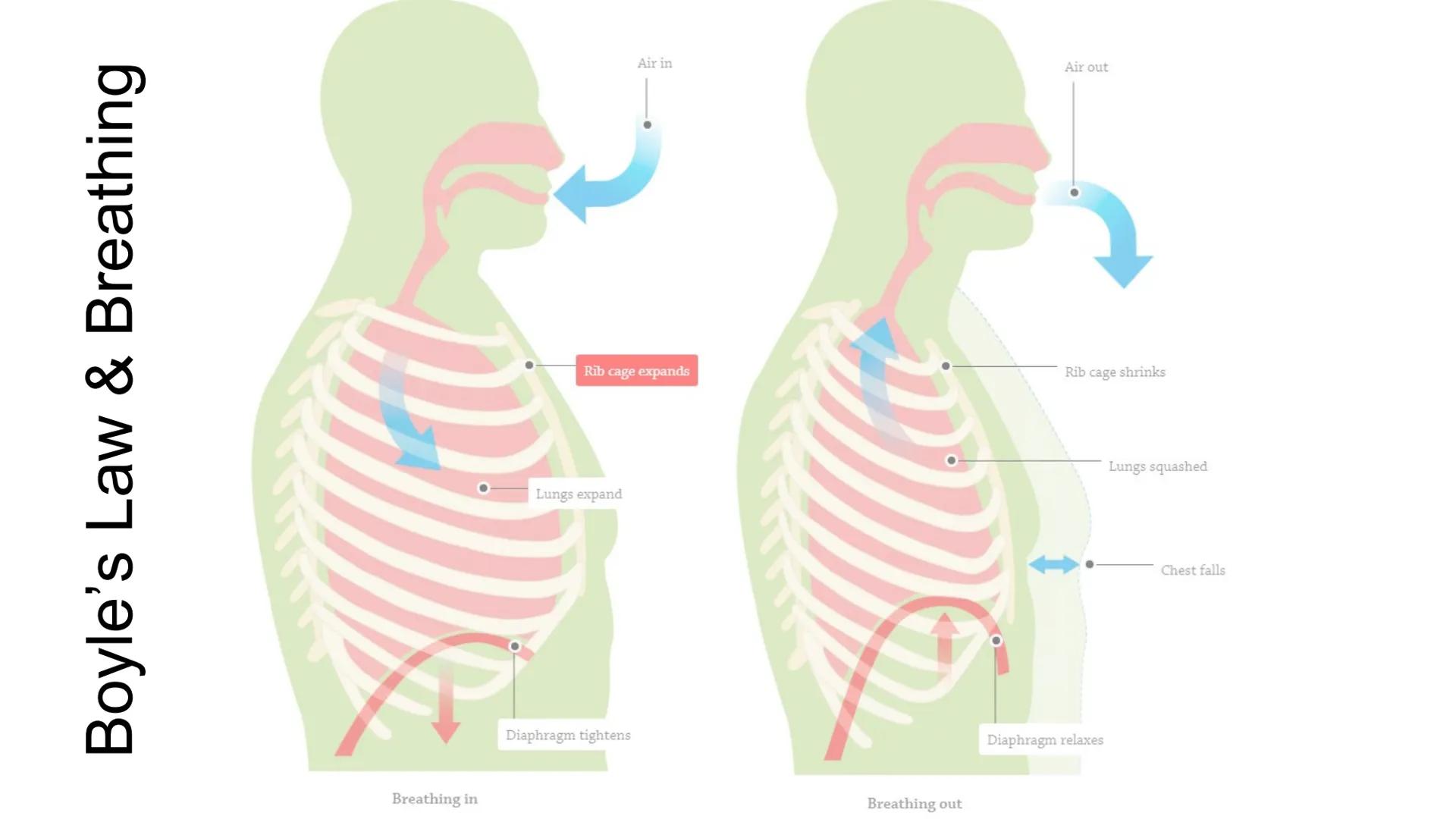
How We Breathe
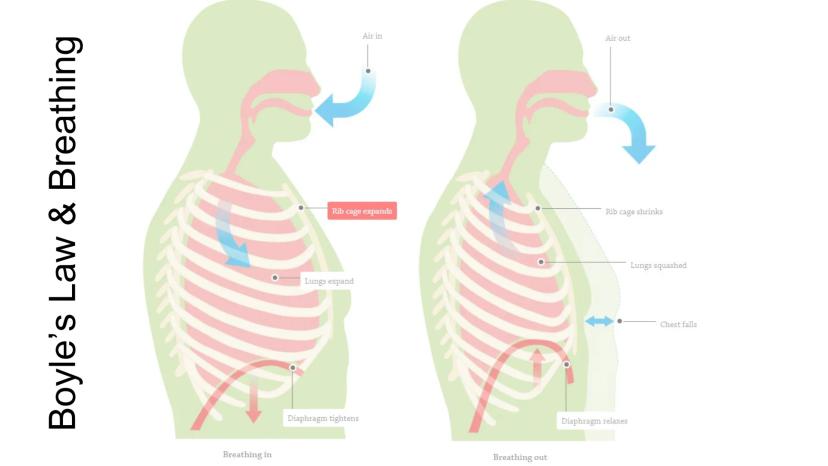
Breathing involves a coordinated dance between your ribs, diaphragm, and lungs. When you breathe in, your rib cage expands and your diaphragm tightens and moves downward. This causes your lungs to expand, creating more space for air to flow in.
When you breathe out, the opposite happens. Your diaphragm relaxes, moving upward while your rib cage shrinks. This squeezes your lungs, forcing air out of your body.
Try This! Place your hand on your stomach and take a deep breath. Feel how your diaphragm pushes outward when you inhale and moves inward when you exhale.
2
of 8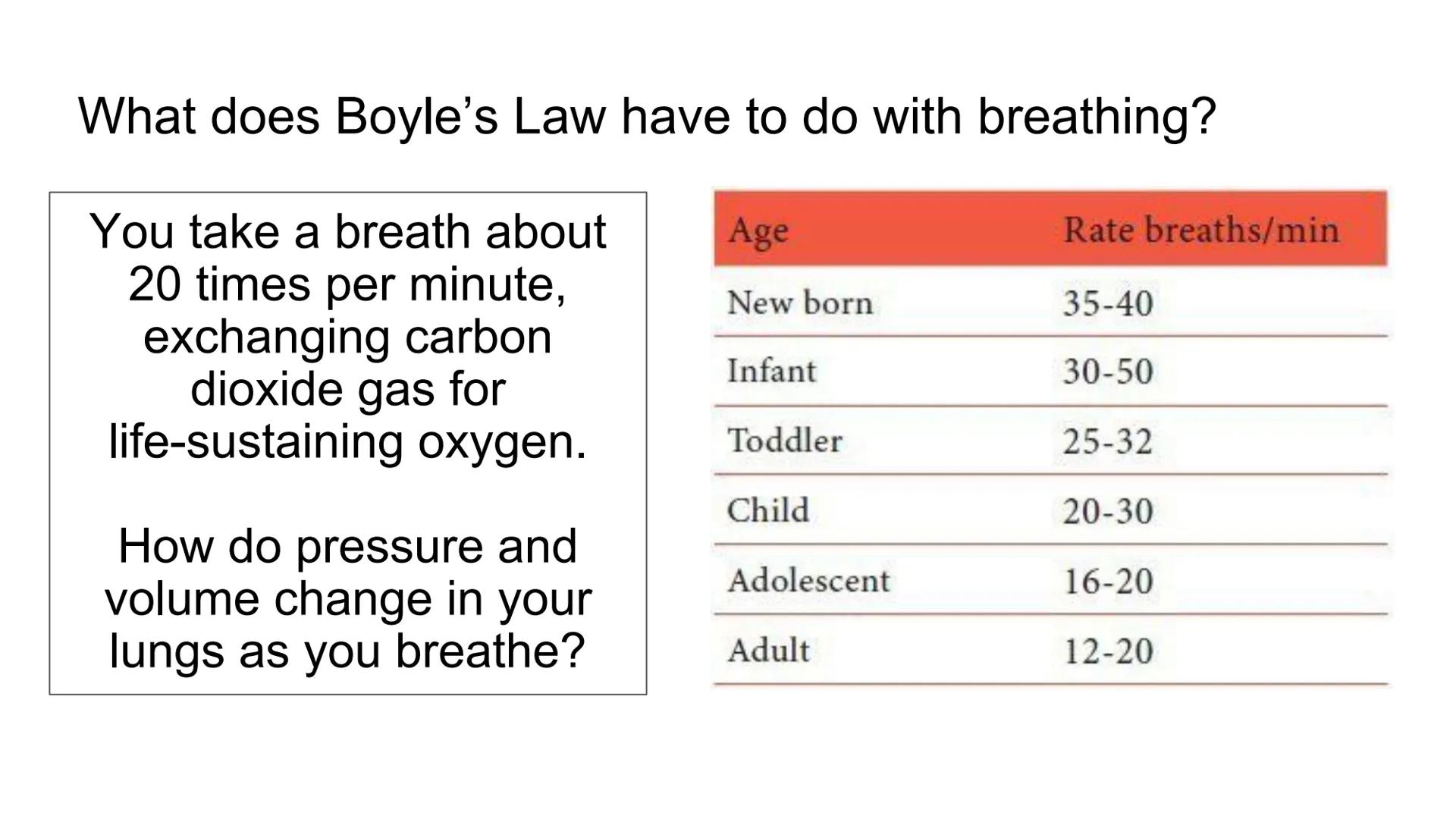
Breathing Rates and Boyle's Law
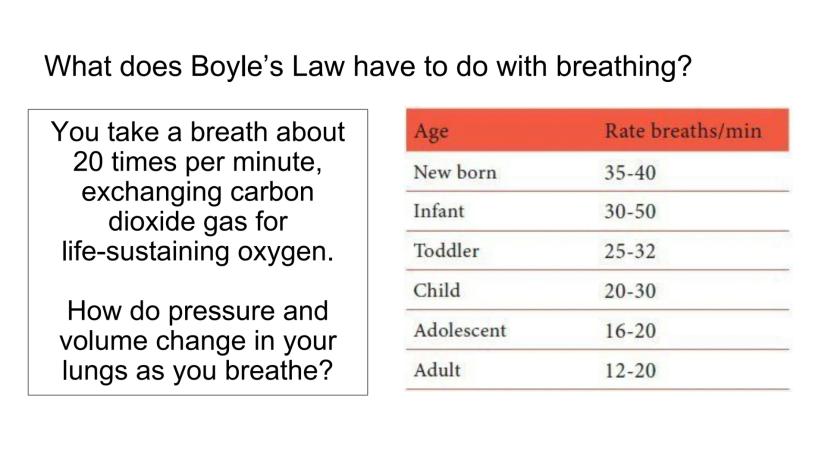
Your breathing rate changes throughout your life. Newborns breathe 35-40 times per minute, while adults typically breathe only 12-20 times per minute. This difference happens because as we grow, our lungs become more efficient.
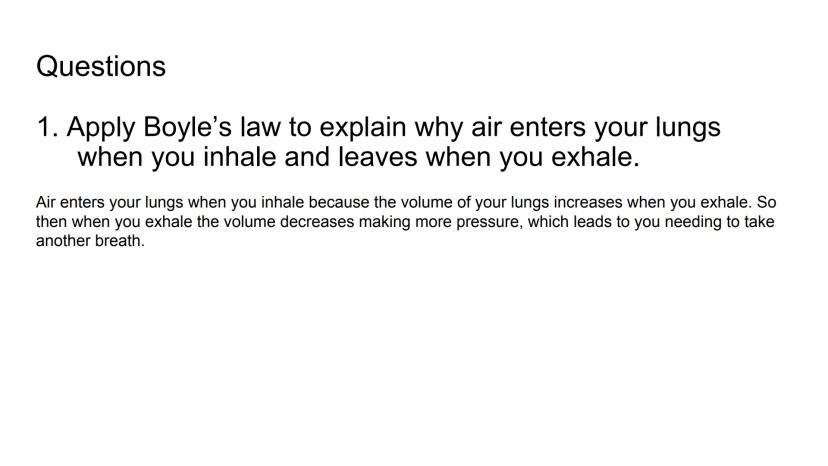
Boyle's Law explains what happens inside our lungs when we breathe. This scientific principle states that when the volume of a gas increases, its pressure decreases (assuming temperature stays the same). Our lungs use this relationship between pressure and volume to draw air in and push it out.
Each breath exchanges carbon dioxide (waste gas) for oxygen (gas we need to live). Without this constant exchange, our cells couldn't function properly.
3
of 8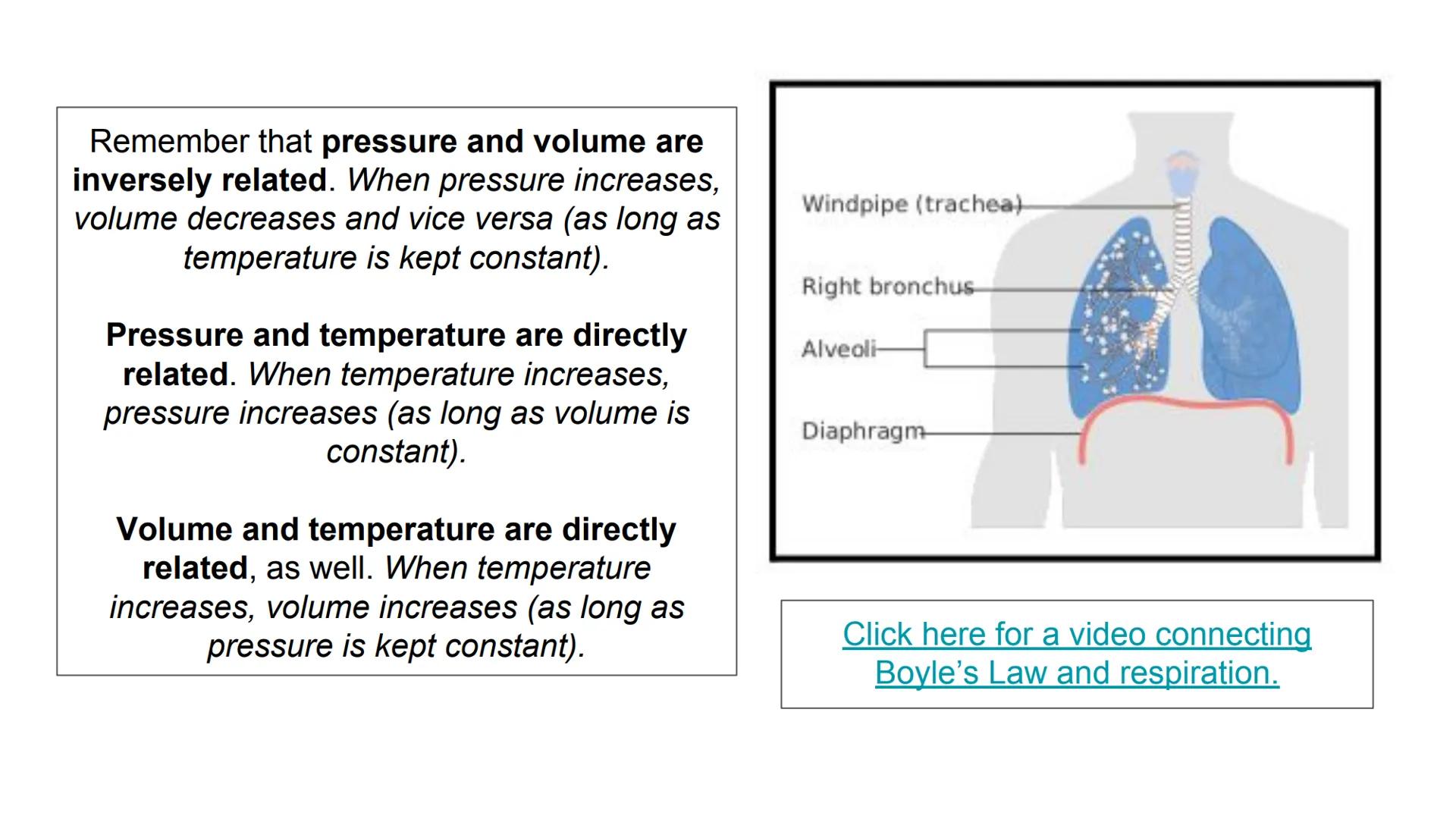
The Science Behind Breathing
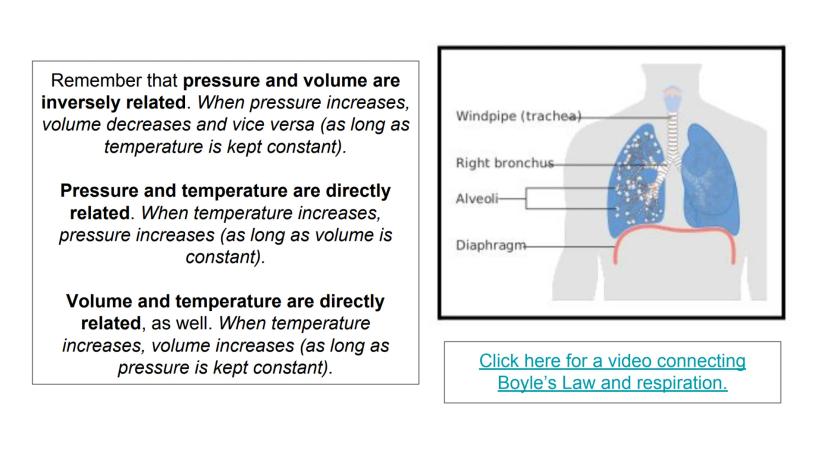
Boyle's Law shows that pressure and volume have an inverse relationship - when one goes up, the other goes down. This is exactly what happens in our lungs during breathing!
Our respiratory system includes the windpipe (trachea), which branches into tubes called bronchi that lead to tiny air sacs called alveoli. These alveoli are where oxygen enters our bloodstream and carbon dioxide exits.
The diaphragm is the star player in breathing. When it contracts and moves down, it creates more space in the chest cavity, increasing lung volume and decreasing pressure inside them.
Amazing Fact: Your lungs contain about 300 million alveoli, giving them a total surface area roughly the size of a tennis court!
4
of 8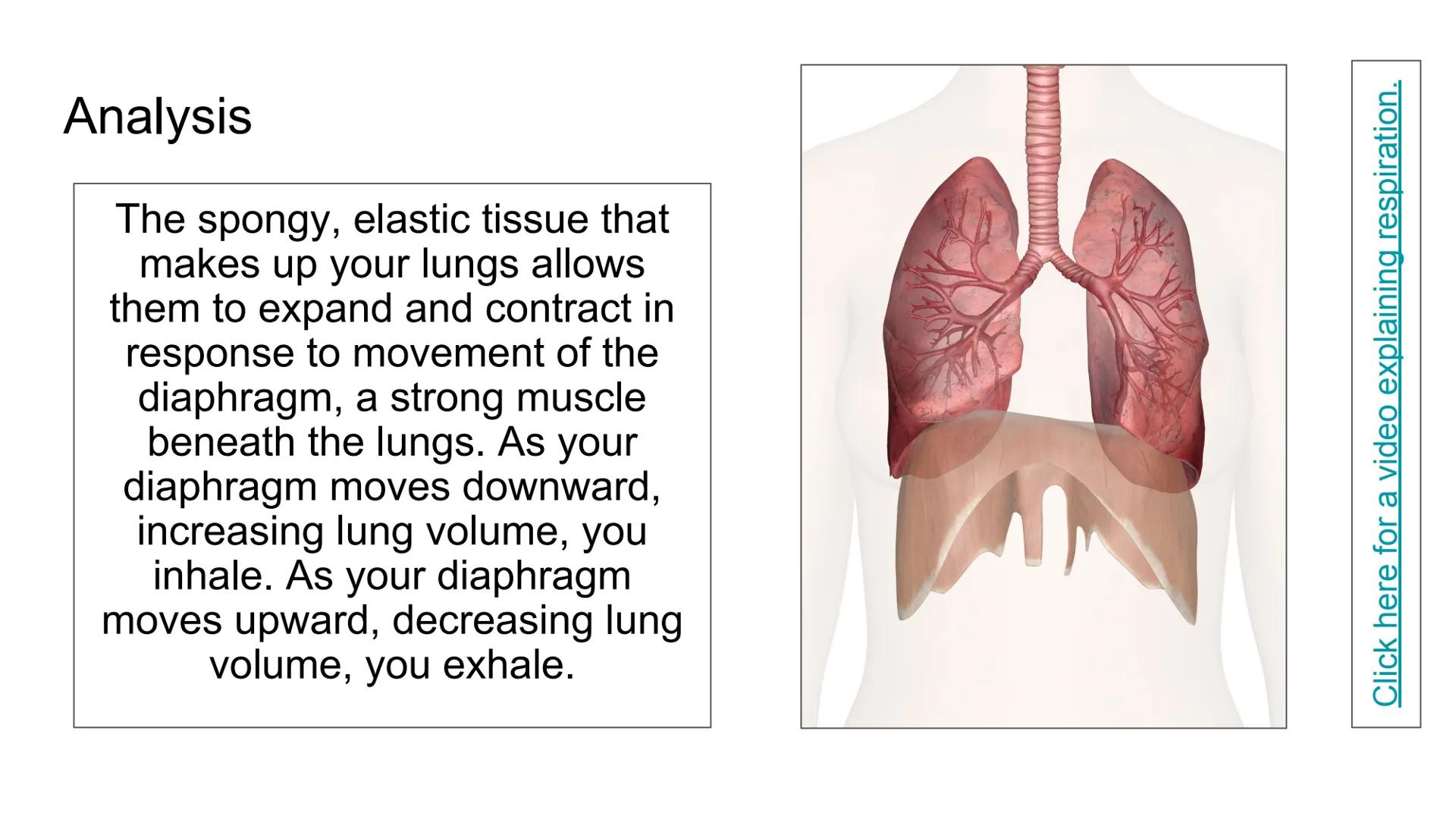
How Lungs Expand and Contract
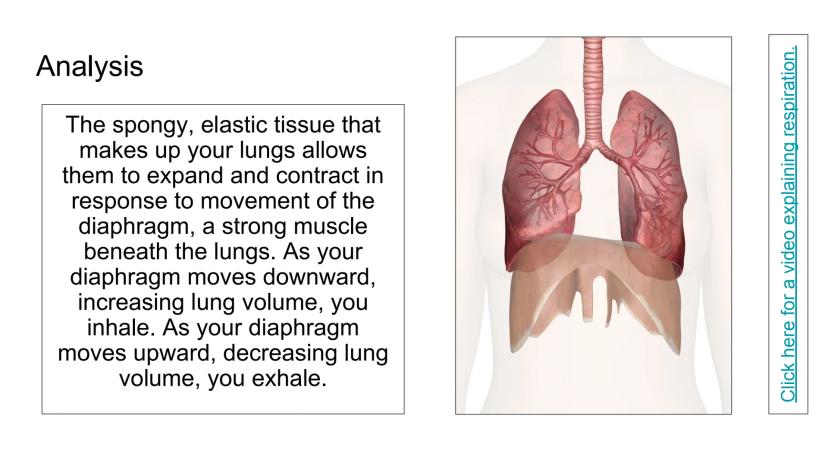
Your lungs are made of spongy, elastic tissue that can stretch and shrink. This elasticity is crucial for breathing. When your diaphragm moves downward, it increases the volume inside your chest cavity, causing your lungs to expand.
As lung volume increases, the pressure inside decreases (following Boyle's Law). This lower pressure inside your lungs compared to the outside air pressure causes air to rush in - that's an inhalation!
When your diaphragm relaxes and moves upward, lung volume decreases and pressure increases, pushing air out - that's an exhalation. This continuous cycle keeps your body supplied with oxygen and removes carbon dioxide.
5
of 8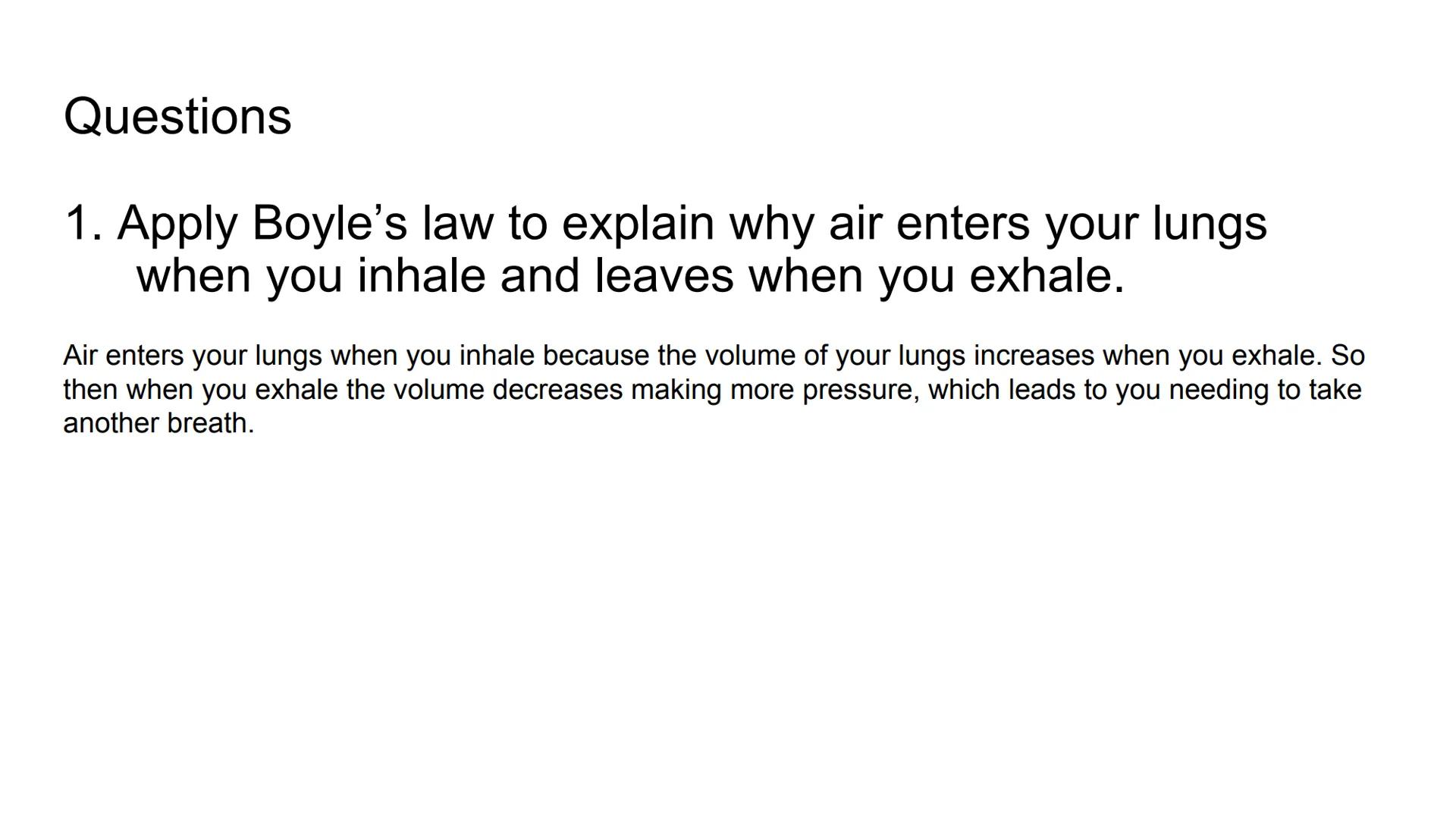
Applying Boyle's Law to Inhalation
When you inhale, your diaphragm contracts and moves down while your rib cage expands. This increases the volume inside your chest cavity, which according to Boyle's Law, decreases the air pressure inside your lungs.
Since air naturally flows from areas of high pressure to areas of low pressure, air rushes into your lungs through your nose and mouth. This is how you breathe in!
When you exhale, the opposite occurs. Your diaphragm relaxes and moves up, decreasing lung volume and increasing pressure inside your lungs. This higher pressure pushes air out of your lungs.
Think About It: Your breathing is basically air responding to pressure differences, not your body "sucking in" air!
6
of 8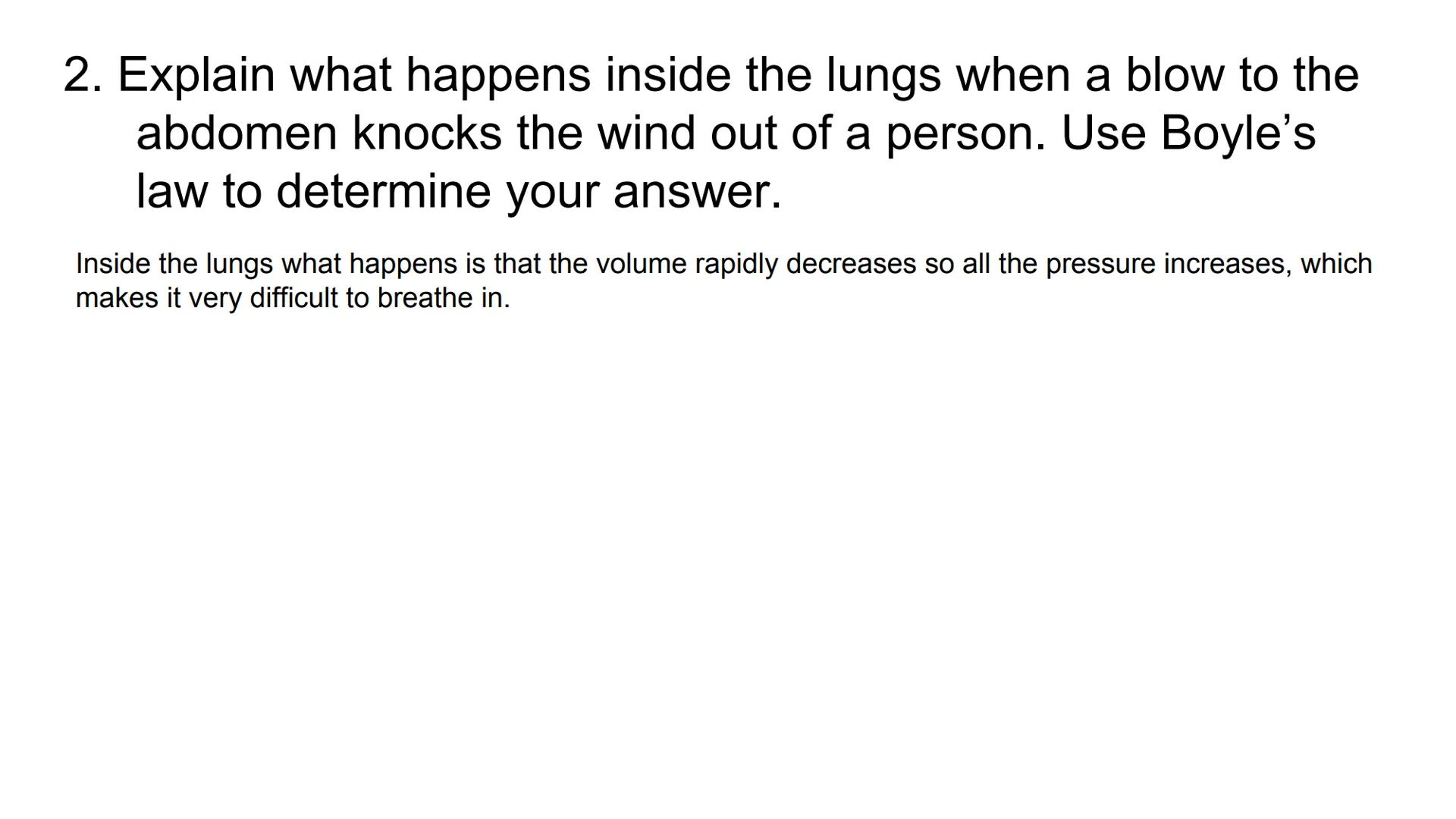
When Breathing Gets Knocked Out
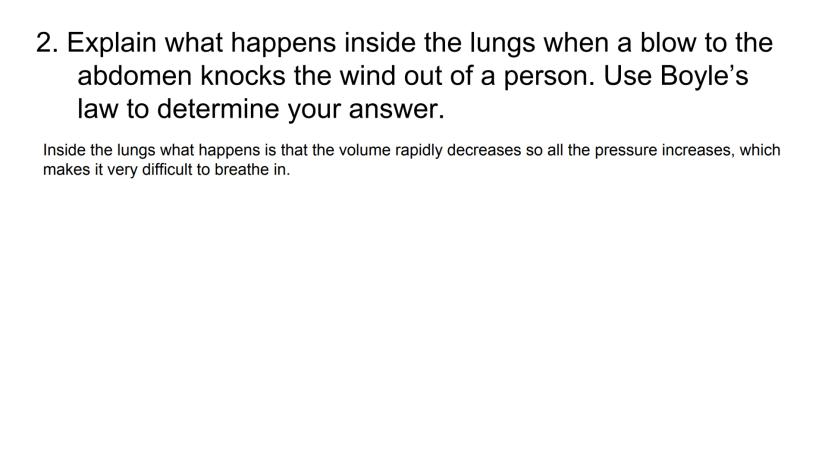
Ever had the "wind knocked out of you"? This happens when a sudden blow to your abdomen forces your diaphragm to spasm. When your abdomen gets hit, your diaphragm rapidly moves upward.
This sudden movement drastically decreases lung volume while simultaneously increasing pressure inside the lungs. According to Boyle's Law, this pressure spike forces air out rapidly.
The diaphragm spasm temporarily prevents normal breathing movements, making it difficult to inhale. Don't worry though - the diaphragm usually relaxes within a minute or two, allowing normal breathing to resume.
7
of 8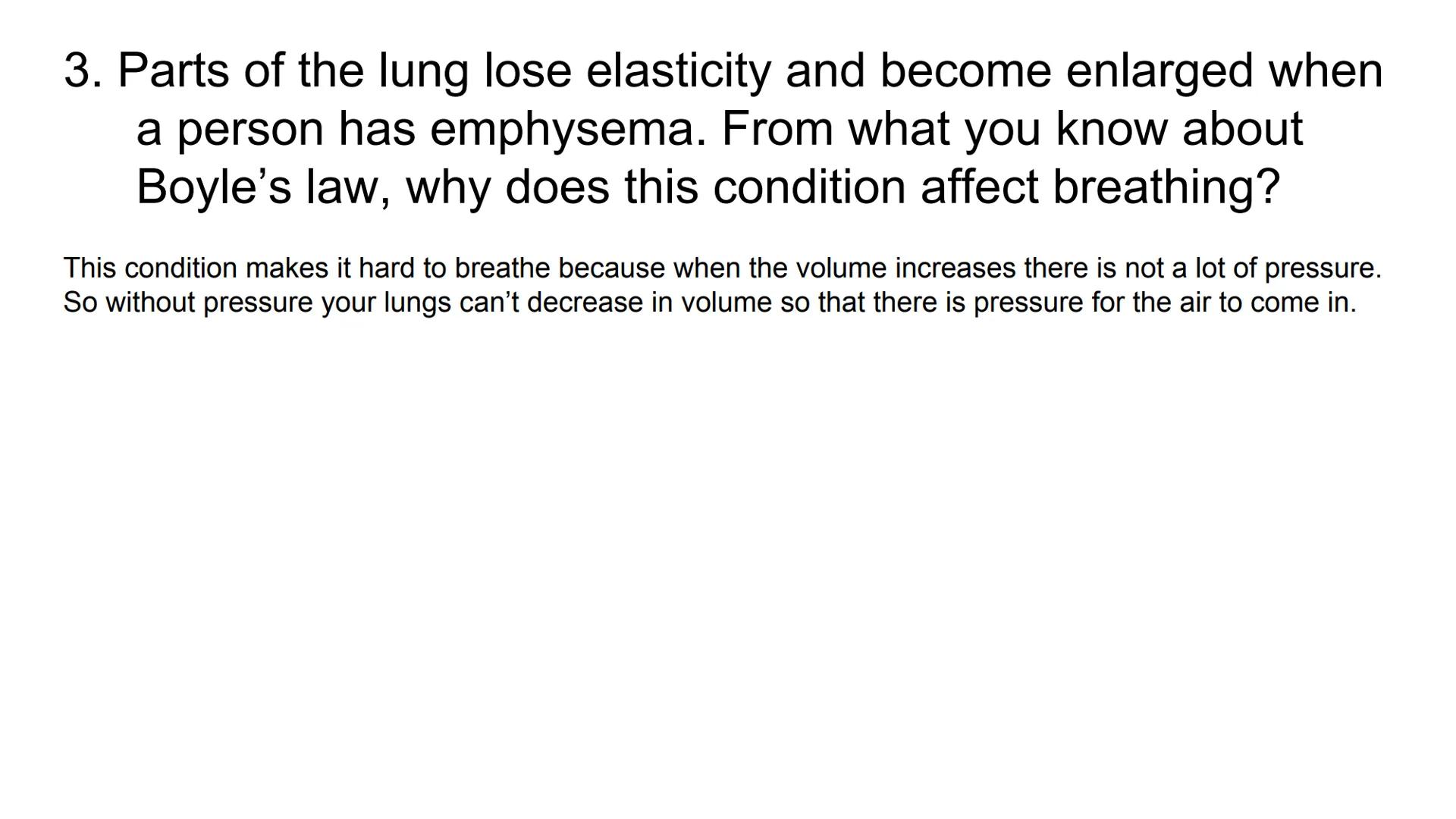
Emphysema and Boyle's Law
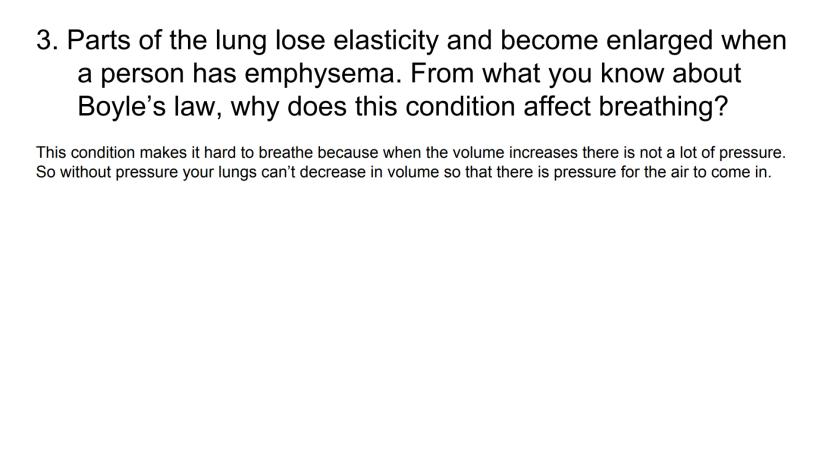
Emphysema is a lung condition where the alveoli (tiny air sacs) lose their elasticity and become permanently enlarged. This might seem like a good thing - bigger lungs! - but it actually causes serious breathing problems.
When lung tissue loses elasticity, the pressure-volume relationship is disrupted. Enlarged alveoli can't contract efficiently during exhalation, which means they can't generate enough pressure to push air out completely.
This leads to air becoming trapped in the lungs. According to Boyle's Law, without proper pressure changes, the normal flow of air becomes difficult. People with emphysema often struggle to breathe out, which then makes breathing in harder too.
Health Note: Smoking is the leading cause of emphysema, damaging lung tissue over time and reducing its elasticity.
8
of 8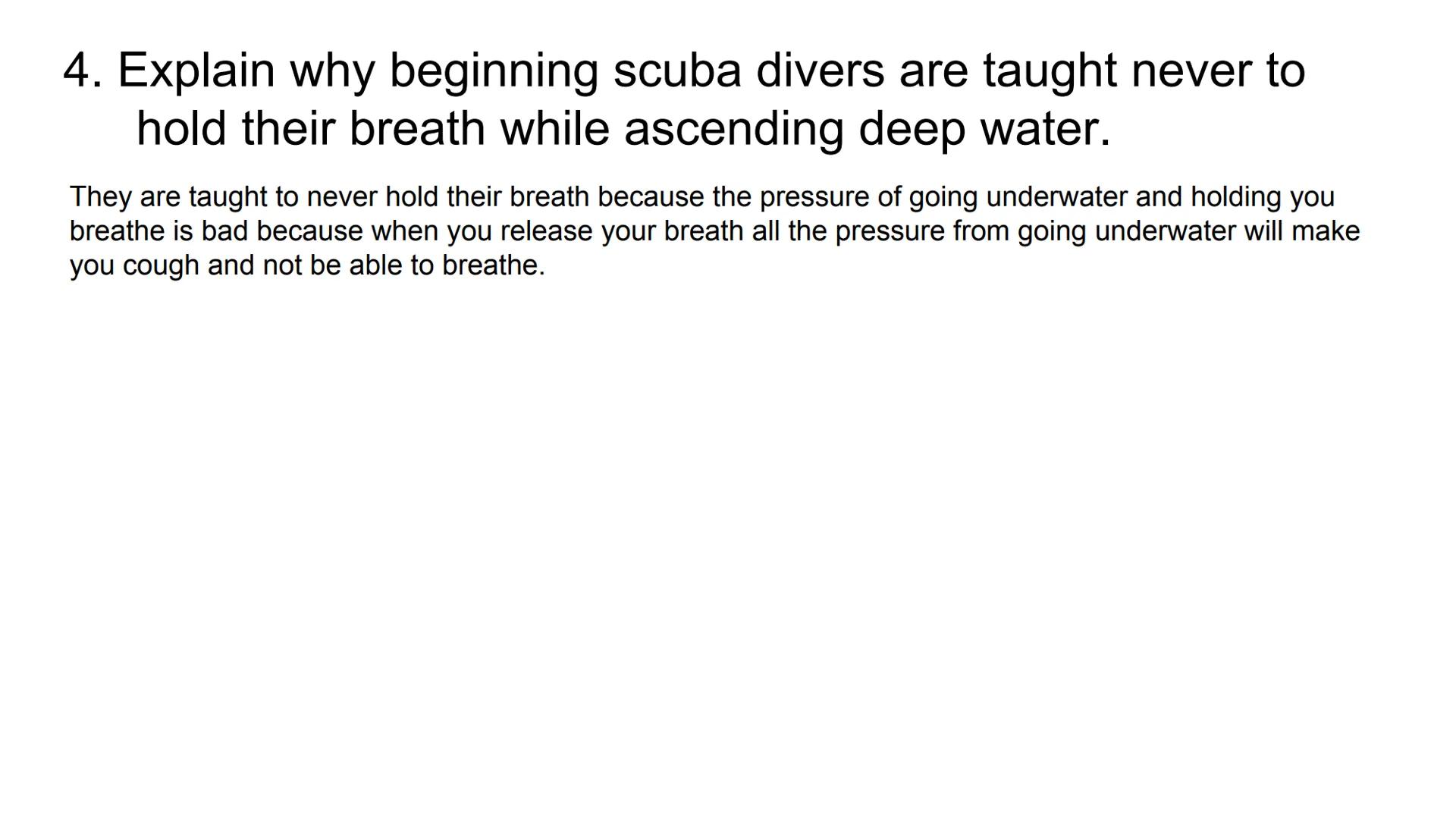
Boyle's Law and Scuba Diving Safety
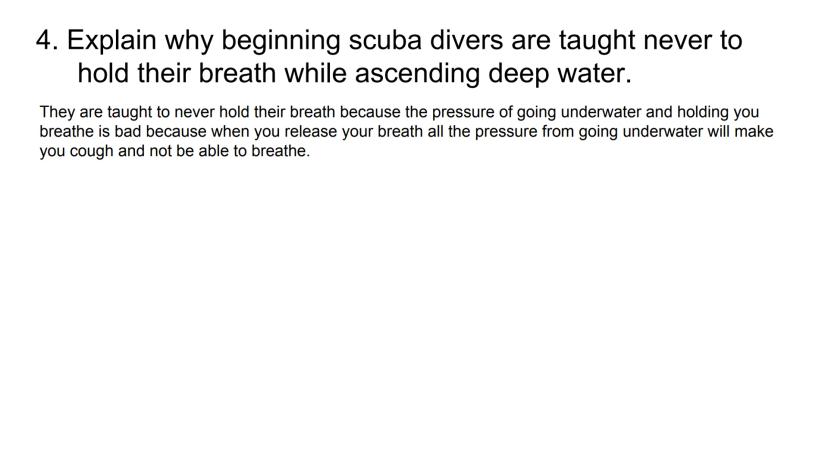
Scuba divers are taught never to hold their breath while ascending from deep water - and Boyle's Law explains why this is dangerous. As a diver descends, water pressure increases, compressing the air in their lungs.
If a diver holds their breath while ascending, the decreasing water pressure allows the compressed air to expand rapidly (following Boyle's Law). This sudden expansion can overinflate and potentially rupture lung tissue - a serious condition called pulmonary barotrauma.
The proper technique is to breathe normally or exhale slowly while ascending. This allows the expanding air to escape safely rather than putting dangerous pressure on lung tissue.
We thought you’d never ask...
What is the Knowunity AI companion?
Our AI companion is specifically built for the needs of students. Based on the millions of content pieces we have on the platform we can provide truly meaningful and relevant answers to students. But its not only about answers, the companion is even more about guiding students through their daily learning challenges, with personalised study plans, quizzes or content pieces in the chat and 100% personalisation based on the students skills and developments.
Where can I download the Knowunity app?
You can download the app in the Google Play Store and in the Apple App Store.
Is Knowunity really free of charge?
That's right! Enjoy free access to study content, connect with fellow students, and get instant help – all at your fingertips.
Similar Content
Most popular content in Biology
9C
BiologyCell Organelles
This Quiz Is To Test Your Knowledge Of Cell Organelles And Their Functions Inside The Cell. It Can Also Be A Study Guide To Remember Them Better.
6th5900
D
BiologyDNA and RNA
Uncover the secrets of life with this comprehensive Biology flashcard set. Perfect for grade 10 students studying Living Environment.
10th1,0502
B
Biologybiology cell organelles and functions
Do you know the cell organelles and their functions?
9th3800
M
BiologyMitosis and Cell Division Flashcards
These flashcards cover the basics of mitosis and why cell division occurs in the first place.
9th3070
A
BiologyAnimal and plant cell structure
Quiz on animal and plant cell structures
9th2910
D
BiologyDiscover the Fascinating World of Living Organisms
Uncover the secrets of biology and explore the diverse and amazing life forms that inhabit our planet with this captivating flashcard set.
7th3830
D
BiologyDiscover Punnet Squares
Uncover the secrets of life with this comprehensive Biology flashcard set. Perfect for grade 10 students studying Living Environment.
10th3561
D
BiologyDNA
Parts of DNA
9th2700
S
BiologySteps of Cellular Respiration
3 basic steps and Molecule Vocab
9th2300
Most popular content
9O
 AP US History
Origins and Dynamics of the Columbian Exchange
Analyze the ecological and economic motivations behind the initial transfer of goods, people, and diseases between the Old and New Worlds.
9th3,1280
I
AP US HistoryIntroduction to Early Cultural Interactions
Analyze the initial social and religious encounters between Europeans, Africans, and Indigenous peoples in the colonial Americas.
9th2,7730
O
 AP World History
Origins of Ancient River Civilizations
Analyze the environmental factors and technological innovations that led to the rise of early states in Mesopotamia, Egypt, and the Indus Valley.
9th3,1860
M
AP US HistoryMotivations for European Exploration
Analyze the economic, religious, and political factors that drove European powers to the Americas during the 15th and 16th centuries.
9th1,7780
F
 AP Psychology
Foundations of Ethical Guidelines in Research
Practice the core principles of the APA ethical code including informed consent, debriefing, and the role of Institutional Review Boards.
9th1,3360
I
AP US HistoryIntroduction to Native American Societies
Examine the diverse social, political, and economic structures of North American indigenous groups prior to European contact.
9th1,1100
I
AP BiologyIntroduction to Biological Elements of Life
Practice identifying the essential elements including carbon, nitrogen, phosphorus, and sulfur that compose biological macromolecules.
9th1,7360
I
AP US HistoryIntroduction to the Spanish Encomienda System
Explore the fundamental economic and social structures of the Spanish colonial system, focusing on the encomienda and the casta social hierarchy.
9th8890
O
AP World HistoryOrigins and Continuity of the Byzantine Empire
Analyze the political and cultural transitions from the Roman Empire to the Byzantine Empire, focusing on the reign of Justinian I and his code.
9th1,6320
Can't find what you're looking for? Explore other subjects.
Students love us — and so will you.
4.6/5App Store
4.7/5Google Play
The app is very easy to use and well designed. I have found everything I was looking for so far and have been able to learn a lot from the presentations! I will definitely use the app for a class assignment! And of course it also helps a lot as an inspiration.
Stefan SiOS user
This app is really great. There are so many study notes and help [...]. My problem subject is French, for example, and the app has so many options for help. Thanks to this app, I have improved my French. I would recommend it to anyone.
Samantha KlichAndroid user
Wow, I am really amazed. I just tried the app because I've seen it advertised many times and was absolutely stunned. This app is THE HELP you want for school and above all, it offers so many things, such as workouts and fact sheets, which have been VERY helpful to me personally.
AnnaiOS user
Biology10 views·Updated May 18, 2026·8 pagesHow Boyle's Law Influences Breathing
Ever wondered why your lungs fill with air when you breathe in? The secret lies in Boyle's Law - a scientific principle that explains the relationship between gas pressure and volume. This fascinating connection helps us understand how our bodies... Show more
1
of 8Sign up to see the content. It's free!
- Access to all documents
- Improve your grades
- Join milions of students
How We Breathe
Breathing involves a coordinated dance between your ribs, diaphragm, and lungs. When you breathe in, your rib cage expands and your diaphragm tightens and moves downward. This causes your lungs to expand, creating more space for air to flow in.
When you breathe out, the opposite happens. Your diaphragm relaxes, moving upward while your rib cage shrinks. This squeezes your lungs, forcing air out of your body.
Try This! Place your hand on your stomach and take a deep breath. Feel how your diaphragm pushes outward when you inhale and moves inward when you exhale.
2
of 8Sign up to see the content. It's free!
- Access to all documents
- Improve your grades
- Join milions of students
Breathing Rates and Boyle's Law
Your breathing rate changes throughout your life. Newborns breathe 35-40 times per minute, while adults typically breathe only 12-20 times per minute. This difference happens because as we grow, our lungs become more efficient.
Boyle's Law explains what happens inside our lungs when we breathe. This scientific principle states that when the volume of a gas increases, its pressure decreases (assuming temperature stays the same). Our lungs use this relationship between pressure and volume to draw air in and push it out.
Each breath exchanges carbon dioxide (waste gas) for oxygen (gas we need to live). Without this constant exchange, our cells couldn't function properly.
3
of 8Sign up to see the content. It's free!
- Access to all documents
- Improve your grades
- Join milions of students
The Science Behind Breathing
Boyle's Law shows that pressure and volume have an inverse relationship - when one goes up, the other goes down. This is exactly what happens in our lungs during breathing!
Our respiratory system includes the windpipe (trachea), which branches into tubes called bronchi that lead to tiny air sacs called alveoli. These alveoli are where oxygen enters our bloodstream and carbon dioxide exits.
The diaphragm is the star player in breathing. When it contracts and moves down, it creates more space in the chest cavity, increasing lung volume and decreasing pressure inside them.
Amazing Fact: Your lungs contain about 300 million alveoli, giving them a total surface area roughly the size of a tennis court!
4
of 8Sign up to see the content. It's free!
- Access to all documents
- Improve your grades
- Join milions of students
How Lungs Expand and Contract
Your lungs are made of spongy, elastic tissue that can stretch and shrink. This elasticity is crucial for breathing. When your diaphragm moves downward, it increases the volume inside your chest cavity, causing your lungs to expand.
As lung volume increases, the pressure inside decreases (following Boyle's Law). This lower pressure inside your lungs compared to the outside air pressure causes air to rush in - that's an inhalation!
When your diaphragm relaxes and moves upward, lung volume decreases and pressure increases, pushing air out - that's an exhalation. This continuous cycle keeps your body supplied with oxygen and removes carbon dioxide.
5
of 8Sign up to see the content. It's free!
- Access to all documents
- Improve your grades
- Join milions of students
Applying Boyle's Law to Inhalation
When you inhale, your diaphragm contracts and moves down while your rib cage expands. This increases the volume inside your chest cavity, which according to Boyle's Law, decreases the air pressure inside your lungs.
Since air naturally flows from areas of high pressure to areas of low pressure, air rushes into your lungs through your nose and mouth. This is how you breathe in!
When you exhale, the opposite occurs. Your diaphragm relaxes and moves up, decreasing lung volume and increasing pressure inside your lungs. This higher pressure pushes air out of your lungs.
Think About It: Your breathing is basically air responding to pressure differences, not your body "sucking in" air!
6
of 8Sign up to see the content. It's free!
- Access to all documents
- Improve your grades
- Join milions of students
When Breathing Gets Knocked Out
Ever had the "wind knocked out of you"? This happens when a sudden blow to your abdomen forces your diaphragm to spasm. When your abdomen gets hit, your diaphragm rapidly moves upward.
This sudden movement drastically decreases lung volume while simultaneously increasing pressure inside the lungs. According to Boyle's Law, this pressure spike forces air out rapidly.
The diaphragm spasm temporarily prevents normal breathing movements, making it difficult to inhale. Don't worry though - the diaphragm usually relaxes within a minute or two, allowing normal breathing to resume.
7
of 8Sign up to see the content. It's free!
- Access to all documents
- Improve your grades
- Join milions of students
Emphysema and Boyle's Law
Emphysema is a lung condition where the alveoli (tiny air sacs) lose their elasticity and become permanently enlarged. This might seem like a good thing - bigger lungs! - but it actually causes serious breathing problems.
When lung tissue loses elasticity, the pressure-volume relationship is disrupted. Enlarged alveoli can't contract efficiently during exhalation, which means they can't generate enough pressure to push air out completely.
This leads to air becoming trapped in the lungs. According to Boyle's Law, without proper pressure changes, the normal flow of air becomes difficult. People with emphysema often struggle to breathe out, which then makes breathing in harder too.
Health Note: Smoking is the leading cause of emphysema, damaging lung tissue over time and reducing its elasticity.
8
of 8Sign up to see the content. It's free!
- Access to all documents
- Improve your grades
- Join milions of students
Boyle's Law and Scuba Diving Safety
Scuba divers are taught never to hold their breath while ascending from deep water - and Boyle's Law explains why this is dangerous. As a diver descends, water pressure increases, compressing the air in their lungs.
If a diver holds their breath while ascending, the decreasing water pressure allows the compressed air to expand rapidly (following Boyle's Law). This sudden expansion can overinflate and potentially rupture lung tissue - a serious condition called pulmonary barotrauma.
The proper technique is to breathe normally or exhale slowly while ascending. This allows the expanding air to escape safely rather than putting dangerous pressure on lung tissue.
We thought you’d never ask...
What is the Knowunity AI companion?
Our AI companion is specifically built for the needs of students. Based on the millions of content pieces we have on the platform we can provide truly meaningful and relevant answers to students. But its not only about answers, the companion is even more about guiding students through their daily learning challenges, with personalised study plans, quizzes or content pieces in the chat and 100% personalisation based on the students skills and developments.
Where can I download the Knowunity app?
You can download the app in the Google Play Store and in the Apple App Store.
Is Knowunity really free of charge?
That's right! Enjoy free access to study content, connect with fellow students, and get instant help – all at your fingertips.
Similar Content
Most popular content in Biology
9C
BiologyCell Organelles
This Quiz Is To Test Your Knowledge Of Cell Organelles And Their Functions Inside The Cell. It Can Also Be A Study Guide To Remember Them Better.
6th5900
D
BiologyDNA and RNA
Uncover the secrets of life with this comprehensive Biology flashcard set. Perfect for grade 10 students studying Living Environment.
10th1,0502
B
Biologybiology cell organelles and functions
Do you know the cell organelles and their functions?
9th3800
M
BiologyMitosis and Cell Division Flashcards
These flashcards cover the basics of mitosis and why cell division occurs in the first place.
9th3070
A
BiologyAnimal and plant cell structure
Quiz on animal and plant cell structures
9th2910
D
BiologyDiscover the Fascinating World of Living Organisms
Uncover the secrets of biology and explore the diverse and amazing life forms that inhabit our planet with this captivating flashcard set.
7th3830
D
BiologyDiscover Punnet Squares
Uncover the secrets of life with this comprehensive Biology flashcard set. Perfect for grade 10 students studying Living Environment.
10th3561
D
BiologyDNA
Parts of DNA
9th2700
S
BiologySteps of Cellular Respiration
3 basic steps and Molecule Vocab
9th2300
Most popular content
9O
AP US HistoryOrigins and Dynamics of the Columbian Exchange
Analyze the ecological and economic motivations behind the initial transfer of goods, people, and diseases between the Old and New Worlds.
9th3,1280
I
AP US HistoryIntroduction to Early Cultural Interactions
Analyze the initial social and religious encounters between Europeans, Africans, and Indigenous peoples in the colonial Americas.
9th2,7730
O
AP World HistoryOrigins of Ancient River Civilizations
Analyze the environmental factors and technological innovations that led to the rise of early states in Mesopotamia, Egypt, and the Indus Valley.
9th3,1860
M
AP US HistoryMotivations for European Exploration
Analyze the economic, religious, and political factors that drove European powers to the Americas during the 15th and 16th centuries.
9th1,7780
F
AP PsychologyFoundations of Ethical Guidelines in Research
Practice the core principles of the APA ethical code including informed consent, debriefing, and the role of Institutional Review Boards.
9th1,3360
I
AP US HistoryIntroduction to Native American Societies
Examine the diverse social, political, and economic structures of North American indigenous groups prior to European contact.
9th1,1100
I
AP BiologyIntroduction to Biological Elements of Life
Practice identifying the essential elements including carbon, nitrogen, phosphorus, and sulfur that compose biological macromolecules.
9th1,7360
I
AP US HistoryIntroduction to the Spanish Encomienda System
Explore the fundamental economic and social structures of the Spanish colonial system, focusing on the encomienda and the casta social hierarchy.
9th8890
O
AP World HistoryOrigins and Continuity of the Byzantine Empire
Analyze the political and cultural transitions from the Roman Empire to the Byzantine Empire, focusing on the reign of Justinian I and his code.
9th1,6320
Can't find what you're looking for? Explore other subjects.
Students love us — and so will you.
4.6/5App Store
4.7/5Google Play
The app is very easy to use and well designed. I have found everything I was looking for so far and have been able to learn a lot from the presentations! I will definitely use the app for a class assignment! And of course it also helps a lot as an inspiration.
Stefan SiOS user
This app is really great. There are so many study notes and help [...]. My problem subject is French, for example, and the app has so many options for help. Thanks to this app, I have improved my French. I would recommend it to anyone.
Samantha KlichAndroid user
Wow, I am really amazed. I just tried the app because I've seen it advertised many times and was absolutely stunned. This app is THE HELP you want for school and above all, it offers so many things, such as workouts and fact sheets, which have been VERY helpful to me personally.
AnnaiOS user