
These exam questions cover the essential bits of cell biology... Show more
 Sociology
Sign up to see the contentIt's free!
Access to all documents
Improve your grades
Join milions of students
By signing up you accept Terms of Service and Privacy Policy

Biology

Chemistry
AP Chemistry

English
AP English Literature
8
1

Safa
12/13/2025
Biology
Cell structure
371
•
Dec 13, 2025
•
These exam questions cover the essential bits of cell biology... Show more
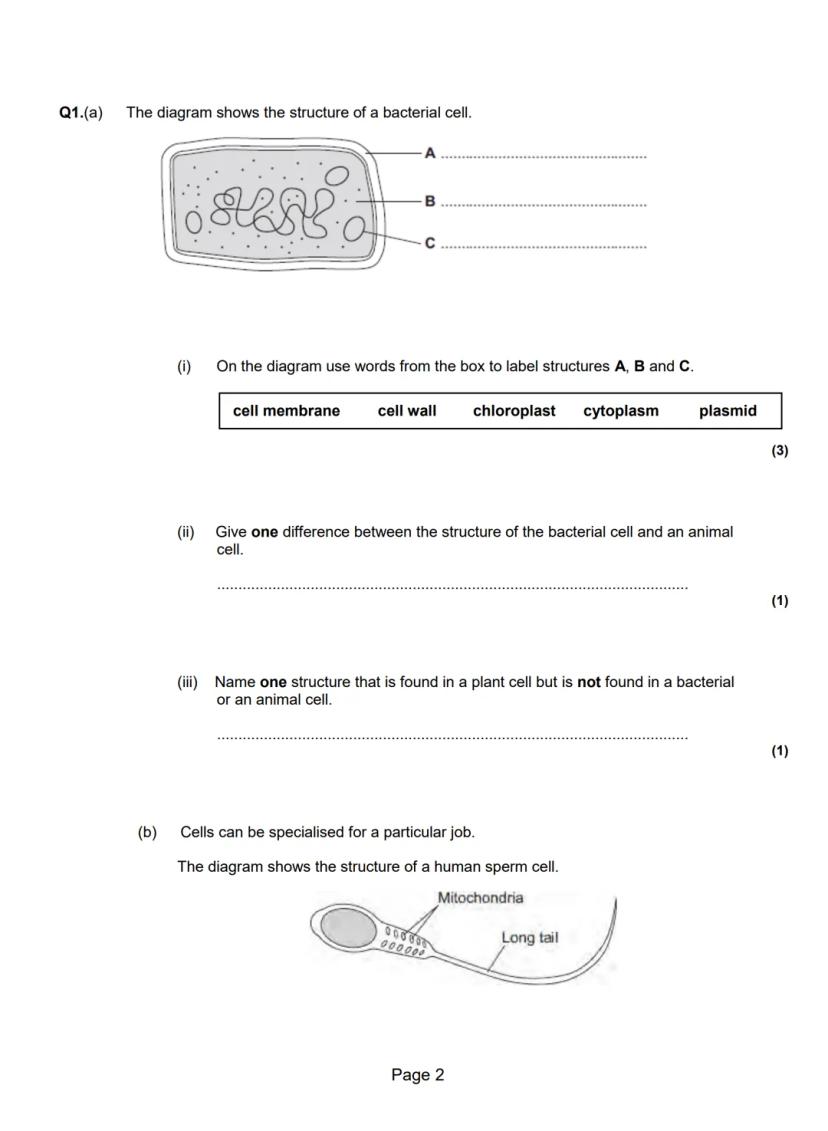
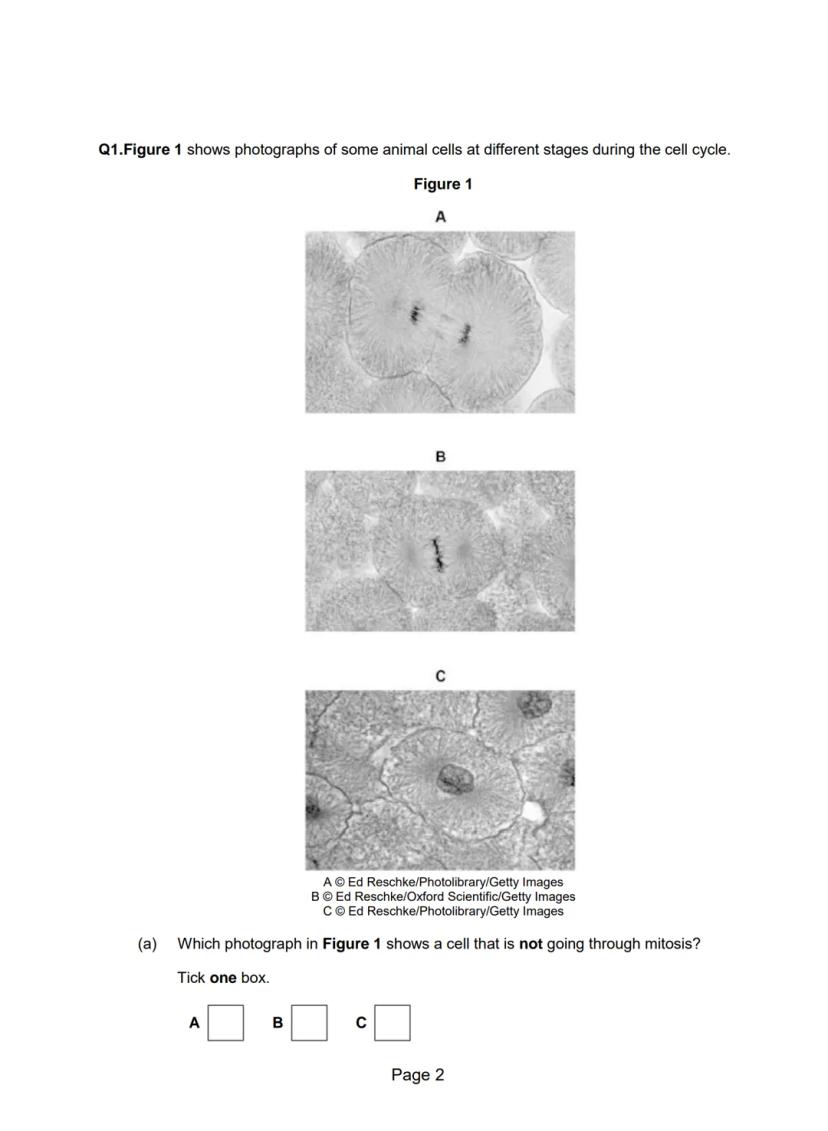
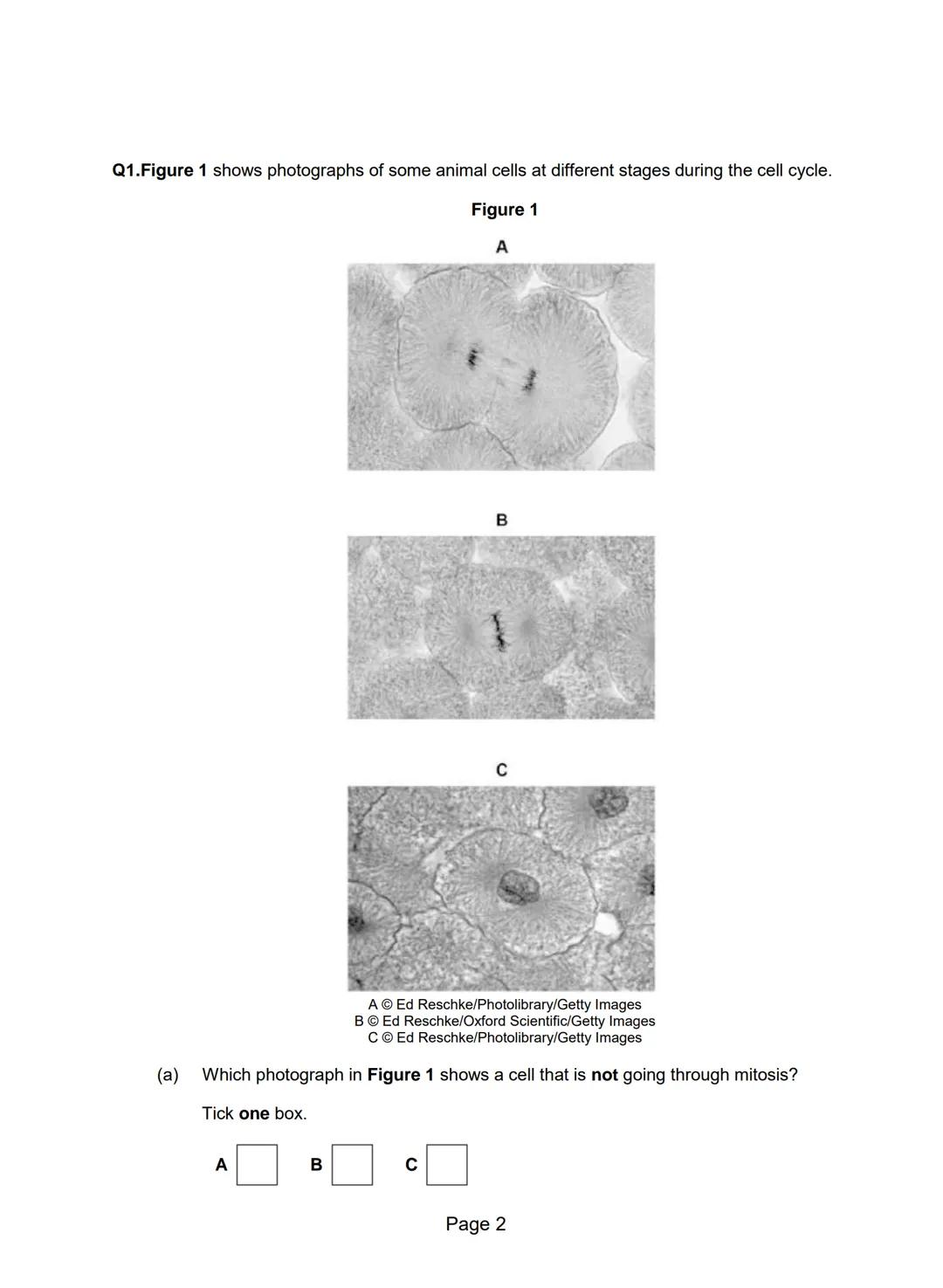
Your body is constantly growing and repairing itself through cell division, and it's happening right now as you read this! The cell cycle includes different stages, with mitosis being the dramatic bit where one cell splits into two identical copies.
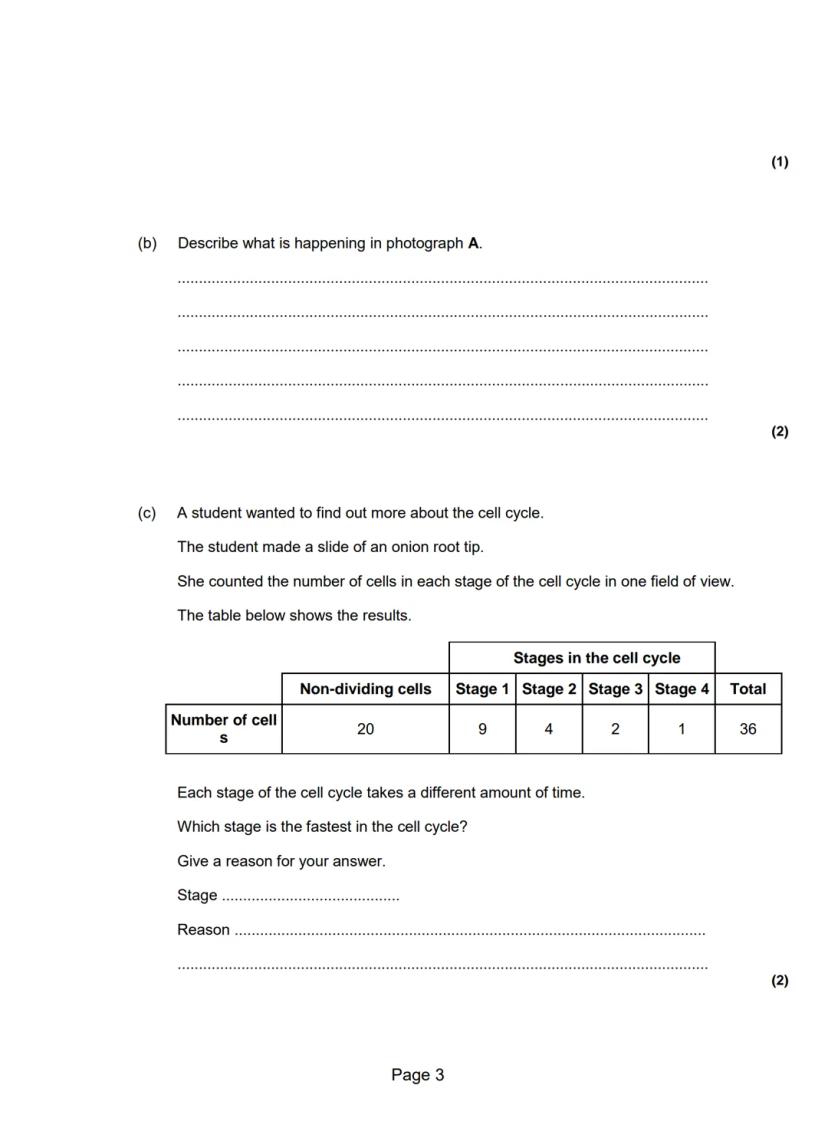
Looking at cell photographs, you can spot which cells aren't going through mitosis - they'll look normal and rounded. Cells actually going through mitosis look quite different, often stretched out or with visible chromosome structures.
Scientists study this by looking at onion root tips (because they grow fast). By counting cells in different stages, they can work out which stage is fastest - and here's a handy trick: the stage with fewer cells is actually the quickest stage because cells don't hang about there for long.
Remember: The fewer cells you count in a stage, the faster that stage happens - it's like a really quick queue that doesn't build up.
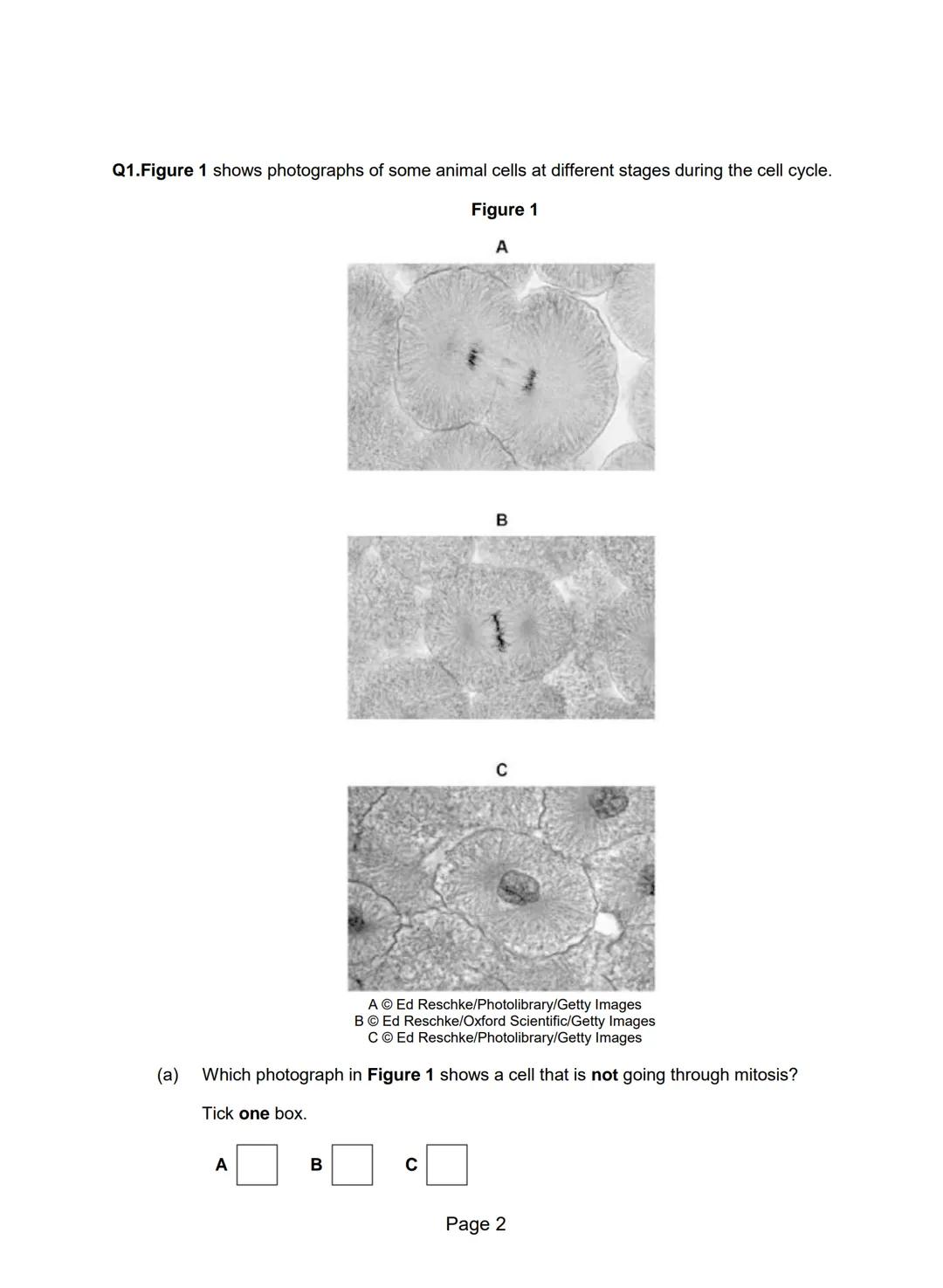
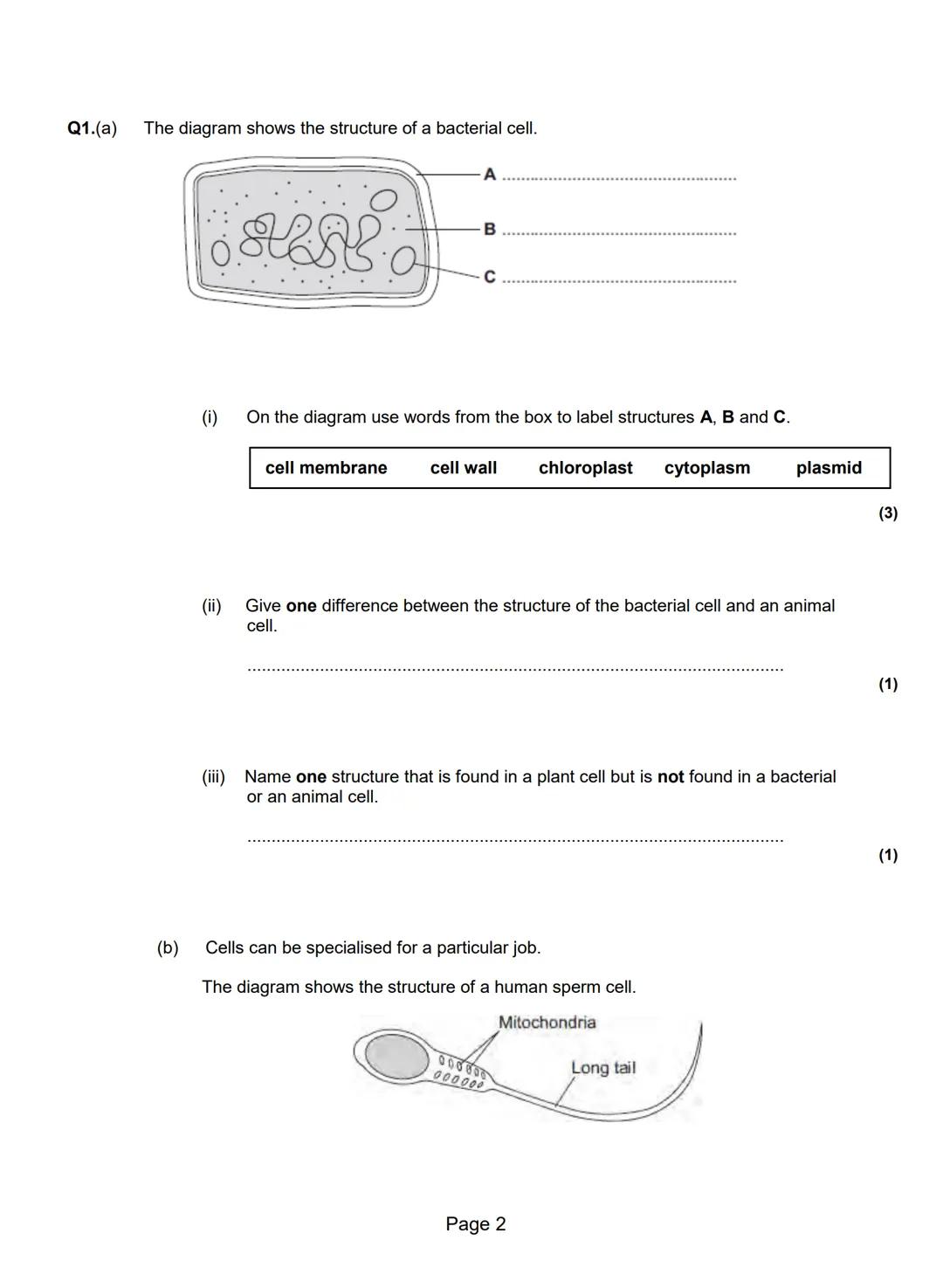
Bacterial cells might be tiny, but they're proper little survivors with some key differences from your cells. They've got a cell wall and cell membrane like plants, but their genetic material floats freely instead of being locked up in a nucleus.
The big difference? Bacteria don't have a nucleus - their DNA just hangs about in the cytoplasm. They also have plasmids (little rings of extra DNA) that animal cells definitely don't have.
Plant cells have something special that neither bacteria nor animals have: chloroplasts. These green powerhouses capture sunlight to make food through photosynthesis.
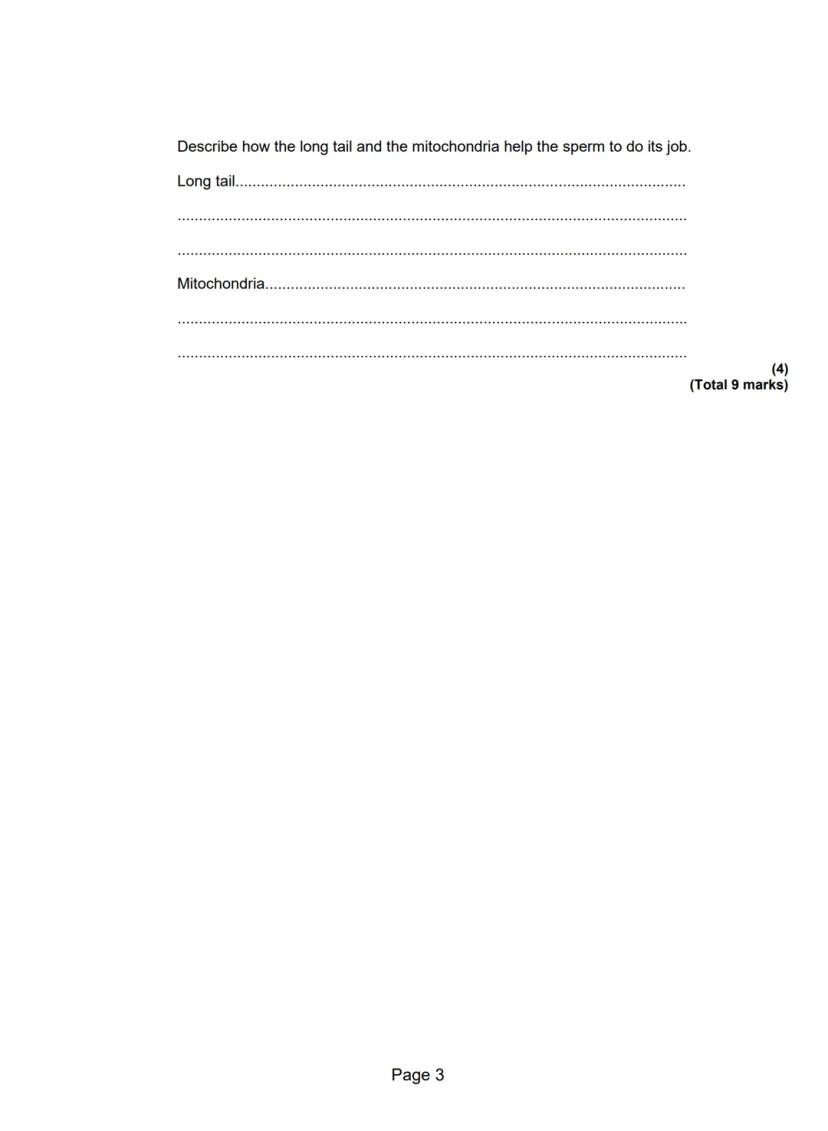
Meanwhile, sperm cells are brilliantly designed for their job. The long tail acts like a propeller to swim towards the egg, whilst loads of mitochondria provide the energy needed for this epic journey.
Quick check: Remember the three main cell types - animal (nucleus, no cell wall), plant (nucleus, cell wall, chloroplasts), and bacterial (no nucleus, cell wall, no chloroplasts).
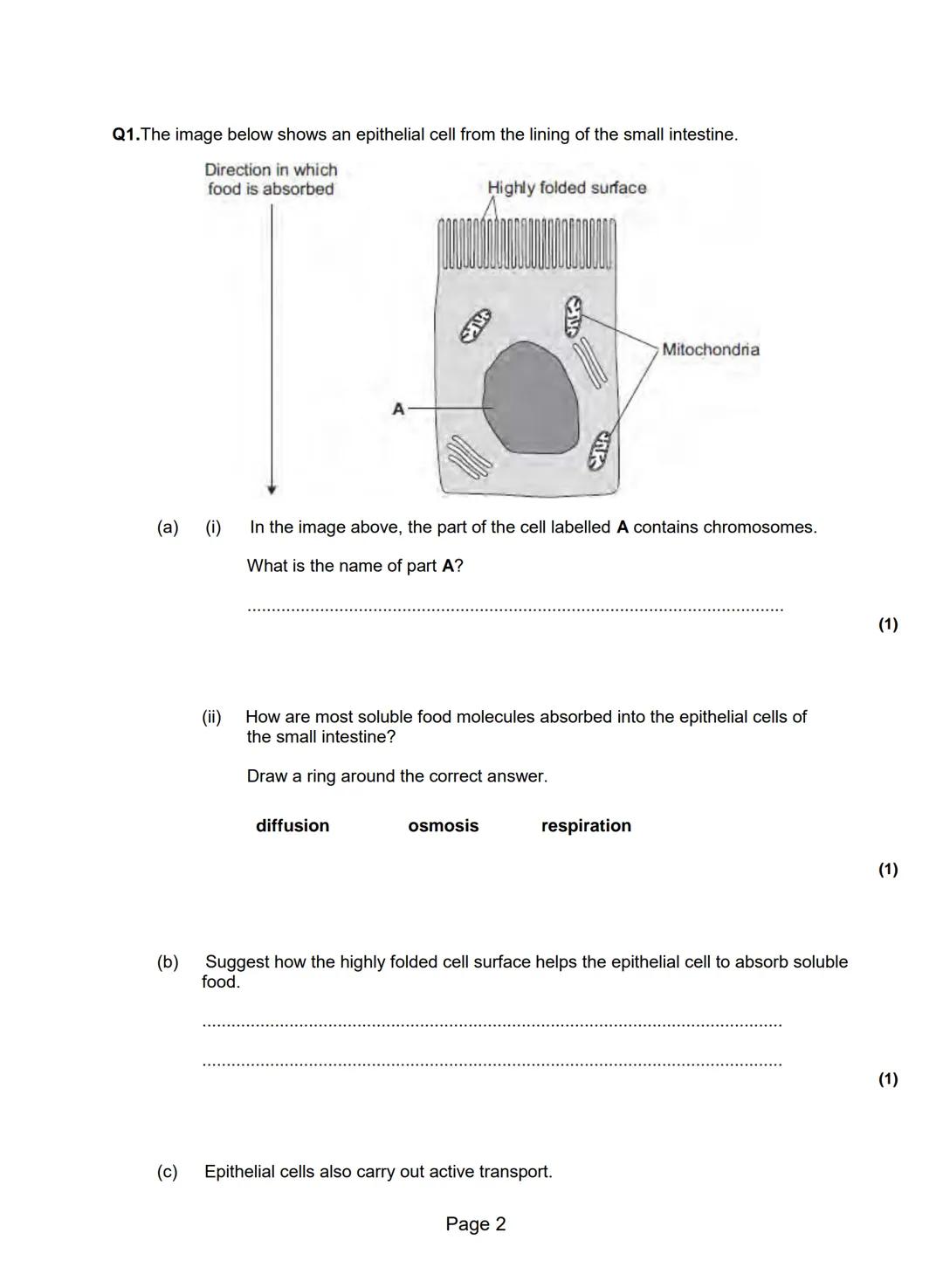
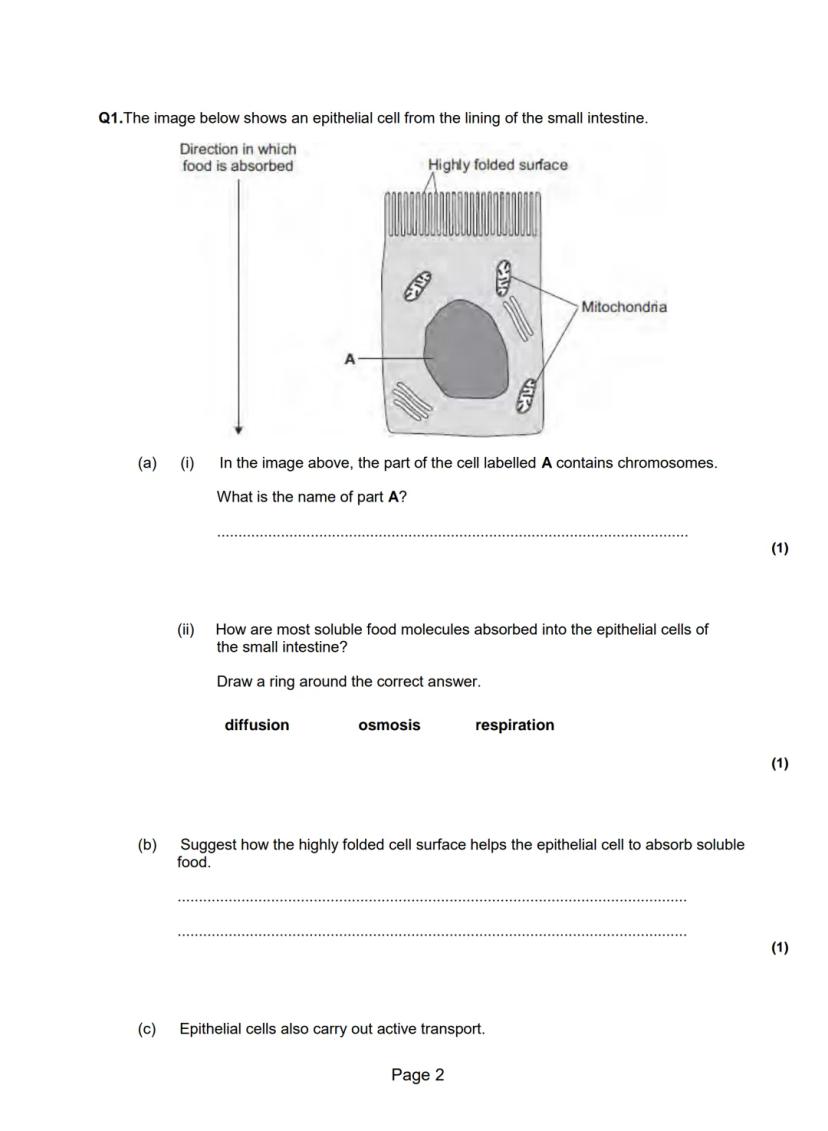
Ever wondered how your body actually gets nutrients from that sandwich you just ate? The epithelial cells lining your small intestine are absolute champions at this job. These cells have a highly folded surface that massively increases their surface area - think of it like having loads more space to absorb all those vital nutrients.
The nucleus (part A in the diagram) contains all the chromosomes and controls what the cell does. Most soluble food molecules get absorbed through diffusion - they simply move from where there's loads of them (in your gut) to where there's fewer (inside the cell).
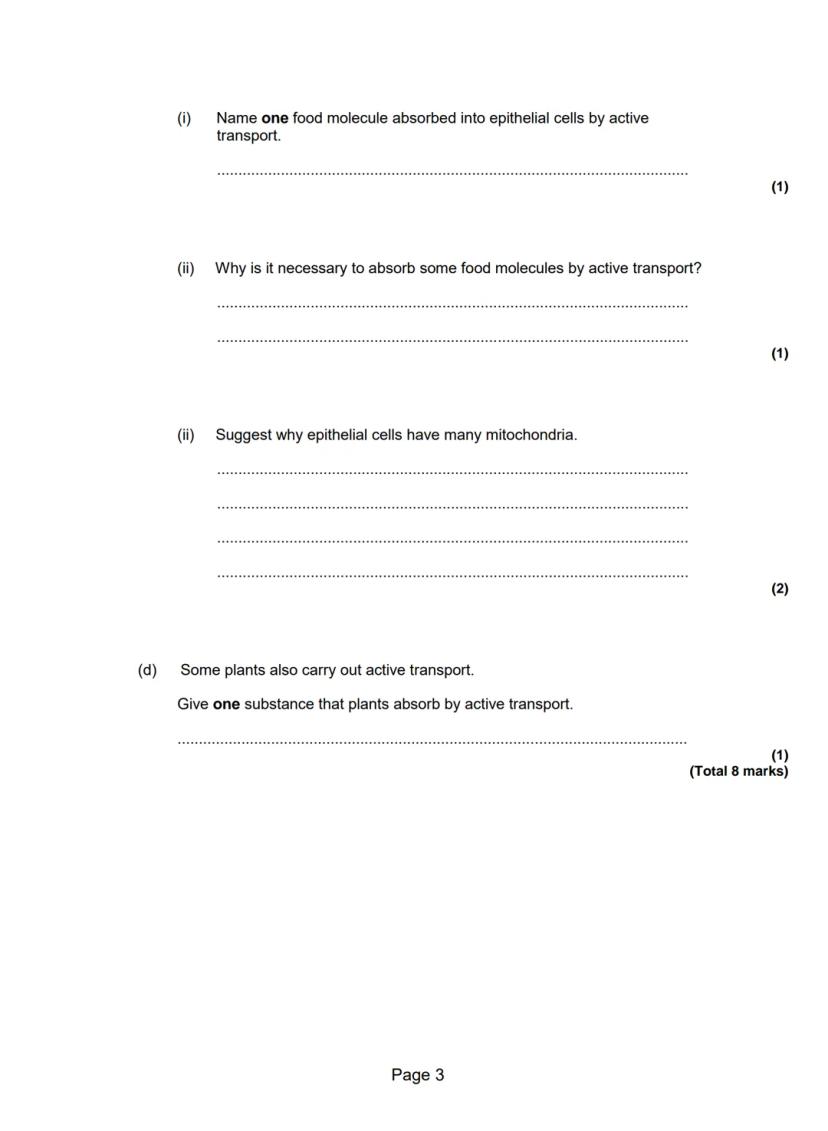
But here's where it gets clever: these cells are packed with mitochondria because absorbing food takes serious energy. Some nutrients like glucose actually need active transport to get absorbed, which is like having a bouncer that only lets certain molecules through the door.
Key tip: Remember that active transport needs energy (from mitochondria) whilst diffusion happens naturally without any energy input.
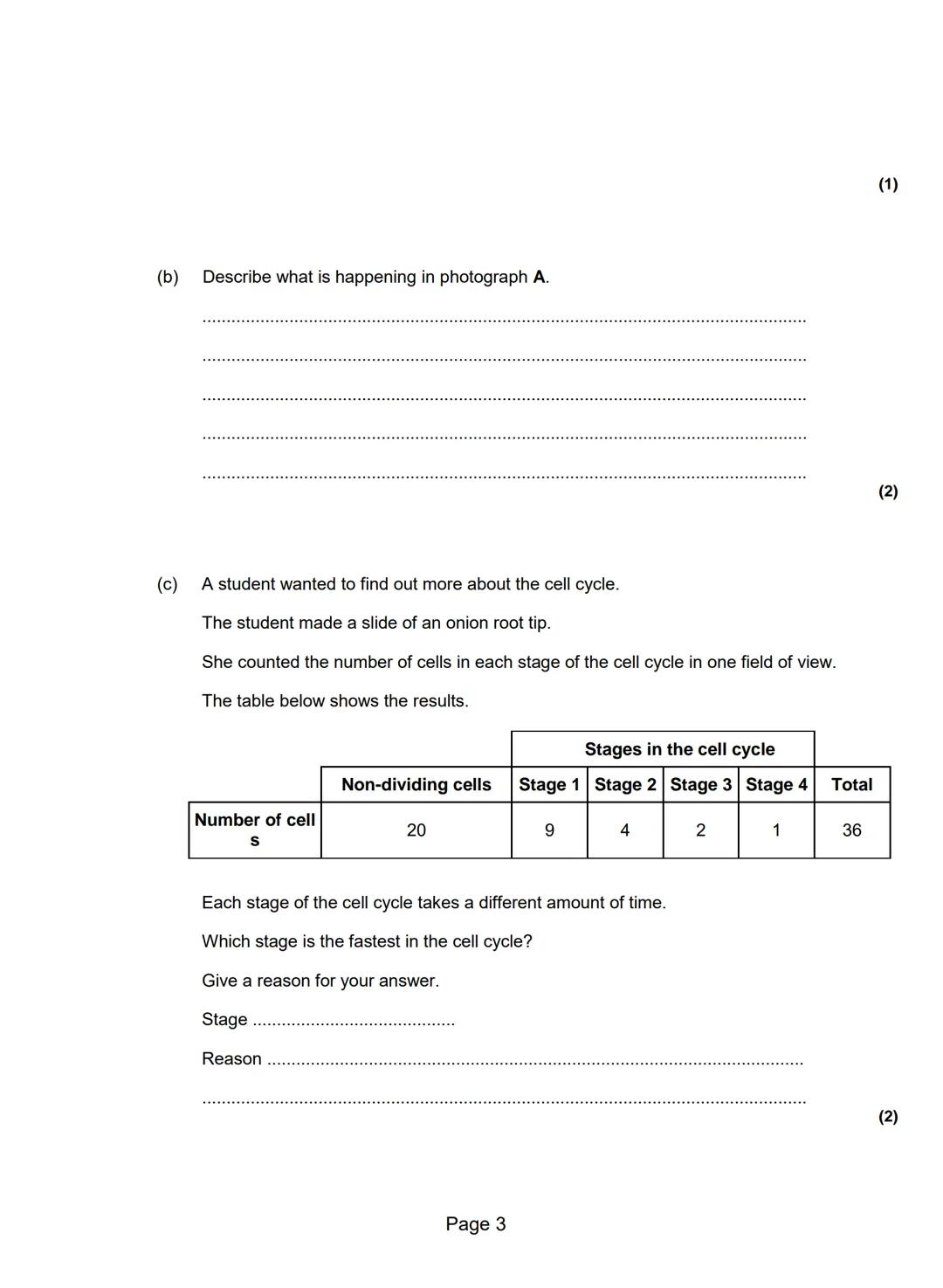
Sometimes diffusion just isn't enough - cells need to actively grab certain substances even when it seems impossible. Active transport is like having a powerful pump that moves substances against the concentration gradient (from low to high concentration).
In your intestines, glucose often gets absorbed by active transport, especially when there's not much of it around. This needs loads of energy, which explains why epithelial cells are packed with mitochondria - they're the cell's power stations.
Plants do this too! They use active transport to absorb mineral ions from soil, even when there's hardly any there. Root cells work incredibly hard to pull in essential nutrients like nitrates for making proteins.
The key thing to remember: active transport needs energy from respiration (happening in mitochondria) to work against natural diffusion. It's like swimming upstream rather than going with the flow.
Energy connection: More mitochondria = more energy = more active transport. It's why hardworking cells are always packed with these cellular powerhouses.
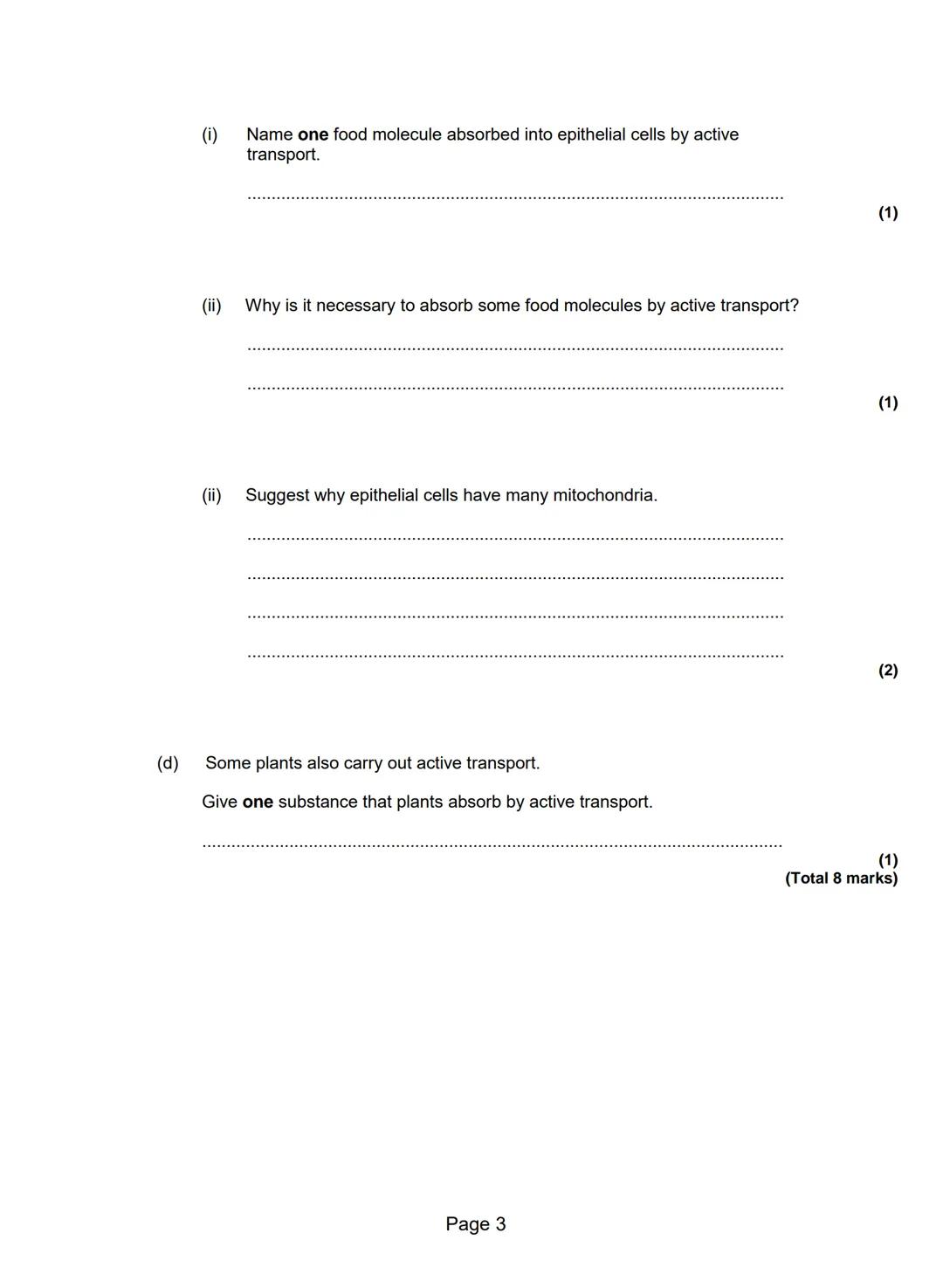
When cells divide through mitosis, you can actually see the chromosomes lined up and getting ready to separate - it's like watching a perfectly choreographed dance under the microscope. This is what's happening in photograph A when chromosomes become visible.
Here's something that might surprise you: the fastest stage in the cell cycle is the one with the fewest cells when you count them. Why? Because cells zip through quick stages so fast that you don't catch many of them at that moment - it's like trying to count cars on a motorway versus a traffic jam.
Scientists use onion root tips for these experiments because they're constantly growing, giving loads of dividing cells to study. By counting cells in each stage, you can work out the timing of the whole process.
Top tip: Stage 4 is usually fastest because you'll count the fewest cells there - they're moving through too quickly to build up in large numbers.
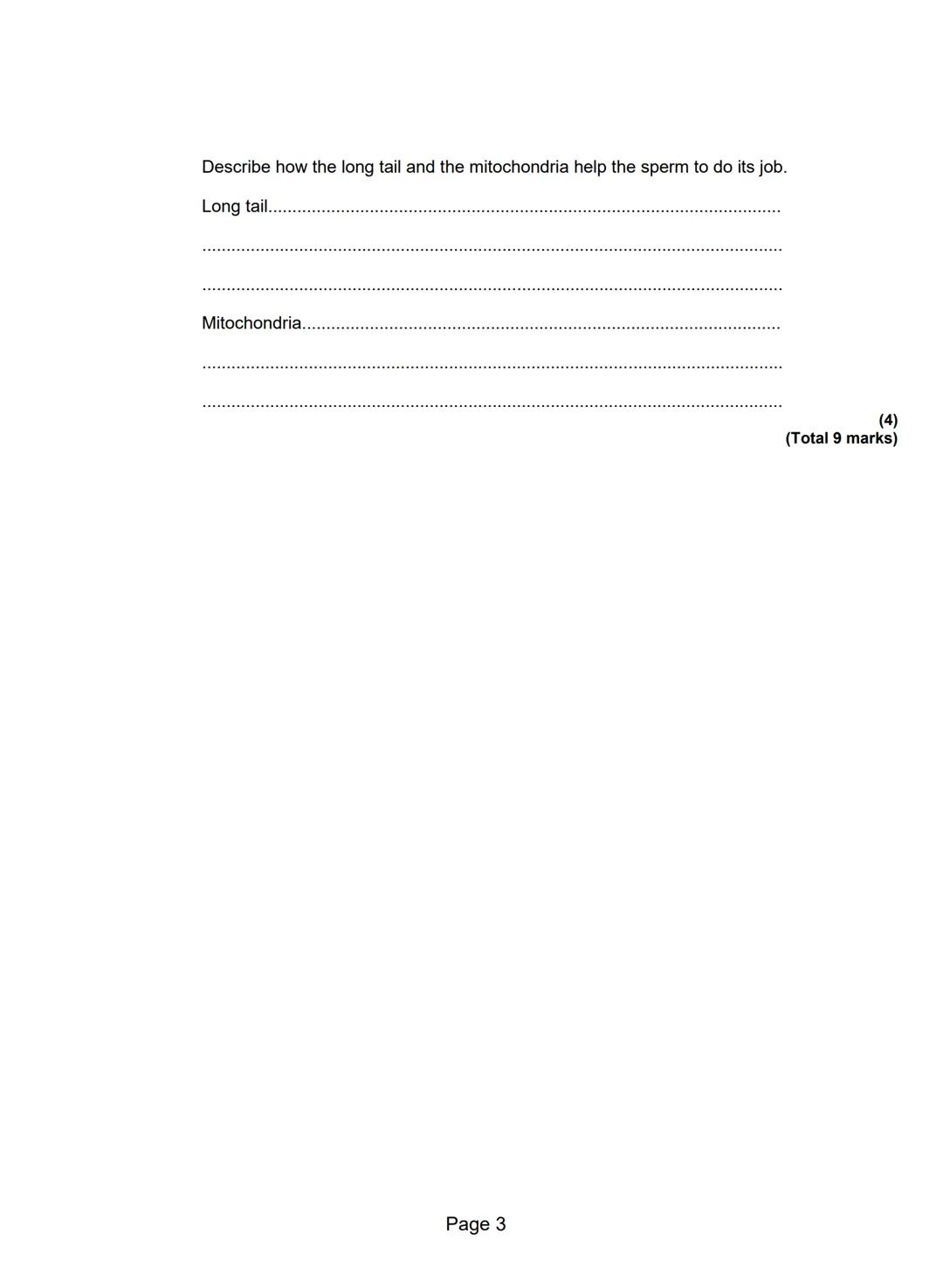
Sperm cells are absolutely brilliant examples of how cells adapt perfectly for their specific job. Every single feature is designed for one mission: reaching and fertilising an egg cell.
The long tail works like a whip, creating the swimming motion that propels the sperm forward through fluid. It's basically a biological motor that can keep going for hours.
All those mitochondria clustered around the tail provide the energy for movement. Think of them as the engine room - they release energy from respiration to keep that tail beating and the sperm swimming towards its target.
Without either of these features, sperm simply couldn't do their job. No tail means no movement, and no mitochondria means no energy to power that movement.
Perfect design: Every specialised cell has features that match its function - sperm need to move, so they get swimming equipment and an energy supply.
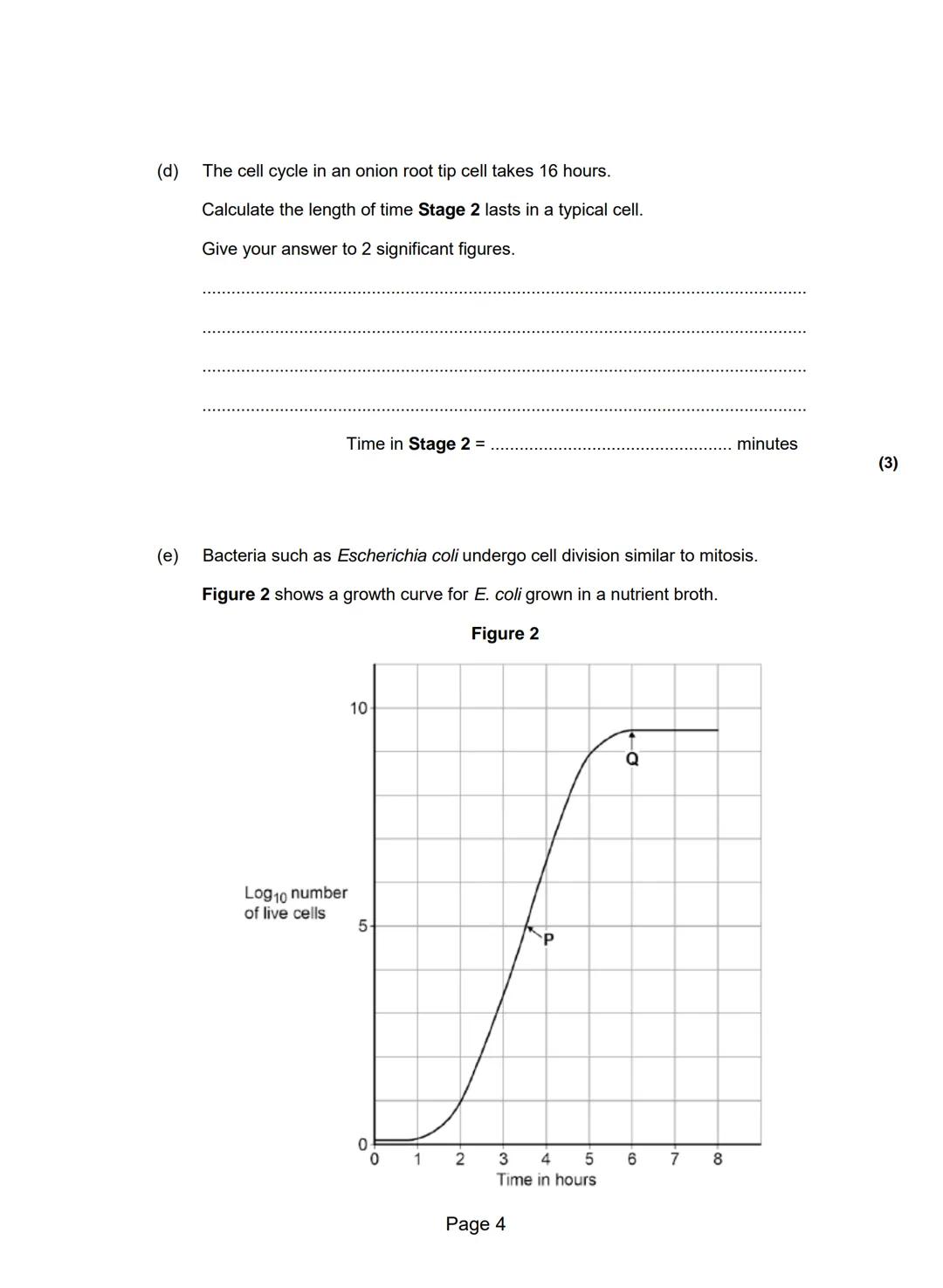
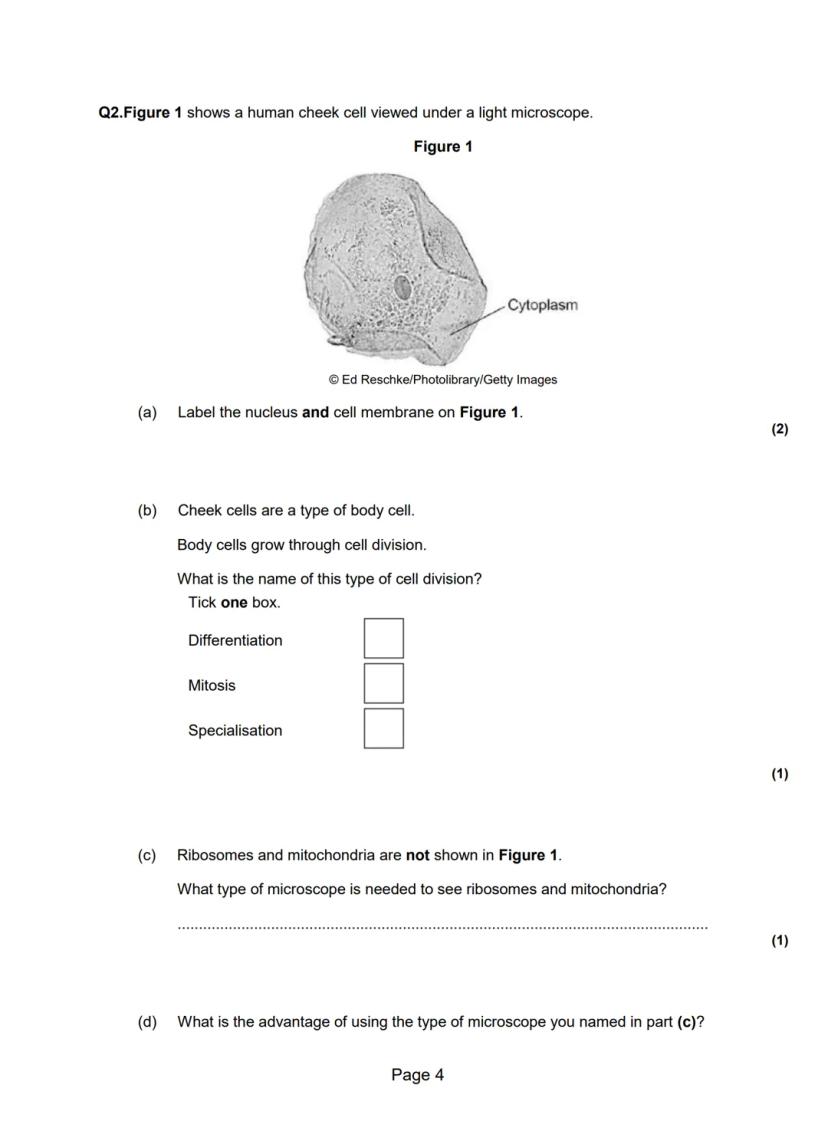
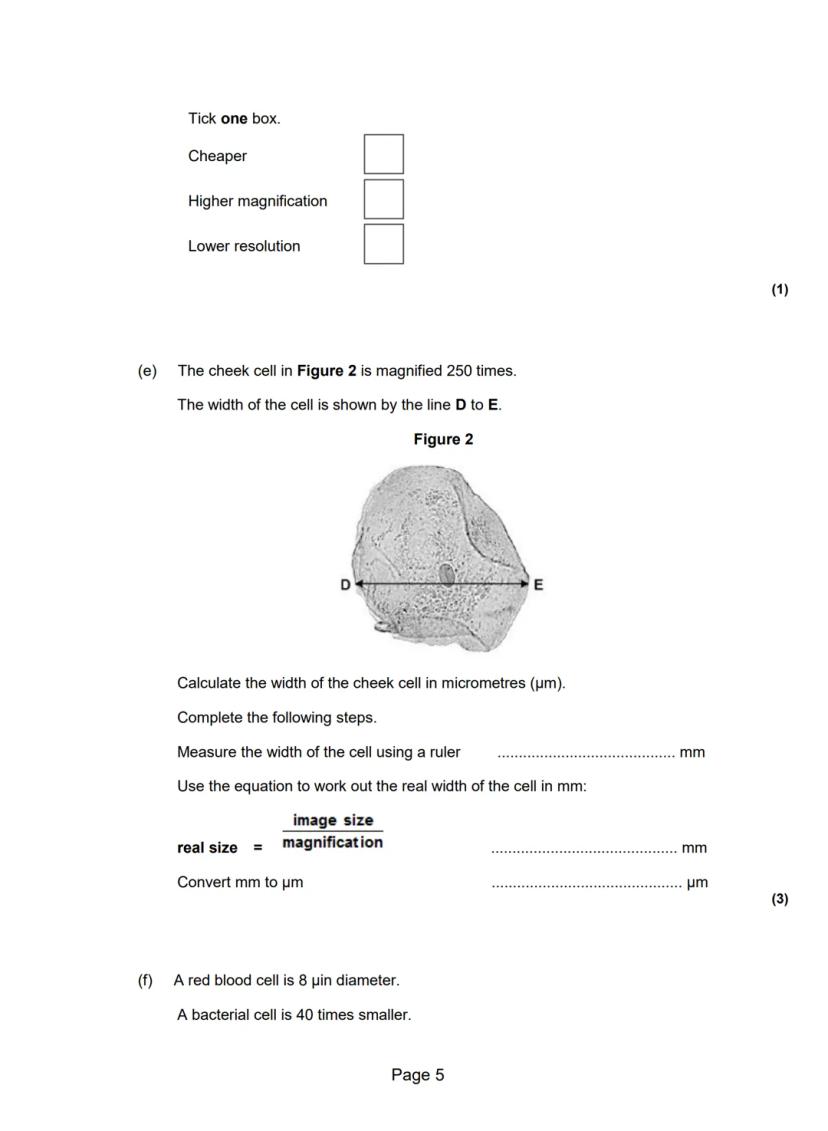
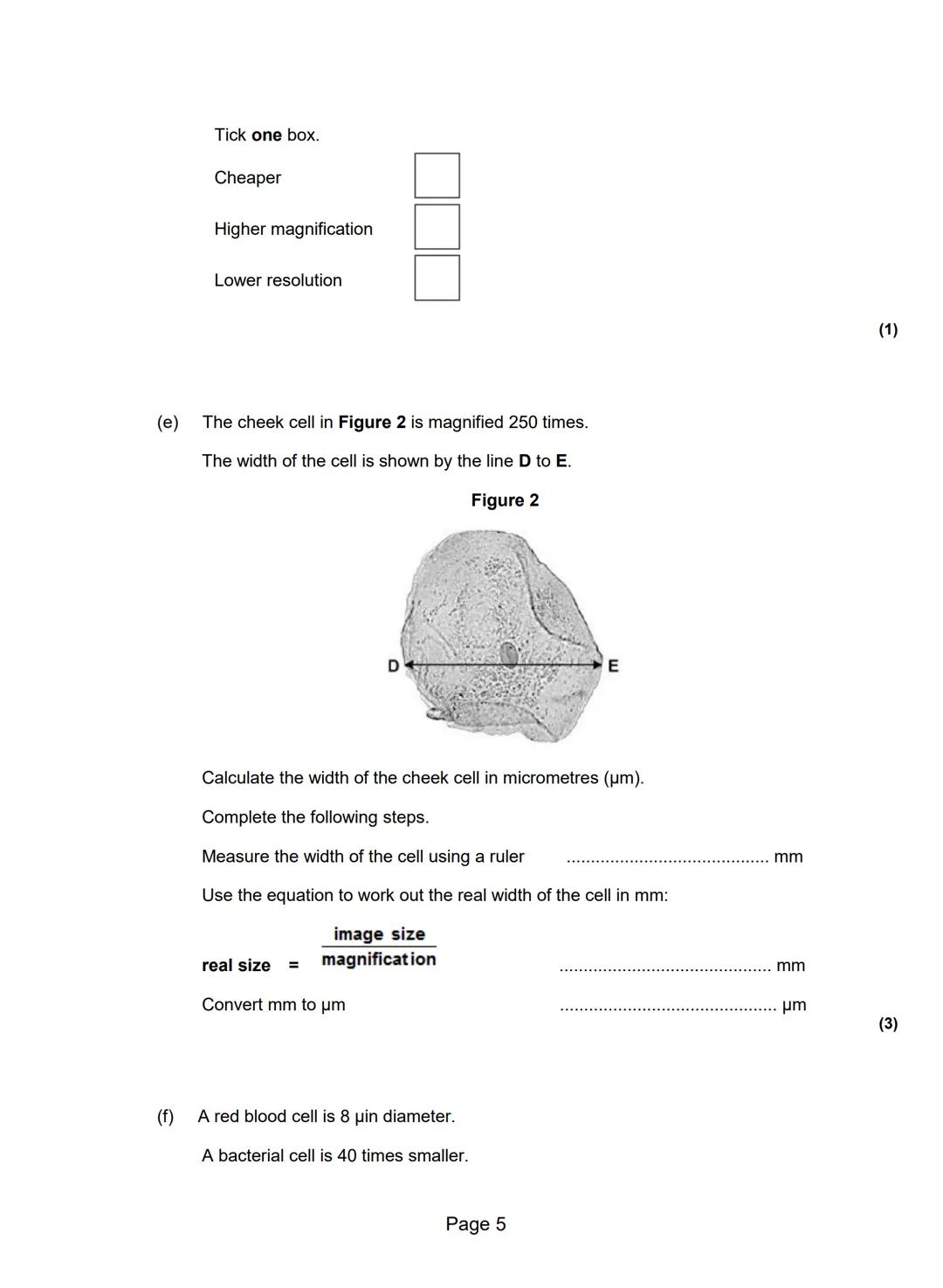
Looking at your own cheek cells under a microscope is pretty amazing - you can clearly see the nucleus (the control centre) and cell membrane (the boundary) that keep everything organised. These are body cells that grow and repair through mitosis.
But here's the limitation: light microscopes can't show you everything. Tiny structures like ribosomes and mitochondria are just too small to see clearly with light waves.
That's where electron microscopes come in - they use electron beams instead of light to achieve much higher magnification and better resolution. You can see incredible detail of cellular structures that are invisible to light microscopes.
The trade-off? Electron microscopes are expensive and complex, but they reveal the intricate world inside cells that light microscopes simply can't reach.
Microscope memory: Light microscopes for basic cell structures, electron microscopes for the really tiny stuff like ribosomes and detailed mitochondria.
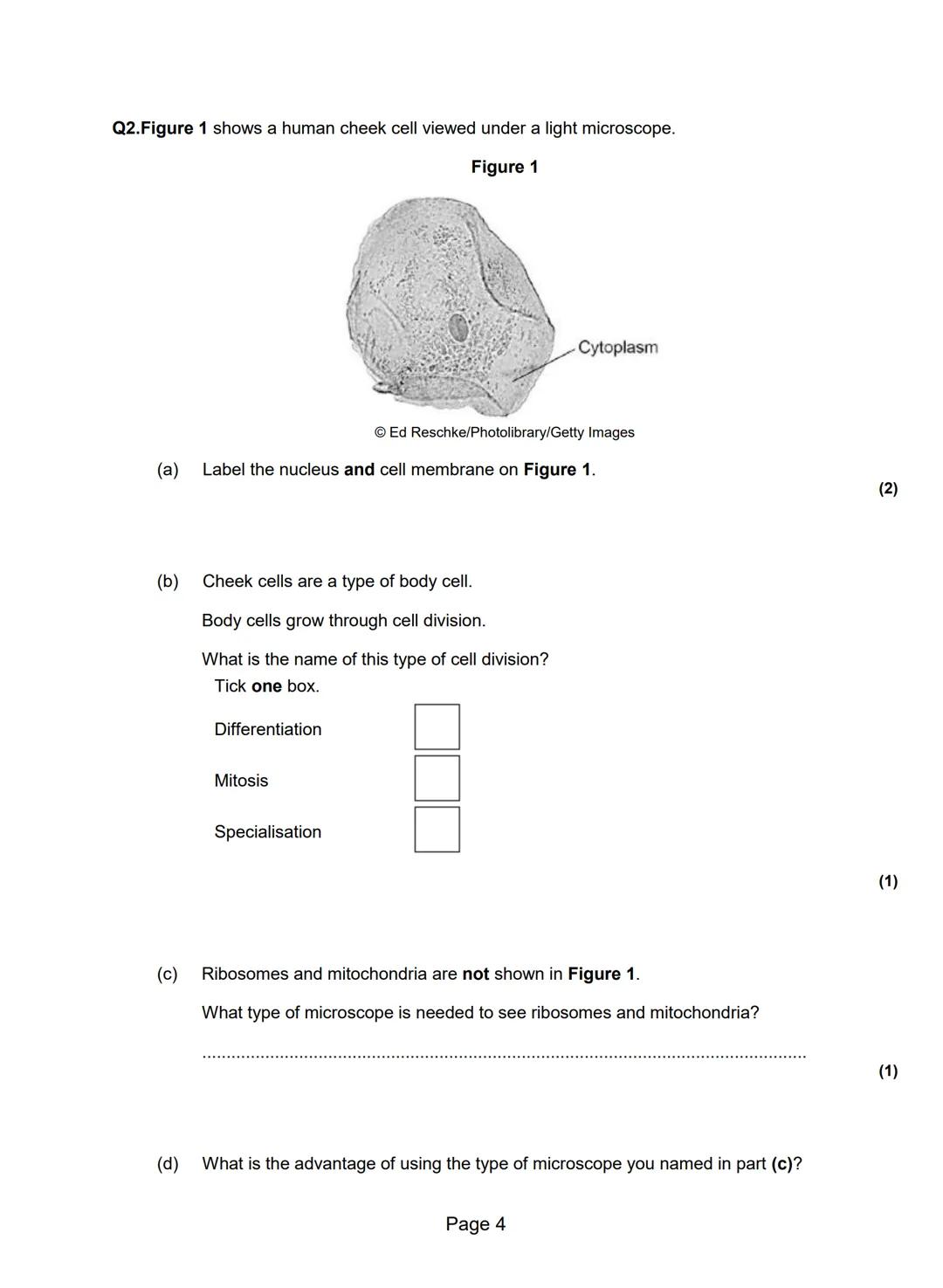
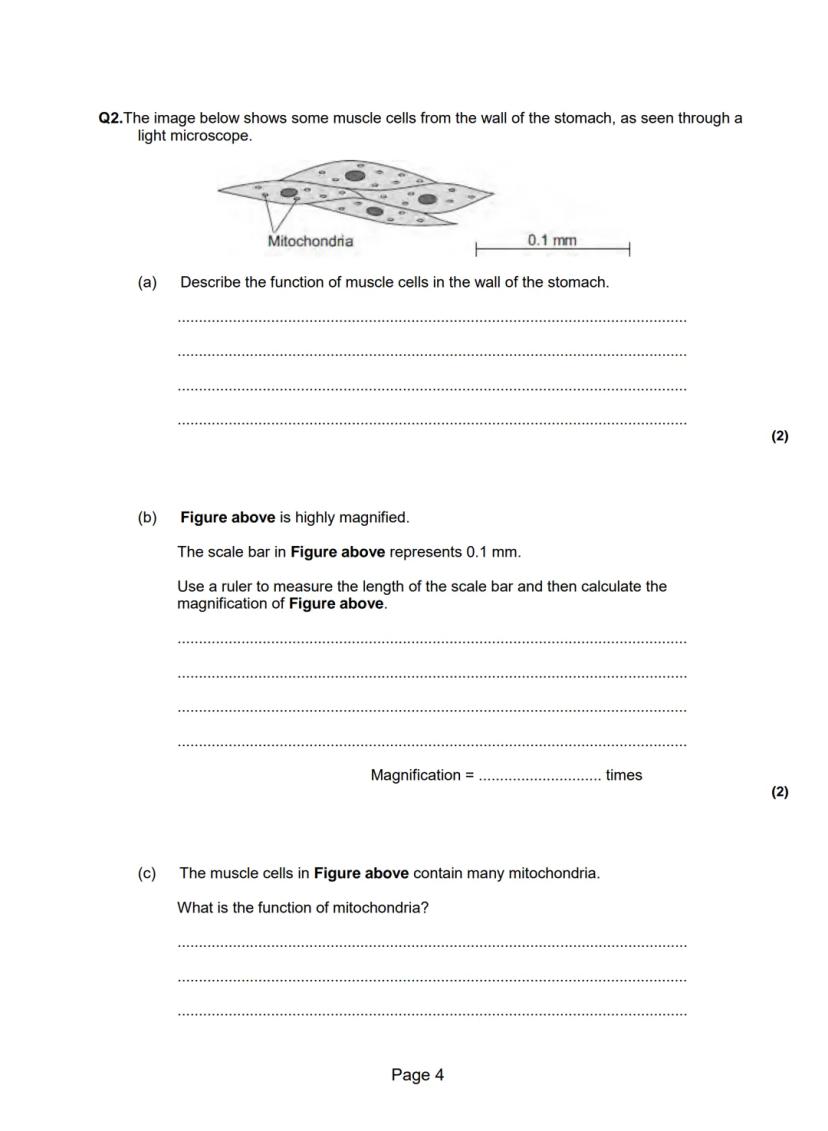
Muscle cells in your stomach wall have a crucial job - they contract and relax to churn food and push it along during digestion. It's like having a built-in food processor that never stops working.
These cells are packed with mitochondria because muscle contraction needs loads of energy from respiration. Every time your stomach muscles squeeze, mitochondria are working overtime to provide the power.
Magnification calculations might seem tricky, but they're straightforward once you get the hang of it. You measure the scale bar with a ruler, then divide the actual measurement by what it represents (like 0.1mm) to get the magnification.
The function of mitochondria is always the same regardless of cell type: they're the powerhouses that release energy through cellular respiration to fuel whatever that cell needs to do.
Energy rule: The more active a cell is, the more mitochondria it contains - muscle cells are constantly working, so they're absolutely packed with these cellular power stations.
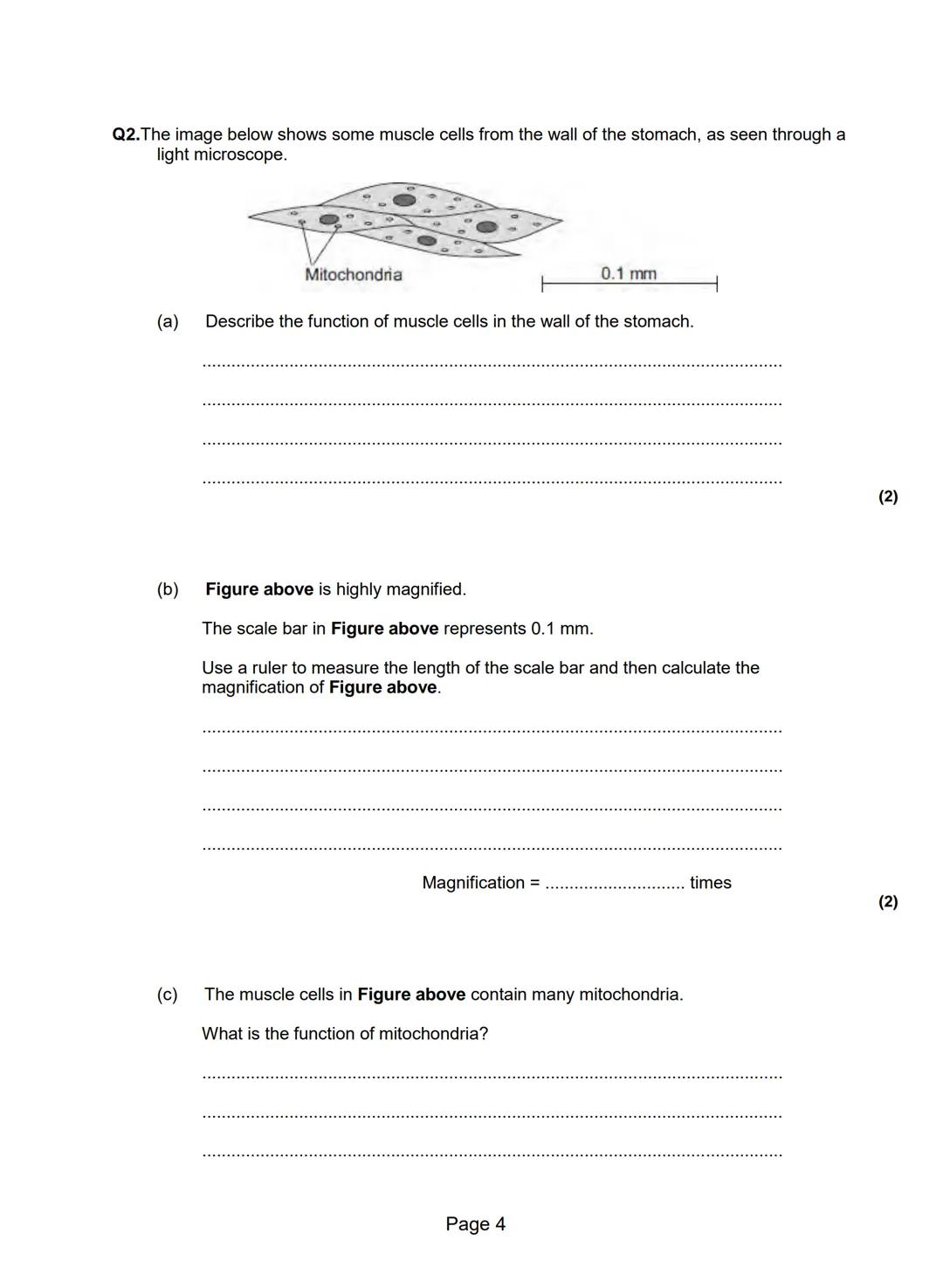
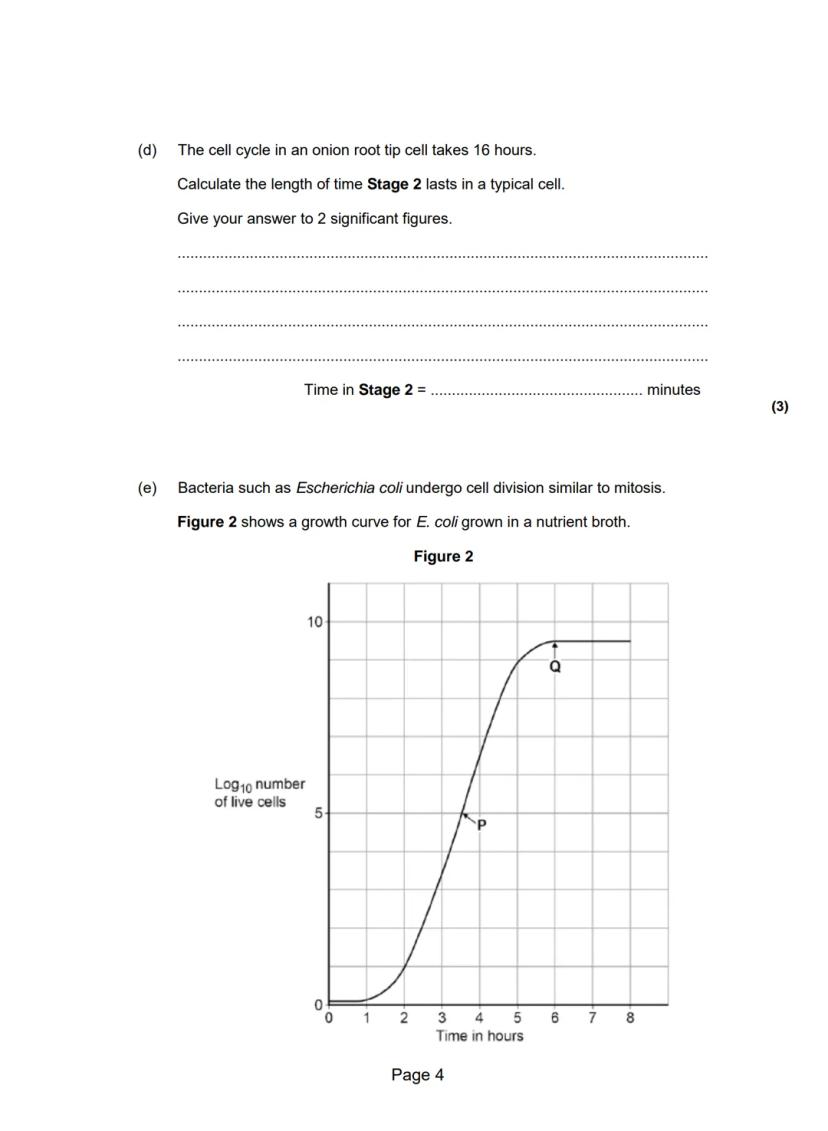
Calculating how long each stage of the cell cycle takes involves some clever maths using the data scientists collect. If you know the total time (like 16 hours) and the proportion of cells in each stage, you can work out individual stage lengths.
Bacteria like E. coli also divide through a process similar to mitosis, and they do it incredibly fast. The growth curve shows how bacterial numbers can explode exponentially when conditions are right - that's why food poisoning can happen so quickly.
The key to these calculations is understanding that the proportion of cells in each stage reflects how long that stage takes. More cells in a stage means it takes longer; fewer cells means it's over quickly.
Scientists use this data to understand cell division timing in everything from cancer research to understanding how infections spread.
Maths connection: Cell cycle calculations combine biology with percentages and time - it's all about proportions and working backwards from the data.
Our AI companion is specifically built for the needs of students. Based on the millions of content pieces we have on the platform we can provide truly meaningful and relevant answers to students. But its not only about answers, the companion is even more about guiding students through their daily learning challenges, with personalised study plans, quizzes or content pieces in the chat and 100% personalisation based on the students skills and developments.
You can download the app in the Google Play Store and in the Apple App Store.
That's right! Enjoy free access to study content, connect with fellow students, and get instant help – all at your fingertips.
Quotes from every main character
English LiteratureApp Store
Google Play
The app is very easy to use and well designed. I have found everything I was looking for so far and have been able to learn a lot from the presentations! I will definitely use the app for a class assignment! And of course it also helps a lot as an inspiration.
Stefan S
iOS user
This app is really great. There are so many study notes and help [...]. My problem subject is French, for example, and the app has so many options for help. Thanks to this app, I have improved my French. I would recommend it to anyone.
Samantha Klich
Android user
Wow, I am really amazed. I just tried the app because I've seen it advertised many times and was absolutely stunned. This app is THE HELP you want for school and above all, it offers so many things, such as workouts and fact sheets, which have been VERY helpful to me personally.
Anna
iOS user
I think it’s very much worth it and you’ll end up using it a lot once you get the hang of it and even after looking at others notes you can still ask your Artificial intelligence buddy the question and ask to simplify it if you still don’t get it!!! In the end I think it’s worth it 😊👍 ⚠️Also DID I MENTION ITS FREEE YOU DON’T HAVE TO PAY FOR ANYTHING AND STILL GET YOUR GRADES IN PERFECTLY❗️❗️⚠️
Thomas R
iOS user
Knowunity is the BEST app I’ve used in a minute. This is not an ai review or anything this is genuinely coming from a 7th grade student (I know 2011 im young) but dude this app is a 10/10 i have maintained a 3.8 gpa and have plenty of time for gaming. I love it and my mom is just happy I got good grades
Brad T
Android user
Not only did it help me find the answer but it also showed me alternative ways to solve it. I was horrible in math and science but now I have an a in both subjects. Thanks for the help🤍🤍
David K
iOS user
The app's just great! All I have to do is enter the topic in the search bar and I get the response real fast. I don't have to watch 10 YouTube videos to understand something, so I'm saving my time. Highly recommended!
Sudenaz Ocak
Android user
In school I was really bad at maths but thanks to the app, I am doing better now. I am so grateful that you made the app.
Greenlight Bonnie
Android user
I found this app a couple years ago and it has only gotten better since then. I really love it because it can help with written questions and photo questions. Also, it can find study guides that other people have made as well as flashcard sets and practice tests. The free version is also amazing for students who might not be able to afford it. Would 100% recommend
Aubrey
iOS user
Best app if you're in Highschool or Junior high. I have been using this app for 2 school years and it's the best, it's good if you don't have anyone to help you with school work.😋🩷🎀
Marco B
iOS user
THE QUIZES AND FLASHCARDS ARE SO USEFUL AND I LOVE THE SCHOOLGPT. IT ALSO IS LITREALLY LIKE CHATGPT BUT SMARTER!! HELPED ME WITH MY MASCARA PROBLEMS TOO!! AS WELL AS MY REAL SUBJECTS ! DUHHH 😍😁😲🤑💗✨🎀😮
Elisha
iOS user
This app is phenomenal down to the correct info and the various topics you can study! I greatly recommend it for people who struggle with procrastination and those who need homework help. It has been perfectly accurate for world 1 history as far as I’ve seen! Geometry too!
Paul T
iOS user
The app is very easy to use and well designed. I have found everything I was looking for so far and have been able to learn a lot from the presentations! I will definitely use the app for a class assignment! And of course it also helps a lot as an inspiration.
Stefan S
iOS user
This app is really great. There are so many study notes and help [...]. My problem subject is French, for example, and the app has so many options for help. Thanks to this app, I have improved my French. I would recommend it to anyone.
Samantha Klich
Android user
Wow, I am really amazed. I just tried the app because I've seen it advertised many times and was absolutely stunned. This app is THE HELP you want for school and above all, it offers so many things, such as workouts and fact sheets, which have been VERY helpful to me personally.
Anna
iOS user
I think it’s very much worth it and you’ll end up using it a lot once you get the hang of it and even after looking at others notes you can still ask your Artificial intelligence buddy the question and ask to simplify it if you still don’t get it!!! In the end I think it’s worth it 😊👍 ⚠️Also DID I MENTION ITS FREEE YOU DON’T HAVE TO PAY FOR ANYTHING AND STILL GET YOUR GRADES IN PERFECTLY❗️❗️⚠️
Thomas R
iOS user
Knowunity is the BEST app I’ve used in a minute. This is not an ai review or anything this is genuinely coming from a 7th grade student (I know 2011 im young) but dude this app is a 10/10 i have maintained a 3.8 gpa and have plenty of time for gaming. I love it and my mom is just happy I got good grades
Brad T
Android user
Not only did it help me find the answer but it also showed me alternative ways to solve it. I was horrible in math and science but now I have an a in both subjects. Thanks for the help🤍🤍
David K
iOS user
The app's just great! All I have to do is enter the topic in the search bar and I get the response real fast. I don't have to watch 10 YouTube videos to understand something, so I'm saving my time. Highly recommended!
Sudenaz Ocak
Android user
In school I was really bad at maths but thanks to the app, I am doing better now. I am so grateful that you made the app.
Greenlight Bonnie
Android user
I found this app a couple years ago and it has only gotten better since then. I really love it because it can help with written questions and photo questions. Also, it can find study guides that other people have made as well as flashcard sets and practice tests. The free version is also amazing for students who might not be able to afford it. Would 100% recommend
Aubrey
iOS user
Best app if you're in Highschool or Junior high. I have been using this app for 2 school years and it's the best, it's good if you don't have anyone to help you with school work.😋🩷🎀
Marco B
iOS user
THE QUIZES AND FLASHCARDS ARE SO USEFUL AND I LOVE THE SCHOOLGPT. IT ALSO IS LITREALLY LIKE CHATGPT BUT SMARTER!! HELPED ME WITH MY MASCARA PROBLEMS TOO!! AS WELL AS MY REAL SUBJECTS ! DUHHH 😍😁😲🤑💗✨🎀😮
Elisha
iOS user
This app is phenomenal down to the correct info and the various topics you can study! I greatly recommend it for people who struggle with procrastination and those who need homework help. It has been perfectly accurate for world 1 history as far as I’ve seen! Geometry too!
Paul T
iOS user
These exam questions cover the essential bits of cell biology you need to master - from how cells absorb nutrients in your digestive system to how they divide and reproduce. You'll explore different types of cells (animal, plant, and bacterial)... Show more
Access to all documents
Improve your grades
Join milions of students
By signing up you accept Terms of Service and Privacy Policy
Your body is constantly growing and repairing itself through cell division, and it's happening right now as you read this! The cell cycle includes different stages, with mitosis being the dramatic bit where one cell splits into two identical copies.
Looking at cell photographs, you can spot which cells aren't going through mitosis - they'll look normal and rounded. Cells actually going through mitosis look quite different, often stretched out or with visible chromosome structures.
Scientists study this by looking at onion root tips (because they grow fast). By counting cells in different stages, they can work out which stage is fastest - and here's a handy trick: the stage with fewer cells is actually the quickest stage because cells don't hang about there for long.
Remember: The fewer cells you count in a stage, the faster that stage happens - it's like a really quick queue that doesn't build up.
Access to all documents
Improve your grades
Join milions of students
By signing up you accept Terms of Service and Privacy Policy
Bacterial cells might be tiny, but they're proper little survivors with some key differences from your cells. They've got a cell wall and cell membrane like plants, but their genetic material floats freely instead of being locked up in a nucleus.
The big difference? Bacteria don't have a nucleus - their DNA just hangs about in the cytoplasm. They also have plasmids (little rings of extra DNA) that animal cells definitely don't have.
Plant cells have something special that neither bacteria nor animals have: chloroplasts. These green powerhouses capture sunlight to make food through photosynthesis.
Meanwhile, sperm cells are brilliantly designed for their job. The long tail acts like a propeller to swim towards the egg, whilst loads of mitochondria provide the energy needed for this epic journey.
Quick check: Remember the three main cell types - animal (nucleus, no cell wall), plant (nucleus, cell wall, chloroplasts), and bacterial (no nucleus, cell wall, no chloroplasts).
Access to all documents
Improve your grades
Join milions of students
By signing up you accept Terms of Service and Privacy Policy
Ever wondered how your body actually gets nutrients from that sandwich you just ate? The epithelial cells lining your small intestine are absolute champions at this job. These cells have a highly folded surface that massively increases their surface area - think of it like having loads more space to absorb all those vital nutrients.
The nucleus (part A in the diagram) contains all the chromosomes and controls what the cell does. Most soluble food molecules get absorbed through diffusion - they simply move from where there's loads of them (in your gut) to where there's fewer (inside the cell).
But here's where it gets clever: these cells are packed with mitochondria because absorbing food takes serious energy. Some nutrients like glucose actually need active transport to get absorbed, which is like having a bouncer that only lets certain molecules through the door.
Key tip: Remember that active transport needs energy (from mitochondria) whilst diffusion happens naturally without any energy input.
Access to all documents
Improve your grades
Join milions of students
By signing up you accept Terms of Service and Privacy Policy
Sometimes diffusion just isn't enough - cells need to actively grab certain substances even when it seems impossible. Active transport is like having a powerful pump that moves substances against the concentration gradient (from low to high concentration).
In your intestines, glucose often gets absorbed by active transport, especially when there's not much of it around. This needs loads of energy, which explains why epithelial cells are packed with mitochondria - they're the cell's power stations.
Plants do this too! They use active transport to absorb mineral ions from soil, even when there's hardly any there. Root cells work incredibly hard to pull in essential nutrients like nitrates for making proteins.
The key thing to remember: active transport needs energy from respiration (happening in mitochondria) to work against natural diffusion. It's like swimming upstream rather than going with the flow.
Energy connection: More mitochondria = more energy = more active transport. It's why hardworking cells are always packed with these cellular powerhouses.
Access to all documents
Improve your grades
Join milions of students
By signing up you accept Terms of Service and Privacy Policy
When cells divide through mitosis, you can actually see the chromosomes lined up and getting ready to separate - it's like watching a perfectly choreographed dance under the microscope. This is what's happening in photograph A when chromosomes become visible.
Here's something that might surprise you: the fastest stage in the cell cycle is the one with the fewest cells when you count them. Why? Because cells zip through quick stages so fast that you don't catch many of them at that moment - it's like trying to count cars on a motorway versus a traffic jam.
Scientists use onion root tips for these experiments because they're constantly growing, giving loads of dividing cells to study. By counting cells in each stage, you can work out the timing of the whole process.
Top tip: Stage 4 is usually fastest because you'll count the fewest cells there - they're moving through too quickly to build up in large numbers.
Access to all documents
Improve your grades
Join milions of students
By signing up you accept Terms of Service and Privacy Policy
Sperm cells are absolutely brilliant examples of how cells adapt perfectly for their specific job. Every single feature is designed for one mission: reaching and fertilising an egg cell.
The long tail works like a whip, creating the swimming motion that propels the sperm forward through fluid. It's basically a biological motor that can keep going for hours.
All those mitochondria clustered around the tail provide the energy for movement. Think of them as the engine room - they release energy from respiration to keep that tail beating and the sperm swimming towards its target.
Without either of these features, sperm simply couldn't do their job. No tail means no movement, and no mitochondria means no energy to power that movement.
Perfect design: Every specialised cell has features that match its function - sperm need to move, so they get swimming equipment and an energy supply.
Access to all documents
Improve your grades
Join milions of students
By signing up you accept Terms of Service and Privacy Policy
Looking at your own cheek cells under a microscope is pretty amazing - you can clearly see the nucleus (the control centre) and cell membrane (the boundary) that keep everything organised. These are body cells that grow and repair through mitosis.
But here's the limitation: light microscopes can't show you everything. Tiny structures like ribosomes and mitochondria are just too small to see clearly with light waves.
That's where electron microscopes come in - they use electron beams instead of light to achieve much higher magnification and better resolution. You can see incredible detail of cellular structures that are invisible to light microscopes.
The trade-off? Electron microscopes are expensive and complex, but they reveal the intricate world inside cells that light microscopes simply can't reach.
Microscope memory: Light microscopes for basic cell structures, electron microscopes for the really tiny stuff like ribosomes and detailed mitochondria.
Access to all documents
Improve your grades
Join milions of students
By signing up you accept Terms of Service and Privacy Policy
Muscle cells in your stomach wall have a crucial job - they contract and relax to churn food and push it along during digestion. It's like having a built-in food processor that never stops working.
These cells are packed with mitochondria because muscle contraction needs loads of energy from respiration. Every time your stomach muscles squeeze, mitochondria are working overtime to provide the power.
Magnification calculations might seem tricky, but they're straightforward once you get the hang of it. You measure the scale bar with a ruler, then divide the actual measurement by what it represents (like 0.1mm) to get the magnification.
The function of mitochondria is always the same regardless of cell type: they're the powerhouses that release energy through cellular respiration to fuel whatever that cell needs to do.
Energy rule: The more active a cell is, the more mitochondria it contains - muscle cells are constantly working, so they're absolutely packed with these cellular power stations.
Access to all documents
Improve your grades
Join milions of students
By signing up you accept Terms of Service and Privacy Policy
Calculating how long each stage of the cell cycle takes involves some clever maths using the data scientists collect. If you know the total time (like 16 hours) and the proportion of cells in each stage, you can work out individual stage lengths.
Bacteria like E. coli also divide through a process similar to mitosis, and they do it incredibly fast. The growth curve shows how bacterial numbers can explode exponentially when conditions are right - that's why food poisoning can happen so quickly.
The key to these calculations is understanding that the proportion of cells in each stage reflects how long that stage takes. More cells in a stage means it takes longer; fewer cells means it's over quickly.
Scientists use this data to understand cell division timing in everything from cancer research to understanding how infections spread.
Maths connection: Cell cycle calculations combine biology with percentages and time - it's all about proportions and working backwards from the data.
Access to all documents
Improve your grades
Join milions of students
By signing up you accept Terms of Service and Privacy Policy
Our AI companion is specifically built for the needs of students. Based on the millions of content pieces we have on the platform we can provide truly meaningful and relevant answers to students. But its not only about answers, the companion is even more about guiding students through their daily learning challenges, with personalised study plans, quizzes or content pieces in the chat and 100% personalisation based on the students skills and developments.
You can download the app in the Google Play Store and in the Apple App Store.
That's right! Enjoy free access to study content, connect with fellow students, and get instant help – all at your fingertips.
8
Smart Tools NEW
Transform this note into: ✓ 50+ Practice Questions ✓ Interactive Flashcards ✓ Full Mock Exam ✓ Essay Outlines
Explore key concepts in GCSE AQA Biology, focusing on human and plant systems. This summary covers the circulatory system, blood components, digestive enzymes, and plant transport mechanisms, including xylem and phloem. Ideal for exam preparation, it includes essential diagrams and detailed explanations of cardiovascular treatments and plant tissue organization.
 Biology
Explore essential practical investigations in Biology, including enzyme activity, osmosis in plant tissues, and microscopy techniques. This resource covers the equipment, procedures, and expected results for experiments on amylase, potato osmosis, and cellular structures. Ideal for AQA GCSE students preparing for Paper 1.
Biologybiology paper 1 higher topic B1 (cell structure and transport)
BiologyComprehensive revision guide for GCSE Biology covering key topics such as photosynthesis, enzyme function, the circulatory system, and the impact of diseases like malaria and HPV. Ideal for students preparing for exams, this resource includes explanations, data interpretation, and practical investigation methods.
BiologyExplore essential biology practicals including enzyme activity, photosynthesis, microscopy, osmosis, and food tests. This comprehensive guide provides step-by-step procedures and key concepts for each experiment, perfect for students preparing for exams. Enhance your understanding of biological processes and laboratory techniques.
BiologyExplore key concepts in National 5 Biology Unit 1, including cell structure, enzyme function, genetic engineering, and transport mechanisms. This summary covers essential topics such as osmosis, DNA structure, and the role of enzymes in digestion, providing a comprehensive resource for exam preparation.
BiologyQuotes from every main character
English LiteratureApp Store
Google Play
The app is very easy to use and well designed. I have found everything I was looking for so far and have been able to learn a lot from the presentations! I will definitely use the app for a class assignment! And of course it also helps a lot as an inspiration.
Stefan S
iOS user
This app is really great. There are so many study notes and help [...]. My problem subject is French, for example, and the app has so many options for help. Thanks to this app, I have improved my French. I would recommend it to anyone.
Samantha Klich
Android user
Wow, I am really amazed. I just tried the app because I've seen it advertised many times and was absolutely stunned. This app is THE HELP you want for school and above all, it offers so many things, such as workouts and fact sheets, which have been VERY helpful to me personally.
Anna
iOS user
I think it’s very much worth it and you’ll end up using it a lot once you get the hang of it and even after looking at others notes you can still ask your Artificial intelligence buddy the question and ask to simplify it if you still don’t get it!!! In the end I think it’s worth it 😊👍 ⚠️Also DID I MENTION ITS FREEE YOU DON’T HAVE TO PAY FOR ANYTHING AND STILL GET YOUR GRADES IN PERFECTLY❗️❗️⚠️
Thomas R
iOS user
Knowunity is the BEST app I’ve used in a minute. This is not an ai review or anything this is genuinely coming from a 7th grade student (I know 2011 im young) but dude this app is a 10/10 i have maintained a 3.8 gpa and have plenty of time for gaming. I love it and my mom is just happy I got good grades
Brad T
Android user
Not only did it help me find the answer but it also showed me alternative ways to solve it. I was horrible in math and science but now I have an a in both subjects. Thanks for the help🤍🤍
David K
iOS user
The app's just great! All I have to do is enter the topic in the search bar and I get the response real fast. I don't have to watch 10 YouTube videos to understand something, so I'm saving my time. Highly recommended!
Sudenaz Ocak
Android user
In school I was really bad at maths but thanks to the app, I am doing better now. I am so grateful that you made the app.
Greenlight Bonnie
Android user
I found this app a couple years ago and it has only gotten better since then. I really love it because it can help with written questions and photo questions. Also, it can find study guides that other people have made as well as flashcard sets and practice tests. The free version is also amazing for students who might not be able to afford it. Would 100% recommend
Aubrey
iOS user
Best app if you're in Highschool or Junior high. I have been using this app for 2 school years and it's the best, it's good if you don't have anyone to help you with school work.😋🩷🎀
Marco B
iOS user
THE QUIZES AND FLASHCARDS ARE SO USEFUL AND I LOVE THE SCHOOLGPT. IT ALSO IS LITREALLY LIKE CHATGPT BUT SMARTER!! HELPED ME WITH MY MASCARA PROBLEMS TOO!! AS WELL AS MY REAL SUBJECTS ! DUHHH 😍😁😲🤑💗✨🎀😮
Elisha
iOS user
This app is phenomenal down to the correct info and the various topics you can study! I greatly recommend it for people who struggle with procrastination and those who need homework help. It has been perfectly accurate for world 1 history as far as I’ve seen! Geometry too!
Paul T
iOS user
The app is very easy to use and well designed. I have found everything I was looking for so far and have been able to learn a lot from the presentations! I will definitely use the app for a class assignment! And of course it also helps a lot as an inspiration.
Stefan S
iOS user
This app is really great. There are so many study notes and help [...]. My problem subject is French, for example, and the app has so many options for help. Thanks to this app, I have improved my French. I would recommend it to anyone.
Samantha Klich
Android user
Wow, I am really amazed. I just tried the app because I've seen it advertised many times and was absolutely stunned. This app is THE HELP you want for school and above all, it offers so many things, such as workouts and fact sheets, which have been VERY helpful to me personally.
Anna
iOS user
I think it’s very much worth it and you’ll end up using it a lot once you get the hang of it and even after looking at others notes you can still ask your Artificial intelligence buddy the question and ask to simplify it if you still don’t get it!!! In the end I think it’s worth it 😊👍 ⚠️Also DID I MENTION ITS FREEE YOU DON’T HAVE TO PAY FOR ANYTHING AND STILL GET YOUR GRADES IN PERFECTLY❗️❗️⚠️
Thomas R
iOS user
Knowunity is the BEST app I’ve used in a minute. This is not an ai review or anything this is genuinely coming from a 7th grade student (I know 2011 im young) but dude this app is a 10/10 i have maintained a 3.8 gpa and have plenty of time for gaming. I love it and my mom is just happy I got good grades
Brad T
Android user
Not only did it help me find the answer but it also showed me alternative ways to solve it. I was horrible in math and science but now I have an a in both subjects. Thanks for the help🤍🤍
David K
iOS user
The app's just great! All I have to do is enter the topic in the search bar and I get the response real fast. I don't have to watch 10 YouTube videos to understand something, so I'm saving my time. Highly recommended!
Sudenaz Ocak
Android user
In school I was really bad at maths but thanks to the app, I am doing better now. I am so grateful that you made the app.
Greenlight Bonnie
Android user
I found this app a couple years ago and it has only gotten better since then. I really love it because it can help with written questions and photo questions. Also, it can find study guides that other people have made as well as flashcard sets and practice tests. The free version is also amazing for students who might not be able to afford it. Would 100% recommend
Aubrey
iOS user
Best app if you're in Highschool or Junior high. I have been using this app for 2 school years and it's the best, it's good if you don't have anyone to help you with school work.😋🩷🎀
Marco B
iOS user
THE QUIZES AND FLASHCARDS ARE SO USEFUL AND I LOVE THE SCHOOLGPT. IT ALSO IS LITREALLY LIKE CHATGPT BUT SMARTER!! HELPED ME WITH MY MASCARA PROBLEMS TOO!! AS WELL AS MY REAL SUBJECTS ! DUHHH 😍😁😲🤑💗✨🎀😮
Elisha
iOS user
This app is phenomenal down to the correct info and the various topics you can study! I greatly recommend it for people who struggle with procrastination and those who need homework help. It has been perfectly accurate for world 1 history as far as I’ve seen! Geometry too!
Paul T
iOS user