Floodplains, Levees and Estuaries
When rivers burst their banks, they don't just cause chaos - they're actually master builders creating some of the most fertile land on Earth.
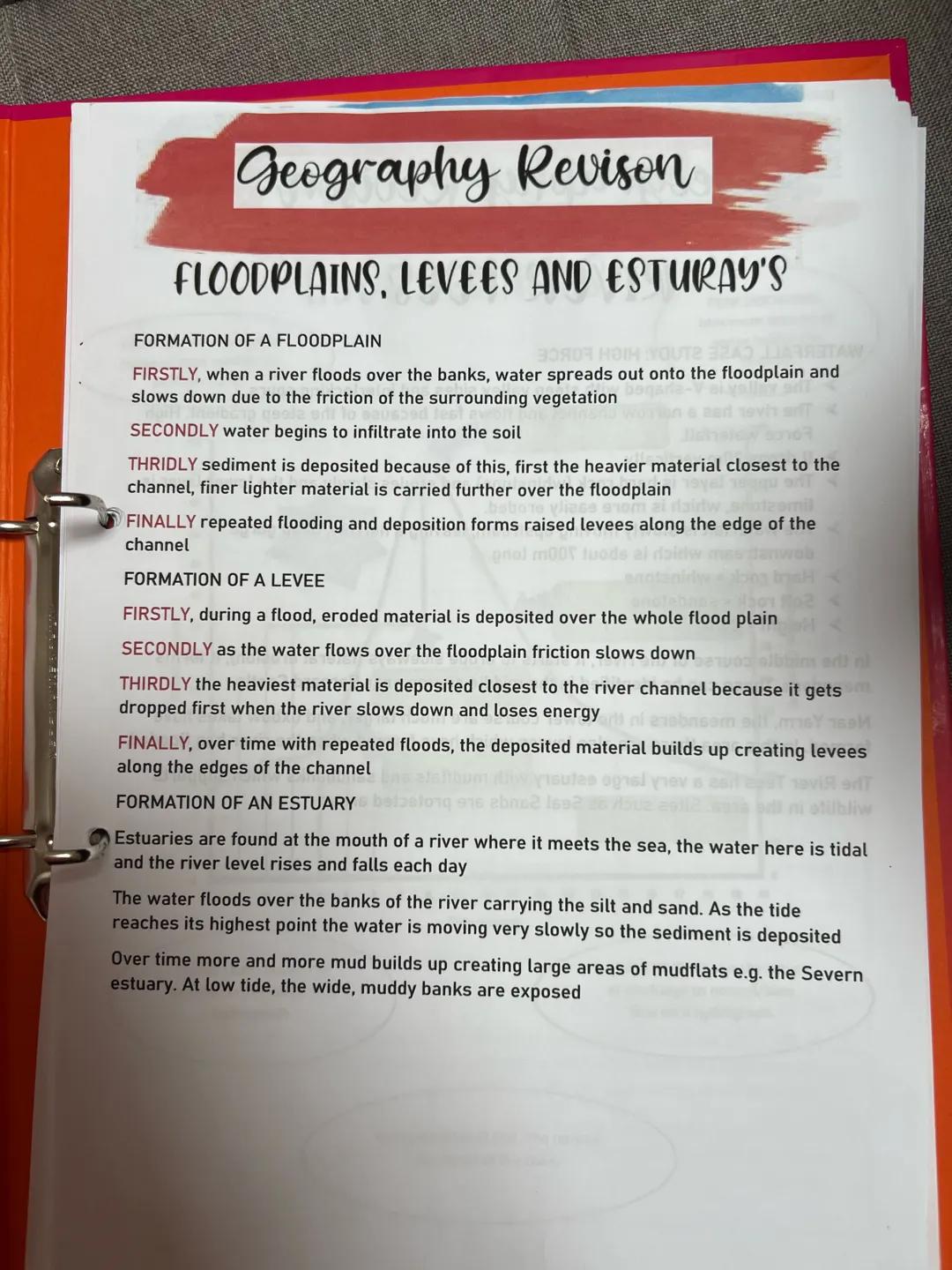
Floodplains form when rivers overflow and spread water across the surrounding area. The vegetation creates friction, slowing the water down so it drops its sediment load. Heavier materials settle first near the channel, whilst lighter particles travel further across the plain. After countless floods, this process builds up raised levees along the riverbank edges.
Levees are natural embankments that form through repeated flooding. Each time the river overflows, the heaviest sediment gets dumped closest to the channel because the water loses energy quickly when it slows down. Over time, these deposits create raised banks that help contain future floods.
Estuaries occur where rivers meet the sea, creating a tidal wonderland of mudflats. As tides rise and fall daily, they carry silt and sand that gets deposited when the slow-moving water reaches high tide. Famous examples like the Severn estuary showcase these vast muddy areas that emerge at low tide.
Exam Success: Remember that all these features form through the same basic principle - fast water erodes, slow water deposits!


 Biology
 Biology
 English Literature
 Sociology