
Photosynthesis is the incredible process plants use to make their... Show more
 Algebra
Sign up to see the contentIt's free!
Access to all documents
Improve your grades
Join milions of students
Knowunity AI
Subjects
Triangle Congruence and Similarity Theorems
Triangle Properties and Classification
Linear Equations and Graphs
Geometric Angle Relationships
Trigonometric Functions and Identities
Equation Solving Techniques
Circle Geometry Fundamentals
Division Operations and Methods
Basic Differentiation Rules
Exponent and Logarithm Properties
Show all topics
Human Organ Systems
Reproductive Cell Cycles
Biological Sciences Subdisciplines
Cellular Energy Metabolism
Autotrophic Energy Processes
Inheritance Patterns and Principles
Biomolecular Structure and Organization
Cell Cycle and Division Mechanics
Cellular Organization and Development
Biological Structural Organization
Show all topics
Chemical Sciences and Applications
Atomic Structure and Composition
Molecular Electron Structure Representation
Atomic Electron Behavior
Matter Properties and Water
Mole Concept and Calculations
Gas Laws and Behavior
Periodic Table Organization
Chemical Thermodynamics Fundamentals
Chemical Bond Types and Properties
Show all topics
European Renaissance and Enlightenment
European Cultural Movements 800-1920
American Revolution Era 1763-1797
American Civil War 1861-1865
Global Imperial Systems
Mongol and Chinese Dynasties
U.S. Presidents and World Leaders
Historical Sources and Documentation
World Wars Era and Impact
World Religious Systems
Show all topics
Classic and Contemporary Novels
Literary Character Analysis
Rhetorical Theory and Practice
Classic Literary Narratives
Reading Analysis and Interpretation
Narrative Structure and Techniques
English Language Components
Influential English-Language Authors
Basic Sentence Structure
Narrative Voice and Perspective
Show all topics
404
•
Updated Mar 19, 2026
•
Danielle Paddock
@daniellepaddock_buyj
Photosynthesis is the incredible process plants use to make their... Show more
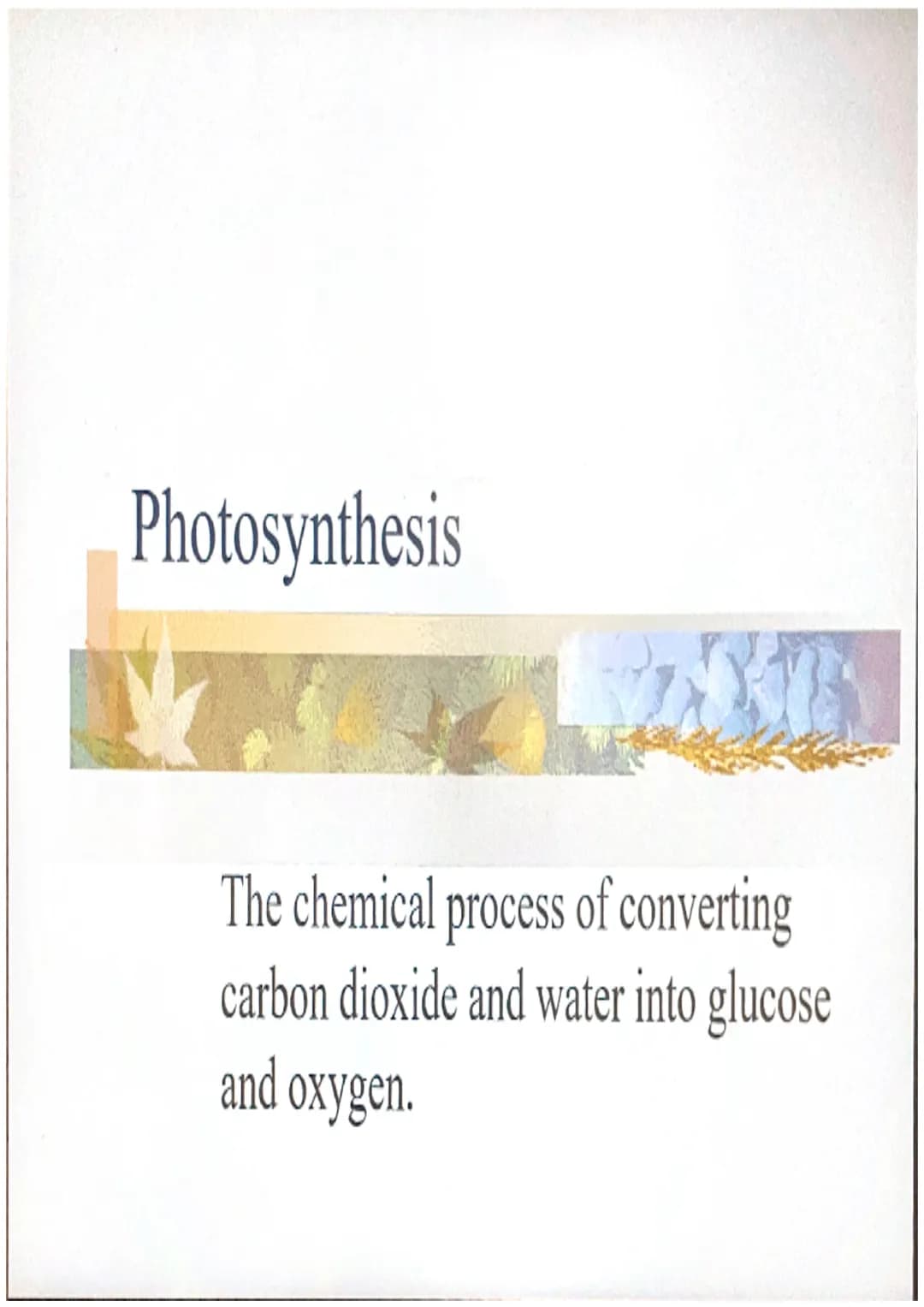
Photosynthesis is the chemical process that converts carbon dioxide and water into glucose and oxygen. This transformation is what allows plants to create their own food using energy from the sun.
Think of photosynthesis as the ultimate recycling system - plants take in carbon dioxide (which we exhale) and release oxygen (which we need to breathe). The glucose they produce becomes their energy source for growth and survival.
Fun Fact: Every breath you take contains oxygen that was likely produced by photosynthesis in plants!
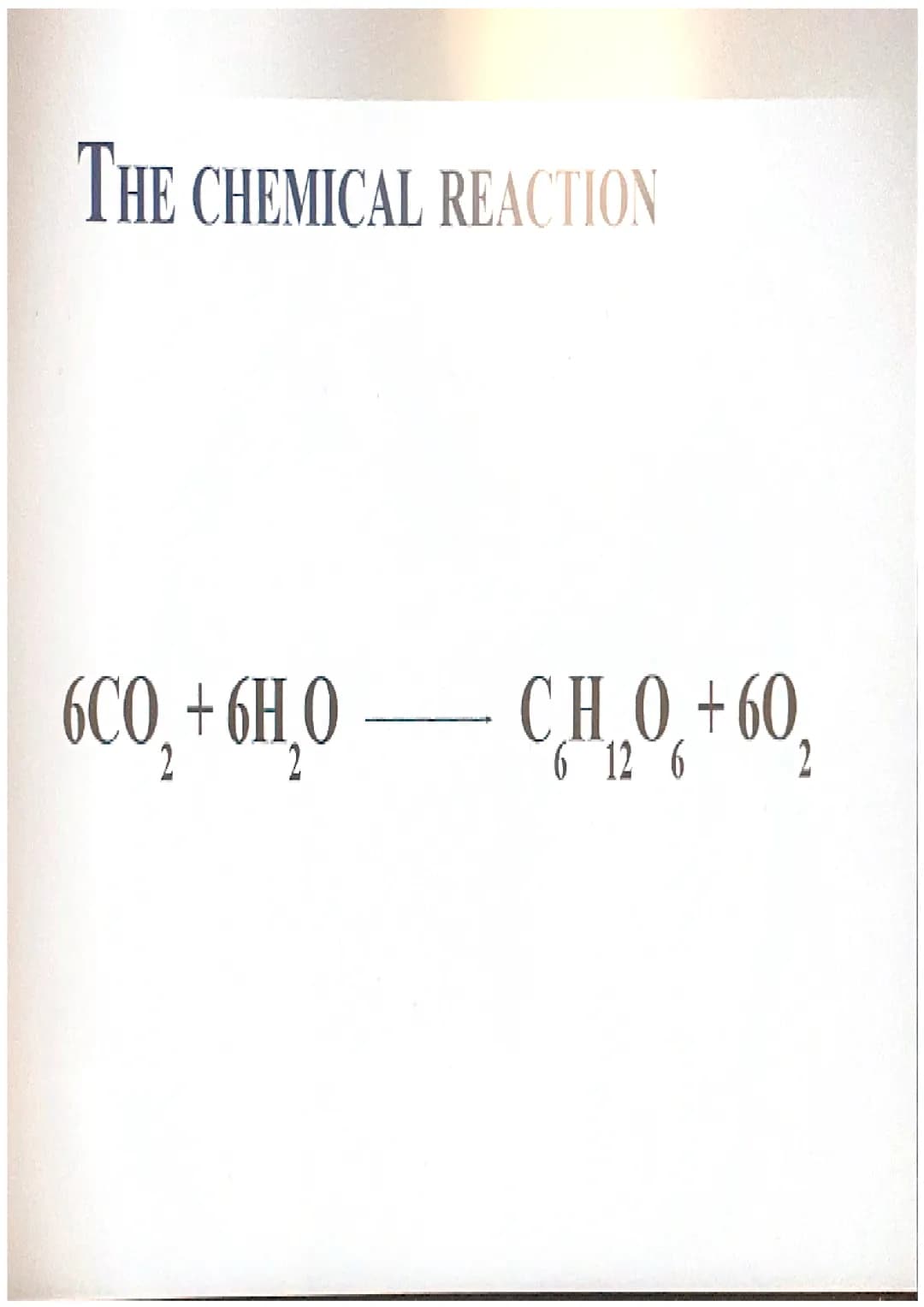
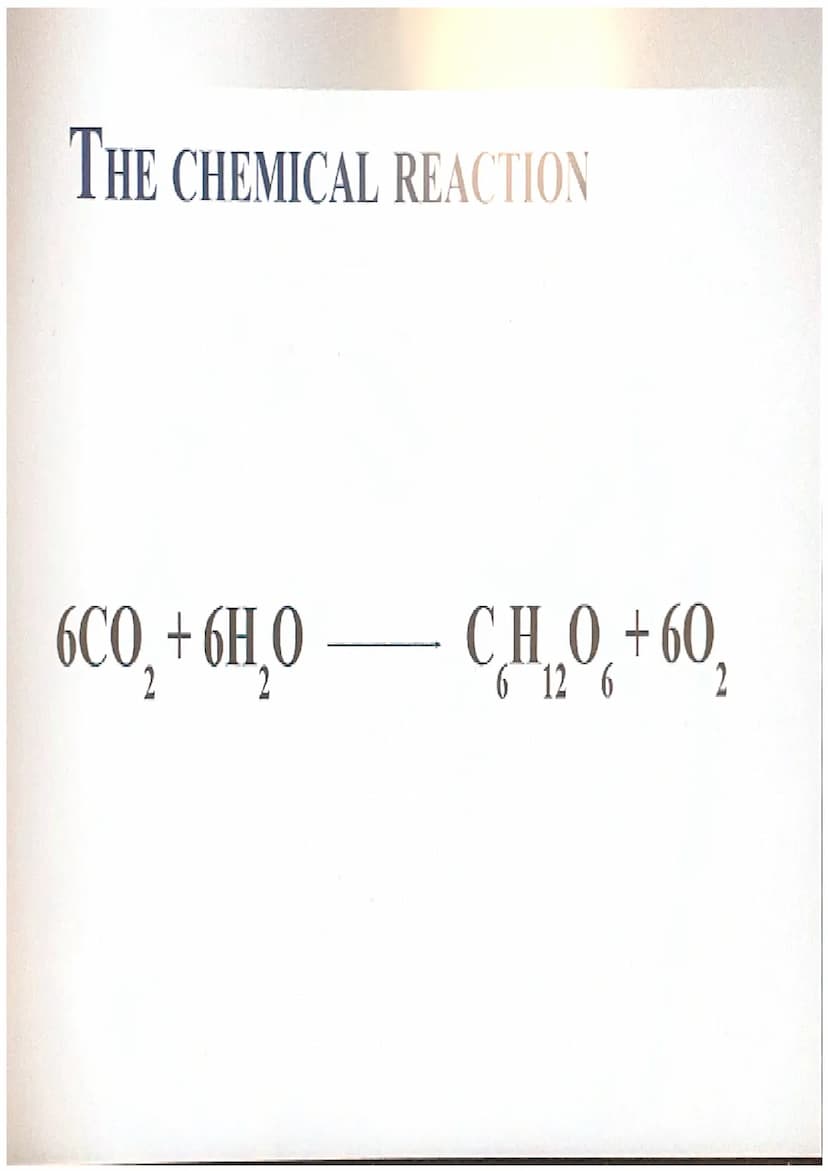
The photosynthesis equation is: 6CO₂ + 6H₂O → C₆H₁₂O₆ + 6O₂
This equation shows that six molecules of carbon dioxide and six molecules of water combine to produce one glucose molecule and six oxygen molecules.
The reaction might look simple, but it actually involves numerous complex steps that occur within specialized plant cells. This chemical transformation requires energy from sunlight to break bonds in the reactants and form new bonds in the products.
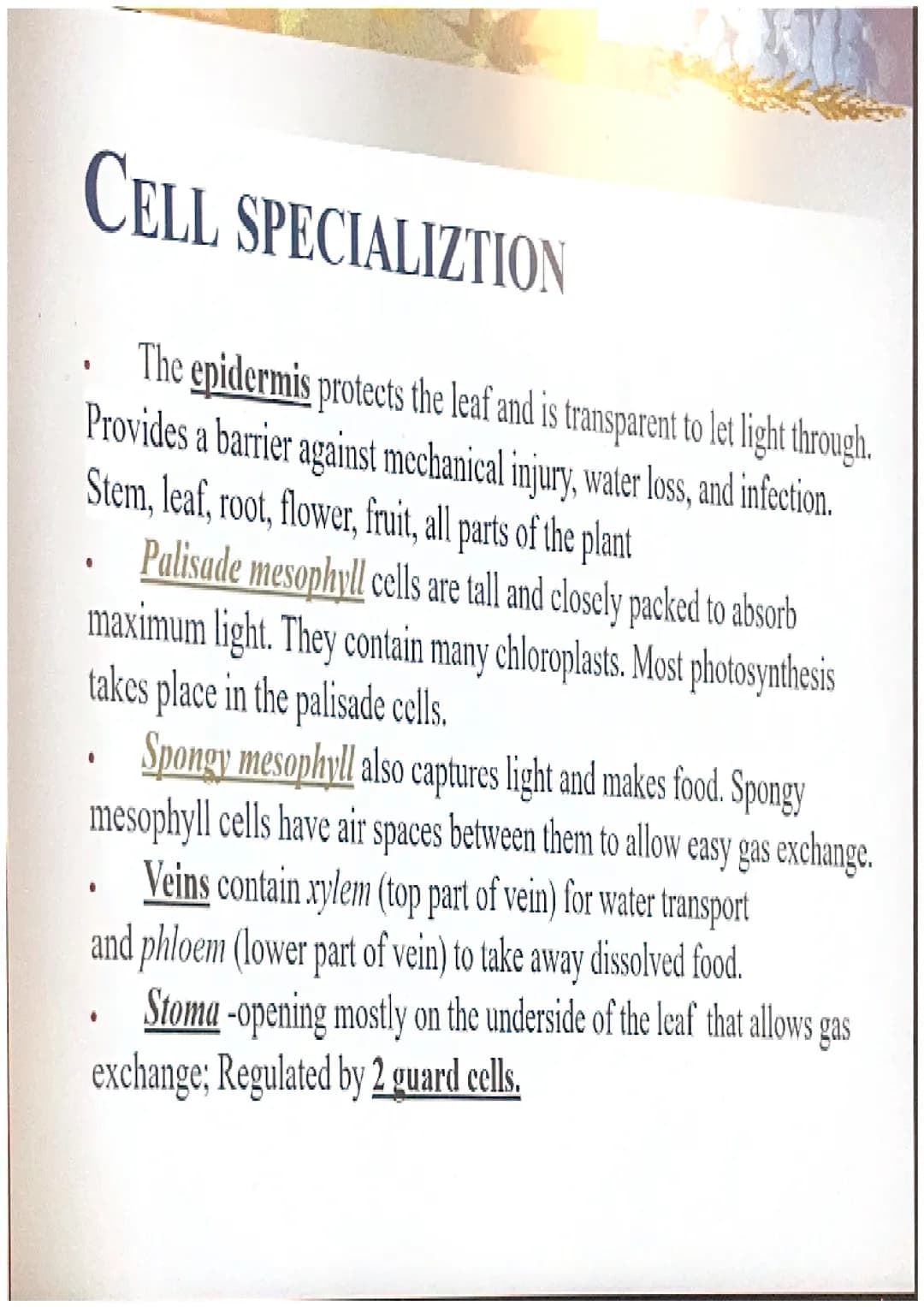
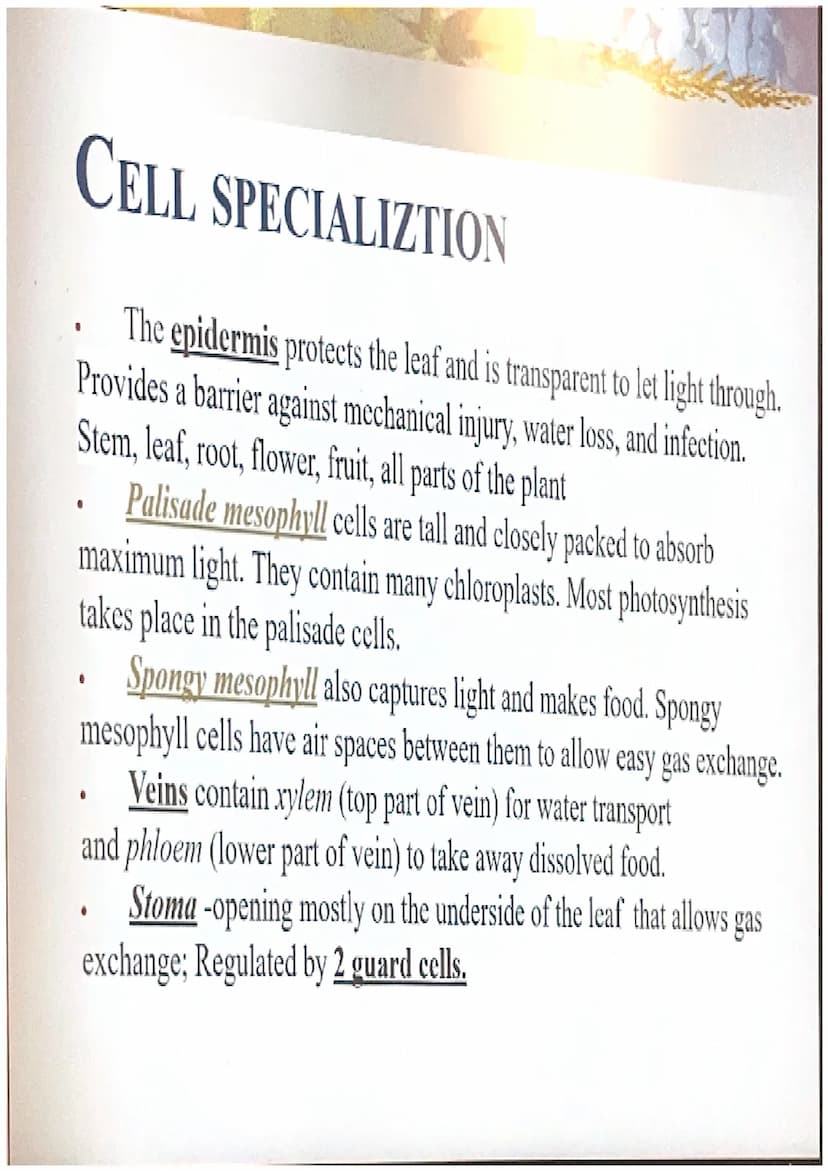
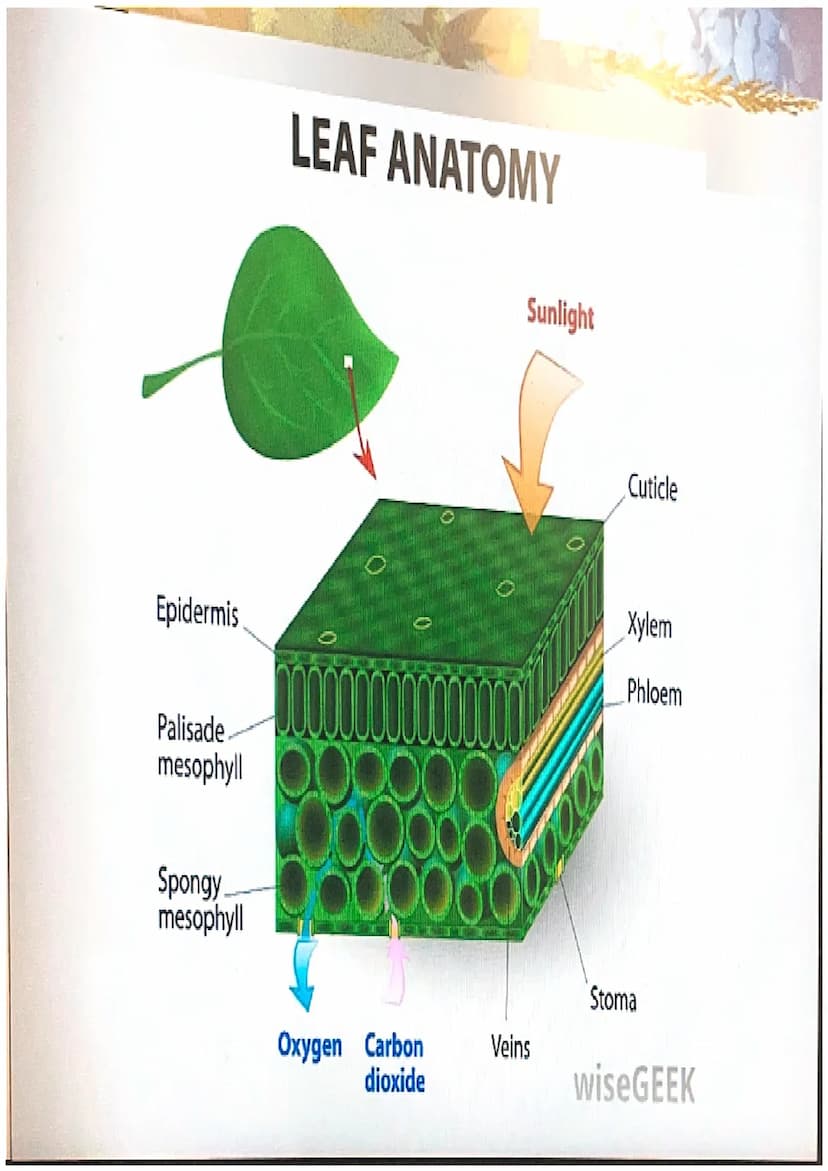
Plants have specialized cells that work together to make photosynthesis possible. The epidermis forms a transparent protective layer that allows light to pass through while preventing water loss and infection.
Palisade mesophyll cells are tall and tightly packed with many chloroplasts, making them perfect for capturing maximum sunlight. Most photosynthesis happens in these cells. Below them, spongy mesophyll cells have air spaces between them that allow gases to move freely.
Veins contain xylem tubes that transport water and phloem tubes that carry dissolved food throughout the plant. Stomata are tiny openings on the leaf's underside controlled by guard cells that regulate gas exchange - letting carbon dioxide in and oxygen out.
Remember: Each specialized cell type has a specific job that contributes to the plant's ability to photosynthesize efficiently!
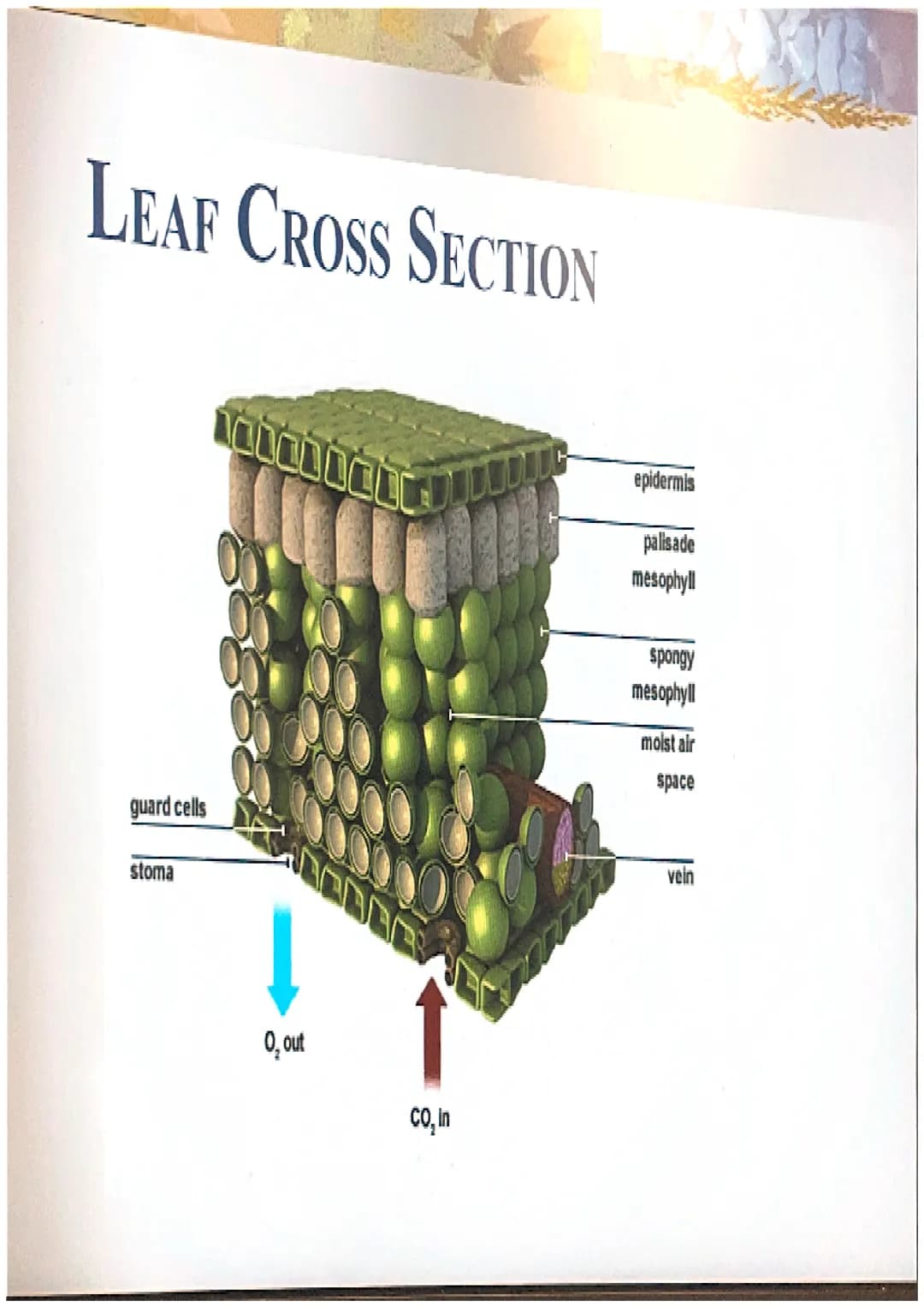
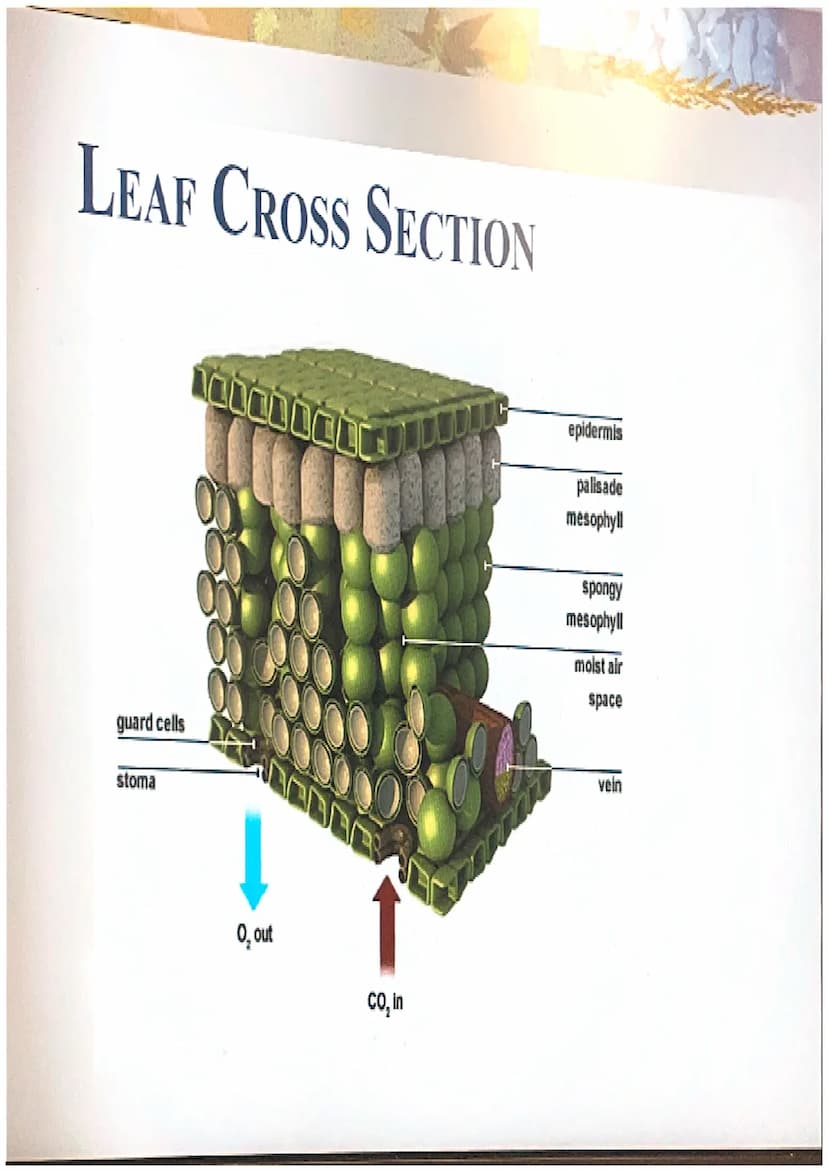
When you look at a leaf cross-section, you can see all the specialized layers working together. The protective epidermis covers the top and bottom surfaces, with the palisade mesophyll directly beneath the upper epidermis.
The spongy mesophyll layer contains irregular-shaped cells with air spaces between them. These spaces connect to the outside air through stomata, which are regulated by curved guard cells that change shape to open or close the pores.
Throughout the leaf, veins carry water and nutrients where they're needed. This entire structure creates the perfect environment for photosynthesis - allowing light to reach chloroplasts while facilitating the exchange of oxygen and carbon dioxide.
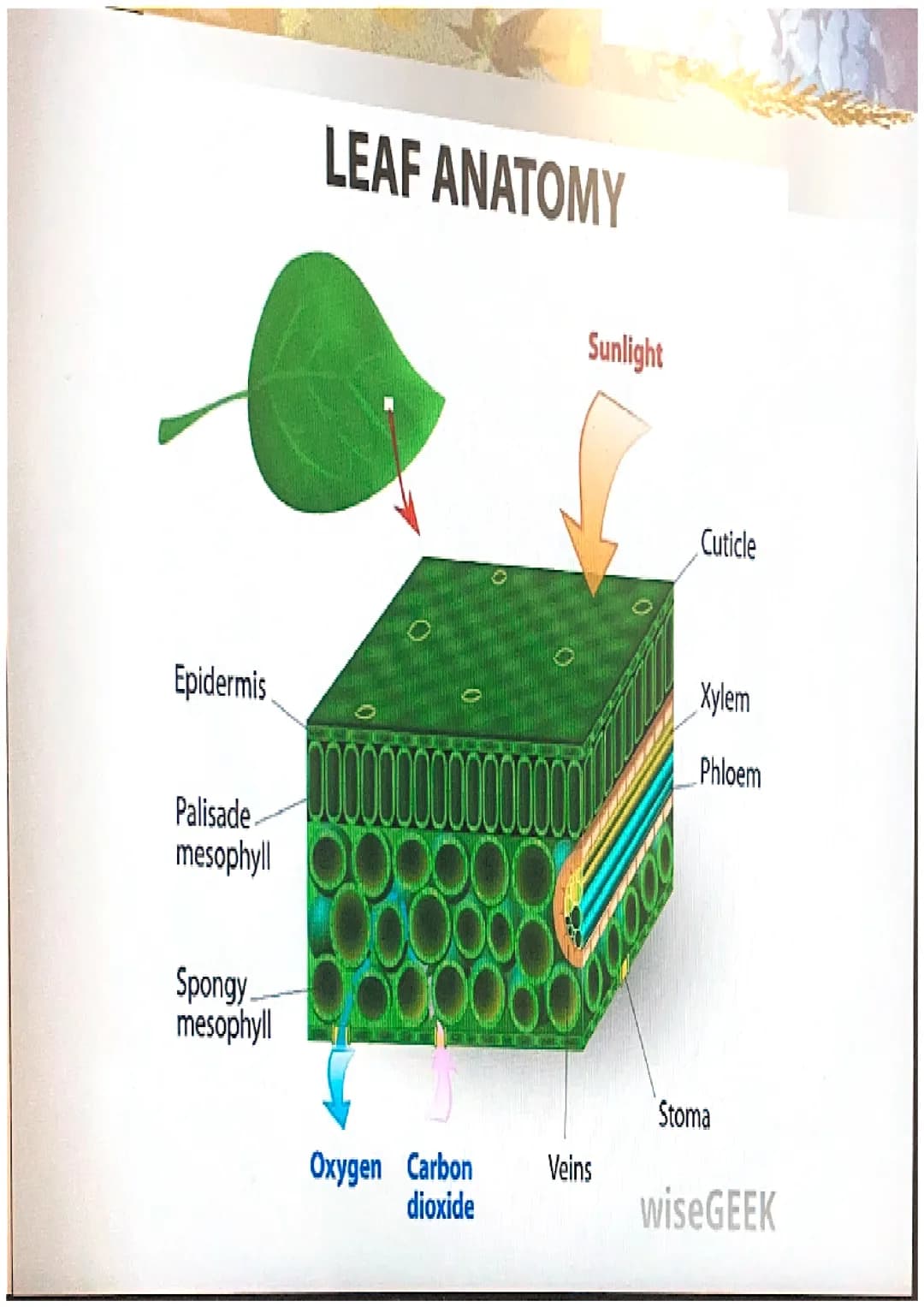
The leaf is a solar panel perfectly designed for capturing sunlight. The waxy cuticle covers the upper epidermis, providing protection while letting light pass through to the palisade mesophyll below, where most photosynthesis occurs.
The spongy mesophyll contains cells with air spaces that allow gases to move easily. Veins run through the leaf, with xylem bringing water up and phloem carrying sugars away to feed the plant.
On the underside, stomata open and close to control the exchange of oxygen and carbon dioxide. This incredible design maximizes light absorption while managing the gases and water needed for photosynthesis.
Think about it: Just like your organs work together to keep you alive, these leaf structures work as a team to keep the plant fed!
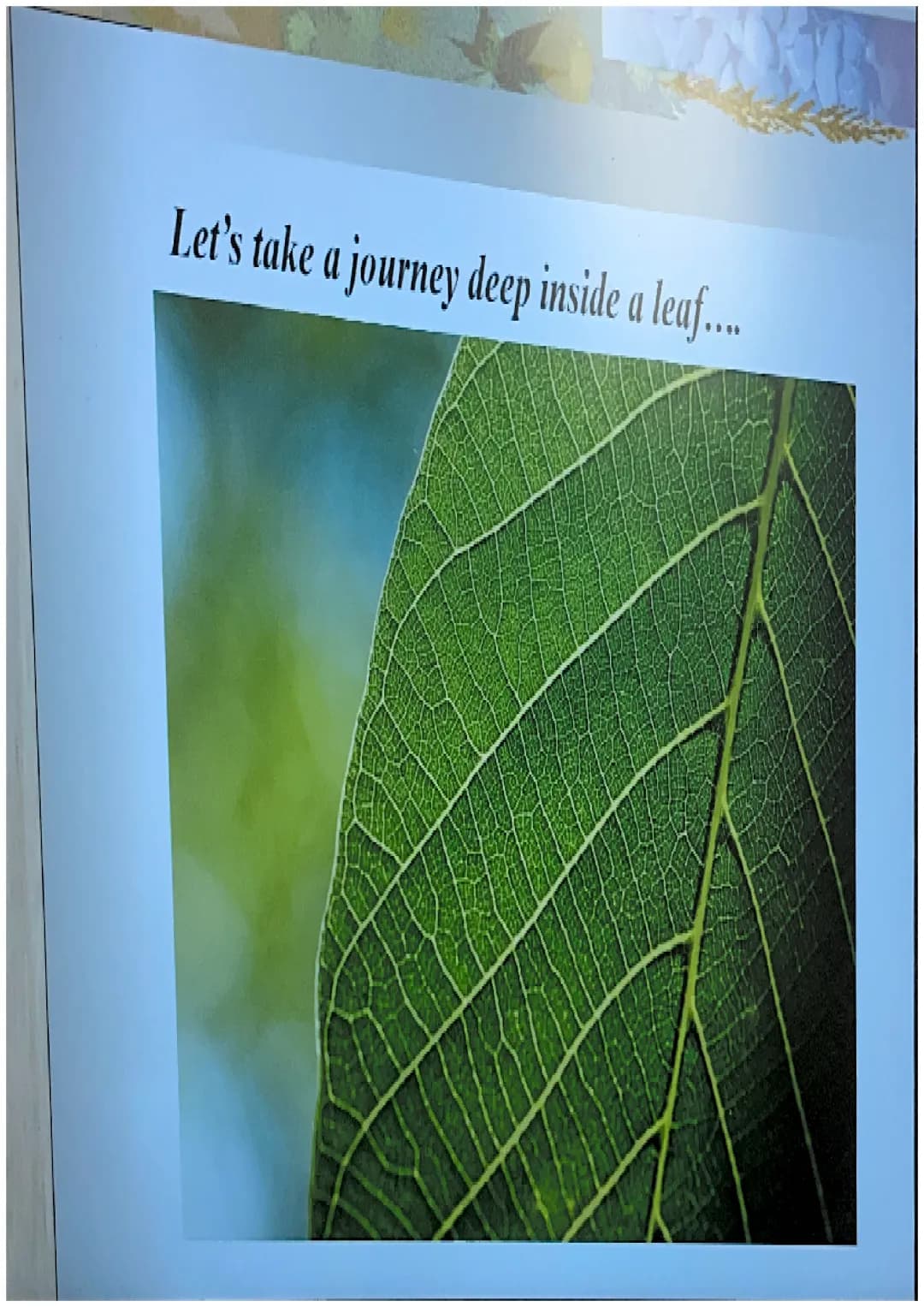
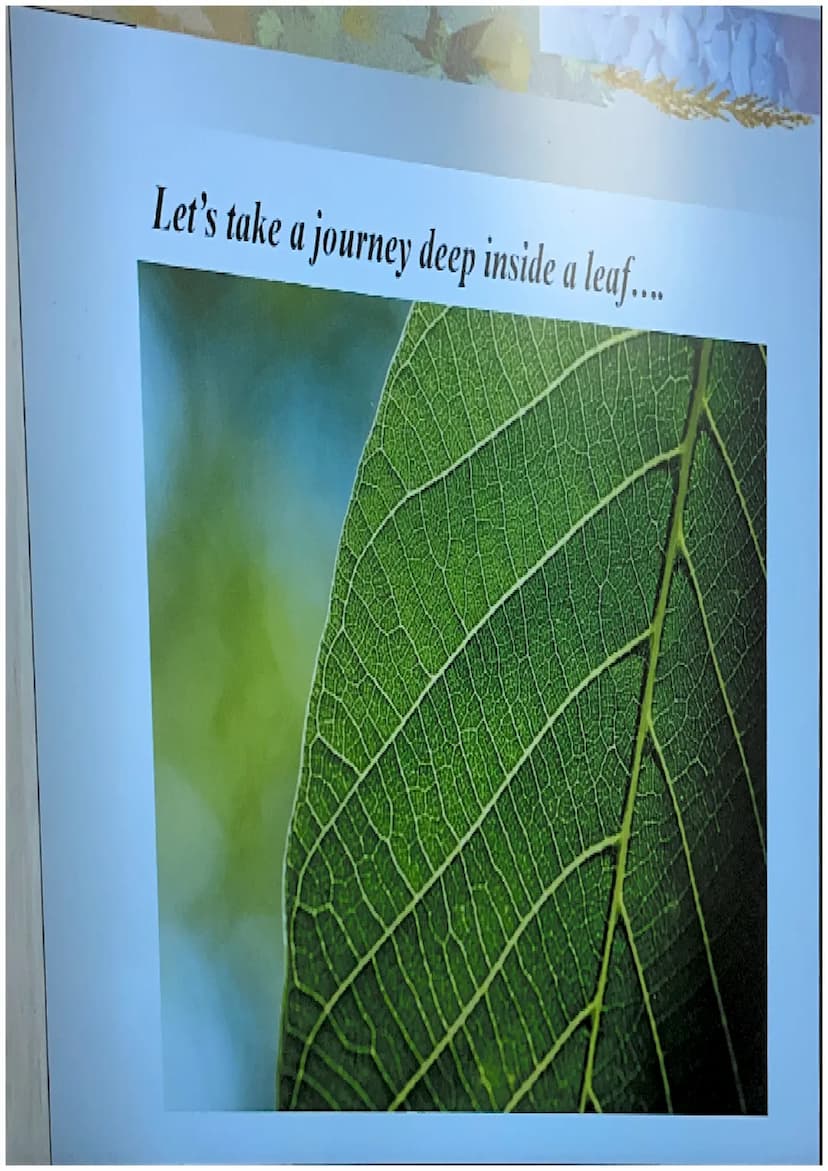
Let's take a journey deep inside a leaf to see where the magic of photosynthesis happens! As we zoom in beyond what we can see with our eyes, we'll discover the cellular structures that make photosynthesis possible.
The leaf's seemingly simple structure actually contains millions of specialized cells with organelles that capture sunlight and transform it into chemical energy. The most important of these organelles is the chloroplast - the powerhouse of photosynthesis.
Exploring the inner workings of a leaf helps us understand how plants have evolved the perfect machinery to harness solar energy - something humans are still trying to replicate with our solar technology!
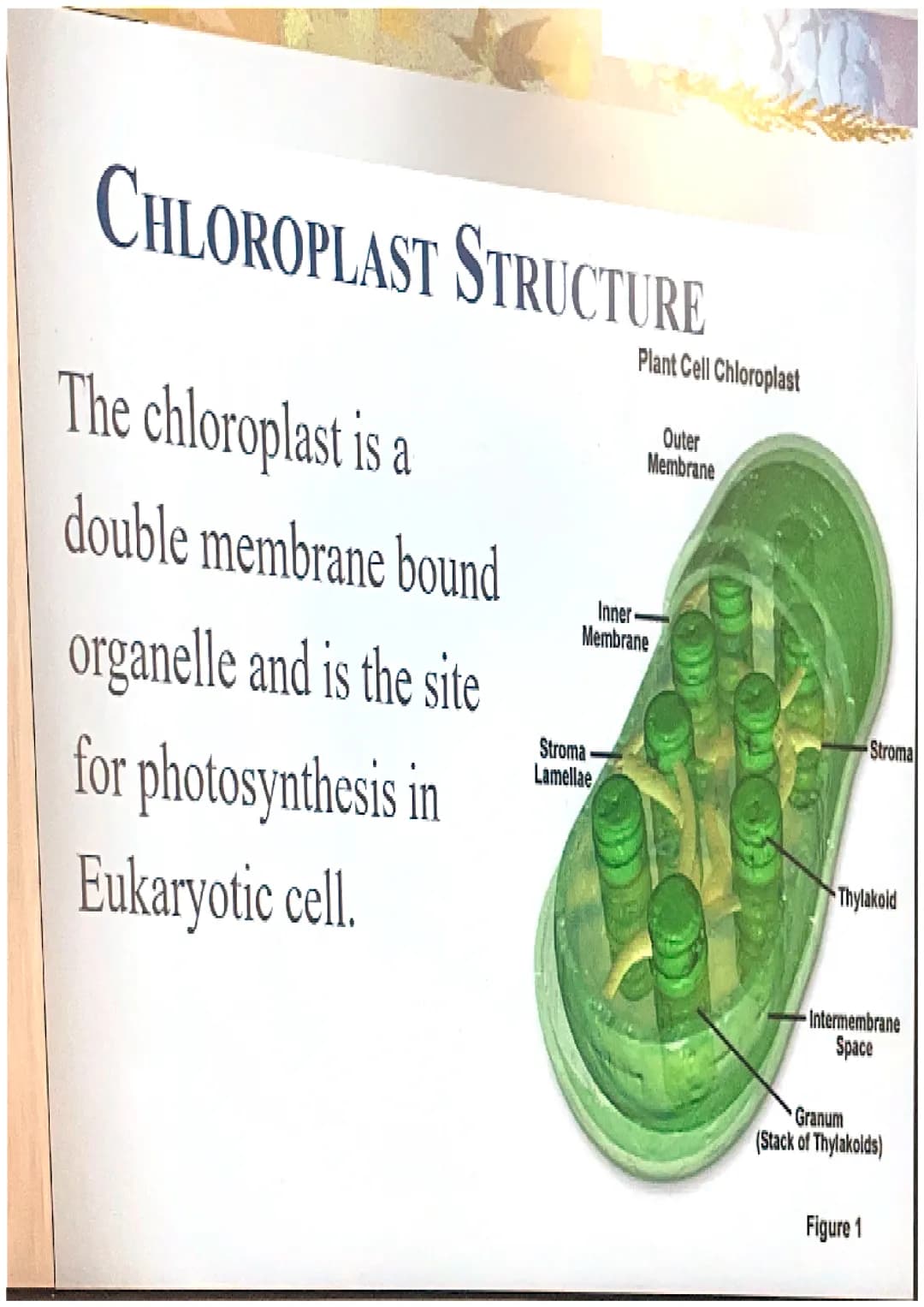
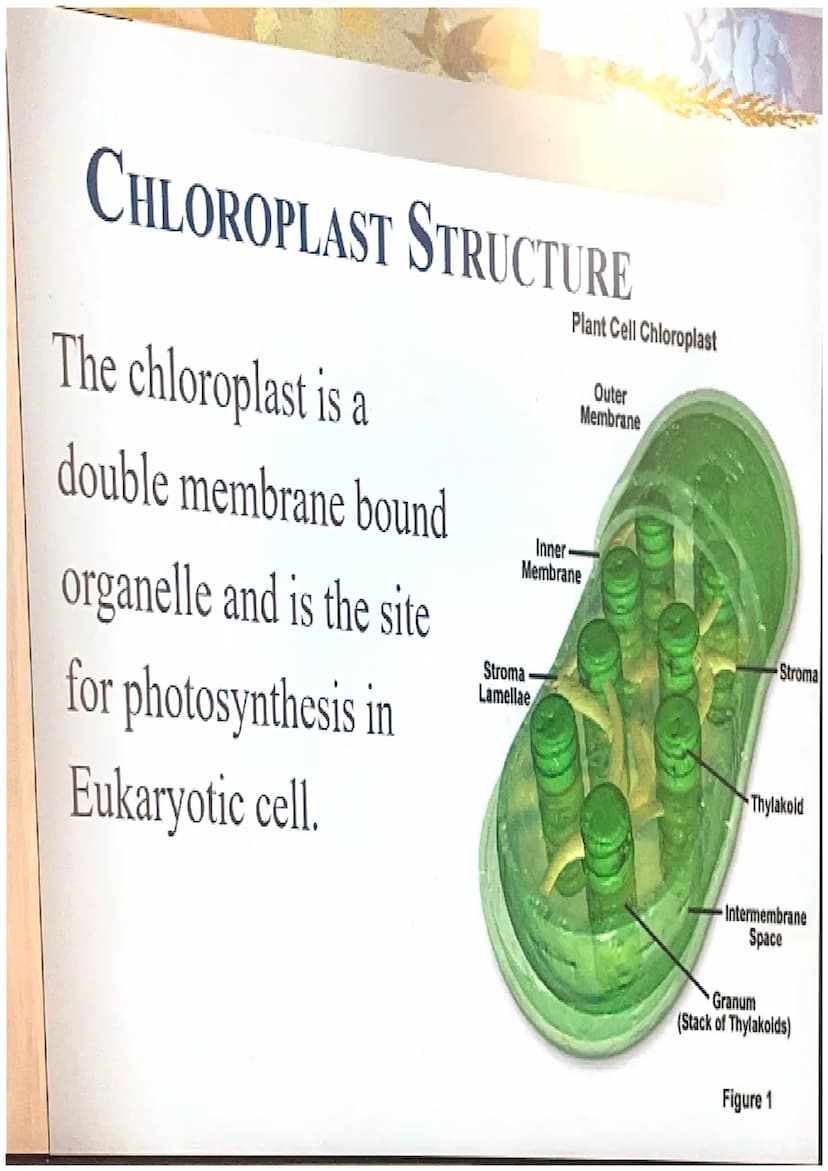
The chloroplast is where photosynthesis actually happens in plant cells. These specialized organelles have a double membrane structure that creates separate compartments for different parts of photosynthesis.
Inside the chloroplast is a fluid-filled space called the stroma. Floating in this stroma are disc-shaped structures called thylakoids, which stack together to form towers called grana.
Think of the chloroplast as a tiny factory: the outer membranes protect everything inside, the thylakoids contain the machinery to capture light energy, and the stroma provides the space where that energy is used to build sugars.
Cool insight: A single leaf cell may contain 20-100 chloroplasts, each working to convert sunlight into food for the plant!
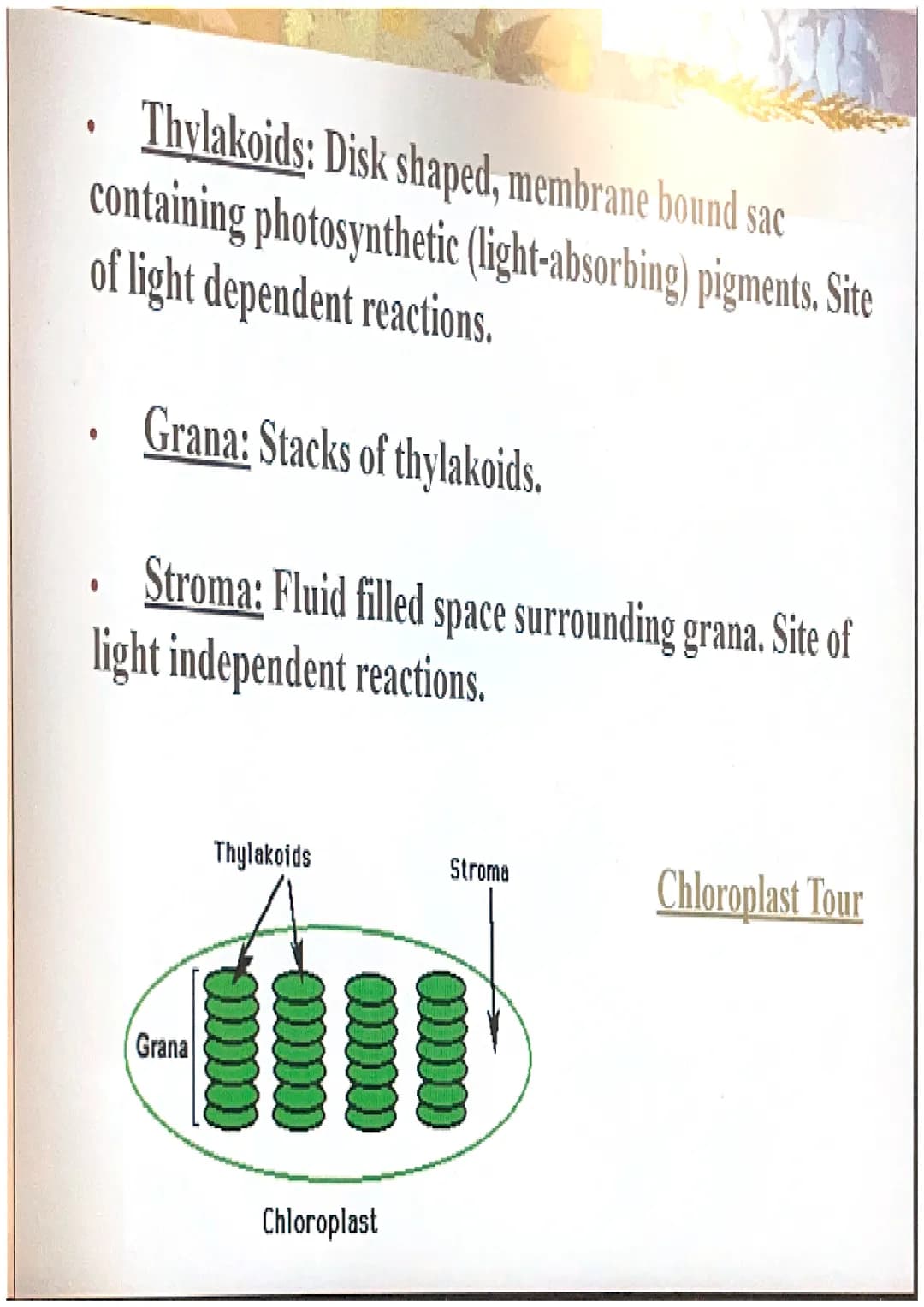
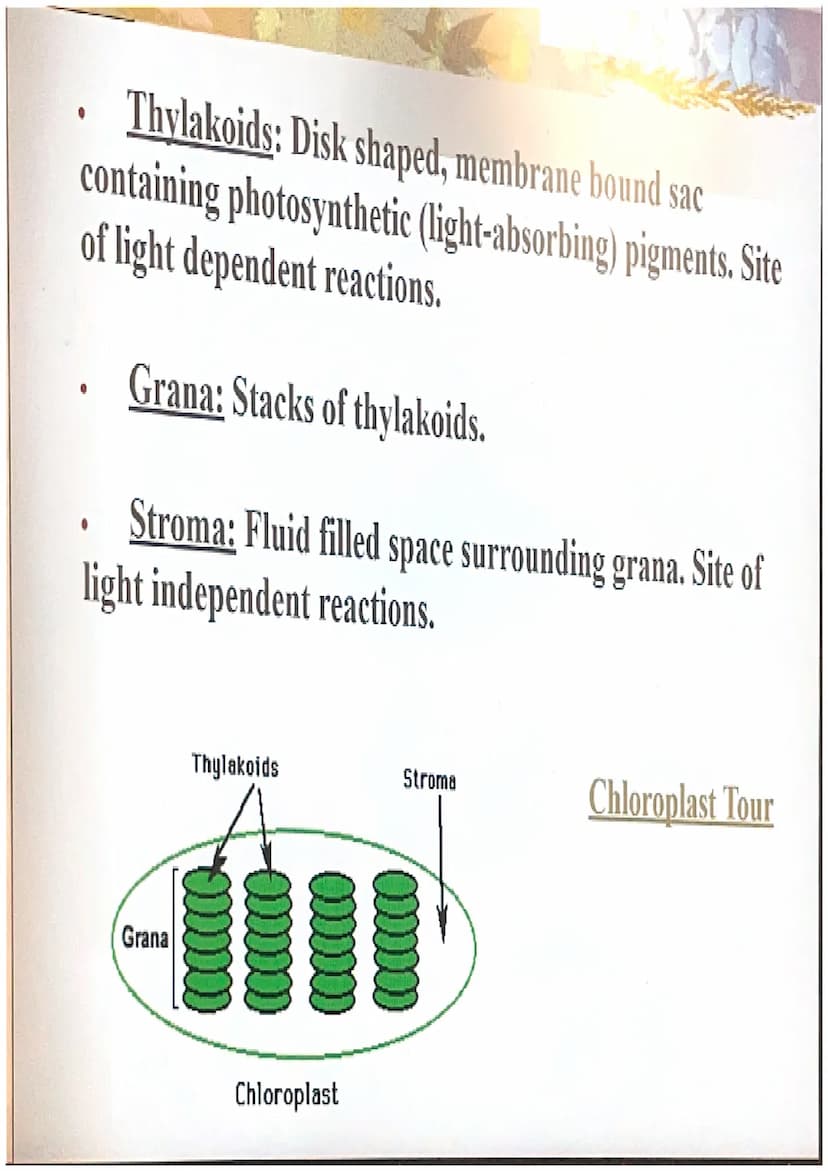
Let's take a closer look at the key parts of a chloroplast where photosynthesis occurs. Thylakoids are disk-shaped, membrane-bound sacs containing light-absorbing pigments. These are where the light-dependent reactions of photosynthesis take place.
Thylakoids stack on top of each other to form grana (like piles of coins). This stacking increases the surface area available for capturing light energy, making photosynthesis more efficient.
Surrounding the grana is the stroma, a fluid-filled space that contains enzymes needed for the light-independent reactions (Calvin Cycle). This is where carbon dioxide is converted into sugar using the energy captured in the thylakoids.
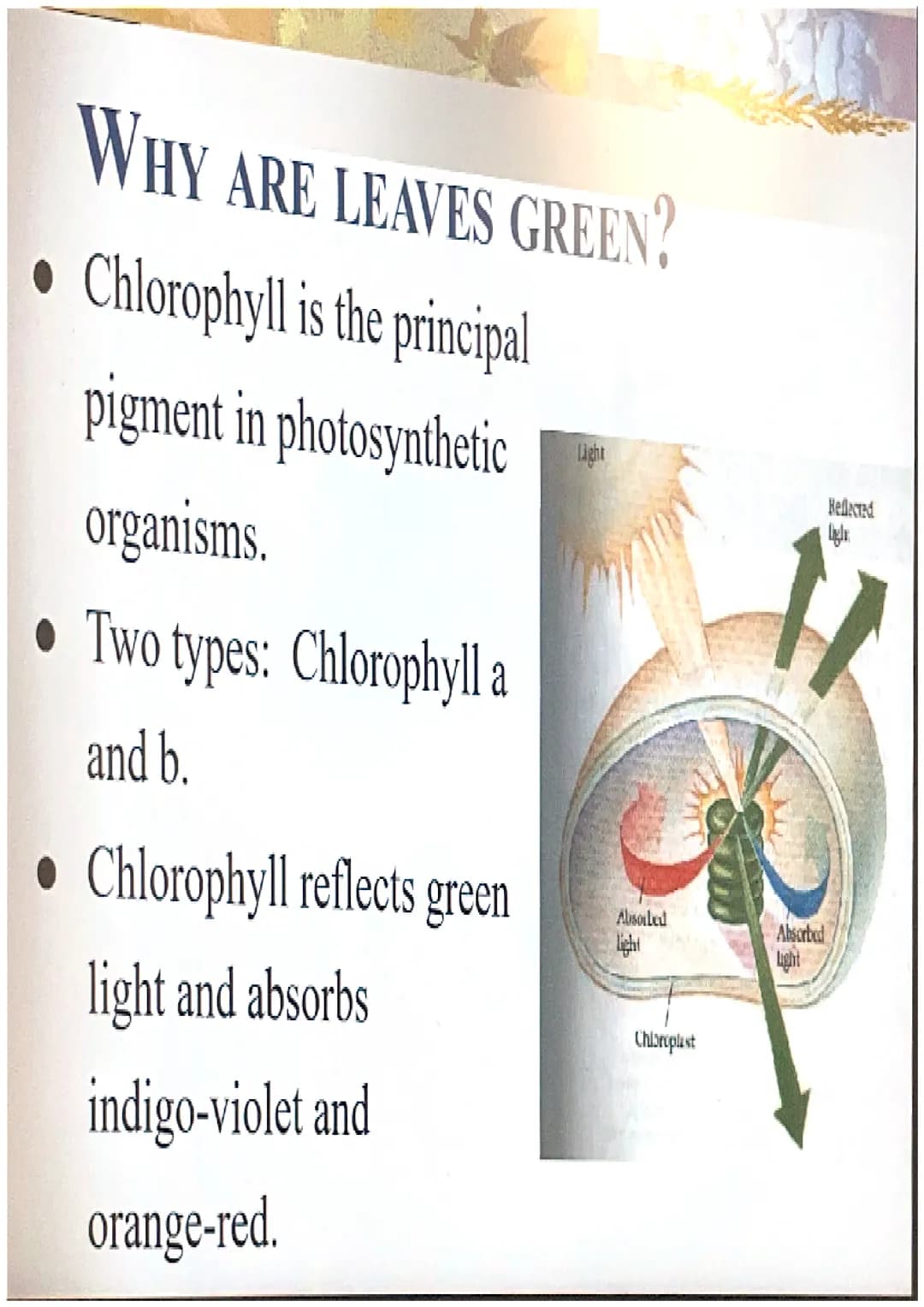
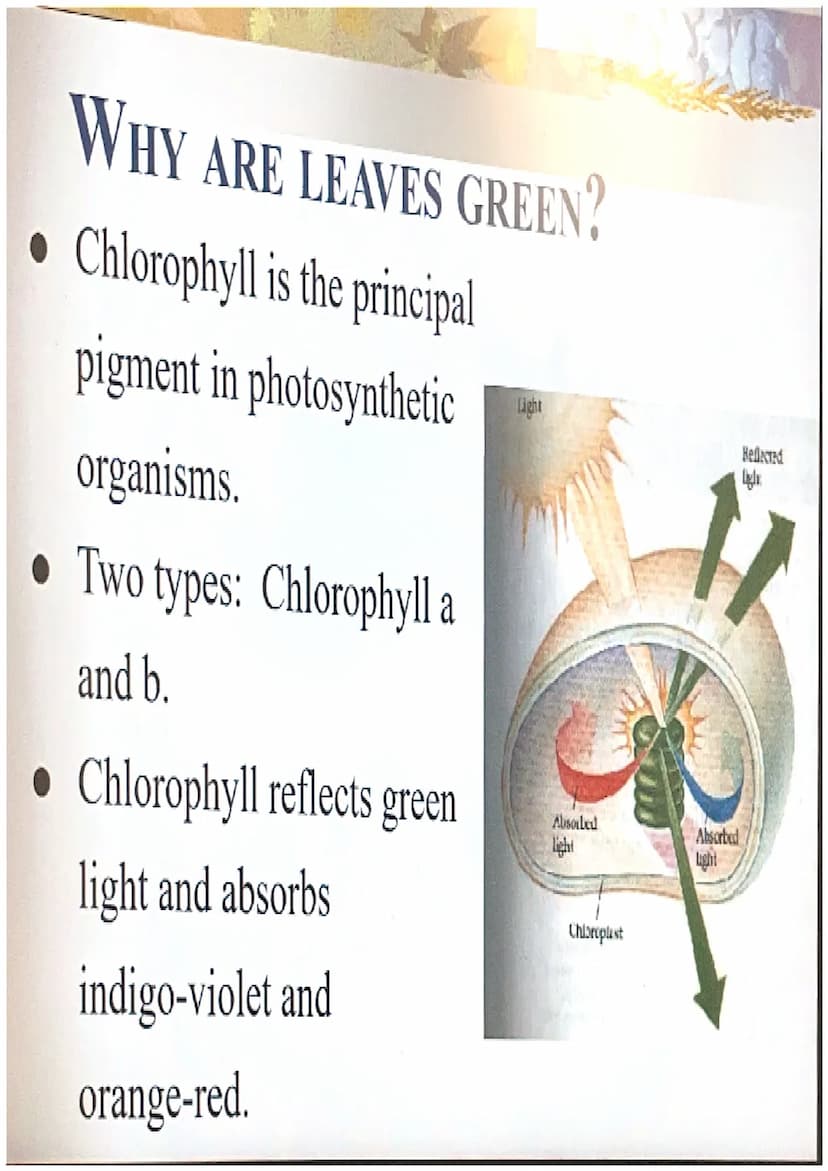
Leaves appear green because of chlorophyll, the principal pigment in photosynthetic organisms. There are two main types - chlorophyll a and chlorophyll b - working together to maximize light absorption.
What makes chlorophyll fascinating is that it absorbs red and blue light wavelengths really well, but it reflects green light. When sunlight hits a leaf, the green wavelengths bounce back to our eyes while the other colors are captured for photosynthesis.
This selective absorption is crucial for photosynthesis - the plant uses the energy from the absorbed wavelengths to power the chemical reactions that produce sugar.
Mind-blowing fact: If plants absorbed green light instead of reflecting it, leaves would appear purplish-red instead of green!
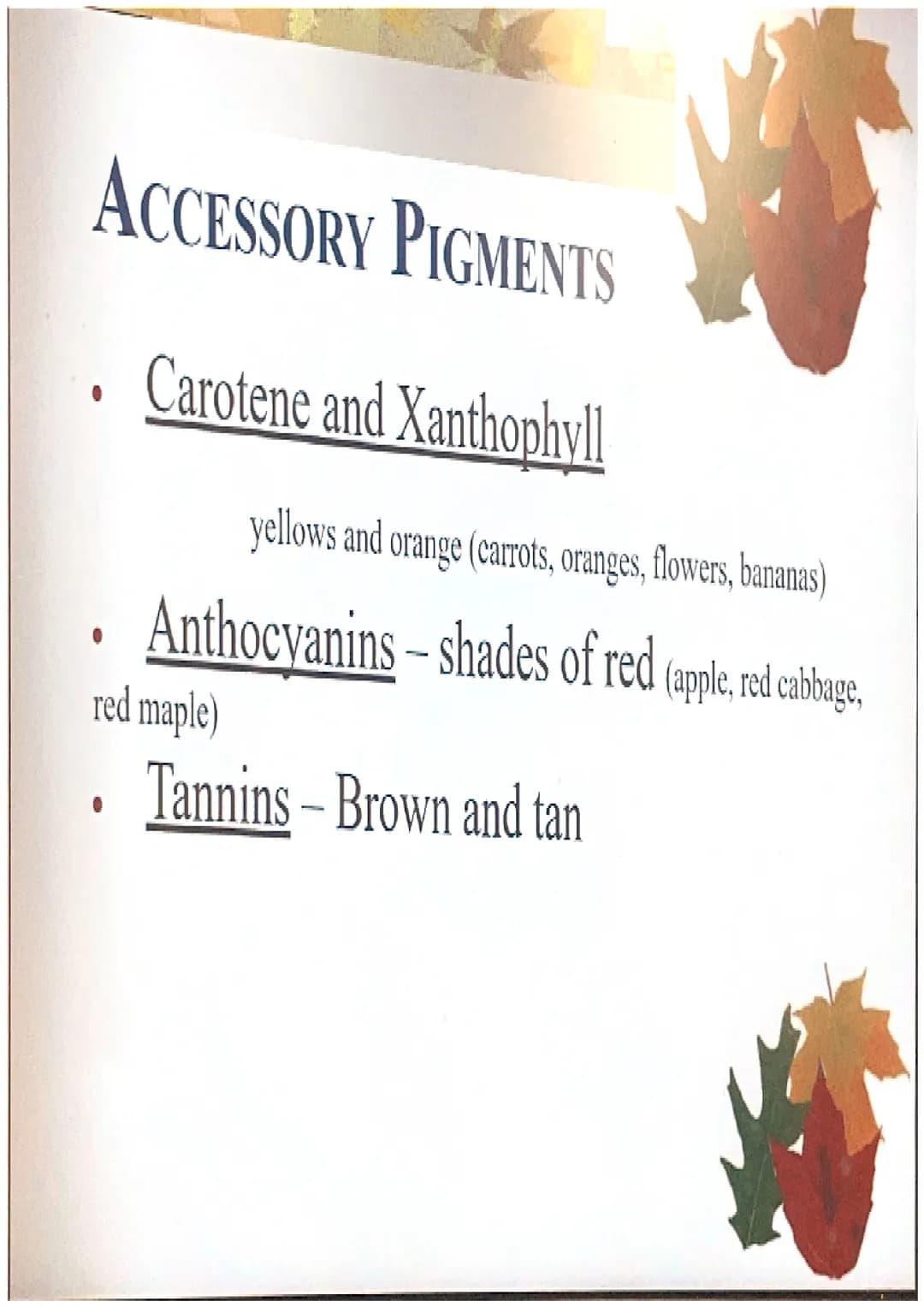
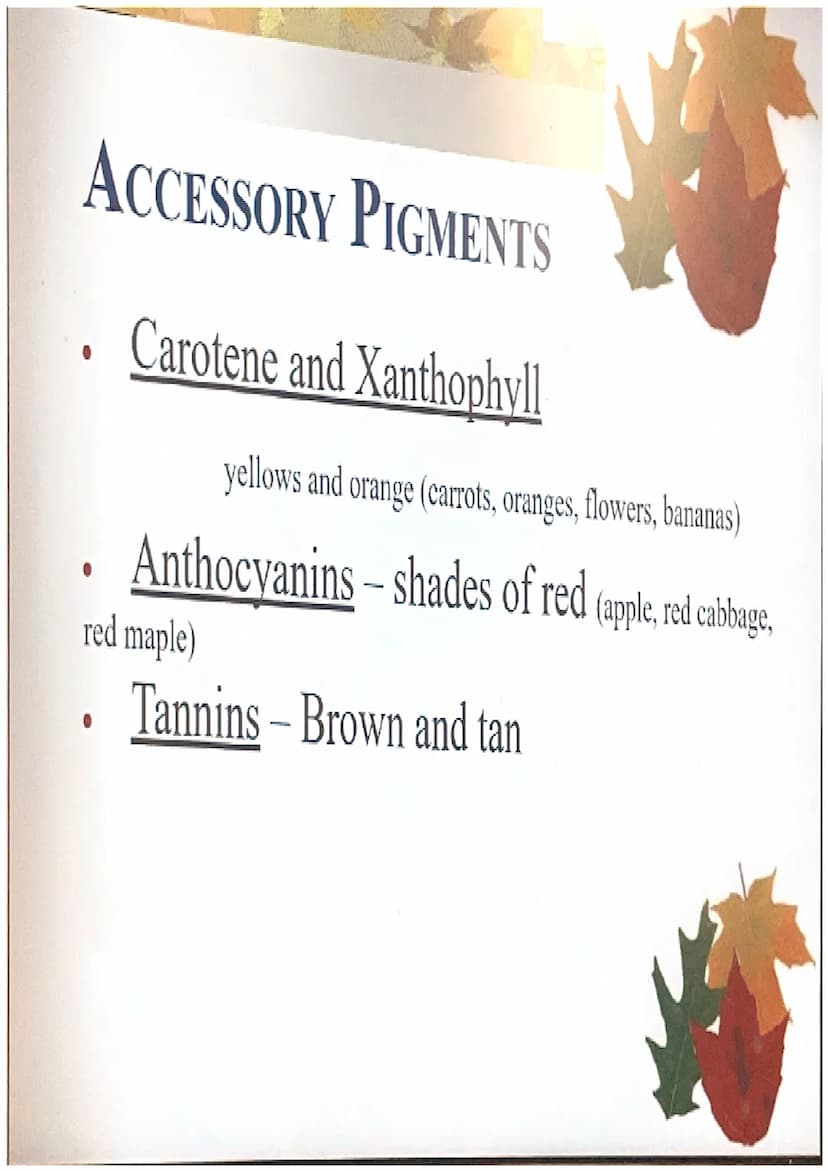
Plants have more than just chlorophyll to help them capture light energy. Accessory pigments expand the range of light wavelengths a plant can use for photosynthesis.
Carotenes and xanthophylls give carrots, oranges, bananas, and many flowers their yellow and orange colors. These pigments capture blue and green-blue light wavelengths that chlorophyll doesn't absorb well.
Anthocyanins produce beautiful shades of red in apples, red cabbage, and maple leaves, especially in autumn. Tannins contribute brown and tan colors to plant tissues. Together, these pigments help plants make the most of available light throughout the changing seasons.
Our AI companion is specifically built for the needs of students. Based on the millions of content pieces we have on the platform we can provide truly meaningful and relevant answers to students. But its not only about answers, the companion is even more about guiding students through their daily learning challenges, with personalised study plans, quizzes or content pieces in the chat and 100% personalisation based on the students skills and developments.
You can download the app in the Google Play Store and in the Apple App Store.
That's right! Enjoy free access to study content, connect with fellow students, and get instant help – all at your fingertips.
"Some organisms consume other organisms to obtain organic molecules these are called heterotrophs. Organisms that can produce their own organic molecules from inorganic molecules are called autotrophs."
 AP Biology
App Store
Google Play
The app is very easy to use and well designed. I have found everything I was looking for so far and have been able to learn a lot from the presentations! I will definitely use the app for a class assignment! And of course it also helps a lot as an inspiration.
Stefan S
iOS user
This app is really great. There are so many study notes and help [...]. My problem subject is French, for example, and the app has so many options for help. Thanks to this app, I have improved my French. I would recommend it to anyone.
Samantha Klich
Android user
Wow, I am really amazed. I just tried the app because I've seen it advertised many times and was absolutely stunned. This app is THE HELP you want for school and above all, it offers so many things, such as workouts and fact sheets, which have been VERY helpful to me personally.
Anna
iOS user
I think it’s very much worth it and you’ll end up using it a lot once you get the hang of it and even after looking at others notes you can still ask your Artificial intelligence buddy the question and ask to simplify it if you still don’t get it!!! In the end I think it’s worth it 😊👍 ⚠️Also DID I MENTION ITS FREEE YOU DON’T HAVE TO PAY FOR ANYTHING AND STILL GET YOUR GRADES IN PERFECTLY❗️❗️⚠️
Thomas R
iOS user
Knowunity is the BEST app I’ve used in a minute. This is not an ai review or anything this is genuinely coming from a 7th grade student (I know 2011 im young) but dude this app is a 10/10 i have maintained a 3.8 gpa and have plenty of time for gaming. I love it and my mom is just happy I got good grades
Brad T
Android user
Not only did it help me find the answer but it also showed me alternative ways to solve it. I was horrible in math and science but now I have an a in both subjects. Thanks for the help🤍🤍
David K
iOS user
The app's just great! All I have to do is enter the topic in the search bar and I get the response real fast. I don't have to watch 10 YouTube videos to understand something, so I'm saving my time. Highly recommended!
Sudenaz Ocak
Android user
In school I was really bad at maths but thanks to the app, I am doing better now. I am so grateful that you made the app.
Greenlight Bonnie
Android user
I found this app a couple years ago and it has only gotten better since then. I really love it because it can help with written questions and photo questions. Also, it can find study guides that other people have made as well as flashcard sets and practice tests. The free version is also amazing for students who might not be able to afford it. Would 100% recommend
Aubrey
iOS user
Best app if you're in Highschool or Junior high. I have been using this app for 2 school years and it's the best, it's good if you don't have anyone to help you with school work.😋🩷🎀
Marco B
iOS user
THE QUIZES AND FLASHCARDS ARE SO USEFUL AND I LOVE Knowunity AI. IT ALSO IS LITREALLY LIKE CHATGPT BUT SMARTER!! HELPED ME WITH MY MASCARA PROBLEMS TOO!! AS WELL AS MY REAL SUBJECTS ! DUHHH 😍😁😲🤑💗✨🎀😮
Elisha
iOS user
This app is phenomenal down to the correct info and the various topics you can study! I greatly recommend it for people who struggle with procrastination and those who need homework help. It has been perfectly accurate for world 1 history as far as I’ve seen! Geometry too!
Paul T
iOS user
The app is very easy to use and well designed. I have found everything I was looking for so far and have been able to learn a lot from the presentations! I will definitely use the app for a class assignment! And of course it also helps a lot as an inspiration.
Stefan S
iOS user
This app is really great. There are so many study notes and help [...]. My problem subject is French, for example, and the app has so many options for help. Thanks to this app, I have improved my French. I would recommend it to anyone.
Samantha Klich
Android user
Wow, I am really amazed. I just tried the app because I've seen it advertised many times and was absolutely stunned. This app is THE HELP you want for school and above all, it offers so many things, such as workouts and fact sheets, which have been VERY helpful to me personally.
Anna
iOS user
I think it’s very much worth it and you’ll end up using it a lot once you get the hang of it and even after looking at others notes you can still ask your Artificial intelligence buddy the question and ask to simplify it if you still don’t get it!!! In the end I think it’s worth it 😊👍 ⚠️Also DID I MENTION ITS FREEE YOU DON’T HAVE TO PAY FOR ANYTHING AND STILL GET YOUR GRADES IN PERFECTLY❗️❗️⚠️
Thomas R
iOS user
Knowunity is the BEST app I’ve used in a minute. This is not an ai review or anything this is genuinely coming from a 7th grade student (I know 2011 im young) but dude this app is a 10/10 i have maintained a 3.8 gpa and have plenty of time for gaming. I love it and my mom is just happy I got good grades
Brad T
Android user
Not only did it help me find the answer but it also showed me alternative ways to solve it. I was horrible in math and science but now I have an a in both subjects. Thanks for the help🤍🤍
David K
iOS user
The app's just great! All I have to do is enter the topic in the search bar and I get the response real fast. I don't have to watch 10 YouTube videos to understand something, so I'm saving my time. Highly recommended!
Sudenaz Ocak
Android user
In school I was really bad at maths but thanks to the app, I am doing better now. I am so grateful that you made the app.
Greenlight Bonnie
Android user
I found this app a couple years ago and it has only gotten better since then. I really love it because it can help with written questions and photo questions. Also, it can find study guides that other people have made as well as flashcard sets and practice tests. The free version is also amazing for students who might not be able to afford it. Would 100% recommend
Aubrey
iOS user
Best app if you're in Highschool or Junior high. I have been using this app for 2 school years and it's the best, it's good if you don't have anyone to help you with school work.😋🩷🎀
Marco B
iOS user
THE QUIZES AND FLASHCARDS ARE SO USEFUL AND I LOVE Knowunity AI. IT ALSO IS LITREALLY LIKE CHATGPT BUT SMARTER!! HELPED ME WITH MY MASCARA PROBLEMS TOO!! AS WELL AS MY REAL SUBJECTS ! DUHHH 😍😁😲🤑💗✨🎀😮
Elisha
iOS user
This app is phenomenal down to the correct info and the various topics you can study! I greatly recommend it for people who struggle with procrastination and those who need homework help. It has been perfectly accurate for world 1 history as far as I’ve seen! Geometry too!
Paul T
iOS user
Danielle Paddock
@daniellepaddock_buyj
Photosynthesis is the incredible process plants use to make their own food using sunlight. This chemical reaction transforms carbon dioxide and water into glucose and oxygen, providing energy for plants and oxygen for us to breathe. Let's explore how this... Show more
Access to all documents
Improve your grades
Join milions of students
Photosynthesis is the chemical process that converts carbon dioxide and water into glucose and oxygen. This transformation is what allows plants to create their own food using energy from the sun.
Think of photosynthesis as the ultimate recycling system - plants take in carbon dioxide (which we exhale) and release oxygen (which we need to breathe). The glucose they produce becomes their energy source for growth and survival.
Fun Fact: Every breath you take contains oxygen that was likely produced by photosynthesis in plants!
Access to all documents
Improve your grades
Join milions of students
The photosynthesis equation is: 6CO₂ + 6H₂O → C₆H₁₂O₆ + 6O₂
This equation shows that six molecules of carbon dioxide and six molecules of water combine to produce one glucose molecule and six oxygen molecules.
The reaction might look simple, but it actually involves numerous complex steps that occur within specialized plant cells. This chemical transformation requires energy from sunlight to break bonds in the reactants and form new bonds in the products.
Access to all documents
Improve your grades
Join milions of students
Plants have specialized cells that work together to make photosynthesis possible. The epidermis forms a transparent protective layer that allows light to pass through while preventing water loss and infection.
Palisade mesophyll cells are tall and tightly packed with many chloroplasts, making them perfect for capturing maximum sunlight. Most photosynthesis happens in these cells. Below them, spongy mesophyll cells have air spaces between them that allow gases to move freely.
Veins contain xylem tubes that transport water and phloem tubes that carry dissolved food throughout the plant. Stomata are tiny openings on the leaf's underside controlled by guard cells that regulate gas exchange - letting carbon dioxide in and oxygen out.
Remember: Each specialized cell type has a specific job that contributes to the plant's ability to photosynthesize efficiently!
Access to all documents
Improve your grades
Join milions of students
When you look at a leaf cross-section, you can see all the specialized layers working together. The protective epidermis covers the top and bottom surfaces, with the palisade mesophyll directly beneath the upper epidermis.
The spongy mesophyll layer contains irregular-shaped cells with air spaces between them. These spaces connect to the outside air through stomata, which are regulated by curved guard cells that change shape to open or close the pores.
Throughout the leaf, veins carry water and nutrients where they're needed. This entire structure creates the perfect environment for photosynthesis - allowing light to reach chloroplasts while facilitating the exchange of oxygen and carbon dioxide.
Access to all documents
Improve your grades
Join milions of students
The leaf is a solar panel perfectly designed for capturing sunlight. The waxy cuticle covers the upper epidermis, providing protection while letting light pass through to the palisade mesophyll below, where most photosynthesis occurs.
The spongy mesophyll contains cells with air spaces that allow gases to move easily. Veins run through the leaf, with xylem bringing water up and phloem carrying sugars away to feed the plant.
On the underside, stomata open and close to control the exchange of oxygen and carbon dioxide. This incredible design maximizes light absorption while managing the gases and water needed for photosynthesis.
Think about it: Just like your organs work together to keep you alive, these leaf structures work as a team to keep the plant fed!
Access to all documents
Improve your grades
Join milions of students
Let's take a journey deep inside a leaf to see where the magic of photosynthesis happens! As we zoom in beyond what we can see with our eyes, we'll discover the cellular structures that make photosynthesis possible.
The leaf's seemingly simple structure actually contains millions of specialized cells with organelles that capture sunlight and transform it into chemical energy. The most important of these organelles is the chloroplast - the powerhouse of photosynthesis.
Exploring the inner workings of a leaf helps us understand how plants have evolved the perfect machinery to harness solar energy - something humans are still trying to replicate with our solar technology!
Access to all documents
Improve your grades
Join milions of students
The chloroplast is where photosynthesis actually happens in plant cells. These specialized organelles have a double membrane structure that creates separate compartments for different parts of photosynthesis.
Inside the chloroplast is a fluid-filled space called the stroma. Floating in this stroma are disc-shaped structures called thylakoids, which stack together to form towers called grana.
Think of the chloroplast as a tiny factory: the outer membranes protect everything inside, the thylakoids contain the machinery to capture light energy, and the stroma provides the space where that energy is used to build sugars.
Cool insight: A single leaf cell may contain 20-100 chloroplasts, each working to convert sunlight into food for the plant!
Access to all documents
Improve your grades
Join milions of students
Let's take a closer look at the key parts of a chloroplast where photosynthesis occurs. Thylakoids are disk-shaped, membrane-bound sacs containing light-absorbing pigments. These are where the light-dependent reactions of photosynthesis take place.
Thylakoids stack on top of each other to form grana (like piles of coins). This stacking increases the surface area available for capturing light energy, making photosynthesis more efficient.
Surrounding the grana is the stroma, a fluid-filled space that contains enzymes needed for the light-independent reactions (Calvin Cycle). This is where carbon dioxide is converted into sugar using the energy captured in the thylakoids.
Access to all documents
Improve your grades
Join milions of students
Leaves appear green because of chlorophyll, the principal pigment in photosynthetic organisms. There are two main types - chlorophyll a and chlorophyll b - working together to maximize light absorption.
What makes chlorophyll fascinating is that it absorbs red and blue light wavelengths really well, but it reflects green light. When sunlight hits a leaf, the green wavelengths bounce back to our eyes while the other colors are captured for photosynthesis.
This selective absorption is crucial for photosynthesis - the plant uses the energy from the absorbed wavelengths to power the chemical reactions that produce sugar.
Mind-blowing fact: If plants absorbed green light instead of reflecting it, leaves would appear purplish-red instead of green!
Access to all documents
Improve your grades
Join milions of students
Plants have more than just chlorophyll to help them capture light energy. Accessory pigments expand the range of light wavelengths a plant can use for photosynthesis.
Carotenes and xanthophylls give carrots, oranges, bananas, and many flowers their yellow and orange colors. These pigments capture blue and green-blue light wavelengths that chlorophyll doesn't absorb well.
Anthocyanins produce beautiful shades of red in apples, red cabbage, and maple leaves, especially in autumn. Tannins contribute brown and tan colors to plant tissues. Together, these pigments help plants make the most of available light throughout the changing seasons.
Our AI companion is specifically built for the needs of students. Based on the millions of content pieces we have on the platform we can provide truly meaningful and relevant answers to students. But its not only about answers, the companion is even more about guiding students through their daily learning challenges, with personalised study plans, quizzes or content pieces in the chat and 100% personalisation based on the students skills and developments.
You can download the app in the Google Play Store and in the Apple App Store.
That's right! Enjoy free access to study content, connect with fellow students, and get instant help – all at your fingertips.
9
Smart Tools NEW
Transform this note into: ✓ 50+ Practice Questions ✓ Interactive Flashcards ✓ Full Practice Test ✓ Essay Outlines
generations, important terms
BiologyThese are notes from the genetics unit of biology
BiologyPLTW Principles of Biomedical Science (PBS) Notes and answers of activity 1.1.6
 Health & Medicine
Different methods and how to do Divybrid Crosses.
BiologyNotes about the factors of the immune system, including pathogens (treatment, the types, etc), the body's line of defenses, diseases, primary and secondary immune responses, forms of immunity, vaccine activation, and autoimmune diseases.
BiologyNotes describing the biological laws of inheritance
Biology"Some organisms consume other organisms to obtain organic molecules these are called heterotrophs. Organisms that can produce their own organic molecules from inorganic molecules are called autotrophs."
AP BiologyApp Store
Google Play
The app is very easy to use and well designed. I have found everything I was looking for so far and have been able to learn a lot from the presentations! I will definitely use the app for a class assignment! And of course it also helps a lot as an inspiration.
Stefan S
iOS user
This app is really great. There are so many study notes and help [...]. My problem subject is French, for example, and the app has so many options for help. Thanks to this app, I have improved my French. I would recommend it to anyone.
Samantha Klich
Android user
Wow, I am really amazed. I just tried the app because I've seen it advertised many times and was absolutely stunned. This app is THE HELP you want for school and above all, it offers so many things, such as workouts and fact sheets, which have been VERY helpful to me personally.
Anna
iOS user
I think it’s very much worth it and you’ll end up using it a lot once you get the hang of it and even after looking at others notes you can still ask your Artificial intelligence buddy the question and ask to simplify it if you still don’t get it!!! In the end I think it’s worth it 😊👍 ⚠️Also DID I MENTION ITS FREEE YOU DON’T HAVE TO PAY FOR ANYTHING AND STILL GET YOUR GRADES IN PERFECTLY❗️❗️⚠️
Thomas R
iOS user
Knowunity is the BEST app I’ve used in a minute. This is not an ai review or anything this is genuinely coming from a 7th grade student (I know 2011 im young) but dude this app is a 10/10 i have maintained a 3.8 gpa and have plenty of time for gaming. I love it and my mom is just happy I got good grades
Brad T
Android user
Not only did it help me find the answer but it also showed me alternative ways to solve it. I was horrible in math and science but now I have an a in both subjects. Thanks for the help🤍🤍
David K
iOS user
The app's just great! All I have to do is enter the topic in the search bar and I get the response real fast. I don't have to watch 10 YouTube videos to understand something, so I'm saving my time. Highly recommended!
Sudenaz Ocak
Android user
In school I was really bad at maths but thanks to the app, I am doing better now. I am so grateful that you made the app.
Greenlight Bonnie
Android user
I found this app a couple years ago and it has only gotten better since then. I really love it because it can help with written questions and photo questions. Also, it can find study guides that other people have made as well as flashcard sets and practice tests. The free version is also amazing for students who might not be able to afford it. Would 100% recommend
Aubrey
iOS user
Best app if you're in Highschool or Junior high. I have been using this app for 2 school years and it's the best, it's good if you don't have anyone to help you with school work.😋🩷🎀
Marco B
iOS user
THE QUIZES AND FLASHCARDS ARE SO USEFUL AND I LOVE Knowunity AI. IT ALSO IS LITREALLY LIKE CHATGPT BUT SMARTER!! HELPED ME WITH MY MASCARA PROBLEMS TOO!! AS WELL AS MY REAL SUBJECTS ! DUHHH 😍😁😲🤑💗✨🎀😮
Elisha
iOS user
This app is phenomenal down to the correct info and the various topics you can study! I greatly recommend it for people who struggle with procrastination and those who need homework help. It has been perfectly accurate for world 1 history as far as I’ve seen! Geometry too!
Paul T
iOS user
The app is very easy to use and well designed. I have found everything I was looking for so far and have been able to learn a lot from the presentations! I will definitely use the app for a class assignment! And of course it also helps a lot as an inspiration.
Stefan S
iOS user
This app is really great. There are so many study notes and help [...]. My problem subject is French, for example, and the app has so many options for help. Thanks to this app, I have improved my French. I would recommend it to anyone.
Samantha Klich
Android user
Wow, I am really amazed. I just tried the app because I've seen it advertised many times and was absolutely stunned. This app is THE HELP you want for school and above all, it offers so many things, such as workouts and fact sheets, which have been VERY helpful to me personally.
Anna
iOS user
I think it’s very much worth it and you’ll end up using it a lot once you get the hang of it and even after looking at others notes you can still ask your Artificial intelligence buddy the question and ask to simplify it if you still don’t get it!!! In the end I think it’s worth it 😊👍 ⚠️Also DID I MENTION ITS FREEE YOU DON’T HAVE TO PAY FOR ANYTHING AND STILL GET YOUR GRADES IN PERFECTLY❗️❗️⚠️
Thomas R
iOS user
Knowunity is the BEST app I’ve used in a minute. This is not an ai review or anything this is genuinely coming from a 7th grade student (I know 2011 im young) but dude this app is a 10/10 i have maintained a 3.8 gpa and have plenty of time for gaming. I love it and my mom is just happy I got good grades
Brad T
Android user
Not only did it help me find the answer but it also showed me alternative ways to solve it. I was horrible in math and science but now I have an a in both subjects. Thanks for the help🤍🤍
David K
iOS user
The app's just great! All I have to do is enter the topic in the search bar and I get the response real fast. I don't have to watch 10 YouTube videos to understand something, so I'm saving my time. Highly recommended!
Sudenaz Ocak
Android user
In school I was really bad at maths but thanks to the app, I am doing better now. I am so grateful that you made the app.
Greenlight Bonnie
Android user
I found this app a couple years ago and it has only gotten better since then. I really love it because it can help with written questions and photo questions. Also, it can find study guides that other people have made as well as flashcard sets and practice tests. The free version is also amazing for students who might not be able to afford it. Would 100% recommend
Aubrey
iOS user
Best app if you're in Highschool or Junior high. I have been using this app for 2 school years and it's the best, it's good if you don't have anyone to help you with school work.😋🩷🎀
Marco B
iOS user
THE QUIZES AND FLASHCARDS ARE SO USEFUL AND I LOVE Knowunity AI. IT ALSO IS LITREALLY LIKE CHATGPT BUT SMARTER!! HELPED ME WITH MY MASCARA PROBLEMS TOO!! AS WELL AS MY REAL SUBJECTS ! DUHHH 😍😁😲🤑💗✨🎀😮
Elisha
iOS user
This app is phenomenal down to the correct info and the various topics you can study! I greatly recommend it for people who struggle with procrastination and those who need homework help. It has been perfectly accurate for world 1 history as far as I’ve seen! Geometry too!
Paul T
iOS user