
Tissues form the building blocks of our bodies, organized into... Show more
 Biology
 Earth and Space Science
 Algebra
Sign up to see the contentIt's free!
Access to all documents
Improve your grades
Join milions of students
Knowunity AI
Subjects
Triangle Congruence and Similarity Theorems
Triangle Properties and Classification
Linear Equations and Graphs
Geometric Angle Relationships
Trigonometric Functions and Identities
Equation Solving Techniques
Circle Geometry Fundamentals
Division Operations and Methods
Basic Differentiation Rules
Exponent and Logarithm Properties
Show all topics
Human Organ Systems
Reproductive Cell Cycles
Biological Sciences Subdisciplines
Cellular Energy Metabolism
Autotrophic Energy Processes
Inheritance Patterns and Principles
Biomolecular Structure and Organization
Cell Cycle and Division Mechanics
Cellular Organization and Development
Biological Structural Organization
Show all topics
Chemical Sciences and Applications
Atomic Structure and Composition
Molecular Electron Structure Representation
Atomic Electron Behavior
Matter Properties and Water
Mole Concept and Calculations
Gas Laws and Behavior
Periodic Table Organization
Chemical Thermodynamics Fundamentals
Chemical Bond Types and Properties
Show all topics
European Renaissance and Enlightenment
European Cultural Movements 800-1920
American Revolution Era 1763-1797
American Civil War 1861-1865
Global Imperial Systems
Mongol and Chinese Dynasties
U.S. Presidents and World Leaders
Historical Sources and Documentation
World Wars Era and Impact
World Religious Systems
Show all topics
Classic and Contemporary Novels
Literary Character Analysis
Rhetorical Theory and Practice
Classic Literary Narratives
Reading Analysis and Interpretation
Narrative Structure and Techniques
English Language Components
Influential English-Language Authors
Basic Sentence Structure
Narrative Voice and Perspective
Show all topics
47
•
Updated Mar 28, 2026
•
not.esther.21
@not.esther.21
Tissues form the building blocks of our bodies, organized into... Show more
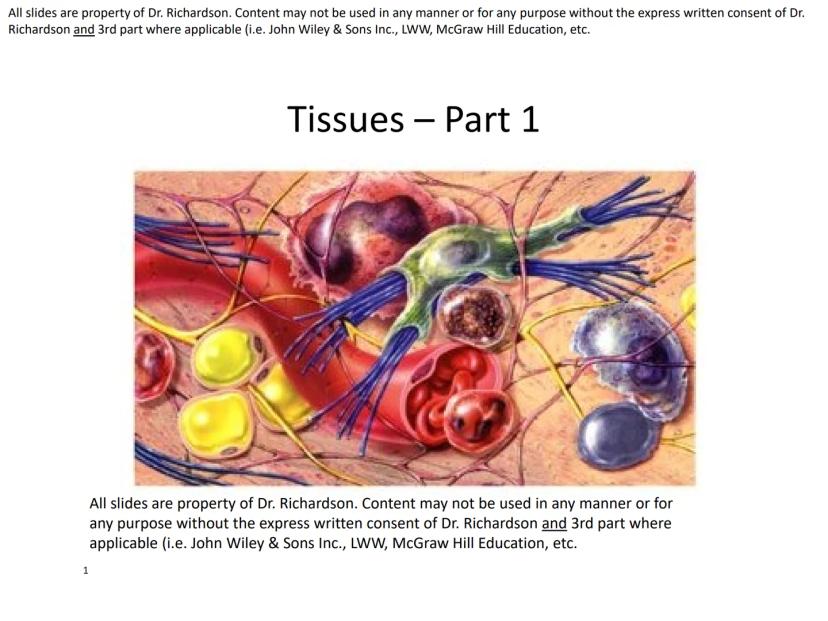
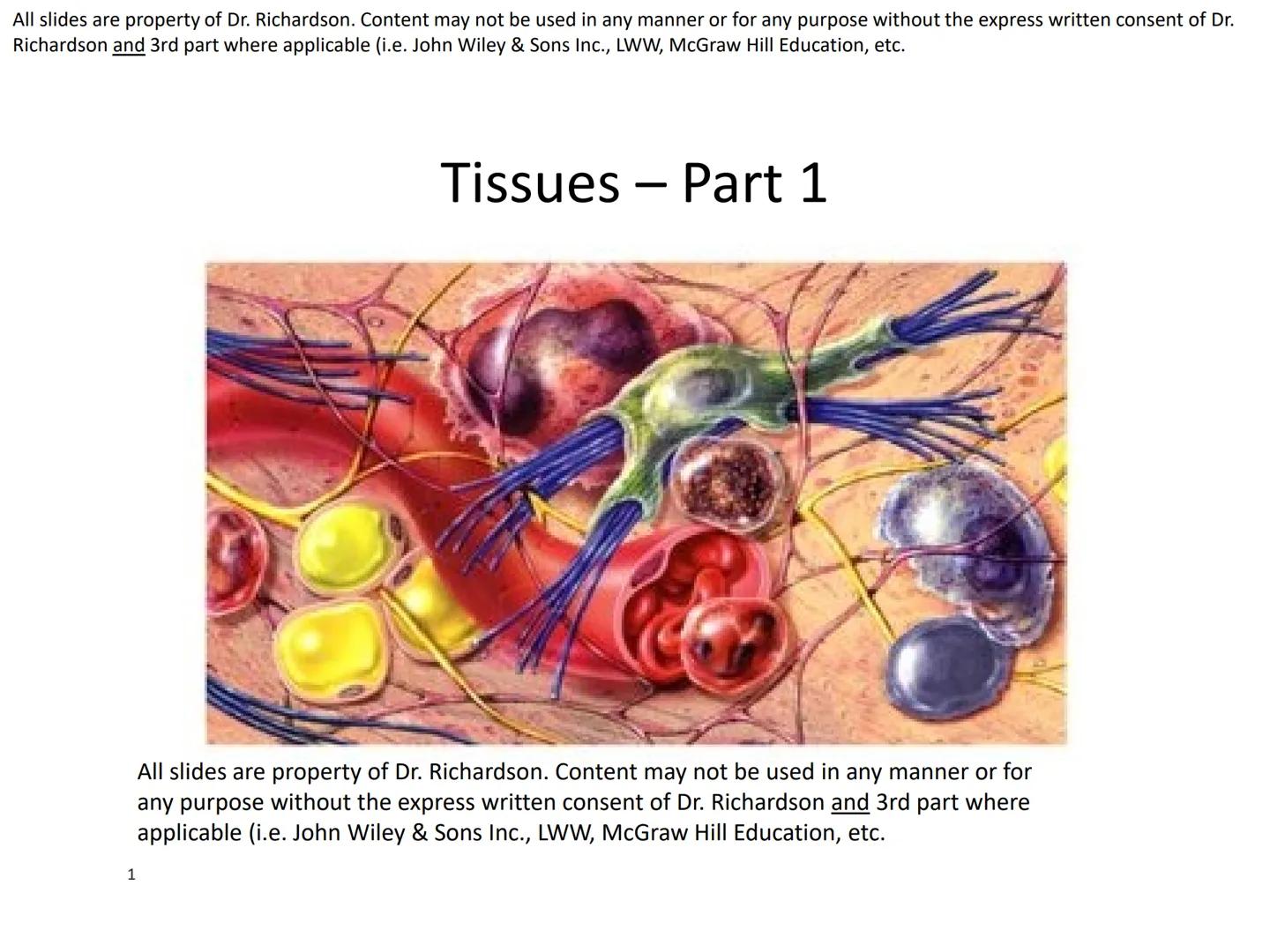
Tissues are groups of cells that share similar structures and work together to perform related functions. When you study tissues, you're diving into histology, which is a specialized branch of microscopic anatomy.
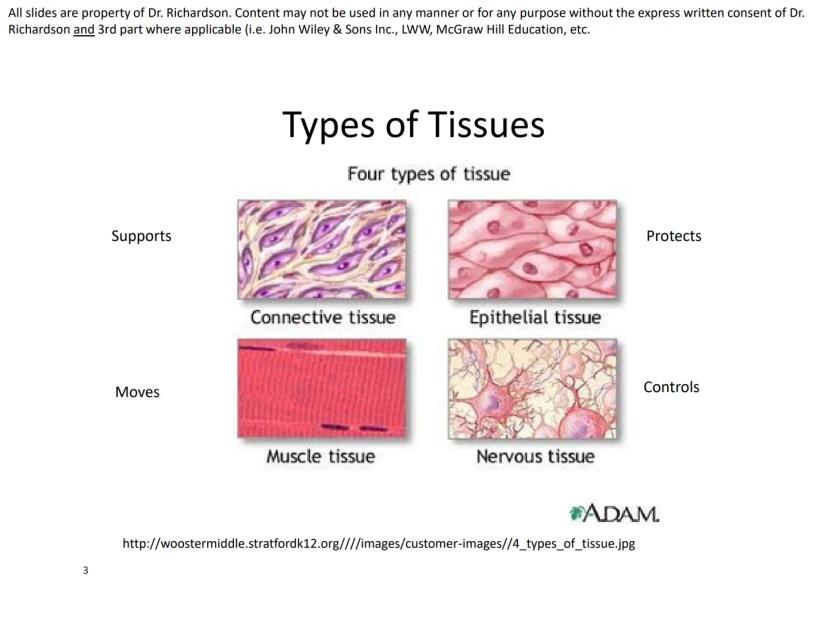
The human body contains four main types of tissue, each designed for specific roles. These include epithelial tissue (covering and lining surfaces), connective tissue (supporting and connecting structures), muscle tissue (creating movement), and nervous tissue (controlling and coordinating body functions).
Quick Fact: Every organ in your body contains multiple tissue types working together! Even something as simple as your skin involves epithelial tissue for protection, connective tissue for support, and nervous tissue for sensations.
Tissues are groups of cells that share two important characteristics: they have similar structures and they perform common or related functions. Think of tissues as specialized teams of cells working together on specific body tasks.
Histology is the scientific study of tissues and is considered a subset of microscopic anatomy. When doctors examine tissue samples under microscopes, they're practicing histology to identify diseases or abnormalities.
Each of the four tissue types has a distinct role in your body: connective tissue supports and connects, epithelial tissue protects and covers, muscle tissue creates movement, and nervous tissue controls and coordinates all body activities.
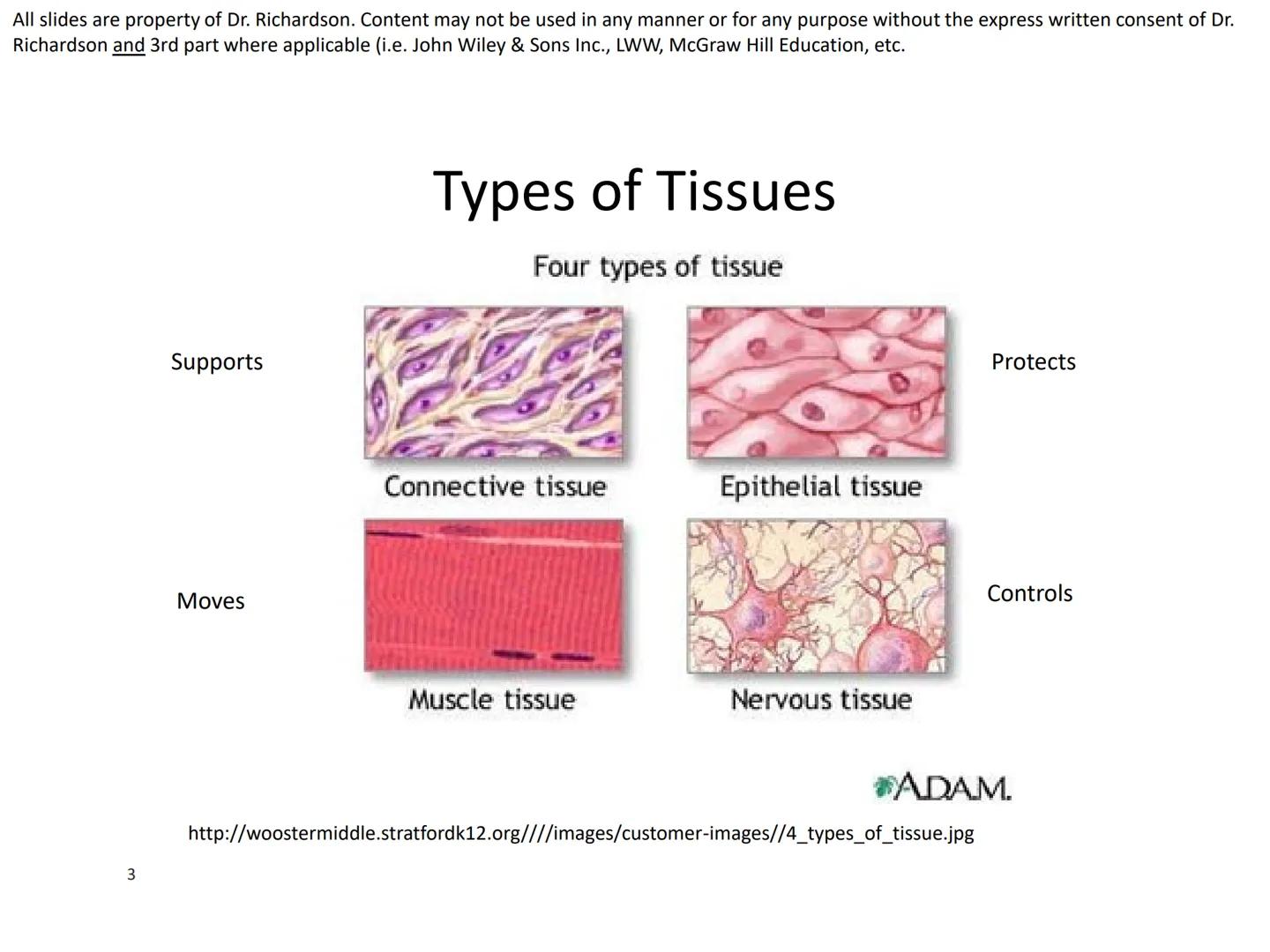
Your body relies on four fundamental tissue types, each with specialized functions that keep you alive and healthy:
Connective tissue provides support throughout your body, forming structures like bones, cartilage, and blood. It's the most abundant tissue type and literally holds your body together.
Epithelial tissue forms protective barriers on body surfaces and lines internal cavities. It's your body's first line of defense against the outside world.
Muscle tissue enables all body movements from heartbeats to running. This highly specialized tissue can contract and relax to generate force.
Nervous tissue controls all body functions through a complex network of communication. It processes information, generates thoughts, and coordinates responses.
Remember This: Each tissue type works with the others to maintain homeostasis—your body's delicate internal balance!
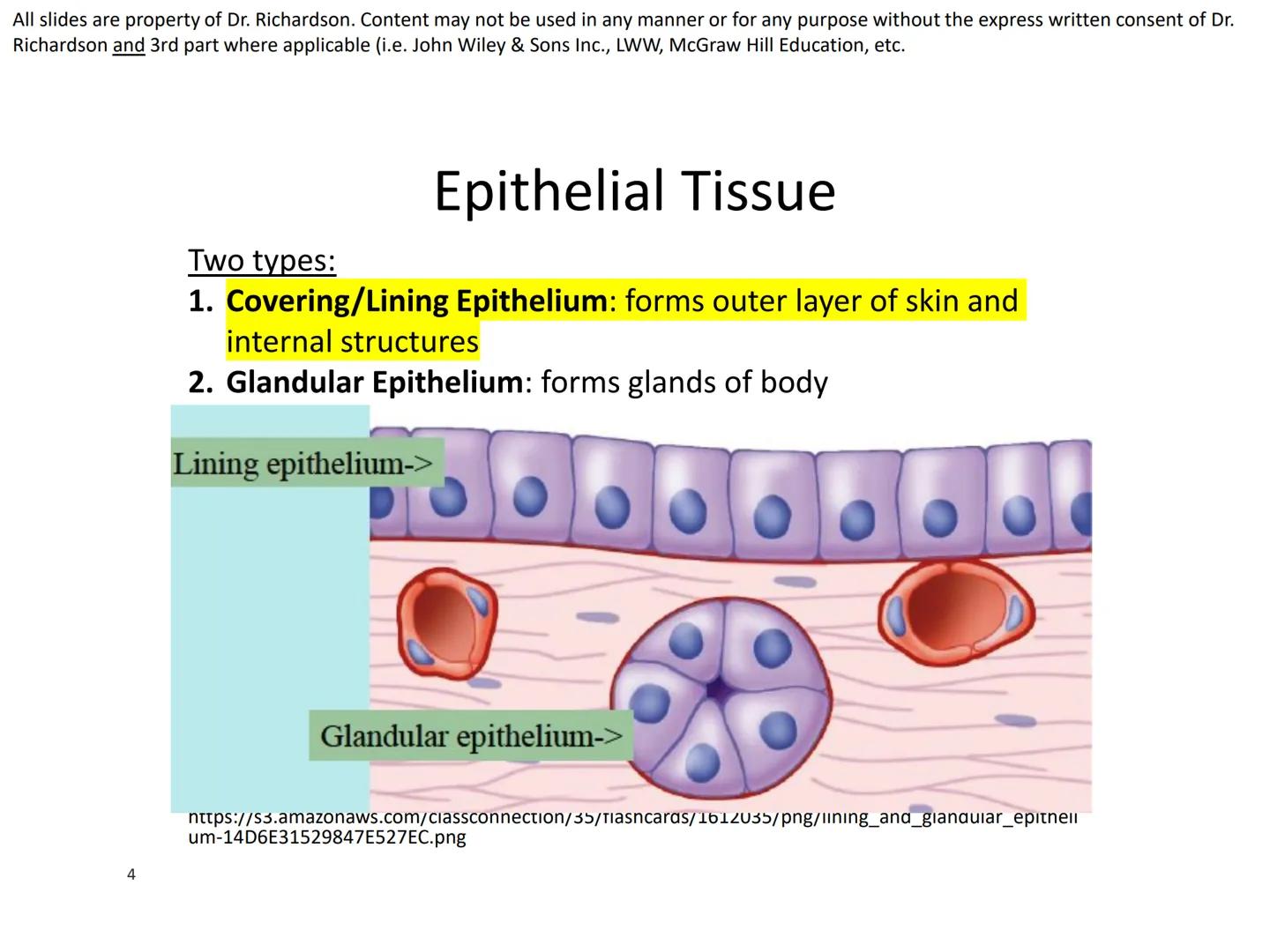
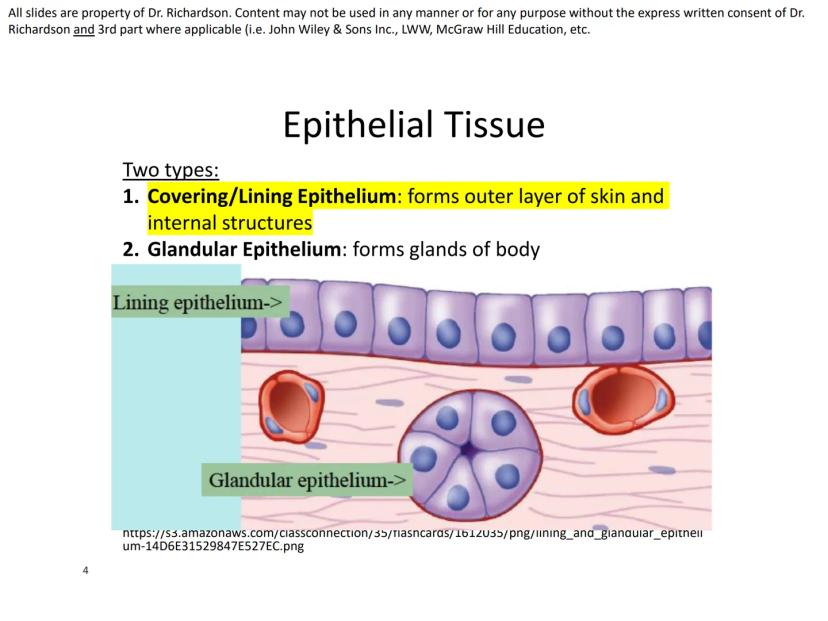
Epithelial tissue comes in two main varieties, each serving distinct functions in your body:
Covering/Lining Epithelium forms the outer layer of your skin and lines internal structures like your digestive tract, blood vessels, and organs. This type creates protective barriers between your body and the environment.
Glandular Epithelium forms the glands throughout your body. These specialized epithelial cells produce and secrete substances like hormones, sweat, mucus, and digestive enzymes that are essential for normal bodily functions.
Both types develop from the same embryonic tissue but differentiate to perform their specialized roles. The structure of epithelial cells directly relates to their function—cells that secrete substances often look different from cells that provide protection.
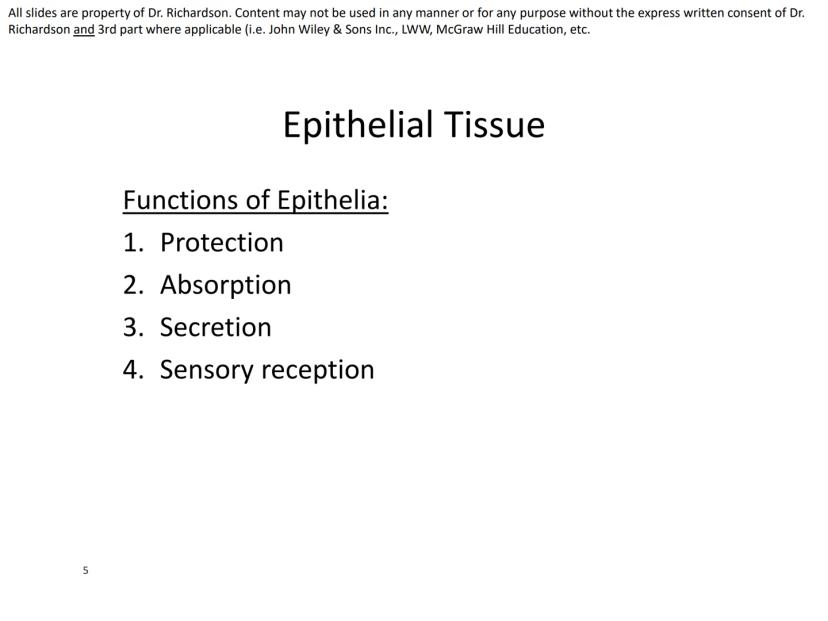
Epithelial tissue performs four critical functions that keep your body running smoothly:
Protection is perhaps its most important role. Epithelial cells form tight barriers that shield your body from physical damage, harmful microbes, and dehydration. The skin on your body is a perfect example of protective epithelium.
Absorption happens through specialized epithelial cells that line organs like your intestines, allowing nutrients to enter your bloodstream. These cells can selectively determine what substances enter your body.
Secretion occurs when glandular epithelial cells produce and release substances like hormones, sweat, or digestive enzymes. These secretions regulate countless body functions.
Sensory reception takes place through specialized epithelial cells that detect stimuli from your environment, like those in your taste buds, inner ear, and nose.
Did You Know? The epithelial cells lining your intestines are replaced every 4-7 days, making them among the fastest-renewing cells in your body!
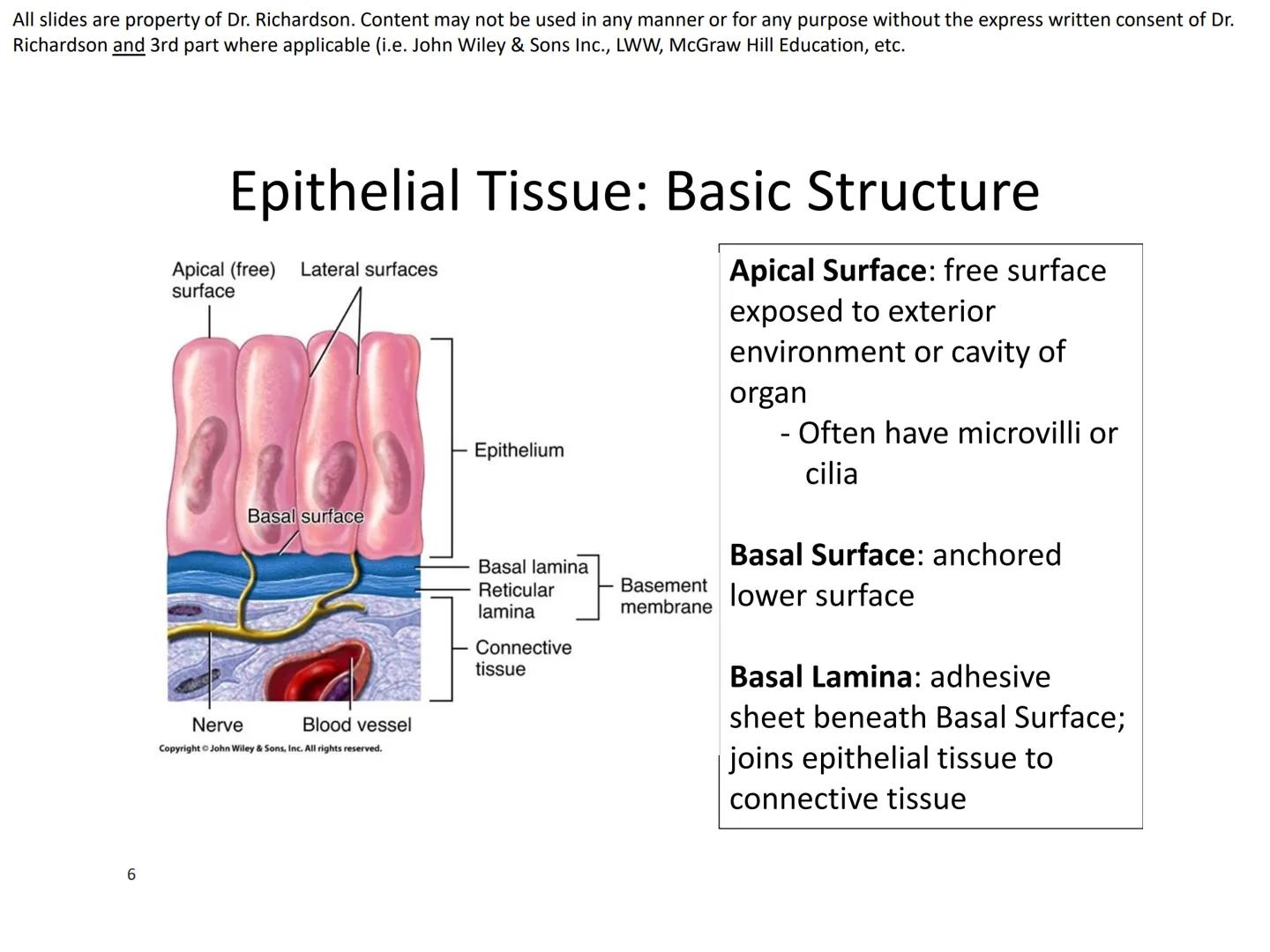
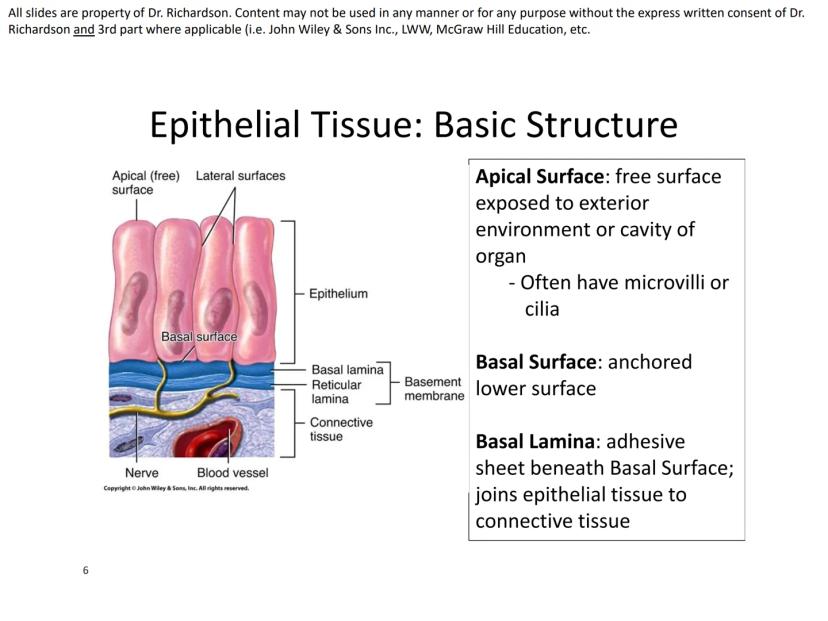
Epithelial tissue has a distinct organization that reflects its protective and barrier functions:
The apical surface (also called the free surface) faces outward toward the external environment or internal cavity. This surface often contains specialized structures like microvilli that increase absorption surface area or cilia that move substances along the tissue surface.
The basal surface anchors the epithelium to underlying tissues. This surface attaches to a thin but crucial structure called the basal lamina, which helps join the epithelium to the connective tissue below.
The basement membrane (consisting of the basal lamina plus reticular lamina) forms an adhesive foundation that secures the epithelial layer in place. This connection is vital for maintaining tissue integrity while allowing epithelial cells to be replaced as needed.
Unlike other tissues, epithelial tissue doesn't contain blood vessels, making the basement membrane essential for nutrient diffusion from underlying connective tissue.
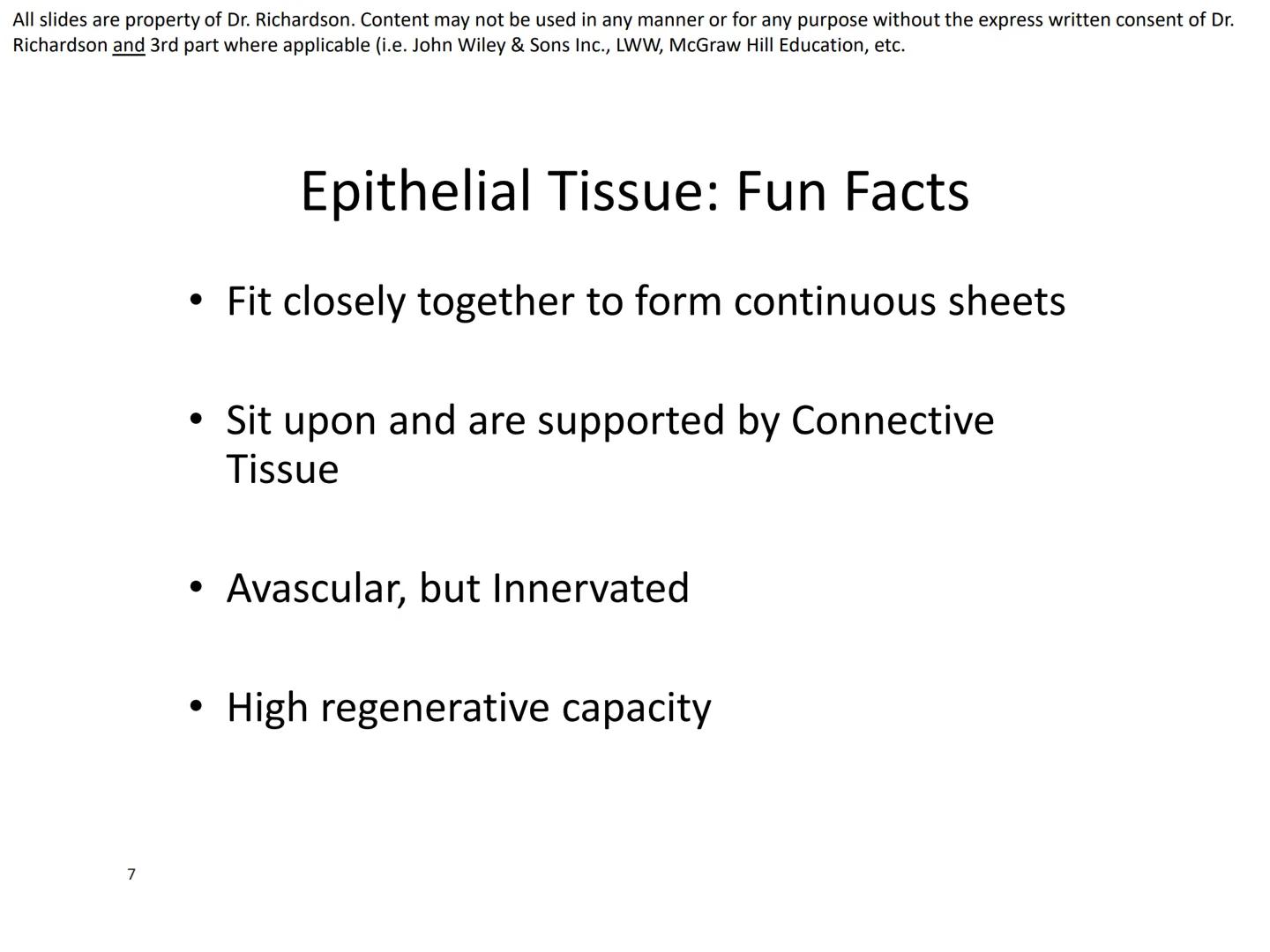
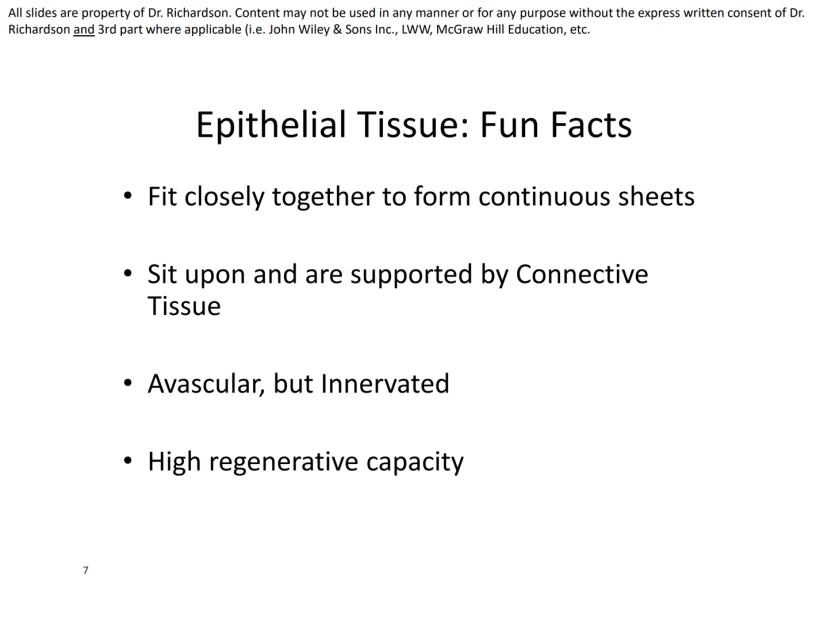
Epithelial tissue has several distinctive features that make it uniquely suited for its protective and secretory roles:
Epithelial cells fit tightly together to form continuous sheets with minimal space between cells. These close connections create effective barriers against pathogens and control what moves through them.
All epithelial tissues sit upon and are supported by connective tissue. This relationship is essential for providing nutrients to epithelial cells.
Interestingly, epithelial tissue is avascular (contains no blood vessels) but is innervated (contains nerve endings). This means nutrients must diffuse from underlying tissues, while sensory information can still be transmitted.
Epithelial tissue has an impressively high regenerative capacity, allowing rapid healing after injury. This is why cuts to your skin and damage to your intestinal lining can heal relatively quickly.
Study Tip: When identifying epithelial tissue under a microscope, look for sheets of tightly packed cells with one surface facing an open space and the other attached to a basement membrane!
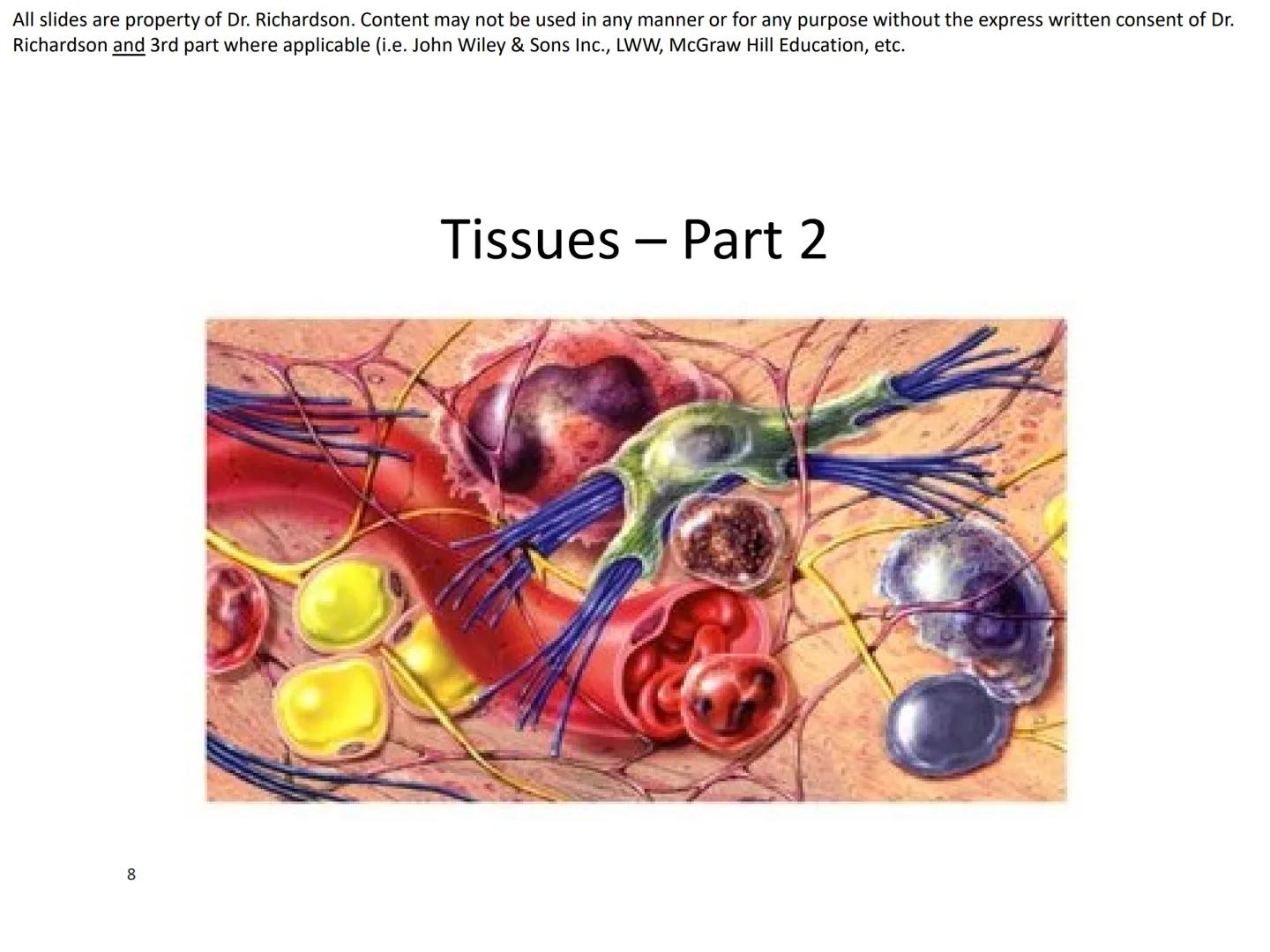
This section continues our exploration of tissues, focusing more deeply on epithelial tissue classification and structure.
In the previous section, we learned that tissues are groups of similar cells working together to perform specific functions. We identified the four major tissue types: epithelial, connective, muscle, and nervous tissue.
Now, we'll examine how epithelial tissues are classified based on their cellular arrangement and cell shapes. Understanding these classifications helps explain how structure relates to function in different body locations.
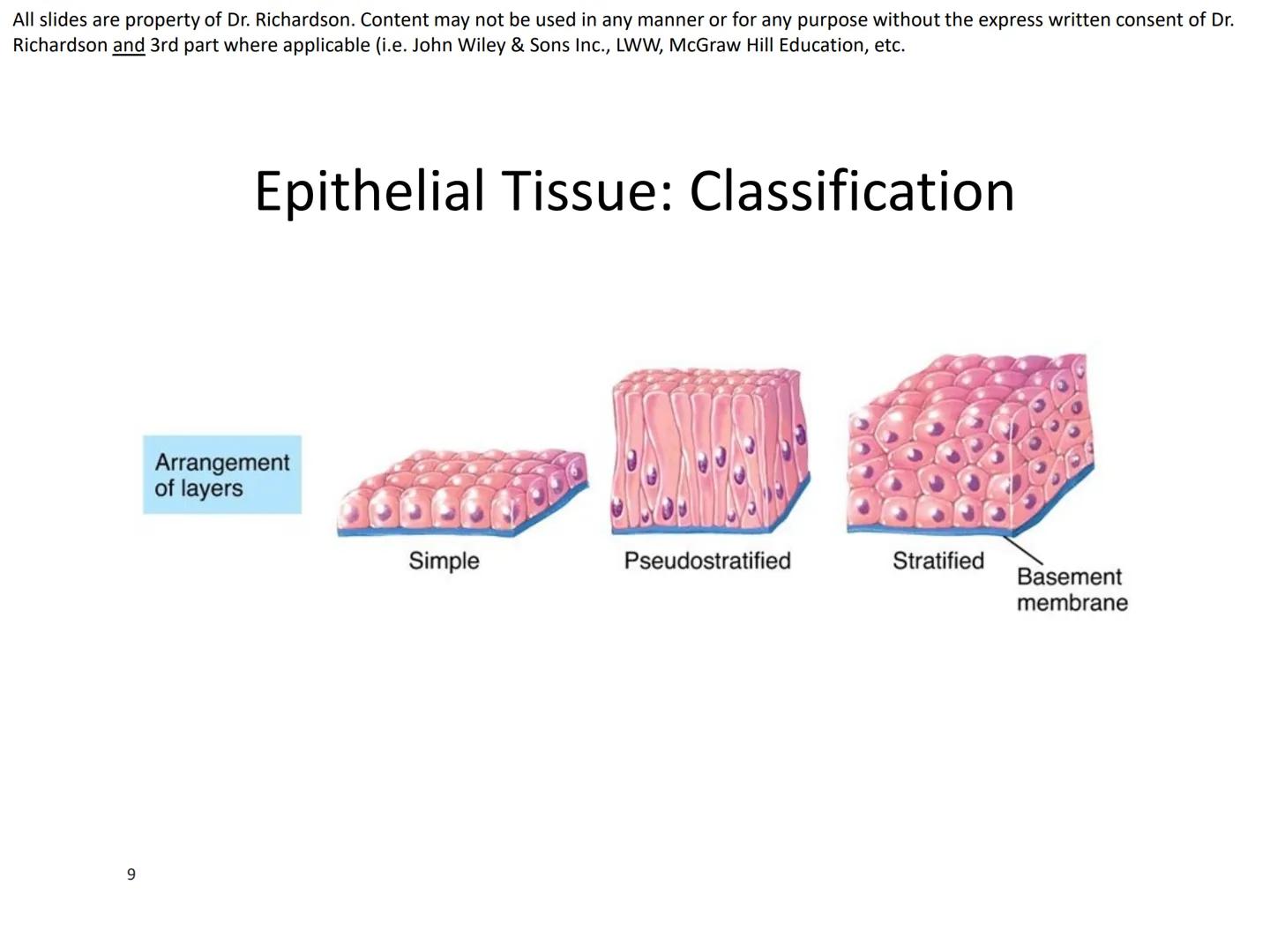
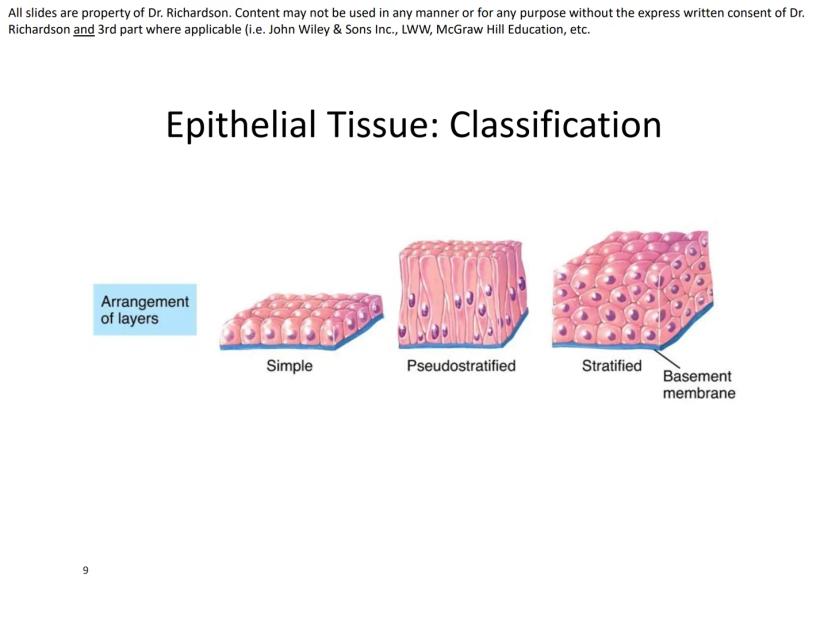
Epithelial tissue is classified first by the number of cell layers it contains, which directly relates to its protective capabilities:
Simple epithelium consists of a single layer of cells. This thin arrangement allows for rapid diffusion and absorption of substances, making it ideal for areas like air sacs in lungs and lining of blood vessels.
Pseudostratified epithelium appears to have multiple layers but actually has just one. All cells attach to the basement membrane, but not all reach the surface, creating a misleading layered appearance. This type often contains cells with cilia that move mucus, as in your respiratory tract.
Stratified epithelium truly has multiple cell layers stacked upon each other. This thicker arrangement provides greater protection against wear and tear, making it perfect for high-abrasion areas like your skin and the lining of your mouth.
The number of layers in epithelial tissue directly relates to its primary function—fewer layers facilitate exchange while more layers enhance protection.
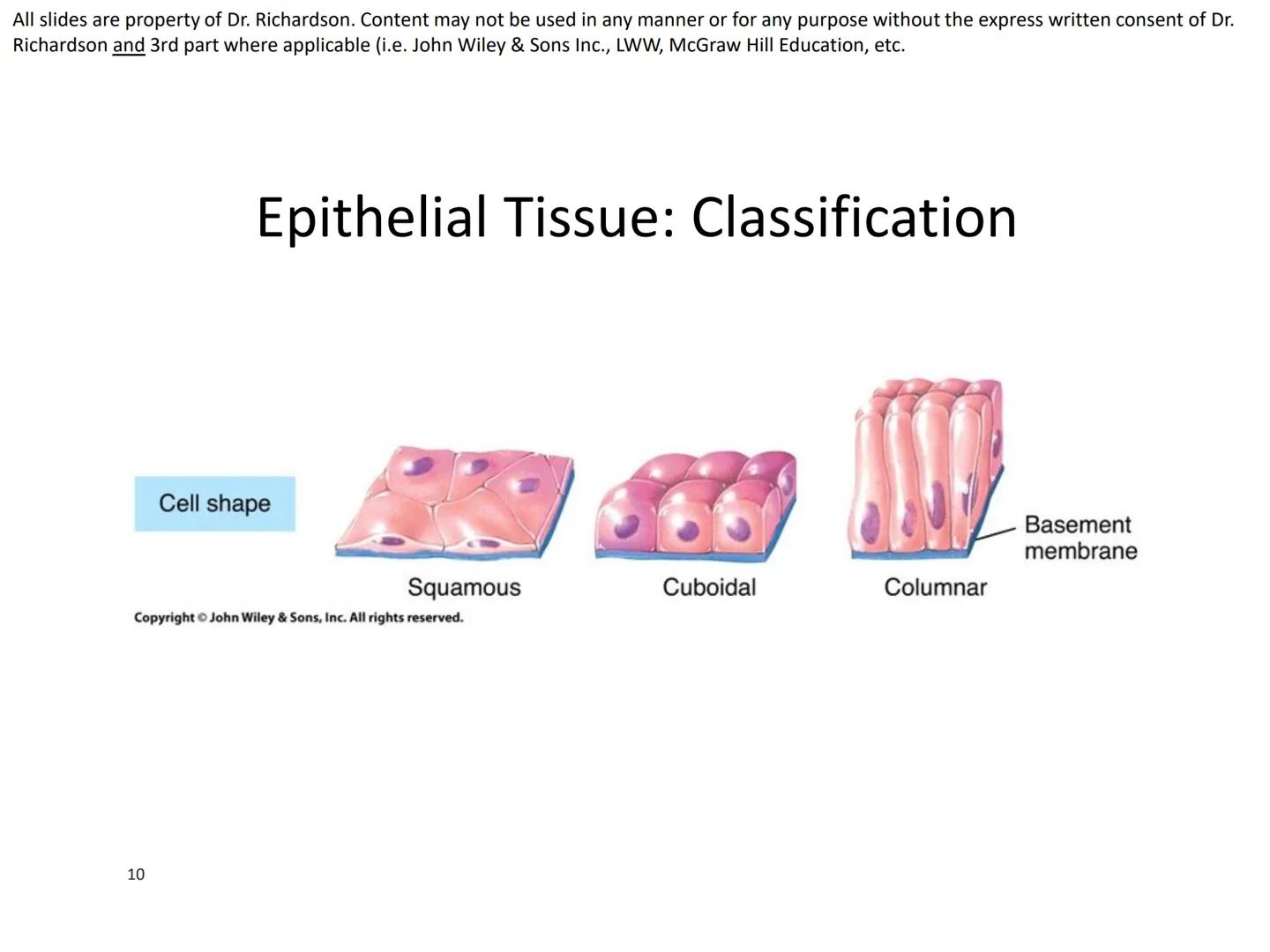
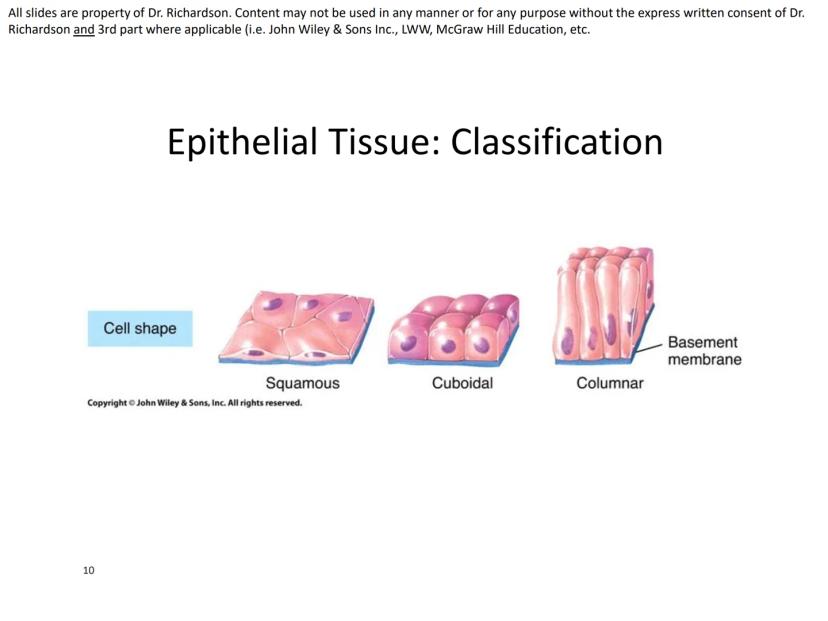
Epithelial tissue is further classified by the shape of its cells, which reflects their specialized functions:
Squamous cells are flat and thin like pancakes, resembling scales when viewed from above. Their flattened shape makes them ideal for areas where rapid diffusion occurs, such as lung air sacs and blood vessels.
Cuboidal cells are roughly square-shaped when viewed from the side, resembling little cubes. These cells often have secretory or absorptive functions and are found in kidney tubules and many glands.
Columnar cells are tall and rectangular, like columns or pillars. Their height provides room for more organelles, making them excellent for absorption and secretion. They line the digestive tract where they absorb nutrients and secrete digestive enzymes.
These shape classifications combine with layer classifications to precisely describe any epithelial tissue. For example, "simple squamous epithelium" describes a single layer of flat cells.
Our AI companion is specifically built for the needs of students. Based on the millions of content pieces we have on the platform we can provide truly meaningful and relevant answers to students. But its not only about answers, the companion is even more about guiding students through their daily learning challenges, with personalised study plans, quizzes or content pieces in the chat and 100% personalisation based on the students skills and developments.
You can download the app in the Google Play Store and in the Apple App Store.
That's right! Enjoy free access to study content, connect with fellow students, and get instant help – all at your fingertips.
App Store
Google Play
The app is very easy to use and well designed. I have found everything I was looking for so far and have been able to learn a lot from the presentations! I will definitely use the app for a class assignment! And of course it also helps a lot as an inspiration.
Stefan S
iOS user
This app is really great. There are so many study notes and help [...]. My problem subject is French, for example, and the app has so many options for help. Thanks to this app, I have improved my French. I would recommend it to anyone.
Samantha Klich
Android user
Wow, I am really amazed. I just tried the app because I've seen it advertised many times and was absolutely stunned. This app is THE HELP you want for school and above all, it offers so many things, such as workouts and fact sheets, which have been VERY helpful to me personally.
Anna
iOS user
I think it’s very much worth it and you’ll end up using it a lot once you get the hang of it and even after looking at others notes you can still ask your Artificial intelligence buddy the question and ask to simplify it if you still don’t get it!!! In the end I think it’s worth it 😊👍 ⚠️Also DID I MENTION ITS FREEE YOU DON’T HAVE TO PAY FOR ANYTHING AND STILL GET YOUR GRADES IN PERFECTLY❗️❗️⚠️
Thomas R
iOS user
Knowunity is the BEST app I’ve used in a minute. This is not an ai review or anything this is genuinely coming from a 7th grade student (I know 2011 im young) but dude this app is a 10/10 i have maintained a 3.8 gpa and have plenty of time for gaming. I love it and my mom is just happy I got good grades
Brad T
Android user
Not only did it help me find the answer but it also showed me alternative ways to solve it. I was horrible in math and science but now I have an a in both subjects. Thanks for the help🤍🤍
David K
iOS user
The app's just great! All I have to do is enter the topic in the search bar and I get the response real fast. I don't have to watch 10 YouTube videos to understand something, so I'm saving my time. Highly recommended!
Sudenaz Ocak
Android user
In school I was really bad at maths but thanks to the app, I am doing better now. I am so grateful that you made the app.
Greenlight Bonnie
Android user
I found this app a couple years ago and it has only gotten better since then. I really love it because it can help with written questions and photo questions. Also, it can find study guides that other people have made as well as flashcard sets and practice tests. The free version is also amazing for students who might not be able to afford it. Would 100% recommend
Aubrey
iOS user
Best app if you're in Highschool or Junior high. I have been using this app for 2 school years and it's the best, it's good if you don't have anyone to help you with school work.😋🩷🎀
Marco B
iOS user
THE QUIZES AND FLASHCARDS ARE SO USEFUL AND I LOVE Knowunity AI. IT ALSO IS LITREALLY LIKE CHATGPT BUT SMARTER!! HELPED ME WITH MY MASCARA PROBLEMS TOO!! AS WELL AS MY REAL SUBJECTS ! DUHHH 😍😁😲🤑💗✨🎀😮
Elisha
iOS user
This app is phenomenal down to the correct info and the various topics you can study! I greatly recommend it for people who struggle with procrastination and those who need homework help. It has been perfectly accurate for world 1 history as far as I’ve seen! Geometry too!
Paul T
iOS user
The app is very easy to use and well designed. I have found everything I was looking for so far and have been able to learn a lot from the presentations! I will definitely use the app for a class assignment! And of course it also helps a lot as an inspiration.
Stefan S
iOS user
This app is really great. There are so many study notes and help [...]. My problem subject is French, for example, and the app has so many options for help. Thanks to this app, I have improved my French. I would recommend it to anyone.
Samantha Klich
Android user
Wow, I am really amazed. I just tried the app because I've seen it advertised many times and was absolutely stunned. This app is THE HELP you want for school and above all, it offers so many things, such as workouts and fact sheets, which have been VERY helpful to me personally.
Anna
iOS user
I think it’s very much worth it and you’ll end up using it a lot once you get the hang of it and even after looking at others notes you can still ask your Artificial intelligence buddy the question and ask to simplify it if you still don’t get it!!! In the end I think it’s worth it 😊👍 ⚠️Also DID I MENTION ITS FREEE YOU DON’T HAVE TO PAY FOR ANYTHING AND STILL GET YOUR GRADES IN PERFECTLY❗️❗️⚠️
Thomas R
iOS user
Knowunity is the BEST app I’ve used in a minute. This is not an ai review or anything this is genuinely coming from a 7th grade student (I know 2011 im young) but dude this app is a 10/10 i have maintained a 3.8 gpa and have plenty of time for gaming. I love it and my mom is just happy I got good grades
Brad T
Android user
Not only did it help me find the answer but it also showed me alternative ways to solve it. I was horrible in math and science but now I have an a in both subjects. Thanks for the help🤍🤍
David K
iOS user
The app's just great! All I have to do is enter the topic in the search bar and I get the response real fast. I don't have to watch 10 YouTube videos to understand something, so I'm saving my time. Highly recommended!
Sudenaz Ocak
Android user
In school I was really bad at maths but thanks to the app, I am doing better now. I am so grateful that you made the app.
Greenlight Bonnie
Android user
I found this app a couple years ago and it has only gotten better since then. I really love it because it can help with written questions and photo questions. Also, it can find study guides that other people have made as well as flashcard sets and practice tests. The free version is also amazing for students who might not be able to afford it. Would 100% recommend
Aubrey
iOS user
Best app if you're in Highschool or Junior high. I have been using this app for 2 school years and it's the best, it's good if you don't have anyone to help you with school work.😋🩷🎀
Marco B
iOS user
THE QUIZES AND FLASHCARDS ARE SO USEFUL AND I LOVE Knowunity AI. IT ALSO IS LITREALLY LIKE CHATGPT BUT SMARTER!! HELPED ME WITH MY MASCARA PROBLEMS TOO!! AS WELL AS MY REAL SUBJECTS ! DUHHH 😍😁😲🤑💗✨🎀😮
Elisha
iOS user
This app is phenomenal down to the correct info and the various topics you can study! I greatly recommend it for people who struggle with procrastination and those who need homework help. It has been perfectly accurate for world 1 history as far as I’ve seen! Geometry too!
Paul T
iOS user
not.esther.21
@not.esther.21
Tissues form the building blocks of our bodies, organized into four main types that each serve specific functions. Understanding how tissues are structured and function helps explain how our bodies maintain life, respond to stimuli, and protect themselves from damage.... Show more
Access to all documents
Improve your grades
Join milions of students
Tissues are groups of cells that share similar structures and work together to perform related functions. When you study tissues, you're diving into histology, which is a specialized branch of microscopic anatomy.
The human body contains four main types of tissue, each designed for specific roles. These include epithelial tissue (covering and lining surfaces), connective tissue (supporting and connecting structures), muscle tissue (creating movement), and nervous tissue (controlling and coordinating body functions).
Quick Fact: Every organ in your body contains multiple tissue types working together! Even something as simple as your skin involves epithelial tissue for protection, connective tissue for support, and nervous tissue for sensations.
Access to all documents
Improve your grades
Join milions of students
Tissues are groups of cells that share two important characteristics: they have similar structures and they perform common or related functions. Think of tissues as specialized teams of cells working together on specific body tasks.
Histology is the scientific study of tissues and is considered a subset of microscopic anatomy. When doctors examine tissue samples under microscopes, they're practicing histology to identify diseases or abnormalities.
Each of the four tissue types has a distinct role in your body: connective tissue supports and connects, epithelial tissue protects and covers, muscle tissue creates movement, and nervous tissue controls and coordinates all body activities.
Access to all documents
Improve your grades
Join milions of students
Your body relies on four fundamental tissue types, each with specialized functions that keep you alive and healthy:
Connective tissue provides support throughout your body, forming structures like bones, cartilage, and blood. It's the most abundant tissue type and literally holds your body together.
Epithelial tissue forms protective barriers on body surfaces and lines internal cavities. It's your body's first line of defense against the outside world.
Muscle tissue enables all body movements from heartbeats to running. This highly specialized tissue can contract and relax to generate force.
Nervous tissue controls all body functions through a complex network of communication. It processes information, generates thoughts, and coordinates responses.
Remember This: Each tissue type works with the others to maintain homeostasis—your body's delicate internal balance!
Access to all documents
Improve your grades
Join milions of students
Epithelial tissue comes in two main varieties, each serving distinct functions in your body:
Covering/Lining Epithelium forms the outer layer of your skin and lines internal structures like your digestive tract, blood vessels, and organs. This type creates protective barriers between your body and the environment.
Glandular Epithelium forms the glands throughout your body. These specialized epithelial cells produce and secrete substances like hormones, sweat, mucus, and digestive enzymes that are essential for normal bodily functions.
Both types develop from the same embryonic tissue but differentiate to perform their specialized roles. The structure of epithelial cells directly relates to their function—cells that secrete substances often look different from cells that provide protection.
Access to all documents
Improve your grades
Join milions of students
Epithelial tissue performs four critical functions that keep your body running smoothly:
Protection is perhaps its most important role. Epithelial cells form tight barriers that shield your body from physical damage, harmful microbes, and dehydration. The skin on your body is a perfect example of protective epithelium.
Absorption happens through specialized epithelial cells that line organs like your intestines, allowing nutrients to enter your bloodstream. These cells can selectively determine what substances enter your body.
Secretion occurs when glandular epithelial cells produce and release substances like hormones, sweat, or digestive enzymes. These secretions regulate countless body functions.
Sensory reception takes place through specialized epithelial cells that detect stimuli from your environment, like those in your taste buds, inner ear, and nose.
Did You Know? The epithelial cells lining your intestines are replaced every 4-7 days, making them among the fastest-renewing cells in your body!
Access to all documents
Improve your grades
Join milions of students
Epithelial tissue has a distinct organization that reflects its protective and barrier functions:
The apical surface (also called the free surface) faces outward toward the external environment or internal cavity. This surface often contains specialized structures like microvilli that increase absorption surface area or cilia that move substances along the tissue surface.
The basal surface anchors the epithelium to underlying tissues. This surface attaches to a thin but crucial structure called the basal lamina, which helps join the epithelium to the connective tissue below.
The basement membrane (consisting of the basal lamina plus reticular lamina) forms an adhesive foundation that secures the epithelial layer in place. This connection is vital for maintaining tissue integrity while allowing epithelial cells to be replaced as needed.
Unlike other tissues, epithelial tissue doesn't contain blood vessels, making the basement membrane essential for nutrient diffusion from underlying connective tissue.
Access to all documents
Improve your grades
Join milions of students
Epithelial tissue has several distinctive features that make it uniquely suited for its protective and secretory roles:
Epithelial cells fit tightly together to form continuous sheets with minimal space between cells. These close connections create effective barriers against pathogens and control what moves through them.
All epithelial tissues sit upon and are supported by connective tissue. This relationship is essential for providing nutrients to epithelial cells.
Interestingly, epithelial tissue is avascular (contains no blood vessels) but is innervated (contains nerve endings). This means nutrients must diffuse from underlying tissues, while sensory information can still be transmitted.
Epithelial tissue has an impressively high regenerative capacity, allowing rapid healing after injury. This is why cuts to your skin and damage to your intestinal lining can heal relatively quickly.
Study Tip: When identifying epithelial tissue under a microscope, look for sheets of tightly packed cells with one surface facing an open space and the other attached to a basement membrane!
Access to all documents
Improve your grades
Join milions of students
This section continues our exploration of tissues, focusing more deeply on epithelial tissue classification and structure.
In the previous section, we learned that tissues are groups of similar cells working together to perform specific functions. We identified the four major tissue types: epithelial, connective, muscle, and nervous tissue.
Now, we'll examine how epithelial tissues are classified based on their cellular arrangement and cell shapes. Understanding these classifications helps explain how structure relates to function in different body locations.
Access to all documents
Improve your grades
Join milions of students
Epithelial tissue is classified first by the number of cell layers it contains, which directly relates to its protective capabilities:
Simple epithelium consists of a single layer of cells. This thin arrangement allows for rapid diffusion and absorption of substances, making it ideal for areas like air sacs in lungs and lining of blood vessels.
Pseudostratified epithelium appears to have multiple layers but actually has just one. All cells attach to the basement membrane, but not all reach the surface, creating a misleading layered appearance. This type often contains cells with cilia that move mucus, as in your respiratory tract.
Stratified epithelium truly has multiple cell layers stacked upon each other. This thicker arrangement provides greater protection against wear and tear, making it perfect for high-abrasion areas like your skin and the lining of your mouth.
The number of layers in epithelial tissue directly relates to its primary function—fewer layers facilitate exchange while more layers enhance protection.
Access to all documents
Improve your grades
Join milions of students
Epithelial tissue is further classified by the shape of its cells, which reflects their specialized functions:
Squamous cells are flat and thin like pancakes, resembling scales when viewed from above. Their flattened shape makes them ideal for areas where rapid diffusion occurs, such as lung air sacs and blood vessels.
Cuboidal cells are roughly square-shaped when viewed from the side, resembling little cubes. These cells often have secretory or absorptive functions and are found in kidney tubules and many glands.
Columnar cells are tall and rectangular, like columns or pillars. Their height provides room for more organelles, making them excellent for absorption and secretion. They line the digestive tract where they absorb nutrients and secrete digestive enzymes.
These shape classifications combine with layer classifications to precisely describe any epithelial tissue. For example, "simple squamous epithelium" describes a single layer of flat cells.
Our AI companion is specifically built for the needs of students. Based on the millions of content pieces we have on the platform we can provide truly meaningful and relevant answers to students. But its not only about answers, the companion is even more about guiding students through their daily learning challenges, with personalised study plans, quizzes or content pieces in the chat and 100% personalisation based on the students skills and developments.
You can download the app in the Google Play Store and in the Apple App Store.
That's right! Enjoy free access to study content, connect with fellow students, and get instant help – all at your fingertips.
1
Smart Tools NEW
Transform this note into: ✓ 50+ Practice Questions ✓ Interactive Flashcards ✓ Full Practice Test ✓ Essay Outlines
App Store
Google Play
The app is very easy to use and well designed. I have found everything I was looking for so far and have been able to learn a lot from the presentations! I will definitely use the app for a class assignment! And of course it also helps a lot as an inspiration.
Stefan S
iOS user
This app is really great. There are so many study notes and help [...]. My problem subject is French, for example, and the app has so many options for help. Thanks to this app, I have improved my French. I would recommend it to anyone.
Samantha Klich
Android user
Wow, I am really amazed. I just tried the app because I've seen it advertised many times and was absolutely stunned. This app is THE HELP you want for school and above all, it offers so many things, such as workouts and fact sheets, which have been VERY helpful to me personally.
Anna
iOS user
I think it’s very much worth it and you’ll end up using it a lot once you get the hang of it and even after looking at others notes you can still ask your Artificial intelligence buddy the question and ask to simplify it if you still don’t get it!!! In the end I think it’s worth it 😊👍 ⚠️Also DID I MENTION ITS FREEE YOU DON’T HAVE TO PAY FOR ANYTHING AND STILL GET YOUR GRADES IN PERFECTLY❗️❗️⚠️
Thomas R
iOS user
Knowunity is the BEST app I’ve used in a minute. This is not an ai review or anything this is genuinely coming from a 7th grade student (I know 2011 im young) but dude this app is a 10/10 i have maintained a 3.8 gpa and have plenty of time for gaming. I love it and my mom is just happy I got good grades
Brad T
Android user
Not only did it help me find the answer but it also showed me alternative ways to solve it. I was horrible in math and science but now I have an a in both subjects. Thanks for the help🤍🤍
David K
iOS user
The app's just great! All I have to do is enter the topic in the search bar and I get the response real fast. I don't have to watch 10 YouTube videos to understand something, so I'm saving my time. Highly recommended!
Sudenaz Ocak
Android user
In school I was really bad at maths but thanks to the app, I am doing better now. I am so grateful that you made the app.
Greenlight Bonnie
Android user
I found this app a couple years ago and it has only gotten better since then. I really love it because it can help with written questions and photo questions. Also, it can find study guides that other people have made as well as flashcard sets and practice tests. The free version is also amazing for students who might not be able to afford it. Would 100% recommend
Aubrey
iOS user
Best app if you're in Highschool or Junior high. I have been using this app for 2 school years and it's the best, it's good if you don't have anyone to help you with school work.😋🩷🎀
Marco B
iOS user
THE QUIZES AND FLASHCARDS ARE SO USEFUL AND I LOVE Knowunity AI. IT ALSO IS LITREALLY LIKE CHATGPT BUT SMARTER!! HELPED ME WITH MY MASCARA PROBLEMS TOO!! AS WELL AS MY REAL SUBJECTS ! DUHHH 😍😁😲🤑💗✨🎀😮
Elisha
iOS user
This app is phenomenal down to the correct info and the various topics you can study! I greatly recommend it for people who struggle with procrastination and those who need homework help. It has been perfectly accurate for world 1 history as far as I’ve seen! Geometry too!
Paul T
iOS user
The app is very easy to use and well designed. I have found everything I was looking for so far and have been able to learn a lot from the presentations! I will definitely use the app for a class assignment! And of course it also helps a lot as an inspiration.
Stefan S
iOS user
This app is really great. There are so many study notes and help [...]. My problem subject is French, for example, and the app has so many options for help. Thanks to this app, I have improved my French. I would recommend it to anyone.
Samantha Klich
Android user
Wow, I am really amazed. I just tried the app because I've seen it advertised many times and was absolutely stunned. This app is THE HELP you want for school and above all, it offers so many things, such as workouts and fact sheets, which have been VERY helpful to me personally.
Anna
iOS user
I think it’s very much worth it and you’ll end up using it a lot once you get the hang of it and even after looking at others notes you can still ask your Artificial intelligence buddy the question and ask to simplify it if you still don’t get it!!! In the end I think it’s worth it 😊👍 ⚠️Also DID I MENTION ITS FREEE YOU DON’T HAVE TO PAY FOR ANYTHING AND STILL GET YOUR GRADES IN PERFECTLY❗️❗️⚠️
Thomas R
iOS user
Knowunity is the BEST app I’ve used in a minute. This is not an ai review or anything this is genuinely coming from a 7th grade student (I know 2011 im young) but dude this app is a 10/10 i have maintained a 3.8 gpa and have plenty of time for gaming. I love it and my mom is just happy I got good grades
Brad T
Android user
Not only did it help me find the answer but it also showed me alternative ways to solve it. I was horrible in math and science but now I have an a in both subjects. Thanks for the help🤍🤍
David K
iOS user
The app's just great! All I have to do is enter the topic in the search bar and I get the response real fast. I don't have to watch 10 YouTube videos to understand something, so I'm saving my time. Highly recommended!
Sudenaz Ocak
Android user
In school I was really bad at maths but thanks to the app, I am doing better now. I am so grateful that you made the app.
Greenlight Bonnie
Android user
I found this app a couple years ago and it has only gotten better since then. I really love it because it can help with written questions and photo questions. Also, it can find study guides that other people have made as well as flashcard sets and practice tests. The free version is also amazing for students who might not be able to afford it. Would 100% recommend
Aubrey
iOS user
Best app if you're in Highschool or Junior high. I have been using this app for 2 school years and it's the best, it's good if you don't have anyone to help you with school work.😋🩷🎀
Marco B
iOS user
THE QUIZES AND FLASHCARDS ARE SO USEFUL AND I LOVE Knowunity AI. IT ALSO IS LITREALLY LIKE CHATGPT BUT SMARTER!! HELPED ME WITH MY MASCARA PROBLEMS TOO!! AS WELL AS MY REAL SUBJECTS ! DUHHH 😍😁😲🤑💗✨🎀😮
Elisha
iOS user
This app is phenomenal down to the correct info and the various topics you can study! I greatly recommend it for people who struggle with procrastination and those who need homework help. It has been perfectly accurate for world 1 history as far as I’ve seen! Geometry too!
Paul T
iOS user