
Chemical reactions are happening everywhere around you - from the... Show more
 Chemistry138 views·Updated Jun 3, 2026·10 pages
Master Chemical Reactions: Handwritten Notes for Easy Learning

Ahmed Nour ✓™@ahmednour
1 / 10
1
of 10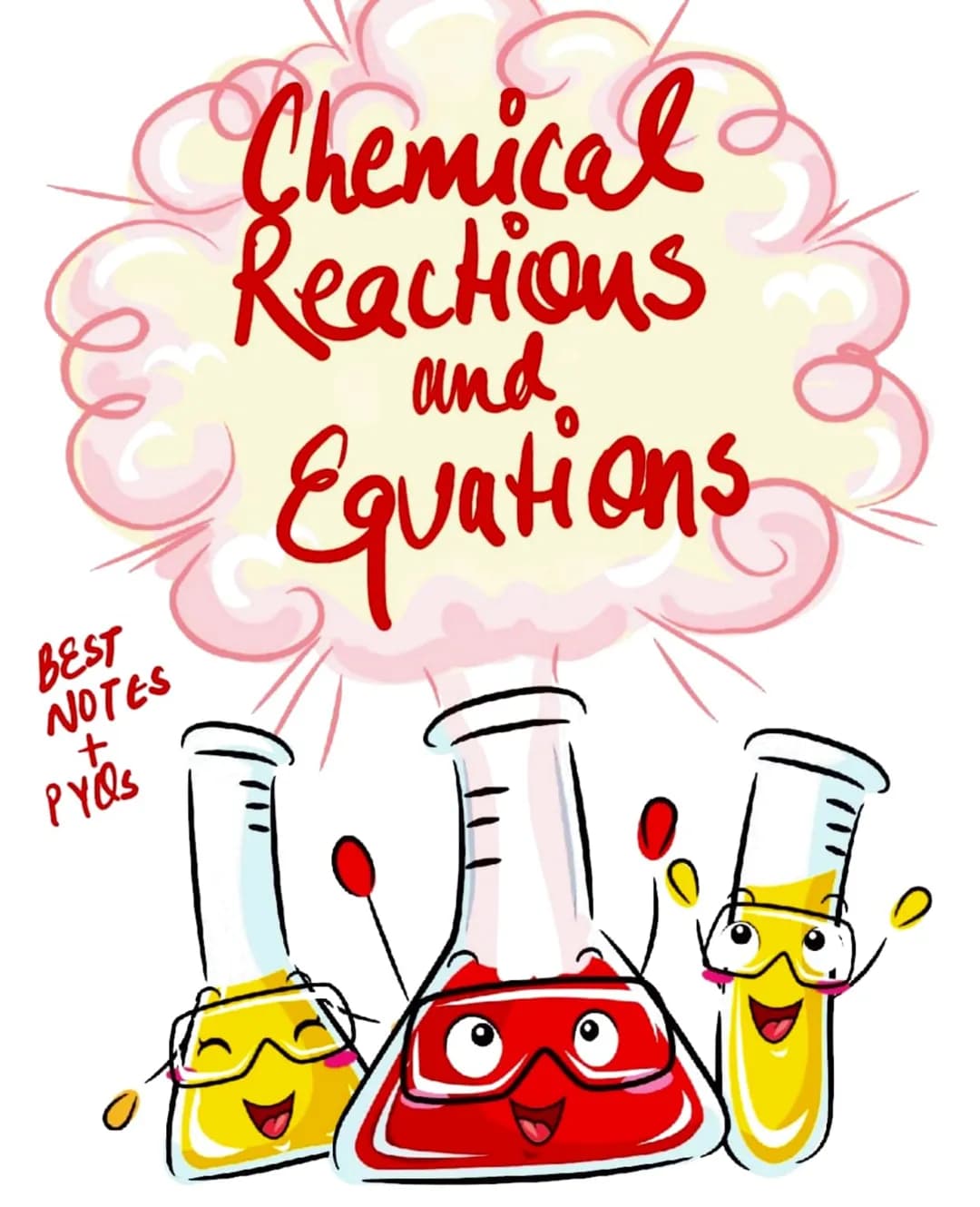
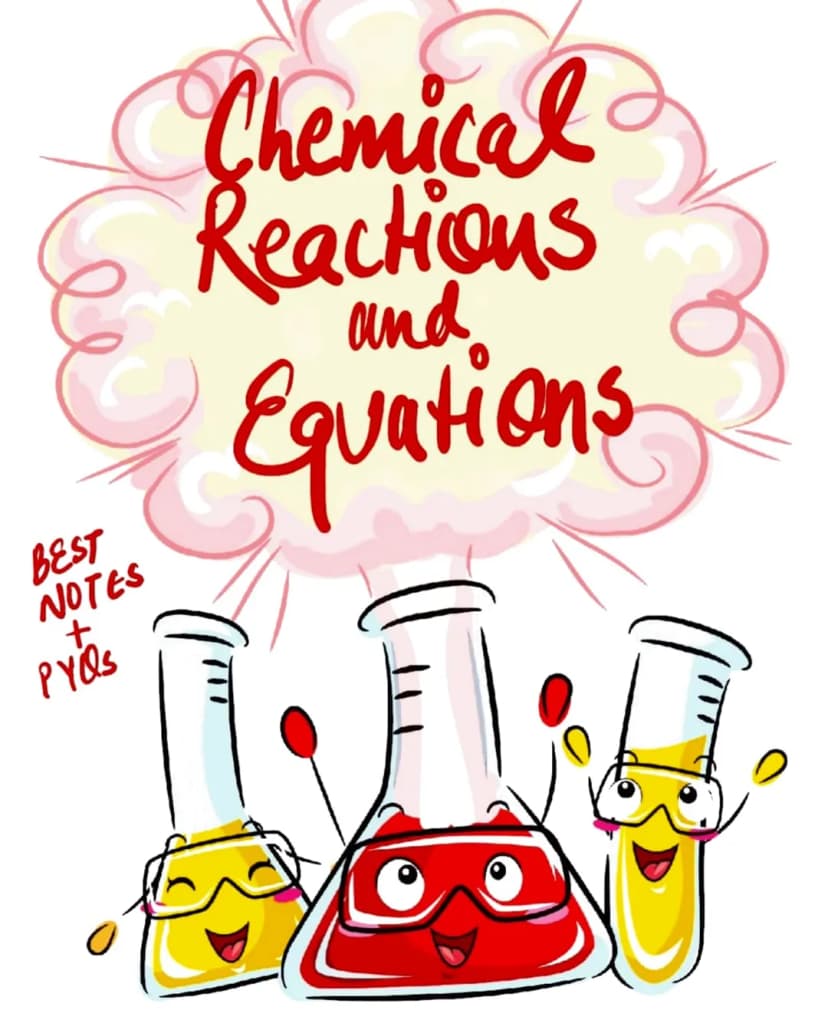
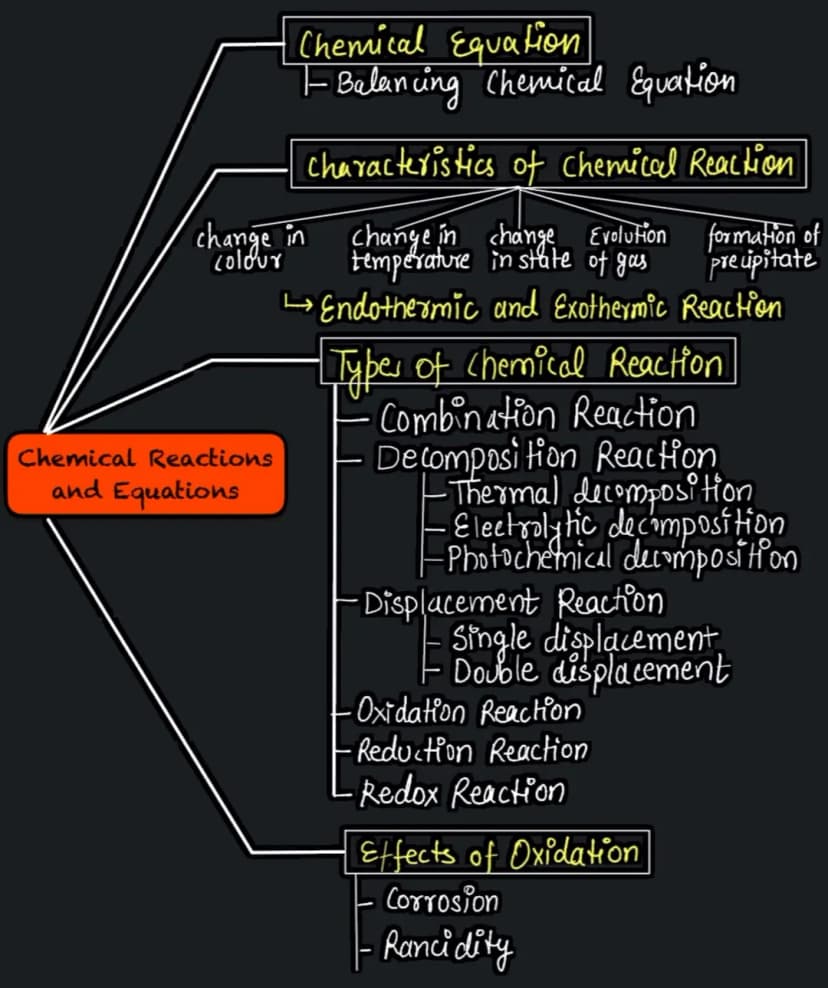
Chemical Reactions and Equations Overview
Chemistry isn't just about memorising formulas - it's about understanding how matter changes and transforms around us every day. This topic covers the fundamental ways substances interact and change into new materials.
Chemical reactions involve substances combining, breaking apart, or rearranging to form completely new materials with different properties. Think of it like cooking - when you mix ingredients and apply heat, you get something entirely different from what you started with.
A chemical equation is simply the shorthand way scientists write these reactions using symbols and formulas instead of words. It's like a recipe that shows exactly what goes in and what comes out.
Quick Tip: Master balancing equations early - it's the foundation for everything else in chemistry and will save you loads of time on tests!
2
of 10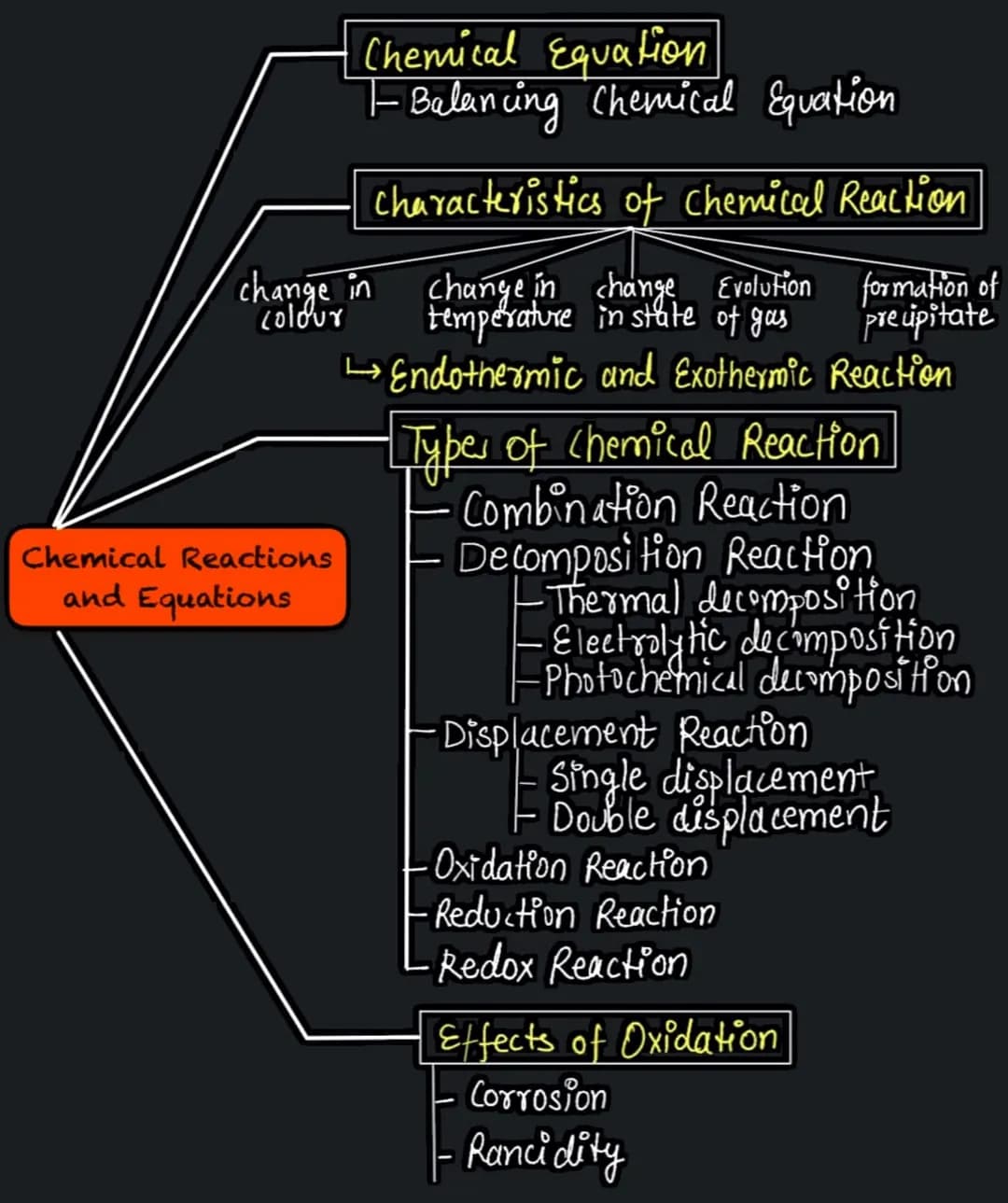
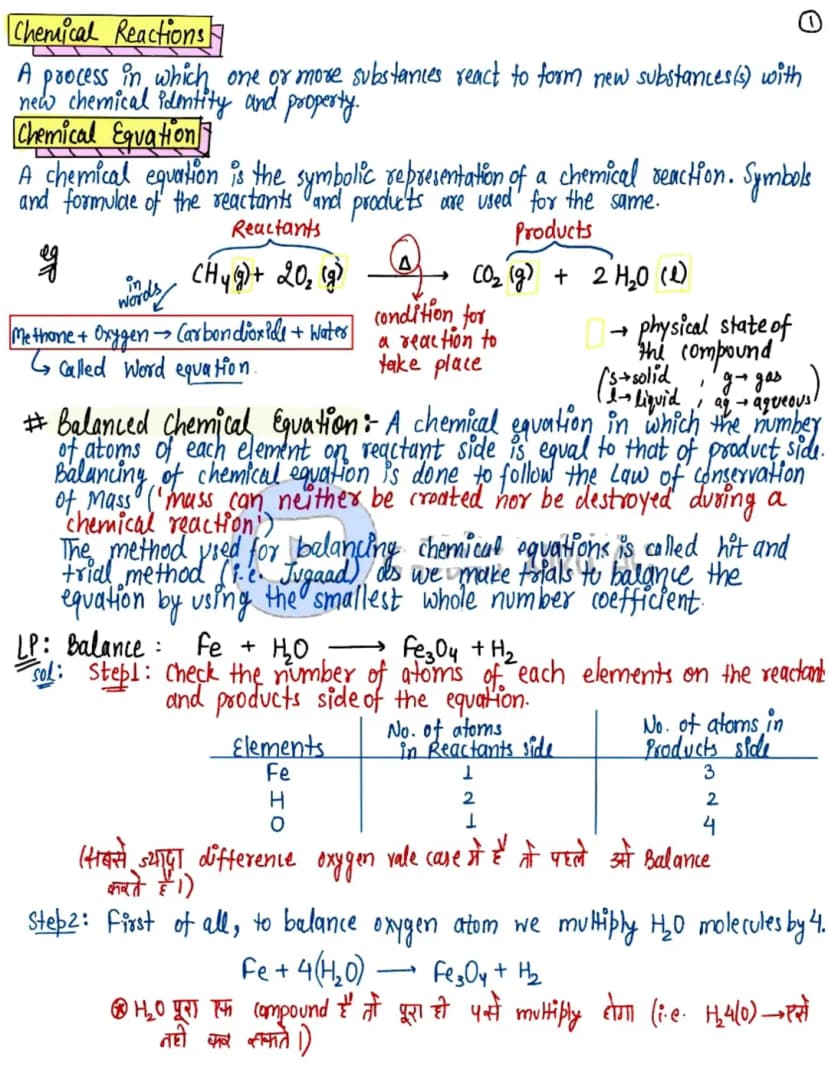
Understanding Chemical Equations
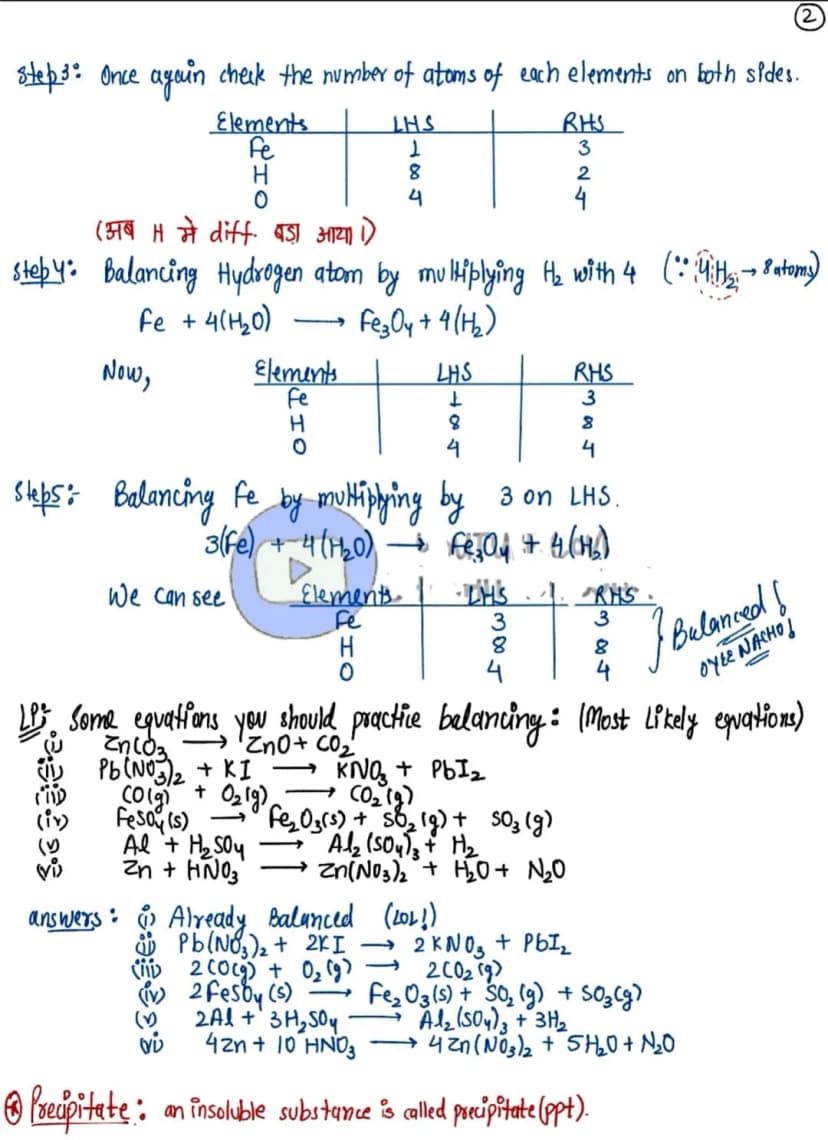
You'll spend a lot of time working with chemical equations, so getting comfortable with them now will make everything easier later. A balanced chemical equation ensures the same number of each type of atom appears on both sides - this follows the law that matter can't just disappear during reactions.
Balancing equations uses the "hit and trial method" (basically educated guessing with maths). Start by counting atoms of each element, then add coefficients (those numbers in front of formulas) until both sides match. Always tackle the element with the biggest difference first.
Here's the step-by-step approach: count atoms on each side, identify which element is most unbalanced, multiply entire compounds by whole numbers to balance that element, then repeat for other elements. Practice with simple equations first before moving to complex ones.
Pro Tip: Remember that when you add a coefficient, it multiplies the entire compound - you can't just multiply part of a formula!
3
of 10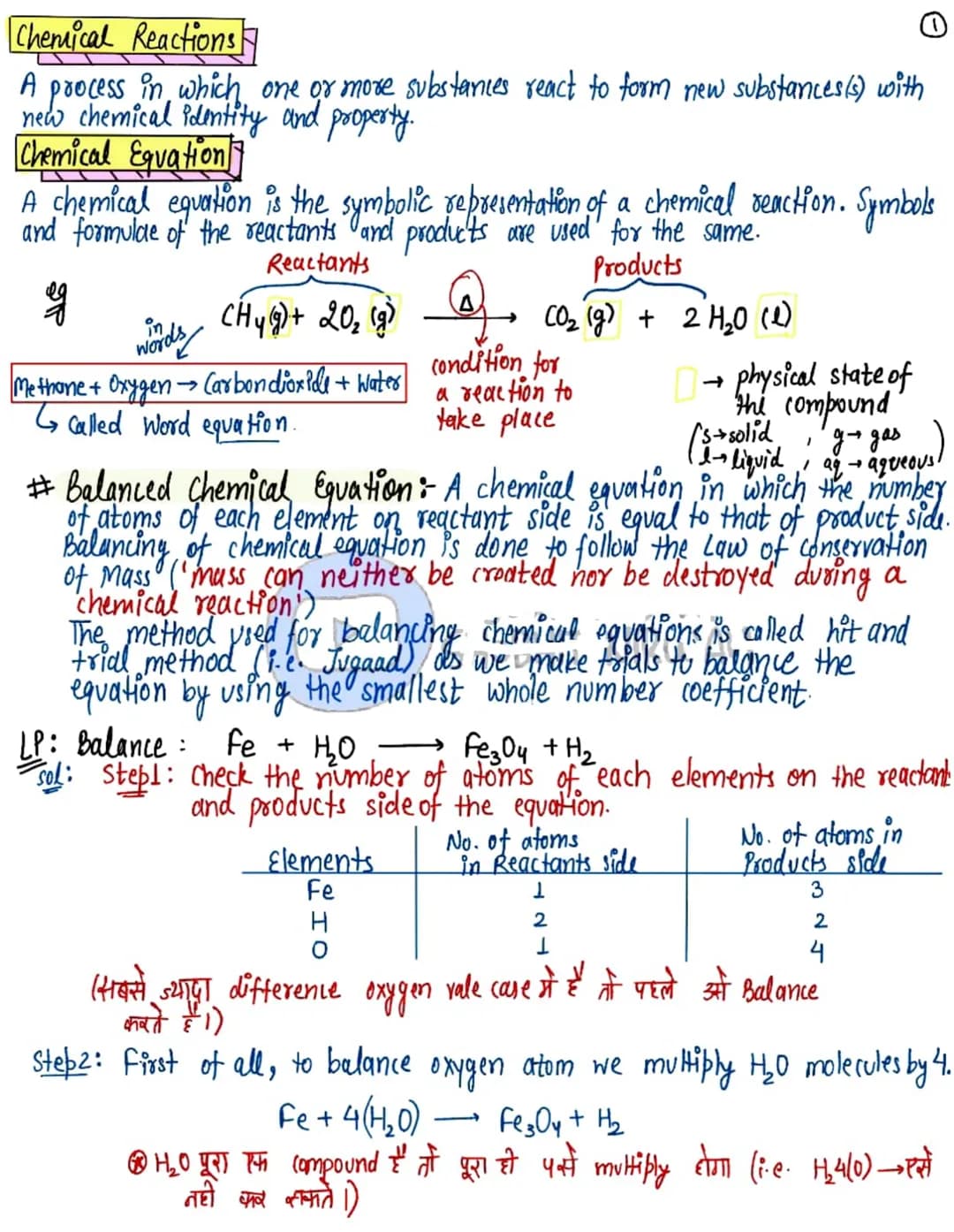
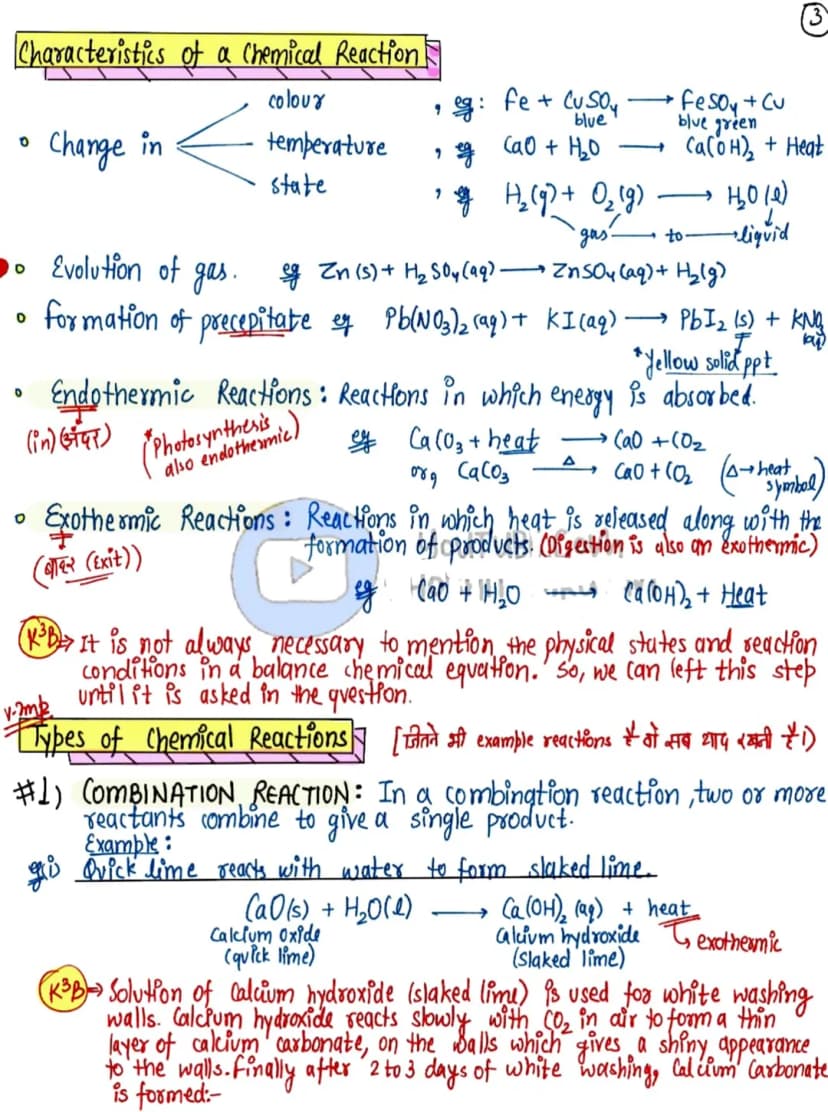
Spotting Chemical Reactions
Chemical reactions aren't invisible - they give you clear signs that something's happening. Learning to recognise these characteristics of chemical reactions will help you identify when substances are actually changing, not just mixing.
Colour changes are often the most obvious clue. When iron reacts with copper sulphate, the blue solution turns green - that's a dead giveaway that a reaction occurred. Temperature changes matter too: some reactions absorb heat (getting cold) while others release it (getting hot).
You might also see changes in state (gas becoming liquid), gas evolution (bubbling), or precipitate formation (solid appearing in a liquid). Each of these signs tells you that atoms are rearranging into new combinations.
Endothermic reactions absorb energy from surroundings (like photosynthesis), while exothermic reactions release energy (like digestion or burning). Understanding which type you're dealing with helps predict what conditions the reaction needs.
Remember: If you see bubbling, colour changes, or temperature shifts during a reaction, that's your confirmation that chemical bonds are breaking and forming!
4
of 10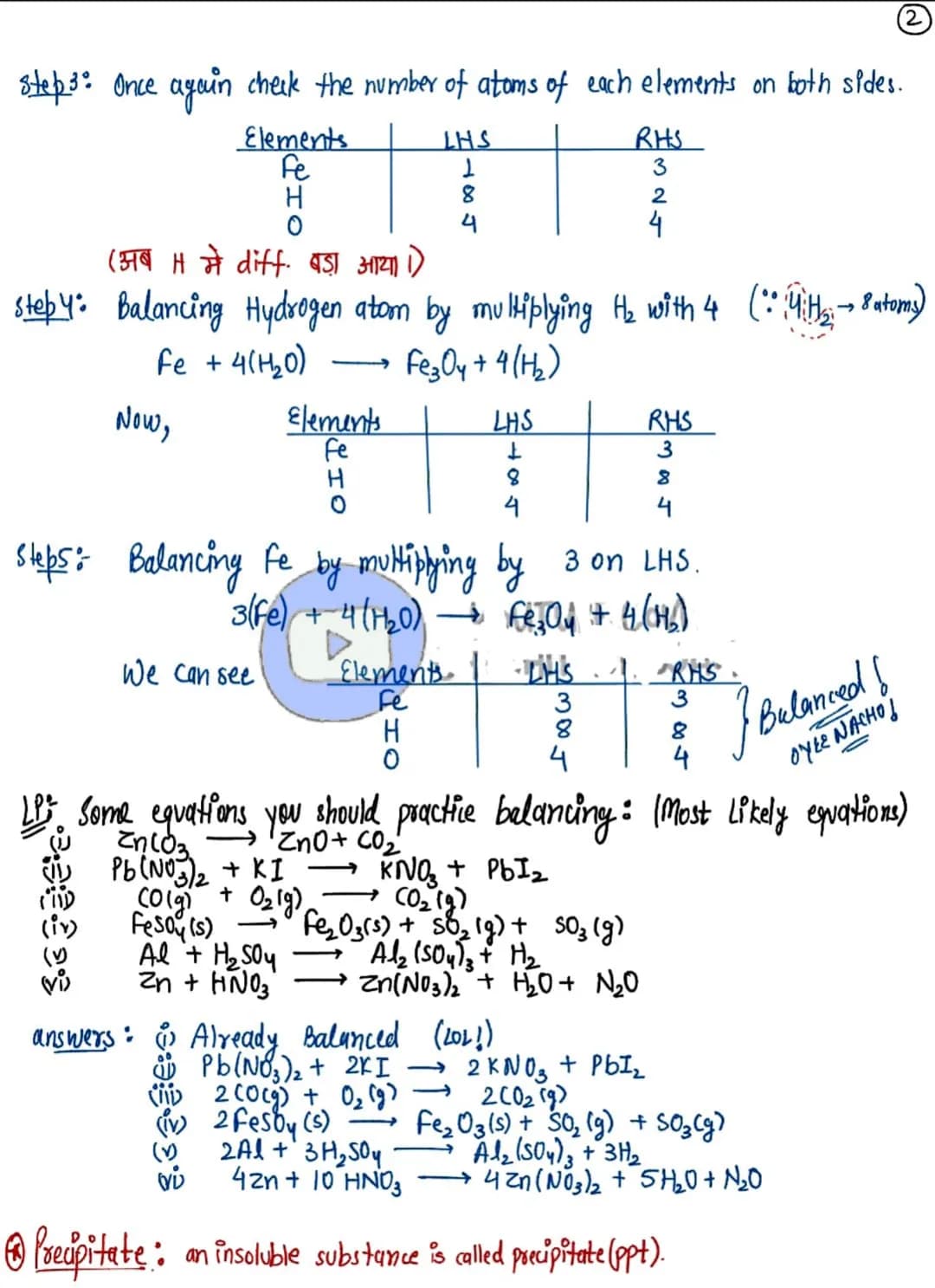
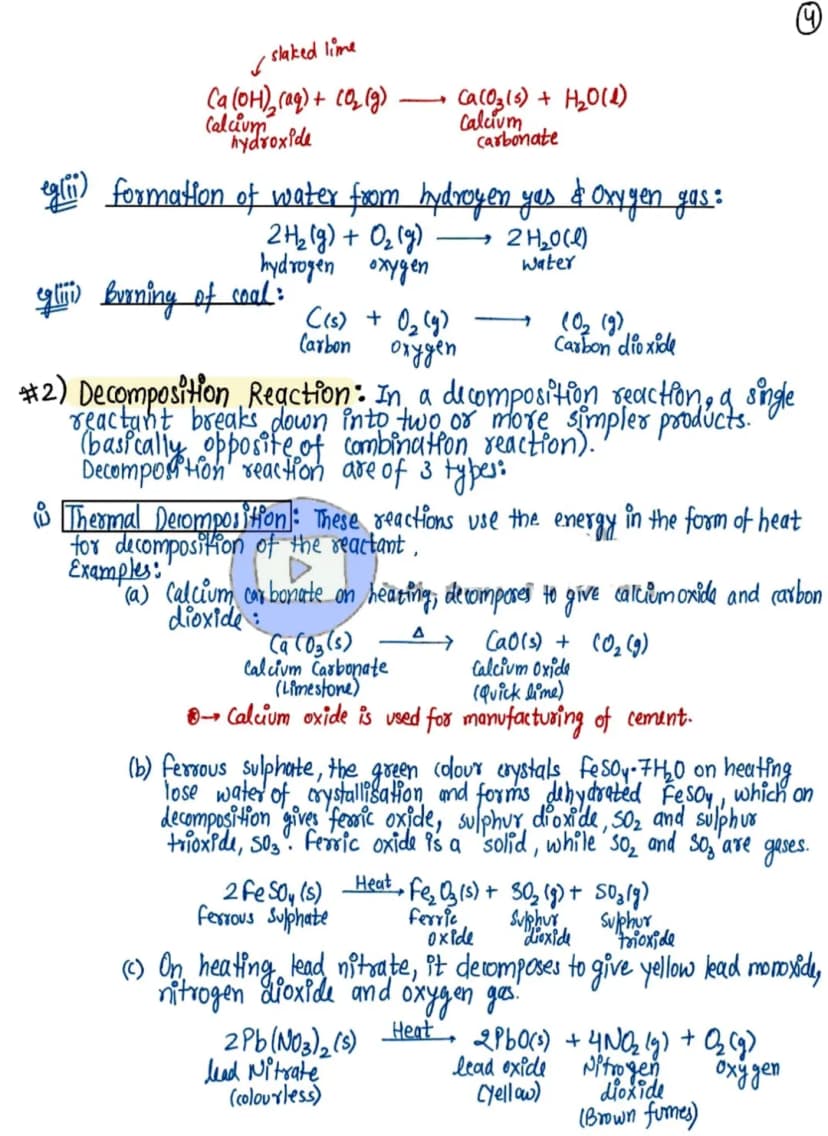
Combination and Decomposition Reactions
These two reaction types are opposites, making them easier to understand once you grasp the pattern. Combination reactions take multiple reactants and merge them into one product - think of it as substances joining forces.
The classic example is quick lime plus water forming slaked lime: CaO + H₂O → Ca(OH)₂ + heat. This reaction is actually used for whitewashing walls because the slaked lime slowly reacts with carbon dioxide in air to create a shiny calcium carbonate coating.
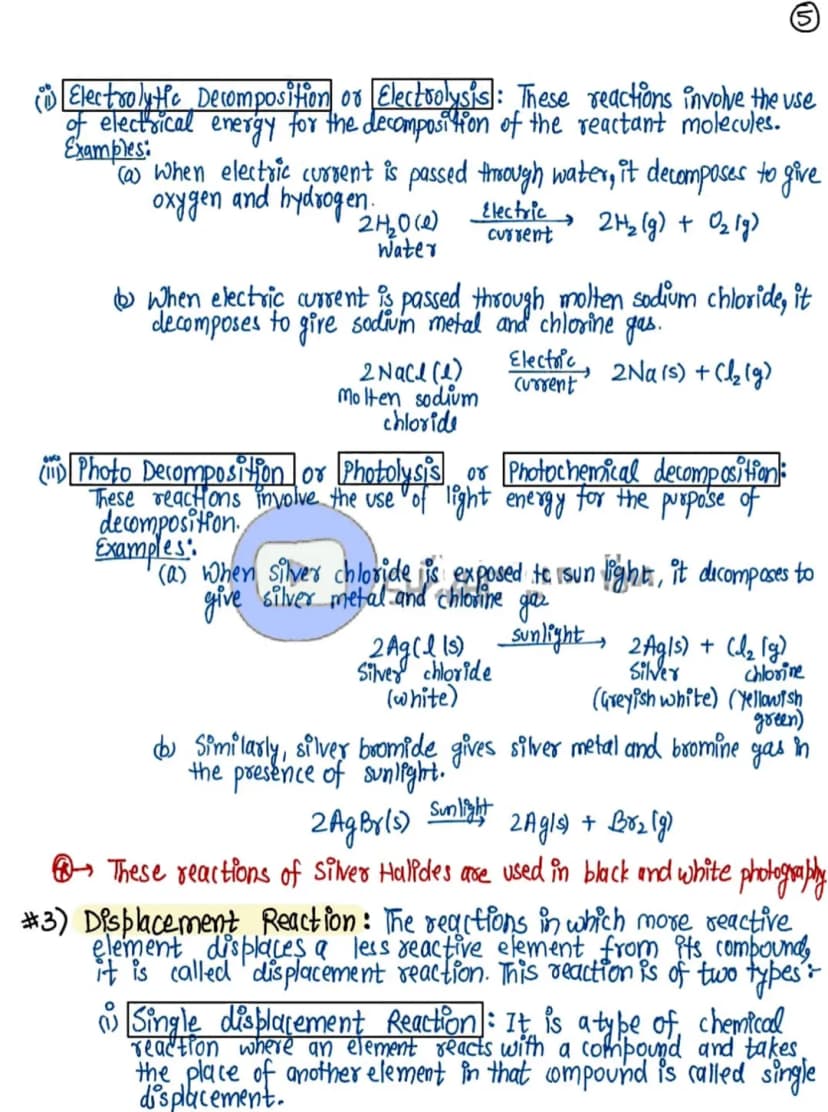
Decomposition reactions do the reverse - one reactant breaks into multiple simpler products. These come in three flavours depending on the energy source: thermal decomposition (using heat), electrolytic decomposition (using electricity), and photochemical decomposition (using light).
Silver chloride breaking down in sunlight is a perfect example of photochemical decomposition - this reaction is actually the basis of old-fashioned black and white photography.
Memory Trick: Combination = coming together, Decomposition = breaking apart. Simple as that!
5
of 10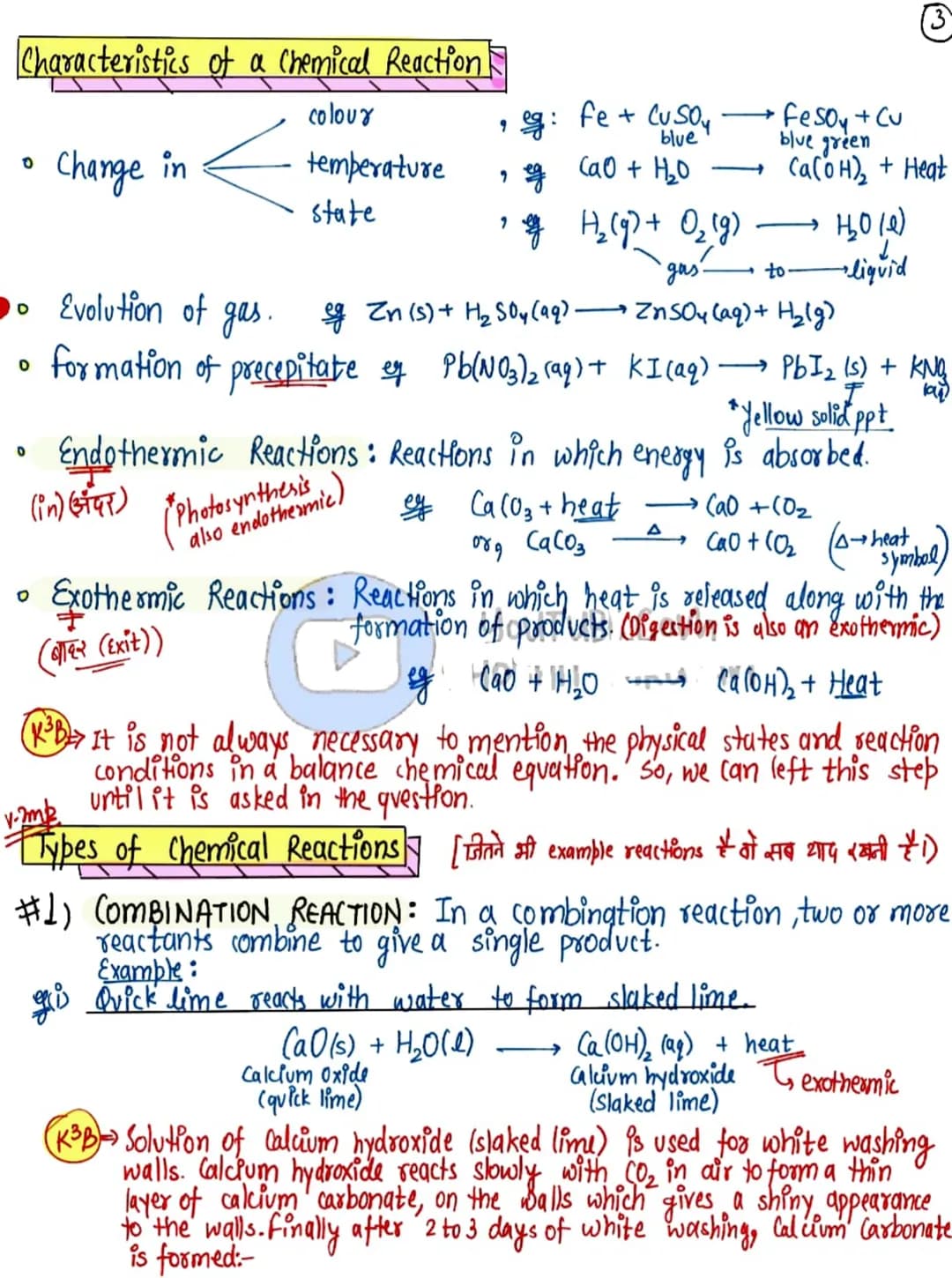
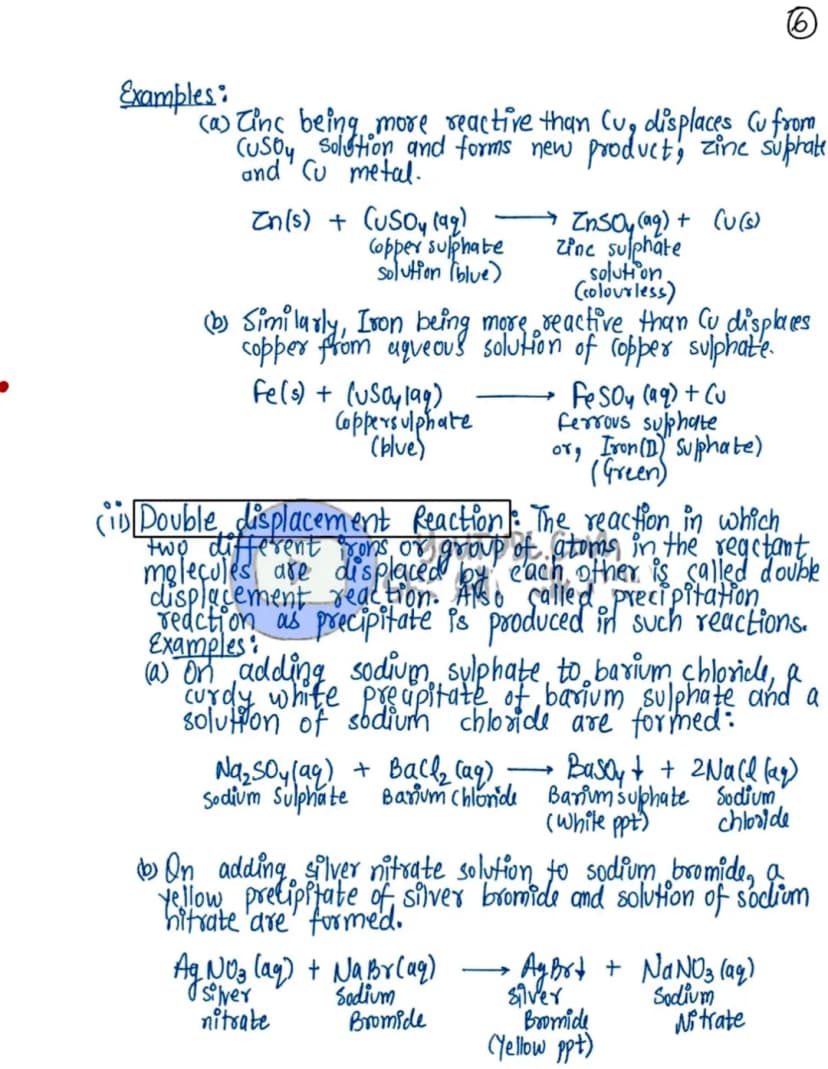
Displacement Reactions
Displacement reactions follow a simple rule: more reactive elements kick out less reactive ones from their compounds. It's like a popularity contest where the more reactive element always wins.
Single displacement involves one element replacing another in a compound. When zinc meets copper sulphate, zinc displaces copper because it's more reactive: Zn + CuSO₄ → ZnSO₄ + Cu. You'll see the blue copper sulphate solution become colourless as zinc sulphate forms.
Double displacement involves two compounds swapping partners - like a chemical square dance. When sodium sulphate meets barium chloride, they exchange ions to form barium sulphate (a white precipitate) plus sodium chloride.
These reactions often create precipitates (insoluble solids that appear in solutions), making them easy to spot. The key is remembering which elements are more reactive than others.
Test Tip: Always check the reactivity series when predicting displacement reactions - it tells you which element will win the battle!
6
of 10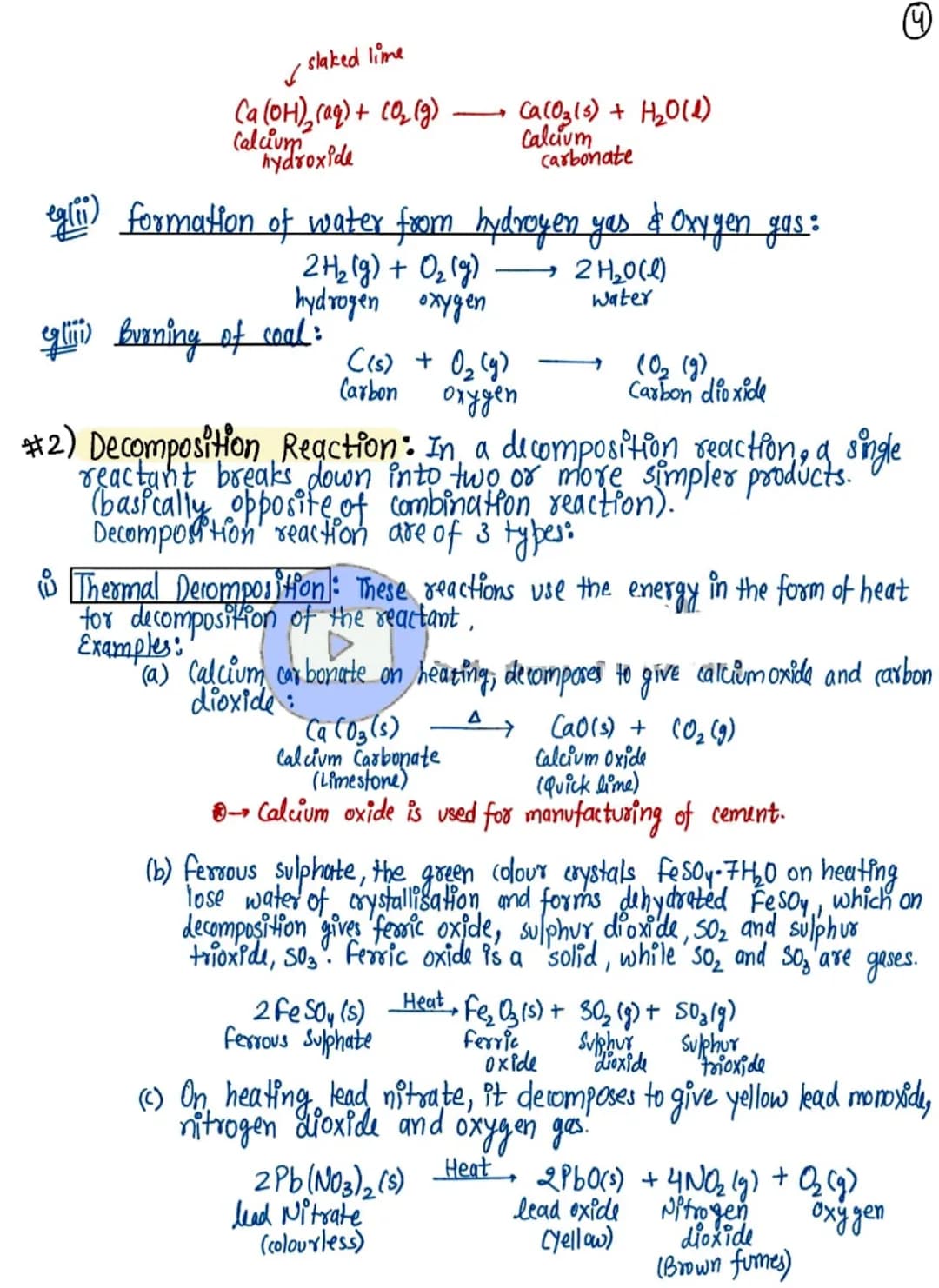
Oxidation, Reduction, and Redox
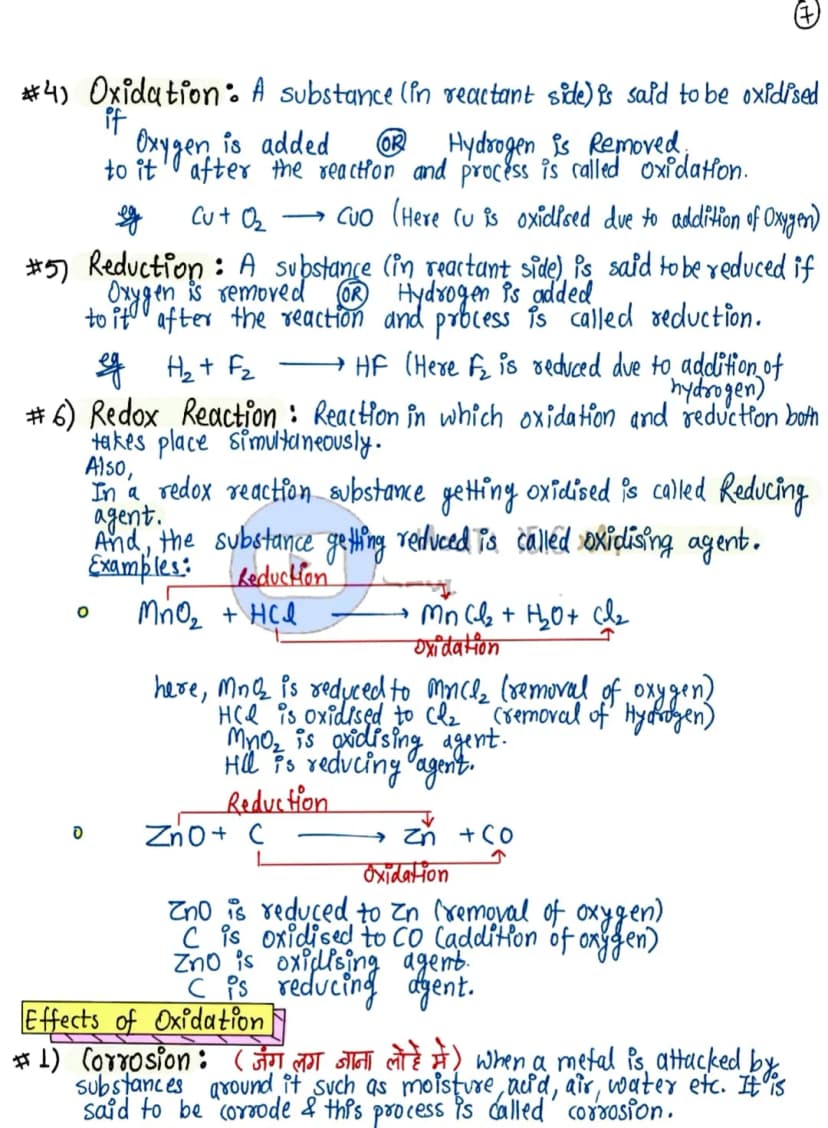
Don't let these terms intimidate you - oxidation and reduction are just fancy ways of describing what happens to substances during reactions. Oxidation means gaining oxygen or losing hydrogen, while reduction means losing oxygen or gaining hydrogen.
Redox reactions are special because both processes happen simultaneously - one substance gets oxidised while another gets reduced. It's like a chemical trade-off where electrons change hands between substances.
Here's the twist: the substance that gets oxidised is called the reducing agent (because it causes reduction in the other substance), while the substance that gets reduced is the oxidising agent. Think of them as chemical matchmakers.
In the reaction ZnO + C → Zn + CO, zinc oxide loses oxygen (gets reduced) while carbon gains oxygen (gets oxidised). This makes ZnO the oxidising agent and carbon the reducing agent.
Memory Hack: OIL RIG - Oxidation Involves Loss , Reduction Involves Gain!
7
of 10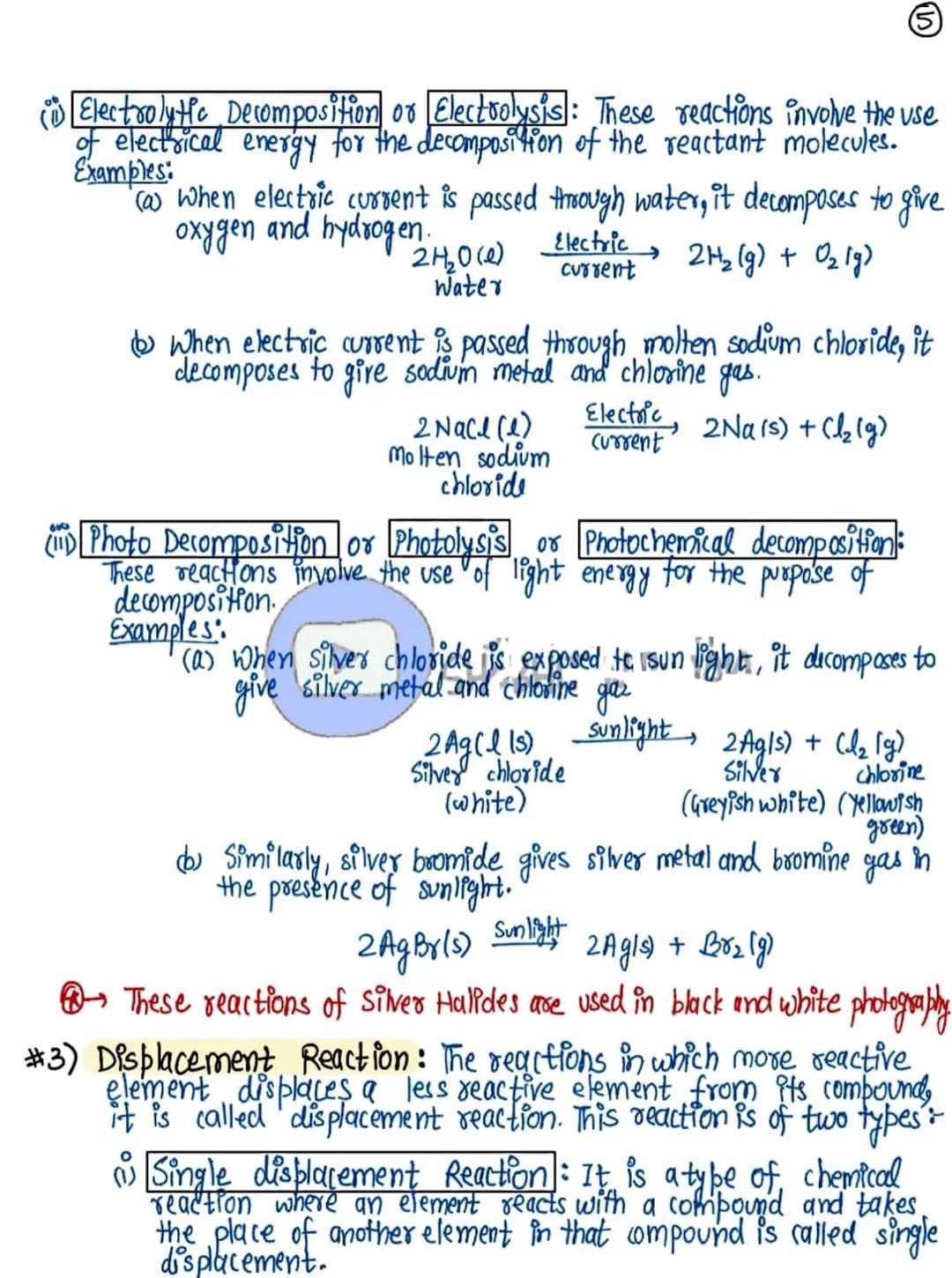
Real-World Effects: Corrosion and Rancidity
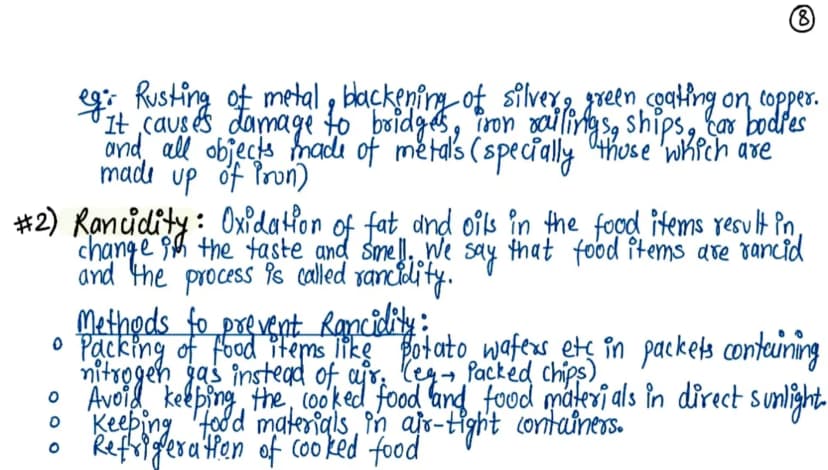
Chemistry doesn't just happen in labs - these oxidation reactions affect your daily life in ways you might not realise. Corrosion is when metals get attacked by moisture, acids, or air, leading to rust on iron, tarnishing on silver, or green coating on copper.
Corrosion costs billions in damage to bridges, cars, ships, and buildings. That rust on your bike? That's iron combining with oxygen and water to form iron oxide - a classic oxidation reaction that weakens the metal over time.
Rancidity happens when fats and oils in food get oxidised, creating those awful tastes and smells in spoiled food. This is why chips are packed with nitrogen gas instead of regular air - nitrogen doesn't react with fats like oxygen does.
You can prevent rancidity by keeping food away from direct sunlight, storing it in airtight containers, and refrigerating cooked meals. These methods limit exposure to oxygen and slow down oxidation reactions.
Life Hack: Understanding oxidation helps you keep your stuff lasting longer - from preventing rust to keeping food fresh!
8
of 10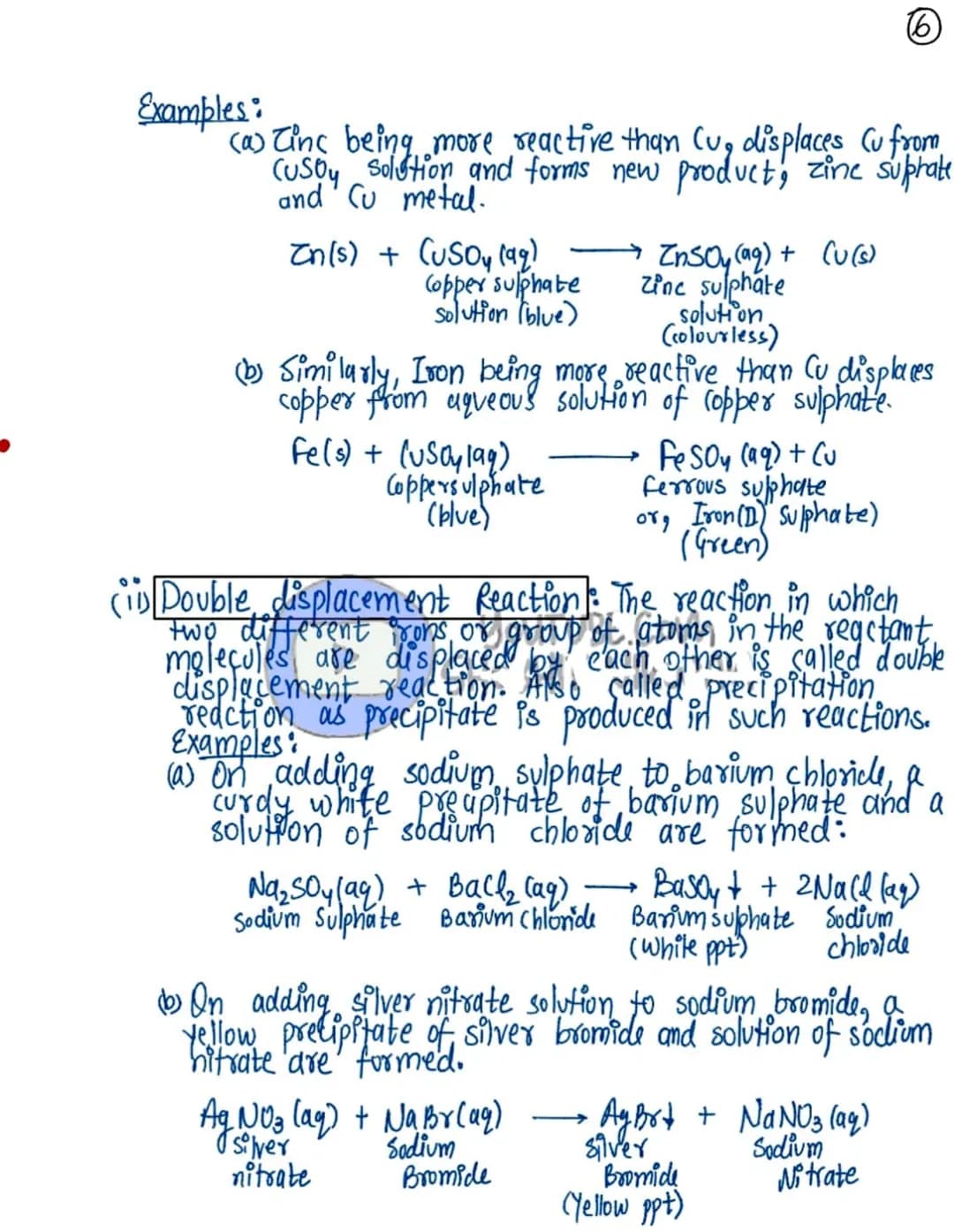
9
of 10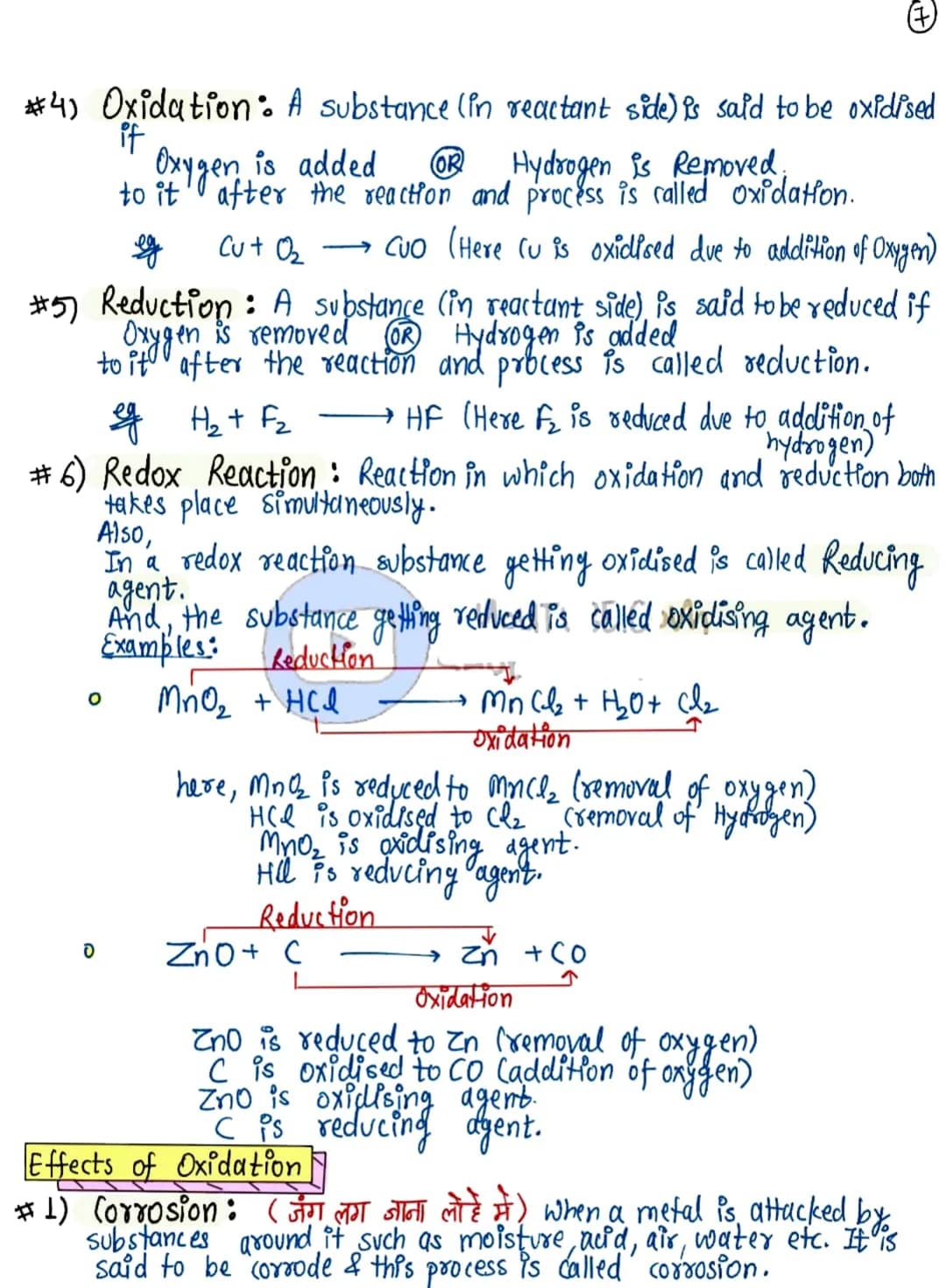
10
of 10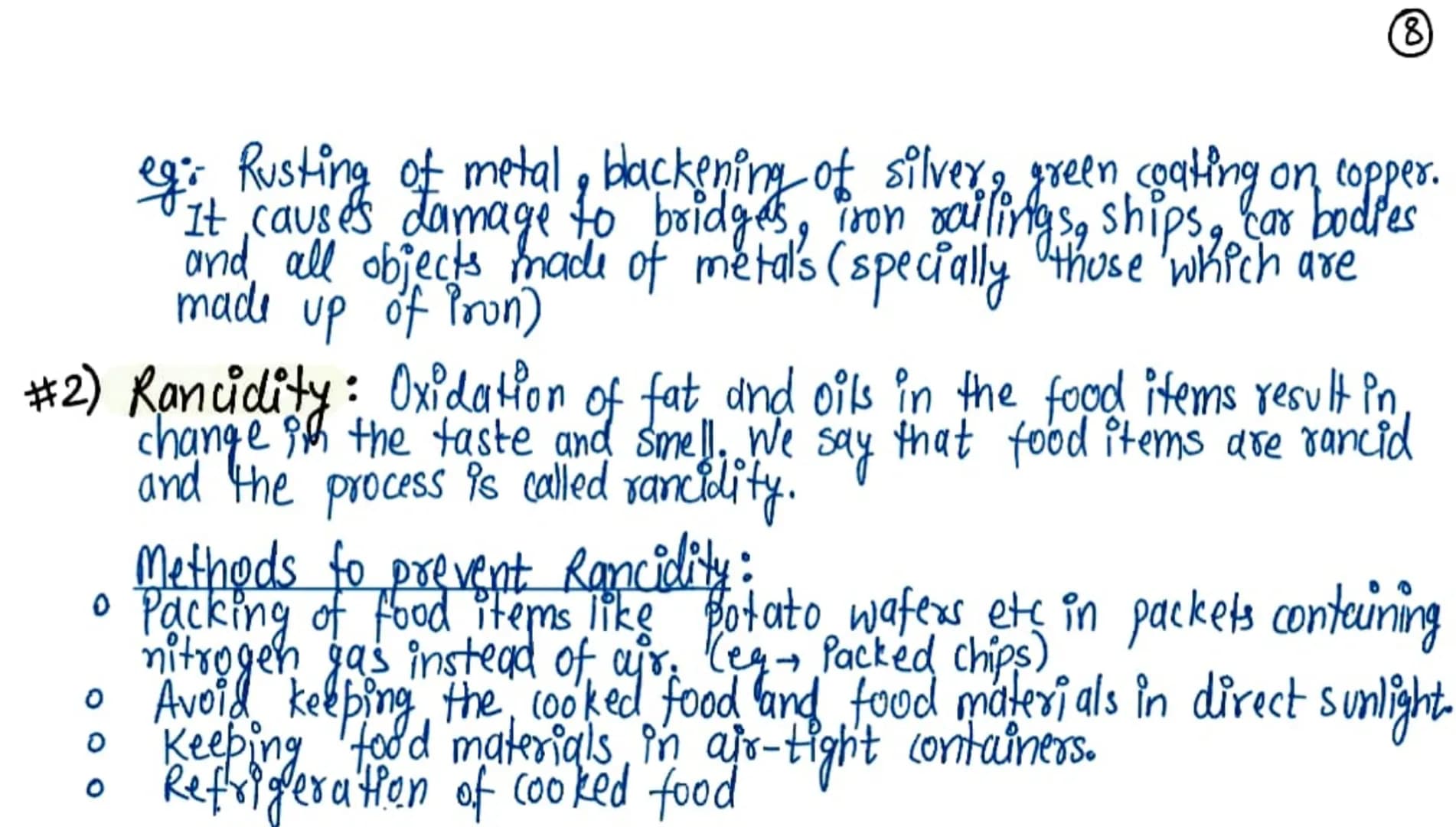
We thought you’d never ask...
What is the Knowunity AI companion?
Our AI companion is specifically built for the needs of students. Based on the millions of content pieces we have on the platform we can provide truly meaningful and relevant answers to students. But its not only about answers, the companion is even more about guiding students through their daily learning challenges, with personalised study plans, quizzes or content pieces in the chat and 100% personalisation based on the students skills and developments.
Where can I download the Knowunity app?
You can download the app in the Google Play Store and in the Apple App Store.
Is Knowunity really free of charge?
That's right! Enjoy free access to study content, connect with fellow students, and get instant help – all at your fingertips.
Most popular content: Chemical Equation
1Most popular content in Chemistry
9Most popular content
9Can't find what you're looking for? Explore other subjects.
Students love us — and so will you.
4.6/5App Store
4.7/5Google Play
The app is very easy to use and well designed. I have found everything I was looking for so far and have been able to learn a lot from the presentations! I will definitely use the app for a class assignment! And of course it also helps a lot as an inspiration.
Stefan SiOS user
This app is really great. There are so many study notes and help [...]. My problem subject is French, for example, and the app has so many options for help. Thanks to this app, I have improved my French. I would recommend it to anyone.
Samantha KlichAndroid user
Wow, I am really amazed. I just tried the app because I've seen it advertised many times and was absolutely stunned. This app is THE HELP you want for school and above all, it offers so many things, such as workouts and fact sheets, which have been VERY helpful to me personally.
AnnaiOS user
Chemistry138 views·Updated Jun 3, 2026·10 pagesMaster Chemical Reactions: Handwritten Notes for Easy Learning
Ahmed Nour ✓™@ahmednour
Chemical reactions are happening everywhere around you - from the food you digest to the rust forming on metal. Understanding how substances transform and interact with each other is crucial for mastering chemistry and will help you make sense of... Show more
1
of 10Sign up to see the content. It's free!
- Access to all documents
- Improve your grades
- Join milions of students
Chemical Reactions and Equations Overview
Chemistry isn't just about memorising formulas - it's about understanding how matter changes and transforms around us every day. This topic covers the fundamental ways substances interact and change into new materials.
Chemical reactions involve substances combining, breaking apart, or rearranging to form completely new materials with different properties. Think of it like cooking - when you mix ingredients and apply heat, you get something entirely different from what you started with.
A chemical equation is simply the shorthand way scientists write these reactions using symbols and formulas instead of words. It's like a recipe that shows exactly what goes in and what comes out.
Quick Tip: Master balancing equations early - it's the foundation for everything else in chemistry and will save you loads of time on tests!
2
of 10Sign up to see the content. It's free!
- Access to all documents
- Improve your grades
- Join milions of students
Understanding Chemical Equations
You'll spend a lot of time working with chemical equations, so getting comfortable with them now will make everything easier later. A balanced chemical equation ensures the same number of each type of atom appears on both sides - this follows the law that matter can't just disappear during reactions.
Balancing equations uses the "hit and trial method" (basically educated guessing with maths). Start by counting atoms of each element, then add coefficients (those numbers in front of formulas) until both sides match. Always tackle the element with the biggest difference first.
Here's the step-by-step approach: count atoms on each side, identify which element is most unbalanced, multiply entire compounds by whole numbers to balance that element, then repeat for other elements. Practice with simple equations first before moving to complex ones.
Pro Tip: Remember that when you add a coefficient, it multiplies the entire compound - you can't just multiply part of a formula!
3
of 10Sign up to see the content. It's free!
- Access to all documents
- Improve your grades
- Join milions of students
Spotting Chemical Reactions
Chemical reactions aren't invisible - they give you clear signs that something's happening. Learning to recognise these characteristics of chemical reactions will help you identify when substances are actually changing, not just mixing.
Colour changes are often the most obvious clue. When iron reacts with copper sulphate, the blue solution turns green - that's a dead giveaway that a reaction occurred. Temperature changes matter too: some reactions absorb heat (getting cold) while others release it (getting hot).
You might also see changes in state (gas becoming liquid), gas evolution (bubbling), or precipitate formation (solid appearing in a liquid). Each of these signs tells you that atoms are rearranging into new combinations.
Endothermic reactions absorb energy from surroundings (like photosynthesis), while exothermic reactions release energy (like digestion or burning). Understanding which type you're dealing with helps predict what conditions the reaction needs.
Remember: If you see bubbling, colour changes, or temperature shifts during a reaction, that's your confirmation that chemical bonds are breaking and forming!
4
of 10Sign up to see the content. It's free!
- Access to all documents
- Improve your grades
- Join milions of students
Combination and Decomposition Reactions
These two reaction types are opposites, making them easier to understand once you grasp the pattern. Combination reactions take multiple reactants and merge them into one product - think of it as substances joining forces.
The classic example is quick lime plus water forming slaked lime: CaO + H₂O → Ca(OH)₂ + heat. This reaction is actually used for whitewashing walls because the slaked lime slowly reacts with carbon dioxide in air to create a shiny calcium carbonate coating.
Decomposition reactions do the reverse - one reactant breaks into multiple simpler products. These come in three flavours depending on the energy source: thermal decomposition (using heat), electrolytic decomposition (using electricity), and photochemical decomposition (using light).
Silver chloride breaking down in sunlight is a perfect example of photochemical decomposition - this reaction is actually the basis of old-fashioned black and white photography.
Memory Trick: Combination = coming together, Decomposition = breaking apart. Simple as that!
5
of 10Sign up to see the content. It's free!
- Access to all documents
- Improve your grades
- Join milions of students
Displacement Reactions
Displacement reactions follow a simple rule: more reactive elements kick out less reactive ones from their compounds. It's like a popularity contest where the more reactive element always wins.
Single displacement involves one element replacing another in a compound. When zinc meets copper sulphate, zinc displaces copper because it's more reactive: Zn + CuSO₄ → ZnSO₄ + Cu. You'll see the blue copper sulphate solution become colourless as zinc sulphate forms.
Double displacement involves two compounds swapping partners - like a chemical square dance. When sodium sulphate meets barium chloride, they exchange ions to form barium sulphate (a white precipitate) plus sodium chloride.
These reactions often create precipitates (insoluble solids that appear in solutions), making them easy to spot. The key is remembering which elements are more reactive than others.
Test Tip: Always check the reactivity series when predicting displacement reactions - it tells you which element will win the battle!
6
of 10Sign up to see the content. It's free!
- Access to all documents
- Improve your grades
- Join milions of students
Oxidation, Reduction, and Redox
Don't let these terms intimidate you - oxidation and reduction are just fancy ways of describing what happens to substances during reactions. Oxidation means gaining oxygen or losing hydrogen, while reduction means losing oxygen or gaining hydrogen.
Redox reactions are special because both processes happen simultaneously - one substance gets oxidised while another gets reduced. It's like a chemical trade-off where electrons change hands between substances.
Here's the twist: the substance that gets oxidised is called the reducing agent (because it causes reduction in the other substance), while the substance that gets reduced is the oxidising agent. Think of them as chemical matchmakers.
In the reaction ZnO + C → Zn + CO, zinc oxide loses oxygen (gets reduced) while carbon gains oxygen (gets oxidised). This makes ZnO the oxidising agent and carbon the reducing agent.
Memory Hack: OIL RIG - Oxidation Involves Loss , Reduction Involves Gain!
7
of 10Sign up to see the content. It's free!
- Access to all documents
- Improve your grades
- Join milions of students
Real-World Effects: Corrosion and Rancidity
Chemistry doesn't just happen in labs - these oxidation reactions affect your daily life in ways you might not realise. Corrosion is when metals get attacked by moisture, acids, or air, leading to rust on iron, tarnishing on silver, or green coating on copper.
Corrosion costs billions in damage to bridges, cars, ships, and buildings. That rust on your bike? That's iron combining with oxygen and water to form iron oxide - a classic oxidation reaction that weakens the metal over time.
Rancidity happens when fats and oils in food get oxidised, creating those awful tastes and smells in spoiled food. This is why chips are packed with nitrogen gas instead of regular air - nitrogen doesn't react with fats like oxygen does.
You can prevent rancidity by keeping food away from direct sunlight, storing it in airtight containers, and refrigerating cooked meals. These methods limit exposure to oxygen and slow down oxidation reactions.
Life Hack: Understanding oxidation helps you keep your stuff lasting longer - from preventing rust to keeping food fresh!
8
of 10Sign up to see the content. It's free!
- Access to all documents
- Improve your grades
- Join milions of students
9
of 10Sign up to see the content. It's free!
- Access to all documents
- Improve your grades
- Join milions of students
10
of 10Sign up to see the content. It's free!
- Access to all documents
- Improve your grades
- Join milions of students
We thought you’d never ask...
What is the Knowunity AI companion?
Our AI companion is specifically built for the needs of students. Based on the millions of content pieces we have on the platform we can provide truly meaningful and relevant answers to students. But its not only about answers, the companion is even more about guiding students through their daily learning challenges, with personalised study plans, quizzes or content pieces in the chat and 100% personalisation based on the students skills and developments.
Where can I download the Knowunity app?
You can download the app in the Google Play Store and in the Apple App Store.
Is Knowunity really free of charge?
That's right! Enjoy free access to study content, connect with fellow students, and get instant help – all at your fingertips.
Most popular content: Chemical Equation
1Most popular content in Chemistry
9Most popular content
9Can't find what you're looking for? Explore other subjects.
Students love us — and so will you.
4.6/5App Store
4.7/5Google Play
The app is very easy to use and well designed. I have found everything I was looking for so far and have been able to learn a lot from the presentations! I will definitely use the app for a class assignment! And of course it also helps a lot as an inspiration.
Stefan SiOS user
This app is really great. There are so many study notes and help [...]. My problem subject is French, for example, and the app has so many options for help. Thanks to this app, I have improved my French. I would recommend it to anyone.
Samantha KlichAndroid user
Wow, I am really amazed. I just tried the app because I've seen it advertised many times and was absolutely stunned. This app is THE HELP you want for school and above all, it offers so many things, such as workouts and fact sheets, which have been VERY helpful to me personally.
AnnaiOS user