
This Earth Science diagnostic test covers the fundamental concepts you'll...
 Earth and Space Science91 views·Updated Jun 4, 2026·13 pages
Philsca EarthScience Entrance Review
T
theo.lexie.halili@theo.lexie.hali
1 / 10
1
of 10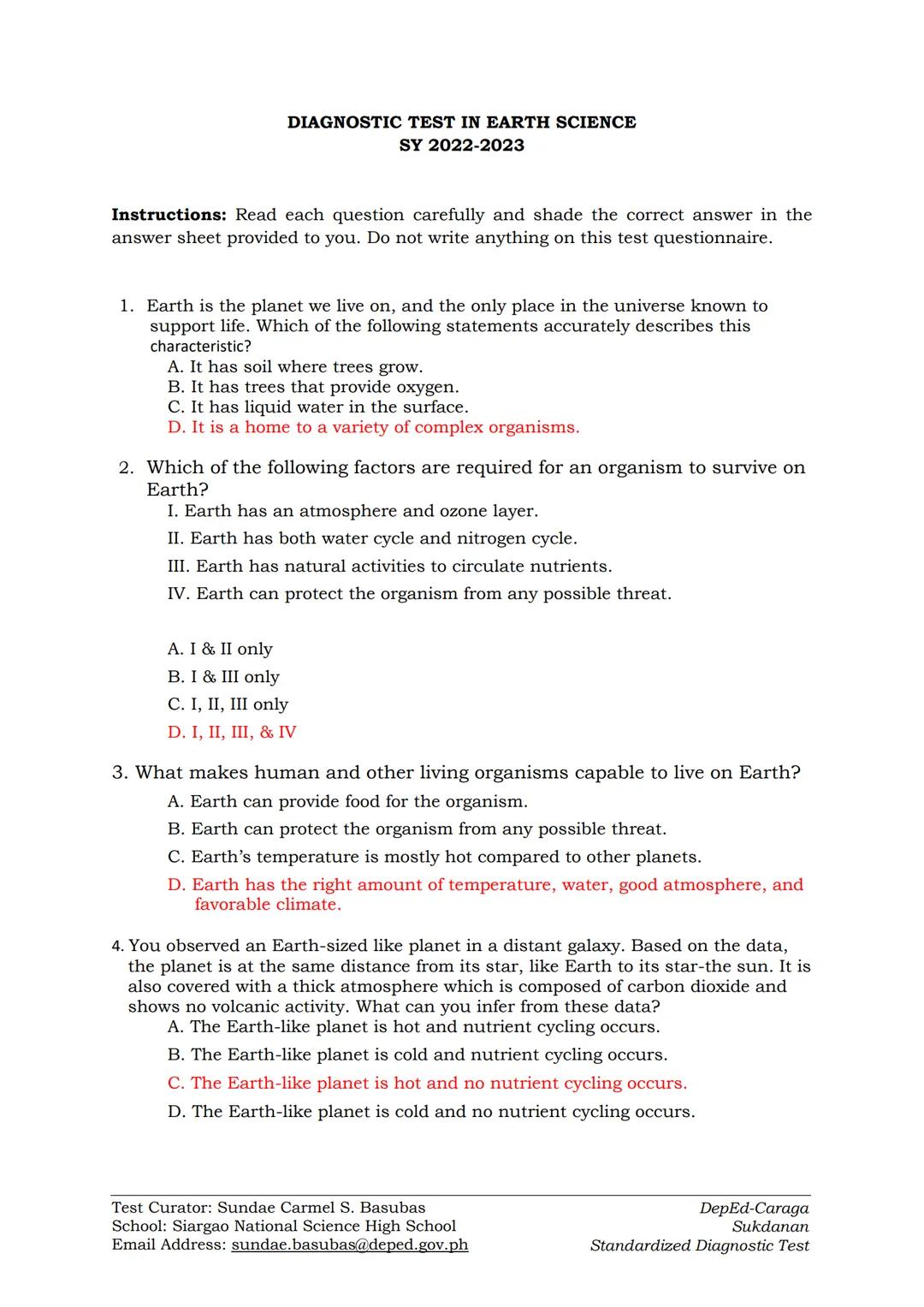
Earth's Habitability and Life-Supporting Characteristics
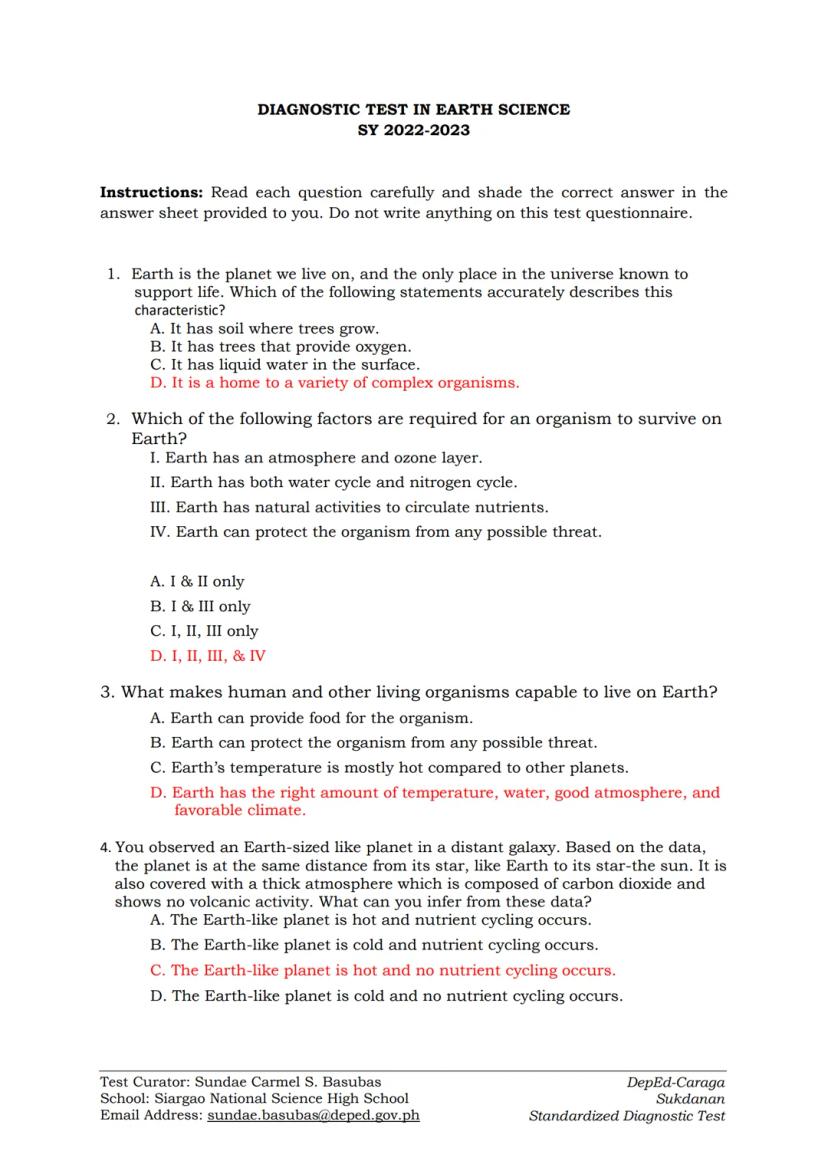
Ever wonder what makes Earth the only known planet that can support life? It's not just one thing – it's a perfect combination of factors working together. Earth's habitability depends on having liquid water on its surface, the right temperature range, and a protective atmosphere with an ozone layer.
The key factors that allow organisms to survive include Earth's atmosphere and ozone layer protection, essential cycles like the water and nitrogen cycles, and natural processes that circulate nutrients. Think of it like a perfectly balanced recipe – remove any ingredient and life as we know it couldn't exist.
When you see questions about Earth-like planets, remember that distance from a star isn't everything. A planet with a thick carbon dioxide atmosphere and no volcanic activity would likely be too hot and lack the nutrient cycling that life needs. Volcanic activity might seem destructive, but it's actually crucial for recycling nutrients and maintaining Earth's dynamic systems.
Quick Tip: Remember that Earth's life-supporting characteristics work as a system – atmosphere, water, temperature, and nutrient cycles all depend on each other!
2
of 10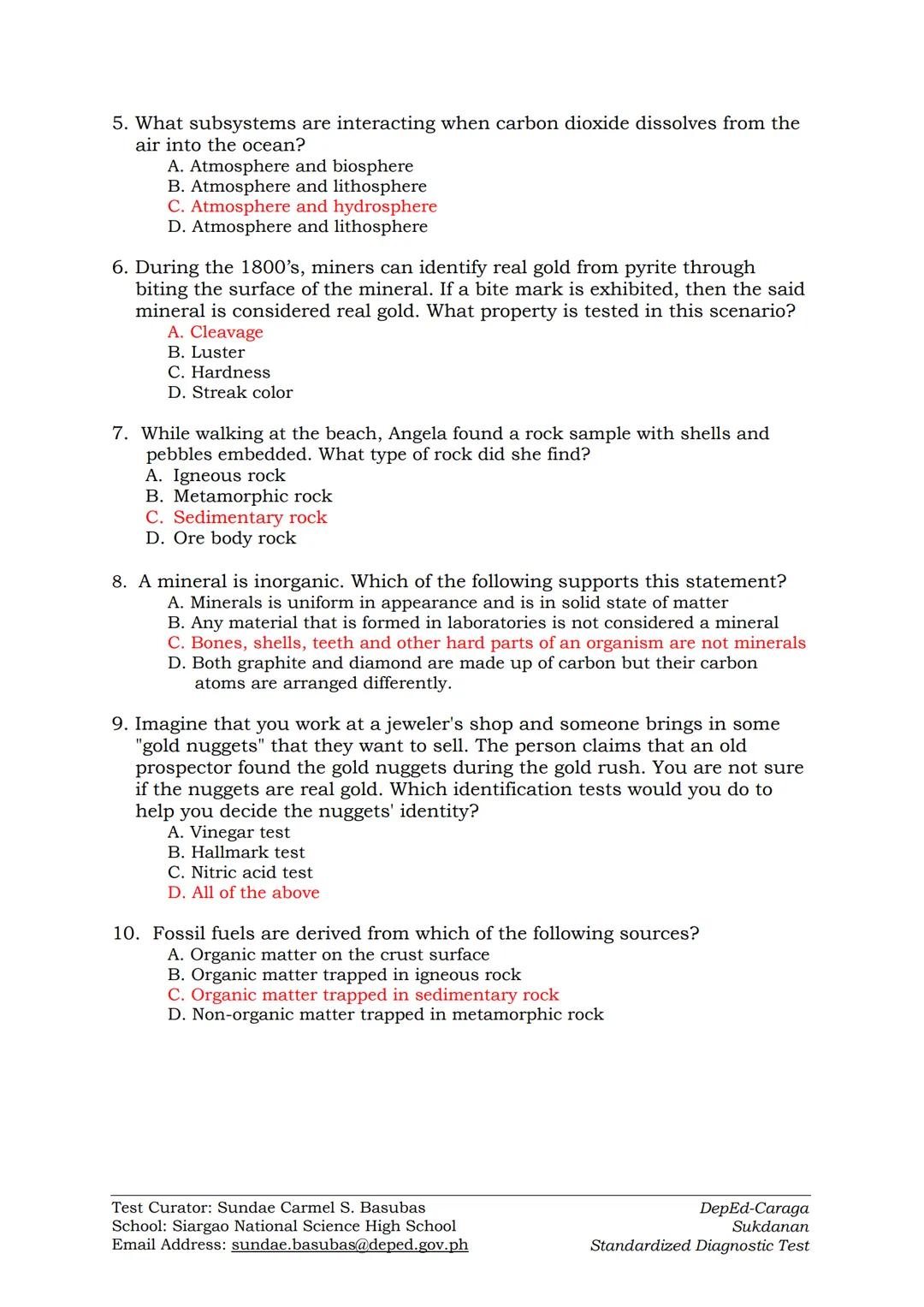
Earth's Subsystems, Minerals, and Rock Types
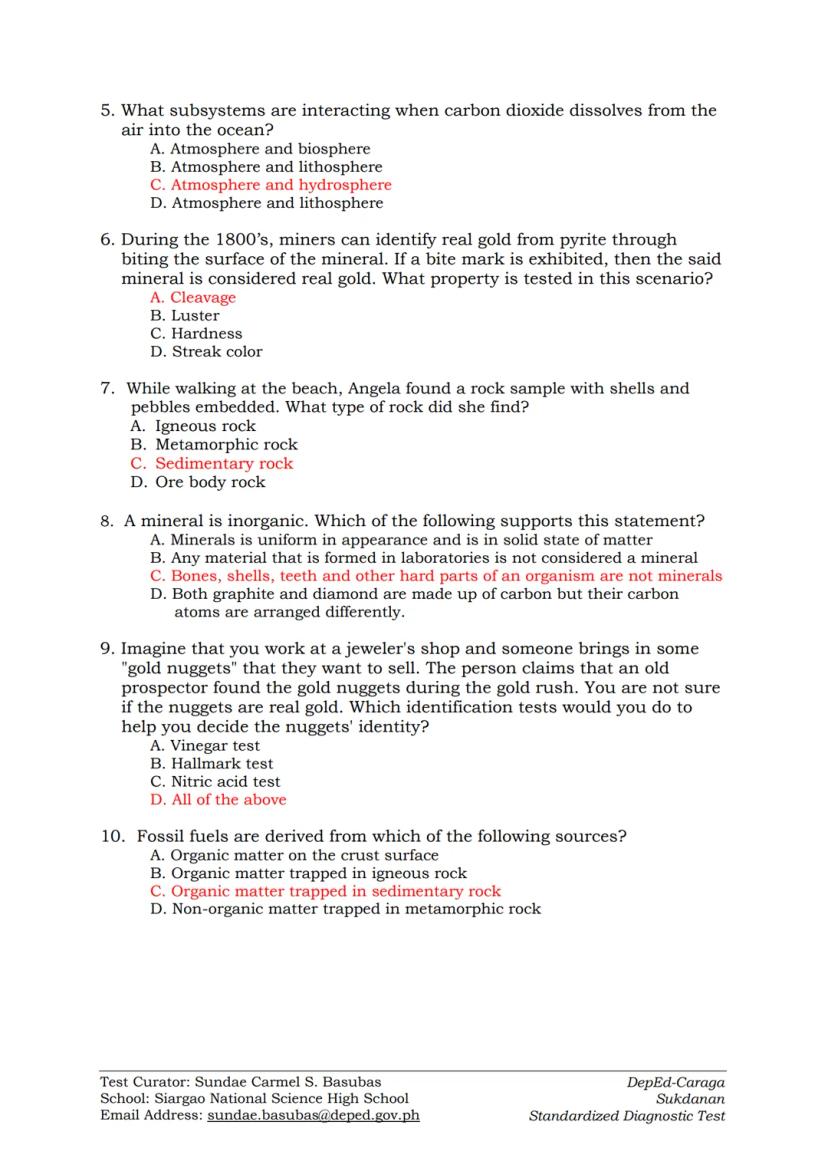
When carbon dioxide dissolves from air into the ocean, you're witnessing the atmosphere and hydrosphere interacting – two of Earth's four major subsystems working together. Understanding these interactions helps explain everything from weather patterns to climate change.
Mineral identification is like being a detective with physical clues. When miners bit gold to test it, they were checking its hardness – real gold is soft enough to leave bite marks, while fool's gold (pyrite) is much harder. Other important properties include luster, streak color, and cleavage patterns.
Rock types tell stories about Earth's history. If you find a rock with shells and pebbles embedded in it, you've discovered a sedimentary rock – formed when materials settled and got cemented together over time. Remember: igneous rocks form from cooling magma, metamorphic rocks form from heat and pressure, and sedimentary rocks form from compressed layers of material.
Memory Hack: Think "SIM" – Sedimentary (layered), Igneous , Metamorphic !
3
of 10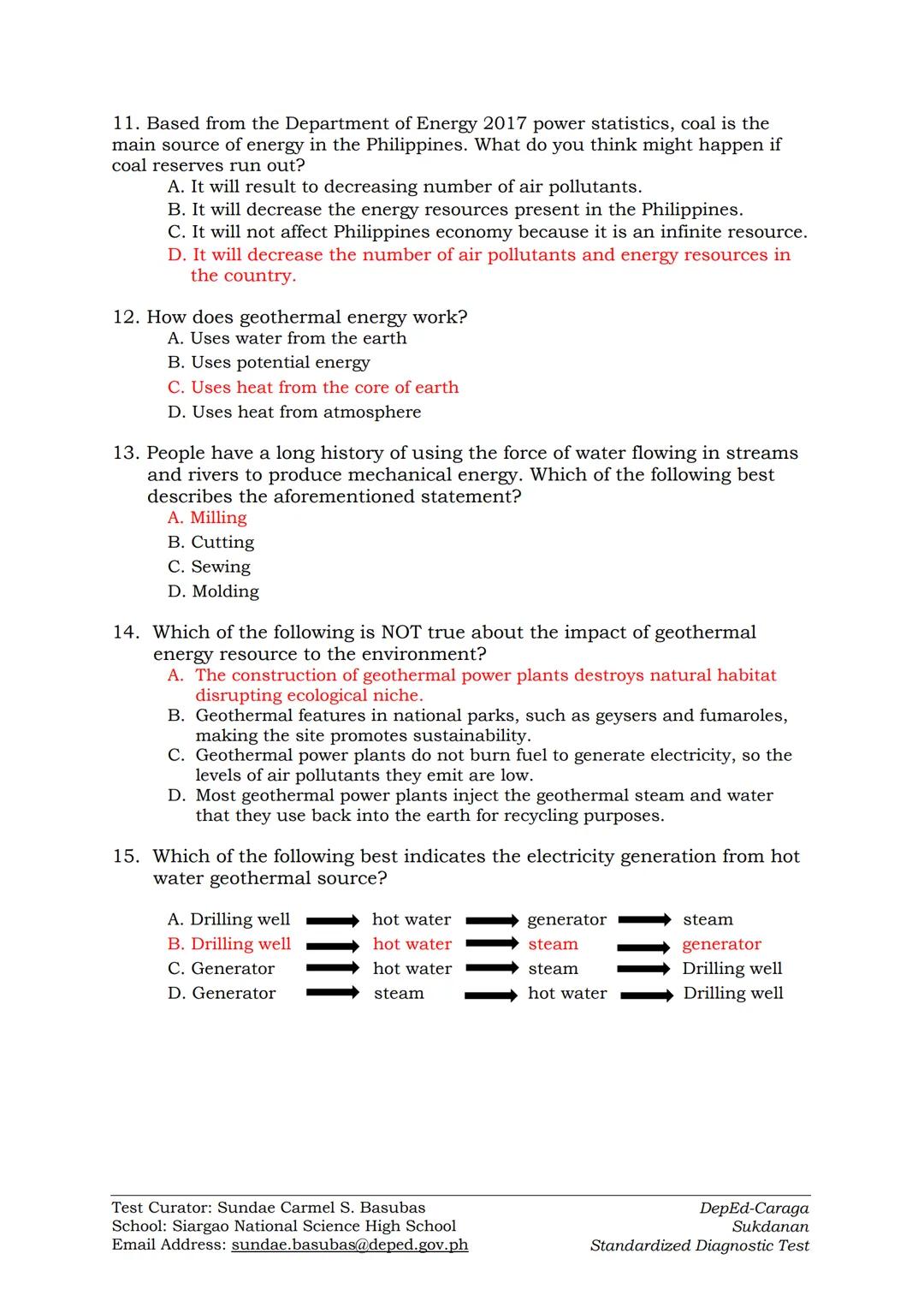
Energy Resources and Geothermal Power
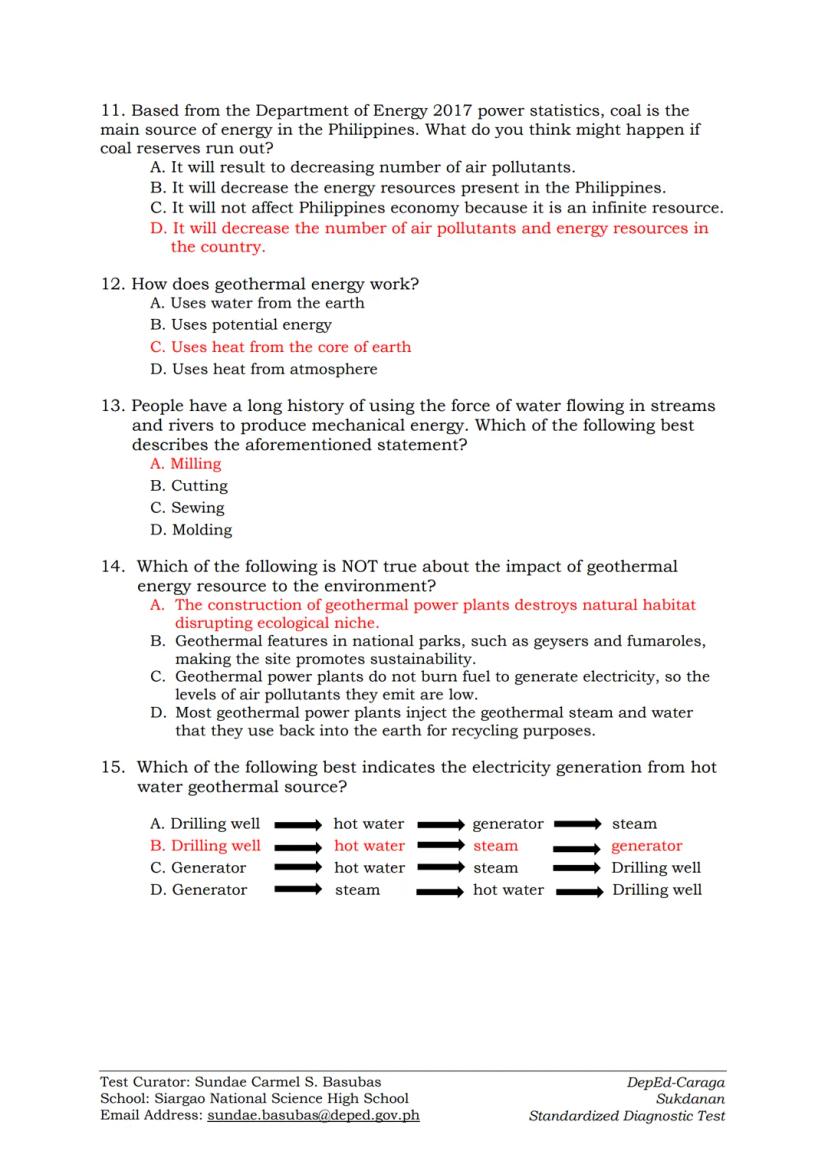
Coal might power much of the Philippines now, but what happens when it runs out? Fossil fuels come from organic matter trapped in sedimentary rocks over millions of years, making them finite resources. Running out would definitely decrease available energy resources, though it would also reduce air pollution.
Geothermal energy taps into heat from Earth's core – it's like having a massive furnace beneath our feet! The process works by drilling wells to access hot water and steam underground, which then drives generators to produce electricity. It's particularly valuable because it's renewable and produces very low emissions.
The environmental impacts of geothermal energy are mostly positive, but construction can disrupt natural habitats. However, most plants recycle the steam and water back into the earth, and they don't burn fuel like coal plants do. The process flows: drilling well → hot water → steam → generator → electricity.
Real-World Connection: Countries like Iceland get most of their energy from geothermal sources – imagine never worrying about running out of power!
4
of 10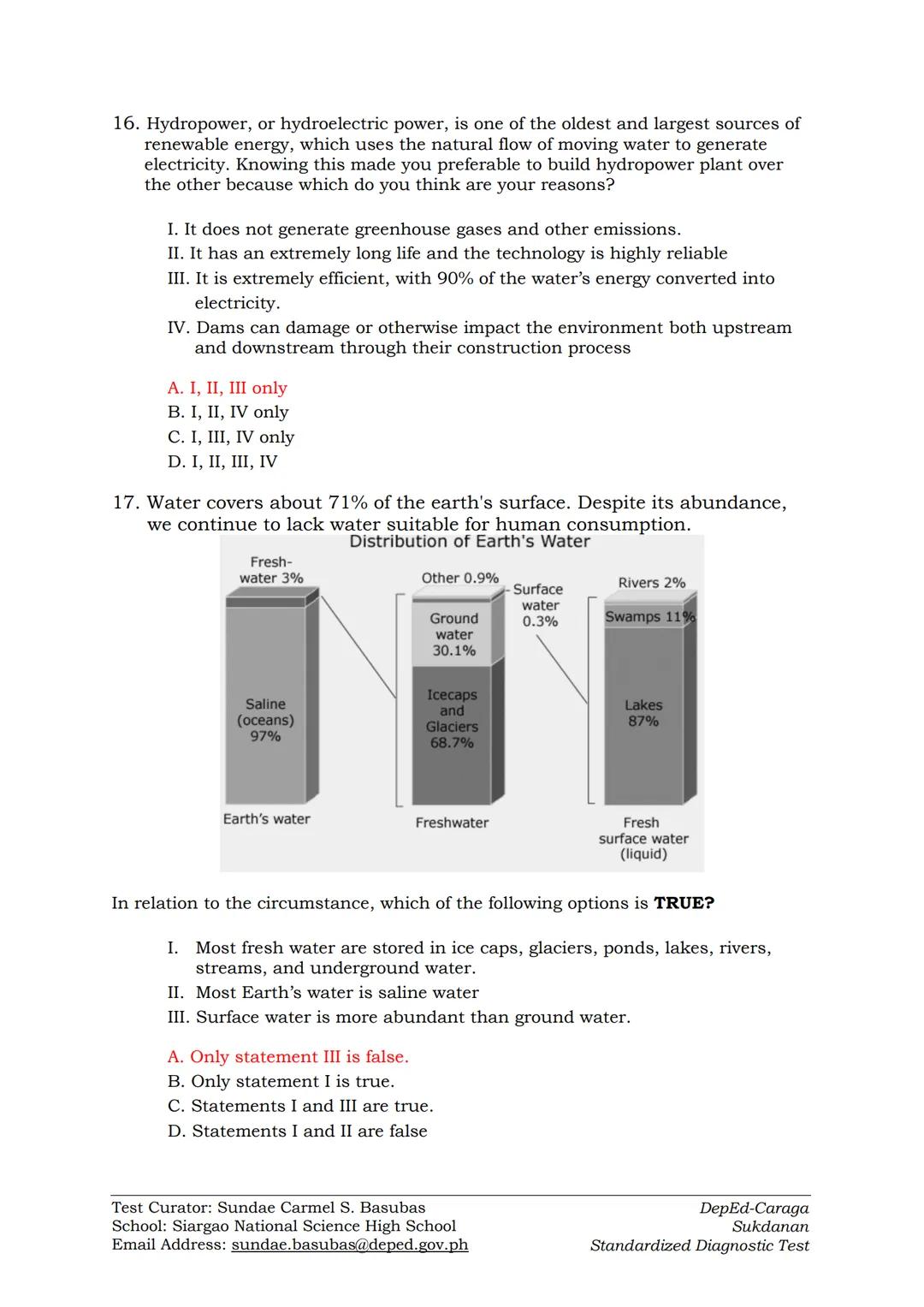
Water Resources and Hydropower
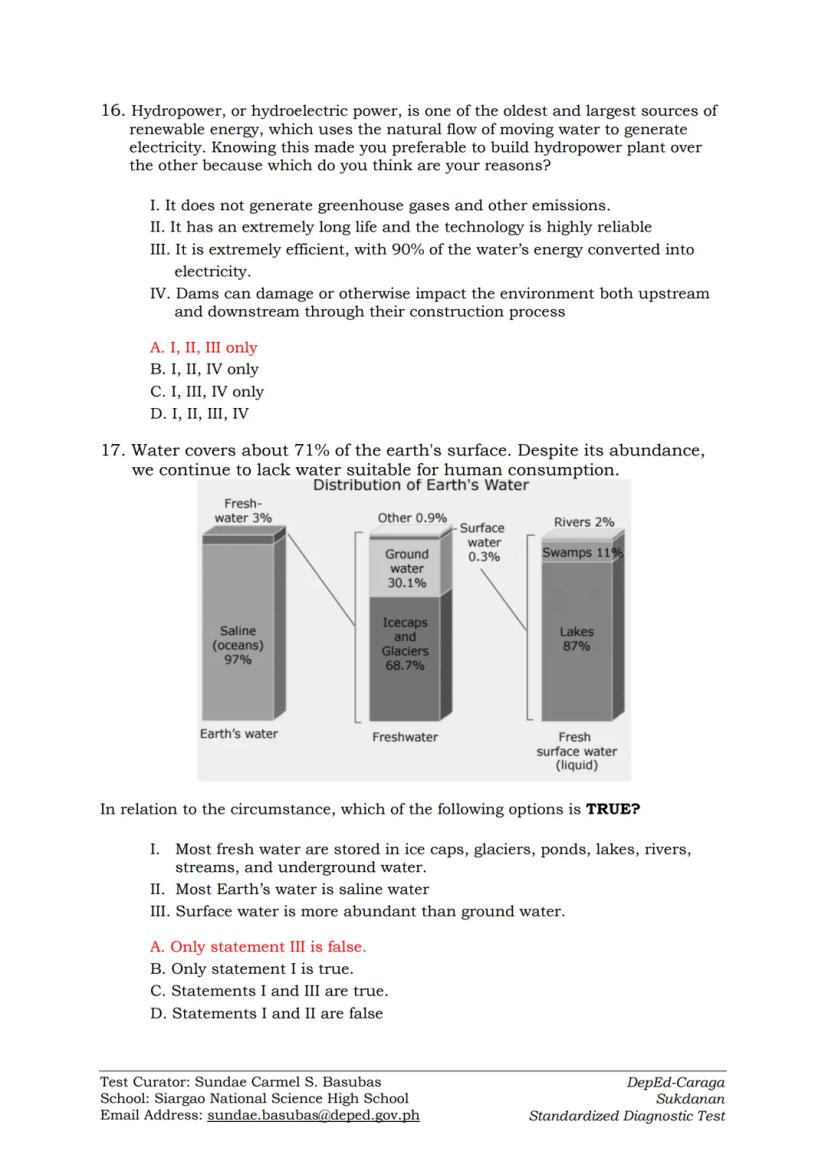
Here's a shocking fact: despite water covering 71% of Earth's surface, only 3% is freshwater, and most of that is frozen in ice caps and glaciers! This explains why water scarcity is such a global issue. The tiny fraction we can actually use makes water conservation incredibly important.
Hydropower is one of humanity's oldest energy sources, and it's incredibly efficient – converting about 90% of water's energy into electricity. It's attractive because it produces no greenhouse gases, lasts extremely long, and uses reliable technology. However, dam construction can impact both upstream and downstream environments.
Looking at the water distribution chart, you'll see that most of Earth's water is saline (97%), and most freshwater is locked in ice. Ground water is actually more abundant than surface water, which might surprise you since we see rivers and lakes but not underground reserves.
Water Wisdom: Every drop counts! Simple actions like fixing leaky toilets and taking shorter showers can make a real difference in water conservation.
5
of 10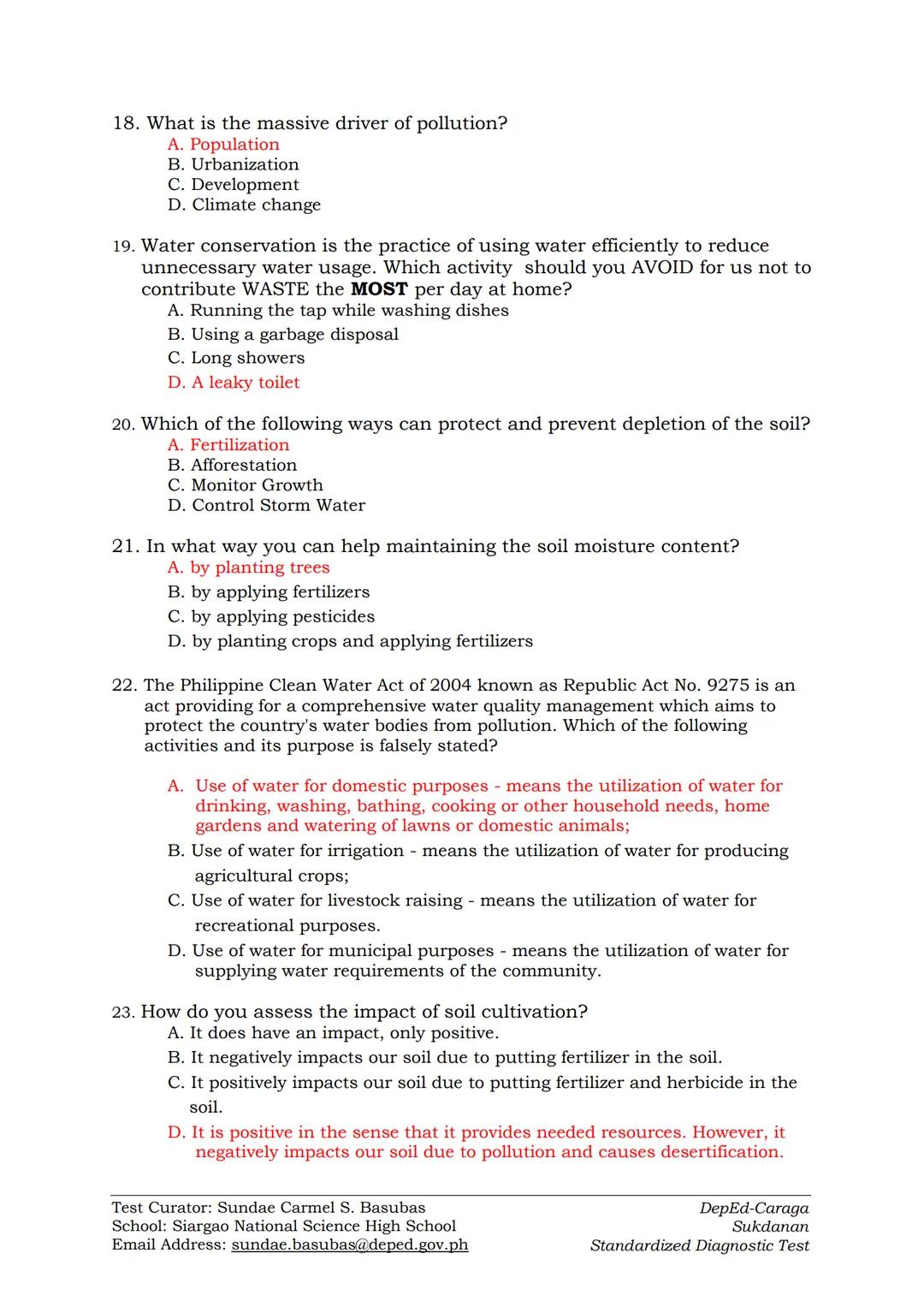
Environmental Protection and Waste Management
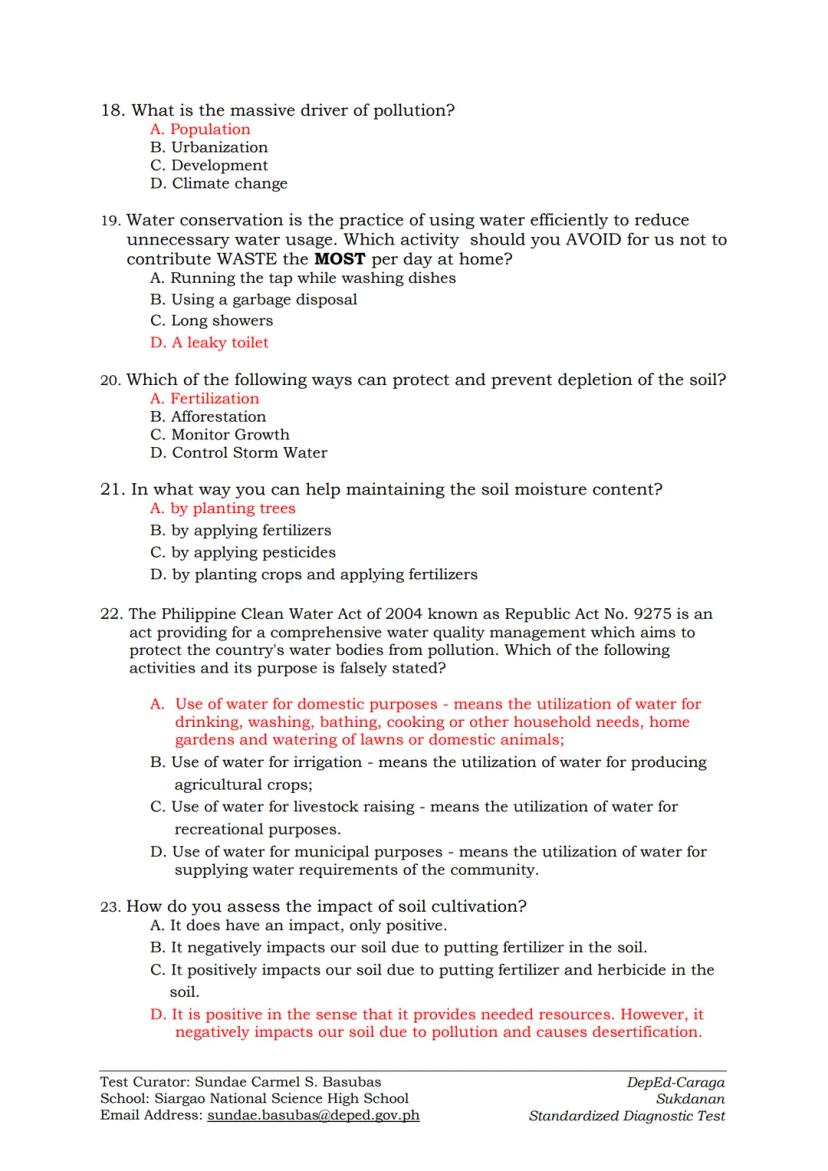
Population growth is often considered the massive driver of pollution – more people means more consumption, waste, and resource use. Understanding this connection helps explain why environmental protection is becoming increasingly urgent as global population continues to grow.
Soil conservation involves multiple strategies: afforestation (planting trees), proper fertilization, monitoring growth, and controlling storm water. Trees are particularly important because they help maintain soil moisture content and prevent erosion. It's like giving the earth a protective blanket.
The Philippine Clean Water Act (RA 9275) protects water bodies from pollution by regulating different water uses – domestic (drinking, washing), irrigation (agriculture), municipal (community supply), and livestock. However, water for livestock raising is NOT the same as water for recreational purposes.
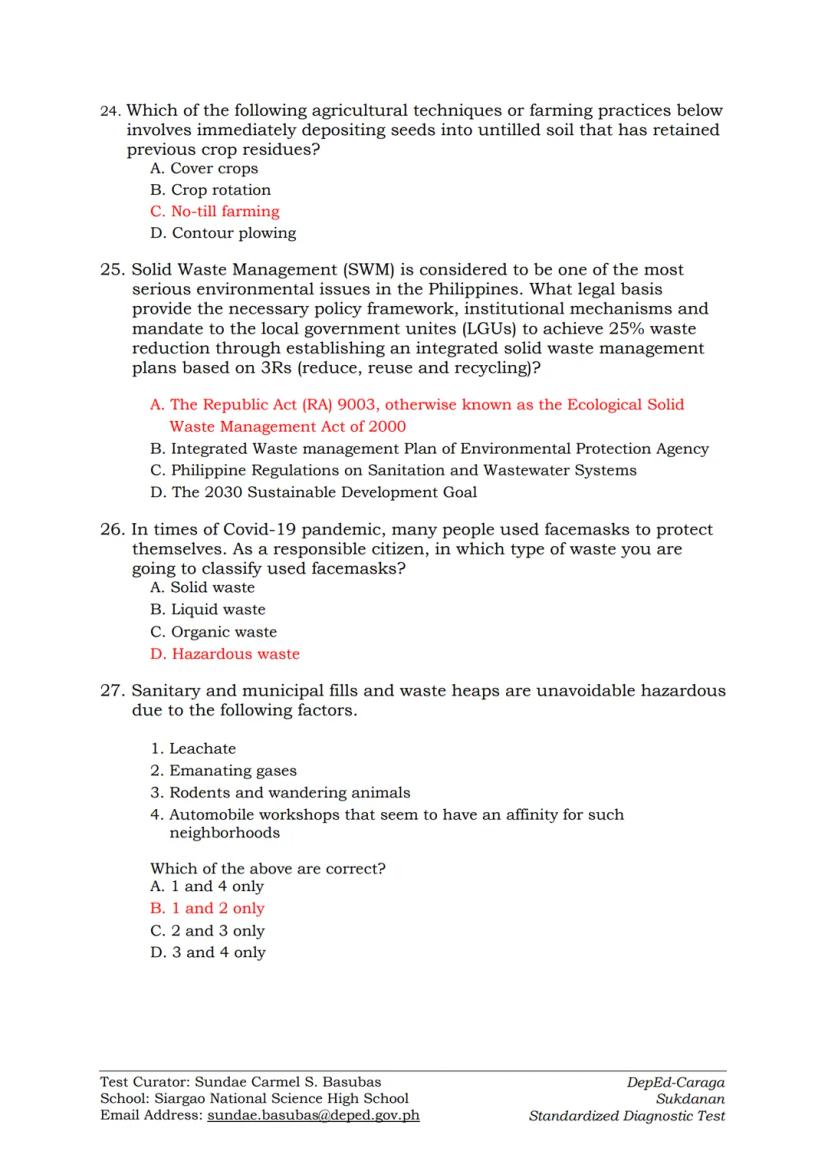
Solid Waste Management follows RA 9003 (Ecological Solid Waste Management Act), which mandates the 3Rs: reduce, reuse, and recycle. During COVID-19, used facemasks were classified as hazardous waste due to potential contamination – a perfect example of how waste classification adapts to real-world situations.
Environmental Reality Check: During the pandemic, waste management became everyone's responsibility – from properly disposing of masks to understanding hazardous waste categories.
6
of 10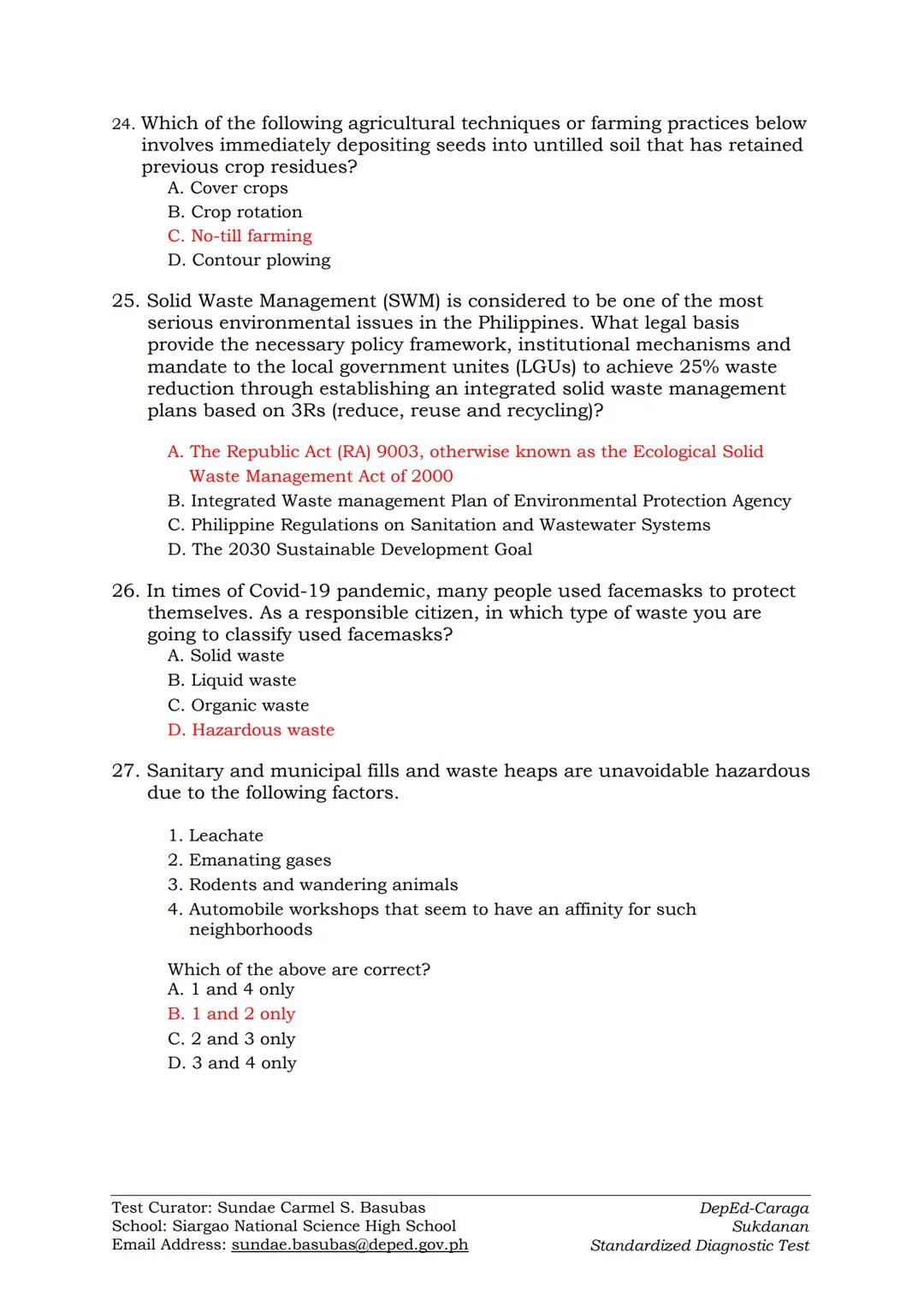
Geological Processes and Rock Formation
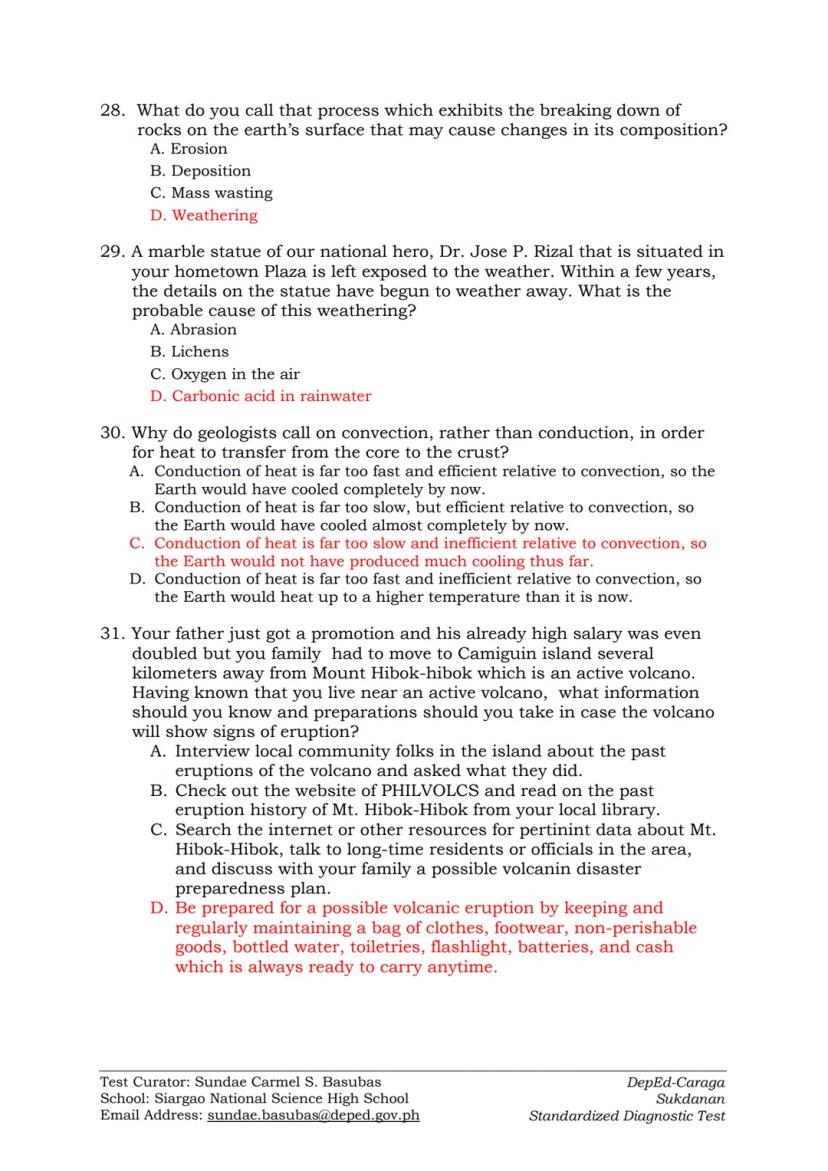
Weathering is nature's way of breaking down rocks at Earth's surface, often changing their composition in the process. When you see a weathered statue, like one of Dr. Jose Rizal, the culprit is usually carbonic acid in rainwater – it forms when carbon dioxide dissolves in water and slowly dissolves certain minerals.
Heat transfer in Earth happens through convection rather than conduction because conduction is far too slow and inefficient. If Earth relied only on conduction, it would barely have cooled at all since its formation! Convection allows hot material to rise and cool material to sink, creating the dynamic processes that drive plate tectonics.
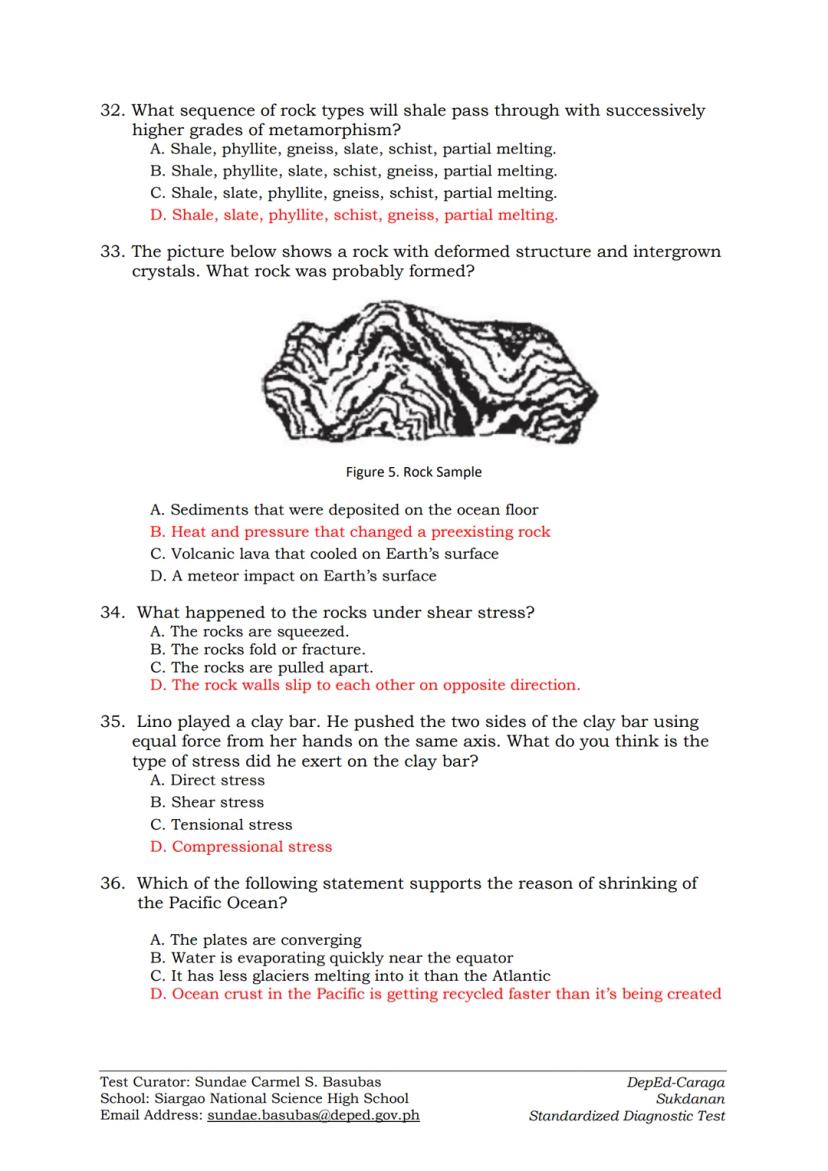
Metamorphic rock sequences follow predictable patterns. Shale transforms through increasing heat and pressure: shale → slate → phyllite → schist → gneiss → partial melting. Each step represents higher temperature and pressure conditions, like a geological progression chart.
When living near active volcanoes like Mount Hibok-hibok, preparation is key. The best approach combines research (checking PHILVOLCS data), community knowledge , and practical planning (emergency preparedness with your family).
Geological Timeline: Remember that weathering happens over human timescales (years to decades), while metamorphism takes millions of years and extreme conditions.
7
of 10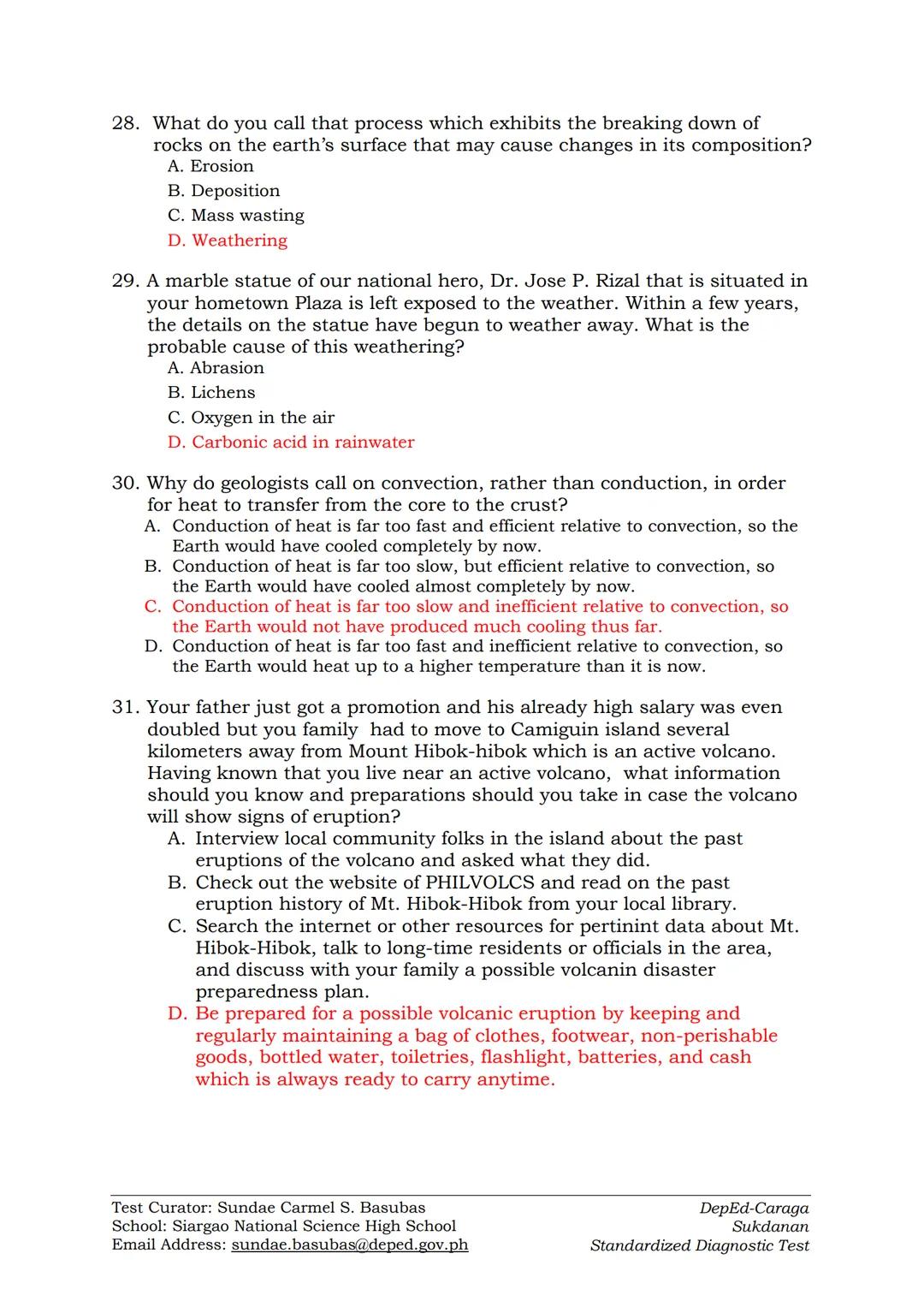
Stress, Deformation, and Plate Boundaries
Rocks respond to different types of stress in predictable ways. Compressional stress squeezes rocks together (like pushing clay from both sides), tensional stress pulls them apart, and shear stress causes rock walls to slip past each other in opposite directions. Understanding stress helps explain why mountains fold and faults form.
The Pacific Ocean is shrinking because ocean crust is being recycled faster than it's being created. This happens at convergent plate boundaries where plates move toward each other, and the ocean floor gets pushed down into the mantle. It's like a massive conveyor belt that's moving faster in reverse!
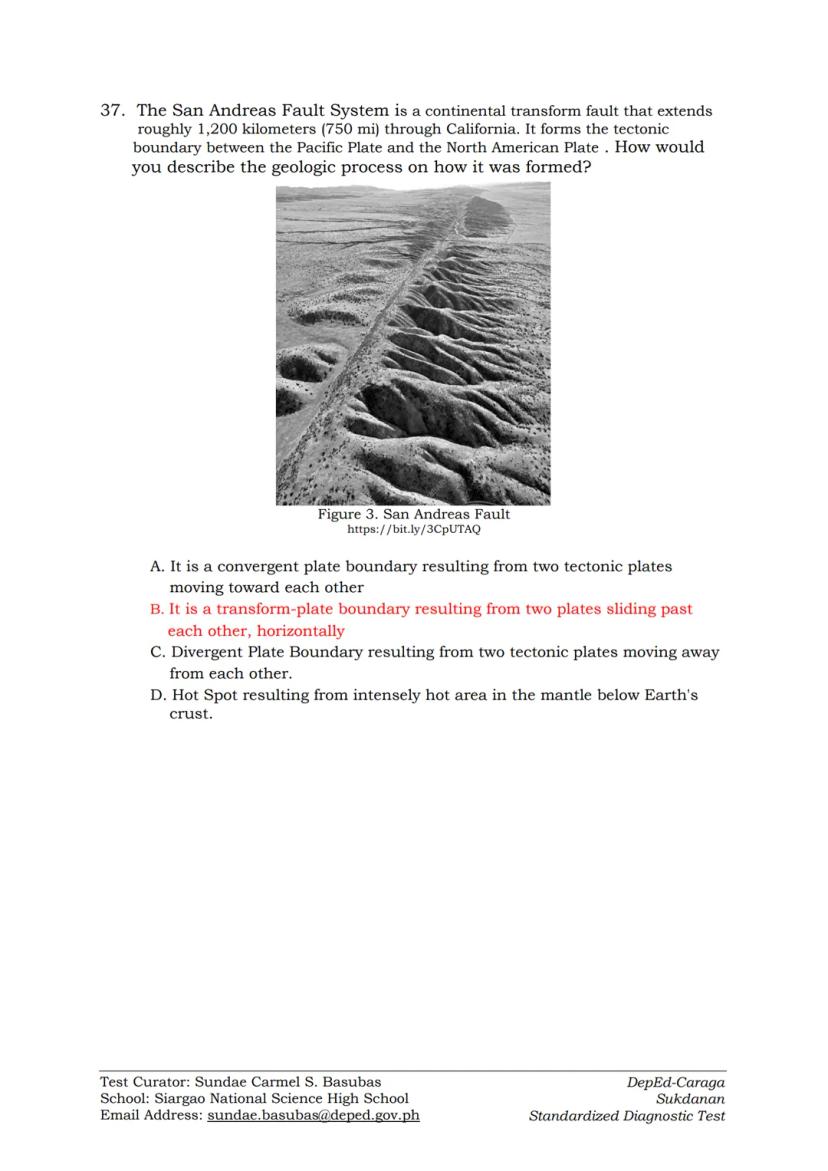
The San Andreas Fault perfectly demonstrates a transform plate boundary – the Pacific and North American plates sliding horizontally past each other. This creates the earthquake activity California is famous for, as the plates don't slide smoothly but stick and slip in sudden movements.
Plate Tectonics Reality: The San Andreas Fault moves about 2 inches per year – roughly the same rate your fingernails grow!
8
of 10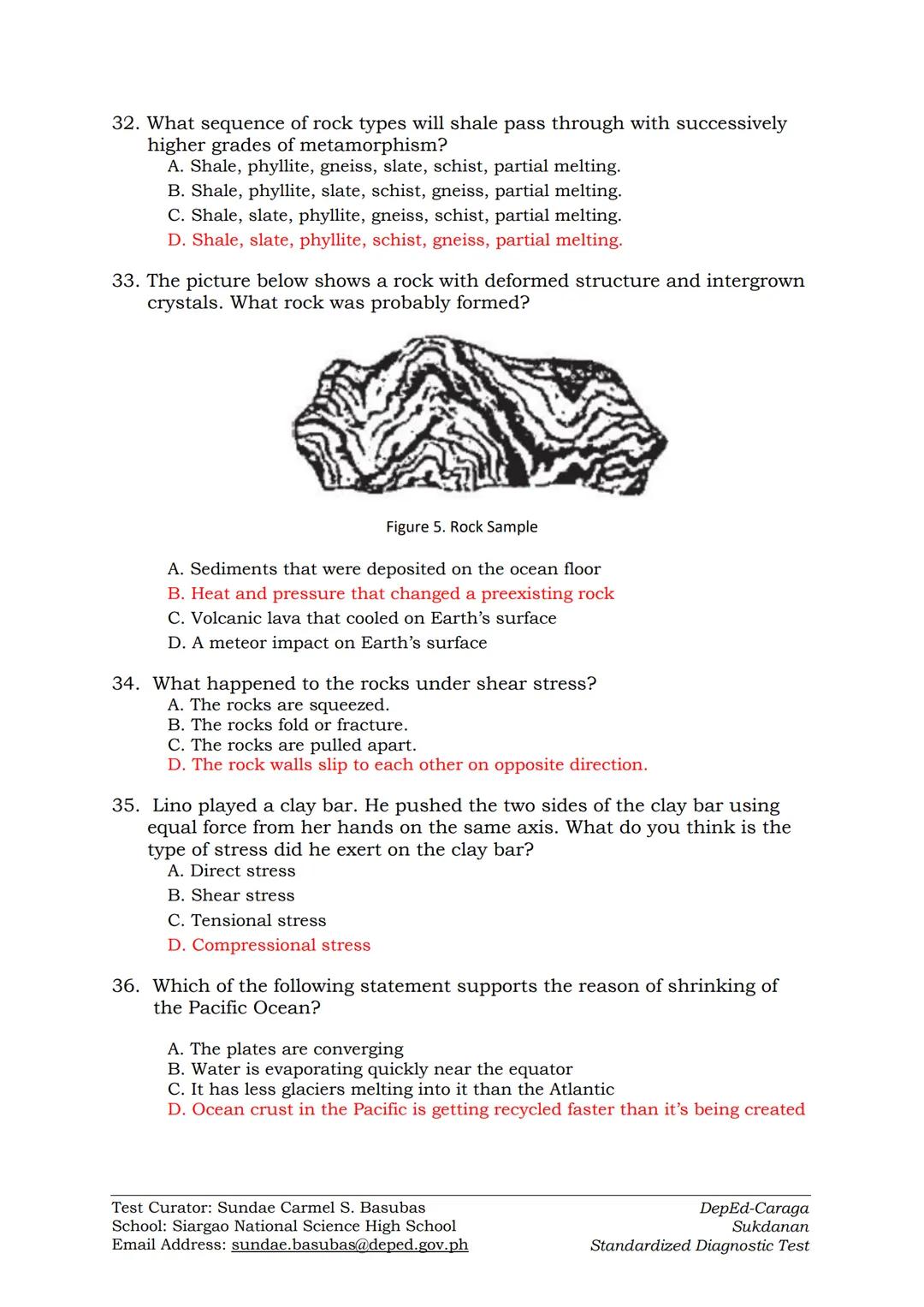
9
of 10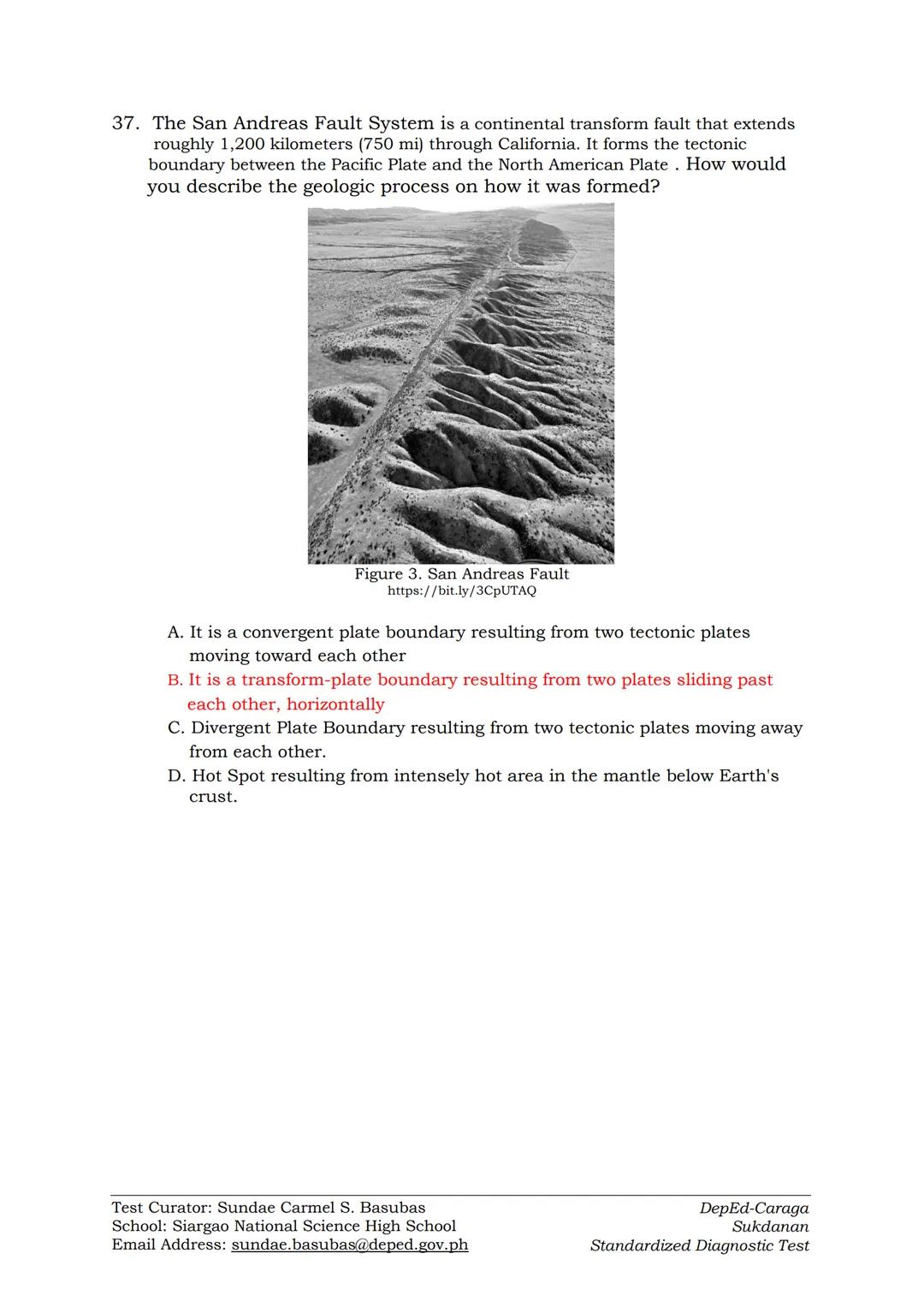
10
of 10
We thought you’d never ask...
What is the Knowunity AI companion?
Our AI companion is specifically built for the needs of students. Based on the millions of content pieces we have on the platform we can provide truly meaningful and relevant answers to students. But its not only about answers, the companion is even more about guiding students through their daily learning challenges, with personalised study plans, quizzes or content pieces in the chat and 100% personalisation based on the students skills and developments.
Where can I download the Knowunity app?
You can download the app in the Google Play Store and in the Apple App Store.
Is Knowunity really free of charge?
That's right! Enjoy free access to study content, connect with fellow students, and get instant help – all at your fingertips.
Most popular content in Earth and Space Science
9Most popular content
9Can't find what you're looking for? Explore other subjects.
Students love us — and so will you.
4.6/5App Store
4.7/5Google Play
The app is very easy to use and well designed. I have found everything I was looking for so far and have been able to learn a lot from the presentations! I will definitely use the app for a class assignment! And of course it also helps a lot as an inspiration.
Stefan SiOS user
This app is really great. There are so many study notes and help [...]. My problem subject is French, for example, and the app has so many options for help. Thanks to this app, I have improved my French. I would recommend it to anyone.
Samantha KlichAndroid user
Wow, I am really amazed. I just tried the app because I've seen it advertised many times and was absolutely stunned. This app is THE HELP you want for school and above all, it offers so many things, such as workouts and fact sheets, which have been VERY helpful to me personally.
AnnaiOS user
Earth and Space Science91 views·Updated Jun 4, 2026·13 pagesPhilsca EarthScience Entrance Review
T
theo.lexie.halili@theo.lexie.hali
This Earth Science diagnostic test covers the fundamental concepts you'll encounter throughout your Earth Science course. From understanding what makes Earth habitable to exploring plate tectonics and environmental conservation, these questions test your knowledge of the interconnected systems that shape...
1
of 10
Sign up to see the content. It's free!
- Access to all documents
- Improve your grades
- Join milions of students
Earth's Habitability and Life-Supporting Characteristics
Ever wonder what makes Earth the only known planet that can support life? It's not just one thing – it's a perfect combination of factors working together. Earth's habitability depends on having liquid water on its surface, the right temperature range, and a protective atmosphere with an ozone layer.
The key factors that allow organisms to survive include Earth's atmosphere and ozone layer protection, essential cycles like the water and nitrogen cycles, and natural processes that circulate nutrients. Think of it like a perfectly balanced recipe – remove any ingredient and life as we know it couldn't exist.
When you see questions about Earth-like planets, remember that distance from a star isn't everything. A planet with a thick carbon dioxide atmosphere and no volcanic activity would likely be too hot and lack the nutrient cycling that life needs. Volcanic activity might seem destructive, but it's actually crucial for recycling nutrients and maintaining Earth's dynamic systems.
Quick Tip: Remember that Earth's life-supporting characteristics work as a system – atmosphere, water, temperature, and nutrient cycles all depend on each other!
2
of 10Sign up to see the content. It's free!
- Access to all documents
- Improve your grades
- Join milions of students
Earth's Subsystems, Minerals, and Rock Types
When carbon dioxide dissolves from air into the ocean, you're witnessing the atmosphere and hydrosphere interacting – two of Earth's four major subsystems working together. Understanding these interactions helps explain everything from weather patterns to climate change.
Mineral identification is like being a detective with physical clues. When miners bit gold to test it, they were checking its hardness – real gold is soft enough to leave bite marks, while fool's gold (pyrite) is much harder. Other important properties include luster, streak color, and cleavage patterns.
Rock types tell stories about Earth's history. If you find a rock with shells and pebbles embedded in it, you've discovered a sedimentary rock – formed when materials settled and got cemented together over time. Remember: igneous rocks form from cooling magma, metamorphic rocks form from heat and pressure, and sedimentary rocks form from compressed layers of material.
Memory Hack: Think "SIM" – Sedimentary (layered), Igneous , Metamorphic !
3
of 10Sign up to see the content. It's free!
- Access to all documents
- Improve your grades
- Join milions of students
Energy Resources and Geothermal Power
Coal might power much of the Philippines now, but what happens when it runs out? Fossil fuels come from organic matter trapped in sedimentary rocks over millions of years, making them finite resources. Running out would definitely decrease available energy resources, though it would also reduce air pollution.
Geothermal energy taps into heat from Earth's core – it's like having a massive furnace beneath our feet! The process works by drilling wells to access hot water and steam underground, which then drives generators to produce electricity. It's particularly valuable because it's renewable and produces very low emissions.
The environmental impacts of geothermal energy are mostly positive, but construction can disrupt natural habitats. However, most plants recycle the steam and water back into the earth, and they don't burn fuel like coal plants do. The process flows: drilling well → hot water → steam → generator → electricity.
Real-World Connection: Countries like Iceland get most of their energy from geothermal sources – imagine never worrying about running out of power!
4
of 10Sign up to see the content. It's free!
- Access to all documents
- Improve your grades
- Join milions of students
Water Resources and Hydropower
Here's a shocking fact: despite water covering 71% of Earth's surface, only 3% is freshwater, and most of that is frozen in ice caps and glaciers! This explains why water scarcity is such a global issue. The tiny fraction we can actually use makes water conservation incredibly important.
Hydropower is one of humanity's oldest energy sources, and it's incredibly efficient – converting about 90% of water's energy into electricity. It's attractive because it produces no greenhouse gases, lasts extremely long, and uses reliable technology. However, dam construction can impact both upstream and downstream environments.
Looking at the water distribution chart, you'll see that most of Earth's water is saline (97%), and most freshwater is locked in ice. Ground water is actually more abundant than surface water, which might surprise you since we see rivers and lakes but not underground reserves.
Water Wisdom: Every drop counts! Simple actions like fixing leaky toilets and taking shorter showers can make a real difference in water conservation.
5
of 10Sign up to see the content. It's free!
- Access to all documents
- Improve your grades
- Join milions of students
Environmental Protection and Waste Management
Population growth is often considered the massive driver of pollution – more people means more consumption, waste, and resource use. Understanding this connection helps explain why environmental protection is becoming increasingly urgent as global population continues to grow.
Soil conservation involves multiple strategies: afforestation (planting trees), proper fertilization, monitoring growth, and controlling storm water. Trees are particularly important because they help maintain soil moisture content and prevent erosion. It's like giving the earth a protective blanket.
The Philippine Clean Water Act (RA 9275) protects water bodies from pollution by regulating different water uses – domestic (drinking, washing), irrigation (agriculture), municipal (community supply), and livestock. However, water for livestock raising is NOT the same as water for recreational purposes.
Solid Waste Management follows RA 9003 (Ecological Solid Waste Management Act), which mandates the 3Rs: reduce, reuse, and recycle. During COVID-19, used facemasks were classified as hazardous waste due to potential contamination – a perfect example of how waste classification adapts to real-world situations.
Environmental Reality Check: During the pandemic, waste management became everyone's responsibility – from properly disposing of masks to understanding hazardous waste categories.
6
of 10Sign up to see the content. It's free!
- Access to all documents
- Improve your grades
- Join milions of students
Geological Processes and Rock Formation
Weathering is nature's way of breaking down rocks at Earth's surface, often changing their composition in the process. When you see a weathered statue, like one of Dr. Jose Rizal, the culprit is usually carbonic acid in rainwater – it forms when carbon dioxide dissolves in water and slowly dissolves certain minerals.
Heat transfer in Earth happens through convection rather than conduction because conduction is far too slow and inefficient. If Earth relied only on conduction, it would barely have cooled at all since its formation! Convection allows hot material to rise and cool material to sink, creating the dynamic processes that drive plate tectonics.
Metamorphic rock sequences follow predictable patterns. Shale transforms through increasing heat and pressure: shale → slate → phyllite → schist → gneiss → partial melting. Each step represents higher temperature and pressure conditions, like a geological progression chart.
When living near active volcanoes like Mount Hibok-hibok, preparation is key. The best approach combines research (checking PHILVOLCS data), community knowledge , and practical planning (emergency preparedness with your family).
Geological Timeline: Remember that weathering happens over human timescales (years to decades), while metamorphism takes millions of years and extreme conditions.
7
of 10Sign up to see the content. It's free!
- Access to all documents
- Improve your grades
- Join milions of students
Stress, Deformation, and Plate Boundaries
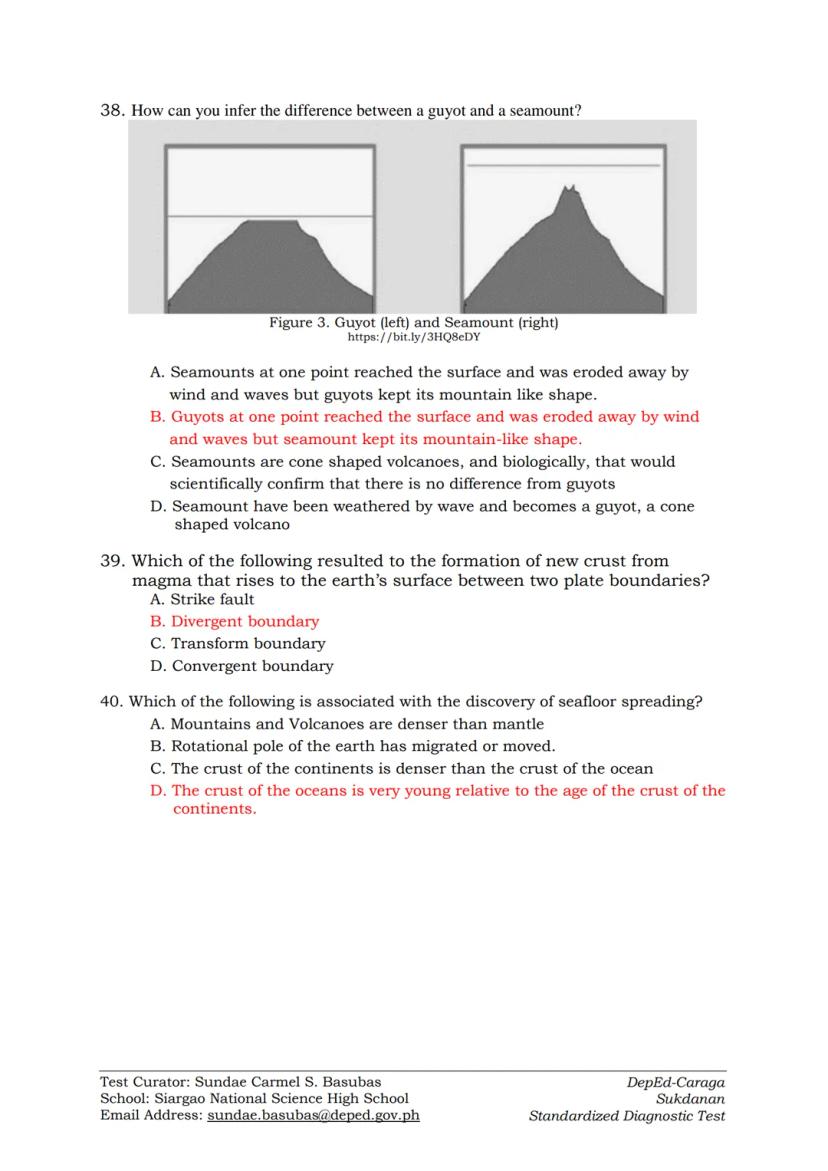
Rocks respond to different types of stress in predictable ways. Compressional stress squeezes rocks together (like pushing clay from both sides), tensional stress pulls them apart, and shear stress causes rock walls to slip past each other in opposite directions. Understanding stress helps explain why mountains fold and faults form.
The Pacific Ocean is shrinking because ocean crust is being recycled faster than it's being created. This happens at convergent plate boundaries where plates move toward each other, and the ocean floor gets pushed down into the mantle. It's like a massive conveyor belt that's moving faster in reverse!
The San Andreas Fault perfectly demonstrates a transform plate boundary – the Pacific and North American plates sliding horizontally past each other. This creates the earthquake activity California is famous for, as the plates don't slide smoothly but stick and slip in sudden movements.
Plate Tectonics Reality: The San Andreas Fault moves about 2 inches per year – roughly the same rate your fingernails grow!
8
of 10Sign up to see the content. It's free!
- Access to all documents
- Improve your grades
- Join milions of students
9
of 10Sign up to see the content. It's free!
- Access to all documents
- Improve your grades
- Join milions of students
10
of 10Sign up to see the content. It's free!
- Access to all documents
- Improve your grades
- Join milions of students
We thought you’d never ask...
What is the Knowunity AI companion?
Our AI companion is specifically built for the needs of students. Based on the millions of content pieces we have on the platform we can provide truly meaningful and relevant answers to students. But its not only about answers, the companion is even more about guiding students through their daily learning challenges, with personalised study plans, quizzes or content pieces in the chat and 100% personalisation based on the students skills and developments.
Where can I download the Knowunity app?
You can download the app in the Google Play Store and in the Apple App Store.
Is Knowunity really free of charge?
That's right! Enjoy free access to study content, connect with fellow students, and get instant help – all at your fingertips.
Most popular content in Earth and Space Science
9Most popular content
9Can't find what you're looking for? Explore other subjects.
Students love us — and so will you.
4.6/5App Store
4.7/5Google Play
The app is very easy to use and well designed. I have found everything I was looking for so far and have been able to learn a lot from the presentations! I will definitely use the app for a class assignment! And of course it also helps a lot as an inspiration.
Stefan SiOS user
This app is really great. There are so many study notes and help [...]. My problem subject is French, for example, and the app has so many options for help. Thanks to this app, I have improved my French. I would recommend it to anyone.
Samantha KlichAndroid user
Wow, I am really amazed. I just tried the app because I've seen it advertised many times and was absolutely stunned. This app is THE HELP you want for school and above all, it offers so many things, such as workouts and fact sheets, which have been VERY helpful to me personally.
AnnaiOS user