Essential Poetry Structures and Literary Devices
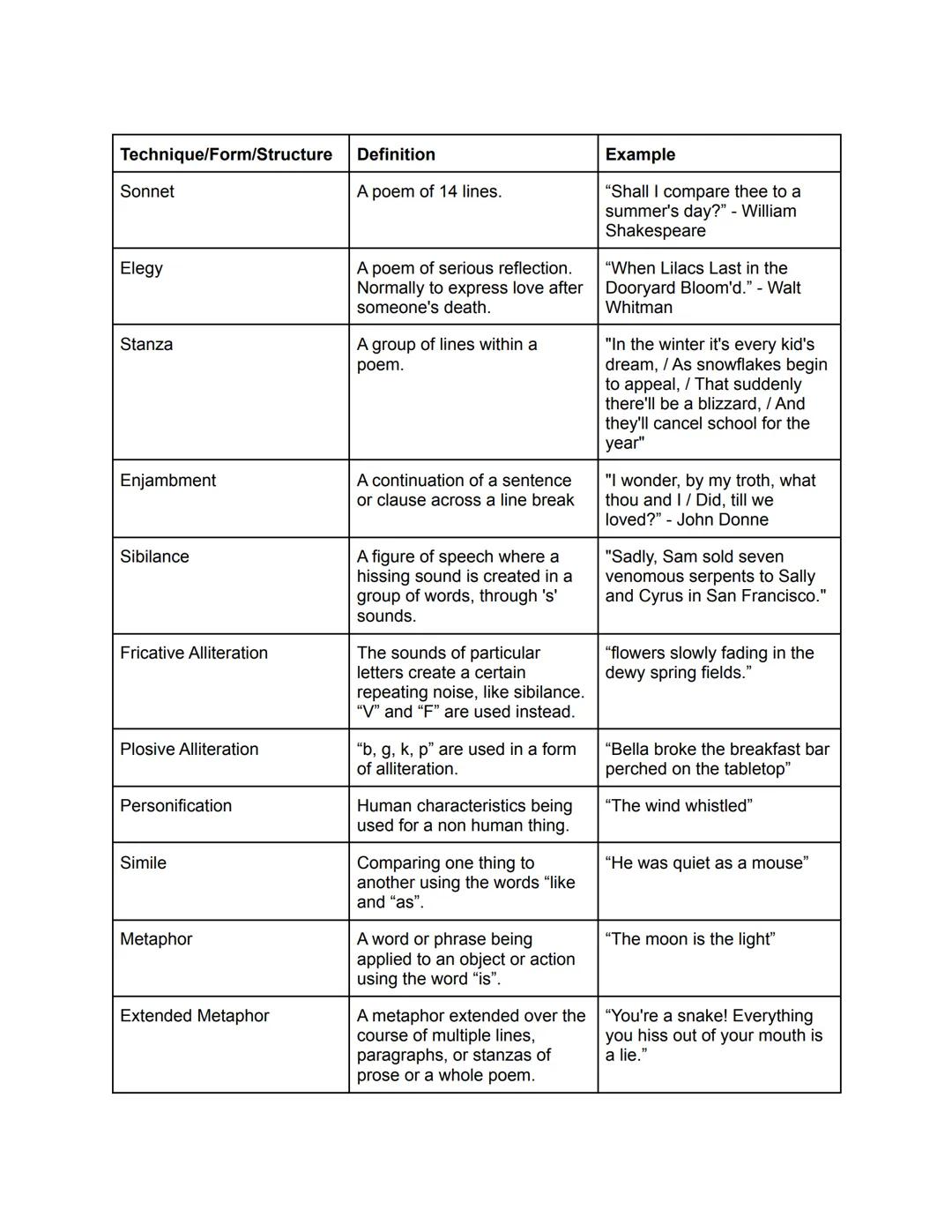
Sonnets are poetry's most famous form - exactly 14 lines that often explore themes of love or beauty, like Shakespeare's "Shall I compare thee to a summer's day?" An elegy, on the other hand, is a reflective poem that expresses grief or loss, such as Walt Whitman's tribute "When Lilacs Last in the Dooryard Bloom'd."
Within poems, you'll find stanzas - groups of lines that work like paragraphs in prose. Enjambment occurs when a sentence flows across line breaks, creating rhythm and emphasis, as John Donne demonstrates: "I wonder, by my troth, what thou and I / Did, till we loved?"
Sound devices create the music in poetry. Sibilance uses 's' sounds to create a hissing effect, whilst fricative alliteration employs 'f' and 'v' sounds for softer repetition. Plosive alliteration uses harder consonants like 'b', 'g', 'k', and 'p' to create punch and impact.
Quick Tip: When analysing poetry, read it aloud - you'll hear these sound patterns much more clearly than when reading silently.
Personification gives human qualities to non-human things (like "the wind whistled"), whilst similes compare using "like" or "as." Metaphors make direct comparisons without these words, and extended metaphors develop these comparisons across multiple lines or entire poems.



 Sociology
 Biology