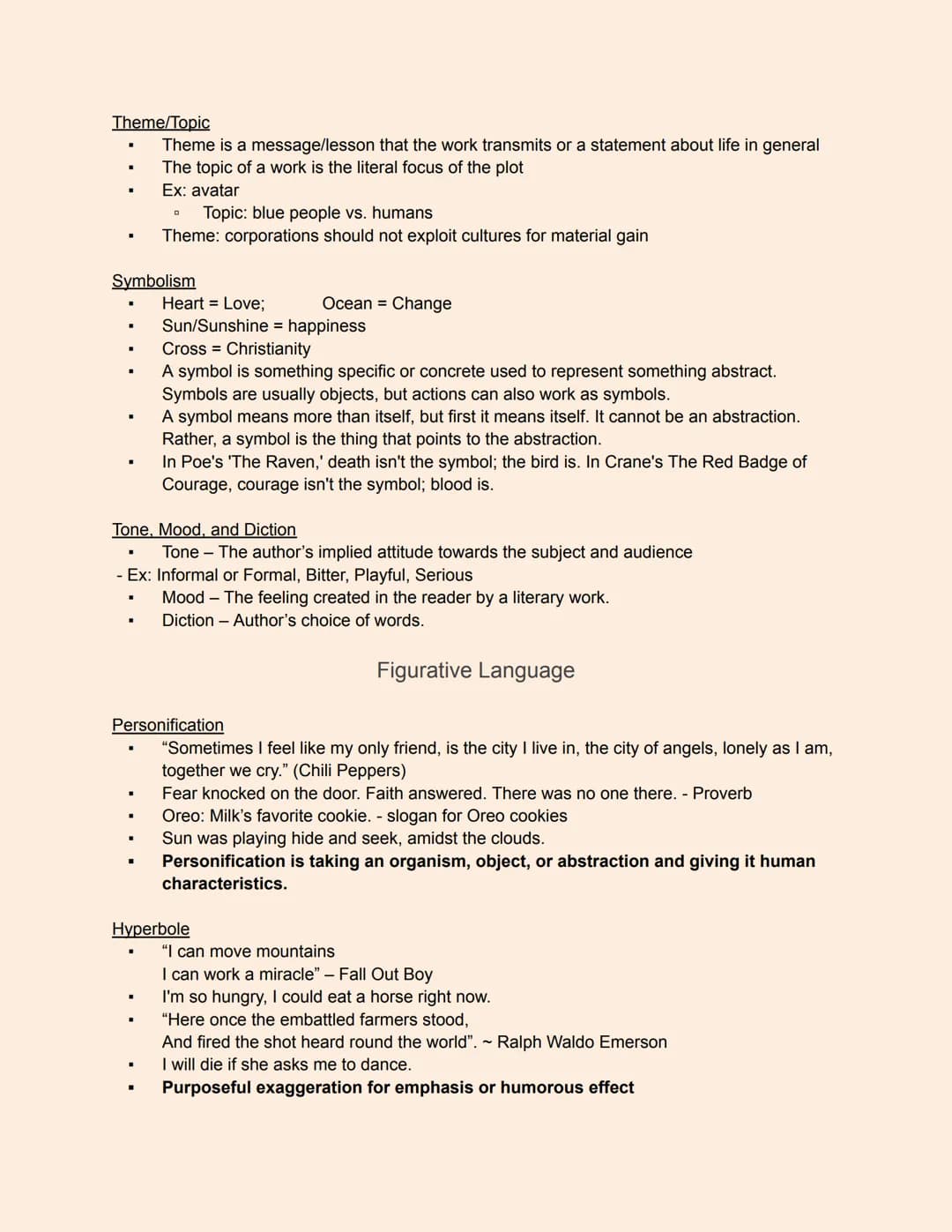
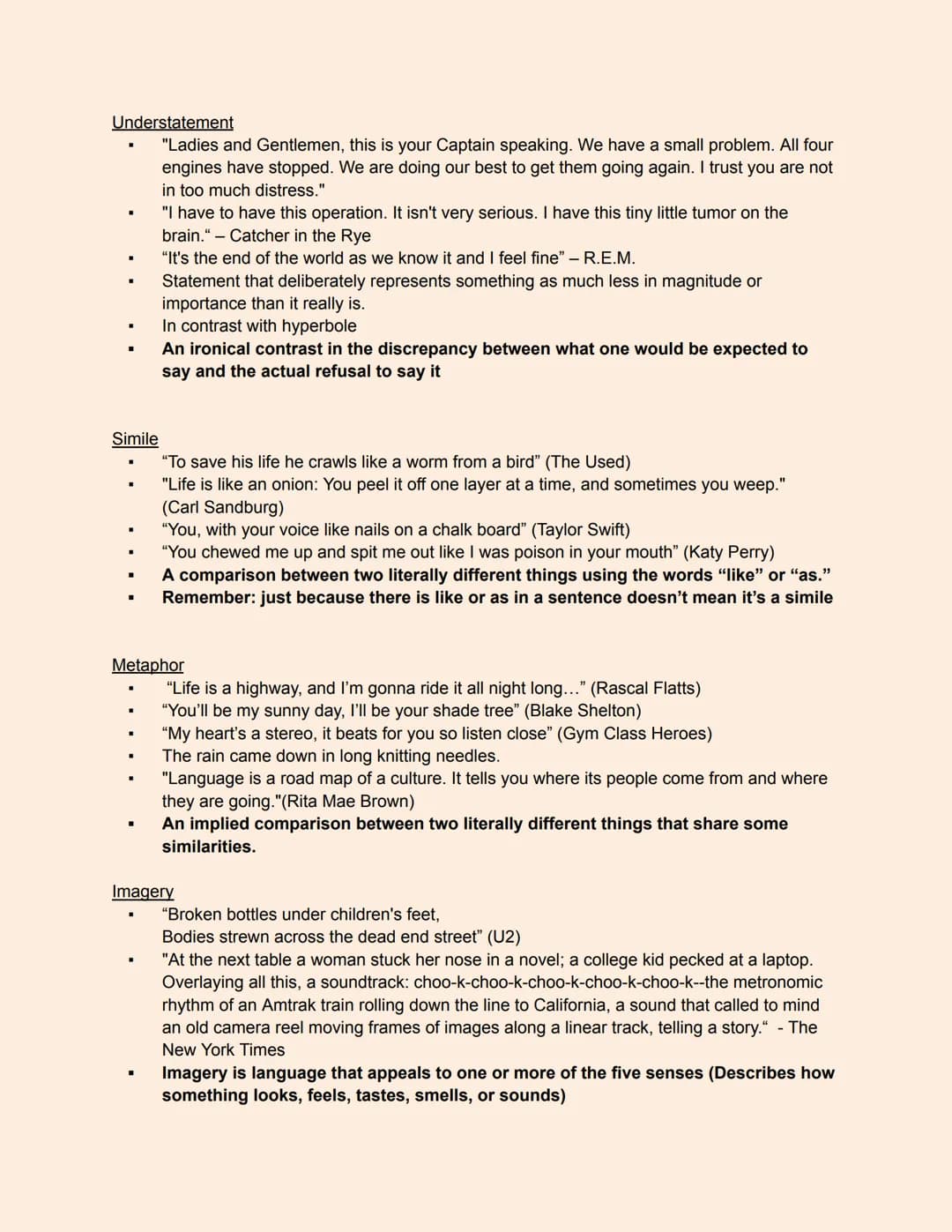
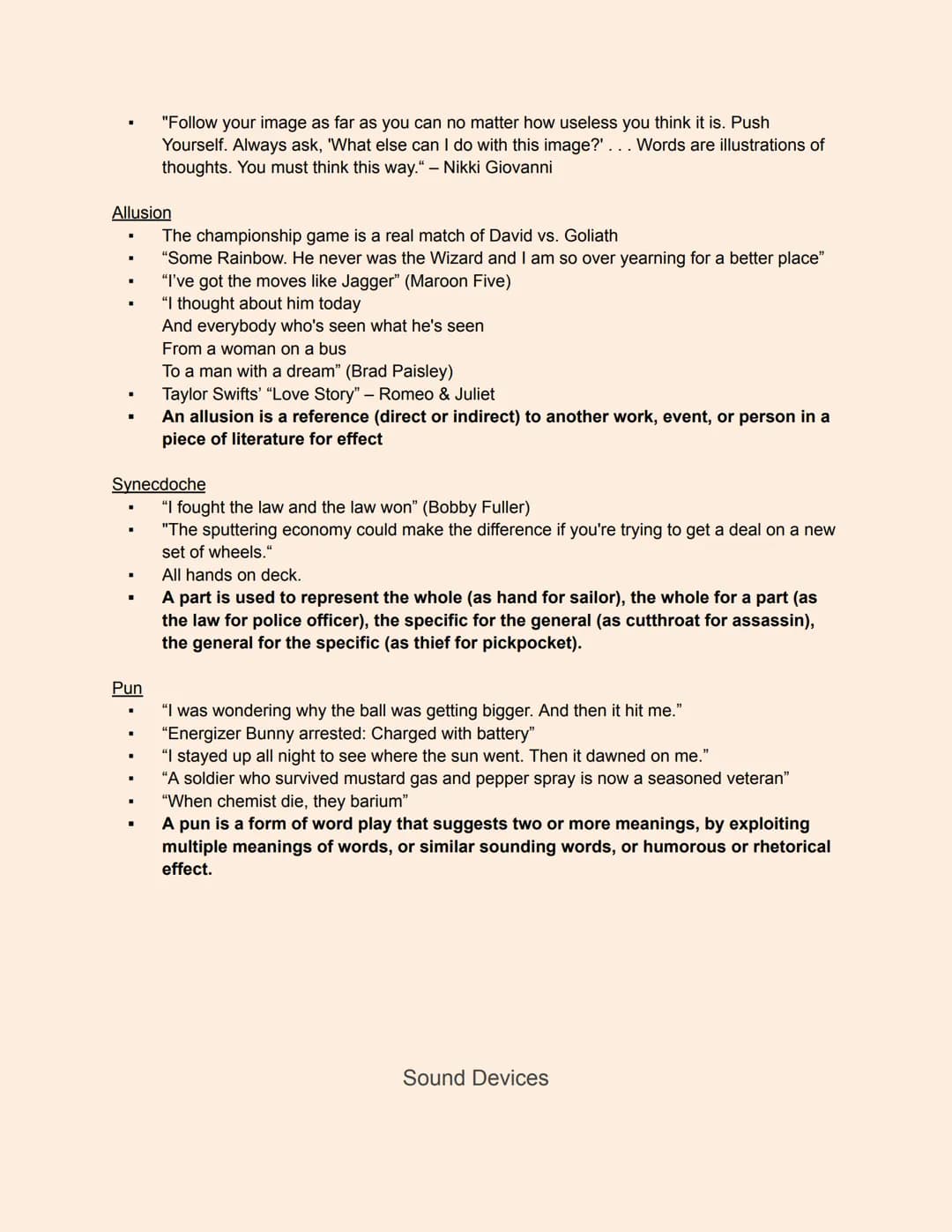
Sound Devices: The Music of Language
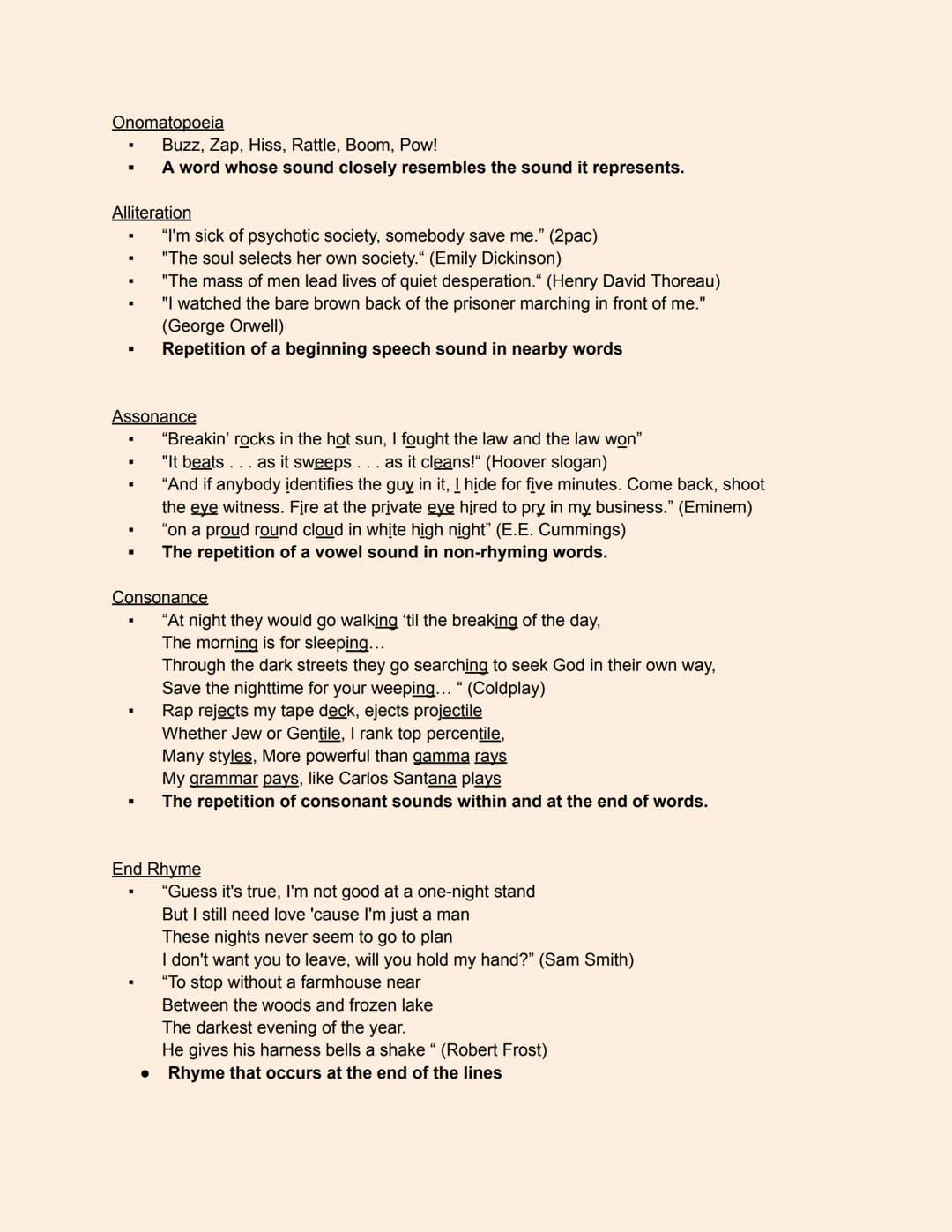
Words don't just have meaning—they have sound! Onomatopoeia uses words that sound like what they describe: buzz, zap, hiss, or boom. These words bring sounds directly into your reading experience.
Alliteration repeats beginning consonant sounds in nearby words, like "sick of psychotic society" or "the soul selects her own society." This technique creates rhythm and emphasizes key ideas. You'll find it everywhere from poetry to advertising slogans.
While alliteration focuses on beginning sounds, assonance repeats vowel sounds ("fought the law and the law won") and consonance repeats consonant sounds within or at the end of words ("Whether Jew or Gentile, I rank top percentile"). These subtle sound patterns make language more musical and memorable.
End rhyme occurs at the end of lines, like in Sam Smith's "stand/man/plan/hand" lyrics. It's the most familiar rhyming pattern we learn. But writers also use internal rhyme within single lines: "I lost my fake ID but you lost the motel key." Both create rhythm that makes language more engaging.
Sound Check: Next time you listen to your favorite song, try to identify the sound devices. Most popular music uses rhyme, but you'll also find alliteration, assonance, and other techniques that make lyrics stick in your head!




 Algebra
 Calculus 1
 Algebra 1
 Overige