
Energy sources power our world, but understanding where they come...
 Environmental Science215 views·Updated Jun 11, 2026·2 pages
Environmental Science Reviewer - 4th Quarter

Jasy Rodriguez@jasyrodriguez_fpij
1
of 2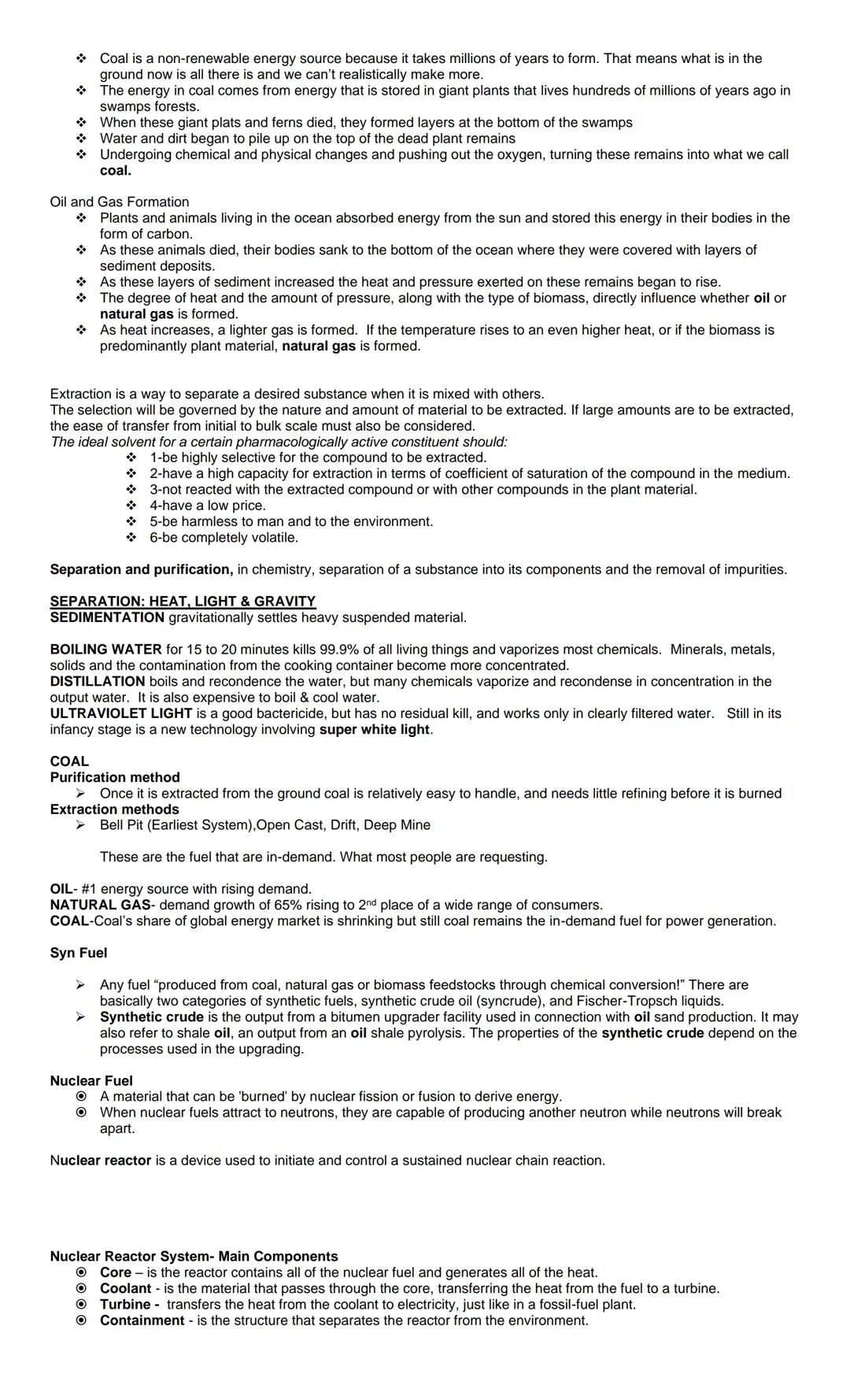
Fossil Fuels: Formation and Extraction
Coal forms over millions of years from ancient plants that died in swamps. As layers of sediment piled up, heat and pressure transformed these remains into coal by squeezing out oxygen. Since this process takes millions of years, coal is considered a non-renewable resource.
Oil and natural gas form similarly but from ocean plants and animals. When these organisms died and sank to the ocean floor, they were covered by sediment. The type of fossil fuel created depends on heat levels and biomass type - higher temperatures typically produce natural gas.
Extraction methods vary by fuel type. Coal can be mined through bell pits, open cast mining, drift mining, or deep mining. Once extracted, coal requires minimal refining before use. For other substances, extraction processes must separate desired materials from mixtures using solvents that are selective, efficient, and environmentally friendly.
Energy Fact: Oil remains the #1 energy source globally, with natural gas demand growing rapidly (projected 65% increase), while coal use is gradually declining but still important for power generation.
Other important fuels include synthetic fuels made from coal or biomass through chemical conversion, and nuclear fuel, which generates energy through controlled nuclear reactions in specialized reactor systems with cooling mechanisms and containment structures.
2
of 2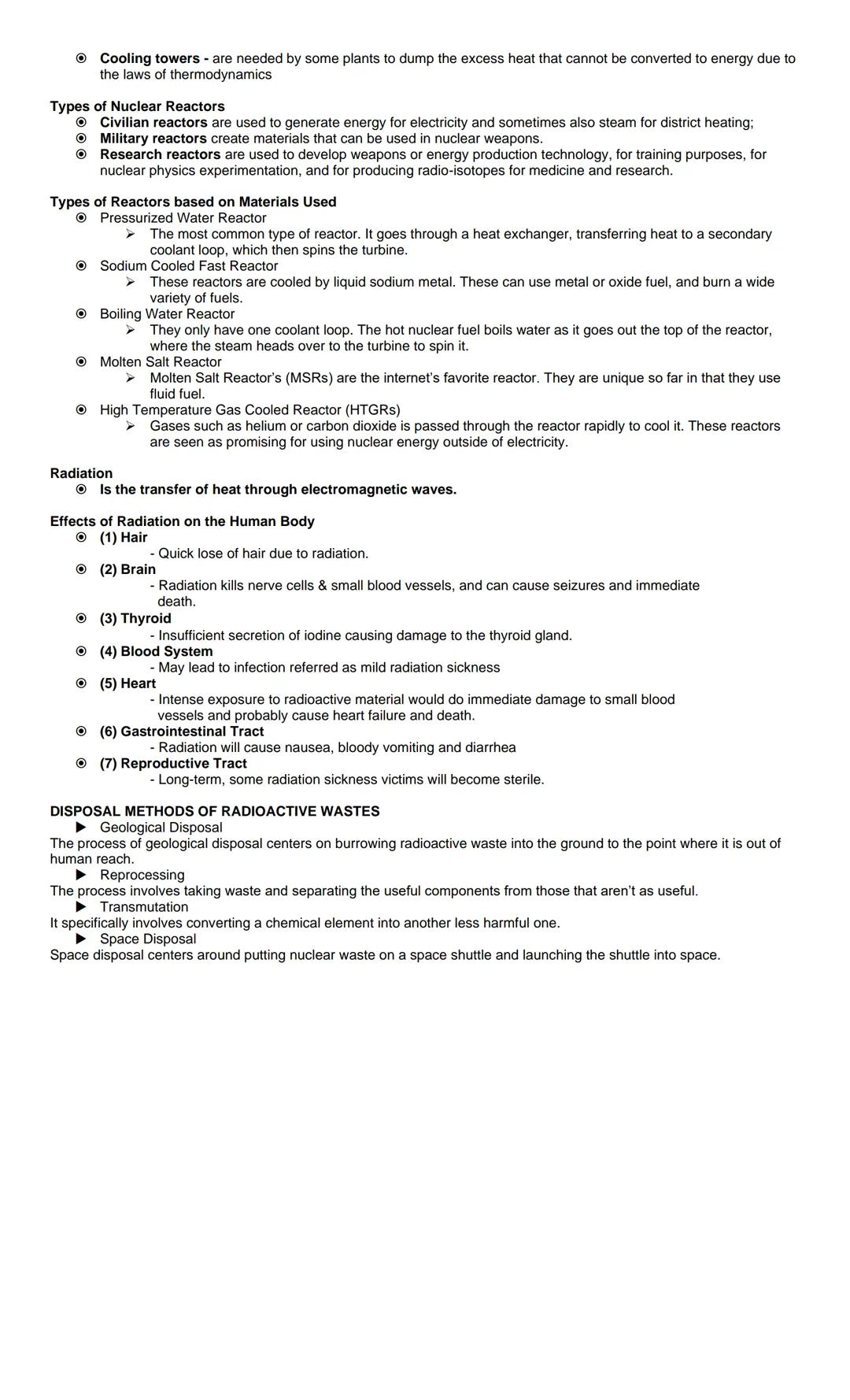
Nuclear Energy and Radiation Safety
Nuclear reactors come in different types based on their purpose. Civilian reactors generate electricity, military reactors create materials for weapons, and research reactors help develop technology or produce medical isotopes. The design varies based on cooling methods and materials used.
Common reactor types include Pressurized Water Reactors (the most widely used), Boiling Water Reactors, Sodium Cooled Fast Reactors, and the internet-famous Molten Salt Reactors with their unique fluid fuel. High Temperature Gas Cooled Reactors show promise for non-electricity applications of nuclear energy.
Radiation from nuclear materials can seriously harm the human body. Effects include rapid hair loss, nerve cell damage, thyroid problems, blood system disruption, and damage to the heart and digestive system. Long-term exposure may cause sterility and increase cancer risk.
Safety Note: Proper disposal of radioactive waste is crucial! Methods include deep geological burial, reprocessing to separate useful components, transmutation to convert harmful elements to less dangerous ones, and even proposals for space disposal.
Handling nuclear materials requires strict safety protocols because of these radiation risks. The benefits of nuclear power must always be balanced against potential hazards through careful containment and waste management.
We thought you’d never ask...
What is the Knowunity AI companion?
Our AI companion is specifically built for the needs of students. Based on the millions of content pieces we have on the platform we can provide truly meaningful and relevant answers to students. But its not only about answers, the companion is even more about guiding students through their daily learning challenges, with personalised study plans, quizzes or content pieces in the chat and 100% personalisation based on the students skills and developments.
Where can I download the Knowunity app?
You can download the app in the Google Play Store and in the Apple App Store.
Is Knowunity really free of charge?
That's right! Enjoy free access to study content, connect with fellow students, and get instant help – all at your fingertips.
Similar Content
 Physical Science
Most popular content in Environmental Science
8C
Environmental ScienceCells
Basics
9th800
Environmental ScienceStudent Exploration: GMOs and the Environment Answer Key.pdf
GMOs and the Environment
4267
Environmental ScienceEcology
Gives an overview of Ecological levels of Organization .
1141
Environmental ScienceEarth and Space: Ch. 2- Minerals
Slideshow about Ch. 2 of Earth and Space Science
11th752
Environmental ScienceEarth and Space: Ch. 5- Weathering, Soil, and Mass Movements
Slideshow about Ch. 5 of Earth and Space Science
11th1414
Environmental ScienceSymbiotic Relationships
Covers: community interactions, mutualism, commensalism, parasitism, habitats, microhabitats, tolerance, ecological niche, keystone species
9th911
Environmental ScienceAsexual vs Sexual Reproduction
Comparison of advantages and disadvantages of asexual and sexual reproduction, including mitosis and meiosis processes.
9th1547
 Earth and Space Science
Human Impact on the Earth: Effects of Environmental Change on Biodiversity
Very interesting and full of info presentation about human impact on our planet and the biodiversity among the animal species
390
Most popular content
9O
 AP US History
Origins and Dynamics of the Columbian Exchange
Analyze the ecological and economic motivations behind the initial transfer of goods, people, and diseases between the Old and New Worlds.
9th3,1280
I
AP US HistoryIntroduction to Early Cultural Interactions
Analyze the initial social and religious encounters between Europeans, Africans, and Indigenous peoples in the colonial Americas.
9th2,7730
O
AP World HistoryOrigins of Ancient River Civilizations
Analyze the environmental factors and technological innovations that led to the rise of early states in Mesopotamia, Egypt, and the Indus Valley.
9th3,1870
M
AP US HistoryMotivations for European Exploration
Analyze the economic, religious, and political factors that drove European powers to the Americas during the 15th and 16th centuries.
9th1,7780
F
 AP Psychology
Foundations of Ethical Guidelines in Research
Practice the core principles of the APA ethical code including informed consent, debriefing, and the role of Institutional Review Boards.
9th1,3360
I
AP US HistoryIntroduction to Native American Societies
Examine the diverse social, political, and economic structures of North American indigenous groups prior to European contact.
9th1,1100
I
 AP Biology
Introduction to Biological Elements of Life
Practice identifying the essential elements including carbon, nitrogen, phosphorus, and sulfur that compose biological macromolecules.
9th1,7390
I
AP US HistoryIntroduction to the Spanish Encomienda System
Explore the fundamental economic and social structures of the Spanish colonial system, focusing on the encomienda and the casta social hierarchy.
9th8890
O
AP World HistoryOrigins and Continuity of the Byzantine Empire
Analyze the political and cultural transitions from the Roman Empire to the Byzantine Empire, focusing on the reign of Justinian I and his code.
9th1,6320
Can't find what you're looking for? Explore other subjects.
Students love us — and so will you.
4.6/5App Store
4.7/5Google Play
The app is very easy to use and well designed. I have found everything I was looking for so far and have been able to learn a lot from the presentations! I will definitely use the app for a class assignment! And of course it also helps a lot as an inspiration.
Stefan SiOS user
This app is really great. There are so many study notes and help [...]. My problem subject is French, for example, and the app has so many options for help. Thanks to this app, I have improved my French. I would recommend it to anyone.
Samantha KlichAndroid user
Wow, I am really amazed. I just tried the app because I've seen it advertised many times and was absolutely stunned. This app is THE HELP you want for school and above all, it offers so many things, such as workouts and fact sheets, which have been VERY helpful to me personally.
AnnaiOS user
Environmental Science215 views·Updated Jun 11, 2026·2 pagesEnvironmental Science Reviewer - 4th Quarter
Jasy Rodriguez@jasyrodriguez_fpij
Energy sources power our world, but understanding where they come from and how they're processed is key to knowing their impact. This summary explores different energy sources including fossil fuels like coal and oil, nuclear energy, and how these resources...
1
of 2
Sign up to see the content. It's free!
- Access to all documents
- Improve your grades
- Join milions of students
Fossil Fuels: Formation and Extraction
Coal forms over millions of years from ancient plants that died in swamps. As layers of sediment piled up, heat and pressure transformed these remains into coal by squeezing out oxygen. Since this process takes millions of years, coal is considered a non-renewable resource.
Oil and natural gas form similarly but from ocean plants and animals. When these organisms died and sank to the ocean floor, they were covered by sediment. The type of fossil fuel created depends on heat levels and biomass type - higher temperatures typically produce natural gas.
Extraction methods vary by fuel type. Coal can be mined through bell pits, open cast mining, drift mining, or deep mining. Once extracted, coal requires minimal refining before use. For other substances, extraction processes must separate desired materials from mixtures using solvents that are selective, efficient, and environmentally friendly.
Energy Fact: Oil remains the #1 energy source globally, with natural gas demand growing rapidly (projected 65% increase), while coal use is gradually declining but still important for power generation.
Other important fuels include synthetic fuels made from coal or biomass through chemical conversion, and nuclear fuel, which generates energy through controlled nuclear reactions in specialized reactor systems with cooling mechanisms and containment structures.
2
of 2Sign up to see the content. It's free!
- Access to all documents
- Improve your grades
- Join milions of students
Nuclear Energy and Radiation Safety
Nuclear reactors come in different types based on their purpose. Civilian reactors generate electricity, military reactors create materials for weapons, and research reactors help develop technology or produce medical isotopes. The design varies based on cooling methods and materials used.
Common reactor types include Pressurized Water Reactors (the most widely used), Boiling Water Reactors, Sodium Cooled Fast Reactors, and the internet-famous Molten Salt Reactors with their unique fluid fuel. High Temperature Gas Cooled Reactors show promise for non-electricity applications of nuclear energy.
Radiation from nuclear materials can seriously harm the human body. Effects include rapid hair loss, nerve cell damage, thyroid problems, blood system disruption, and damage to the heart and digestive system. Long-term exposure may cause sterility and increase cancer risk.
Safety Note: Proper disposal of radioactive waste is crucial! Methods include deep geological burial, reprocessing to separate useful components, transmutation to convert harmful elements to less dangerous ones, and even proposals for space disposal.
Handling nuclear materials requires strict safety protocols because of these radiation risks. The benefits of nuclear power must always be balanced against potential hazards through careful containment and waste management.
We thought you’d never ask...
What is the Knowunity AI companion?
Our AI companion is specifically built for the needs of students. Based on the millions of content pieces we have on the platform we can provide truly meaningful and relevant answers to students. But its not only about answers, the companion is even more about guiding students through their daily learning challenges, with personalised study plans, quizzes or content pieces in the chat and 100% personalisation based on the students skills and developments.
Where can I download the Knowunity app?
You can download the app in the Google Play Store and in the Apple App Store.
Is Knowunity really free of charge?
That's right! Enjoy free access to study content, connect with fellow students, and get instant help – all at your fingertips.
Similar Content
Most popular content in Environmental Science
8C
Environmental ScienceCells
Basics
9th800
Environmental ScienceStudent Exploration: GMOs and the Environment Answer Key.pdf
GMOs and the Environment
4267
Environmental ScienceEcology
Gives an overview of Ecological levels of Organization .
1141
Environmental ScienceEarth and Space: Ch. 2- Minerals
Slideshow about Ch. 2 of Earth and Space Science
11th752
Environmental ScienceEarth and Space: Ch. 5- Weathering, Soil, and Mass Movements
Slideshow about Ch. 5 of Earth and Space Science
11th1414
Environmental ScienceSymbiotic Relationships
Covers: community interactions, mutualism, commensalism, parasitism, habitats, microhabitats, tolerance, ecological niche, keystone species
9th911
Environmental ScienceAsexual vs Sexual Reproduction
Comparison of advantages and disadvantages of asexual and sexual reproduction, including mitosis and meiosis processes.
9th1547
Earth and Space ScienceHuman Impact on the Earth: Effects of Environmental Change on Biodiversity
Very interesting and full of info presentation about human impact on our planet and the biodiversity among the animal species
390
Most popular content
9O
AP US HistoryOrigins and Dynamics of the Columbian Exchange
Analyze the ecological and economic motivations behind the initial transfer of goods, people, and diseases between the Old and New Worlds.
9th3,1280
I
AP US HistoryIntroduction to Early Cultural Interactions
Analyze the initial social and religious encounters between Europeans, Africans, and Indigenous peoples in the colonial Americas.
9th2,7730
O
AP World HistoryOrigins of Ancient River Civilizations
Analyze the environmental factors and technological innovations that led to the rise of early states in Mesopotamia, Egypt, and the Indus Valley.
9th3,1870
M
AP US HistoryMotivations for European Exploration
Analyze the economic, religious, and political factors that drove European powers to the Americas during the 15th and 16th centuries.
9th1,7780
F
AP PsychologyFoundations of Ethical Guidelines in Research
Practice the core principles of the APA ethical code including informed consent, debriefing, and the role of Institutional Review Boards.
9th1,3360
I
AP US HistoryIntroduction to Native American Societies
Examine the diverse social, political, and economic structures of North American indigenous groups prior to European contact.
9th1,1100
I
AP BiologyIntroduction to Biological Elements of Life
Practice identifying the essential elements including carbon, nitrogen, phosphorus, and sulfur that compose biological macromolecules.
9th1,7390
I
AP US HistoryIntroduction to the Spanish Encomienda System
Explore the fundamental economic and social structures of the Spanish colonial system, focusing on the encomienda and the casta social hierarchy.
9th8890
O
AP World HistoryOrigins and Continuity of the Byzantine Empire
Analyze the political and cultural transitions from the Roman Empire to the Byzantine Empire, focusing on the reign of Justinian I and his code.
9th1,6320
Can't find what you're looking for? Explore other subjects.
Students love us — and so will you.
4.6/5App Store
4.7/5Google Play
The app is very easy to use and well designed. I have found everything I was looking for so far and have been able to learn a lot from the presentations! I will definitely use the app for a class assignment! And of course it also helps a lot as an inspiration.
Stefan SiOS user
This app is really great. There are so many study notes and help [...]. My problem subject is French, for example, and the app has so many options for help. Thanks to this app, I have improved my French. I would recommend it to anyone.
Samantha KlichAndroid user
Wow, I am really amazed. I just tried the app because I've seen it advertised many times and was absolutely stunned. This app is THE HELP you want for school and above all, it offers so many things, such as workouts and fact sheets, which have been VERY helpful to me personally.
AnnaiOS user