
Administering medication is a critical responsibility for medical assistants that... Show more
 Science (ACT®)
 Algebra
Sign up to see the contentIt's free!
Access to all documents
Improve your grades
Join milions of students
Knowunity AI
Subjects
Triangle Congruence and Similarity Theorems
Triangle Properties and Classification
Linear Equations and Graphs
Geometric Angle Relationships
Trigonometric Functions and Identities
Equation Solving Techniques
Circle Geometry Fundamentals
Division Operations and Methods
Basic Differentiation Rules
Exponent and Logarithm Properties
Show all topics
Human Organ Systems
Reproductive Cell Cycles
Biological Sciences Subdisciplines
Cellular Energy Metabolism
Autotrophic Energy Processes
Inheritance Patterns and Principles
Biomolecular Structure and Organization
Cell Cycle and Division Mechanics
Cellular Organization and Development
Biological Structural Organization
Show all topics
Chemical Sciences and Applications
Atomic Structure and Composition
Molecular Electron Structure Representation
Atomic Electron Behavior
Matter Properties and Water
Mole Concept and Calculations
Gas Laws and Behavior
Periodic Table Organization
Chemical Thermodynamics Fundamentals
Chemical Bond Types and Properties
Show all topics
European Renaissance and Enlightenment
European Cultural Movements 800-1920
American Revolution Era 1763-1797
American Civil War 1861-1865
Global Imperial Systems
Mongol and Chinese Dynasties
U.S. Presidents and World Leaders
Historical Sources and Documentation
World Wars Era and Impact
World Religious Systems
Show all topics
Classic and Contemporary Novels
Literary Character Analysis
Rhetorical Theory and Practice
Classic Literary Narratives
Reading Analysis and Interpretation
Narrative Structure and Techniques
English Language Components
Influential English-Language Authors
Basic Sentence Structure
Narrative Voice and Perspective
Show all topics
287
•
Feb 18, 2026
•

Gigi Rodriguez
@gigirodriguez_thtd
Administering medication is a critical responsibility for medical assistants that... Show more
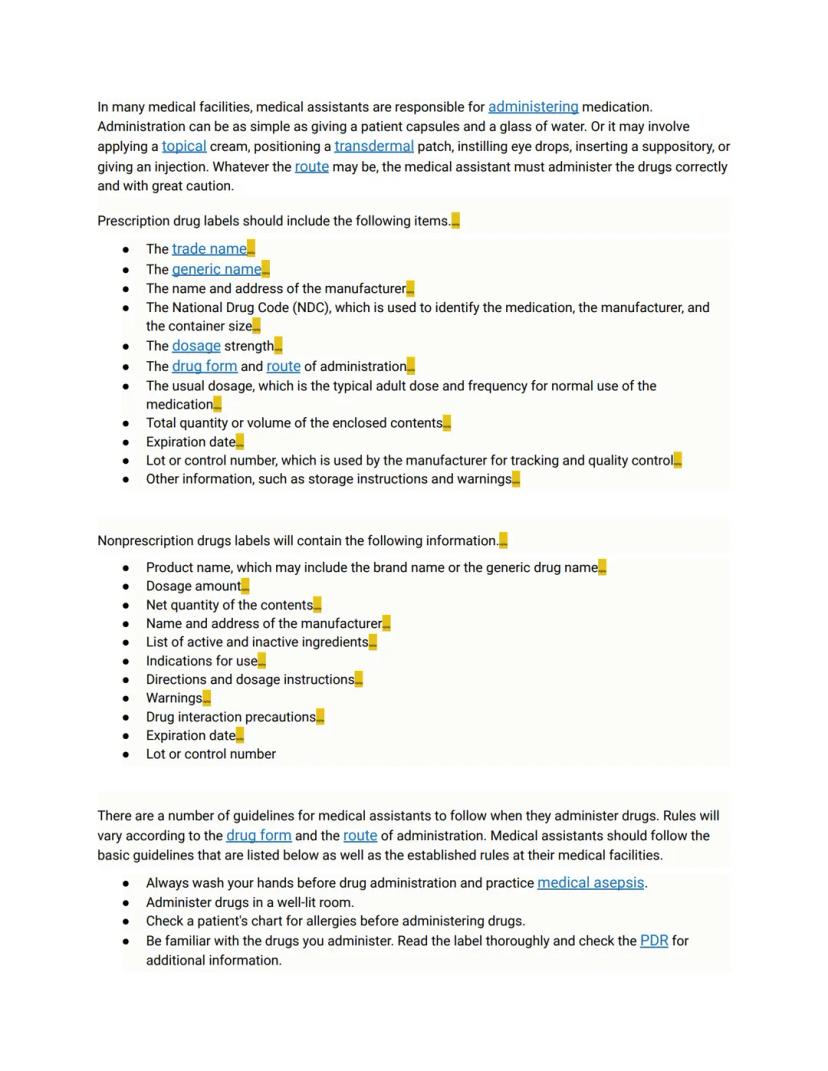
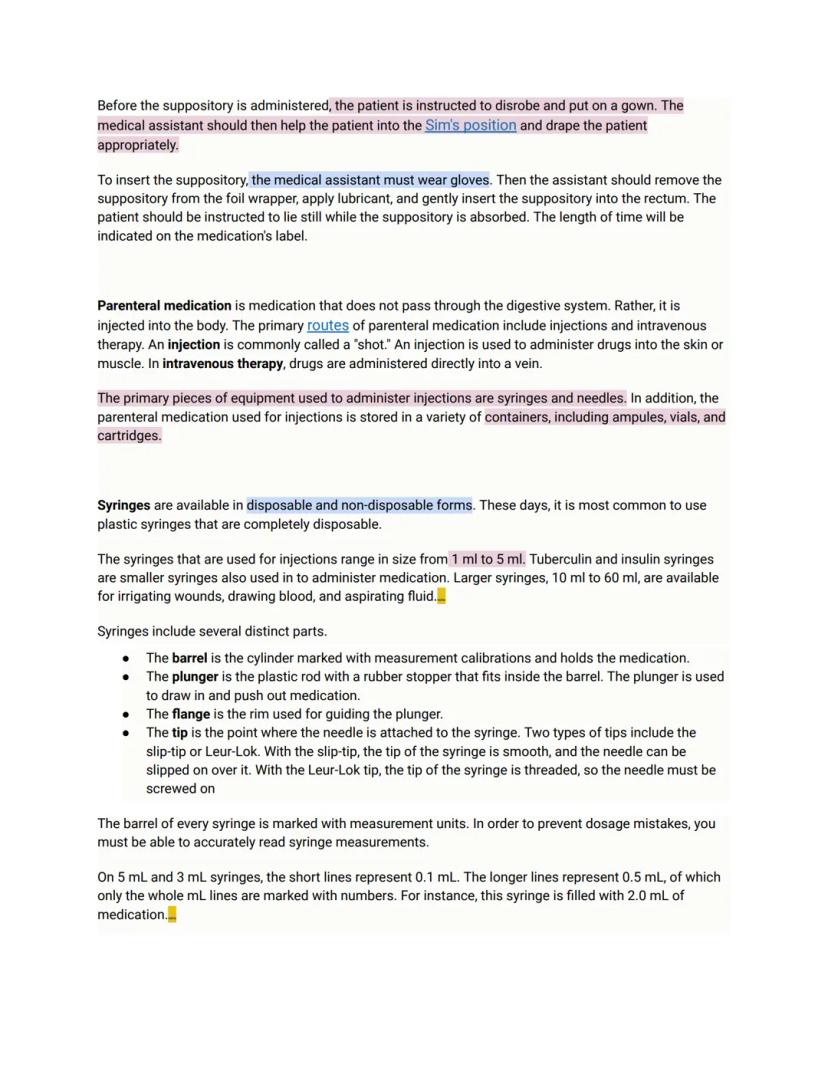
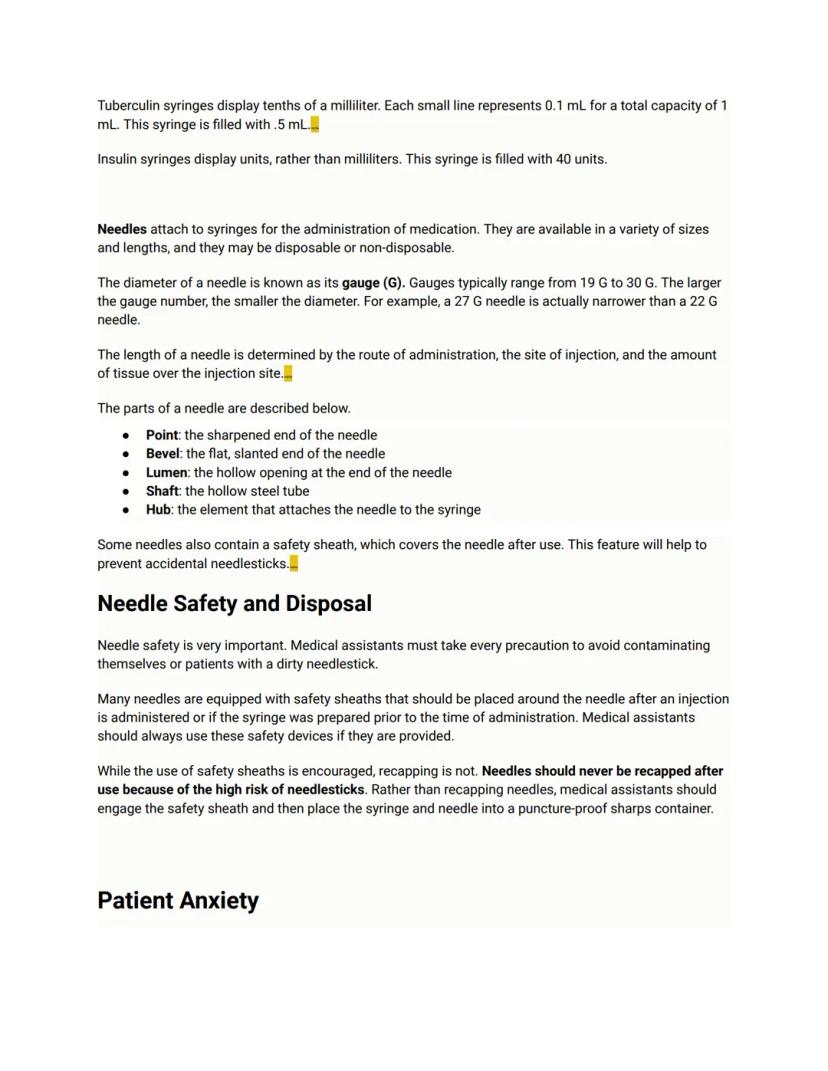
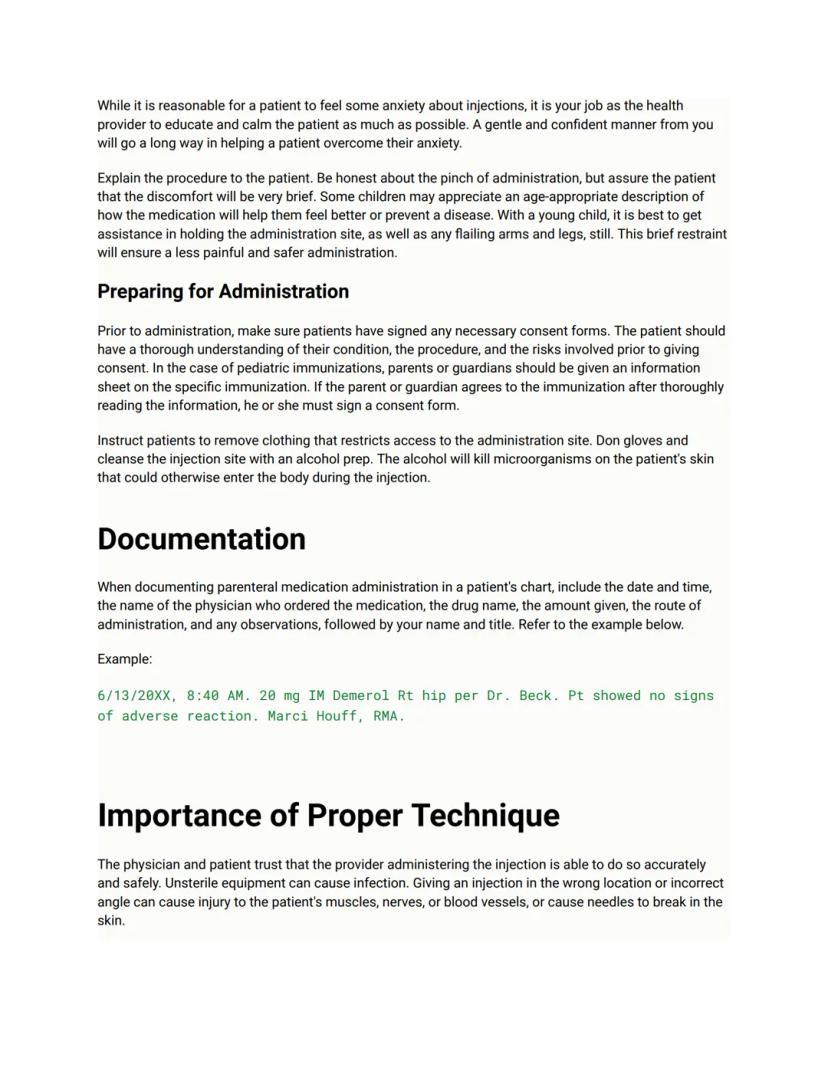
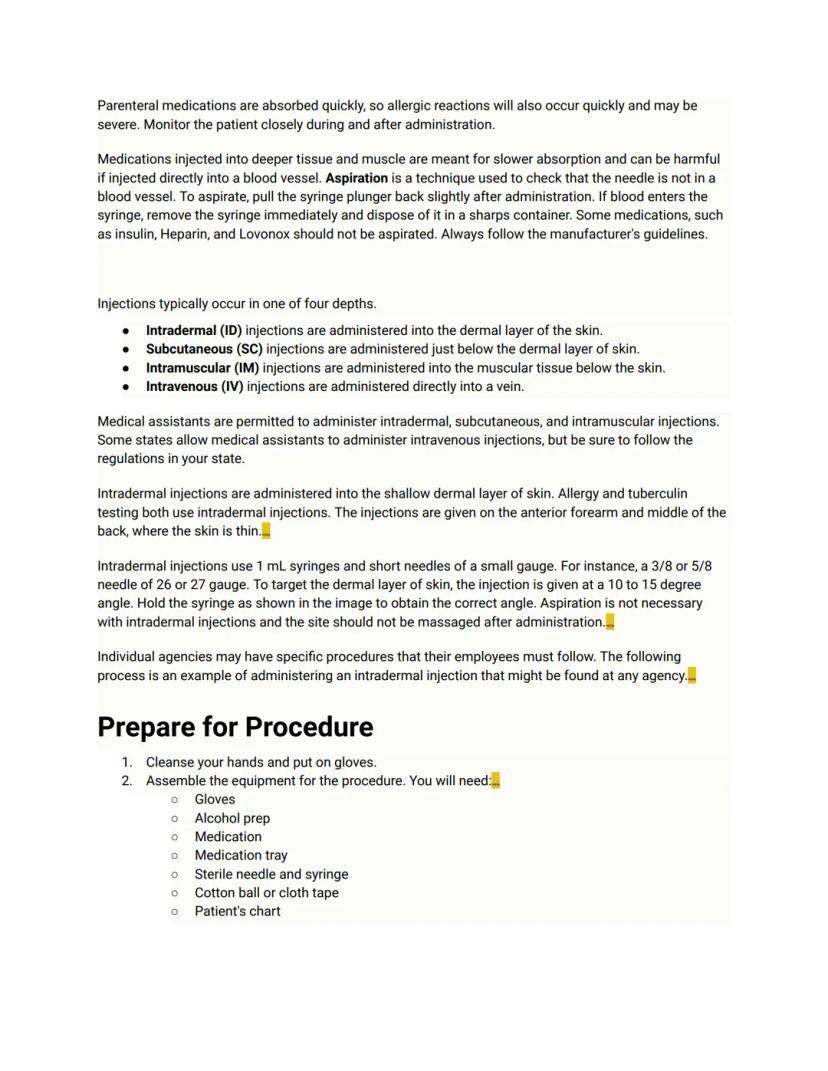
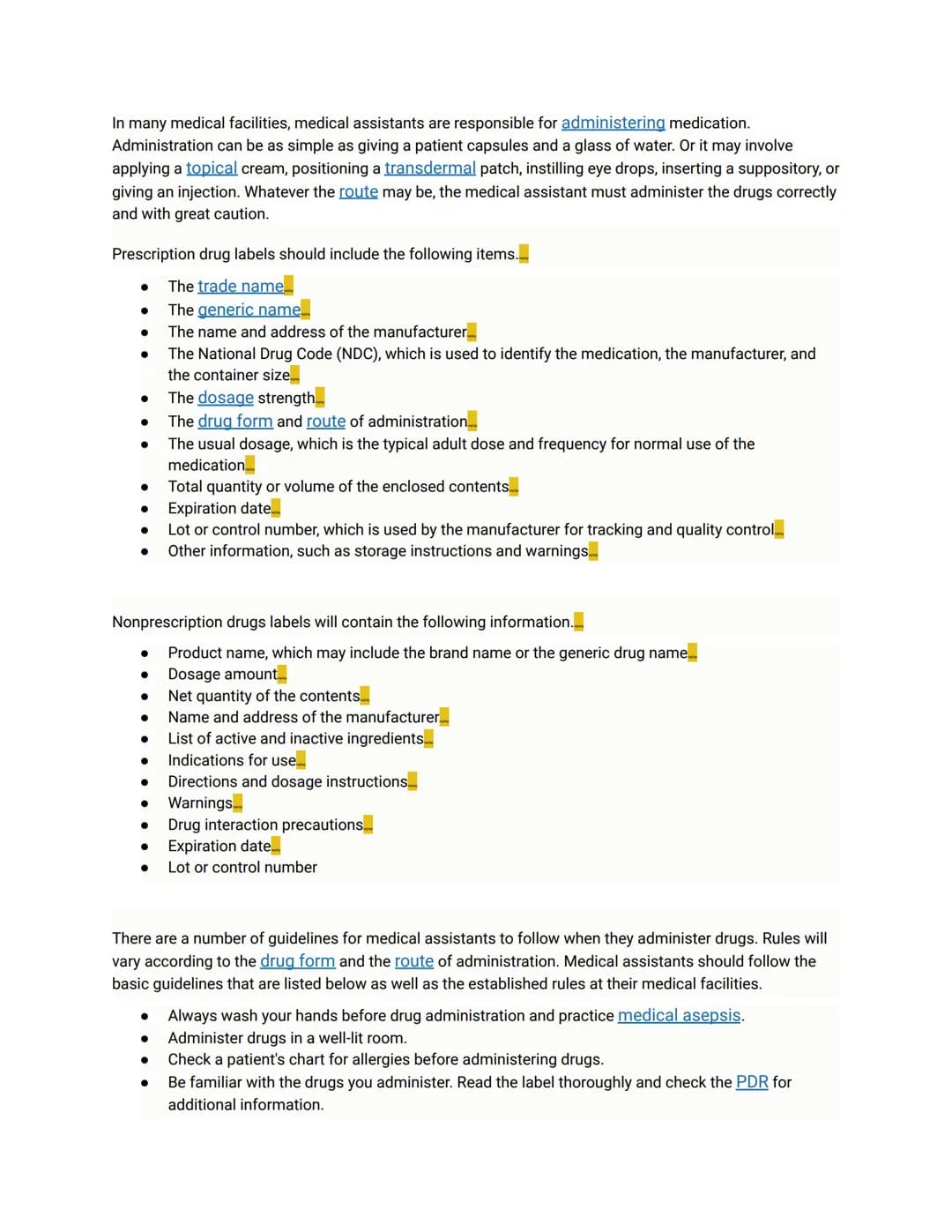
When you're responsible for giving medications, knowing how to read labels is your first defense against errors. Prescription drug labels contain vital information including the trade name, generic name, dosage strength, and expiration date. Nonprescription drugs include similar details plus directions and warnings.
Following proper administration guidelines is crucial for patient safety. Always wash your hands before handling medications and practice medical asepsis. Never leave prepared drugs unattended, and always check a patient's chart for allergies before administering anything.
Be methodical in your approach to medication. Read the physician's order before retrieving drugs, prepare your own medications, and follow directions carefully during preparation. After administering oral medications, stay with the patient to ensure they've swallowed completely.
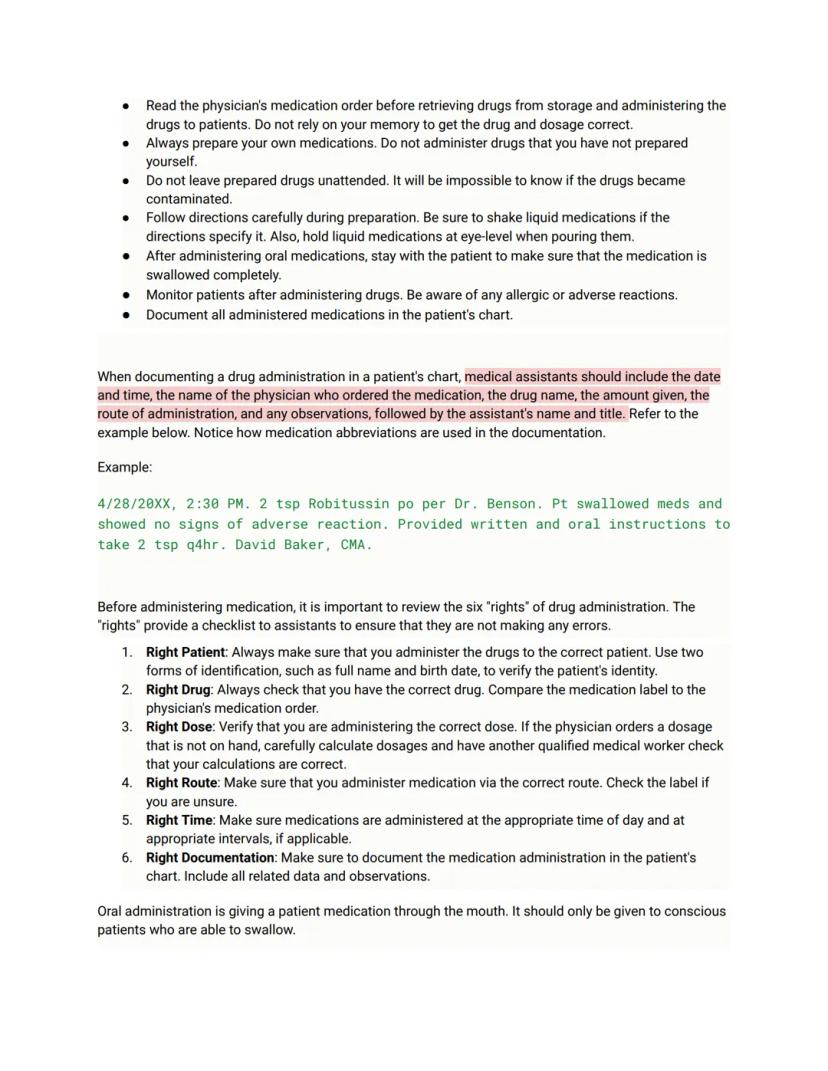
Safety Tip: When documenting medication administration, always include the date, time, physician name, drug name, amount, route, and your observations. Proper documentation is just as important as proper administration!
Documentation example:
4/28/20XX, 2:30 PM. 2 tsp Robitussin po per Dr. Benson. Pt swallowed meds and showed no signs of adverse reaction. Provided written and oral instructions to take 2 tsp q4hr. David Baker, CMA.
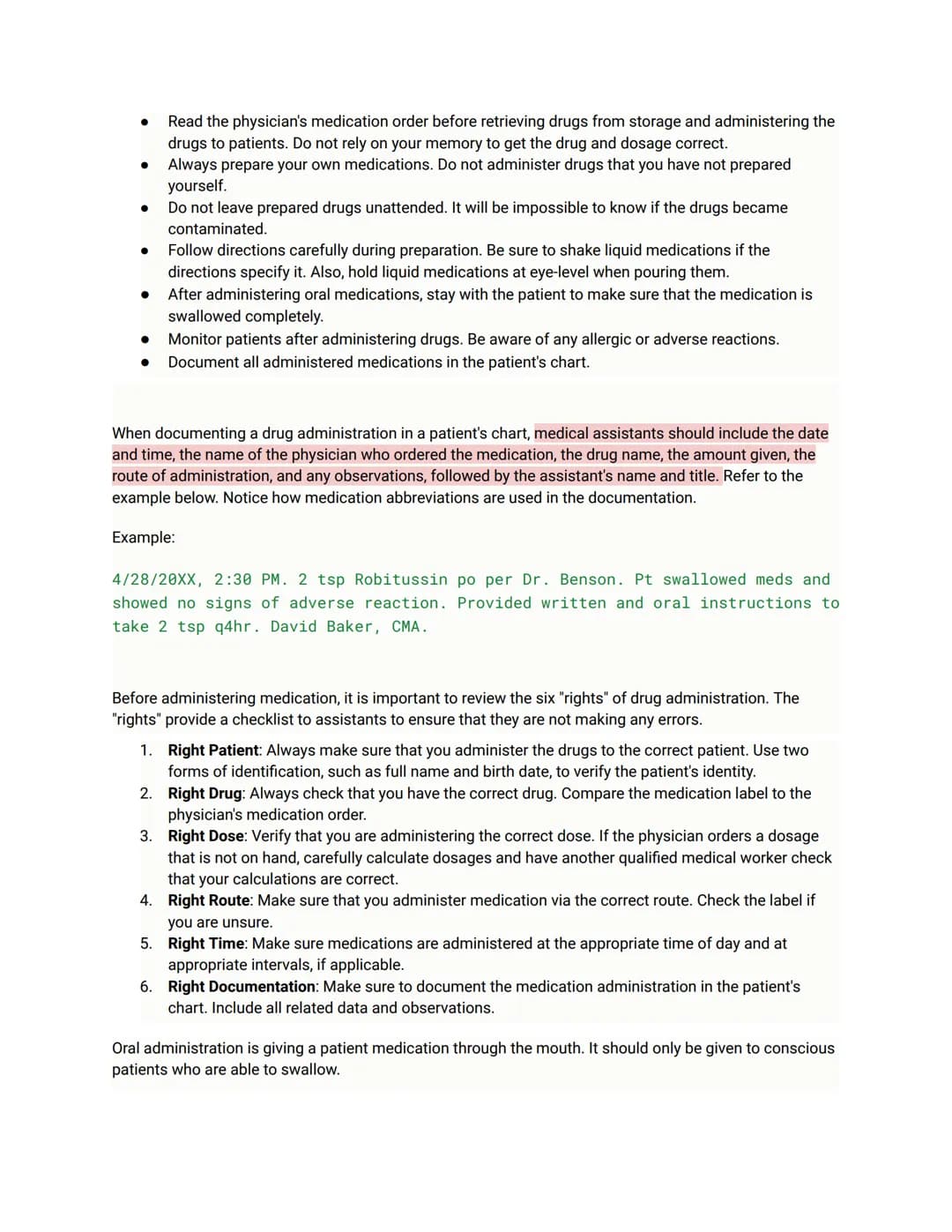
Before giving any medication, review the six "rights" - your safety checklist to prevent errors. The right patient means verifying identity with two forms of identification. The right drug involves comparing the medication label to the physician's order.
Always confirm the right dose by carefully calculating if needed, and have another qualified person double-check your math. Check that you're using the right route of administration as indicated on the label. Administer at the right time according to prescribed intervals, and complete the right documentation in the patient's chart.
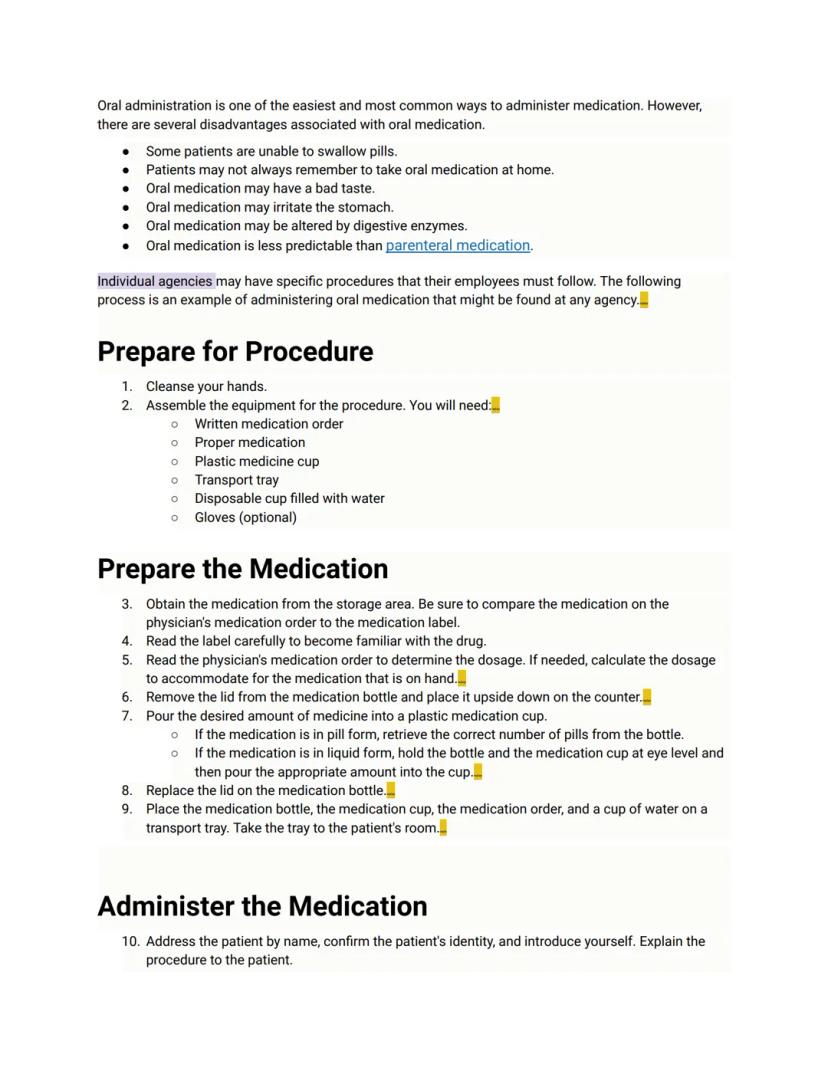
Oral administration is the most common way to give medication. It's simple but has limitations - some patients can't swallow pills, medications may taste bad or irritate the stomach, and they might be altered by digestive enzymes.
When giving oral medication, the process typically includes proper preparation, administering the medication with water if allowed, and carefully recording the administration in the patient's chart. Remember to monitor the patient for any adverse reactions afterward.
Practice Pointer: Never rely on memory when administering medications! Always read the physician's order directly before retrieving and administering drugs to ensure accuracy.
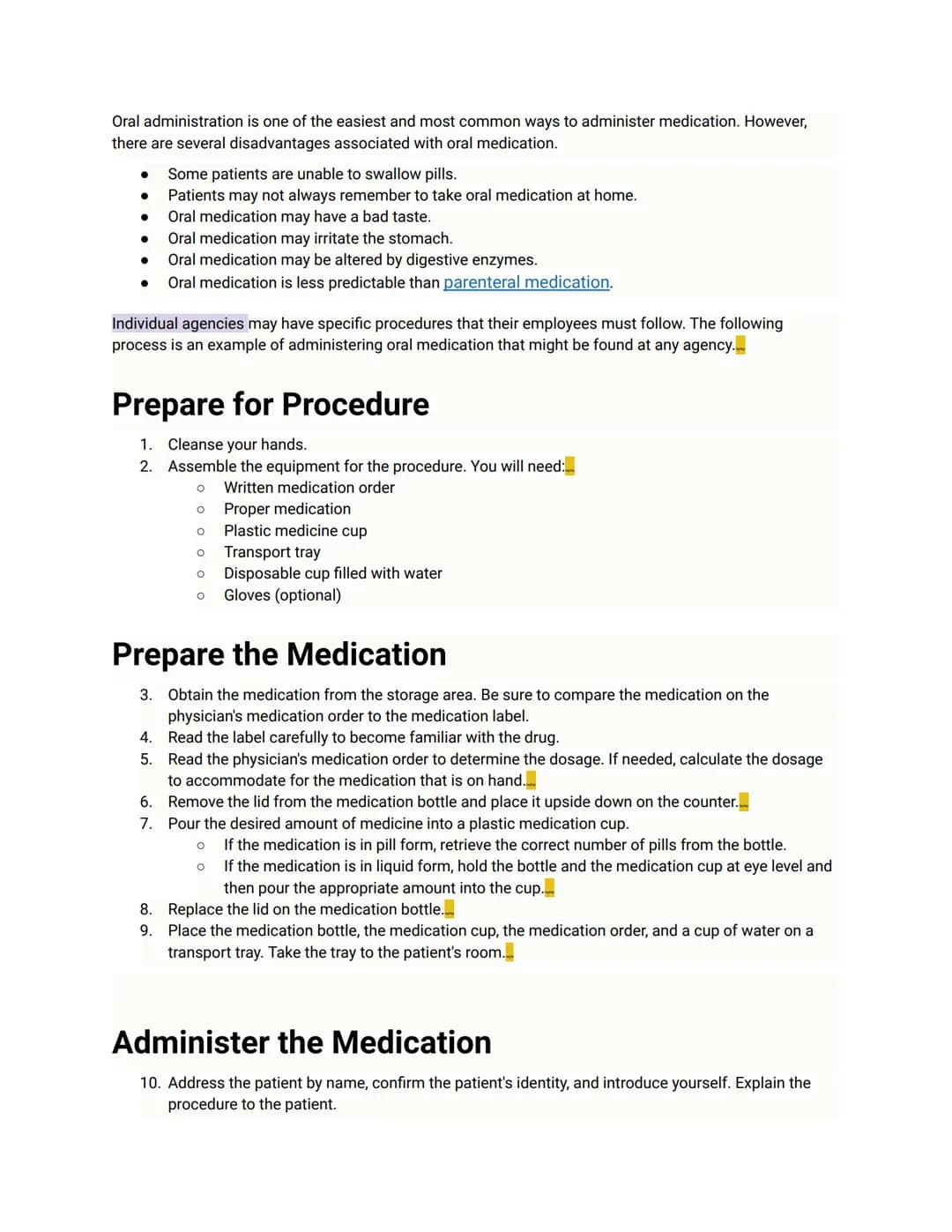
Giving oral medications follows a specific procedure that begins with thorough hand washing. You'll need the written order, proper medication, a medicine cup, water, and possibly gloves. Safety starts with proper verification - always compare the medication to the physician's order before proceeding.
When preparing the medication, place bottle caps upside down to prevent contamination. For pills, count out the correct number; for liquids, hold the bottle and cup at eye level while pouring. This helps ensure accurate measurement and prevents dosage errors.
After preparation, place everything on a transport tray and take it to the patient. Always confirm the patient's identity before giving any medication. After administration, offer water if allowed, and stay with the patient until they've completely swallowed the medication.
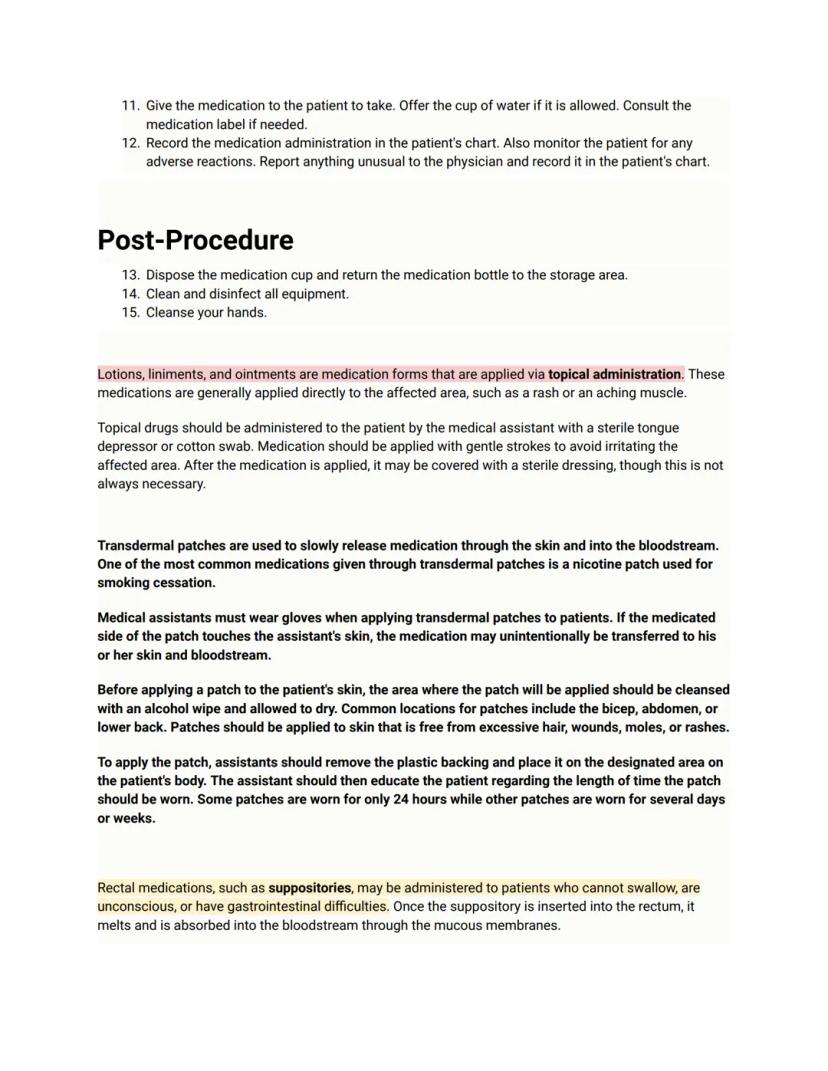
Proper documentation completes the process. Record the administration in the patient's chart and monitor for adverse reactions. Any unusual responses should be reported to the physician immediately.
Real-World Reminder: The seemingly simple act of giving oral medication requires attention to detail. Taking shortcuts in this process can lead to serious medication errors that harm patients.
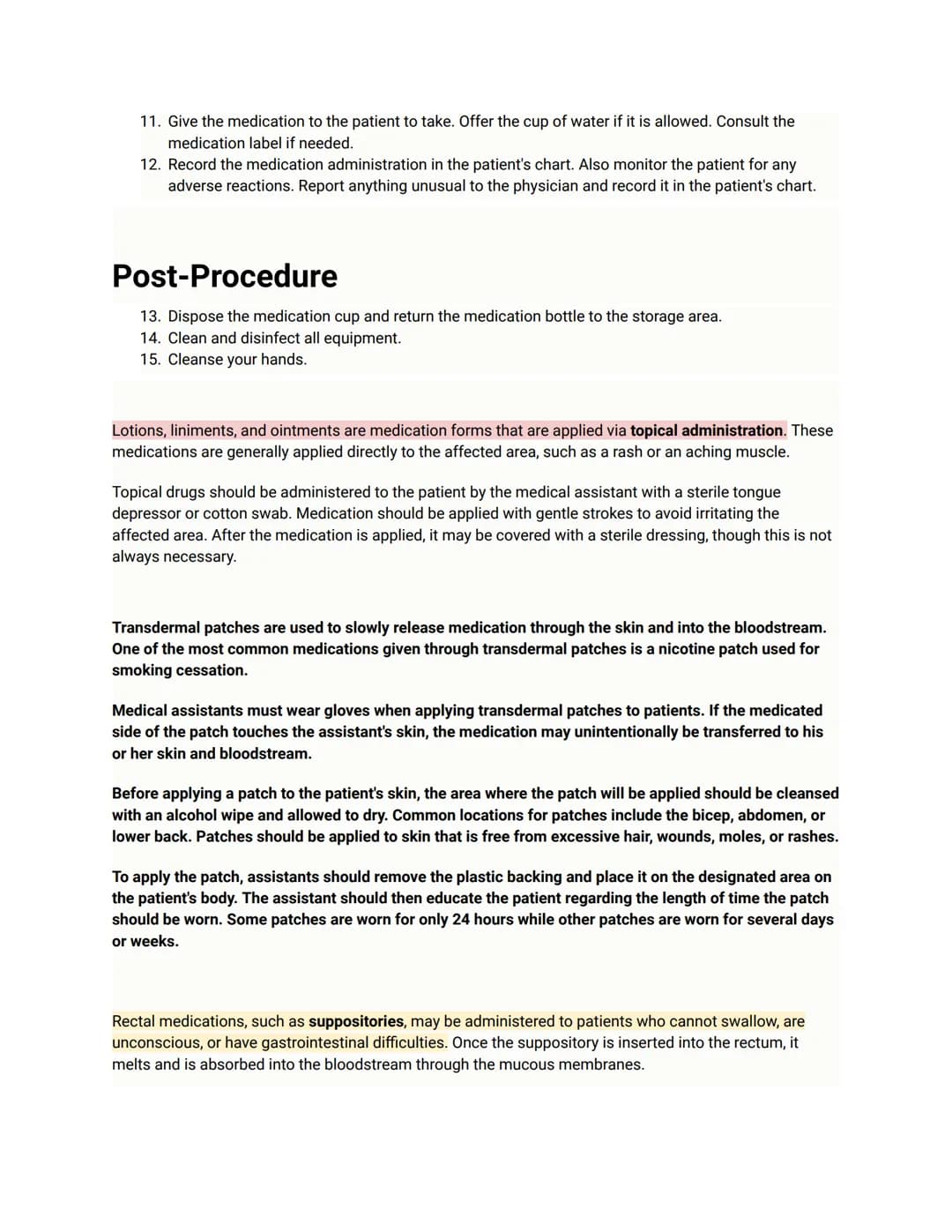
Topical medications like lotions and ointments should be applied using a sterile tongue depressor or cotton swab. Use gentle strokes to avoid irritating the affected area, and cover with a sterile dressing if necessary. This method delivers medication directly to the treatment site.
Transdermal patches slowly release medication through the skin into the bloodstream. When applying patches, always wear gloves to prevent accidentally absorbing medication through your own skin. Clean the application site with alcohol first, and choose areas free of hair, wounds, or rashes.
To apply a patch properly, remove the plastic backing and place it on the designated area. Educate patients about how long to wear the patch - some are worn for just 24 hours while others remain in place for weeks.
Rectal suppositories are useful for patients who cannot swallow or have gastrointestinal issues. After helping the patient into the Sim's position and properly draping them, wear gloves to insert the lubricated suppository. Instruct patients to remain still while the medication absorbs.
Clinical Insight: When applying transdermal patches, be especially careful with placement. The medication will be absorbed directly into the bloodstream, so proper application technique matters just as much as with injections.
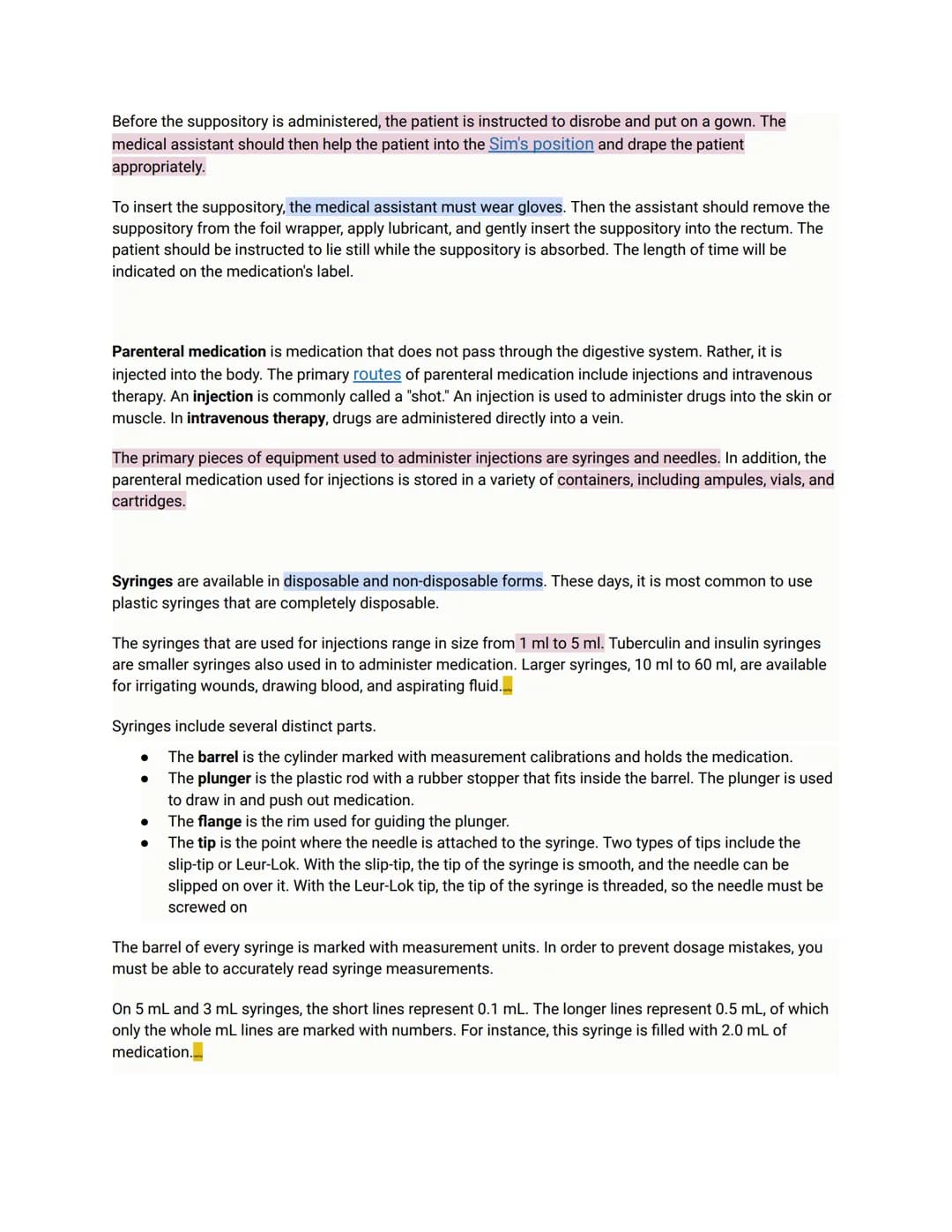
Parenteral medication doesn't pass through the digestive system but is instead injected directly into the body. This method allows for faster absorption and is used when oral administration isn't possible or effective. The main routes include injections and intravenous therapy.
Syringes and needles are the primary equipment used for injections. Modern medical facilities typically use disposable plastic syringes ranging from 1 ml to 5 ml for standard injections. Each syringe has specific parts: the barrel (holds medication), plunger , flange (guides plunger), and tip (attaches to needle).
Reading syringe measurements accurately is crucial to prevent dosage mistakes. Different syringe types have different measurement markings - standard syringes use milliliter markings, tuberculin syringes display tenths of a milliliter, and insulin syringes show units rather than milliliters.
Understanding needle specifications is equally important. The needle's gauge refers to its diameter (higher numbers mean smaller diameters), and length varies based on the injection type and site. Key parts include the point (sharpened end), bevel (slanted end), lumen (hollow opening), shaft (hollow tube), and hub (attaches to syringe).
Safety Alert: Always verify your measurements twice when drawing up medication. A small error in reading calibrations can lead to a significant dosage mistake that could harm the patient.
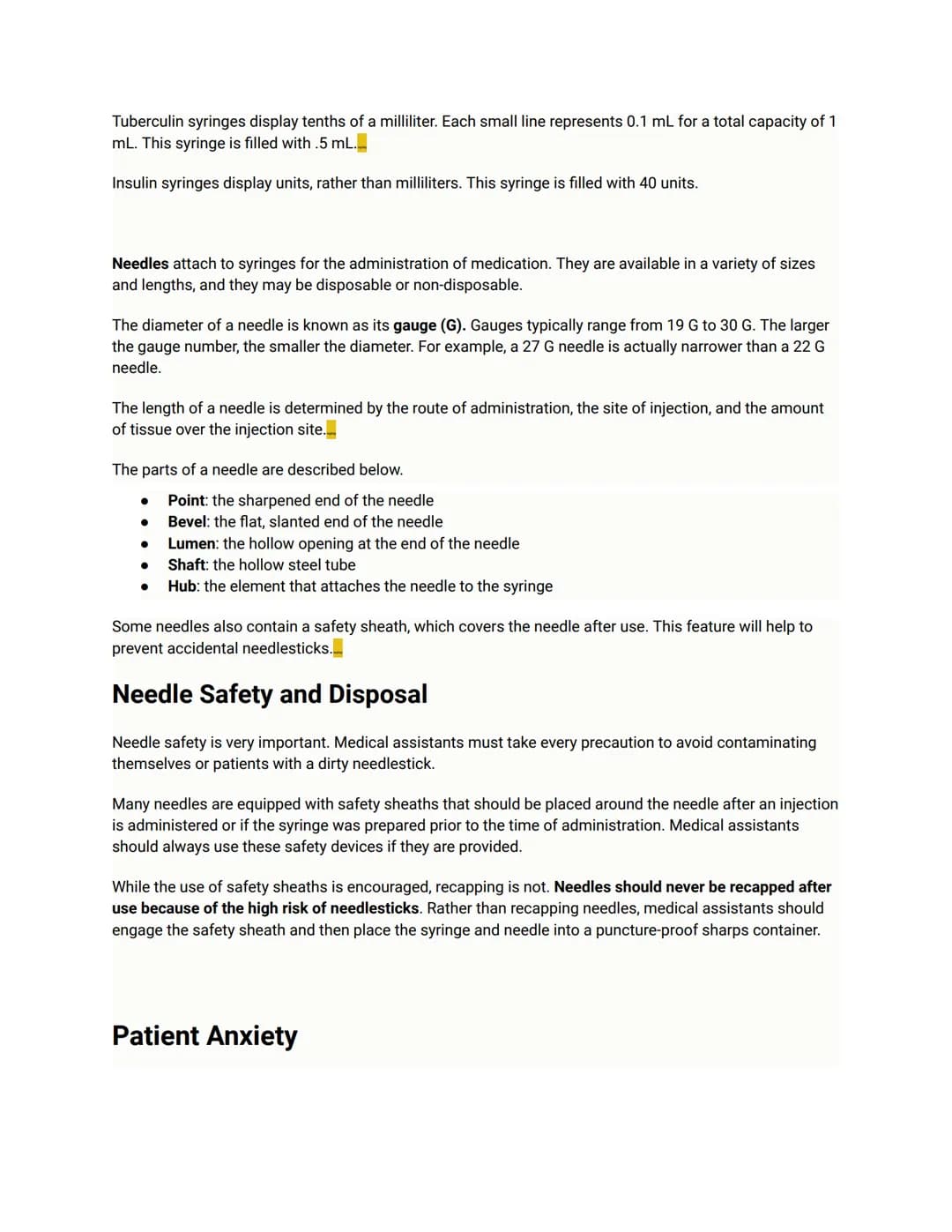
Needle safety must be a top priority in healthcare settings. Many modern needles include safety sheaths that cover the needle after use to prevent accidental needlesticks. Always use these safety features when available.
Never recap needles after use - this increases your risk of a needlestick injury. Instead, immediately dispose of used needles and syringes in a puncture-proof sharps container. This simple practice significantly reduces the risk of bloodborne pathogen exposure.
Many patients experience anxiety about injections. As a medical assistant, your calm, confident manner can help ease their fears. Be honest about the momentary discomfort but reassure patients that it will be brief. For children, offer age-appropriate explanations about how the medication will help them feel better.
Before administering any injection, ensure all consent forms are signed. For pediatric immunizations, parents or guardians must receive detailed information sheets and sign consent forms. Prepare the injection site by having patients remove restrictive clothing and cleansing the site with alcohol to kill microorganisms.
Professional Tip: Your demeanor during injections matters tremendously. Speaking calmly and confidently while maintaining a gentle touch can transform a patient's experience from fearful to manageable.
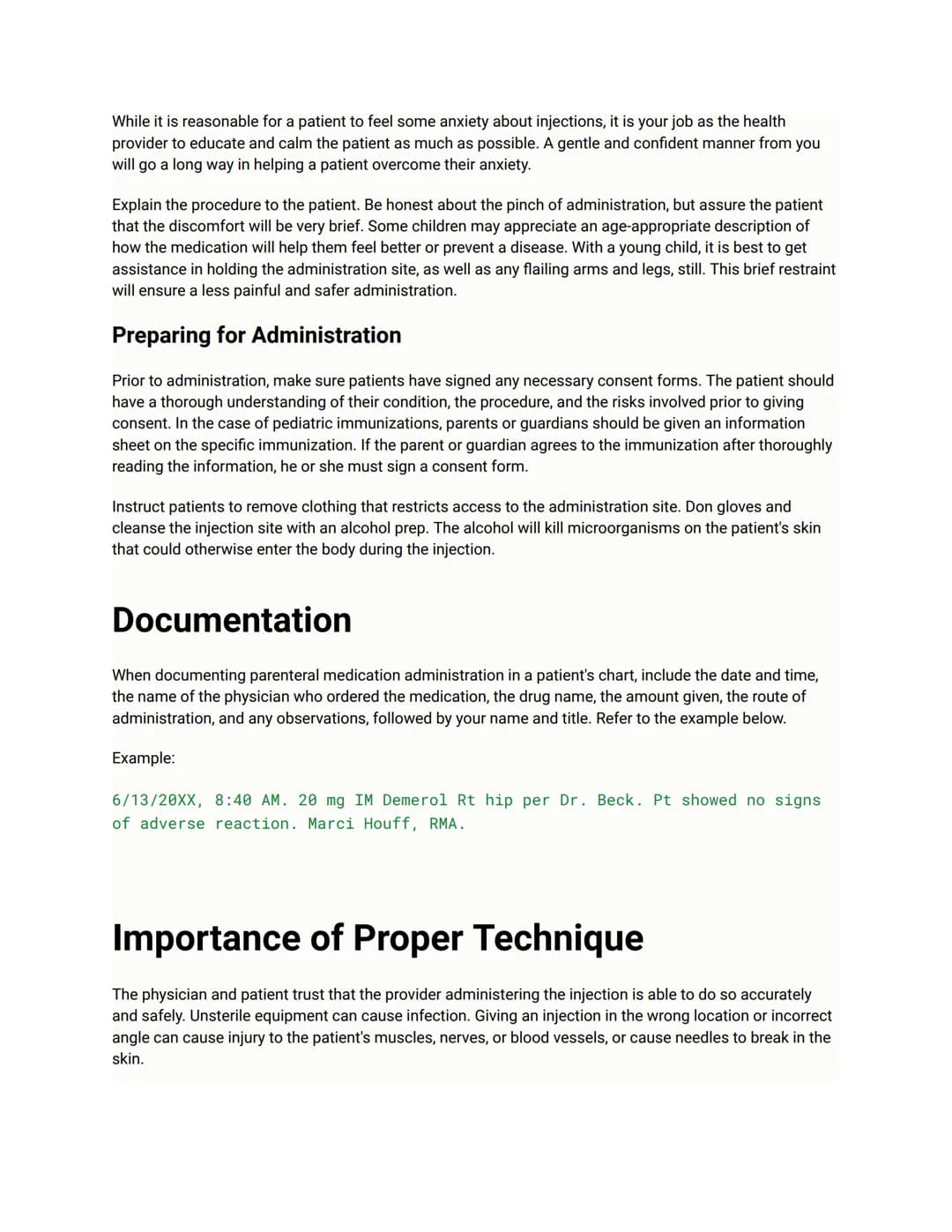
Proper documentation of injections is essential for patient records. Always include the date, time, physician name, medication name, amount, administration route, and any observations, followed by your name and title. For example: "6/13/20XX, 8:40 AM. 20 mg IM Demerol Rt hip per Dr. Beck. Pt showed no signs of adverse reaction. Marci Houff, RMA."
Using correct technique for injections is critical for patient safety. Improper administration can cause infections, injury to muscles and nerves, or broken needles. Since parenteral medications are absorbed quickly, monitor patients closely for allergic reactions, which can be severe and rapid.
Aspiration is an important safety technique for many injections. After inserting the needle, pull the plunger back slightly - if blood appears, immediately remove the needle, discard the syringe, and start over with new supplies. This prevents accidentally injecting medication directly into a blood vessel. However, some medications (insulin, Heparin, Lovonox) should not be aspirated.
Injections are administered at different depths depending on the medication and purpose. Medical assistants can typically administer intradermal (into the dermis), subcutaneous (below the dermis), and intramuscular (into muscle) injections. Intravenous injections (directly into veins) may be permitted in some states but check your local regulations.
Critical Reminder: The physician and patient trust your ability to administer injections safely and accurately. Always follow proper procedures without taking shortcuts - a moment of carelessness can lead to serious complications.
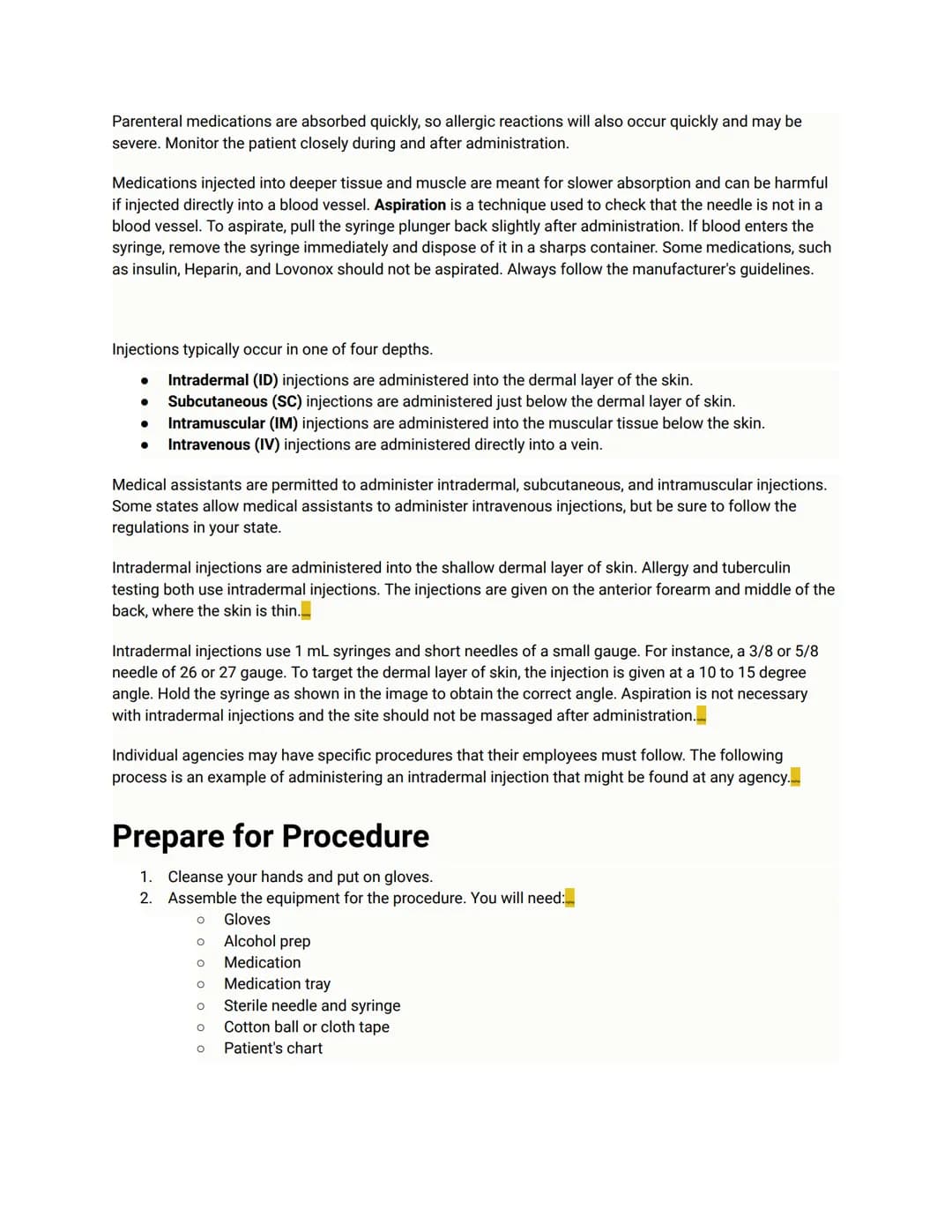
Intradermal (ID) injections are administered into the thin dermal layer of skin. These shallow injections are commonly used for allergy and tuberculin testing. The best administration sites are the anterior forearm and middle back, where skin is thinnest.
For intradermal injections, use a 1 mL syringe with a short, small-gauge needle . The key to proper technique is the injection angle - hold the syringe at a 10-15 degree angle, almost parallel to the skin surface, to target just the dermal layer.
Unlike other injection types, intradermal injections do not require aspiration, and the site should not be massaged afterward. A successful intradermal injection creates a visible "wheal" or small raised area on the skin, indicating the medication is in the dermal layer.
The standard procedure includes thorough preparation, patient identification, and site cleaning with alcohol. After injecting the medication, remove the needle at the same angle it was inserted and properly dispose of it in a sharps container. Document the procedure including the patient's reaction.
Technique Tip: When performing intradermal injections, holding the skin taut with your non-dominant hand helps ensure the needle enters at the correct depth. If you go too deep, you'll miss the dermal layer and compromise test results.
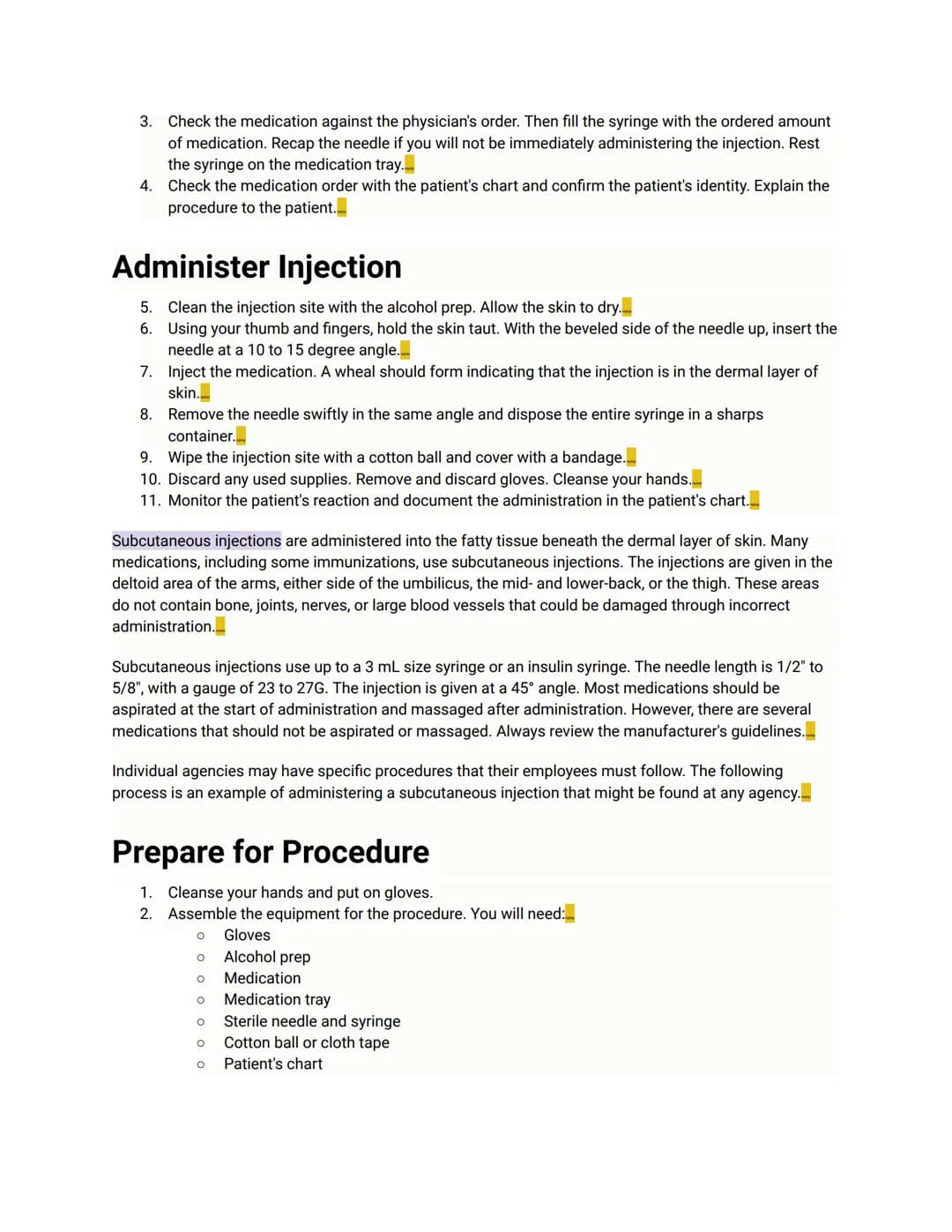
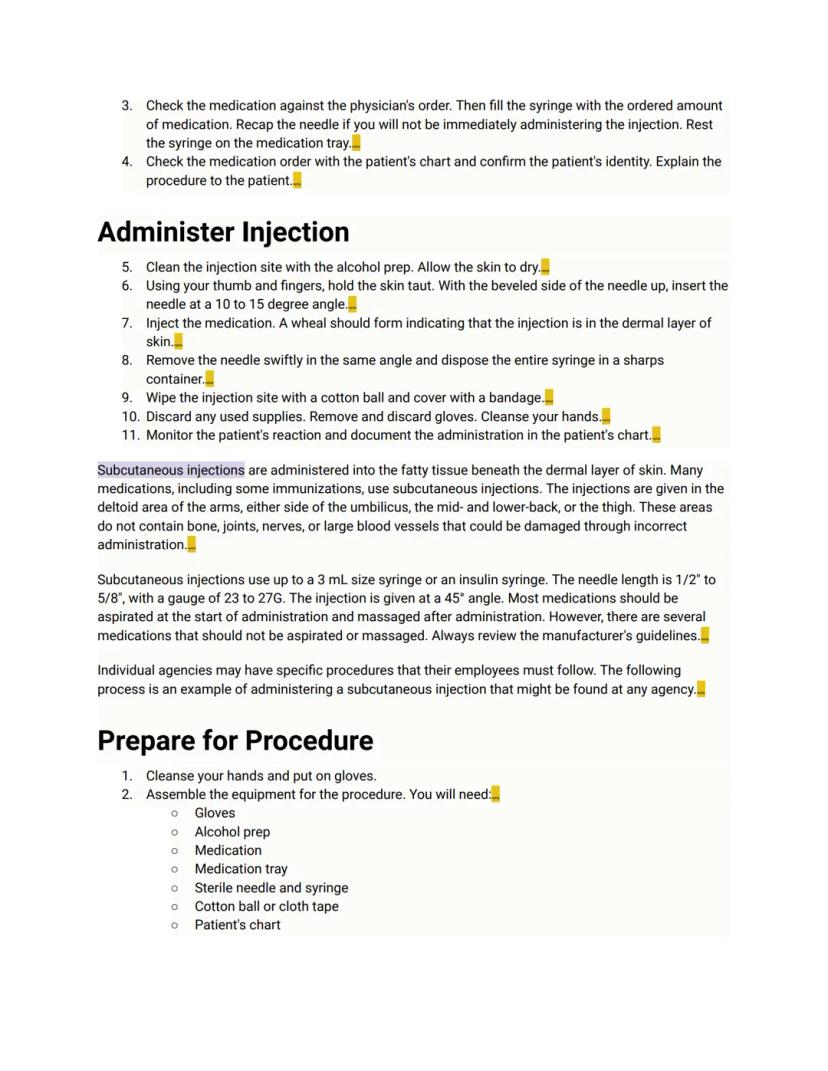
Subcutaneous (SC) injections deliver medication into the fatty tissue beneath the skin. This route is used for many medications including certain immunizations. Common injection sites include the upper arms (deltoid area), abdomen (either side of the umbilicus), mid and lower back, and thighs.
These sites are chosen because they lack bone, joints, nerves, or large blood vessels that could be damaged during administration. You'll typically use a 1/2" to 5/8" needle with a 23 to 27 gauge and a syringe up to 3 mL in size. The proper injection angle is 45 degrees to reach the subcutaneous tissue.
The procedure starts with gathering supplies and proper hand hygiene. After preparing the medication and confirming the patient's identity, clean the injection site with alcohol and allow it to dry. Gently pinch the skin between your thumb and index finger to isolate the subcutaneous tissue.
Most subcutaneous medications require aspiration to check for blood vessel entry, though some medications should not be aspirated. After injection, remove the needle at the same angle and gently massage the site to distribute the medication (unless contraindicated). Always monitor the patient for adverse reactions.
Key Distinction: While intradermal injections create a visible wheal on the skin, subcutaneous injections go deeper and don't produce this surface reaction. The pinching technique is crucial for proper delivery into subcutaneous tissue.
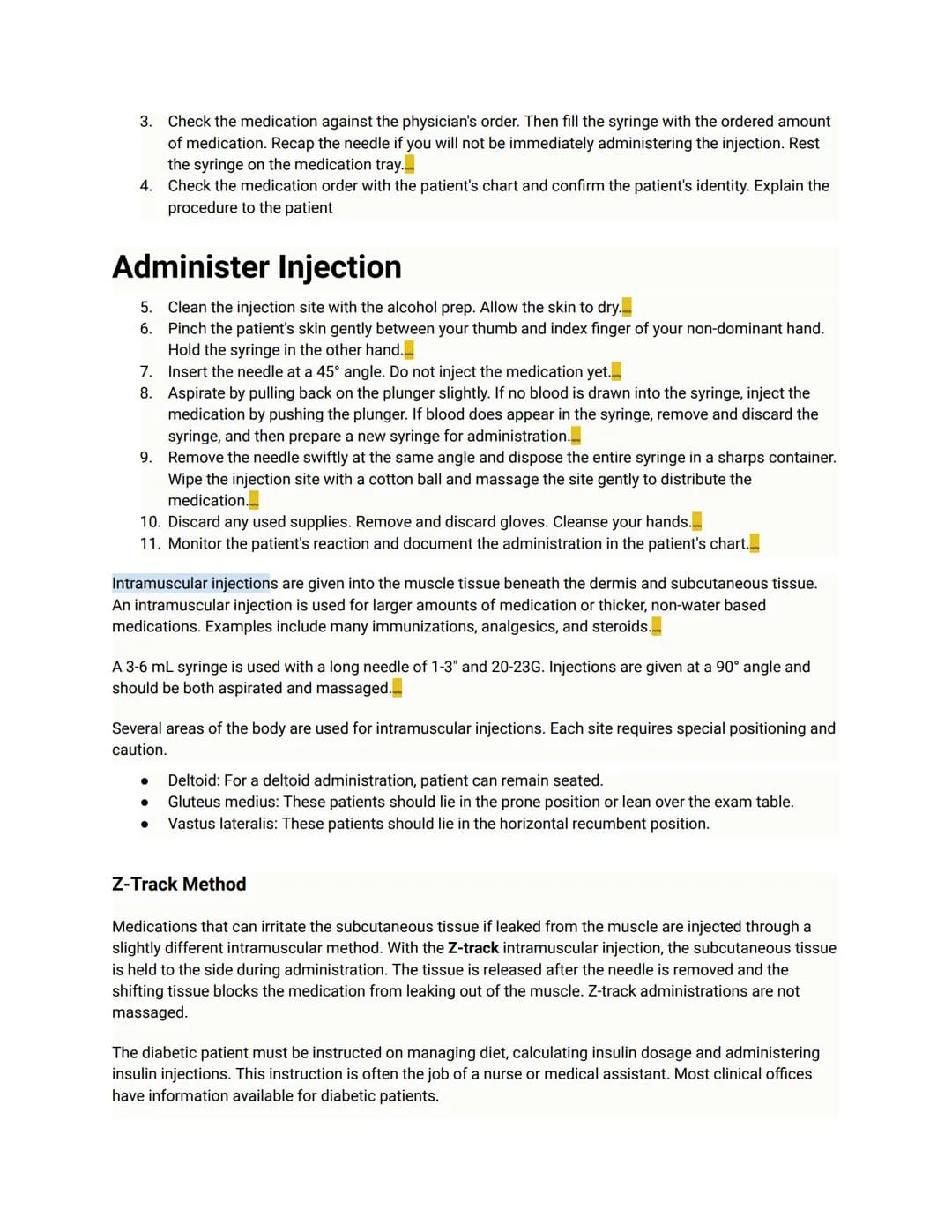
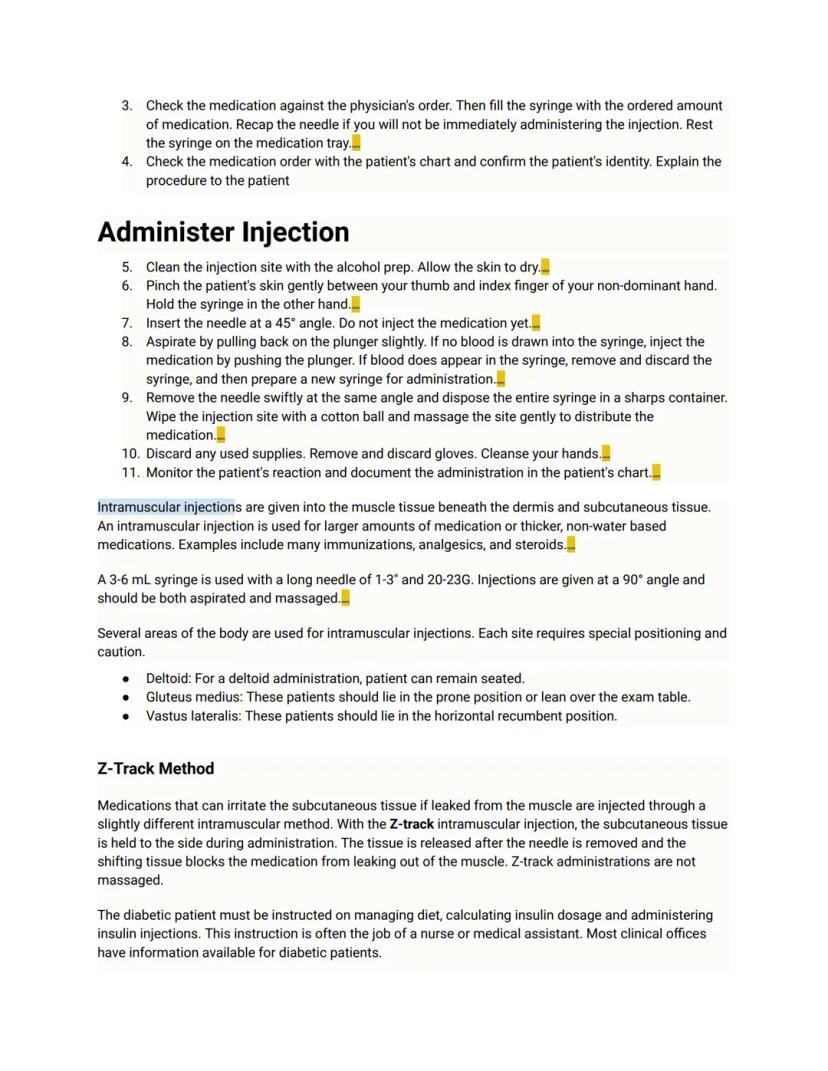
Intramuscular (IM) injections deliver medication deep into muscle tissue. This route is ideal for larger medication volumes or thicker, non-water based medications like many immunizations, analgesics, and steroids. These injections use longer needles (1-3") with a gauge of 20-23 and are administered at a 90-degree angle.
Several body sites can be used for IM injections, each requiring specific positioning. For deltoid injections, patients can remain seated. Gluteus medius injections require patients to lie prone or lean over the exam table. For vastus lateralis injections, patients should lie in a horizontal recumbent position.
The Z-track method is a specialized technique for irritating medications. This method prevents leakage into subcutaneous tissue by pulling the skin to one side during injection, then releasing it after needle removal. The shifted tissue blocks the medication from leaking out of the muscle.
Diabetic patients require special instruction on insulin administration. Since repeated injections in the same site can damage tissue and affect insulin absorption, teach patients to rotate injection sites following a consistent pattern. This helps maintain healthy tissue and ensures proper insulin absorption.
Clinical Application: When administering IM injections, site selection matters tremendously. For adult patients, the vastus lateralis (thigh) is often preferred as it's a large muscle with fewer nerves and blood vessels compared to other sites.
Our AI companion is specifically built for the needs of students. Based on the millions of content pieces we have on the platform we can provide truly meaningful and relevant answers to students. But its not only about answers, the companion is even more about guiding students through their daily learning challenges, with personalised study plans, quizzes or content pieces in the chat and 100% personalisation based on the students skills and developments.
You can download the app in the Google Play Store and in the Apple App Store.
That's right! Enjoy free access to study content, connect with fellow students, and get instant help – all at your fingertips.
App Store
Google Play
The app is very easy to use and well designed. I have found everything I was looking for so far and have been able to learn a lot from the presentations! I will definitely use the app for a class assignment! And of course it also helps a lot as an inspiration.
Stefan S
iOS user
This app is really great. There are so many study notes and help [...]. My problem subject is French, for example, and the app has so many options for help. Thanks to this app, I have improved my French. I would recommend it to anyone.
Samantha Klich
Android user
Wow, I am really amazed. I just tried the app because I've seen it advertised many times and was absolutely stunned. This app is THE HELP you want for school and above all, it offers so many things, such as workouts and fact sheets, which have been VERY helpful to me personally.
Anna
iOS user
I think it’s very much worth it and you’ll end up using it a lot once you get the hang of it and even after looking at others notes you can still ask your Artificial intelligence buddy the question and ask to simplify it if you still don’t get it!!! In the end I think it’s worth it 😊👍 ⚠️Also DID I MENTION ITS FREEE YOU DON’T HAVE TO PAY FOR ANYTHING AND STILL GET YOUR GRADES IN PERFECTLY❗️❗️⚠️
Thomas R
iOS user
Knowunity is the BEST app I’ve used in a minute. This is not an ai review or anything this is genuinely coming from a 7th grade student (I know 2011 im young) but dude this app is a 10/10 i have maintained a 3.8 gpa and have plenty of time for gaming. I love it and my mom is just happy I got good grades
Brad T
Android user
Not only did it help me find the answer but it also showed me alternative ways to solve it. I was horrible in math and science but now I have an a in both subjects. Thanks for the help🤍🤍
David K
iOS user
The app's just great! All I have to do is enter the topic in the search bar and I get the response real fast. I don't have to watch 10 YouTube videos to understand something, so I'm saving my time. Highly recommended!
Sudenaz Ocak
Android user
In school I was really bad at maths but thanks to the app, I am doing better now. I am so grateful that you made the app.
Greenlight Bonnie
Android user
I found this app a couple years ago and it has only gotten better since then. I really love it because it can help with written questions and photo questions. Also, it can find study guides that other people have made as well as flashcard sets and practice tests. The free version is also amazing for students who might not be able to afford it. Would 100% recommend
Aubrey
iOS user
Best app if you're in Highschool or Junior high. I have been using this app for 2 school years and it's the best, it's good if you don't have anyone to help you with school work.😋🩷🎀
Marco B
iOS user
THE QUIZES AND FLASHCARDS ARE SO USEFUL AND I LOVE Knowunity AI. IT ALSO IS LITREALLY LIKE CHATGPT BUT SMARTER!! HELPED ME WITH MY MASCARA PROBLEMS TOO!! AS WELL AS MY REAL SUBJECTS ! DUHHH 😍😁😲🤑💗✨🎀😮
Elisha
iOS user
This app is phenomenal down to the correct info and the various topics you can study! I greatly recommend it for people who struggle with procrastination and those who need homework help. It has been perfectly accurate for world 1 history as far as I’ve seen! Geometry too!
Paul T
iOS user
The app is very easy to use and well designed. I have found everything I was looking for so far and have been able to learn a lot from the presentations! I will definitely use the app for a class assignment! And of course it also helps a lot as an inspiration.
Stefan S
iOS user
This app is really great. There are so many study notes and help [...]. My problem subject is French, for example, and the app has so many options for help. Thanks to this app, I have improved my French. I would recommend it to anyone.
Samantha Klich
Android user
Wow, I am really amazed. I just tried the app because I've seen it advertised many times and was absolutely stunned. This app is THE HELP you want for school and above all, it offers so many things, such as workouts and fact sheets, which have been VERY helpful to me personally.
Anna
iOS user
I think it’s very much worth it and you’ll end up using it a lot once you get the hang of it and even after looking at others notes you can still ask your Artificial intelligence buddy the question and ask to simplify it if you still don’t get it!!! In the end I think it’s worth it 😊👍 ⚠️Also DID I MENTION ITS FREEE YOU DON’T HAVE TO PAY FOR ANYTHING AND STILL GET YOUR GRADES IN PERFECTLY❗️❗️⚠️
Thomas R
iOS user
Knowunity is the BEST app I’ve used in a minute. This is not an ai review or anything this is genuinely coming from a 7th grade student (I know 2011 im young) but dude this app is a 10/10 i have maintained a 3.8 gpa and have plenty of time for gaming. I love it and my mom is just happy I got good grades
Brad T
Android user
Not only did it help me find the answer but it also showed me alternative ways to solve it. I was horrible in math and science but now I have an a in both subjects. Thanks for the help🤍🤍
David K
iOS user
The app's just great! All I have to do is enter the topic in the search bar and I get the response real fast. I don't have to watch 10 YouTube videos to understand something, so I'm saving my time. Highly recommended!
Sudenaz Ocak
Android user
In school I was really bad at maths but thanks to the app, I am doing better now. I am so grateful that you made the app.
Greenlight Bonnie
Android user
I found this app a couple years ago and it has only gotten better since then. I really love it because it can help with written questions and photo questions. Also, it can find study guides that other people have made as well as flashcard sets and practice tests. The free version is also amazing for students who might not be able to afford it. Would 100% recommend
Aubrey
iOS user
Best app if you're in Highschool or Junior high. I have been using this app for 2 school years and it's the best, it's good if you don't have anyone to help you with school work.😋🩷🎀
Marco B
iOS user
THE QUIZES AND FLASHCARDS ARE SO USEFUL AND I LOVE Knowunity AI. IT ALSO IS LITREALLY LIKE CHATGPT BUT SMARTER!! HELPED ME WITH MY MASCARA PROBLEMS TOO!! AS WELL AS MY REAL SUBJECTS ! DUHHH 😍😁😲🤑💗✨🎀😮
Elisha
iOS user
This app is phenomenal down to the correct info and the various topics you can study! I greatly recommend it for people who struggle with procrastination and those who need homework help. It has been perfectly accurate for world 1 history as far as I’ve seen! Geometry too!
Paul T
iOS user
Gigi Rodriguez
@gigirodriguez_thtd
Administering medication is a critical responsibility for medical assistants that demands precision, knowledge, and caution. Whether giving pills, applying creams, or administering injections, following proper procedures ensures patient safety and effective treatment.
Access to all documents
Improve your grades
Join milions of students
When you're responsible for giving medications, knowing how to read labels is your first defense against errors. Prescription drug labels contain vital information including the trade name, generic name, dosage strength, and expiration date. Nonprescription drugs include similar details plus directions and warnings.
Following proper administration guidelines is crucial for patient safety. Always wash your hands before handling medications and practice medical asepsis. Never leave prepared drugs unattended, and always check a patient's chart for allergies before administering anything.
Be methodical in your approach to medication. Read the physician's order before retrieving drugs, prepare your own medications, and follow directions carefully during preparation. After administering oral medications, stay with the patient to ensure they've swallowed completely.
Safety Tip: When documenting medication administration, always include the date, time, physician name, drug name, amount, route, and your observations. Proper documentation is just as important as proper administration!
Documentation example:
4/28/20XX, 2:30 PM. 2 tsp Robitussin po per Dr. Benson. Pt swallowed meds and showed no signs of adverse reaction. Provided written and oral instructions to take 2 tsp q4hr. David Baker, CMA.
Access to all documents
Improve your grades
Join milions of students
Before giving any medication, review the six "rights" - your safety checklist to prevent errors. The right patient means verifying identity with two forms of identification. The right drug involves comparing the medication label to the physician's order.
Always confirm the right dose by carefully calculating if needed, and have another qualified person double-check your math. Check that you're using the right route of administration as indicated on the label. Administer at the right time according to prescribed intervals, and complete the right documentation in the patient's chart.
Oral administration is the most common way to give medication. It's simple but has limitations - some patients can't swallow pills, medications may taste bad or irritate the stomach, and they might be altered by digestive enzymes.
When giving oral medication, the process typically includes proper preparation, administering the medication with water if allowed, and carefully recording the administration in the patient's chart. Remember to monitor the patient for any adverse reactions afterward.
Practice Pointer: Never rely on memory when administering medications! Always read the physician's order directly before retrieving and administering drugs to ensure accuracy.
Access to all documents
Improve your grades
Join milions of students
Giving oral medications follows a specific procedure that begins with thorough hand washing. You'll need the written order, proper medication, a medicine cup, water, and possibly gloves. Safety starts with proper verification - always compare the medication to the physician's order before proceeding.
When preparing the medication, place bottle caps upside down to prevent contamination. For pills, count out the correct number; for liquids, hold the bottle and cup at eye level while pouring. This helps ensure accurate measurement and prevents dosage errors.
After preparation, place everything on a transport tray and take it to the patient. Always confirm the patient's identity before giving any medication. After administration, offer water if allowed, and stay with the patient until they've completely swallowed the medication.
Proper documentation completes the process. Record the administration in the patient's chart and monitor for adverse reactions. Any unusual responses should be reported to the physician immediately.
Real-World Reminder: The seemingly simple act of giving oral medication requires attention to detail. Taking shortcuts in this process can lead to serious medication errors that harm patients.
Access to all documents
Improve your grades
Join milions of students
Topical medications like lotions and ointments should be applied using a sterile tongue depressor or cotton swab. Use gentle strokes to avoid irritating the affected area, and cover with a sterile dressing if necessary. This method delivers medication directly to the treatment site.
Transdermal patches slowly release medication through the skin into the bloodstream. When applying patches, always wear gloves to prevent accidentally absorbing medication through your own skin. Clean the application site with alcohol first, and choose areas free of hair, wounds, or rashes.
To apply a patch properly, remove the plastic backing and place it on the designated area. Educate patients about how long to wear the patch - some are worn for just 24 hours while others remain in place for weeks.
Rectal suppositories are useful for patients who cannot swallow or have gastrointestinal issues. After helping the patient into the Sim's position and properly draping them, wear gloves to insert the lubricated suppository. Instruct patients to remain still while the medication absorbs.
Clinical Insight: When applying transdermal patches, be especially careful with placement. The medication will be absorbed directly into the bloodstream, so proper application technique matters just as much as with injections.
Access to all documents
Improve your grades
Join milions of students
Parenteral medication doesn't pass through the digestive system but is instead injected directly into the body. This method allows for faster absorption and is used when oral administration isn't possible or effective. The main routes include injections and intravenous therapy.
Syringes and needles are the primary equipment used for injections. Modern medical facilities typically use disposable plastic syringes ranging from 1 ml to 5 ml for standard injections. Each syringe has specific parts: the barrel (holds medication), plunger , flange (guides plunger), and tip (attaches to needle).
Reading syringe measurements accurately is crucial to prevent dosage mistakes. Different syringe types have different measurement markings - standard syringes use milliliter markings, tuberculin syringes display tenths of a milliliter, and insulin syringes show units rather than milliliters.
Understanding needle specifications is equally important. The needle's gauge refers to its diameter (higher numbers mean smaller diameters), and length varies based on the injection type and site. Key parts include the point (sharpened end), bevel (slanted end), lumen (hollow opening), shaft (hollow tube), and hub (attaches to syringe).
Safety Alert: Always verify your measurements twice when drawing up medication. A small error in reading calibrations can lead to a significant dosage mistake that could harm the patient.
Access to all documents
Improve your grades
Join milions of students
Needle safety must be a top priority in healthcare settings. Many modern needles include safety sheaths that cover the needle after use to prevent accidental needlesticks. Always use these safety features when available.
Never recap needles after use - this increases your risk of a needlestick injury. Instead, immediately dispose of used needles and syringes in a puncture-proof sharps container. This simple practice significantly reduces the risk of bloodborne pathogen exposure.
Many patients experience anxiety about injections. As a medical assistant, your calm, confident manner can help ease their fears. Be honest about the momentary discomfort but reassure patients that it will be brief. For children, offer age-appropriate explanations about how the medication will help them feel better.
Before administering any injection, ensure all consent forms are signed. For pediatric immunizations, parents or guardians must receive detailed information sheets and sign consent forms. Prepare the injection site by having patients remove restrictive clothing and cleansing the site with alcohol to kill microorganisms.
Professional Tip: Your demeanor during injections matters tremendously. Speaking calmly and confidently while maintaining a gentle touch can transform a patient's experience from fearful to manageable.
Access to all documents
Improve your grades
Join milions of students
Proper documentation of injections is essential for patient records. Always include the date, time, physician name, medication name, amount, administration route, and any observations, followed by your name and title. For example: "6/13/20XX, 8:40 AM. 20 mg IM Demerol Rt hip per Dr. Beck. Pt showed no signs of adverse reaction. Marci Houff, RMA."
Using correct technique for injections is critical for patient safety. Improper administration can cause infections, injury to muscles and nerves, or broken needles. Since parenteral medications are absorbed quickly, monitor patients closely for allergic reactions, which can be severe and rapid.
Aspiration is an important safety technique for many injections. After inserting the needle, pull the plunger back slightly - if blood appears, immediately remove the needle, discard the syringe, and start over with new supplies. This prevents accidentally injecting medication directly into a blood vessel. However, some medications (insulin, Heparin, Lovonox) should not be aspirated.
Injections are administered at different depths depending on the medication and purpose. Medical assistants can typically administer intradermal (into the dermis), subcutaneous (below the dermis), and intramuscular (into muscle) injections. Intravenous injections (directly into veins) may be permitted in some states but check your local regulations.
Critical Reminder: The physician and patient trust your ability to administer injections safely and accurately. Always follow proper procedures without taking shortcuts - a moment of carelessness can lead to serious complications.
Access to all documents
Improve your grades
Join milions of students
Intradermal (ID) injections are administered into the thin dermal layer of skin. These shallow injections are commonly used for allergy and tuberculin testing. The best administration sites are the anterior forearm and middle back, where skin is thinnest.
For intradermal injections, use a 1 mL syringe with a short, small-gauge needle . The key to proper technique is the injection angle - hold the syringe at a 10-15 degree angle, almost parallel to the skin surface, to target just the dermal layer.
Unlike other injection types, intradermal injections do not require aspiration, and the site should not be massaged afterward. A successful intradermal injection creates a visible "wheal" or small raised area on the skin, indicating the medication is in the dermal layer.
The standard procedure includes thorough preparation, patient identification, and site cleaning with alcohol. After injecting the medication, remove the needle at the same angle it was inserted and properly dispose of it in a sharps container. Document the procedure including the patient's reaction.
Technique Tip: When performing intradermal injections, holding the skin taut with your non-dominant hand helps ensure the needle enters at the correct depth. If you go too deep, you'll miss the dermal layer and compromise test results.
Access to all documents
Improve your grades
Join milions of students
Subcutaneous (SC) injections deliver medication into the fatty tissue beneath the skin. This route is used for many medications including certain immunizations. Common injection sites include the upper arms (deltoid area), abdomen (either side of the umbilicus), mid and lower back, and thighs.
These sites are chosen because they lack bone, joints, nerves, or large blood vessels that could be damaged during administration. You'll typically use a 1/2" to 5/8" needle with a 23 to 27 gauge and a syringe up to 3 mL in size. The proper injection angle is 45 degrees to reach the subcutaneous tissue.
The procedure starts with gathering supplies and proper hand hygiene. After preparing the medication and confirming the patient's identity, clean the injection site with alcohol and allow it to dry. Gently pinch the skin between your thumb and index finger to isolate the subcutaneous tissue.
Most subcutaneous medications require aspiration to check for blood vessel entry, though some medications should not be aspirated. After injection, remove the needle at the same angle and gently massage the site to distribute the medication (unless contraindicated). Always monitor the patient for adverse reactions.
Key Distinction: While intradermal injections create a visible wheal on the skin, subcutaneous injections go deeper and don't produce this surface reaction. The pinching technique is crucial for proper delivery into subcutaneous tissue.
Access to all documents
Improve your grades
Join milions of students
Intramuscular (IM) injections deliver medication deep into muscle tissue. This route is ideal for larger medication volumes or thicker, non-water based medications like many immunizations, analgesics, and steroids. These injections use longer needles (1-3") with a gauge of 20-23 and are administered at a 90-degree angle.
Several body sites can be used for IM injections, each requiring specific positioning. For deltoid injections, patients can remain seated. Gluteus medius injections require patients to lie prone or lean over the exam table. For vastus lateralis injections, patients should lie in a horizontal recumbent position.
The Z-track method is a specialized technique for irritating medications. This method prevents leakage into subcutaneous tissue by pulling the skin to one side during injection, then releasing it after needle removal. The shifted tissue blocks the medication from leaking out of the muscle.
Diabetic patients require special instruction on insulin administration. Since repeated injections in the same site can damage tissue and affect insulin absorption, teach patients to rotate injection sites following a consistent pattern. This helps maintain healthy tissue and ensures proper insulin absorption.
Clinical Application: When administering IM injections, site selection matters tremendously. For adult patients, the vastus lateralis (thigh) is often preferred as it's a large muscle with fewer nerves and blood vessels compared to other sites.
Our AI companion is specifically built for the needs of students. Based on the millions of content pieces we have on the platform we can provide truly meaningful and relevant answers to students. But its not only about answers, the companion is even more about guiding students through their daily learning challenges, with personalised study plans, quizzes or content pieces in the chat and 100% personalisation based on the students skills and developments.
You can download the app in the Google Play Store and in the Apple App Store.
That's right! Enjoy free access to study content, connect with fellow students, and get instant help – all at your fingertips.
7
Smart Tools NEW
Transform this note into: ✓ 50+ Practice Questions ✓ Interactive Flashcards ✓ Full Practice Test ✓ Essay Outlines
Notes from Contract Law for 1L students
 Fun Stuff
This will help with what you need to know before you go into an interview.
Fun StuffIncludes a diagram of all the muscles within the human body, showing the anterior and posterior parts.
Fun StuffThese are my notes for different roles in criminal justice from my Criminal Justice 1 class.
Fun StuffFishery Laws
Fun StuffChapter One The Homicide Crime Scene Lecture Notes
Fun StuffApp Store
Google Play
The app is very easy to use and well designed. I have found everything I was looking for so far and have been able to learn a lot from the presentations! I will definitely use the app for a class assignment! And of course it also helps a lot as an inspiration.
Stefan S
iOS user
This app is really great. There are so many study notes and help [...]. My problem subject is French, for example, and the app has so many options for help. Thanks to this app, I have improved my French. I would recommend it to anyone.
Samantha Klich
Android user
Wow, I am really amazed. I just tried the app because I've seen it advertised many times and was absolutely stunned. This app is THE HELP you want for school and above all, it offers so many things, such as workouts and fact sheets, which have been VERY helpful to me personally.
Anna
iOS user
I think it’s very much worth it and you’ll end up using it a lot once you get the hang of it and even after looking at others notes you can still ask your Artificial intelligence buddy the question and ask to simplify it if you still don’t get it!!! In the end I think it’s worth it 😊👍 ⚠️Also DID I MENTION ITS FREEE YOU DON’T HAVE TO PAY FOR ANYTHING AND STILL GET YOUR GRADES IN PERFECTLY❗️❗️⚠️
Thomas R
iOS user
Knowunity is the BEST app I’ve used in a minute. This is not an ai review or anything this is genuinely coming from a 7th grade student (I know 2011 im young) but dude this app is a 10/10 i have maintained a 3.8 gpa and have plenty of time for gaming. I love it and my mom is just happy I got good grades
Brad T
Android user
Not only did it help me find the answer but it also showed me alternative ways to solve it. I was horrible in math and science but now I have an a in both subjects. Thanks for the help🤍🤍
David K
iOS user
The app's just great! All I have to do is enter the topic in the search bar and I get the response real fast. I don't have to watch 10 YouTube videos to understand something, so I'm saving my time. Highly recommended!
Sudenaz Ocak
Android user
In school I was really bad at maths but thanks to the app, I am doing better now. I am so grateful that you made the app.
Greenlight Bonnie
Android user
I found this app a couple years ago and it has only gotten better since then. I really love it because it can help with written questions and photo questions. Also, it can find study guides that other people have made as well as flashcard sets and practice tests. The free version is also amazing for students who might not be able to afford it. Would 100% recommend
Aubrey
iOS user
Best app if you're in Highschool or Junior high. I have been using this app for 2 school years and it's the best, it's good if you don't have anyone to help you with school work.😋🩷🎀
Marco B
iOS user
THE QUIZES AND FLASHCARDS ARE SO USEFUL AND I LOVE Knowunity AI. IT ALSO IS LITREALLY LIKE CHATGPT BUT SMARTER!! HELPED ME WITH MY MASCARA PROBLEMS TOO!! AS WELL AS MY REAL SUBJECTS ! DUHHH 😍😁😲🤑💗✨🎀😮
Elisha
iOS user
This app is phenomenal down to the correct info and the various topics you can study! I greatly recommend it for people who struggle with procrastination and those who need homework help. It has been perfectly accurate for world 1 history as far as I’ve seen! Geometry too!
Paul T
iOS user
The app is very easy to use and well designed. I have found everything I was looking for so far and have been able to learn a lot from the presentations! I will definitely use the app for a class assignment! And of course it also helps a lot as an inspiration.
Stefan S
iOS user
This app is really great. There are so many study notes and help [...]. My problem subject is French, for example, and the app has so many options for help. Thanks to this app, I have improved my French. I would recommend it to anyone.
Samantha Klich
Android user
Wow, I am really amazed. I just tried the app because I've seen it advertised many times and was absolutely stunned. This app is THE HELP you want for school and above all, it offers so many things, such as workouts and fact sheets, which have been VERY helpful to me personally.
Anna
iOS user
I think it’s very much worth it and you’ll end up using it a lot once you get the hang of it and even after looking at others notes you can still ask your Artificial intelligence buddy the question and ask to simplify it if you still don’t get it!!! In the end I think it’s worth it 😊👍 ⚠️Also DID I MENTION ITS FREEE YOU DON’T HAVE TO PAY FOR ANYTHING AND STILL GET YOUR GRADES IN PERFECTLY❗️❗️⚠️
Thomas R
iOS user
Knowunity is the BEST app I’ve used in a minute. This is not an ai review or anything this is genuinely coming from a 7th grade student (I know 2011 im young) but dude this app is a 10/10 i have maintained a 3.8 gpa and have plenty of time for gaming. I love it and my mom is just happy I got good grades
Brad T
Android user
Not only did it help me find the answer but it also showed me alternative ways to solve it. I was horrible in math and science but now I have an a in both subjects. Thanks for the help🤍🤍
David K
iOS user
The app's just great! All I have to do is enter the topic in the search bar and I get the response real fast. I don't have to watch 10 YouTube videos to understand something, so I'm saving my time. Highly recommended!
Sudenaz Ocak
Android user
In school I was really bad at maths but thanks to the app, I am doing better now. I am so grateful that you made the app.
Greenlight Bonnie
Android user
I found this app a couple years ago and it has only gotten better since then. I really love it because it can help with written questions and photo questions. Also, it can find study guides that other people have made as well as flashcard sets and practice tests. The free version is also amazing for students who might not be able to afford it. Would 100% recommend
Aubrey
iOS user
Best app if you're in Highschool or Junior high. I have been using this app for 2 school years and it's the best, it's good if you don't have anyone to help you with school work.😋🩷🎀
Marco B
iOS user
THE QUIZES AND FLASHCARDS ARE SO USEFUL AND I LOVE Knowunity AI. IT ALSO IS LITREALLY LIKE CHATGPT BUT SMARTER!! HELPED ME WITH MY MASCARA PROBLEMS TOO!! AS WELL AS MY REAL SUBJECTS ! DUHHH 😍😁😲🤑💗✨🎀😮
Elisha
iOS user
This app is phenomenal down to the correct info and the various topics you can study! I greatly recommend it for people who struggle with procrastination and those who need homework help. It has been perfectly accurate for world 1 history as far as I’ve seen! Geometry too!
Paul T
iOS user