
Anatomy and Physiology explores how our bodies are structured and... Show more
 Other
Other Science
 Econ
Econ Araling Panlipunan (AP)
 Practical Research
 DISS
DISSSign up to see the contentIt's free!
Access to all documents
Improve your grades
Join milions of students
By signing up you accept Terms of Service and Privacy Policy

Biology

Chemistry
AP Chemistry

English
AP English Literature
4,691
•
Dec 8, 2025
•
rain
@rainulan12
Anatomy and Physiology explores how our bodies are structured and... Show more
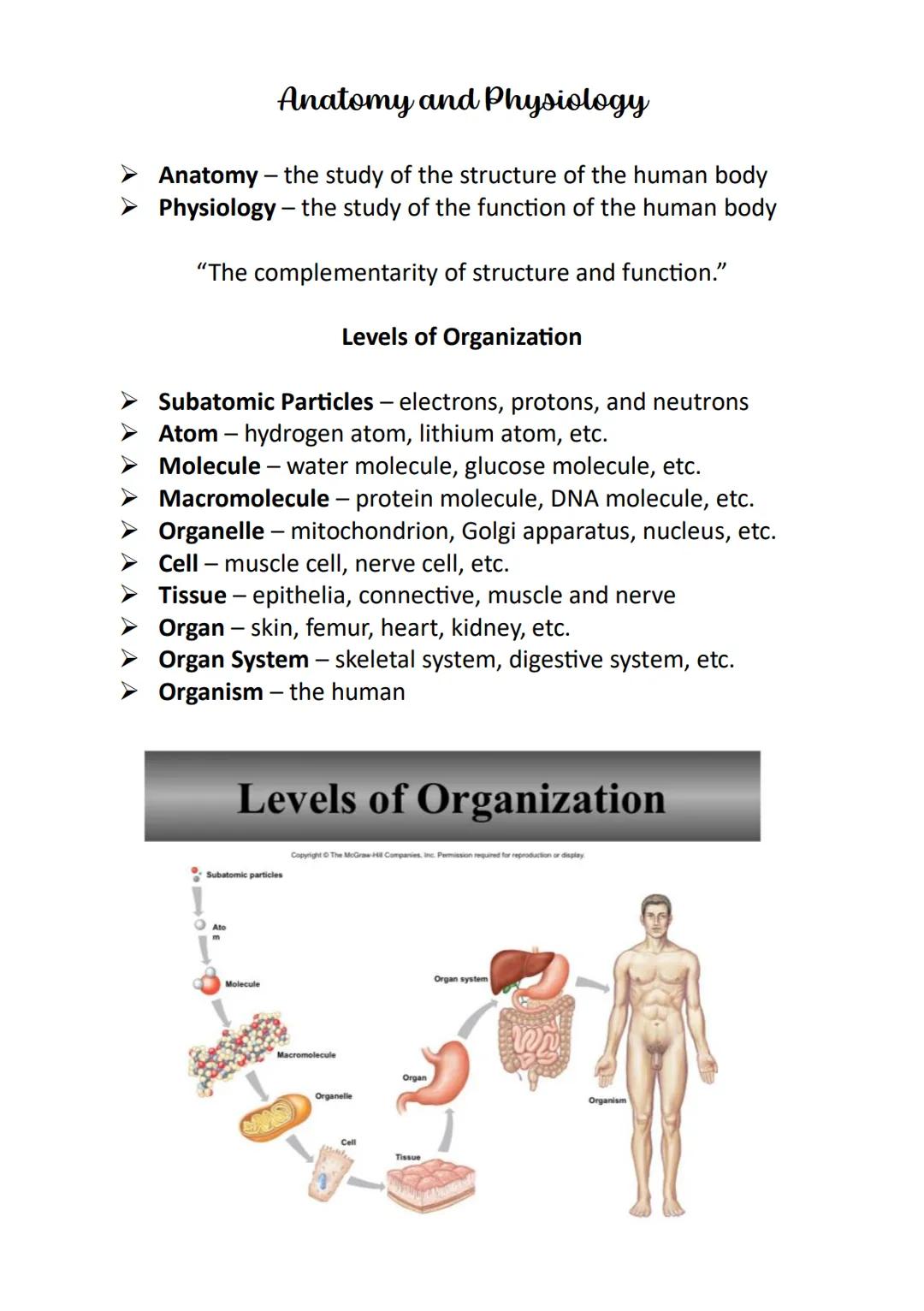
Anatomy studies the structure of the human body, while physiology examines how the body functions. These two aspects are complementary—structure determines function, and function influences structure.
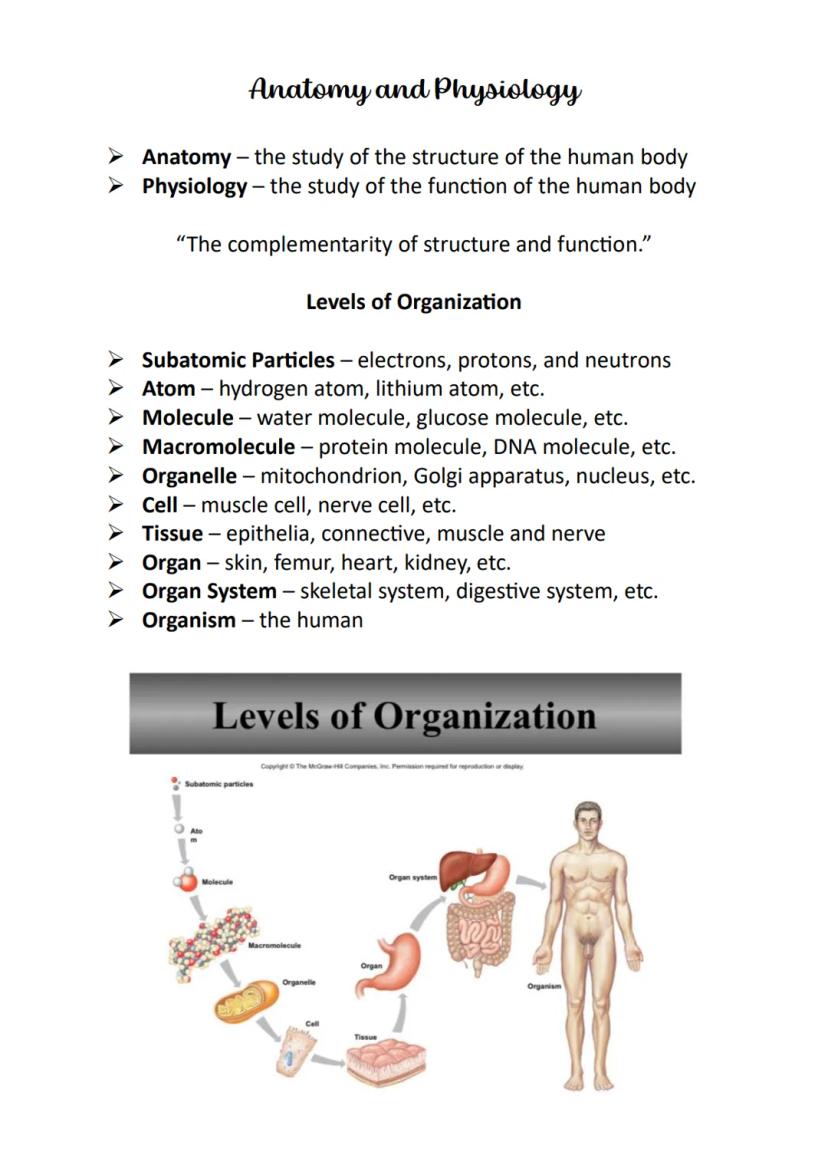
The human body is organized in increasing levels of complexity. Starting with subatomic particles (electrons, protons, neutrons), these build into atoms and molecules. Molecules form macromolecules like proteins and DNA, which create organelles such as mitochondria and nuclei within cells.
Cells of similar types form tissues (epithelial, connective, muscle, and nerve), which combine to create organs like the heart or kidneys. Organs work together as organ systems, and all systems together form the complete human organism.
Did you know? Understanding this hierarchy of organization helps explain how problems at one level (like a genetic mutation) can affect the entire body's function!
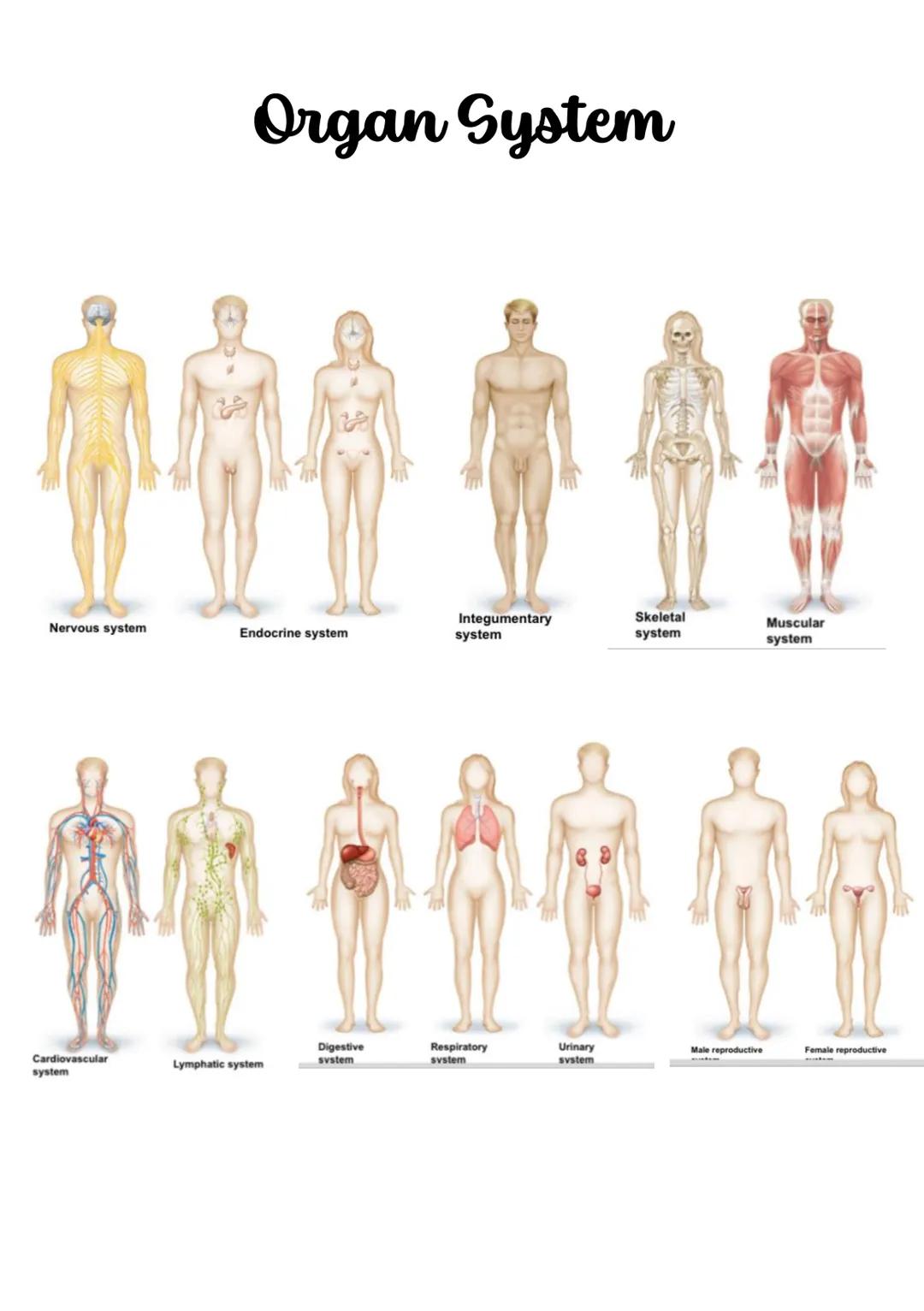
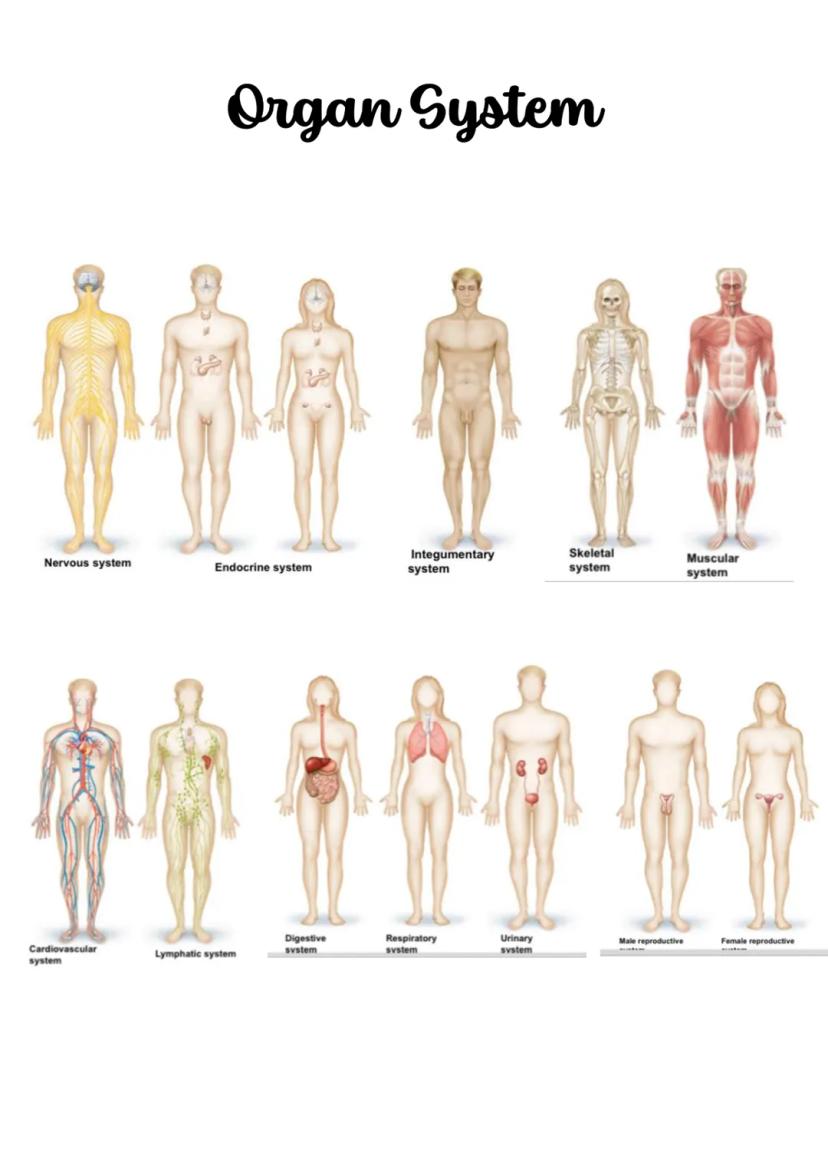
Your body contains 11 major organ systems, each with specialized functions that keep you alive and healthy. These systems don't work in isolation—they constantly interact with each other.
The nervous system controls and coordinates body functions, while the endocrine system regulates metabolism and growth through hormones. Your integumentary system (skin) provides protection, and the skeletal system supports your body and protects organs.
The muscular system enables movement, while the cardiovascular system transports blood throughout your body. Your lymphatic system helps defend against disease, and the digestive system processes food for energy. The respiratory system brings in oxygen, the urinary system removes wastes, and the reproductive system ensures survival of the species.
Important! Every cell in your body depends on multiple organ systems working together. For example, your muscles need the respiratory system for oxygen, the digestive system for nutrients, and the cardiovascular system to deliver both!
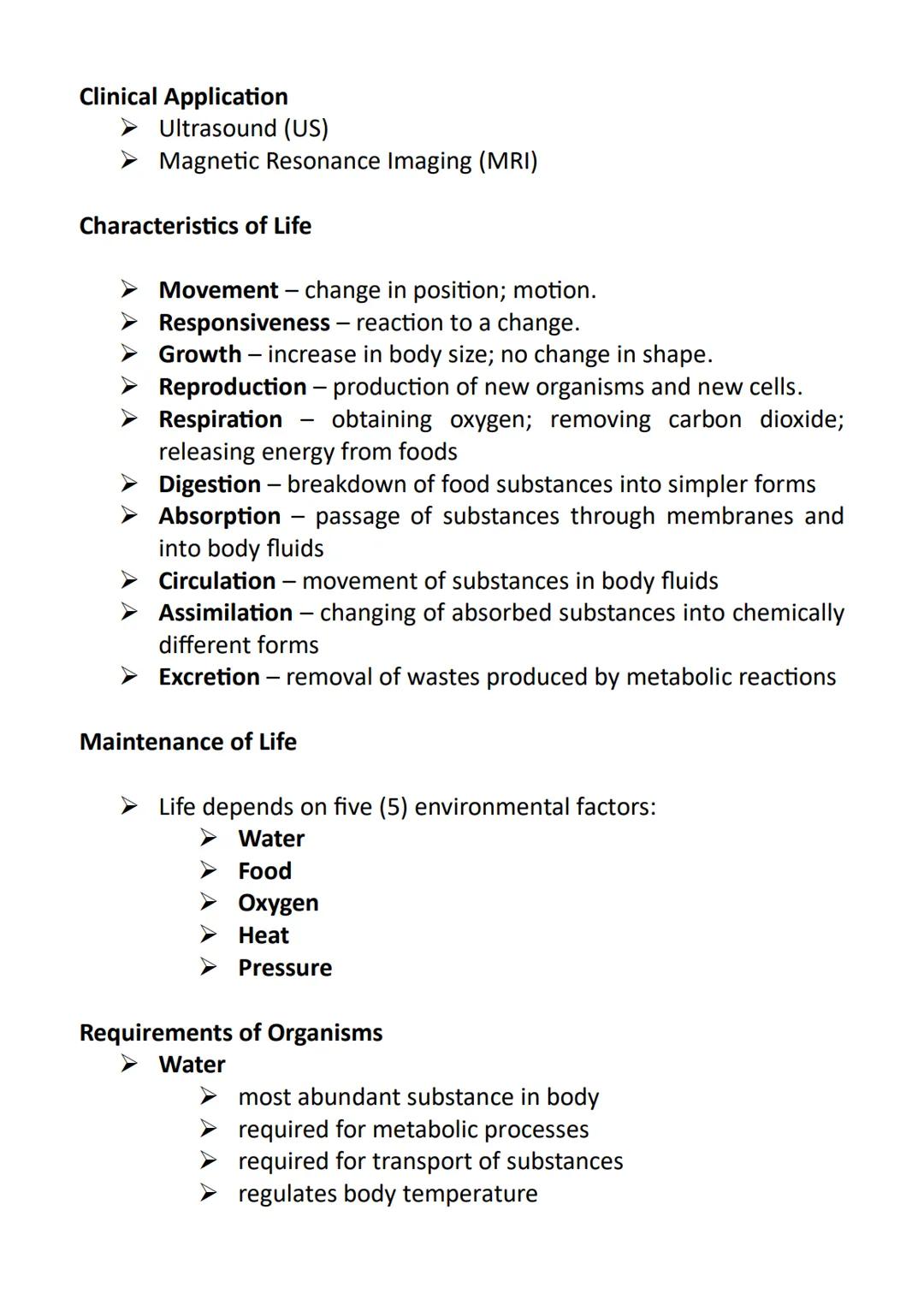
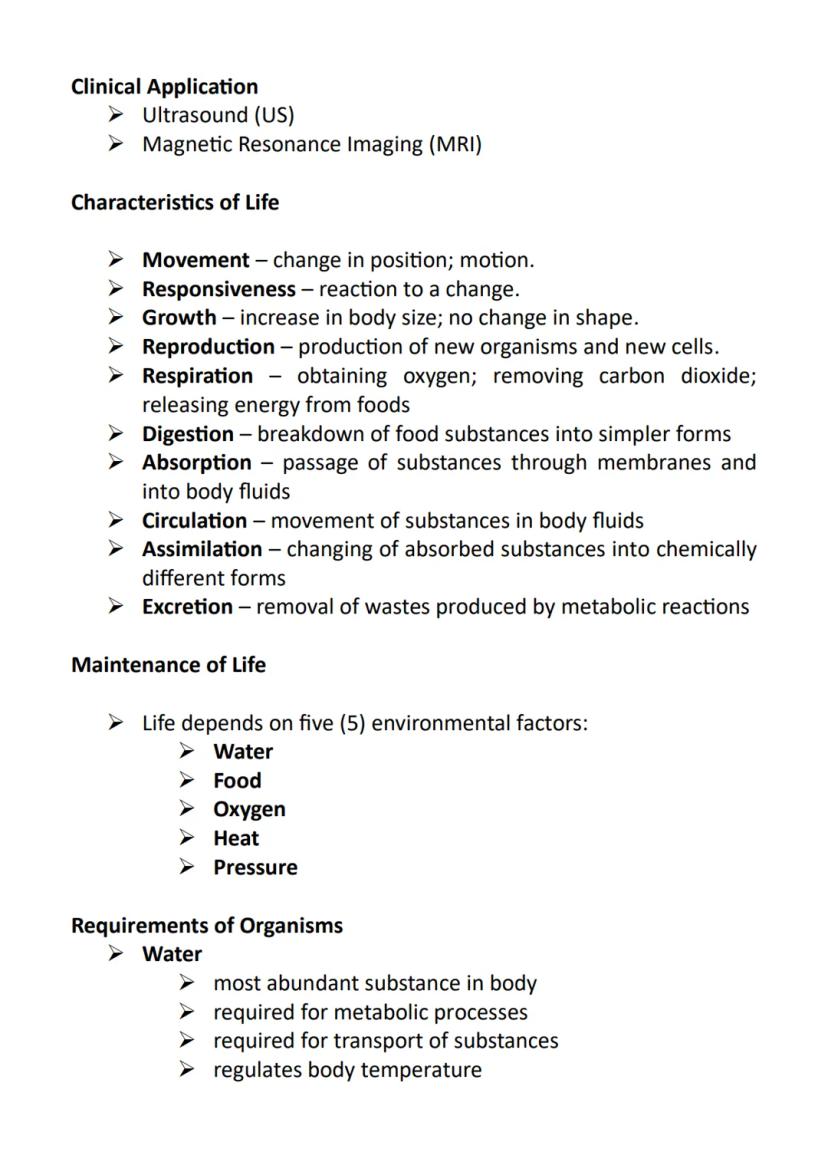
All living organisms display key characteristics of life. These include movement (changing position), responsiveness (reacting to changes), growth, and reproduction. Additional characteristics are respiration (obtaining oxygen and releasing energy), digestion, absorption, circulation, assimilation, and excretion.
Life depends on five critical environmental factors. Water is the most abundant substance in your body, essential for metabolic processes, transport, and temperature regulation. Food supplies necessary nutrients, energy, and raw materials for building body structures.
Oxygen makes up about one-fifth of air and is vital for releasing energy from nutrients. Heat affects the rate of metabolic reactions, and pressure (both atmospheric and hydrostatic) is important for breathing and blood circulation.
Quick tip: Think of your body as a complex machine that needs the right inputs (water, food, oxygen) and conditions (heat, pressure) to function properly!
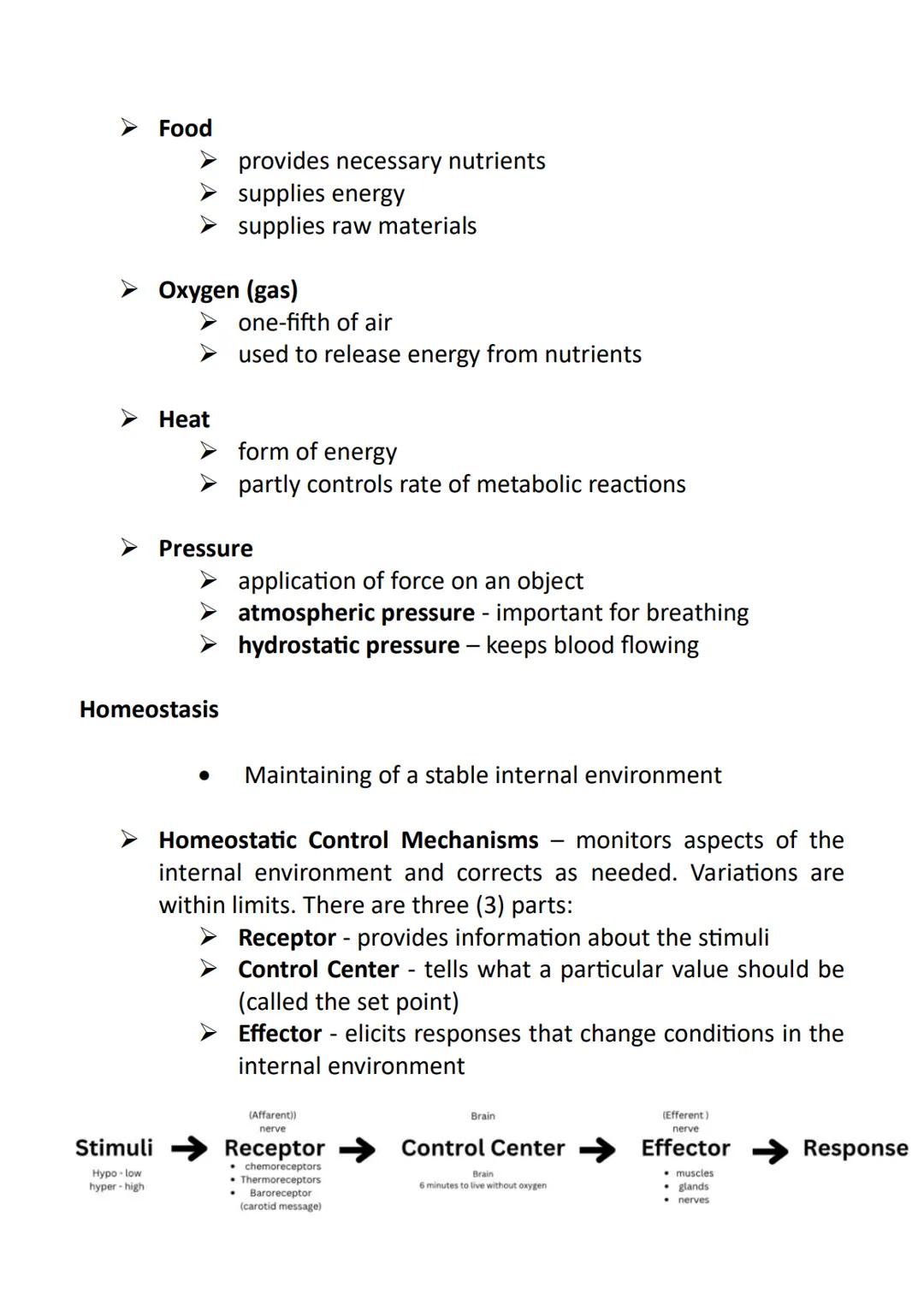
Homeostasis is your body's ability to maintain a stable internal environment despite external changes. This process is crucial for survival and involves complex control mechanisms.
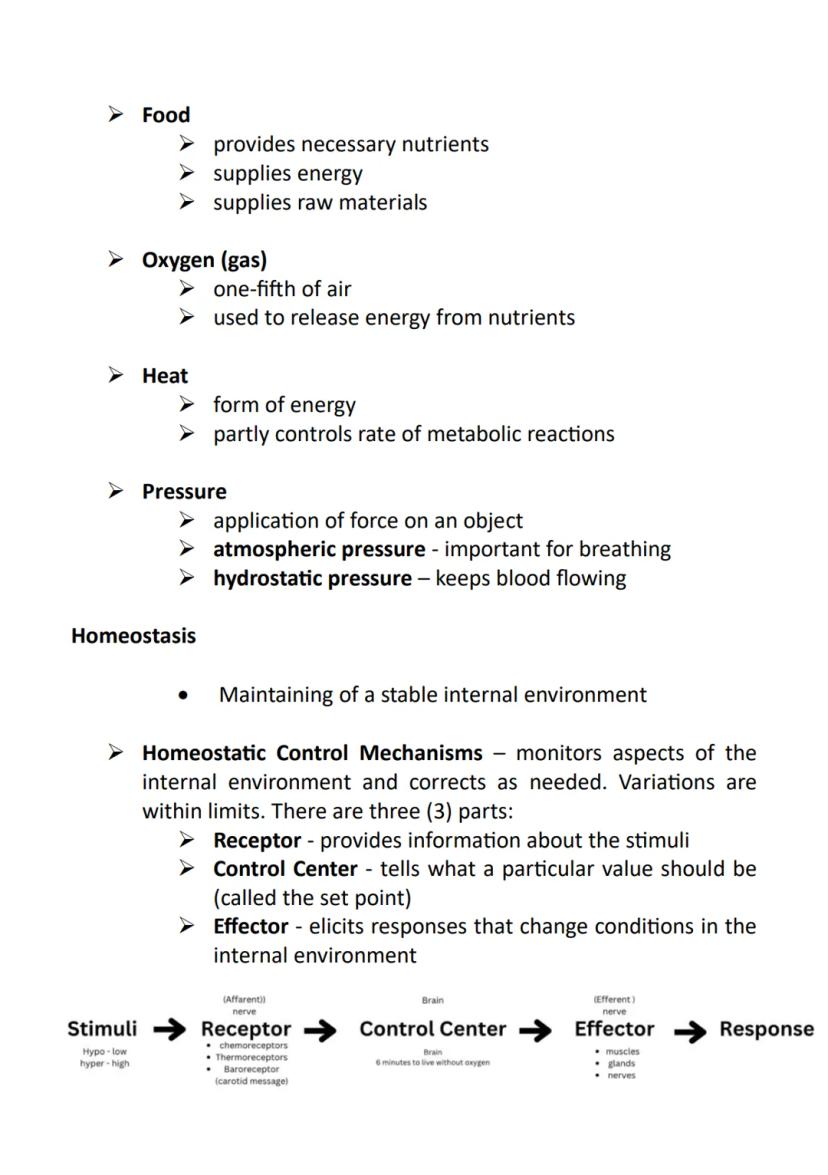
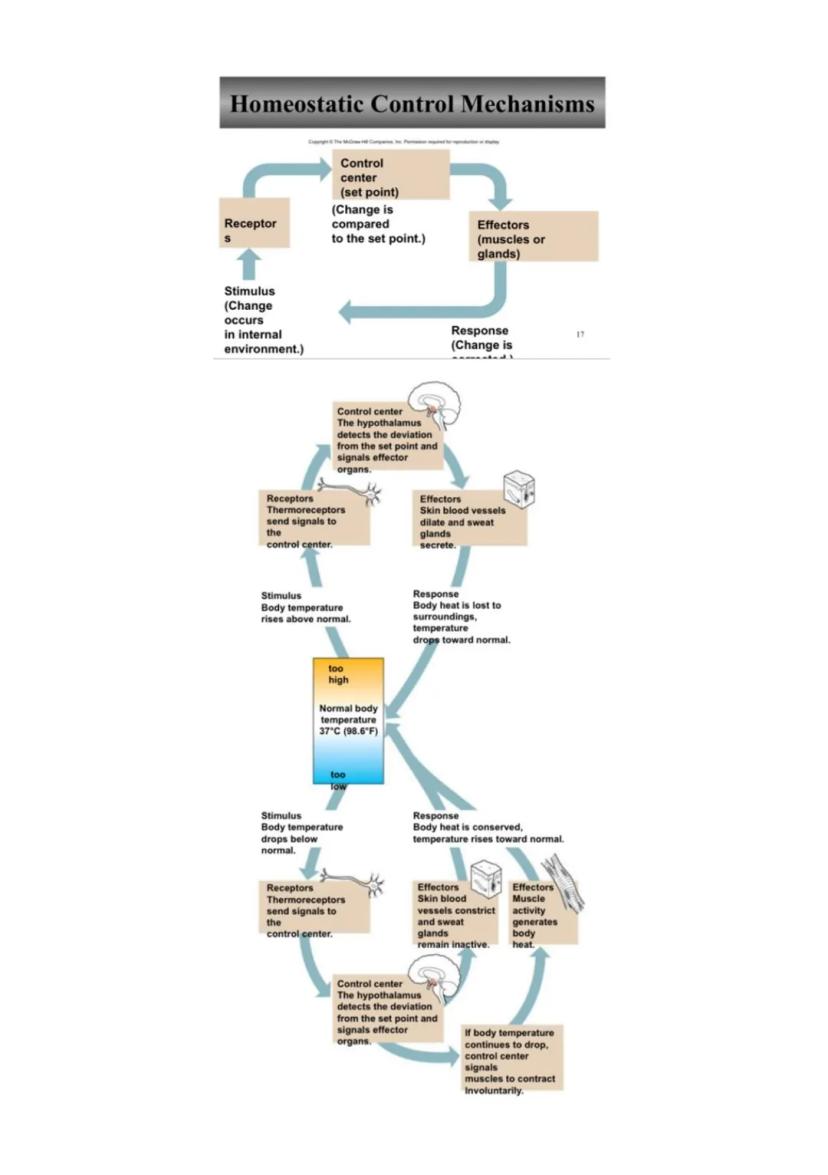
Every homeostatic control system has three essential parts. Receptors detect changes in your body (like thermoreceptors sensing temperature). The control center (often the brain) compares this information to the normal value or "set point." Effectors (muscles and glands) then create responses to restore balance.
For example, if your body temperature rises too high, thermoreceptors alert your hypothalamus (control center). This triggers effectors like sweat glands to activate and blood vessels to dilate, cooling your body back to normal.
Real-life application: When you exercise and get hot, your body automatically initiates cooling responses without you having to think about it—that's homeostasis in action!
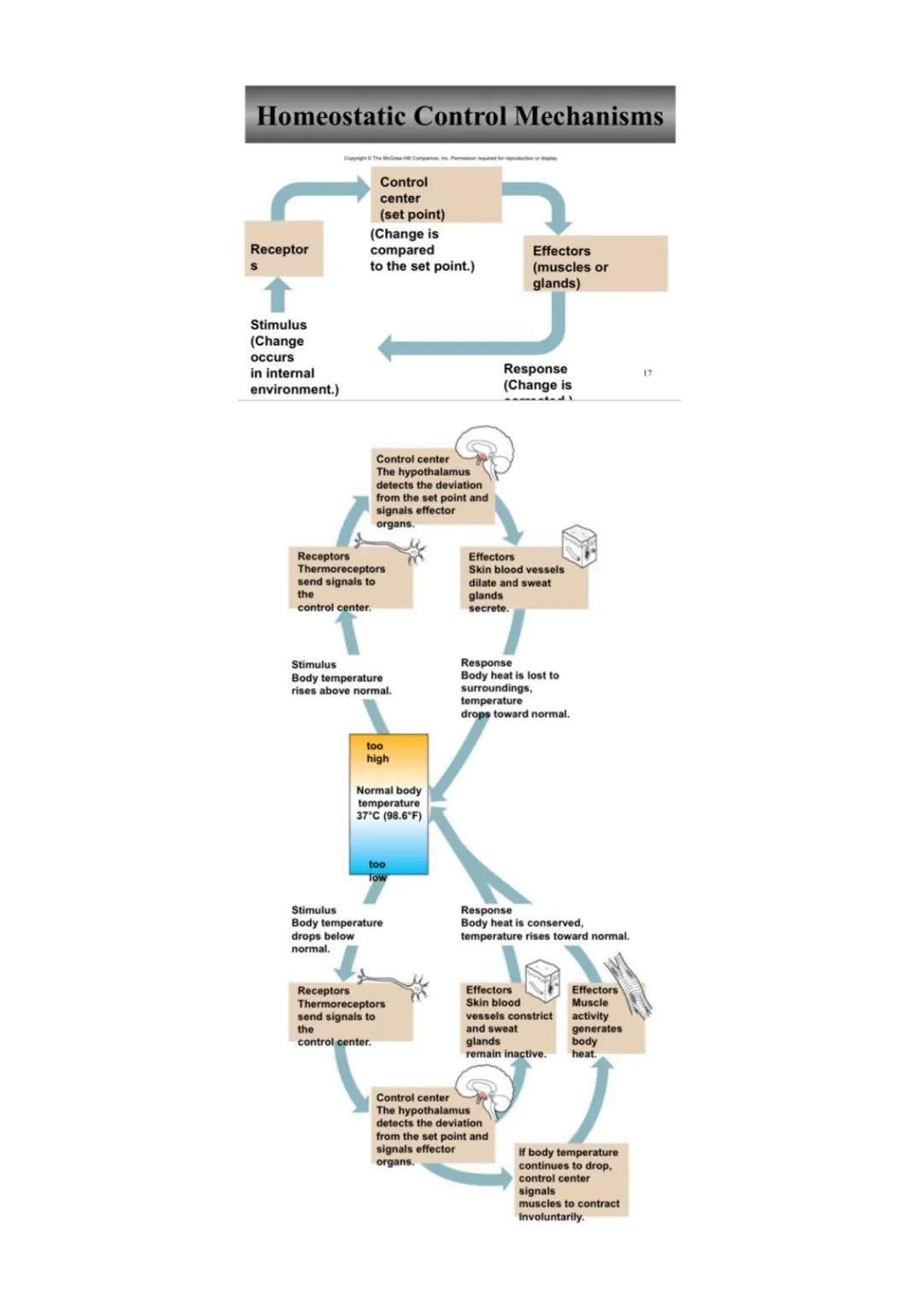
Your body uses two main types of homeostatic mechanisms. Negative feedback is most common and works by opposing or reversing changes that occur. Like a thermostat, it detects when a value moves away from the set point and activates processes to return to normal.
For example, when body temperature rises above 37°C (98.6°F), your body activates cooling mechanisms. When temperature falls too low, warming mechanisms activate instead. This continuous adjustment keeps your temperature stable.
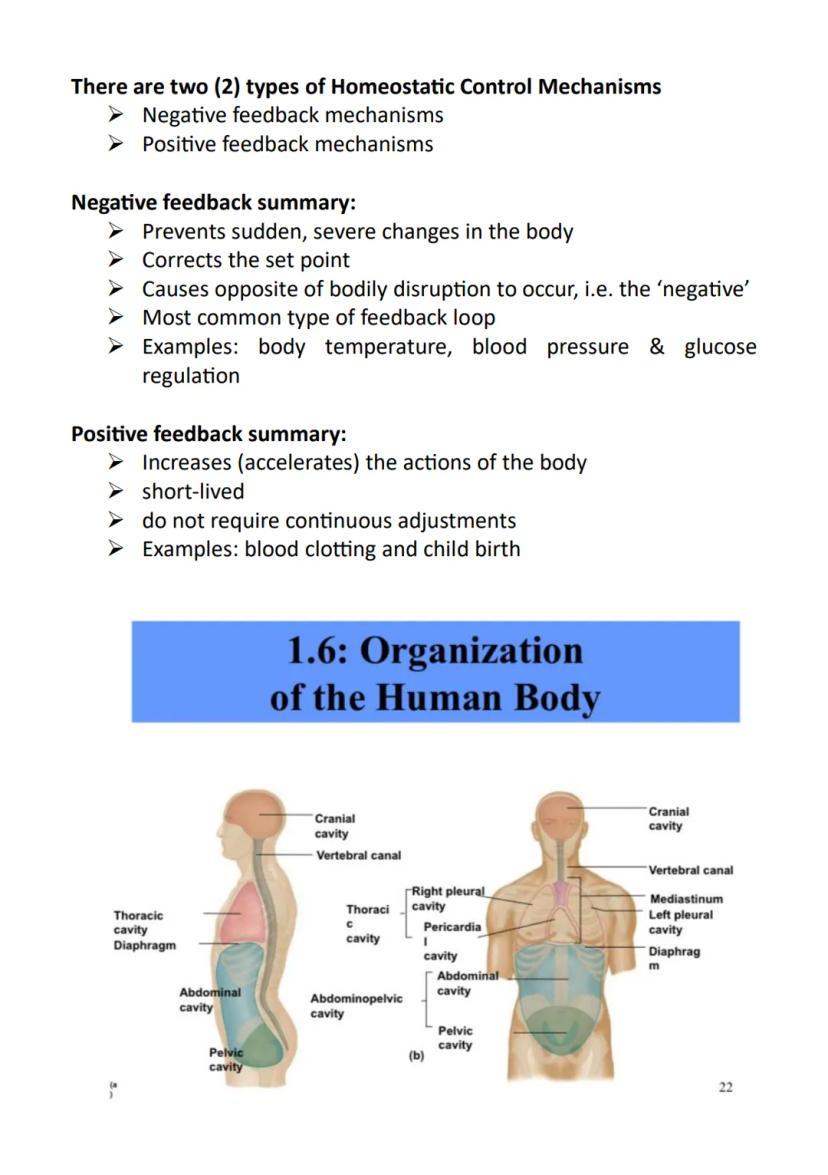
Positive feedback mechanisms are less common and actually intensify changes instead of opposing them. These processes are typically short-lived and used in special situations like childbirth, where contractions become stronger and more frequent until the baby is delivered.
Remember this: Negative feedback maintains stability (like body temperature), while positive feedback accelerates processes that need to be completed quickly (like blood clotting).
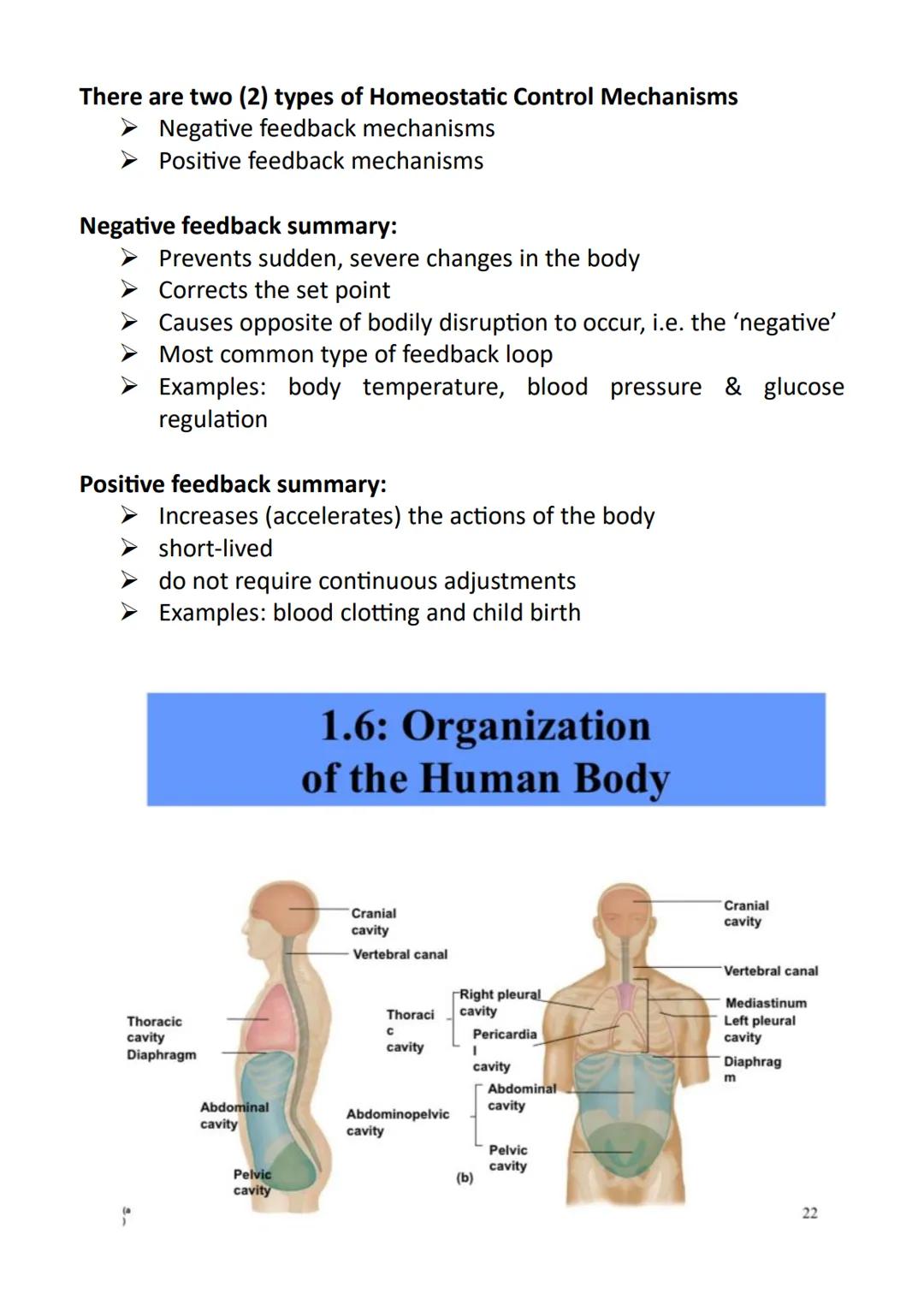
Your body contains specialized cavities that protect and house vital organs. The cranial cavity encloses your brain, while your spinal cord runs through the vertebral canal. The thoracic cavity contains your heart and lungs, divided into the pericardial cavity (heart) and pleural cavities (lungs).
Below your diaphragm is the abdominopelvic cavity, which includes the abdominal cavity (stomach, intestines, liver) and the pelvic cavity (bladder, reproductive organs).
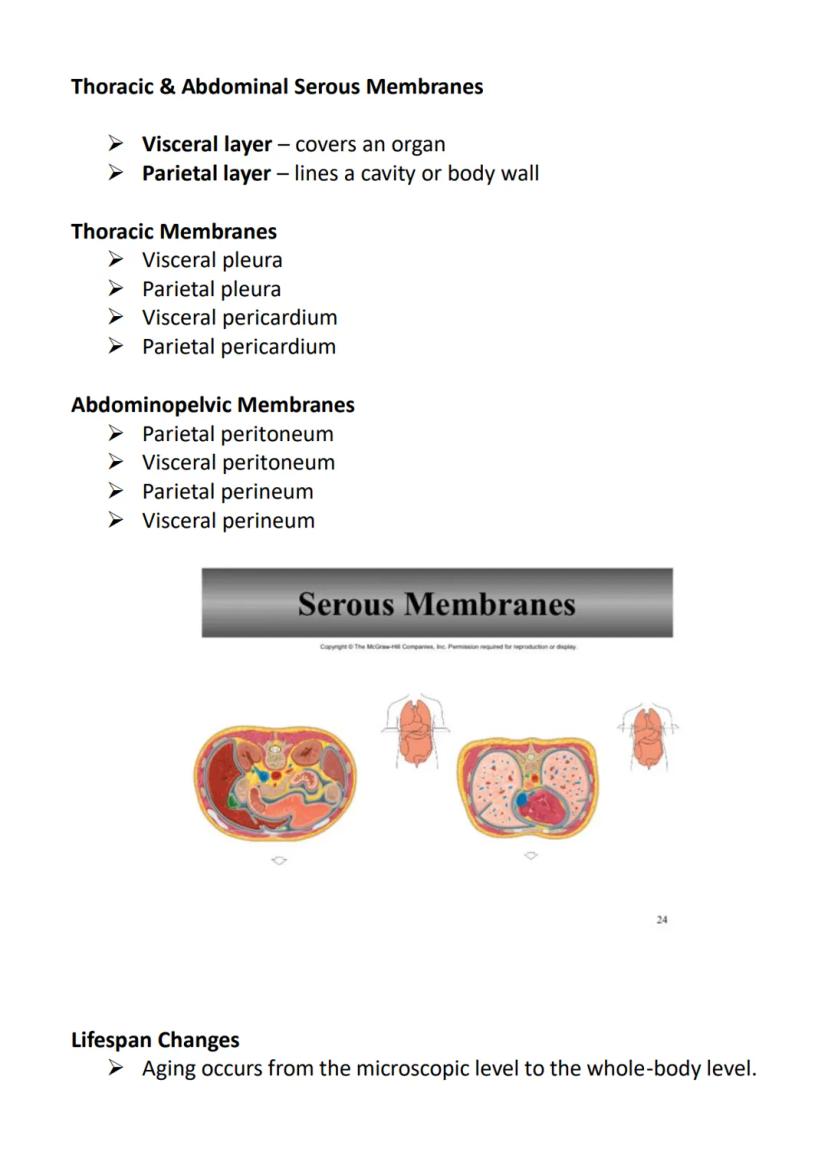
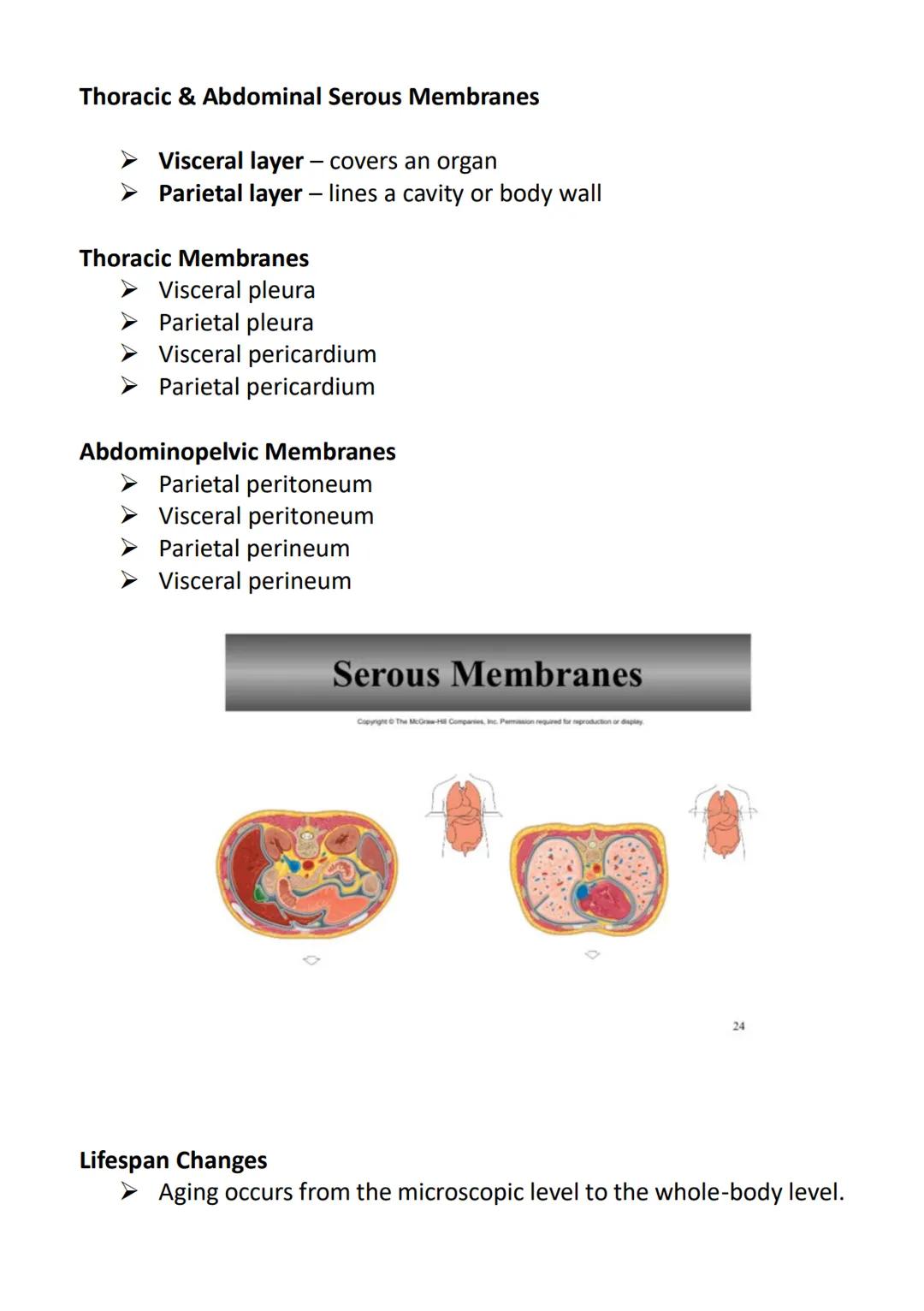
Special serous membranes line these cavities and cover organs. These membranes have two layers: the visceral layer covers organs directly, while the parietal layer lines the cavity wall. The pleura surrounds lungs, the pericardium encloses the heart, and the peritoneum lines the abdominopelvic cavity.
Interesting fact: The small space between visceral and parietal membranes contains serous fluid that reduces friction as organs move within their cavities.
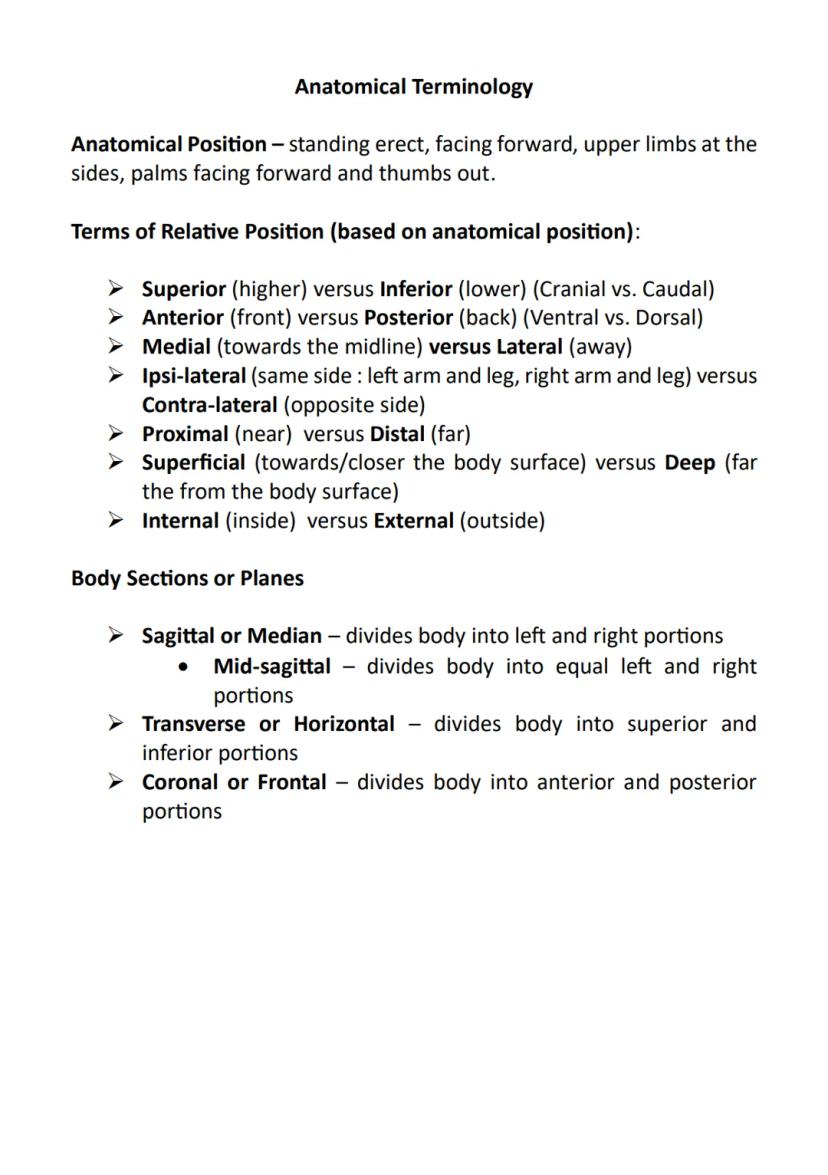
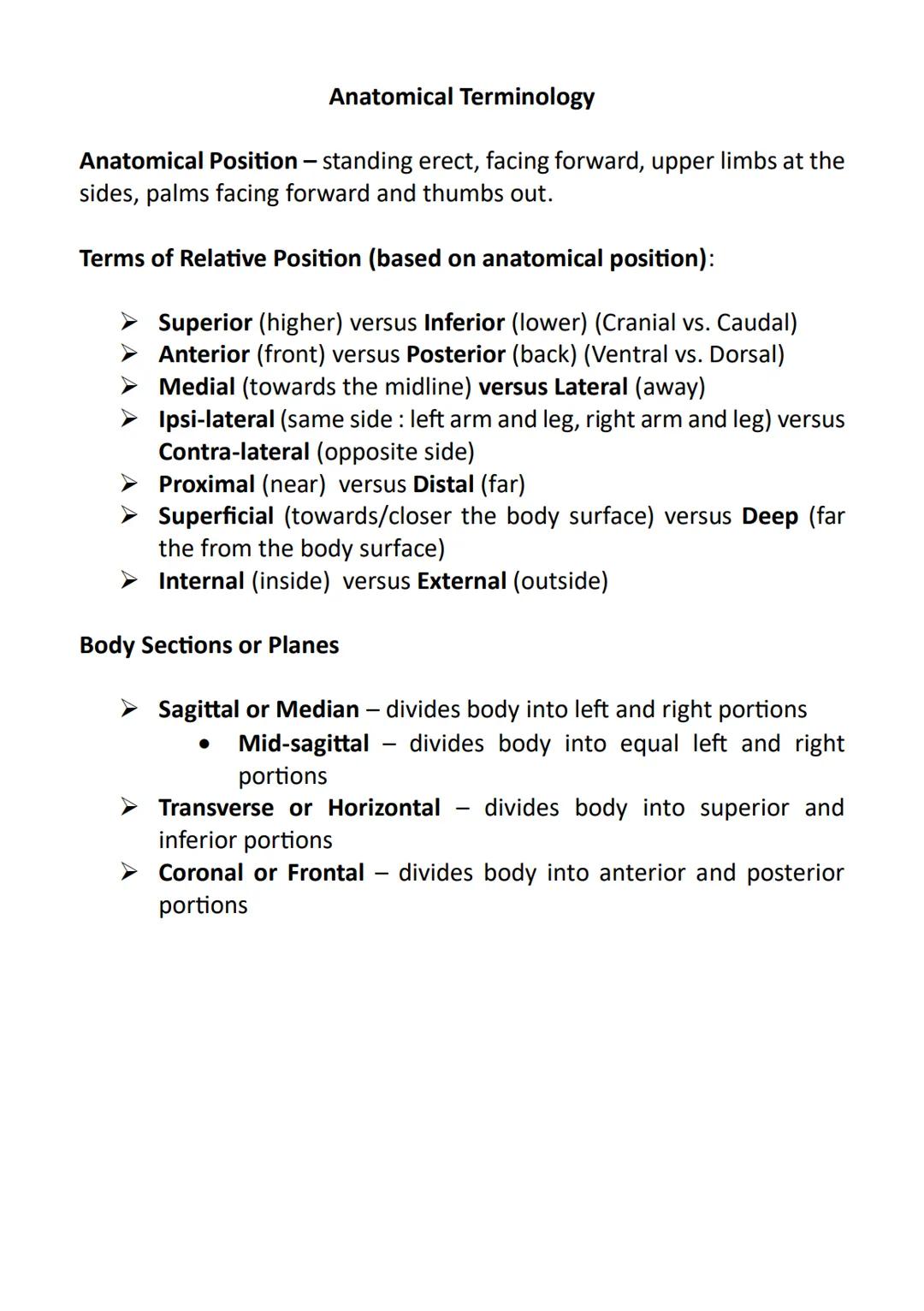
Medical professionals use standardized terminology to describe body positions and locations precisely. The anatomical position is the reference point: standing erect, facing forward, arms at sides with palms forward and thumbs out.
Important directional terms include: superior (toward the head) versus inferior (toward the feet); anterior (front) versus posterior (back); medial (toward midline) versus lateral (away from midline); proximal (near attachment point) versus distal (farther from attachment); and superficial (toward surface) versus deep (away from surface).
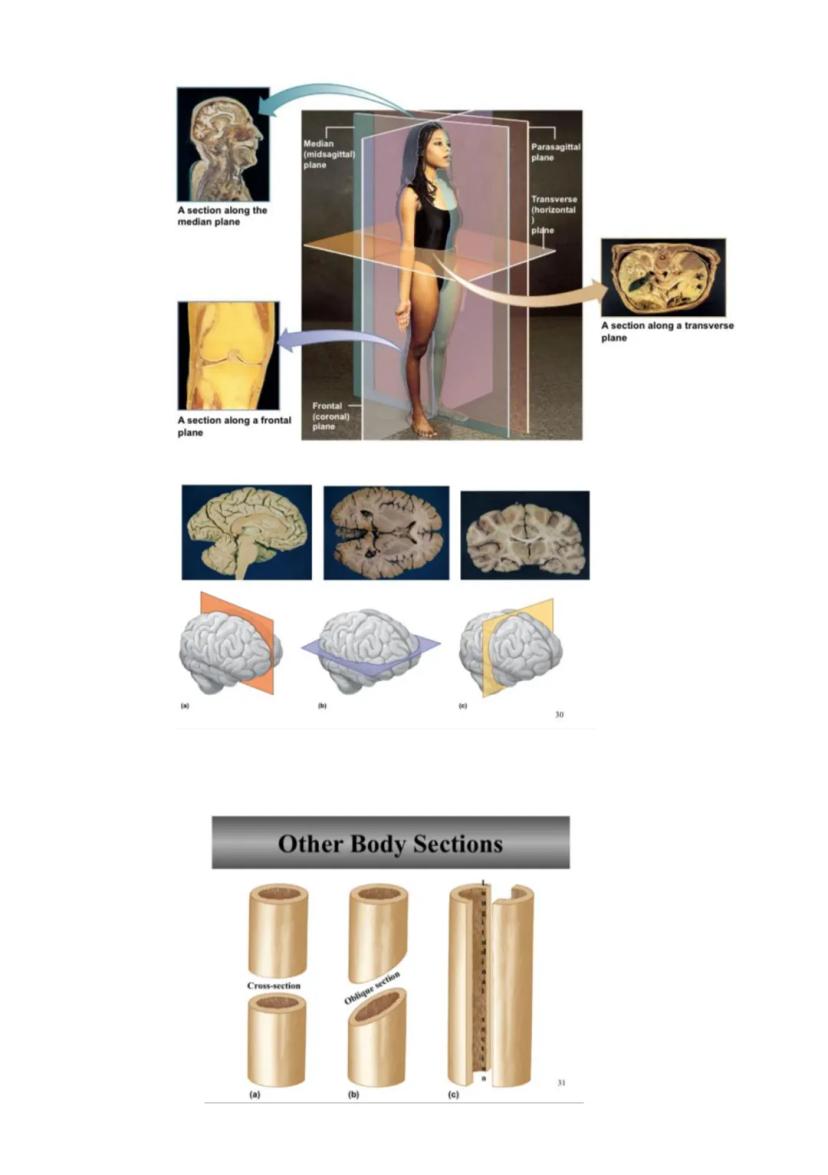
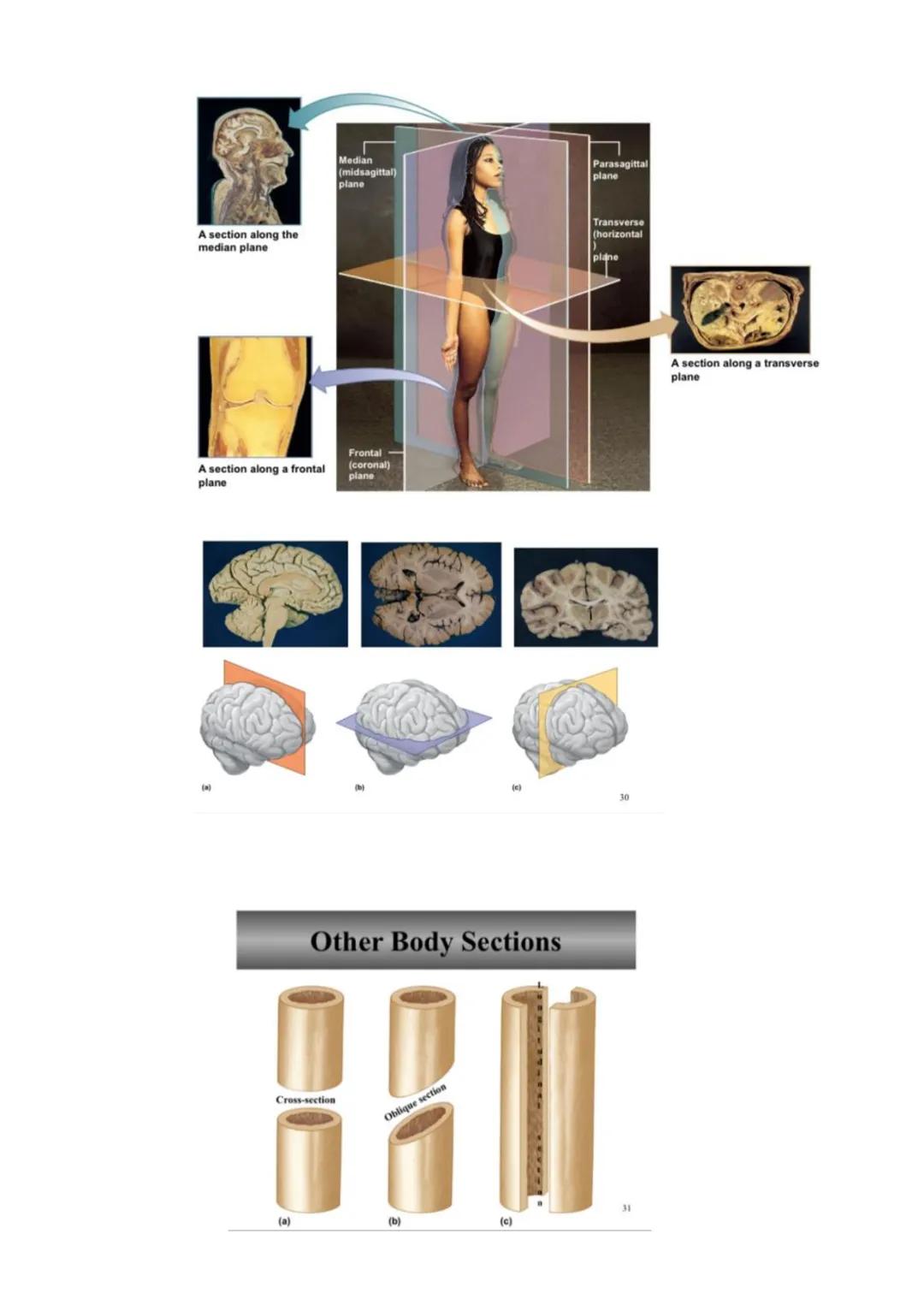
Body sections or planes help describe how the body is divided for imaging. The sagittal plane divides the body into left and right portions, the transverse plane separates upper and lower portions, and the coronal plane divides front from back portions.
Clinical connection: Medical imaging techniques like MRIs and CT scans use these planes to create detailed views of internal structures from different angles!
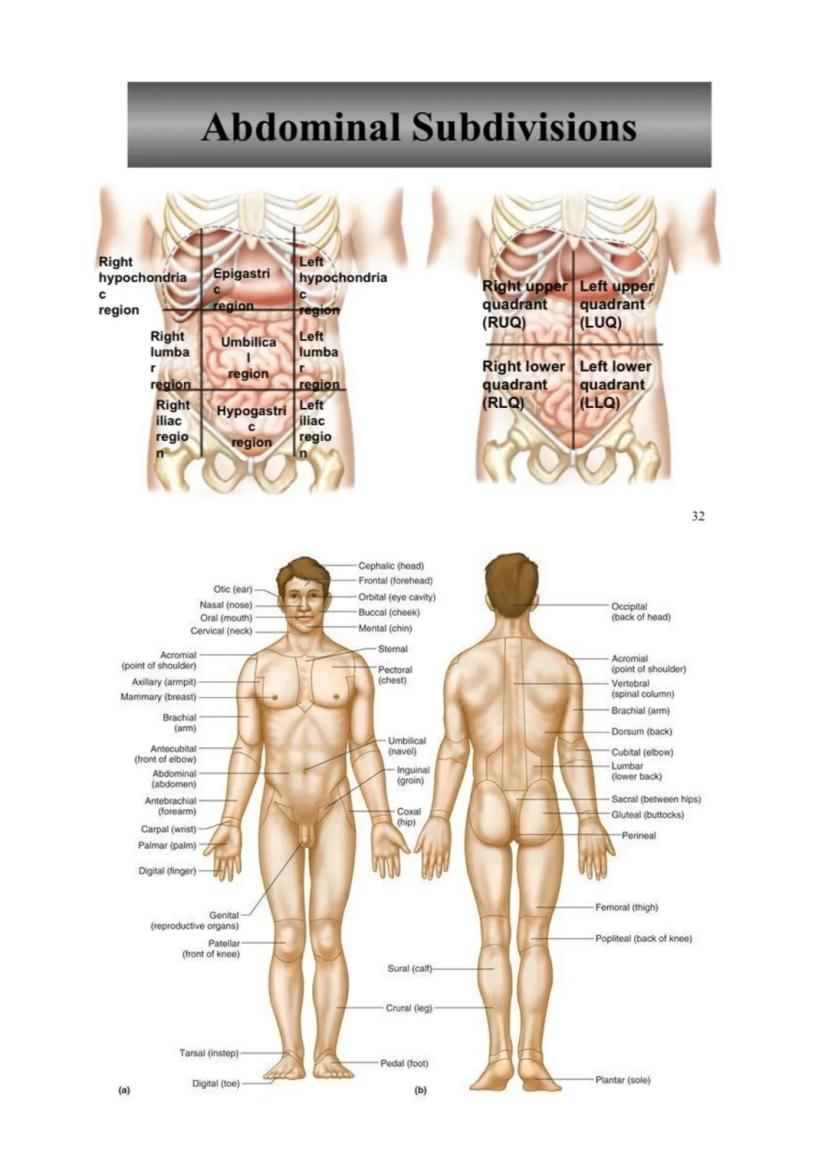
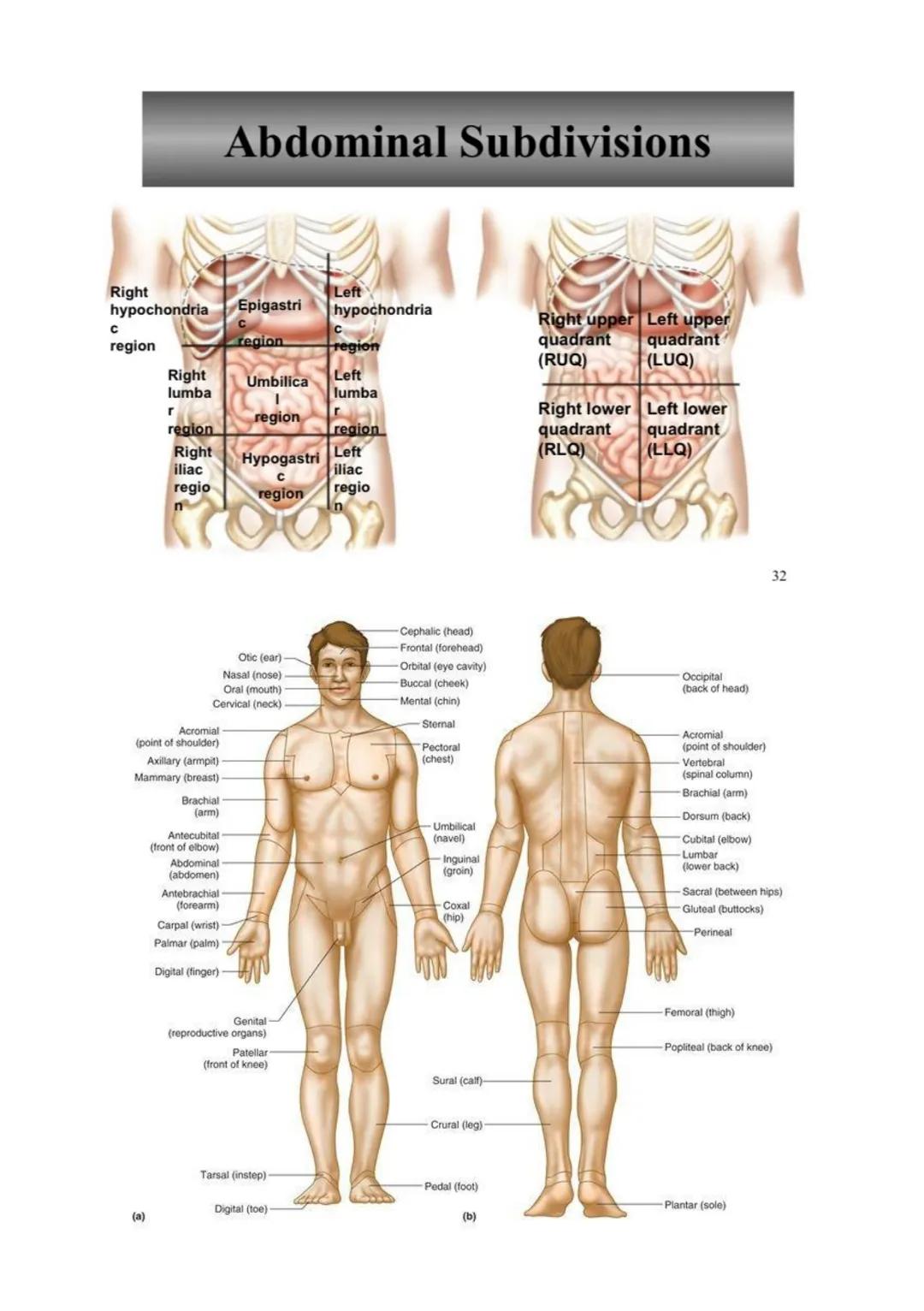
Learning anatomical regions helps you precisely locate body areas. The cephalic region refers to the head, while cervical indicates the neck. The thoracic region includes your chest, and abdominal refers to your belly area. Brachial identifies the arm, while crural refers to the leg.
The abdomen is divided into specific regions for more precise reference. The epigastric region is the upper middle abdomen, with hypochondriac regions on either side. The umbilical region surrounds the navel, flanked by lumbar regions. The lower abdomen includes the hypogastric region in the center and iliac regions on the sides.
Clinically, the abdomen is also divided into four quadrants using the umbilicus as a reference point: right upper quadrant (RUQ), left upper quadrant (LUQ), right lower quadrant (RLQ), and left lower quadrant (LLQ).
Why this matters: When you feel pain, doctors need to know exactly where it is located. These standardized terms help communicate precise locations to identify possible causes.
The integumentary system is your body's protective covering, consisting of skin, hair, nails, and specialized glands. As your largest organ, skin performs multiple vital functions.
Skin provides protection against water loss, microbes, and harmful UV light. It contains sensory receptors for sensation of touch, temperature, pain, and pressure. It assists in temperature regulation by dilating or constricting blood vessels and producing sweat. Skin also aids in excretion of waste products and produces vitamin D when exposed to sunlight.
The skin weighs about 9 pounds and consists of two main regions: the outer epidermis and deeper dermis. Below these lies the hypodermis (subcutaneous tissue), which attaches skin to underlying structures and contains fat for insulation and energy storage.
Fun fact: Your skin sheds about 40,000 skin cells every minute! In a lifetime, you'll shed about 40 pounds of skin.
The epidermis is the outer skin layer composed of stratified squamous epithelium. It undergoes constant keratinization, where new cells are produced in deeper layers and gradually push older cells toward the surface. This process takes 40-56 days for a cell to complete its journey.
The outermost layer, the stratum corneum, consists of 20-30 layers of dead cells filled with the protein keratin. This layer accounts for 75% of epidermal thickness and forms a water-resistant barrier. When these cells flake off from your scalp, they form dandruff.
The deepest epidermal layer, the stratum basale, is a single layer of cells firmly attached to the underlying dermis. This layer contains actively dividing cells that replenish the epidermis. Areas of frequent friction develop a callus, where the stratum corneum thickens for extra protection.
Did you know? Your fingerprints form due to ridges in the dermis that push the epidermis into unique patterns, which are genetically determined and formed before birth!
Our AI companion is specifically built for the needs of students. Based on the millions of content pieces we have on the platform we can provide truly meaningful and relevant answers to students. But its not only about answers, the companion is even more about guiding students through their daily learning challenges, with personalised study plans, quizzes or content pieces in the chat and 100% personalisation based on the students skills and developments.
You can download the app in the Google Play Store and in the Apple App Store.
That's right! Enjoy free access to study content, connect with fellow students, and get instant help – all at your fingertips.
App Store
Google Play
The app is very easy to use and well designed. I have found everything I was looking for so far and have been able to learn a lot from the presentations! I will definitely use the app for a class assignment! And of course it also helps a lot as an inspiration.
Stefan S
iOS user
This app is really great. There are so many study notes and help [...]. My problem subject is French, for example, and the app has so many options for help. Thanks to this app, I have improved my French. I would recommend it to anyone.
Samantha Klich
Android user
Wow, I am really amazed. I just tried the app because I've seen it advertised many times and was absolutely stunned. This app is THE HELP you want for school and above all, it offers so many things, such as workouts and fact sheets, which have been VERY helpful to me personally.
Anna
iOS user
I think it’s very much worth it and you’ll end up using it a lot once you get the hang of it and even after looking at others notes you can still ask your Artificial intelligence buddy the question and ask to simplify it if you still don’t get it!!! In the end I think it’s worth it 😊👍 ⚠️Also DID I MENTION ITS FREEE YOU DON’T HAVE TO PAY FOR ANYTHING AND STILL GET YOUR GRADES IN PERFECTLY❗️❗️⚠️
Thomas R
iOS user
Knowunity is the BEST app I’ve used in a minute. This is not an ai review or anything this is genuinely coming from a 7th grade student (I know 2011 im young) but dude this app is a 10/10 i have maintained a 3.8 gpa and have plenty of time for gaming. I love it and my mom is just happy I got good grades
Brad T
Android user
Not only did it help me find the answer but it also showed me alternative ways to solve it. I was horrible in math and science but now I have an a in both subjects. Thanks for the help🤍🤍
David K
iOS user
The app's just great! All I have to do is enter the topic in the search bar and I get the response real fast. I don't have to watch 10 YouTube videos to understand something, so I'm saving my time. Highly recommended!
Sudenaz Ocak
Android user
In school I was really bad at maths but thanks to the app, I am doing better now. I am so grateful that you made the app.
Greenlight Bonnie
Android user
I found this app a couple years ago and it has only gotten better since then. I really love it because it can help with written questions and photo questions. Also, it can find study guides that other people have made as well as flashcard sets and practice tests. The free version is also amazing for students who might not be able to afford it. Would 100% recommend
Aubrey
iOS user
Best app if you're in Highschool or Junior high. I have been using this app for 2 school years and it's the best, it's good if you don't have anyone to help you with school work.😋🩷🎀
Marco B
iOS user
THE QUIZES AND FLASHCARDS ARE SO USEFUL AND I LOVE THE SCHOOLGPT. IT ALSO IS LITREALLY LIKE CHATGPT BUT SMARTER!! HELPED ME WITH MY MASCARA PROBLEMS TOO!! AS WELL AS MY REAL SUBJECTS ! DUHHH 😍😁😲🤑💗✨🎀😮
Elisha
iOS user
This app is phenomenal down to the correct info and the various topics you can study! I greatly recommend it for people who struggle with procrastination and those who need homework help. It has been perfectly accurate for world 1 history as far as I’ve seen! Geometry too!
Paul T
iOS user
The app is very easy to use and well designed. I have found everything I was looking for so far and have been able to learn a lot from the presentations! I will definitely use the app for a class assignment! And of course it also helps a lot as an inspiration.
Stefan S
iOS user
This app is really great. There are so many study notes and help [...]. My problem subject is French, for example, and the app has so many options for help. Thanks to this app, I have improved my French. I would recommend it to anyone.
Samantha Klich
Android user
Wow, I am really amazed. I just tried the app because I've seen it advertised many times and was absolutely stunned. This app is THE HELP you want for school and above all, it offers so many things, such as workouts and fact sheets, which have been VERY helpful to me personally.
Anna
iOS user
I think it’s very much worth it and you’ll end up using it a lot once you get the hang of it and even after looking at others notes you can still ask your Artificial intelligence buddy the question and ask to simplify it if you still don’t get it!!! In the end I think it’s worth it 😊👍 ⚠️Also DID I MENTION ITS FREEE YOU DON’T HAVE TO PAY FOR ANYTHING AND STILL GET YOUR GRADES IN PERFECTLY❗️❗️⚠️
Thomas R
iOS user
Knowunity is the BEST app I’ve used in a minute. This is not an ai review or anything this is genuinely coming from a 7th grade student (I know 2011 im young) but dude this app is a 10/10 i have maintained a 3.8 gpa and have plenty of time for gaming. I love it and my mom is just happy I got good grades
Brad T
Android user
Not only did it help me find the answer but it also showed me alternative ways to solve it. I was horrible in math and science but now I have an a in both subjects. Thanks for the help🤍🤍
David K
iOS user
The app's just great! All I have to do is enter the topic in the search bar and I get the response real fast. I don't have to watch 10 YouTube videos to understand something, so I'm saving my time. Highly recommended!
Sudenaz Ocak
Android user
In school I was really bad at maths but thanks to the app, I am doing better now. I am so grateful that you made the app.
Greenlight Bonnie
Android user
I found this app a couple years ago and it has only gotten better since then. I really love it because it can help with written questions and photo questions. Also, it can find study guides that other people have made as well as flashcard sets and practice tests. The free version is also amazing for students who might not be able to afford it. Would 100% recommend
Aubrey
iOS user
Best app if you're in Highschool or Junior high. I have been using this app for 2 school years and it's the best, it's good if you don't have anyone to help you with school work.😋🩷🎀
Marco B
iOS user
THE QUIZES AND FLASHCARDS ARE SO USEFUL AND I LOVE THE SCHOOLGPT. IT ALSO IS LITREALLY LIKE CHATGPT BUT SMARTER!! HELPED ME WITH MY MASCARA PROBLEMS TOO!! AS WELL AS MY REAL SUBJECTS ! DUHHH 😍😁😲🤑💗✨🎀😮
Elisha
iOS user
This app is phenomenal down to the correct info and the various topics you can study! I greatly recommend it for people who struggle with procrastination and those who need homework help. It has been perfectly accurate for world 1 history as far as I’ve seen! Geometry too!
Paul T
iOS user
rain
@rainulan12
Anatomy and Physiology explores how our bodies are structured and how they function. This field helps us understand the intricate organization of the human body from the smallest particles to complete systems, and how they work together to maintain life.
Access to all documents
Improve your grades
Join milions of students
By signing up you accept Terms of Service and Privacy Policy
Anatomy studies the structure of the human body, while physiology examines how the body functions. These two aspects are complementary—structure determines function, and function influences structure.
The human body is organized in increasing levels of complexity. Starting with subatomic particles (electrons, protons, neutrons), these build into atoms and molecules. Molecules form macromolecules like proteins and DNA, which create organelles such as mitochondria and nuclei within cells.
Cells of similar types form tissues (epithelial, connective, muscle, and nerve), which combine to create organs like the heart or kidneys. Organs work together as organ systems, and all systems together form the complete human organism.
Did you know? Understanding this hierarchy of organization helps explain how problems at one level (like a genetic mutation) can affect the entire body's function!
Access to all documents
Improve your grades
Join milions of students
By signing up you accept Terms of Service and Privacy Policy
Your body contains 11 major organ systems, each with specialized functions that keep you alive and healthy. These systems don't work in isolation—they constantly interact with each other.
The nervous system controls and coordinates body functions, while the endocrine system regulates metabolism and growth through hormones. Your integumentary system (skin) provides protection, and the skeletal system supports your body and protects organs.
The muscular system enables movement, while the cardiovascular system transports blood throughout your body. Your lymphatic system helps defend against disease, and the digestive system processes food for energy. The respiratory system brings in oxygen, the urinary system removes wastes, and the reproductive system ensures survival of the species.
Important! Every cell in your body depends on multiple organ systems working together. For example, your muscles need the respiratory system for oxygen, the digestive system for nutrients, and the cardiovascular system to deliver both!
Access to all documents
Improve your grades
Join milions of students
By signing up you accept Terms of Service and Privacy Policy
All living organisms display key characteristics of life. These include movement (changing position), responsiveness (reacting to changes), growth, and reproduction. Additional characteristics are respiration (obtaining oxygen and releasing energy), digestion, absorption, circulation, assimilation, and excretion.
Life depends on five critical environmental factors. Water is the most abundant substance in your body, essential for metabolic processes, transport, and temperature regulation. Food supplies necessary nutrients, energy, and raw materials for building body structures.
Oxygen makes up about one-fifth of air and is vital for releasing energy from nutrients. Heat affects the rate of metabolic reactions, and pressure (both atmospheric and hydrostatic) is important for breathing and blood circulation.
Quick tip: Think of your body as a complex machine that needs the right inputs (water, food, oxygen) and conditions (heat, pressure) to function properly!
Access to all documents
Improve your grades
Join milions of students
By signing up you accept Terms of Service and Privacy Policy
Homeostasis is your body's ability to maintain a stable internal environment despite external changes. This process is crucial for survival and involves complex control mechanisms.
Every homeostatic control system has three essential parts. Receptors detect changes in your body (like thermoreceptors sensing temperature). The control center (often the brain) compares this information to the normal value or "set point." Effectors (muscles and glands) then create responses to restore balance.
For example, if your body temperature rises too high, thermoreceptors alert your hypothalamus (control center). This triggers effectors like sweat glands to activate and blood vessels to dilate, cooling your body back to normal.
Real-life application: When you exercise and get hot, your body automatically initiates cooling responses without you having to think about it—that's homeostasis in action!
Access to all documents
Improve your grades
Join milions of students
By signing up you accept Terms of Service and Privacy Policy
Your body uses two main types of homeostatic mechanisms. Negative feedback is most common and works by opposing or reversing changes that occur. Like a thermostat, it detects when a value moves away from the set point and activates processes to return to normal.
For example, when body temperature rises above 37°C (98.6°F), your body activates cooling mechanisms. When temperature falls too low, warming mechanisms activate instead. This continuous adjustment keeps your temperature stable.
Positive feedback mechanisms are less common and actually intensify changes instead of opposing them. These processes are typically short-lived and used in special situations like childbirth, where contractions become stronger and more frequent until the baby is delivered.
Remember this: Negative feedback maintains stability (like body temperature), while positive feedback accelerates processes that need to be completed quickly (like blood clotting).
Access to all documents
Improve your grades
Join milions of students
By signing up you accept Terms of Service and Privacy Policy
Your body contains specialized cavities that protect and house vital organs. The cranial cavity encloses your brain, while your spinal cord runs through the vertebral canal. The thoracic cavity contains your heart and lungs, divided into the pericardial cavity (heart) and pleural cavities (lungs).
Below your diaphragm is the abdominopelvic cavity, which includes the abdominal cavity (stomach, intestines, liver) and the pelvic cavity (bladder, reproductive organs).
Special serous membranes line these cavities and cover organs. These membranes have two layers: the visceral layer covers organs directly, while the parietal layer lines the cavity wall. The pleura surrounds lungs, the pericardium encloses the heart, and the peritoneum lines the abdominopelvic cavity.
Interesting fact: The small space between visceral and parietal membranes contains serous fluid that reduces friction as organs move within their cavities.
Access to all documents
Improve your grades
Join milions of students
By signing up you accept Terms of Service and Privacy Policy
Medical professionals use standardized terminology to describe body positions and locations precisely. The anatomical position is the reference point: standing erect, facing forward, arms at sides with palms forward and thumbs out.
Important directional terms include: superior (toward the head) versus inferior (toward the feet); anterior (front) versus posterior (back); medial (toward midline) versus lateral (away from midline); proximal (near attachment point) versus distal (farther from attachment); and superficial (toward surface) versus deep (away from surface).
Body sections or planes help describe how the body is divided for imaging. The sagittal plane divides the body into left and right portions, the transverse plane separates upper and lower portions, and the coronal plane divides front from back portions.
Clinical connection: Medical imaging techniques like MRIs and CT scans use these planes to create detailed views of internal structures from different angles!
Access to all documents
Improve your grades
Join milions of students
By signing up you accept Terms of Service and Privacy Policy
Learning anatomical regions helps you precisely locate body areas. The cephalic region refers to the head, while cervical indicates the neck. The thoracic region includes your chest, and abdominal refers to your belly area. Brachial identifies the arm, while crural refers to the leg.
The abdomen is divided into specific regions for more precise reference. The epigastric region is the upper middle abdomen, with hypochondriac regions on either side. The umbilical region surrounds the navel, flanked by lumbar regions. The lower abdomen includes the hypogastric region in the center and iliac regions on the sides.
Clinically, the abdomen is also divided into four quadrants using the umbilicus as a reference point: right upper quadrant (RUQ), left upper quadrant (LUQ), right lower quadrant (RLQ), and left lower quadrant (LLQ).
Why this matters: When you feel pain, doctors need to know exactly where it is located. These standardized terms help communicate precise locations to identify possible causes.
Access to all documents
Improve your grades
Join milions of students
By signing up you accept Terms of Service and Privacy Policy
The integumentary system is your body's protective covering, consisting of skin, hair, nails, and specialized glands. As your largest organ, skin performs multiple vital functions.
Skin provides protection against water loss, microbes, and harmful UV light. It contains sensory receptors for sensation of touch, temperature, pain, and pressure. It assists in temperature regulation by dilating or constricting blood vessels and producing sweat. Skin also aids in excretion of waste products and produces vitamin D when exposed to sunlight.
The skin weighs about 9 pounds and consists of two main regions: the outer epidermis and deeper dermis. Below these lies the hypodermis (subcutaneous tissue), which attaches skin to underlying structures and contains fat for insulation and energy storage.
Fun fact: Your skin sheds about 40,000 skin cells every minute! In a lifetime, you'll shed about 40 pounds of skin.
Access to all documents
Improve your grades
Join milions of students
By signing up you accept Terms of Service and Privacy Policy
The epidermis is the outer skin layer composed of stratified squamous epithelium. It undergoes constant keratinization, where new cells are produced in deeper layers and gradually push older cells toward the surface. This process takes 40-56 days for a cell to complete its journey.
The outermost layer, the stratum corneum, consists of 20-30 layers of dead cells filled with the protein keratin. This layer accounts for 75% of epidermal thickness and forms a water-resistant barrier. When these cells flake off from your scalp, they form dandruff.
The deepest epidermal layer, the stratum basale, is a single layer of cells firmly attached to the underlying dermis. This layer contains actively dividing cells that replenish the epidermis. Areas of frequent friction develop a callus, where the stratum corneum thickens for extra protection.
Did you know? Your fingerprints form due to ridges in the dermis that push the epidermis into unique patterns, which are genetically determined and formed before birth!
Our AI companion is specifically built for the needs of students. Based on the millions of content pieces we have on the platform we can provide truly meaningful and relevant answers to students. But its not only about answers, the companion is even more about guiding students through their daily learning challenges, with personalised study plans, quizzes or content pieces in the chat and 100% personalisation based on the students skills and developments.
You can download the app in the Google Play Store and in the Apple App Store.
That's right! Enjoy free access to study content, connect with fellow students, and get instant help – all at your fingertips.
237
Smart Tools NEW
Transform this note into: ✓ 50+ Practice Questions ✓ Interactive Flashcards ✓ Full Mock Exam ✓ Essay Outlines
App Store
Google Play
The app is very easy to use and well designed. I have found everything I was looking for so far and have been able to learn a lot from the presentations! I will definitely use the app for a class assignment! And of course it also helps a lot as an inspiration.
Stefan S
iOS user
This app is really great. There are so many study notes and help [...]. My problem subject is French, for example, and the app has so many options for help. Thanks to this app, I have improved my French. I would recommend it to anyone.
Samantha Klich
Android user
Wow, I am really amazed. I just tried the app because I've seen it advertised many times and was absolutely stunned. This app is THE HELP you want for school and above all, it offers so many things, such as workouts and fact sheets, which have been VERY helpful to me personally.
Anna
iOS user
I think it’s very much worth it and you’ll end up using it a lot once you get the hang of it and even after looking at others notes you can still ask your Artificial intelligence buddy the question and ask to simplify it if you still don’t get it!!! In the end I think it’s worth it 😊👍 ⚠️Also DID I MENTION ITS FREEE YOU DON’T HAVE TO PAY FOR ANYTHING AND STILL GET YOUR GRADES IN PERFECTLY❗️❗️⚠️
Thomas R
iOS user
Knowunity is the BEST app I’ve used in a minute. This is not an ai review or anything this is genuinely coming from a 7th grade student (I know 2011 im young) but dude this app is a 10/10 i have maintained a 3.8 gpa and have plenty of time for gaming. I love it and my mom is just happy I got good grades
Brad T
Android user
Not only did it help me find the answer but it also showed me alternative ways to solve it. I was horrible in math and science but now I have an a in both subjects. Thanks for the help🤍🤍
David K
iOS user
The app's just great! All I have to do is enter the topic in the search bar and I get the response real fast. I don't have to watch 10 YouTube videos to understand something, so I'm saving my time. Highly recommended!
Sudenaz Ocak
Android user
In school I was really bad at maths but thanks to the app, I am doing better now. I am so grateful that you made the app.
Greenlight Bonnie
Android user
I found this app a couple years ago and it has only gotten better since then. I really love it because it can help with written questions and photo questions. Also, it can find study guides that other people have made as well as flashcard sets and practice tests. The free version is also amazing for students who might not be able to afford it. Would 100% recommend
Aubrey
iOS user
Best app if you're in Highschool or Junior high. I have been using this app for 2 school years and it's the best, it's good if you don't have anyone to help you with school work.😋🩷🎀
Marco B
iOS user
THE QUIZES AND FLASHCARDS ARE SO USEFUL AND I LOVE THE SCHOOLGPT. IT ALSO IS LITREALLY LIKE CHATGPT BUT SMARTER!! HELPED ME WITH MY MASCARA PROBLEMS TOO!! AS WELL AS MY REAL SUBJECTS ! DUHHH 😍😁😲🤑💗✨🎀😮
Elisha
iOS user
This app is phenomenal down to the correct info and the various topics you can study! I greatly recommend it for people who struggle with procrastination and those who need homework help. It has been perfectly accurate for world 1 history as far as I’ve seen! Geometry too!
Paul T
iOS user
The app is very easy to use and well designed. I have found everything I was looking for so far and have been able to learn a lot from the presentations! I will definitely use the app for a class assignment! And of course it also helps a lot as an inspiration.
Stefan S
iOS user
This app is really great. There are so many study notes and help [...]. My problem subject is French, for example, and the app has so many options for help. Thanks to this app, I have improved my French. I would recommend it to anyone.
Samantha Klich
Android user
Wow, I am really amazed. I just tried the app because I've seen it advertised many times and was absolutely stunned. This app is THE HELP you want for school and above all, it offers so many things, such as workouts and fact sheets, which have been VERY helpful to me personally.
Anna
iOS user
I think it’s very much worth it and you’ll end up using it a lot once you get the hang of it and even after looking at others notes you can still ask your Artificial intelligence buddy the question and ask to simplify it if you still don’t get it!!! In the end I think it’s worth it 😊👍 ⚠️Also DID I MENTION ITS FREEE YOU DON’T HAVE TO PAY FOR ANYTHING AND STILL GET YOUR GRADES IN PERFECTLY❗️❗️⚠️
Thomas R
iOS user
Knowunity is the BEST app I’ve used in a minute. This is not an ai review or anything this is genuinely coming from a 7th grade student (I know 2011 im young) but dude this app is a 10/10 i have maintained a 3.8 gpa and have plenty of time for gaming. I love it and my mom is just happy I got good grades
Brad T
Android user
Not only did it help me find the answer but it also showed me alternative ways to solve it. I was horrible in math and science but now I have an a in both subjects. Thanks for the help🤍🤍
David K
iOS user
The app's just great! All I have to do is enter the topic in the search bar and I get the response real fast. I don't have to watch 10 YouTube videos to understand something, so I'm saving my time. Highly recommended!
Sudenaz Ocak
Android user
In school I was really bad at maths but thanks to the app, I am doing better now. I am so grateful that you made the app.
Greenlight Bonnie
Android user
I found this app a couple years ago and it has only gotten better since then. I really love it because it can help with written questions and photo questions. Also, it can find study guides that other people have made as well as flashcard sets and practice tests. The free version is also amazing for students who might not be able to afford it. Would 100% recommend
Aubrey
iOS user
Best app if you're in Highschool or Junior high. I have been using this app for 2 school years and it's the best, it's good if you don't have anyone to help you with school work.😋🩷🎀
Marco B
iOS user
THE QUIZES AND FLASHCARDS ARE SO USEFUL AND I LOVE THE SCHOOLGPT. IT ALSO IS LITREALLY LIKE CHATGPT BUT SMARTER!! HELPED ME WITH MY MASCARA PROBLEMS TOO!! AS WELL AS MY REAL SUBJECTS ! DUHHH 😍😁😲🤑💗✨🎀😮
Elisha
iOS user
This app is phenomenal down to the correct info and the various topics you can study! I greatly recommend it for people who struggle with procrastination and those who need homework help. It has been perfectly accurate for world 1 history as far as I’ve seen! Geometry too!
Paul T
iOS user