Reaction Rates and Influencing Factors
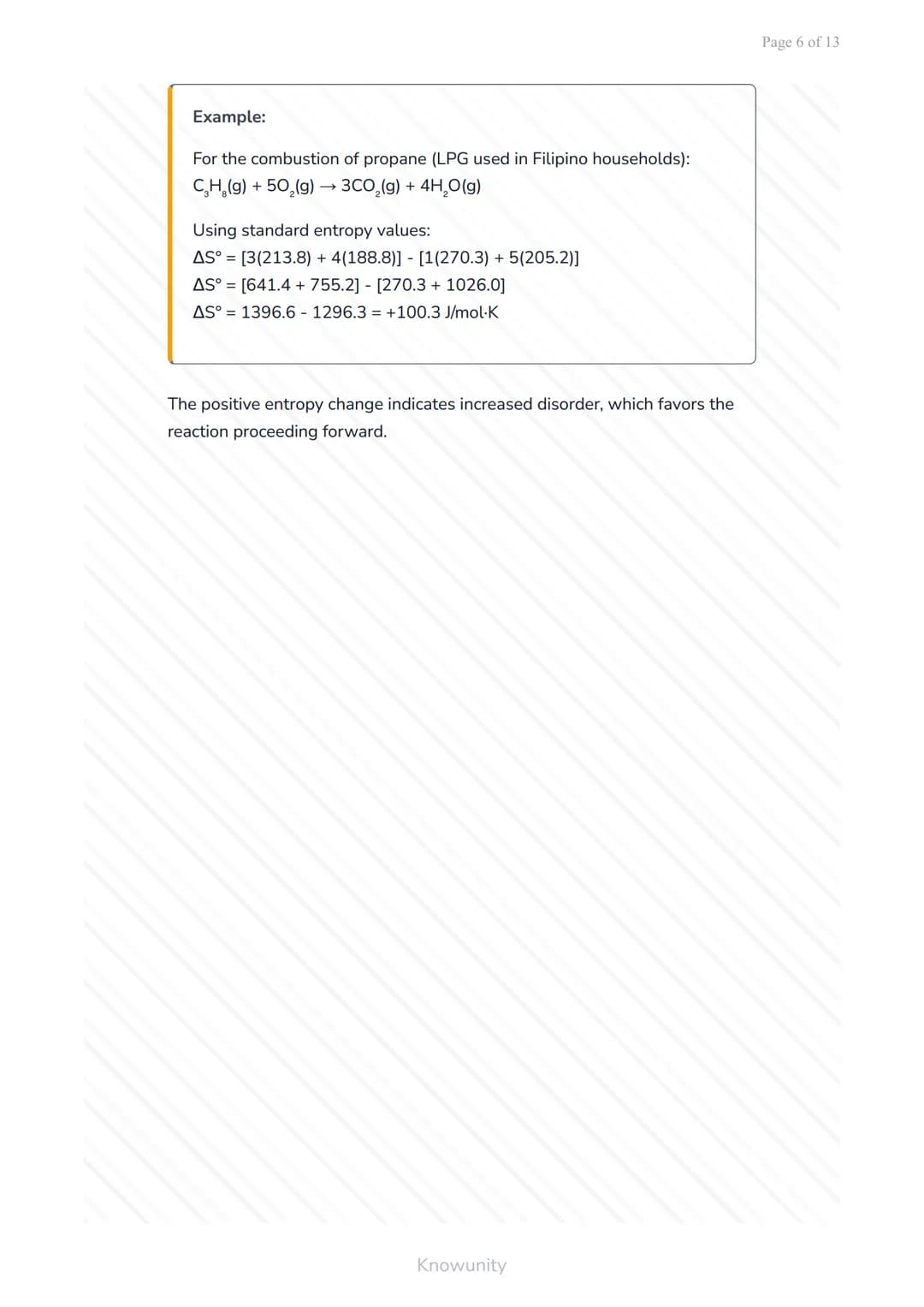
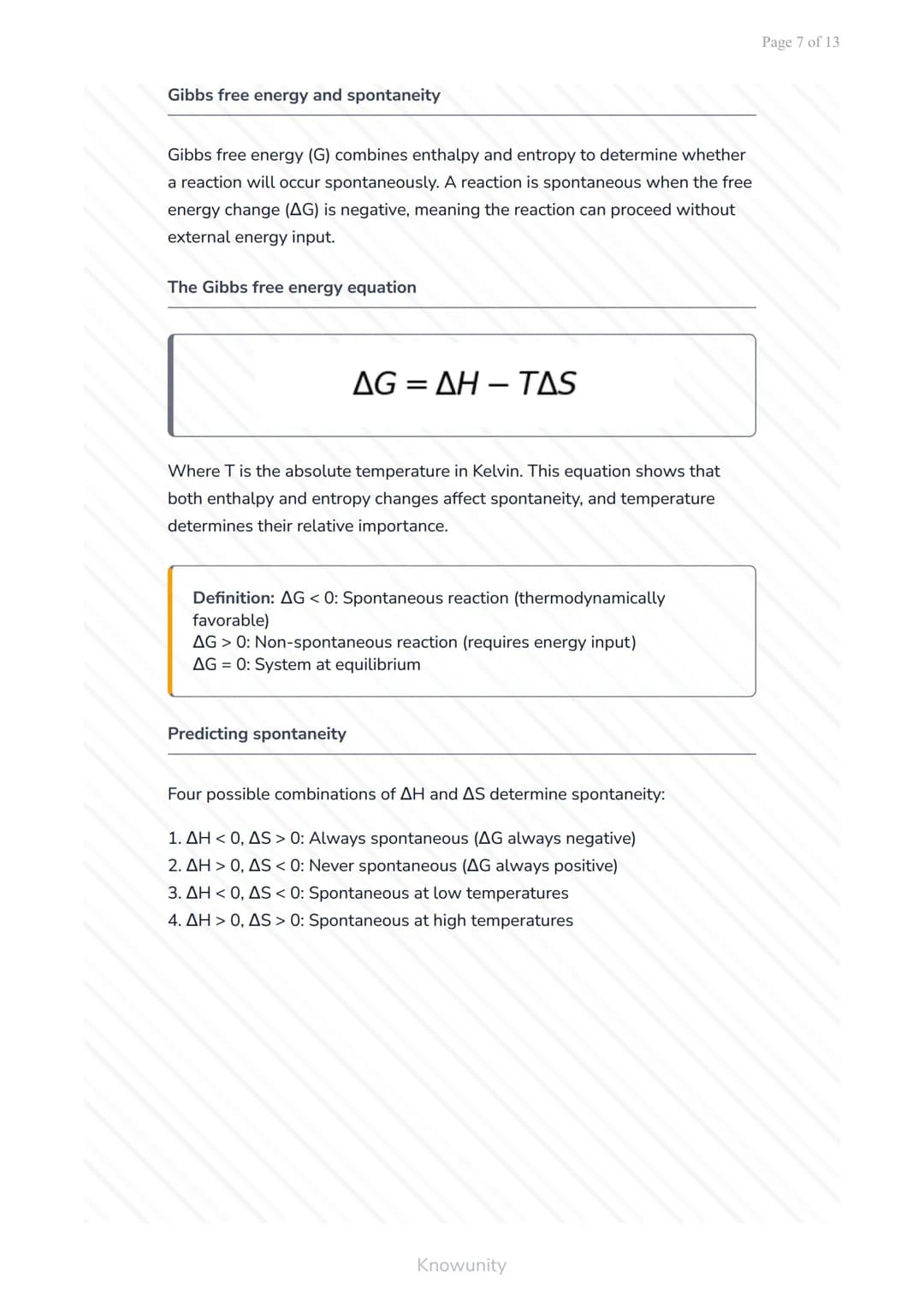
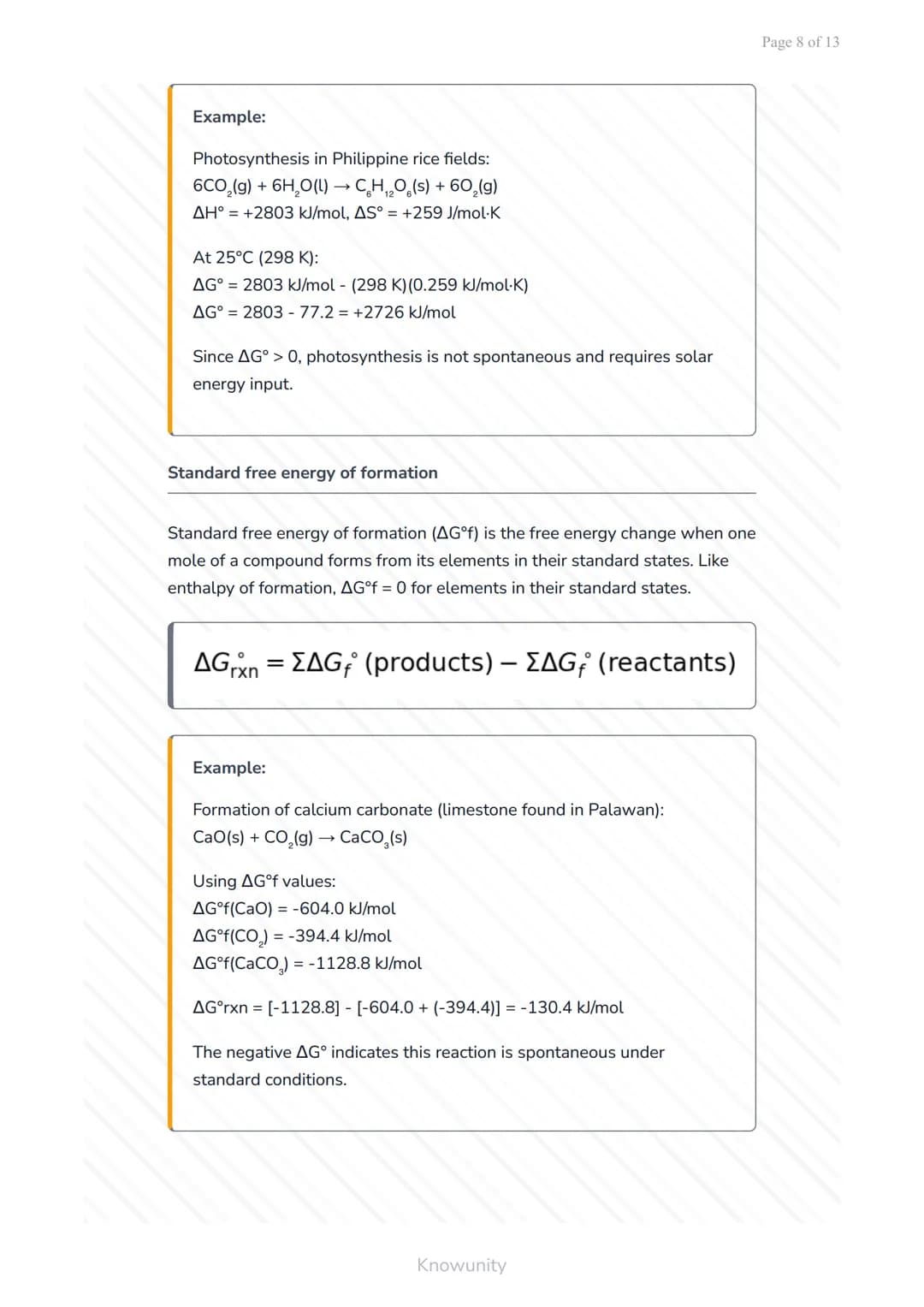
Chemical kinetics studies reaction speeds - thermodynamics tells you if reactions are possible, kinetics tells you how fast they'll happen. Even favourable reactions might crawl along without proper conditions.
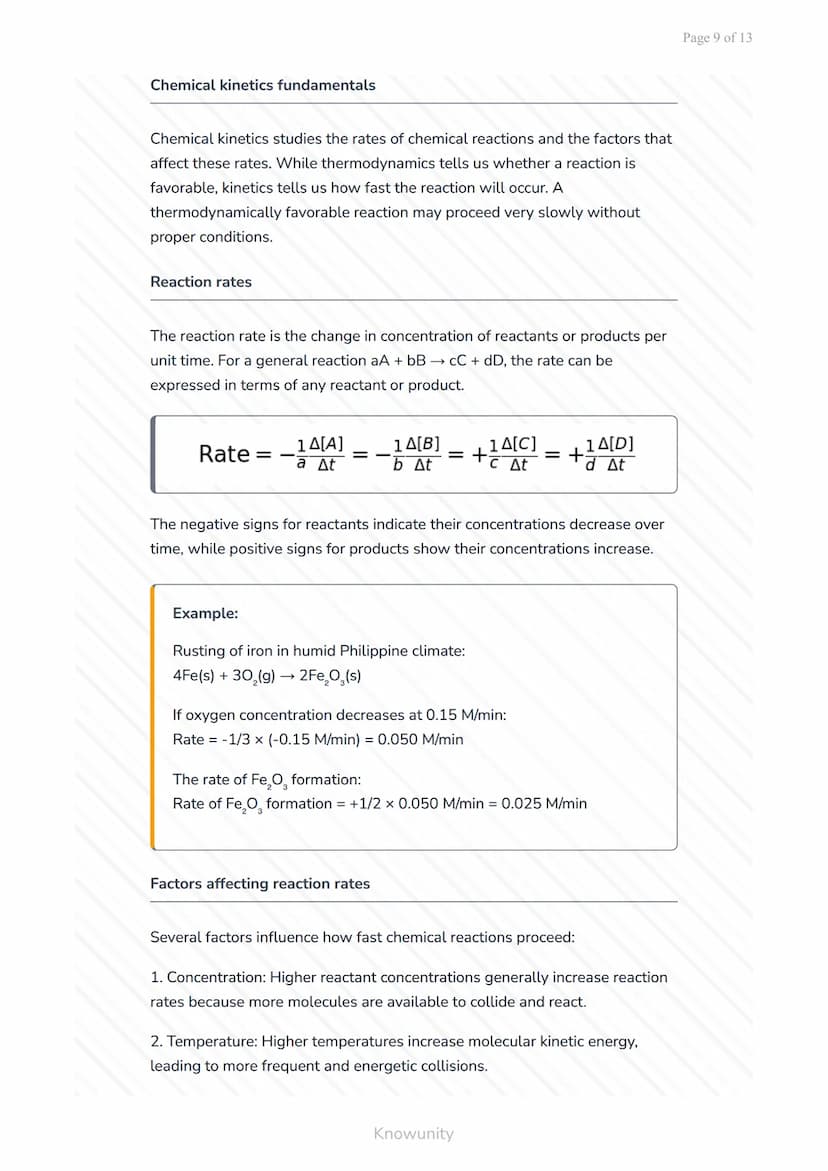
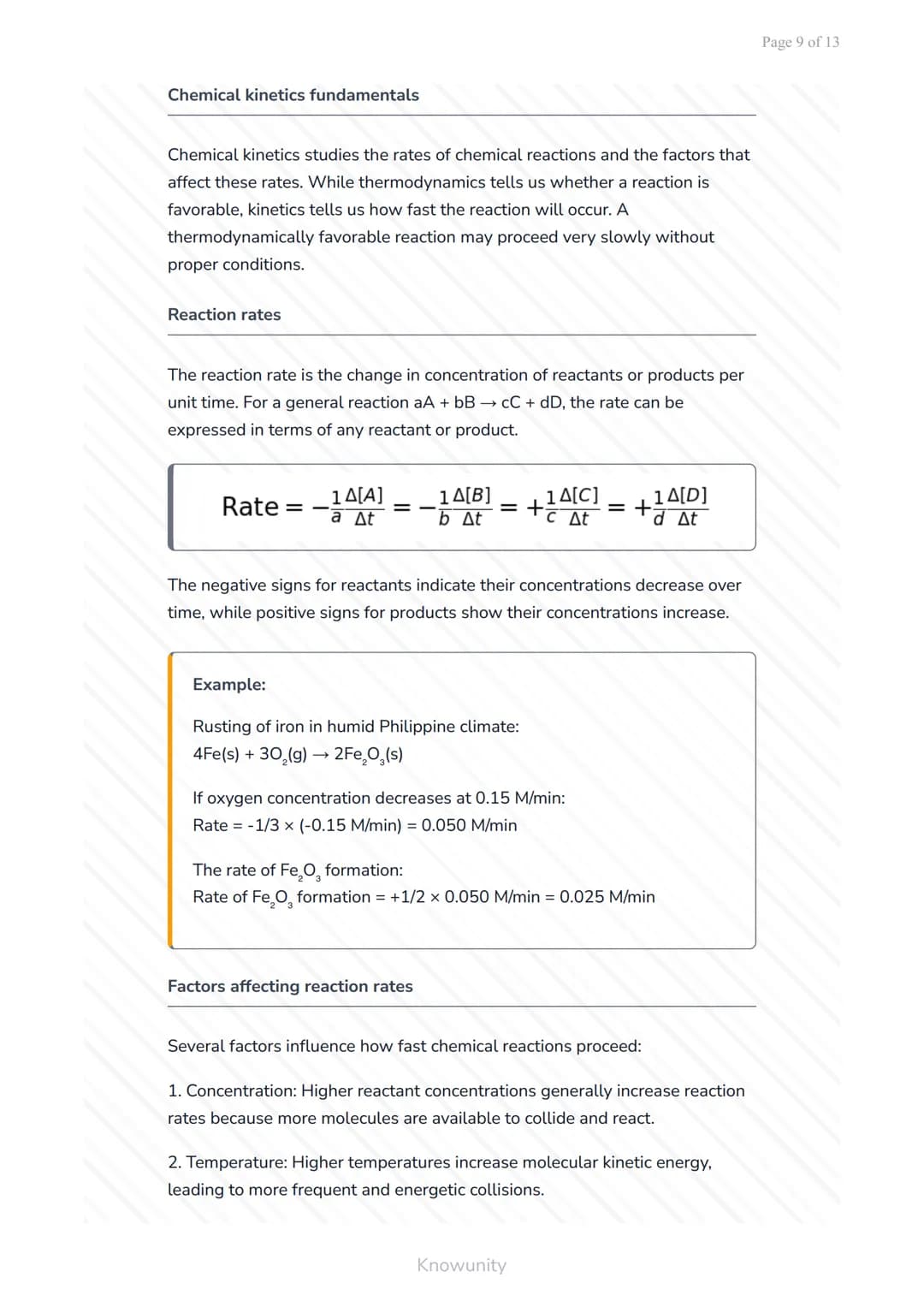
Reaction rates measure concentration changes over time. For iron rusting in humid Philippine climate, if oxygen decreases at 0.15 M/min, the overall rate is 0.050 M/min.
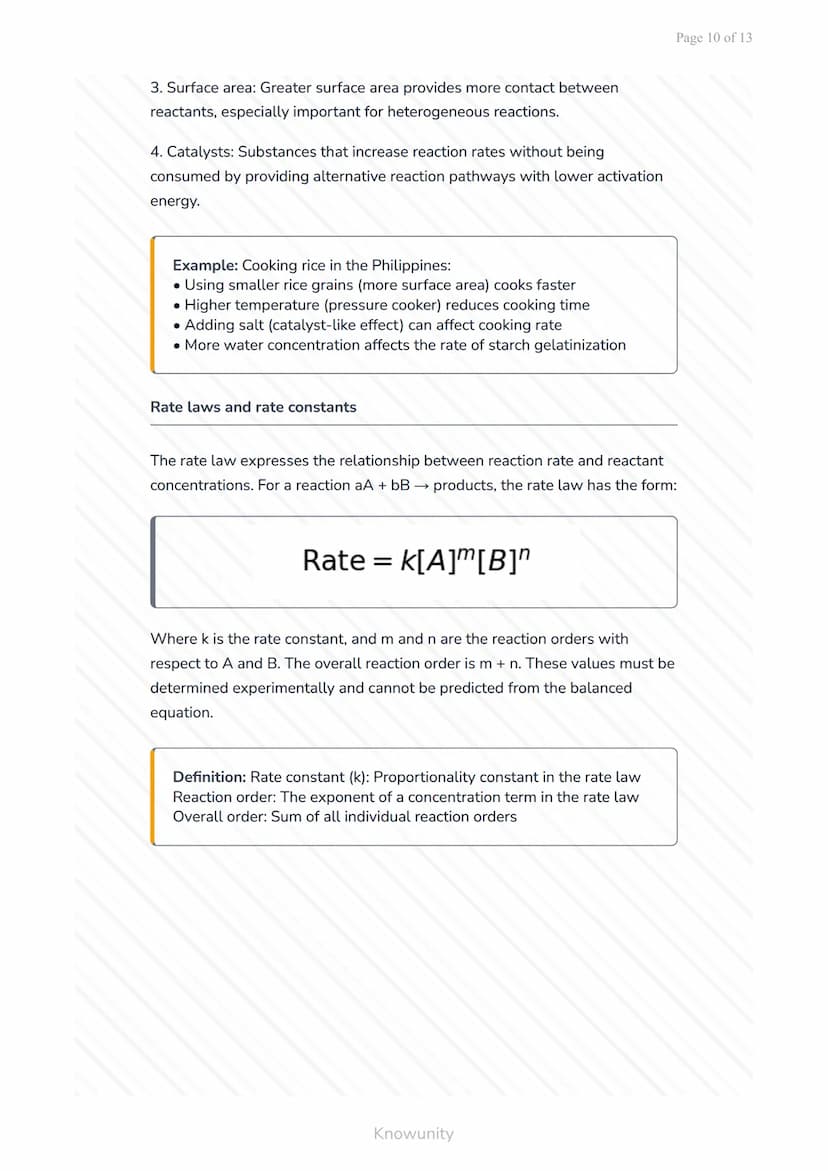
Four main factors affect reaction speeds: concentration (more molecules mean more collisions), temperature (higher energy creates faster, more energetic collisions), surface area (more contact between reactants), and catalysts (alternative pathways with lower energy barriers).
Cooking rice demonstrates all these factors: smaller grains cook faster (surface area), pressure cookers reduce time (temperature), and proper water ratios matter (concentration effects).
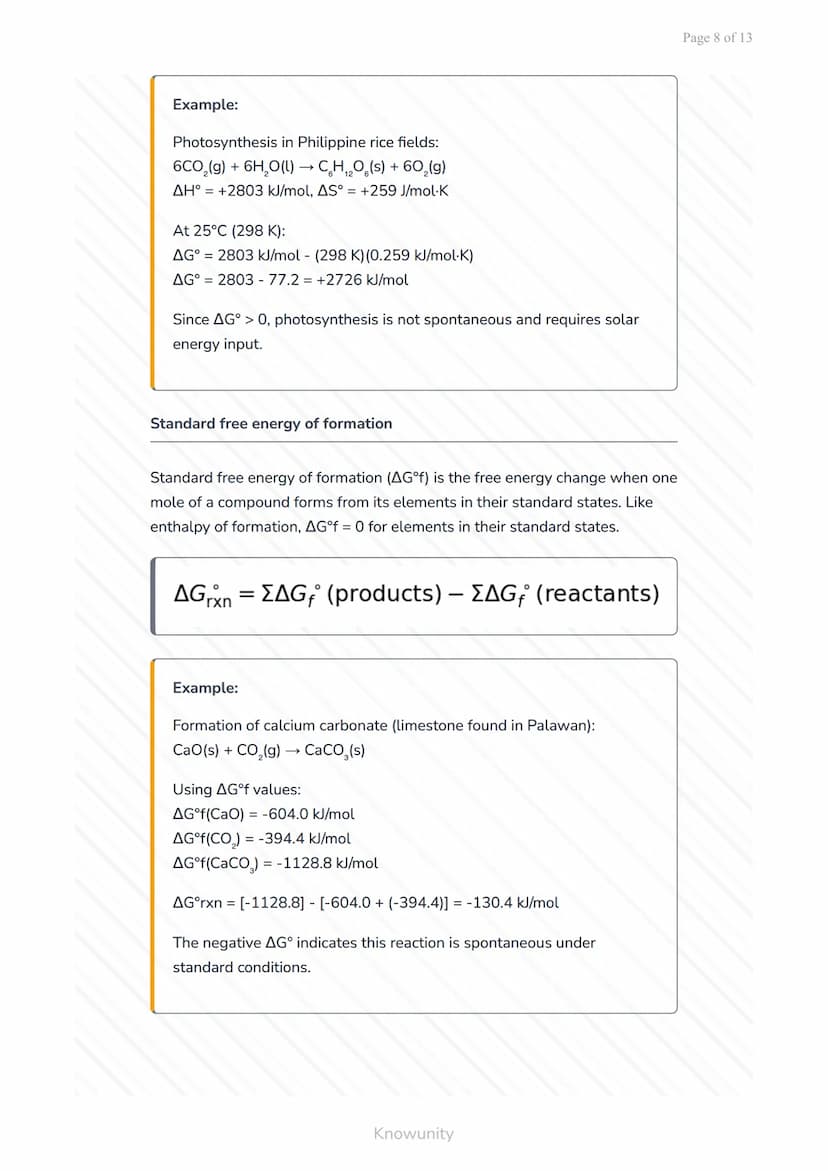
Quick check: Rate expressions use negative signs for disappearing reactants and positive signs for forming products.



 Econ
Econ GenBio
 Other
Other Araling Panlipunan (AP)
 Practical Research
 DISS
DISS