Understanding 3D Shapes
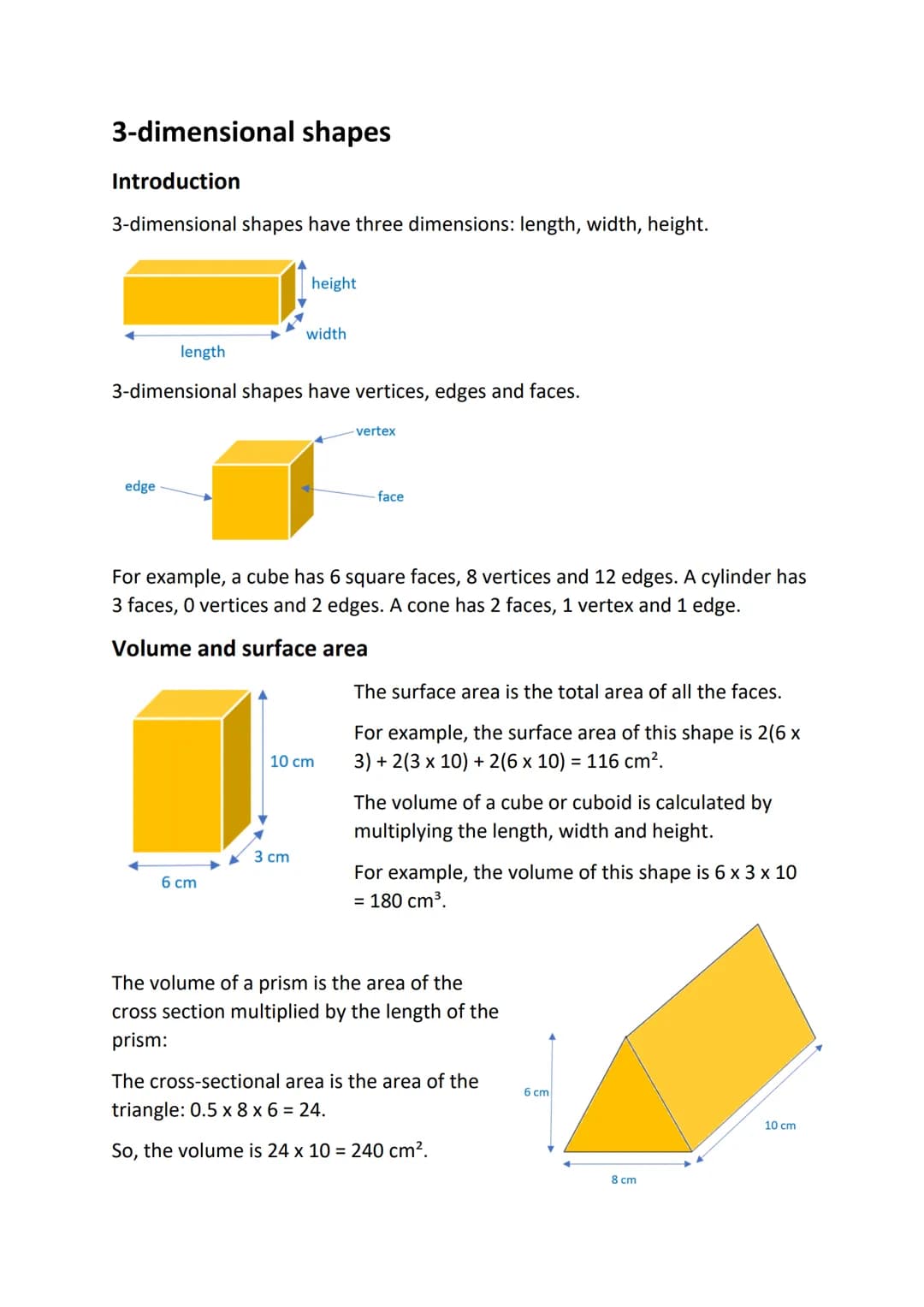
Every 3D shape has three key measurements: length, width, and height - that's what makes them three-dimensional rather than flat. You'll also need to identify their vertices (corners), edges (lines where faces meet), and faces (flat surfaces).
Think of a cube - it's got 6 square faces, 8 vertices, and 12 edges. Compare that to a cylinder with 3 faces, 0 vertices, and 2 edges, or a cone with 2 faces, 1 vertex, and 1 edge.
Surface area is simply the total area of all faces added together. For a cuboid, you calculate the area of each rectangular face and add them up. Volume tells you how much space is inside the shape.
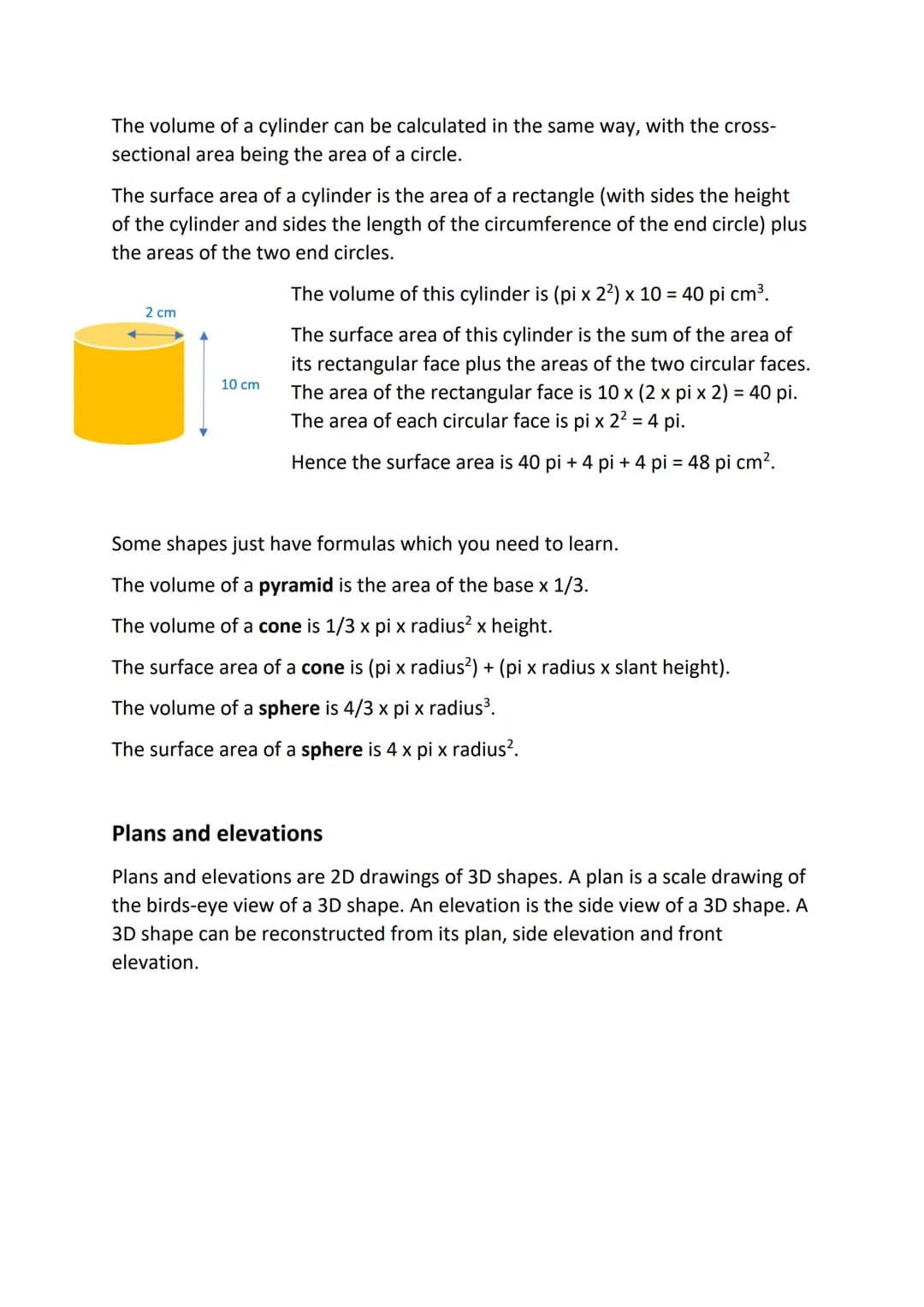
For cuboids, volume is dead simple: just multiply length × width × height. For other prisms shapeswiththesamecross−sectionthroughout, multiply the cross-sectional area by the length.
Top Tip: Always check your units - surface area uses cm² whilst volume uses cm³!


 Maths
Maths English Literature
 Biology
 Sociology