The Sine Rule - When You Know Angles and Opposite Sides
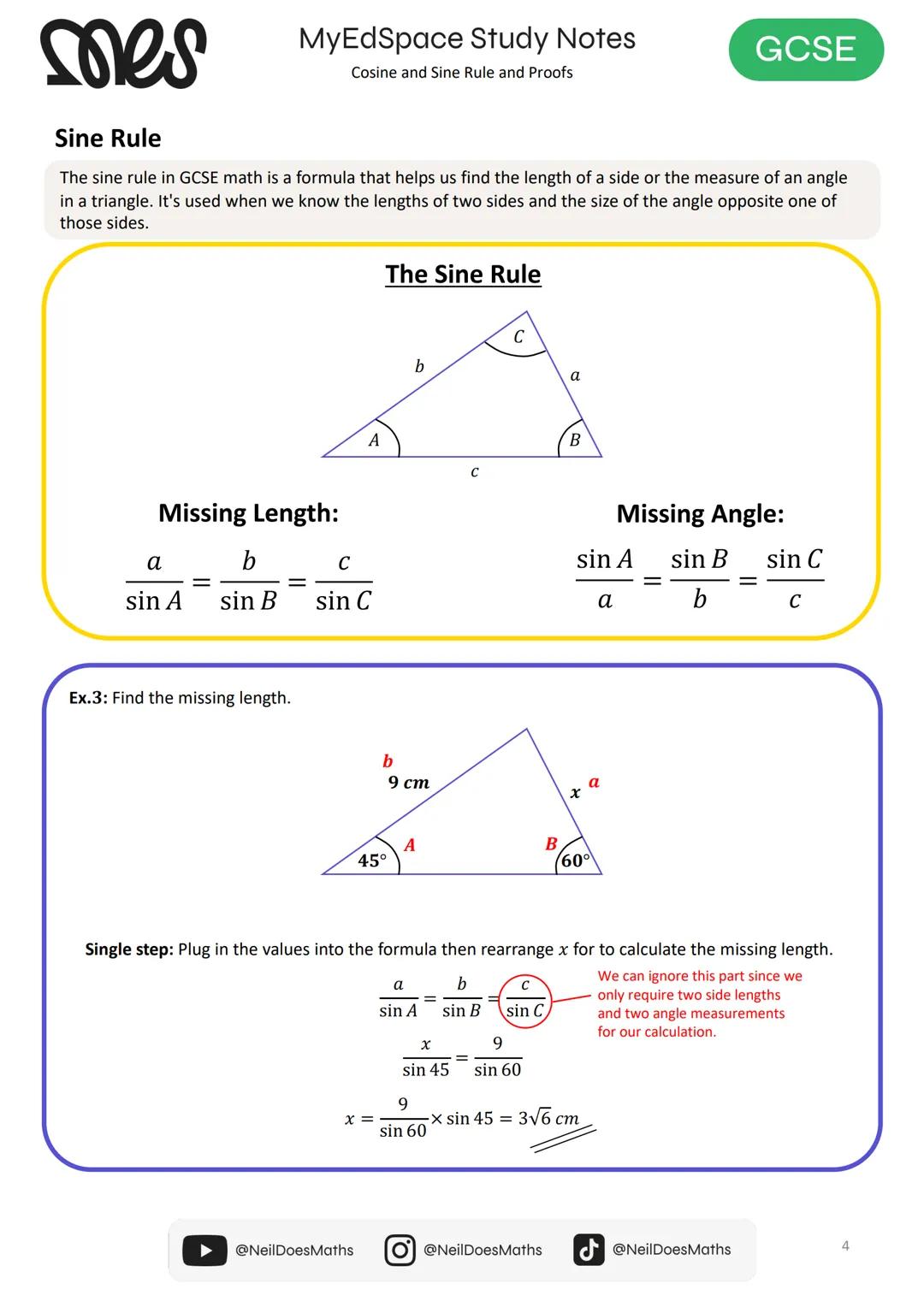
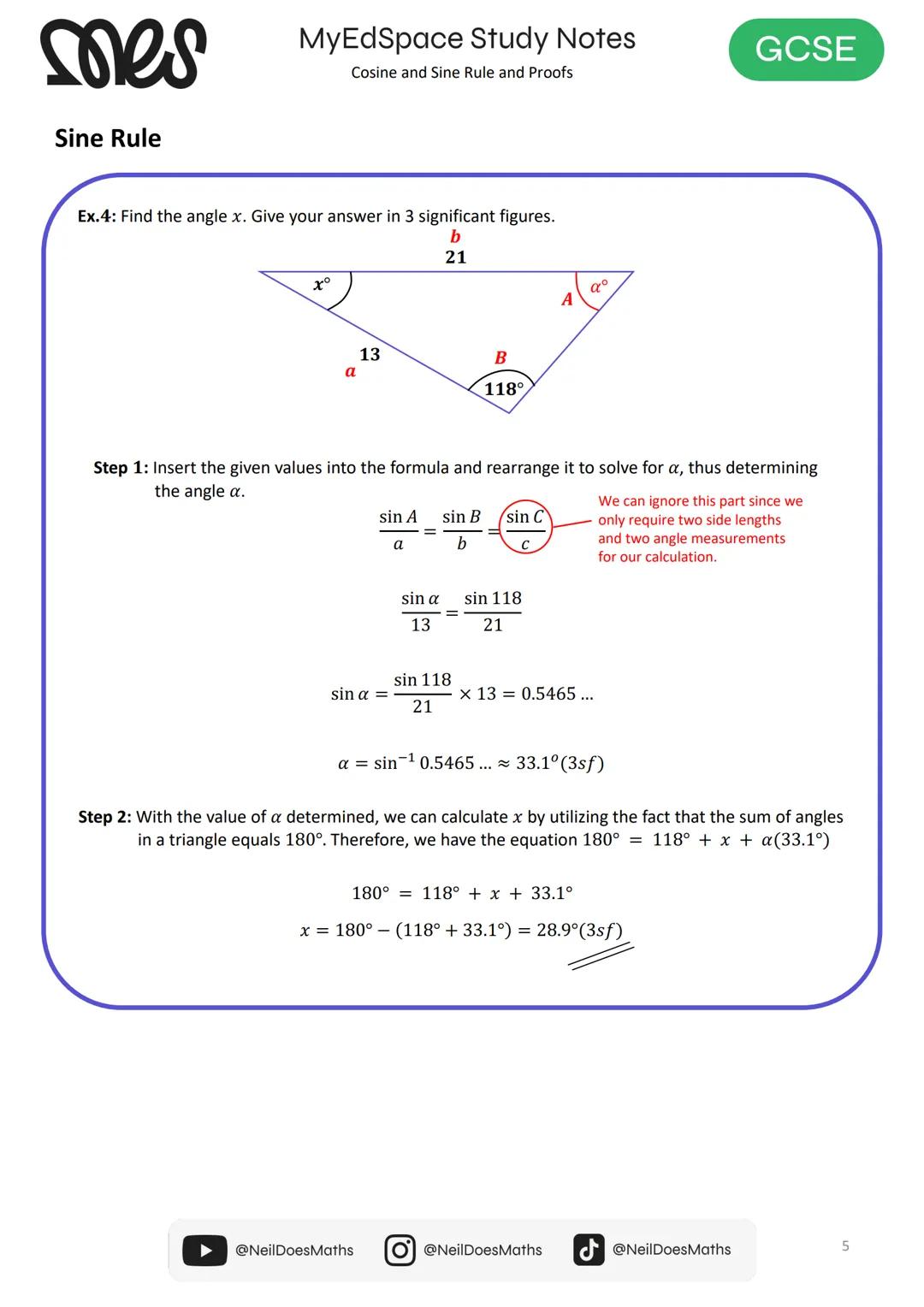
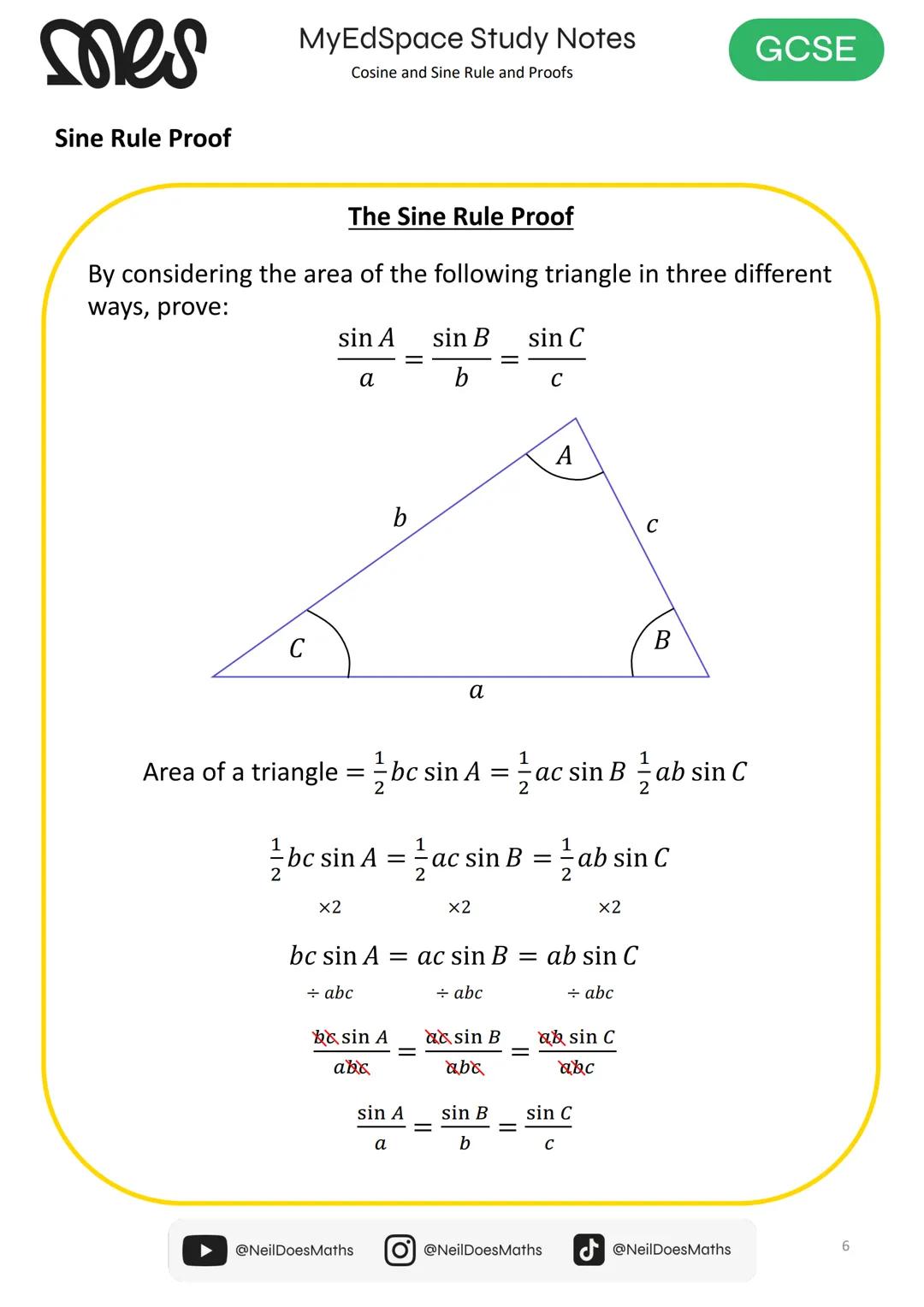
The sine rule comes to the rescue when you know two sides and an angle that's not between them, or when you have two angles and one side. It creates a beautiful relationship: a/sin A = b/sin B = c/sin C.
For missing lengths, rearrange to solve for your unknown side. In the example, with a 45° angle, a 60° angle, and a 9cm side, you set up the equation and cross-multiply to get x = 3√6 cm.
The key insight is that you only need two parts of this three-way relationship to solve your problem. Pick the two fractions that contain your known and unknown values, then ignore the third part completely.
Study Smart: You can flip the sine rule to sin A/a = sin B/b = sin C/c when finding angles - whatever feels easier to work with!