Body Cavities and Abdominal Regions
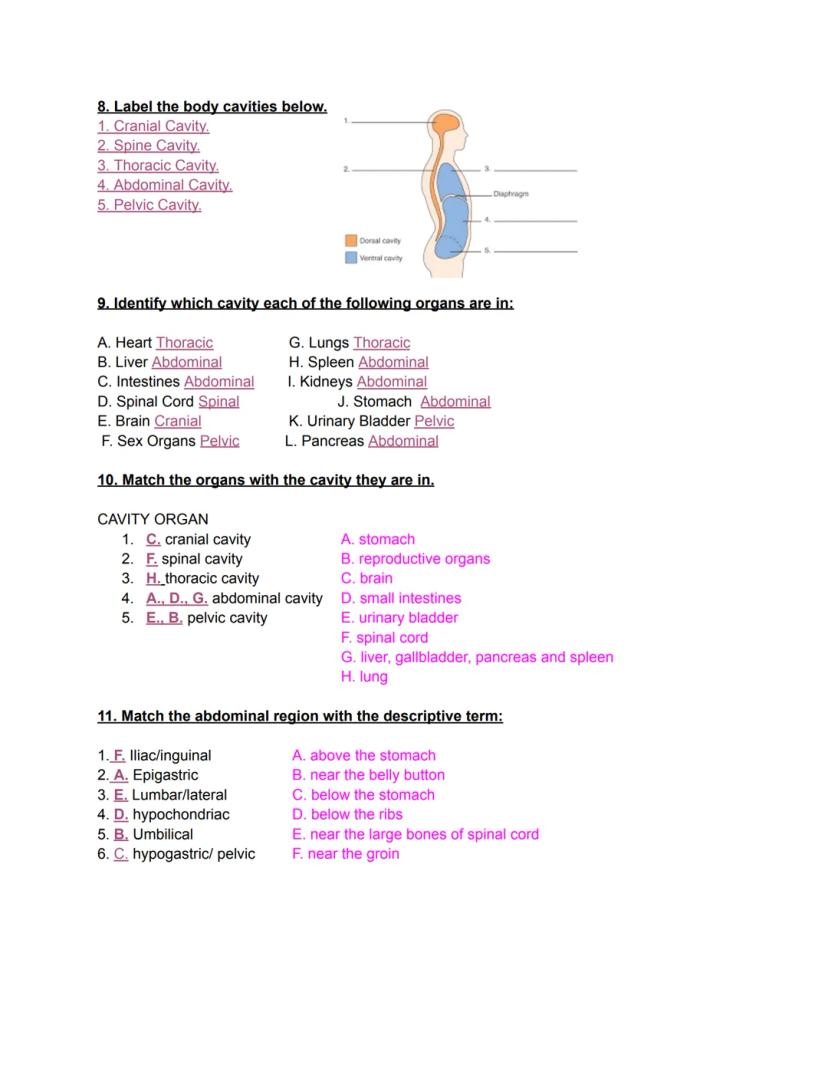
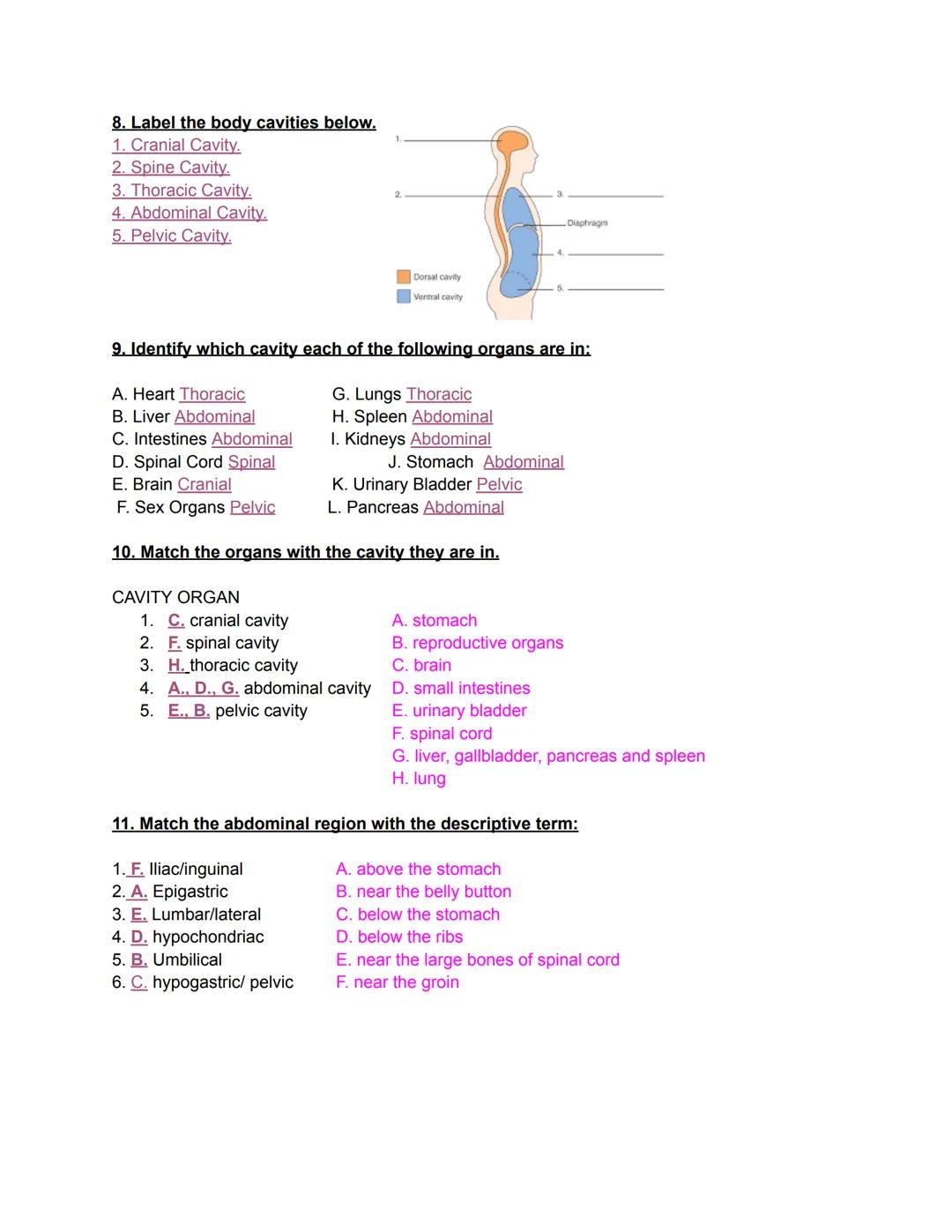
Your vital organs aren't just floating around - they're organized into specific compartments called body cavities. The dorsal cavity includes the cranial cavity (housing the brain) and spinal cavity (containing the spinal cord). The ventral cavity is separated by the diaphragm into the upper thoracic cavity (home to the heart and lungs) and the lower abdominal cavity (containing digestive organs like the liver, stomach, and intestines). The pelvic cavity sits at the bottom, holding reproductive organs and the urinary bladder.
Knowing which organs belong in which cavities helps you understand how body systems are organized. The heart and lungs reside in the thoracic cavity, while digestive organs like the liver, stomach, intestines, and pancreas occupy the abdominal cavity. The brain is protected within the cranial cavity, and reproductive organs are found in the pelvic cavity.
For more precise locations, the abdomen is divided into regions with specific names. The epigastric region sits above the stomach, the umbilical region surrounds the belly button, and the hypogastric (pelvic) region is below the stomach. The hypochondriac regions lie below the ribs, lumbar regions near the spine, and iliac/inguinal regions near the groin.
Clinical Connection: Medical professionals often document pain or symptoms by specific body region. When you say "my stomach hurts," a doctor might ask, "Is it more in your epigastric or umbilical region?" to help narrow down potential causes.


 Health
 Fun Stuff
 Algebra
 Overige
 Algebra 1
 Biology
 Health & Social Care