Specialised Cells: Form Meets Function
Ever wondered why red blood cells look completely different from nerve cells? Each cell type has evolved specific features that make it brilliant at its particular job.
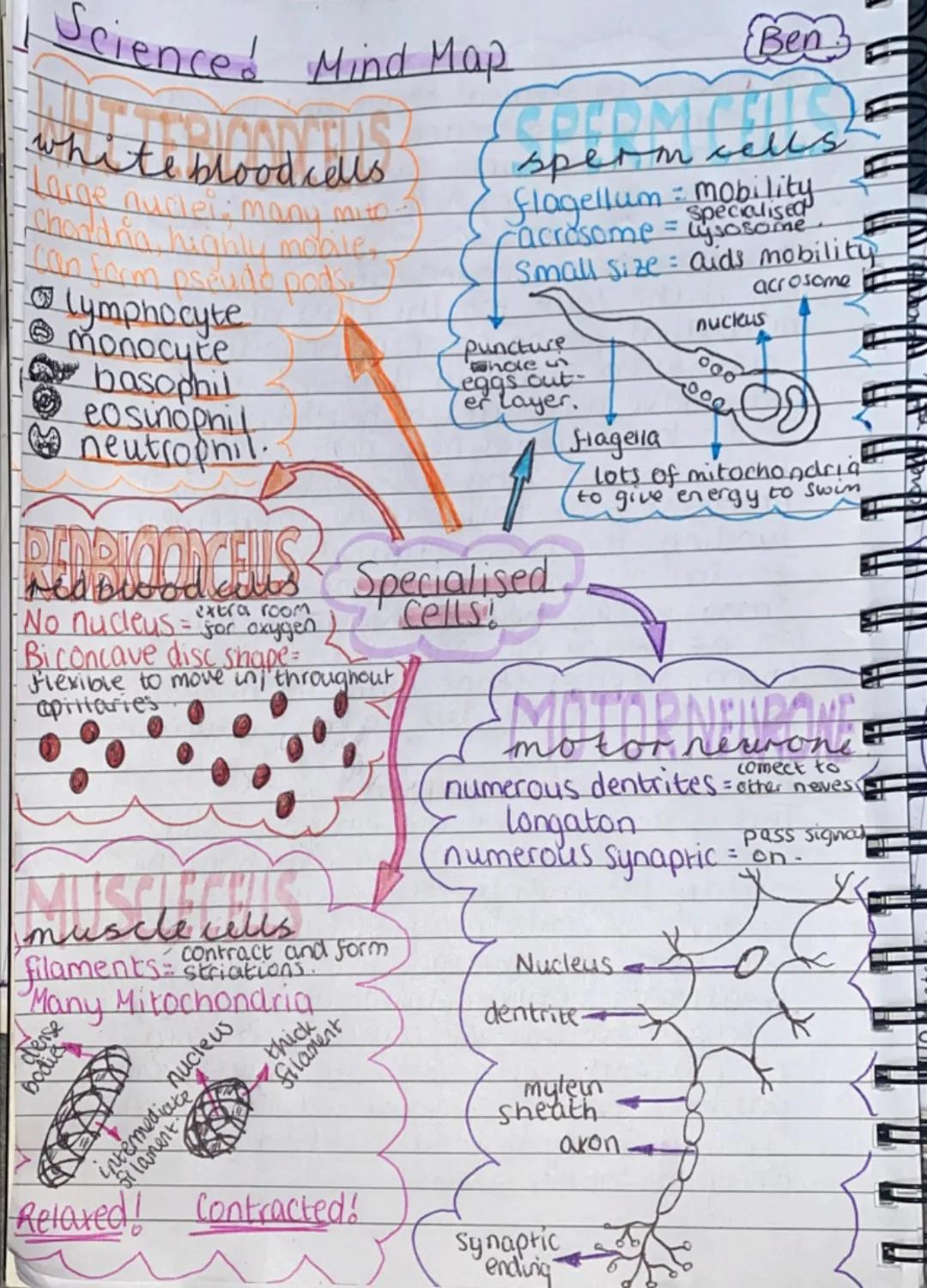
Red blood cells are your body's oxygen delivery service. They've ditched their nucleus to make extra room for haemoglobin (the protein that carries oxygen). Their biconcave disc shape isn't random either - it makes them flexible enough to squeeze through tiny capillaries whilst maximising surface area for gas exchange.
White blood cells are your immune system's army. They're packed with mitochondria for energy and have large nuclei to control their complex defence functions. Many can form pseudopods (fake feet) to chase down invaders - pretty cool, right?
Sperm cells are built for one mission: reaching the egg. Their flagellum acts like a propeller, while the acrosome (a specialised lysosome) helps punch through the egg's outer layer. They're tiny for maximum mobility and stuffed with mitochondria for the energy needed for their marathon swim.
Key Insight: Every specialised cell follows the same rule - structure perfectly matches function. This principle will help you tackle any cell-related exam question!



 Health
 Fun Stuff
 Biology