
Epidemiology is the study of how health outcomes and diseases... Show more
 Fun Stuff
 Algebra
 Biology
Sign up to see the contentIt's free!
Access to all documents
Improve your grades
Join milions of students
Knowunity AI
Subjects
Triangle Congruence and Similarity Theorems
Triangle Properties and Classification
Linear Equations and Graphs
Geometric Angle Relationships
Trigonometric Functions and Identities
Equation Solving Techniques
Circle Geometry Fundamentals
Division Operations and Methods
Basic Differentiation Rules
Exponent and Logarithm Properties
Show all topics
Human Organ Systems
Reproductive Cell Cycles
Biological Sciences Subdisciplines
Cellular Energy Metabolism
Autotrophic Energy Processes
Inheritance Patterns and Principles
Biomolecular Structure and Organization
Cell Cycle and Division Mechanics
Cellular Organization and Development
Biological Structural Organization
Show all topics
Chemical Sciences and Applications
Atomic Structure and Composition
Molecular Electron Structure Representation
Atomic Electron Behavior
Matter Properties and Water
Mole Concept and Calculations
Gas Laws and Behavior
Periodic Table Organization
Chemical Thermodynamics Fundamentals
Chemical Bond Types and Properties
Show all topics
European Renaissance and Enlightenment
European Cultural Movements 800-1920
American Revolution Era 1763-1797
American Civil War 1861-1865
Global Imperial Systems
Mongol and Chinese Dynasties
U.S. Presidents and World Leaders
Historical Sources and Documentation
World Wars Era and Impact
World Religious Systems
Show all topics
Classic and Contemporary Novels
Literary Character Analysis
Rhetorical Theory and Practice
Classic Literary Narratives
Reading Analysis and Interpretation
Narrative Structure and Techniques
English Language Components
Influential English-Language Authors
Basic Sentence Structure
Narrative Voice and Perspective
Show all topics
75
•
Updated Mar 11, 2026
•

Katelyn W.
@katelynw._qfmt
Epidemiology is the study of how health outcomes and diseases... Show more
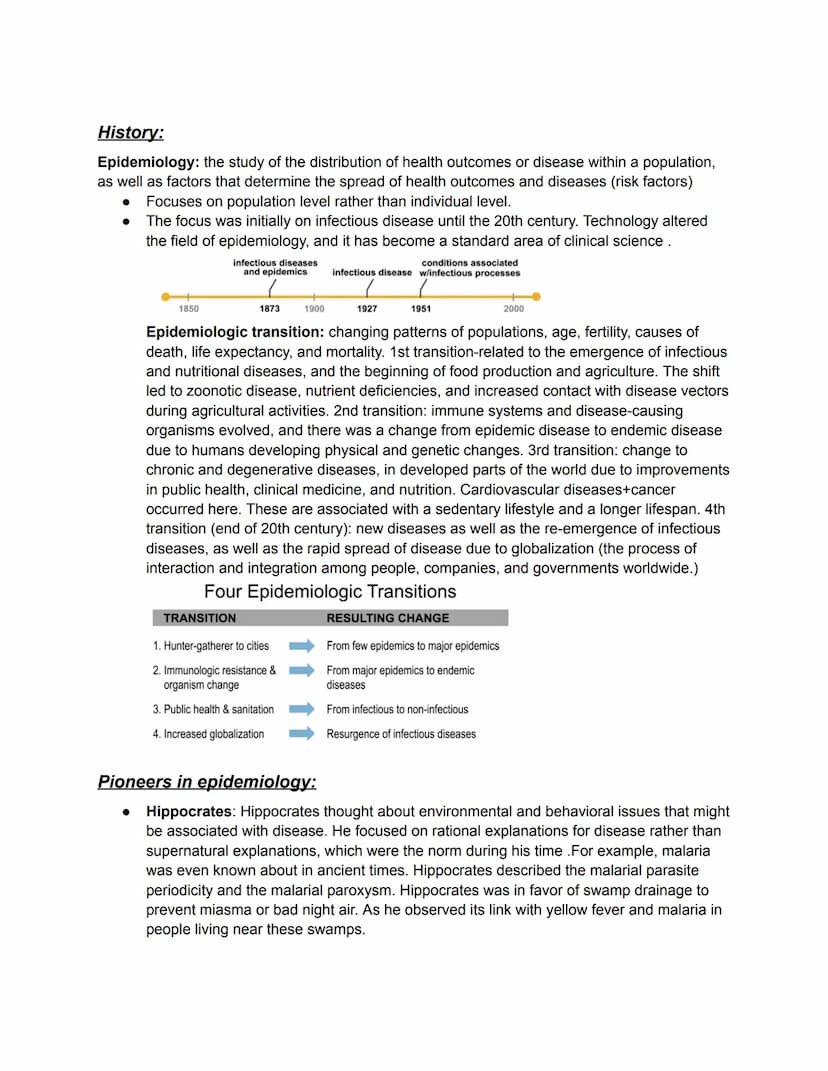
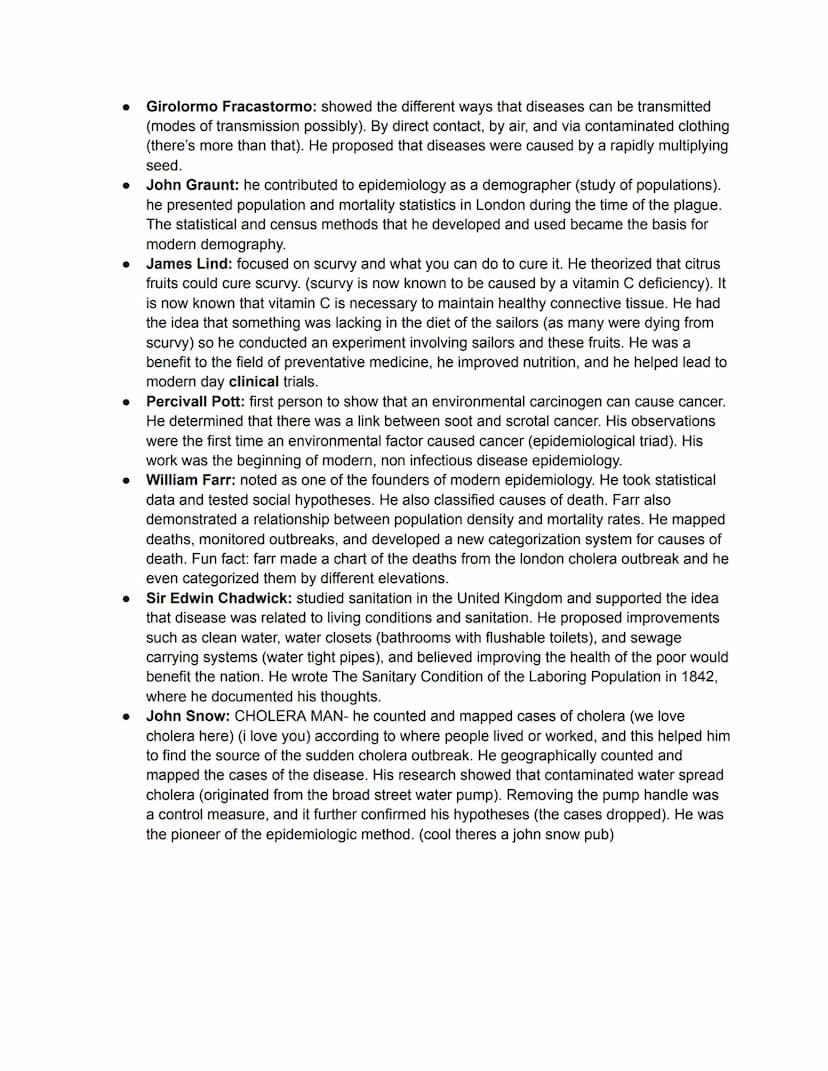
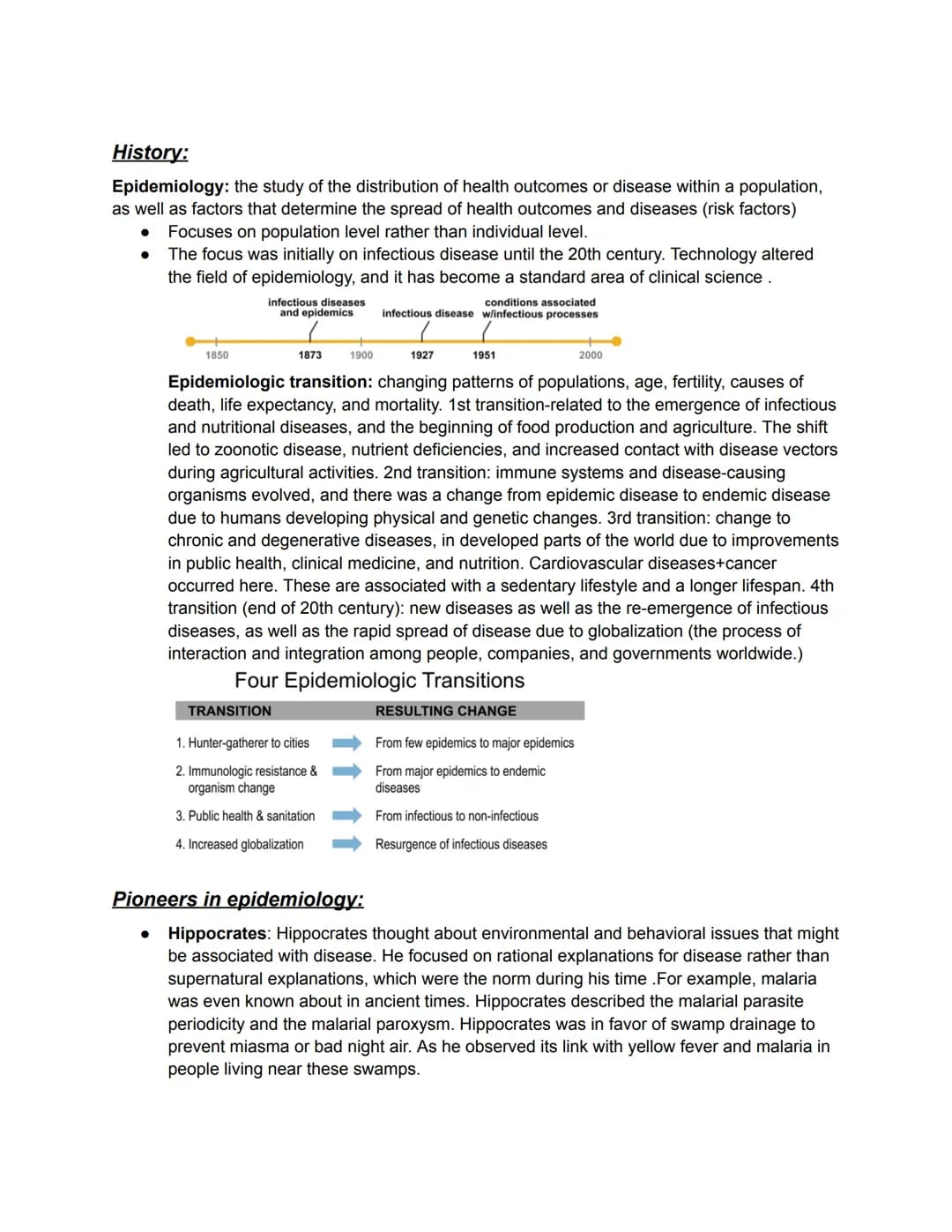
Epidemiology studies health patterns at the population level rather than individually. While it initially focused on infectious diseases, technological advances transformed it into a standard area of clinical science. The epidemiologic transition describes how disease patterns have shifted throughout human history through four major phases.
The first transition occurred with agriculture, introducing zoonotic diseases and nutritional deficiencies. The second transition saw immune systems evolve as epidemic diseases became endemic. The third brought a shift toward chronic and degenerative diseases like cardiovascular conditions and cancer in developed regions. The fourth transition (late 20th century) features both new diseases and the re-emergence of infectious threats due to globalization.
One of epidemiology's earliest pioneers was Hippocrates, who rejected supernatural explanations for diseases in favor of rational, environmental factors. He even recognized the connection between swamps and diseases like malaria, advocating for swamp drainage to prevent what he called "bad night air."
Did you know? Hippocrates described the malarial parasite's cycles centuries before microscopes were invented, showing how careful observation can lead to medical insights even without modern technology!
Several brilliant thinkers shaped epidemiology throughout history. Girolormo Fracastormo identified different disease transmission modes and proposed that diseases came from rapidly multiplying "seeds." John Graunt developed statistical methods during London's plague that became the foundation for modern demographics.
James Lind performed one of the first clinical trials when he discovered citrus fruits could prevent scurvy among sailors. We now know this was due to vitamin C's role in maintaining healthy connective tissue. Percivall Pott made another breakthrough when he linked environmental factors to cancer, specifically connecting chimney soot to scrotal cancer in young chimney sweeps.
William Farr, considered one of modern epidemiology's founders, revolutionized the field by classifying causes of death and demonstrating relationships between population density and mortality. But perhaps the most famous pioneer was John Snow, who mapped cholera cases during a London outbreak. By identifying the Broad Street water pump as the contamination source and removing its handle, he confirmed his hypothesis and dramatically reduced new cases.
Fascinating fact: There's now a pub named after John Snow near the site of the infamous Broad Street pump that helped him prove how cholera spreads through contaminated water!
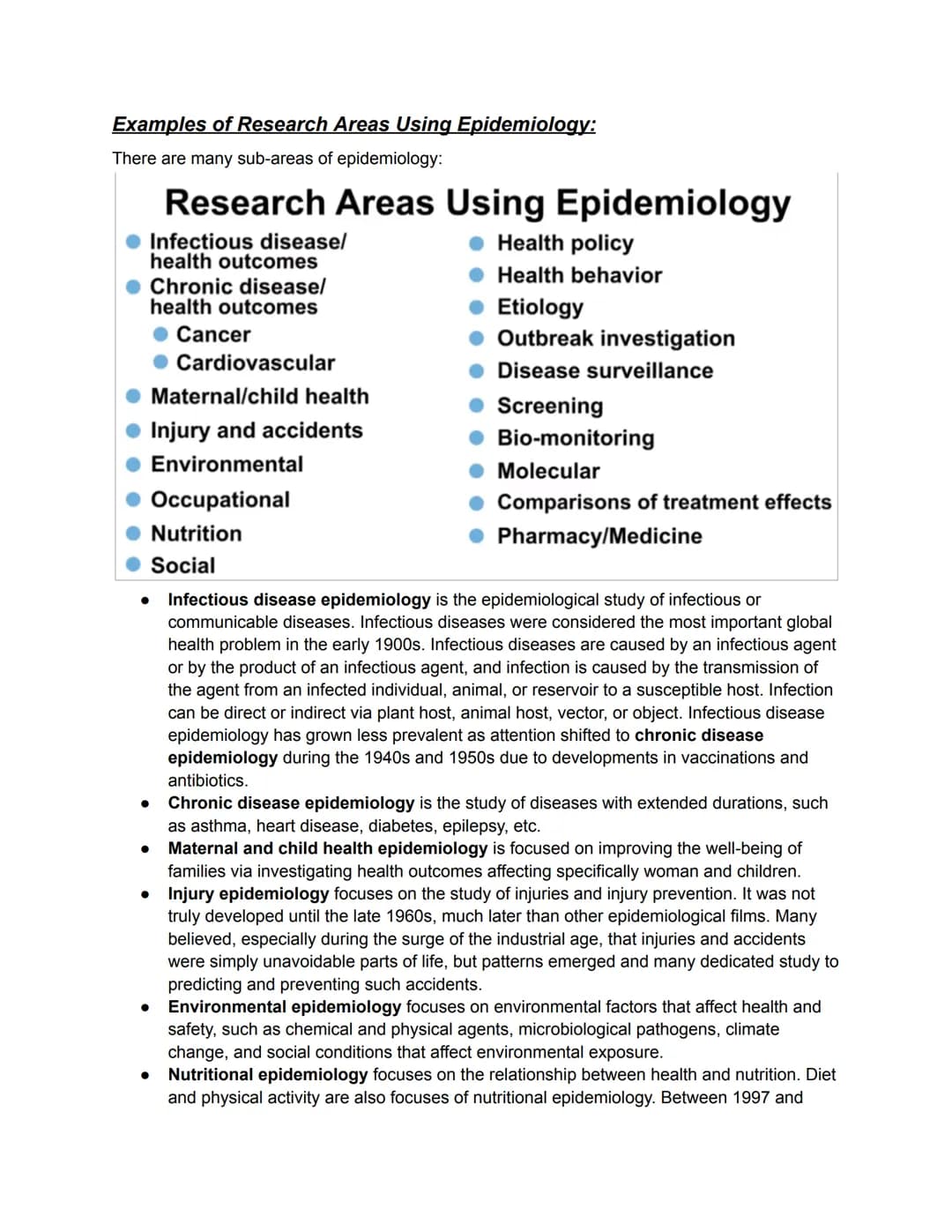
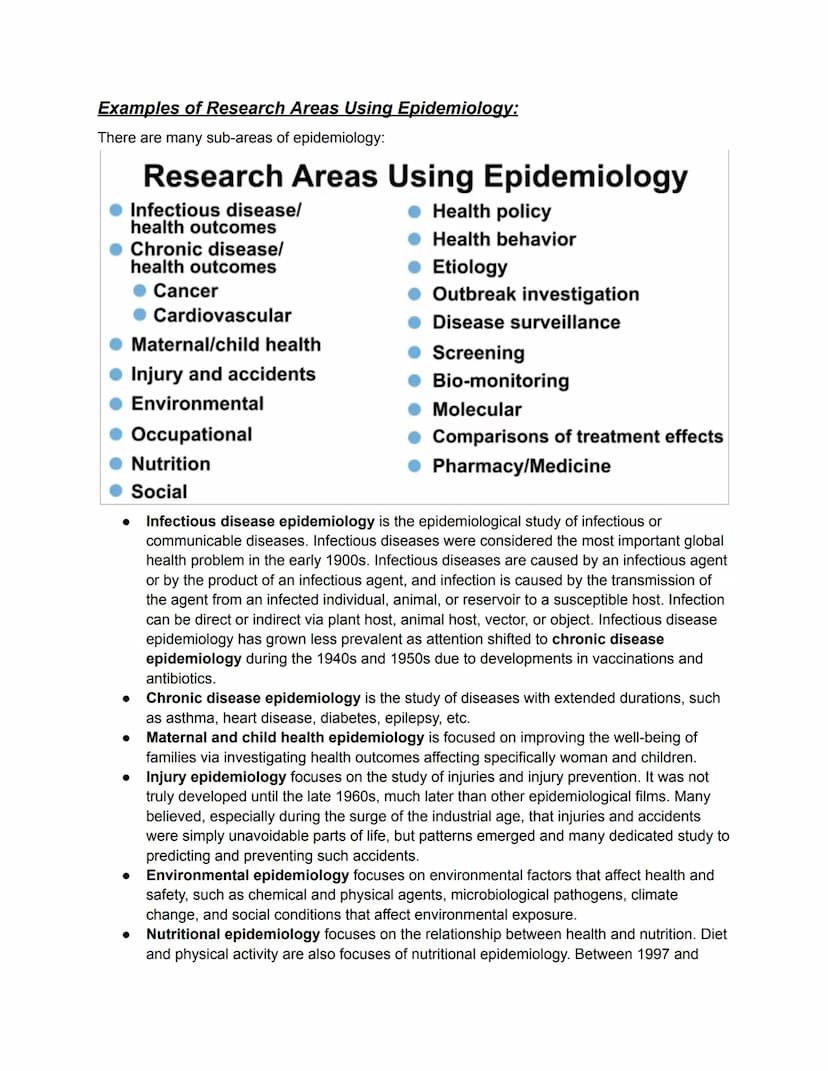
Epidemiology has branched into numerous specialized fields that tackle different health challenges. Infectious disease epidemiology studies communicable diseases and their transmission between hosts. Although this was considered the most critical global health problem in the early 1900s, its prominence decreased with the development of vaccines and antibiotics.
Chronic disease epidemiology examines conditions with extended durations, like heart disease, diabetes, and asthma. Maternal and child health epidemiology focuses specifically on health outcomes affecting women and children. Injury epidemiology studies patterns of accidents and injury prevention—a field that developed later than others because many injuries were once considered unavoidable.
Environmental epidemiology investigates how external factors like chemical agents, physical exposures, and climate change affect health. Nutritional epidemiology explores the relationship between diet and health outcomes, tracking important trends like the 18% increase in childhood food allergies between 1997 and 2007.
Real-world impact: The research from these specialized fields directly shapes public health recommendations that protect communities and save lives every day!
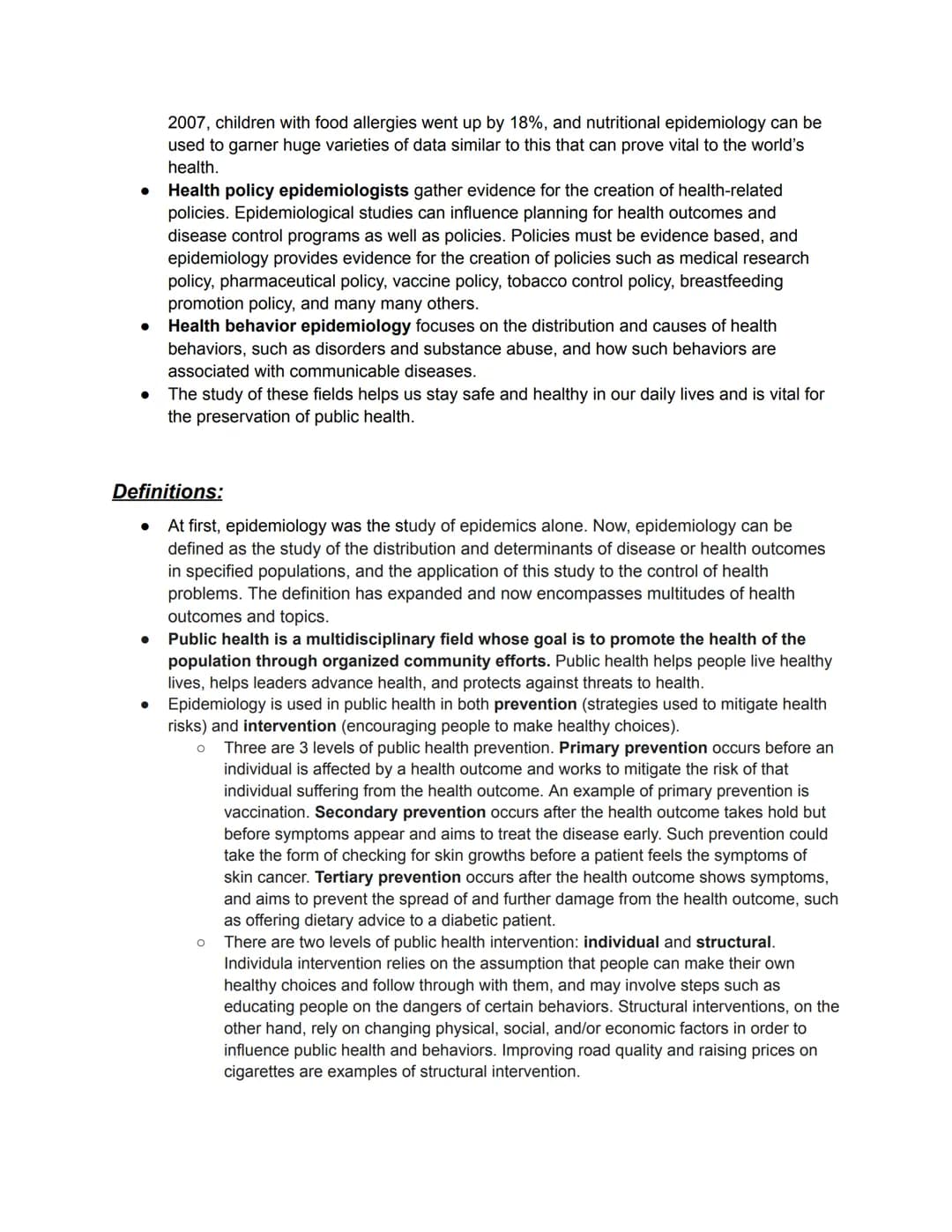
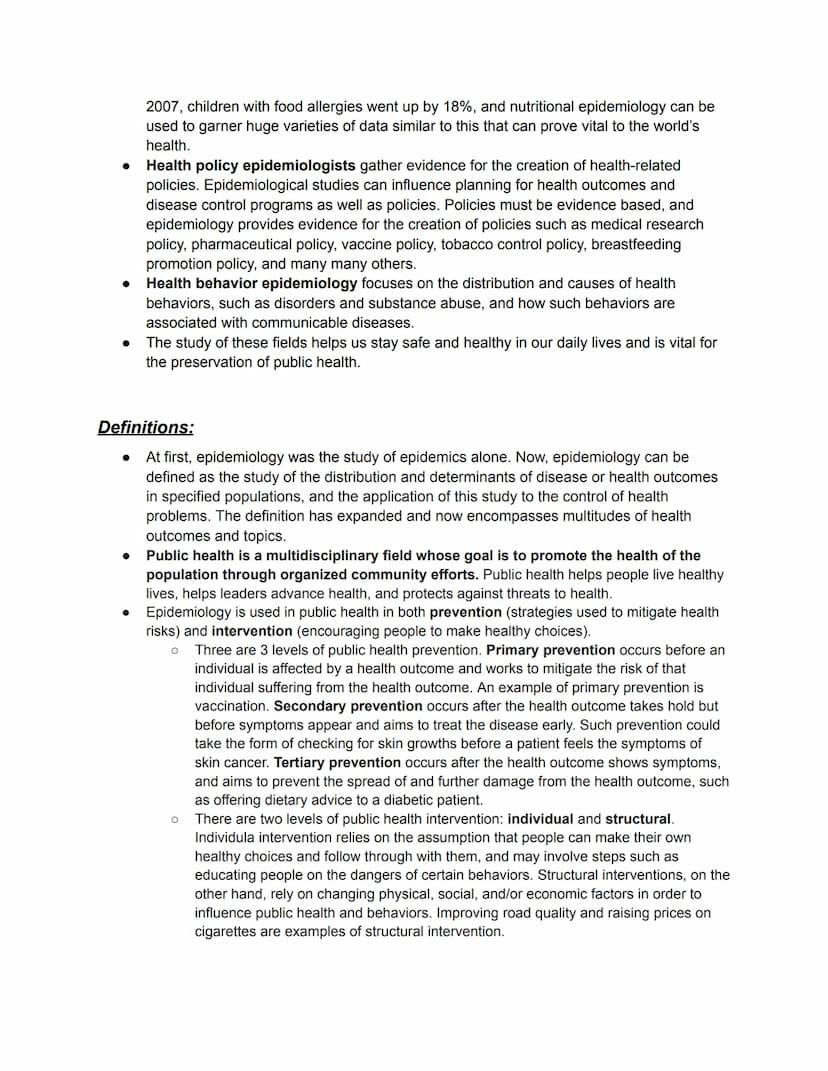
Epidemiology provides the evidence base for public health policy and practice. Health policy epidemiologists gather data to support the creation of evidence-based policies on everything from vaccines to tobacco control. Health behavior epidemiology examines how different behaviors relate to disease outcomes.
Public health uses epidemiological insights for both prevention and intervention strategies. Prevention occurs at three levels: primary prevention (before illness occurs, like vaccination), secondary prevention (early detection before symptoms, like screening), and tertiary prevention (managing existing conditions to prevent complications).
Interventions can be individual or structural. Individual interventions educate people to make healthier choices, while structural interventions change physical, social, or economic factors—like improving road design or increasing cigarette taxes—to create environments that support health.
Think about it: Next time you see a warning label on cigarettes or notice a bike lane in your community, you're seeing epidemiology in action! These interventions were developed based on population-level health data.
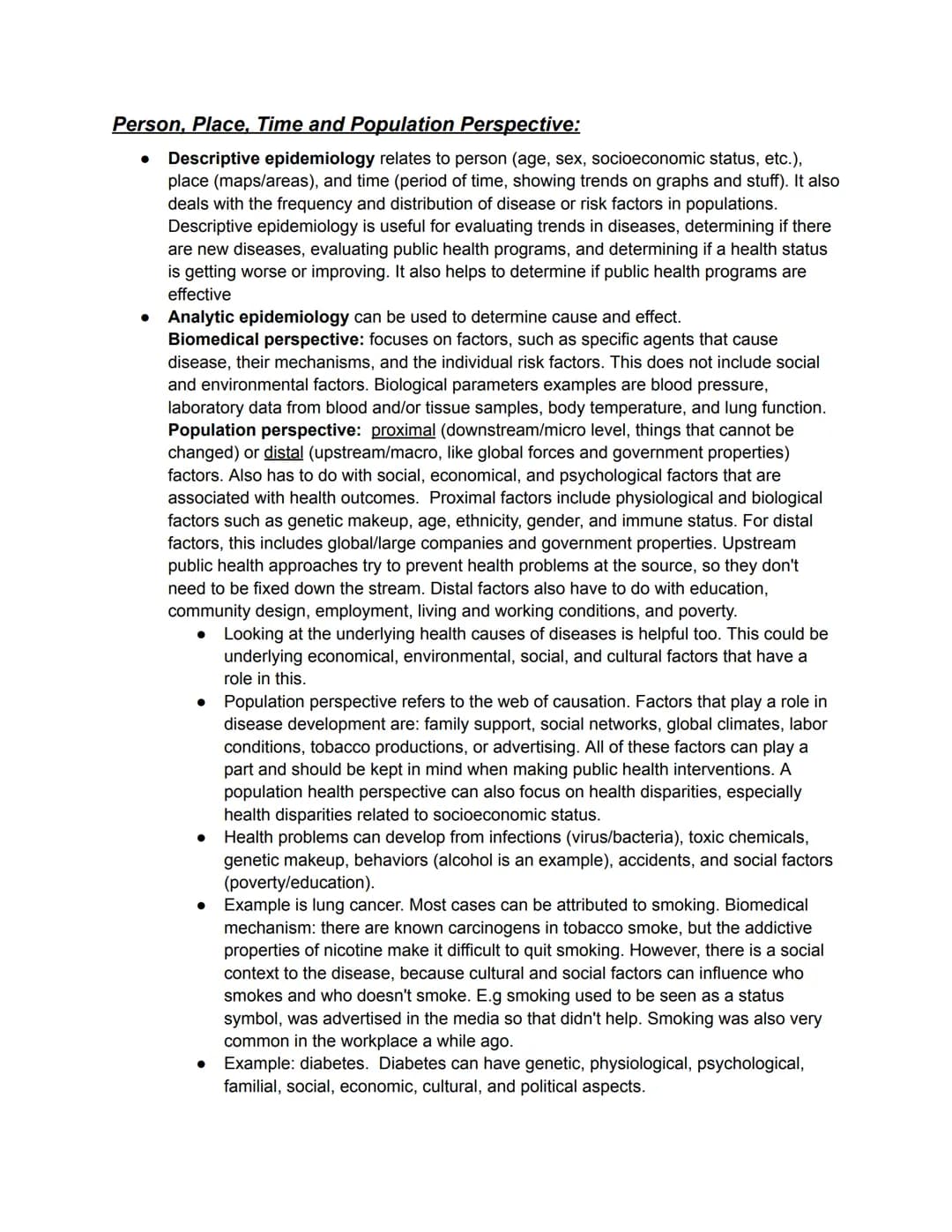
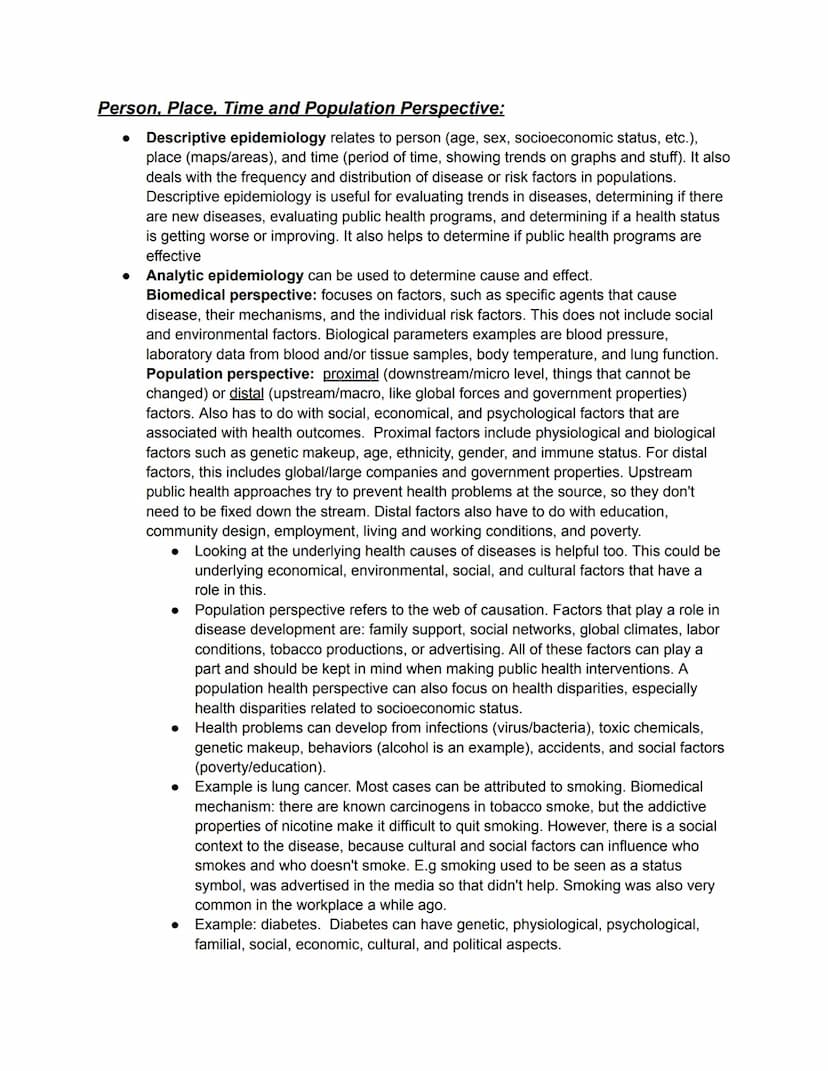
Descriptive epidemiology examines health patterns by person (age, gender, socioeconomic status), place (geographical distribution), and time (trends over periods). This approach helps evaluate disease trends, identify new conditions, and assess the effectiveness of public health programs. In contrast, analytic epidemiology determines cause-and-effect relationships between exposures and outcomes.
The biomedical perspective focuses on specific disease agents and individual risk factors like blood pressure or lung function, but doesn't account for social factors. The population perspective takes a broader view, examining both proximal factors (genetic makeup, age, ethnicity) and distal factors (education, employment, government policies).
Health problems develop from multiple causes—the "web of causation." Consider lung cancer: while the biomedical mechanism involves carcinogens in tobacco smoke, social context matters too. Cultural factors influence who smokes, and historical advertising normalized smoking. Similarly, diabetes has genetic, physiological, psychological, familial, economic, and cultural dimensions.
Pro tip: When studying any health condition, consider both the immediate biological mechanisms and the broader social contexts. This "upstream thinking" helps identify the most effective intervention points!
Our AI companion is specifically built for the needs of students. Based on the millions of content pieces we have on the platform we can provide truly meaningful and relevant answers to students. But its not only about answers, the companion is even more about guiding students through their daily learning challenges, with personalised study plans, quizzes or content pieces in the chat and 100% personalisation based on the students skills and developments.
You can download the app in the Google Play Store and in the Apple App Store.
That's right! Enjoy free access to study content, connect with fellow students, and get instant help – all at your fingertips.
App Store
Google Play
The app is very easy to use and well designed. I have found everything I was looking for so far and have been able to learn a lot from the presentations! I will definitely use the app for a class assignment! And of course it also helps a lot as an inspiration.
Stefan S
iOS user
This app is really great. There are so many study notes and help [...]. My problem subject is French, for example, and the app has so many options for help. Thanks to this app, I have improved my French. I would recommend it to anyone.
Samantha Klich
Android user
Wow, I am really amazed. I just tried the app because I've seen it advertised many times and was absolutely stunned. This app is THE HELP you want for school and above all, it offers so many things, such as workouts and fact sheets, which have been VERY helpful to me personally.
Anna
iOS user
I think it’s very much worth it and you’ll end up using it a lot once you get the hang of it and even after looking at others notes you can still ask your Artificial intelligence buddy the question and ask to simplify it if you still don’t get it!!! In the end I think it’s worth it 😊👍 ⚠️Also DID I MENTION ITS FREEE YOU DON’T HAVE TO PAY FOR ANYTHING AND STILL GET YOUR GRADES IN PERFECTLY❗️❗️⚠️
Thomas R
iOS user
Knowunity is the BEST app I’ve used in a minute. This is not an ai review or anything this is genuinely coming from a 7th grade student (I know 2011 im young) but dude this app is a 10/10 i have maintained a 3.8 gpa and have plenty of time for gaming. I love it and my mom is just happy I got good grades
Brad T
Android user
Not only did it help me find the answer but it also showed me alternative ways to solve it. I was horrible in math and science but now I have an a in both subjects. Thanks for the help🤍🤍
David K
iOS user
The app's just great! All I have to do is enter the topic in the search bar and I get the response real fast. I don't have to watch 10 YouTube videos to understand something, so I'm saving my time. Highly recommended!
Sudenaz Ocak
Android user
In school I was really bad at maths but thanks to the app, I am doing better now. I am so grateful that you made the app.
Greenlight Bonnie
Android user
I found this app a couple years ago and it has only gotten better since then. I really love it because it can help with written questions and photo questions. Also, it can find study guides that other people have made as well as flashcard sets and practice tests. The free version is also amazing for students who might not be able to afford it. Would 100% recommend
Aubrey
iOS user
Best app if you're in Highschool or Junior high. I have been using this app for 2 school years and it's the best, it's good if you don't have anyone to help you with school work.😋🩷🎀
Marco B
iOS user
THE QUIZES AND FLASHCARDS ARE SO USEFUL AND I LOVE Knowunity AI. IT ALSO IS LITREALLY LIKE CHATGPT BUT SMARTER!! HELPED ME WITH MY MASCARA PROBLEMS TOO!! AS WELL AS MY REAL SUBJECTS ! DUHHH 😍😁😲🤑💗✨🎀😮
Elisha
iOS user
This app is phenomenal down to the correct info and the various topics you can study! I greatly recommend it for people who struggle with procrastination and those who need homework help. It has been perfectly accurate for world 1 history as far as I’ve seen! Geometry too!
Paul T
iOS user
The app is very easy to use and well designed. I have found everything I was looking for so far and have been able to learn a lot from the presentations! I will definitely use the app for a class assignment! And of course it also helps a lot as an inspiration.
Stefan S
iOS user
This app is really great. There are so many study notes and help [...]. My problem subject is French, for example, and the app has so many options for help. Thanks to this app, I have improved my French. I would recommend it to anyone.
Samantha Klich
Android user
Wow, I am really amazed. I just tried the app because I've seen it advertised many times and was absolutely stunned. This app is THE HELP you want for school and above all, it offers so many things, such as workouts and fact sheets, which have been VERY helpful to me personally.
Anna
iOS user
I think it’s very much worth it and you’ll end up using it a lot once you get the hang of it and even after looking at others notes you can still ask your Artificial intelligence buddy the question and ask to simplify it if you still don’t get it!!! In the end I think it’s worth it 😊👍 ⚠️Also DID I MENTION ITS FREEE YOU DON’T HAVE TO PAY FOR ANYTHING AND STILL GET YOUR GRADES IN PERFECTLY❗️❗️⚠️
Thomas R
iOS user
Knowunity is the BEST app I’ve used in a minute. This is not an ai review or anything this is genuinely coming from a 7th grade student (I know 2011 im young) but dude this app is a 10/10 i have maintained a 3.8 gpa and have plenty of time for gaming. I love it and my mom is just happy I got good grades
Brad T
Android user
Not only did it help me find the answer but it also showed me alternative ways to solve it. I was horrible in math and science but now I have an a in both subjects. Thanks for the help🤍🤍
David K
iOS user
The app's just great! All I have to do is enter the topic in the search bar and I get the response real fast. I don't have to watch 10 YouTube videos to understand something, so I'm saving my time. Highly recommended!
Sudenaz Ocak
Android user
In school I was really bad at maths but thanks to the app, I am doing better now. I am so grateful that you made the app.
Greenlight Bonnie
Android user
I found this app a couple years ago and it has only gotten better since then. I really love it because it can help with written questions and photo questions. Also, it can find study guides that other people have made as well as flashcard sets and practice tests. The free version is also amazing for students who might not be able to afford it. Would 100% recommend
Aubrey
iOS user
Best app if you're in Highschool or Junior high. I have been using this app for 2 school years and it's the best, it's good if you don't have anyone to help you with school work.😋🩷🎀
Marco B
iOS user
THE QUIZES AND FLASHCARDS ARE SO USEFUL AND I LOVE Knowunity AI. IT ALSO IS LITREALLY LIKE CHATGPT BUT SMARTER!! HELPED ME WITH MY MASCARA PROBLEMS TOO!! AS WELL AS MY REAL SUBJECTS ! DUHHH 😍😁😲🤑💗✨🎀😮
Elisha
iOS user
This app is phenomenal down to the correct info and the various topics you can study! I greatly recommend it for people who struggle with procrastination and those who need homework help. It has been perfectly accurate for world 1 history as far as I’ve seen! Geometry too!
Paul T
iOS user
Katelyn W.
@katelynw._qfmt
Epidemiology is the study of how health outcomes and diseases are distributed across populations and what factors determine their spread. Originally focused on infectious diseases, the field has evolved to encompass chronic conditions, environmental factors, and many specialized areas. This... Show more
Access to all documents
Improve your grades
Join milions of students
Epidemiology studies health patterns at the population level rather than individually. While it initially focused on infectious diseases, technological advances transformed it into a standard area of clinical science. The epidemiologic transition describes how disease patterns have shifted throughout human history through four major phases.
The first transition occurred with agriculture, introducing zoonotic diseases and nutritional deficiencies. The second transition saw immune systems evolve as epidemic diseases became endemic. The third brought a shift toward chronic and degenerative diseases like cardiovascular conditions and cancer in developed regions. The fourth transition (late 20th century) features both new diseases and the re-emergence of infectious threats due to globalization.
One of epidemiology's earliest pioneers was Hippocrates, who rejected supernatural explanations for diseases in favor of rational, environmental factors. He even recognized the connection between swamps and diseases like malaria, advocating for swamp drainage to prevent what he called "bad night air."
Did you know? Hippocrates described the malarial parasite's cycles centuries before microscopes were invented, showing how careful observation can lead to medical insights even without modern technology!
Access to all documents
Improve your grades
Join milions of students
Several brilliant thinkers shaped epidemiology throughout history. Girolormo Fracastormo identified different disease transmission modes and proposed that diseases came from rapidly multiplying "seeds." John Graunt developed statistical methods during London's plague that became the foundation for modern demographics.
James Lind performed one of the first clinical trials when he discovered citrus fruits could prevent scurvy among sailors. We now know this was due to vitamin C's role in maintaining healthy connective tissue. Percivall Pott made another breakthrough when he linked environmental factors to cancer, specifically connecting chimney soot to scrotal cancer in young chimney sweeps.
William Farr, considered one of modern epidemiology's founders, revolutionized the field by classifying causes of death and demonstrating relationships between population density and mortality. But perhaps the most famous pioneer was John Snow, who mapped cholera cases during a London outbreak. By identifying the Broad Street water pump as the contamination source and removing its handle, he confirmed his hypothesis and dramatically reduced new cases.
Fascinating fact: There's now a pub named after John Snow near the site of the infamous Broad Street pump that helped him prove how cholera spreads through contaminated water!
Access to all documents
Improve your grades
Join milions of students
Epidemiology has branched into numerous specialized fields that tackle different health challenges. Infectious disease epidemiology studies communicable diseases and their transmission between hosts. Although this was considered the most critical global health problem in the early 1900s, its prominence decreased with the development of vaccines and antibiotics.
Chronic disease epidemiology examines conditions with extended durations, like heart disease, diabetes, and asthma. Maternal and child health epidemiology focuses specifically on health outcomes affecting women and children. Injury epidemiology studies patterns of accidents and injury prevention—a field that developed later than others because many injuries were once considered unavoidable.
Environmental epidemiology investigates how external factors like chemical agents, physical exposures, and climate change affect health. Nutritional epidemiology explores the relationship between diet and health outcomes, tracking important trends like the 18% increase in childhood food allergies between 1997 and 2007.
Real-world impact: The research from these specialized fields directly shapes public health recommendations that protect communities and save lives every day!
Access to all documents
Improve your grades
Join milions of students
Epidemiology provides the evidence base for public health policy and practice. Health policy epidemiologists gather data to support the creation of evidence-based policies on everything from vaccines to tobacco control. Health behavior epidemiology examines how different behaviors relate to disease outcomes.
Public health uses epidemiological insights for both prevention and intervention strategies. Prevention occurs at three levels: primary prevention (before illness occurs, like vaccination), secondary prevention (early detection before symptoms, like screening), and tertiary prevention (managing existing conditions to prevent complications).
Interventions can be individual or structural. Individual interventions educate people to make healthier choices, while structural interventions change physical, social, or economic factors—like improving road design or increasing cigarette taxes—to create environments that support health.
Think about it: Next time you see a warning label on cigarettes or notice a bike lane in your community, you're seeing epidemiology in action! These interventions were developed based on population-level health data.
Access to all documents
Improve your grades
Join milions of students
Descriptive epidemiology examines health patterns by person (age, gender, socioeconomic status), place (geographical distribution), and time (trends over periods). This approach helps evaluate disease trends, identify new conditions, and assess the effectiveness of public health programs. In contrast, analytic epidemiology determines cause-and-effect relationships between exposures and outcomes.
The biomedical perspective focuses on specific disease agents and individual risk factors like blood pressure or lung function, but doesn't account for social factors. The population perspective takes a broader view, examining both proximal factors (genetic makeup, age, ethnicity) and distal factors (education, employment, government policies).
Health problems develop from multiple causes—the "web of causation." Consider lung cancer: while the biomedical mechanism involves carcinogens in tobacco smoke, social context matters too. Cultural factors influence who smokes, and historical advertising normalized smoking. Similarly, diabetes has genetic, physiological, psychological, familial, economic, and cultural dimensions.
Pro tip: When studying any health condition, consider both the immediate biological mechanisms and the broader social contexts. This "upstream thinking" helps identify the most effective intervention points!
Our AI companion is specifically built for the needs of students. Based on the millions of content pieces we have on the platform we can provide truly meaningful and relevant answers to students. But its not only about answers, the companion is even more about guiding students through their daily learning challenges, with personalised study plans, quizzes or content pieces in the chat and 100% personalisation based on the students skills and developments.
You can download the app in the Google Play Store and in the Apple App Store.
That's right! Enjoy free access to study content, connect with fellow students, and get instant help – all at your fingertips.
1
Smart Tools NEW
Transform this note into: ✓ 50+ Practice Questions ✓ Interactive Flashcards ✓ Full Practice Test ✓ Essay Outlines
medical terminology
 Health & Medicine
notes and diagrams for the integumentary system
Health & MedicineExplore the diverse types of specialized animal cells, including red blood cells, white blood cells, and muscle cells. This mind map highlights key features such as cell structure, function, and mobility, making it an essential resource for understanding cell specialization in human biology. Ideal for T-level Adult Nursing students.
 Health & Social Care
definitions, body regions, body planes & sections, directional terms, body cavities
Health & MedicineExploring the structure and function of the skeletal system, cardiovascular system, digestion, respiration, and more including anatomical positions.
Health & MedicineUnderstanding the functions and components of the integumentary system in the human body.
Health & MedicineApp Store
Google Play
The app is very easy to use and well designed. I have found everything I was looking for so far and have been able to learn a lot from the presentations! I will definitely use the app for a class assignment! And of course it also helps a lot as an inspiration.
Stefan S
iOS user
This app is really great. There are so many study notes and help [...]. My problem subject is French, for example, and the app has so many options for help. Thanks to this app, I have improved my French. I would recommend it to anyone.
Samantha Klich
Android user
Wow, I am really amazed. I just tried the app because I've seen it advertised many times and was absolutely stunned. This app is THE HELP you want for school and above all, it offers so many things, such as workouts and fact sheets, which have been VERY helpful to me personally.
Anna
iOS user
I think it’s very much worth it and you’ll end up using it a lot once you get the hang of it and even after looking at others notes you can still ask your Artificial intelligence buddy the question and ask to simplify it if you still don’t get it!!! In the end I think it’s worth it 😊👍 ⚠️Also DID I MENTION ITS FREEE YOU DON’T HAVE TO PAY FOR ANYTHING AND STILL GET YOUR GRADES IN PERFECTLY❗️❗️⚠️
Thomas R
iOS user
Knowunity is the BEST app I’ve used in a minute. This is not an ai review or anything this is genuinely coming from a 7th grade student (I know 2011 im young) but dude this app is a 10/10 i have maintained a 3.8 gpa and have plenty of time for gaming. I love it and my mom is just happy I got good grades
Brad T
Android user
Not only did it help me find the answer but it also showed me alternative ways to solve it. I was horrible in math and science but now I have an a in both subjects. Thanks for the help🤍🤍
David K
iOS user
The app's just great! All I have to do is enter the topic in the search bar and I get the response real fast. I don't have to watch 10 YouTube videos to understand something, so I'm saving my time. Highly recommended!
Sudenaz Ocak
Android user
In school I was really bad at maths but thanks to the app, I am doing better now. I am so grateful that you made the app.
Greenlight Bonnie
Android user
I found this app a couple years ago and it has only gotten better since then. I really love it because it can help with written questions and photo questions. Also, it can find study guides that other people have made as well as flashcard sets and practice tests. The free version is also amazing for students who might not be able to afford it. Would 100% recommend
Aubrey
iOS user
Best app if you're in Highschool or Junior high. I have been using this app for 2 school years and it's the best, it's good if you don't have anyone to help you with school work.😋🩷🎀
Marco B
iOS user
THE QUIZES AND FLASHCARDS ARE SO USEFUL AND I LOVE Knowunity AI. IT ALSO IS LITREALLY LIKE CHATGPT BUT SMARTER!! HELPED ME WITH MY MASCARA PROBLEMS TOO!! AS WELL AS MY REAL SUBJECTS ! DUHHH 😍😁😲🤑💗✨🎀😮
Elisha
iOS user
This app is phenomenal down to the correct info and the various topics you can study! I greatly recommend it for people who struggle with procrastination and those who need homework help. It has been perfectly accurate for world 1 history as far as I’ve seen! Geometry too!
Paul T
iOS user
The app is very easy to use and well designed. I have found everything I was looking for so far and have been able to learn a lot from the presentations! I will definitely use the app for a class assignment! And of course it also helps a lot as an inspiration.
Stefan S
iOS user
This app is really great. There are so many study notes and help [...]. My problem subject is French, for example, and the app has so many options for help. Thanks to this app, I have improved my French. I would recommend it to anyone.
Samantha Klich
Android user
Wow, I am really amazed. I just tried the app because I've seen it advertised many times and was absolutely stunned. This app is THE HELP you want for school and above all, it offers so many things, such as workouts and fact sheets, which have been VERY helpful to me personally.
Anna
iOS user
I think it’s very much worth it and you’ll end up using it a lot once you get the hang of it and even after looking at others notes you can still ask your Artificial intelligence buddy the question and ask to simplify it if you still don’t get it!!! In the end I think it’s worth it 😊👍 ⚠️Also DID I MENTION ITS FREEE YOU DON’T HAVE TO PAY FOR ANYTHING AND STILL GET YOUR GRADES IN PERFECTLY❗️❗️⚠️
Thomas R
iOS user
Knowunity is the BEST app I’ve used in a minute. This is not an ai review or anything this is genuinely coming from a 7th grade student (I know 2011 im young) but dude this app is a 10/10 i have maintained a 3.8 gpa and have plenty of time for gaming. I love it and my mom is just happy I got good grades
Brad T
Android user
Not only did it help me find the answer but it also showed me alternative ways to solve it. I was horrible in math and science but now I have an a in both subjects. Thanks for the help🤍🤍
David K
iOS user
The app's just great! All I have to do is enter the topic in the search bar and I get the response real fast. I don't have to watch 10 YouTube videos to understand something, so I'm saving my time. Highly recommended!
Sudenaz Ocak
Android user
In school I was really bad at maths but thanks to the app, I am doing better now. I am so grateful that you made the app.
Greenlight Bonnie
Android user
I found this app a couple years ago and it has only gotten better since then. I really love it because it can help with written questions and photo questions. Also, it can find study guides that other people have made as well as flashcard sets and practice tests. The free version is also amazing for students who might not be able to afford it. Would 100% recommend
Aubrey
iOS user
Best app if you're in Highschool or Junior high. I have been using this app for 2 school years and it's the best, it's good if you don't have anyone to help you with school work.😋🩷🎀
Marco B
iOS user
THE QUIZES AND FLASHCARDS ARE SO USEFUL AND I LOVE Knowunity AI. IT ALSO IS LITREALLY LIKE CHATGPT BUT SMARTER!! HELPED ME WITH MY MASCARA PROBLEMS TOO!! AS WELL AS MY REAL SUBJECTS ! DUHHH 😍😁😲🤑💗✨🎀😮
Elisha
iOS user
This app is phenomenal down to the correct info and the various topics you can study! I greatly recommend it for people who struggle with procrastination and those who need homework help. It has been perfectly accurate for world 1 history as far as I’ve seen! Geometry too!
Paul T
iOS user