

The nervous system is composed of neurons and neuroglial cells,... Show more
 Health & Medicine589 views·Updated May 29, 2026·4 pages
Neuroglial Cells and Neurons: Types, Functions, and Locations for Kids
1 / 4
1
of 4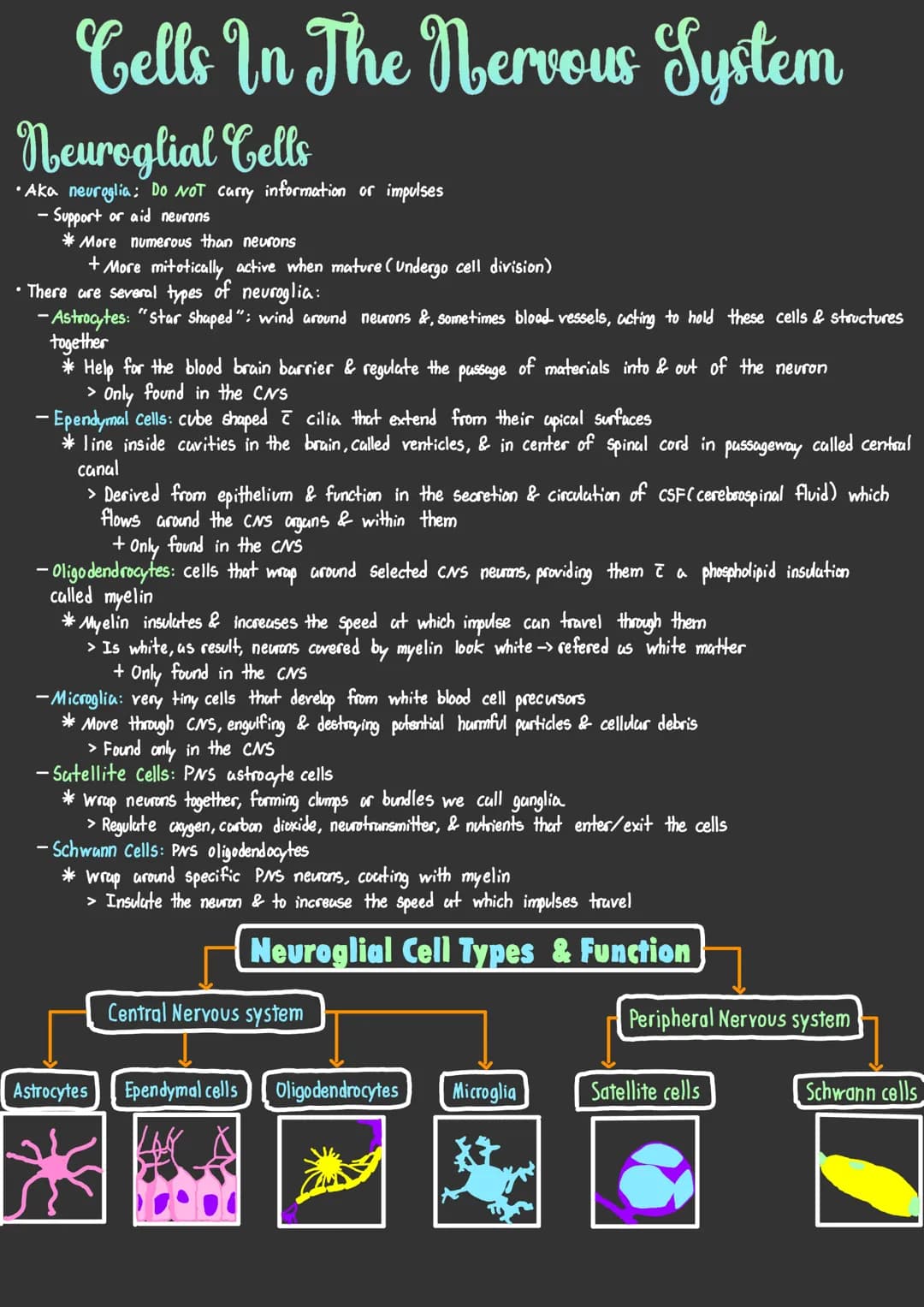
Neurons: Structure and Function
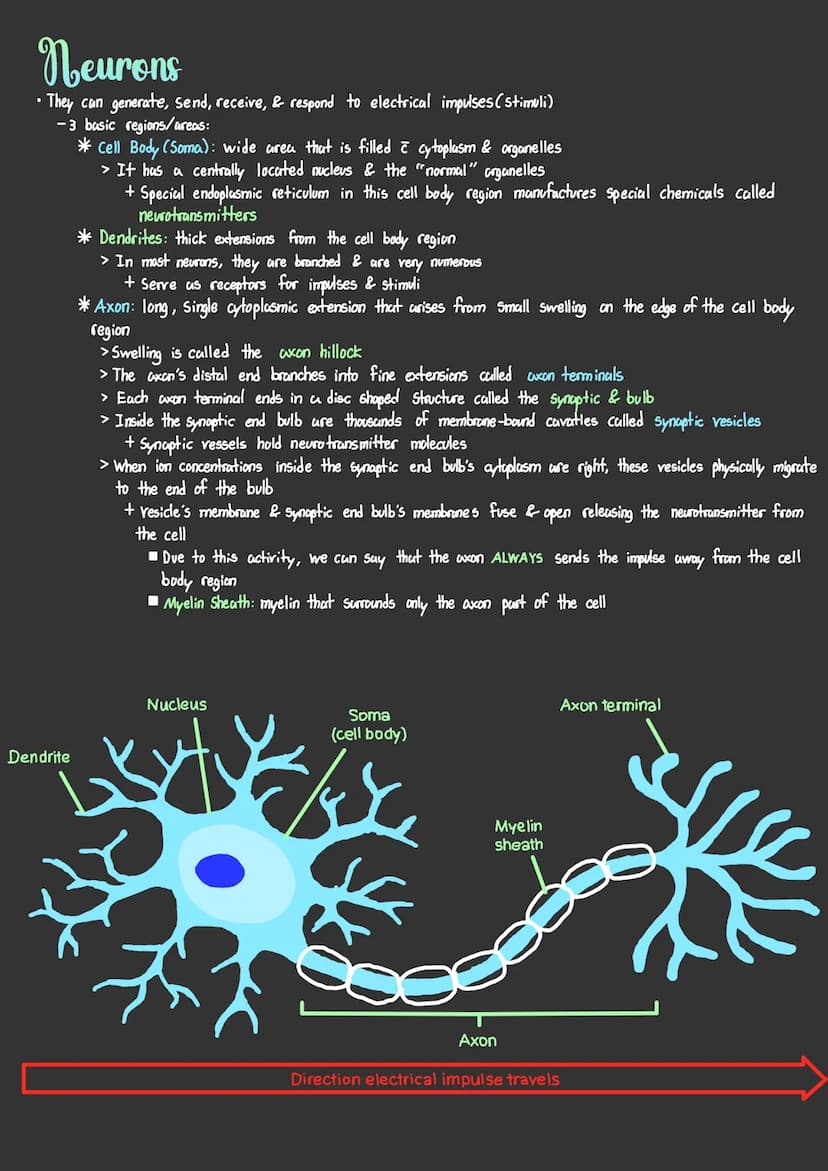
Neurons are the primary functional units of the nervous system, responsible for generating, sending, receiving, and responding to electrical impulses. This page delves into the structure of neurons and their essential components.
Definition: Neurons are specialized cells in the nervous system capable of generating, transmitting, and receiving electrical signals.
The three basic regions of a neuron are:
-
Cell Body (Soma): This is the wide area of the neuron containing the nucleus and various organelles. It houses a special endoplasmic reticulum that manufactures neurotransmitters.
-
Dendrites: These are thick, branched extensions from the cell body that serve as receptors for impulses and stimuli.
-
Axon: A long, single cytoplasmic extension arising from the axon hillock (a small swelling on the edge of the cell body). The axon ends in branched structures called axon terminals, each terminating in a synaptic end bulb.
Highlight: The axon always sends impulses away from the cell body region.
Key features of the axon include:
- Synaptic end bulbs: Disc-shaped structures at the end of axon terminals.
- Synaptic vesicles: Membrane-bound cavities within the synaptic end bulbs that contain neurotransmitter molecules.
- Myelin sheath: A layer of myelin that surrounds only the axon part of some neurons, insulating them and increasing the speed of impulse transmission.
Vocabulary: Neurotransmitters - Chemical messengers that transmit signals across synapses from one neuron to another.
Understanding the structure and function of neurons is crucial for grasping how the nervous system processes and transmits information throughout the body.
2
of 4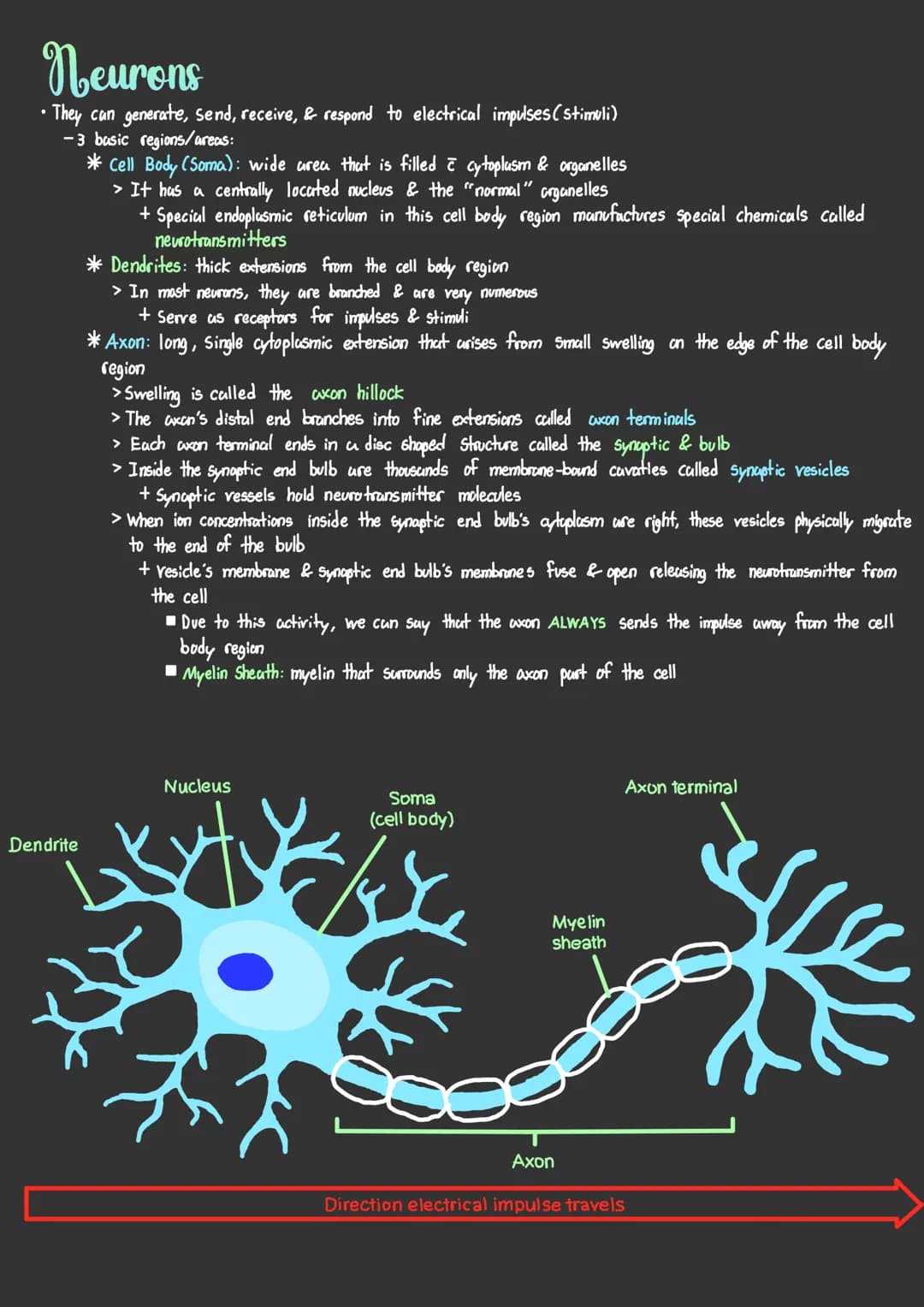
Neuron Classification
Neurons can be classified in various ways based on their shape, function, myelination, and location within the nervous system. This page provides a detailed overview of these classification systems.
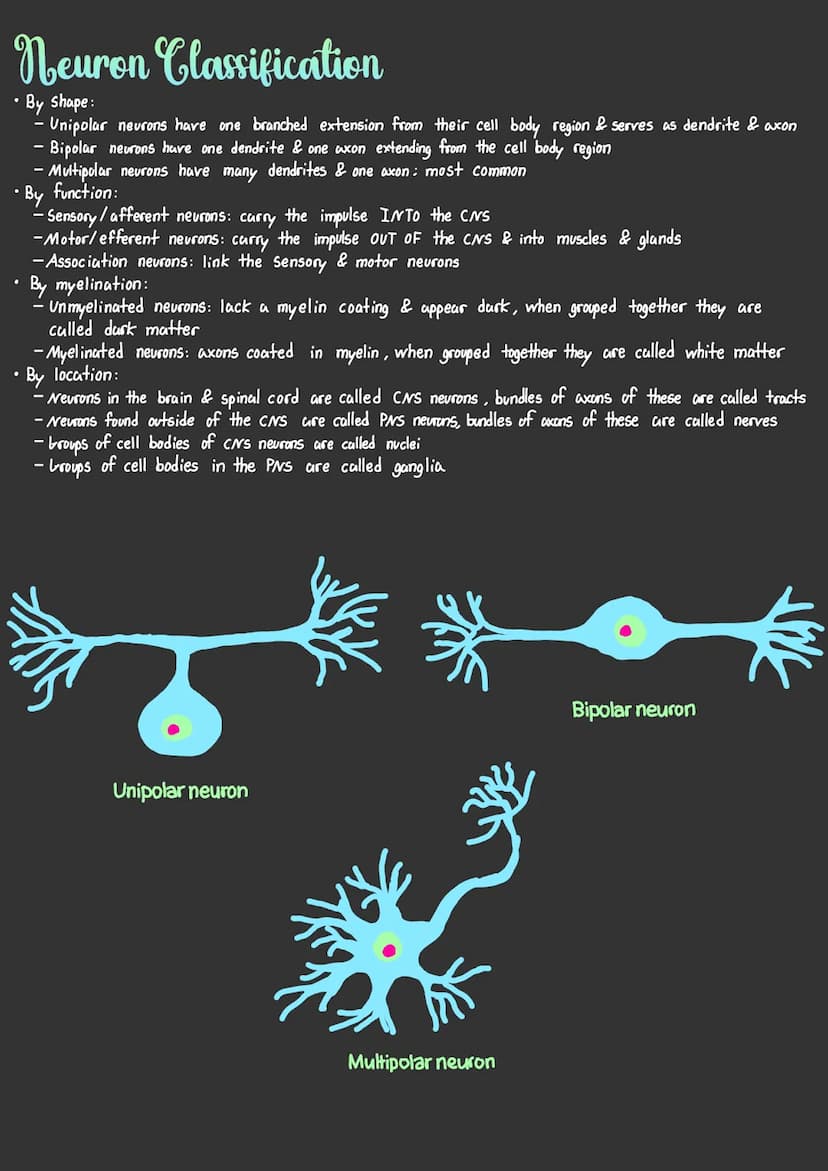
Classification by shape:
-
Unipolar neurons: These have one branched extension from their cell body region that serves as both dendrite and axon.
-
Bipolar neurons: These have one dendrite and one axon extending from the cell body region.
-
Multipolar neurons: These have many dendrites and one axon, and are the most common type.
Example: Motor neurons in the spinal cord are typically multipolar, with numerous dendrites receiving signals from other neurons and a single long axon extending to the target muscle.
Classification by function:
-
Sensory (afferent) neurons: These carry impulses into the central nervous system (CNS).
-
Motor (efferent) neurons: These carry impulses out of the CNS and into muscles and glands.
-
Association neurons: These link sensory and motor neurons within the CNS.
Classification by myelination:
-
Unmyelinated neurons: These lack a myelin coating and appear dark. When grouped together, they form gray matter.
-
Myelinated neurons: These have axons coated in myelin. When grouped together, they form white matter.
Highlight: The presence or absence of myelin affects the speed of impulse transmission, with myelinated neurons conducting signals much faster than unmyelinated ones.
Classification by location:
-
CNS neurons: These are found in the brain and spinal cord. Bundles of their axons are called tracts.
-
PNS neurons: These are found outside the CNS. Bundles of their axons are called nerves.
Vocabulary:
- Nuclei: Groups of cell bodies of CNS neurons.
- Ganglia: Groups of cell bodies in the PNS.
Understanding these classifications is essential for comprehending the diverse types of neurons and their functions within the nervous system.
3
of 4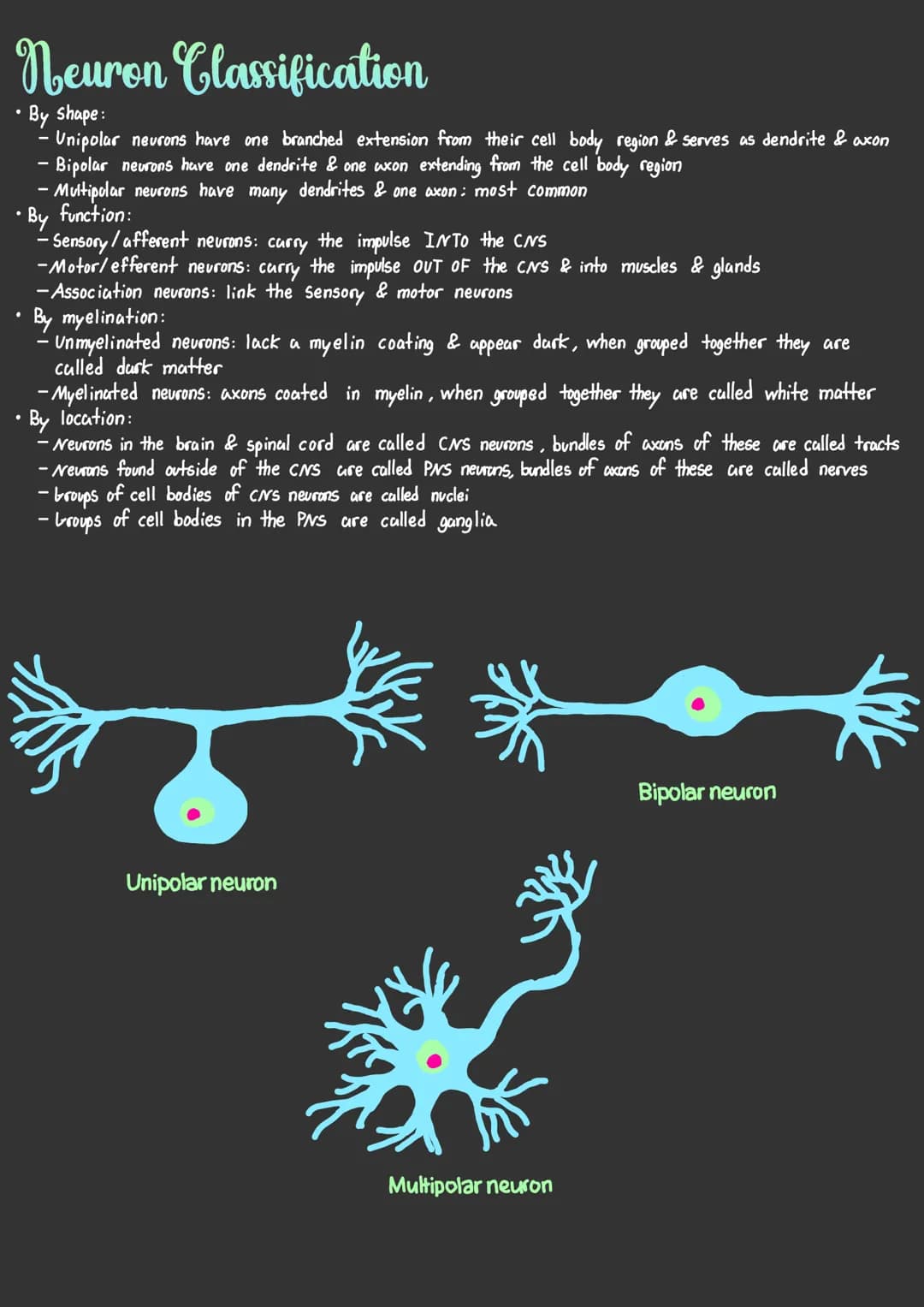
Study Questions and Key Points
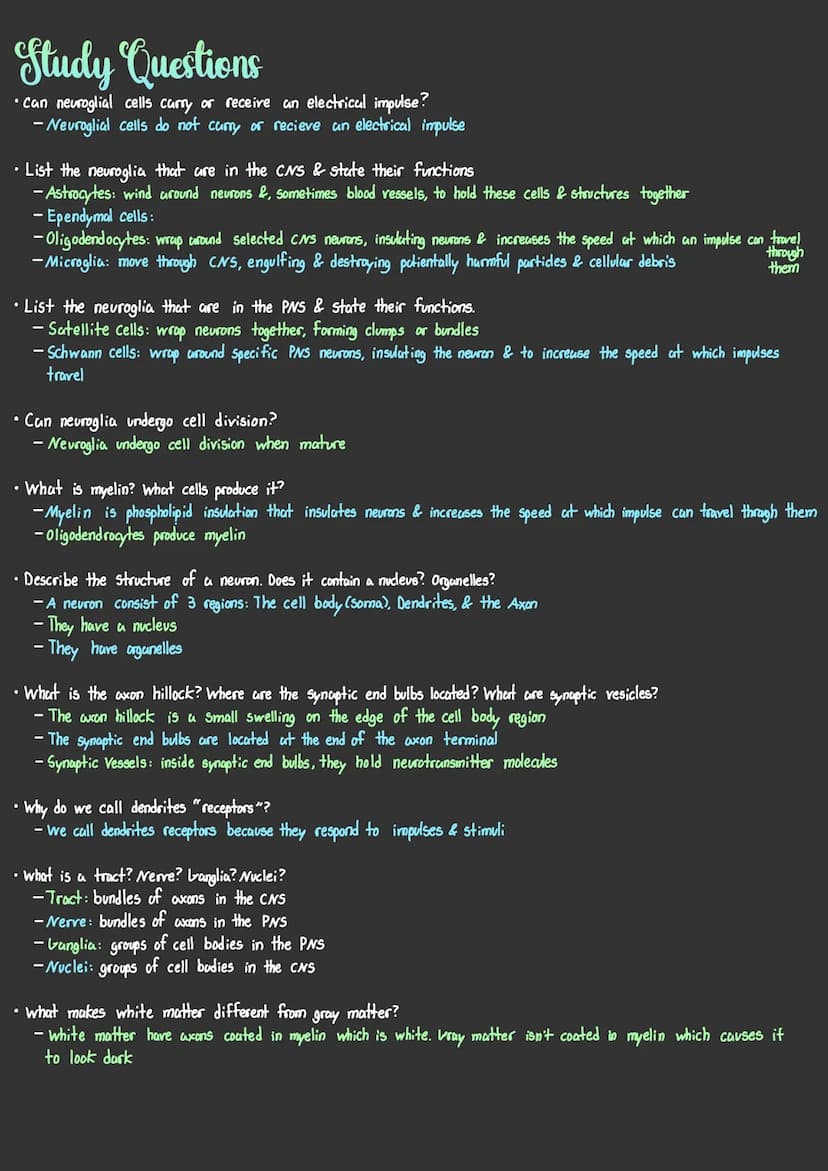
This page provides a review of important concepts related to neuroglial cells and neurons in the nervous system.
Key points to remember:
-
Neuroglial cells do not carry or receive electrical impulses. Their primary function is to support and aid neurons in various ways.
-
The main types of neuroglia in the Central Nervous System (CNS) are:
-
Astrocytes: These wind around neurons and blood vessels, holding cells and structures together. They also contribute to the blood-brain barrier.
-
Ependymal cells: These line the ventricles in the brain and the central canal of the spinal cord, playing a role in cerebrospinal fluid circulation.
-
Oligodendrocytes: These wrap around selected CNS neurons, providing insulation (myelin) and increasing the speed of impulse transmission.
-
Microglia: These move through the CNS, engulfing and destroying potentially harmful particles and cellular debris.
-
Highlight: Each type of neuroglial cell has a specific function that contributes to the overall health and efficiency of the nervous system.
-
In the Peripheral Nervous System (PNS), the main types of neuroglia are:
-
Satellite cells: These wrap around neurons, forming ganglia and regulating the exchange of substances.
-
Schwann cells: These wrap around PNS neurons, providing myelin insulation.
-
-
Neurons are specialized cells that can generate, send, receive, and respond to electrical impulses. They consist of three main parts: the cell body (soma), dendrites, and axon.
-
Neurons can be classified based on their shape (unipolar, bipolar, multipolar), function (sensory, motor, association), myelination (myelinated, unmyelinated), and location (CNS, PNS).
Example: A motor neuron in the spinal cord would be classified as a multipolar, efferent, myelinated, CNS neuron.
Understanding these key points is crucial for grasping the structure and function of the nervous system and the roles played by its various cellular components.
4
of 4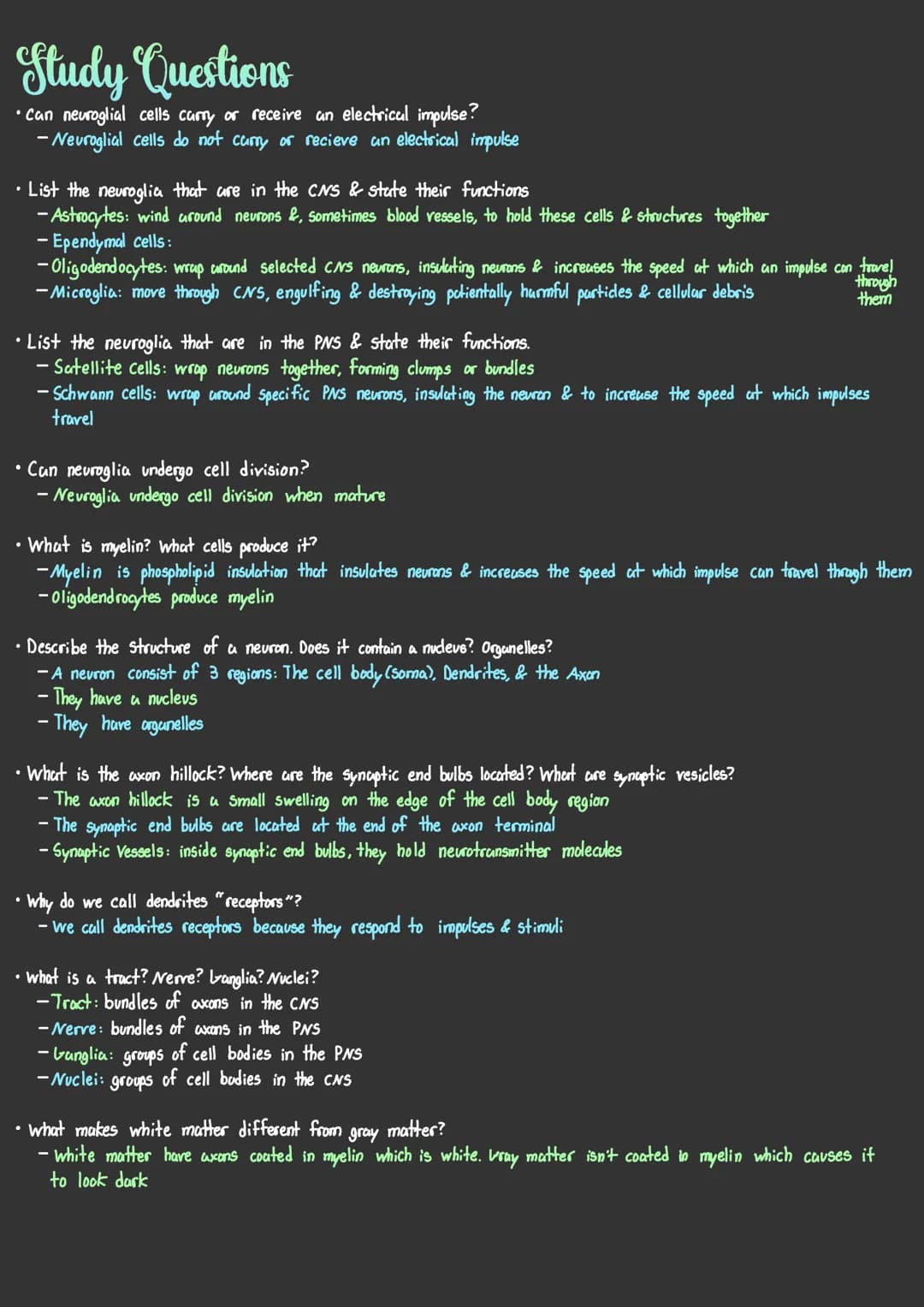
Neuroglial Cells in the Nervous System
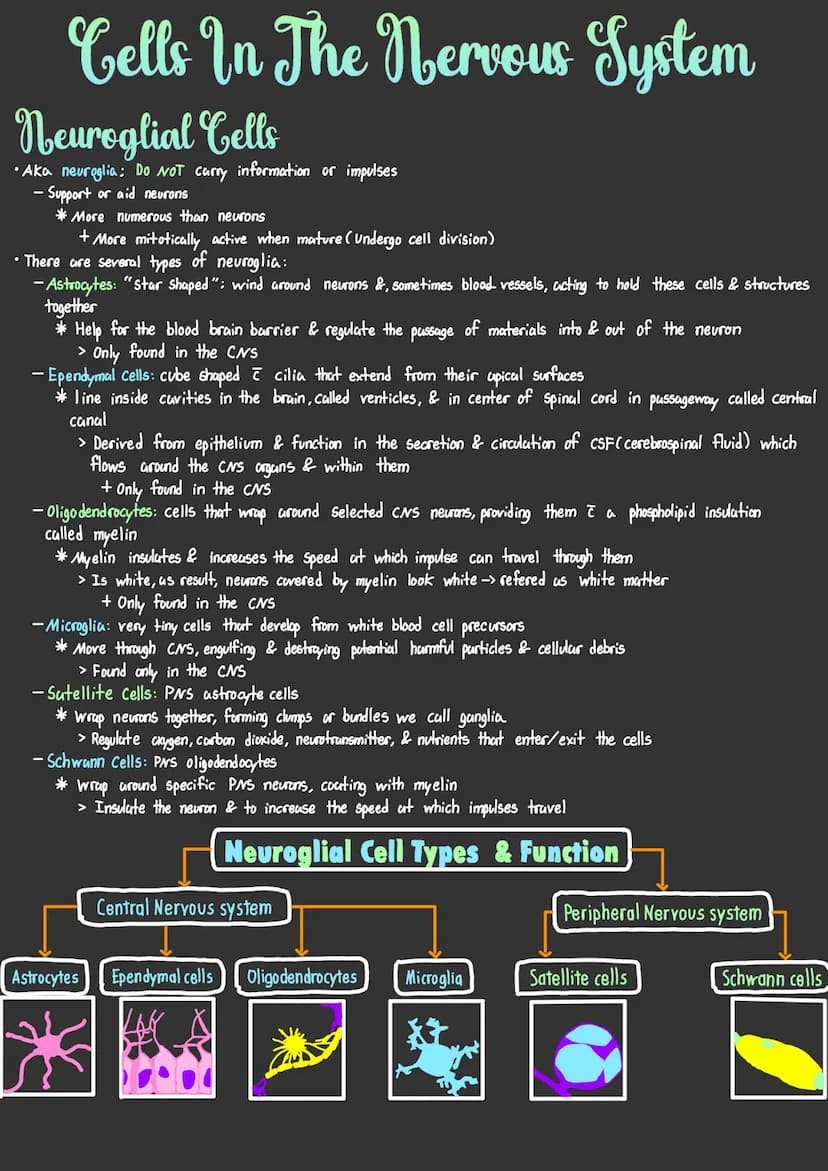
Neuroglial cells, also known as neuroglia, play a crucial supporting role in the nervous system. Unlike neurons, they do not carry information or impulses but are essential for maintaining and aiding neuronal function. This page provides an overview of the various types of neuroglial cells and their specific functions in the central nervous system (CNS) and peripheral nervous system (PNS).
Definition: Neuroglial cells are support cells in the nervous system that do not carry information or impulses but aid neurons in various ways.
The main types of neuroglial cells in the CNS include:
-
Astrocytes: These star-shaped cells wrap around neurons and blood vessels, providing structural support and contributing to the blood-brain barrier.
-
Ependymal cells: Cube-shaped cells with cilia that line the ventricles in the brain and the central canal of the spinal cord.
-
Oligodendrocytes: Cells that wrap around selected CNS neurons, providing them with a myelin sheath.
-
Microglia: Tiny cells that move through the CNS, engulfing and destroying potentially harmful particles and cellular debris.
In the PNS, the main types of neuroglial cells are:
-
Satellite cells: These cells wrap around neurons, forming ganglia and regulating the exchange of substances between neurons and their environment.
-
Schwann cells: Similar to oligodendrocytes in the CNS, these cells wrap around PNS neurons, providing myelin insulation.
Highlight: Neuroglial cells are more numerous than neurons and are more mitotically active when mature, meaning they can undergo cell division.
Vocabulary: Myelin - A white, fatty substance that forms an insulating layer around nerve fibers, increasing the speed at which impulses can travel through neurons.
The presence of myelin gives rise to the terms "white matter" and "gray matter" in the nervous system:
- White matter: Areas where myelinated neurons are concentrated, appearing white due to the myelin.
- Gray matter: Areas where unmyelinated neurons are concentrated, appearing gray or dark.
Understanding the types of neuroglial cells and their functions is crucial for comprehending the complex workings of the nervous system and its various components.
We thought you’d never ask...
What is the Knowunity AI companion?
Our AI companion is specifically built for the needs of students. Based on the millions of content pieces we have on the platform we can provide truly meaningful and relevant answers to students. But its not only about answers, the companion is even more about guiding students through their daily learning challenges, with personalised study plans, quizzes or content pieces in the chat and 100% personalisation based on the students skills and developments.
Where can I download the Knowunity app?
You can download the app in the Google Play Store and in the Apple App Store.
Is Knowunity really free of charge?
That's right! Enjoy free access to study content, connect with fellow students, and get instant help – all at your fingertips.
Similar Content
Most popular content in Health & Medicine
9M
Health & MedicineMedical Terminology Quiz
key concepts in med terminology
11th2000
Health & MedicineNHA module 1 study guide
Nia module I study guide
11th1502
Health & MedicinePharmacology - Descriptions and Terms
Medical Terminology - Learn about descriptions of things related to pharmacology and additional terms about medications.
College1047
Health & MedicineHow to give CPR
How to give CPR
956
Health & MedicineMark Klimek Nclex Review
Comphrensive Nclex Review
College761
 Fun Stuff
Anatomy and Physiology Chapter 1
Chpater 1 : The orientation of the body / College Level Anatomy and Physiology
83038
Health & MedicineChapter 16- Vital Signs (Health Science Foundations)
Notes on vital signs
10th732
Health & MedicineCOVID-19 Informational Slideshow
COVID-19 slideshow about the disease.
1012
Health & Medicinetfn
theoretical foundation in nursing
College1360
Most popular content
9O
 AP US History
Origins and Dynamics of the Columbian Exchange
Analyze the ecological and economic motivations behind the initial transfer of goods, people, and diseases between the Old and New Worlds.
9th3,1280
I
AP US HistoryIntroduction to Early Cultural Interactions
Analyze the initial social and religious encounters between Europeans, Africans, and Indigenous peoples in the colonial Americas.
9th2,7730
O
 AP World History
Origins of Ancient River Civilizations
Analyze the environmental factors and technological innovations that led to the rise of early states in Mesopotamia, Egypt, and the Indus Valley.
9th3,1860
M
AP US HistoryMotivations for European Exploration
Analyze the economic, religious, and political factors that drove European powers to the Americas during the 15th and 16th centuries.
9th1,7780
F
 AP Psychology
Foundations of Ethical Guidelines in Research
Practice the core principles of the APA ethical code including informed consent, debriefing, and the role of Institutional Review Boards.
9th1,3360
I
AP US HistoryIntroduction to Native American Societies
Examine the diverse social, political, and economic structures of North American indigenous groups prior to European contact.
9th1,1100
I
 AP Biology
Introduction to Biological Elements of Life
Practice identifying the essential elements including carbon, nitrogen, phosphorus, and sulfur that compose biological macromolecules.
9th1,7360
I
AP US HistoryIntroduction to the Spanish Encomienda System
Explore the fundamental economic and social structures of the Spanish colonial system, focusing on the encomienda and the casta social hierarchy.
9th8890
O
AP World HistoryOrigins and Continuity of the Byzantine Empire
Analyze the political and cultural transitions from the Roman Empire to the Byzantine Empire, focusing on the reign of Justinian I and his code.
9th1,6320
Can't find what you're looking for? Explore other subjects.
Students love us — and so will you.
4.6/5App Store
4.7/5Google Play
The app is very easy to use and well designed. I have found everything I was looking for so far and have been able to learn a lot from the presentations! I will definitely use the app for a class assignment! And of course it also helps a lot as an inspiration.
Stefan SiOS user
This app is really great. There are so many study notes and help [...]. My problem subject is French, for example, and the app has so many options for help. Thanks to this app, I have improved my French. I would recommend it to anyone.
Samantha KlichAndroid user
Wow, I am really amazed. I just tried the app because I've seen it advertised many times and was absolutely stunned. This app is THE HELP you want for school and above all, it offers so many things, such as workouts and fact sheets, which have been VERY helpful to me personally.
AnnaiOS user
Health & Medicine589 views·Updated May 29, 2026·4 pagesNeuroglial Cells and Neurons: Types, Functions, and Locations for Kids
The nervous system is composed of neurons and neuroglial cells, each playing crucial roles in its function and maintenance. This summary provides detailed information on the types, structures, and functions of these cells.
Neuroglial cells, also known as neuroglia,... Show more
1
of 4Sign up to see the content. It's free!
- Access to all documents
- Improve your grades
- Join milions of students
Neurons: Structure and Function
Neurons are the primary functional units of the nervous system, responsible for generating, sending, receiving, and responding to electrical impulses. This page delves into the structure of neurons and their essential components.
Definition: Neurons are specialized cells in the nervous system capable of generating, transmitting, and receiving electrical signals.
The three basic regions of a neuron are:
-
Cell Body (Soma): This is the wide area of the neuron containing the nucleus and various organelles. It houses a special endoplasmic reticulum that manufactures neurotransmitters.
-
Dendrites: These are thick, branched extensions from the cell body that serve as receptors for impulses and stimuli.
-
Axon: A long, single cytoplasmic extension arising from the axon hillock (a small swelling on the edge of the cell body). The axon ends in branched structures called axon terminals, each terminating in a synaptic end bulb.
Highlight: The axon always sends impulses away from the cell body region.
Key features of the axon include:
- Synaptic end bulbs: Disc-shaped structures at the end of axon terminals.
- Synaptic vesicles: Membrane-bound cavities within the synaptic end bulbs that contain neurotransmitter molecules.
- Myelin sheath: A layer of myelin that surrounds only the axon part of some neurons, insulating them and increasing the speed of impulse transmission.
Vocabulary: Neurotransmitters - Chemical messengers that transmit signals across synapses from one neuron to another.
Understanding the structure and function of neurons is crucial for grasping how the nervous system processes and transmits information throughout the body.
2
of 4Sign up to see the content. It's free!
- Access to all documents
- Improve your grades
- Join milions of students
Neuron Classification
Neurons can be classified in various ways based on their shape, function, myelination, and location within the nervous system. This page provides a detailed overview of these classification systems.
Classification by shape:
-
Unipolar neurons: These have one branched extension from their cell body region that serves as both dendrite and axon.
-
Bipolar neurons: These have one dendrite and one axon extending from the cell body region.
-
Multipolar neurons: These have many dendrites and one axon, and are the most common type.
Example: Motor neurons in the spinal cord are typically multipolar, with numerous dendrites receiving signals from other neurons and a single long axon extending to the target muscle.
Classification by function:
-
Sensory (afferent) neurons: These carry impulses into the central nervous system (CNS).
-
Motor (efferent) neurons: These carry impulses out of the CNS and into muscles and glands.
-
Association neurons: These link sensory and motor neurons within the CNS.
Classification by myelination:
-
Unmyelinated neurons: These lack a myelin coating and appear dark. When grouped together, they form gray matter.
-
Myelinated neurons: These have axons coated in myelin. When grouped together, they form white matter.
Highlight: The presence or absence of myelin affects the speed of impulse transmission, with myelinated neurons conducting signals much faster than unmyelinated ones.
Classification by location:
-
CNS neurons: These are found in the brain and spinal cord. Bundles of their axons are called tracts.
-
PNS neurons: These are found outside the CNS. Bundles of their axons are called nerves.
Vocabulary:
- Nuclei: Groups of cell bodies of CNS neurons.
- Ganglia: Groups of cell bodies in the PNS.
Understanding these classifications is essential for comprehending the diverse types of neurons and their functions within the nervous system.
3
of 4Sign up to see the content. It's free!
- Access to all documents
- Improve your grades
- Join milions of students
Study Questions and Key Points
This page provides a review of important concepts related to neuroglial cells and neurons in the nervous system.
Key points to remember:
-
Neuroglial cells do not carry or receive electrical impulses. Their primary function is to support and aid neurons in various ways.
-
The main types of neuroglia in the Central Nervous System (CNS) are:
-
Astrocytes: These wind around neurons and blood vessels, holding cells and structures together. They also contribute to the blood-brain barrier.
-
Ependymal cells: These line the ventricles in the brain and the central canal of the spinal cord, playing a role in cerebrospinal fluid circulation.
-
Oligodendrocytes: These wrap around selected CNS neurons, providing insulation (myelin) and increasing the speed of impulse transmission.
-
Microglia: These move through the CNS, engulfing and destroying potentially harmful particles and cellular debris.
-
Highlight: Each type of neuroglial cell has a specific function that contributes to the overall health and efficiency of the nervous system.
-
In the Peripheral Nervous System (PNS), the main types of neuroglia are:
-
Satellite cells: These wrap around neurons, forming ganglia and regulating the exchange of substances.
-
Schwann cells: These wrap around PNS neurons, providing myelin insulation.
-
-
Neurons are specialized cells that can generate, send, receive, and respond to electrical impulses. They consist of three main parts: the cell body (soma), dendrites, and axon.
-
Neurons can be classified based on their shape (unipolar, bipolar, multipolar), function (sensory, motor, association), myelination (myelinated, unmyelinated), and location (CNS, PNS).
Example: A motor neuron in the spinal cord would be classified as a multipolar, efferent, myelinated, CNS neuron.
Understanding these key points is crucial for grasping the structure and function of the nervous system and the roles played by its various cellular components.
4
of 4Sign up to see the content. It's free!
- Access to all documents
- Improve your grades
- Join milions of students
Neuroglial Cells in the Nervous System
Neuroglial cells, also known as neuroglia, play a crucial supporting role in the nervous system. Unlike neurons, they do not carry information or impulses but are essential for maintaining and aiding neuronal function. This page provides an overview of the various types of neuroglial cells and their specific functions in the central nervous system (CNS) and peripheral nervous system (PNS).
Definition: Neuroglial cells are support cells in the nervous system that do not carry information or impulses but aid neurons in various ways.
The main types of neuroglial cells in the CNS include:
-
Astrocytes: These star-shaped cells wrap around neurons and blood vessels, providing structural support and contributing to the blood-brain barrier.
-
Ependymal cells: Cube-shaped cells with cilia that line the ventricles in the brain and the central canal of the spinal cord.
-
Oligodendrocytes: Cells that wrap around selected CNS neurons, providing them with a myelin sheath.
-
Microglia: Tiny cells that move through the CNS, engulfing and destroying potentially harmful particles and cellular debris.
In the PNS, the main types of neuroglial cells are:
-
Satellite cells: These cells wrap around neurons, forming ganglia and regulating the exchange of substances between neurons and their environment.
-
Schwann cells: Similar to oligodendrocytes in the CNS, these cells wrap around PNS neurons, providing myelin insulation.
Highlight: Neuroglial cells are more numerous than neurons and are more mitotically active when mature, meaning they can undergo cell division.
Vocabulary: Myelin - A white, fatty substance that forms an insulating layer around nerve fibers, increasing the speed at which impulses can travel through neurons.
The presence of myelin gives rise to the terms "white matter" and "gray matter" in the nervous system:
- White matter: Areas where myelinated neurons are concentrated, appearing white due to the myelin.
- Gray matter: Areas where unmyelinated neurons are concentrated, appearing gray or dark.
Understanding the types of neuroglial cells and their functions is crucial for comprehending the complex workings of the nervous system and its various components.
We thought you’d never ask...
What is the Knowunity AI companion?
Our AI companion is specifically built for the needs of students. Based on the millions of content pieces we have on the platform we can provide truly meaningful and relevant answers to students. But its not only about answers, the companion is even more about guiding students through their daily learning challenges, with personalised study plans, quizzes or content pieces in the chat and 100% personalisation based on the students skills and developments.
Where can I download the Knowunity app?
You can download the app in the Google Play Store and in the Apple App Store.
Is Knowunity really free of charge?
That's right! Enjoy free access to study content, connect with fellow students, and get instant help – all at your fingertips.
Similar Content
Most popular content in Health & Medicine
9M
Health & MedicineMedical Terminology Quiz
key concepts in med terminology
11th2000
Health & MedicineNHA module 1 study guide
Nia module I study guide
11th1502
Health & MedicinePharmacology - Descriptions and Terms
Medical Terminology - Learn about descriptions of things related to pharmacology and additional terms about medications.
College1047
Health & MedicineHow to give CPR
How to give CPR
956
Health & MedicineMark Klimek Nclex Review
Comphrensive Nclex Review
College761
Fun StuffAnatomy and Physiology Chapter 1
Chpater 1 : The orientation of the body / College Level Anatomy and Physiology
83038
Health & MedicineChapter 16- Vital Signs (Health Science Foundations)
Notes on vital signs
10th732
Health & MedicineCOVID-19 Informational Slideshow
COVID-19 slideshow about the disease.
1012
Health & Medicinetfn
theoretical foundation in nursing
College1360
Most popular content
9O
AP US HistoryOrigins and Dynamics of the Columbian Exchange
Analyze the ecological and economic motivations behind the initial transfer of goods, people, and diseases between the Old and New Worlds.
9th3,1280
I
AP US HistoryIntroduction to Early Cultural Interactions
Analyze the initial social and religious encounters between Europeans, Africans, and Indigenous peoples in the colonial Americas.
9th2,7730
O
AP World HistoryOrigins of Ancient River Civilizations
Analyze the environmental factors and technological innovations that led to the rise of early states in Mesopotamia, Egypt, and the Indus Valley.
9th3,1860
M
AP US HistoryMotivations for European Exploration
Analyze the economic, religious, and political factors that drove European powers to the Americas during the 15th and 16th centuries.
9th1,7780
F
AP PsychologyFoundations of Ethical Guidelines in Research
Practice the core principles of the APA ethical code including informed consent, debriefing, and the role of Institutional Review Boards.
9th1,3360
I
AP US HistoryIntroduction to Native American Societies
Examine the diverse social, political, and economic structures of North American indigenous groups prior to European contact.
9th1,1100
I
AP BiologyIntroduction to Biological Elements of Life
Practice identifying the essential elements including carbon, nitrogen, phosphorus, and sulfur that compose biological macromolecules.
9th1,7360
I
AP US HistoryIntroduction to the Spanish Encomienda System
Explore the fundamental economic and social structures of the Spanish colonial system, focusing on the encomienda and the casta social hierarchy.
9th8890
O
AP World HistoryOrigins and Continuity of the Byzantine Empire
Analyze the political and cultural transitions from the Roman Empire to the Byzantine Empire, focusing on the reign of Justinian I and his code.
9th1,6320
Can't find what you're looking for? Explore other subjects.
Students love us — and so will you.
4.6/5App Store
4.7/5Google Play
The app is very easy to use and well designed. I have found everything I was looking for so far and have been able to learn a lot from the presentations! I will definitely use the app for a class assignment! And of course it also helps a lot as an inspiration.
Stefan SiOS user
This app is really great. There are so many study notes and help [...]. My problem subject is French, for example, and the app has so many options for help. Thanks to this app, I have improved my French. I would recommend it to anyone.
Samantha KlichAndroid user
Wow, I am really amazed. I just tried the app because I've seen it advertised many times and was absolutely stunned. This app is THE HELP you want for school and above all, it offers so many things, such as workouts and fact sheets, which have been VERY helpful to me personally.
AnnaiOS user