
Anatomy and Physiology are the foundation for understanding how our... Show more
 Algebra
Sign up to see the contentIt's free!
Access to all documents
Improve your grades
Join milions of students
Knowunity AI
Subjects
Triangle Congruence and Similarity Theorems
Triangle Properties and Classification
Linear Equations and Graphs
Geometric Angle Relationships
Trigonometric Functions and Identities
Equation Solving Techniques
Circle Geometry Fundamentals
Division Operations and Methods
Basic Differentiation Rules
Exponent and Logarithm Properties
Show all topics
Human Organ Systems
Reproductive Cell Cycles
Biological Sciences Subdisciplines
Cellular Energy Metabolism
Autotrophic Energy Processes
Inheritance Patterns and Principles
Biomolecular Structure and Organization
Cell Cycle and Division Mechanics
Cellular Organization and Development
Biological Structural Organization
Show all topics
Chemical Sciences and Applications
Atomic Structure and Composition
Molecular Electron Structure Representation
Atomic Electron Behavior
Matter Properties and Water
Mole Concept and Calculations
Gas Laws and Behavior
Periodic Table Organization
Chemical Thermodynamics Fundamentals
Chemical Bond Types and Properties
Show all topics
European Renaissance and Enlightenment
European Cultural Movements 800-1920
American Revolution Era 1763-1797
American Civil War 1861-1865
Global Imperial Systems
Mongol and Chinese Dynasties
U.S. Presidents and World Leaders
Historical Sources and Documentation
World Wars Era and Impact
World Religious Systems
Show all topics
Classic and Contemporary Novels
Literary Character Analysis
Rhetorical Theory and Practice
Classic Literary Narratives
Reading Analysis and Interpretation
Narrative Structure and Techniques
English Language Components
Influential English-Language Authors
Basic Sentence Structure
Narrative Voice and Perspective
Show all topics
128
•
Feb 13, 2026
•
Makayla Lazorchak
@akaylaazorchak_zrwcv
Anatomy and Physiology are the foundation for understanding how our... Show more
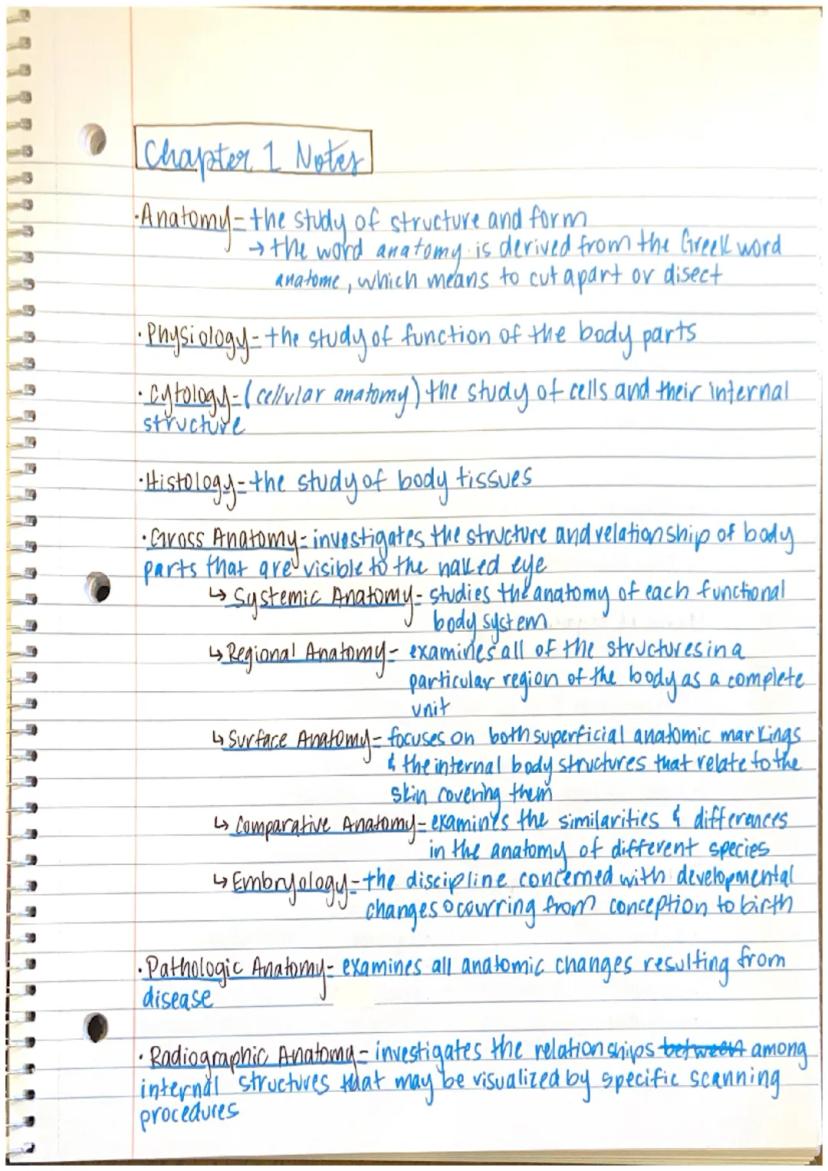
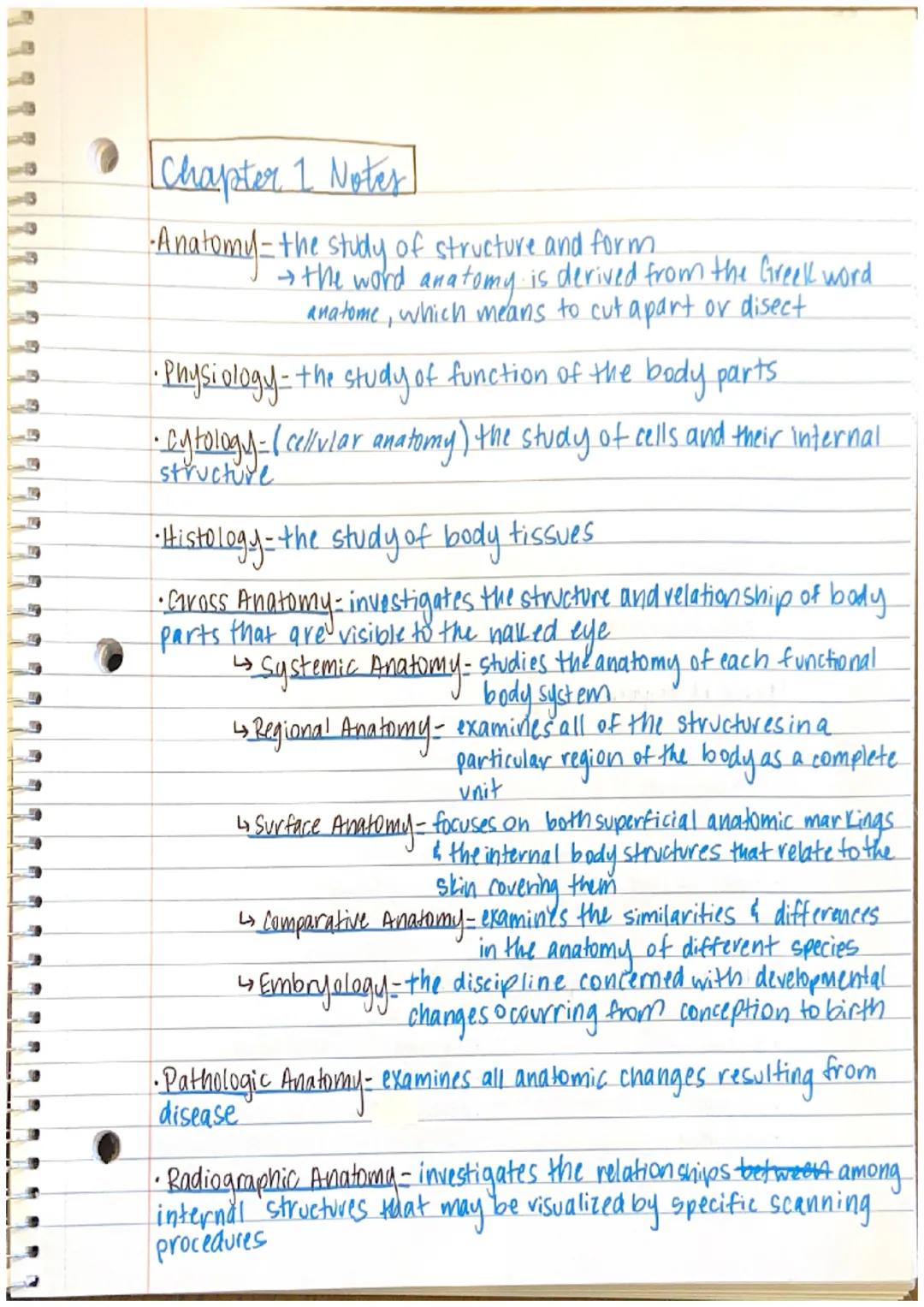
Anatomy is the study of structure and form in the body, coming from the Greek word "anatome" which literally means "to cut apart or dissect." When paired with physiology (the study of body part functions), these disciplines give us a complete picture of how our bodies work.
Anatomy branches into several specialized fields. Cytology examines cells and their internal structures, while histology focuses on body tissues. Gross anatomy looks at structures visible to the naked eye and can be approached in different ways: studying body systems (systemic anatomy), examining specific regions (regional anatomy), or looking at surface features (surface anatomy).
Other important branches include comparative anatomy (examining similarities between species), embryology (development from conception to birth), and pathologic anatomy (studying changes caused by disease). Radiographic anatomy uses various scanning technologies to visualize internal structures non-invasively.
Quick Tip: Think of anatomy as the "what" (structure) and physiology as the "how" (function). You need both to truly understand the human body!
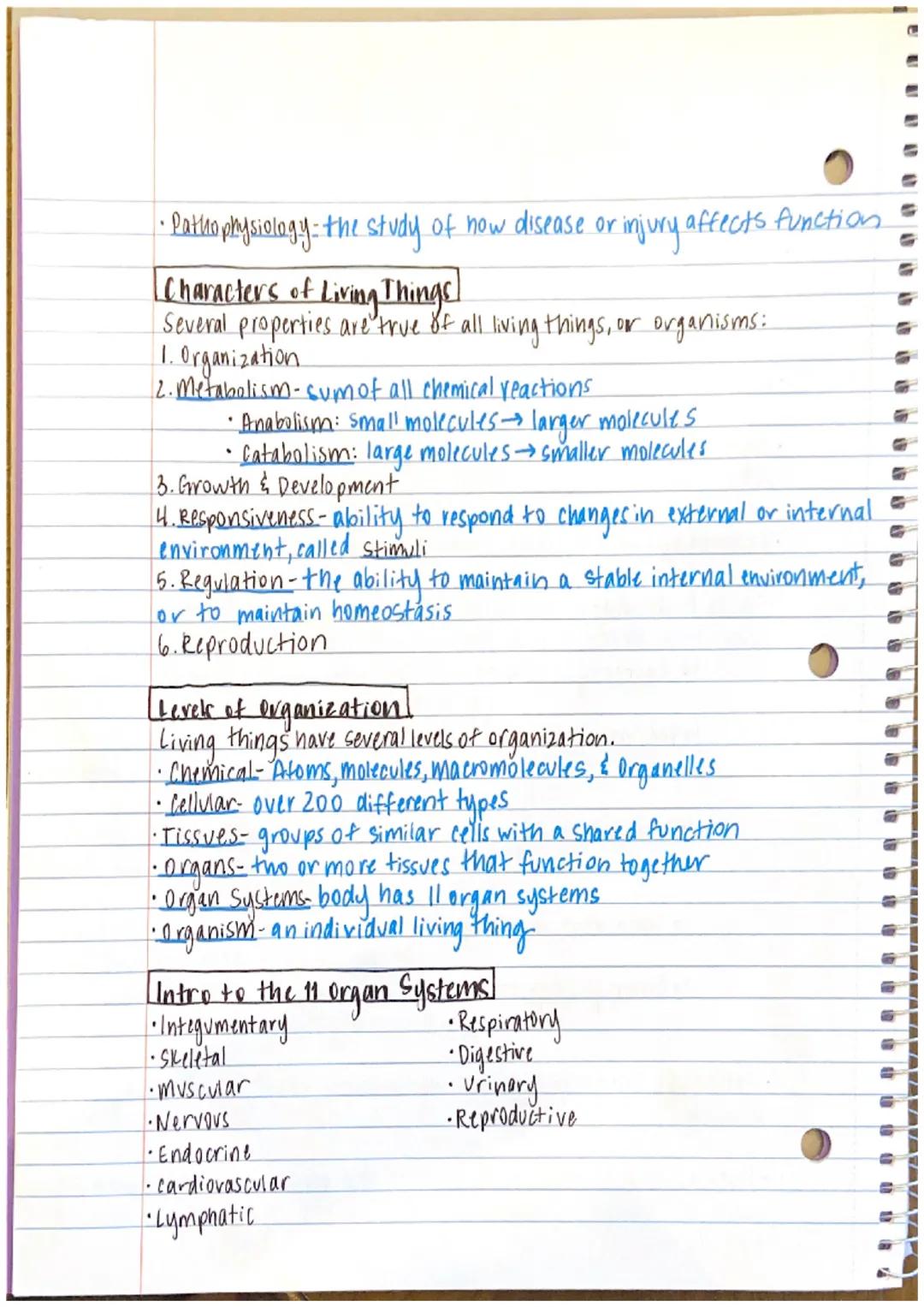
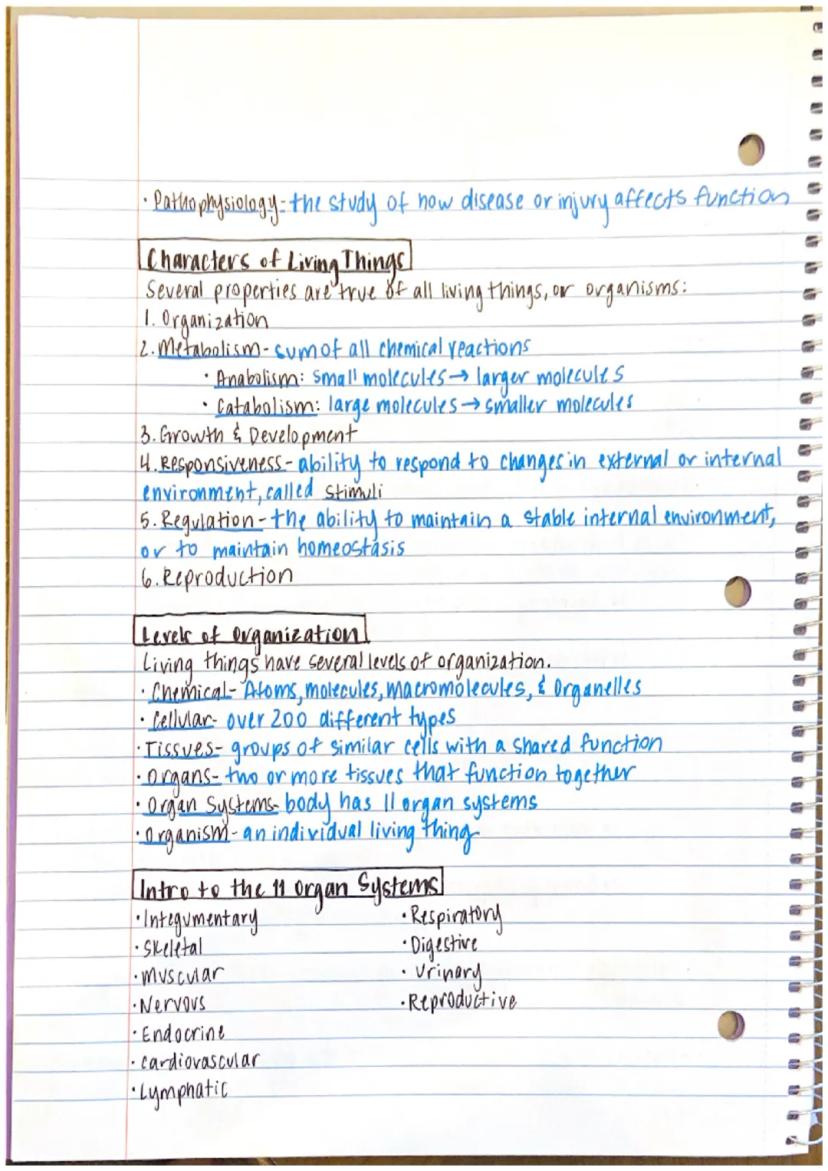
All living organisms share several key characteristics. They demonstrate organization, engage in metabolism (the sum of all chemical reactions, including building up molecules through anabolism and breaking them down through catabolism), undergo growth and development, and show responsiveness to stimuli. They also maintain homeostasis through regulation and can reproduce.
The human body is organized in increasing levels of complexity. Starting with the chemical level (atoms and molecules), we move up to cells (over 200 types), tissues (groups of similar cells), organs (multiple tissues working together), and organ systems. These 11 systems—integumentary, skeletal, muscular, nervous, endocrine, cardiovascular, lymphatic, respiratory, digestive, urinary, and reproductive—function together to create a complete organism.
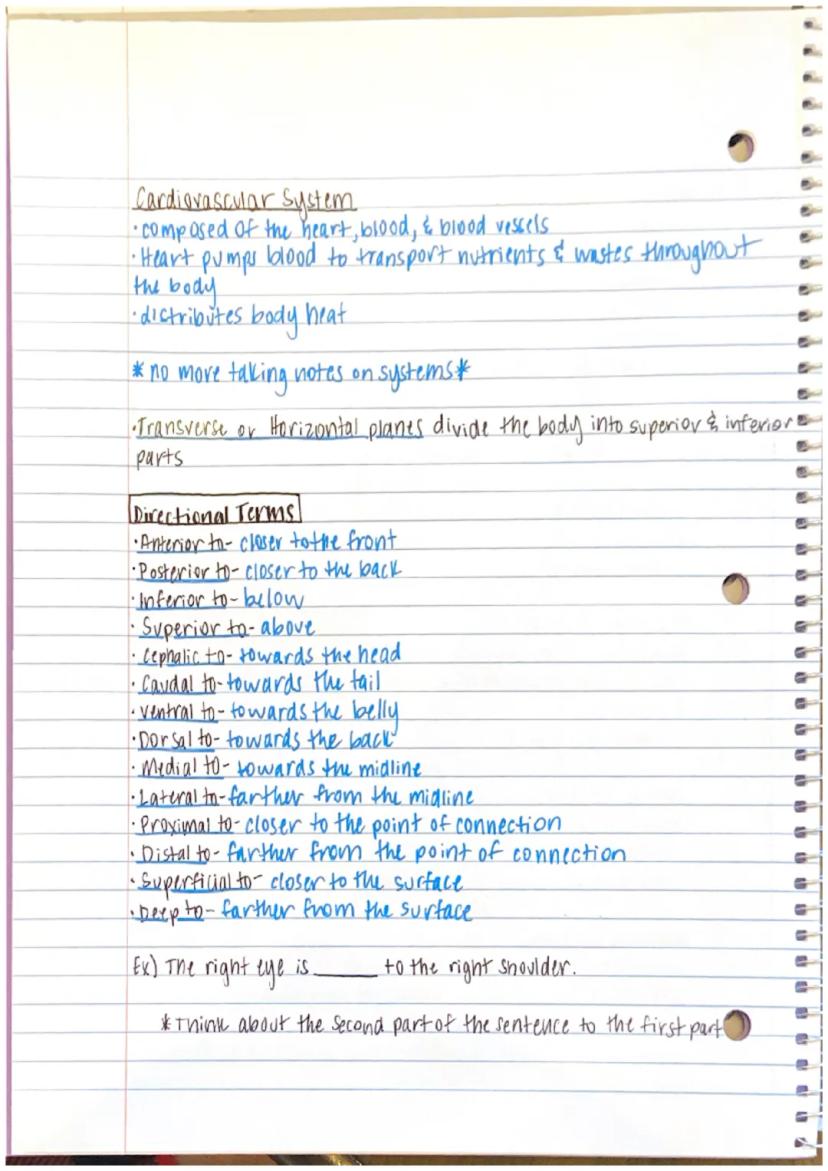
When studying the body, we use planes to divide it into sections. Transverse planes (also called horizontal planes) divide the body into superior (upper) and inferior (lower) parts, helping us visualize internal structures.
Remember This: The 11 organ systems don't work in isolation—they constantly communicate and coordinate with each other to maintain life!
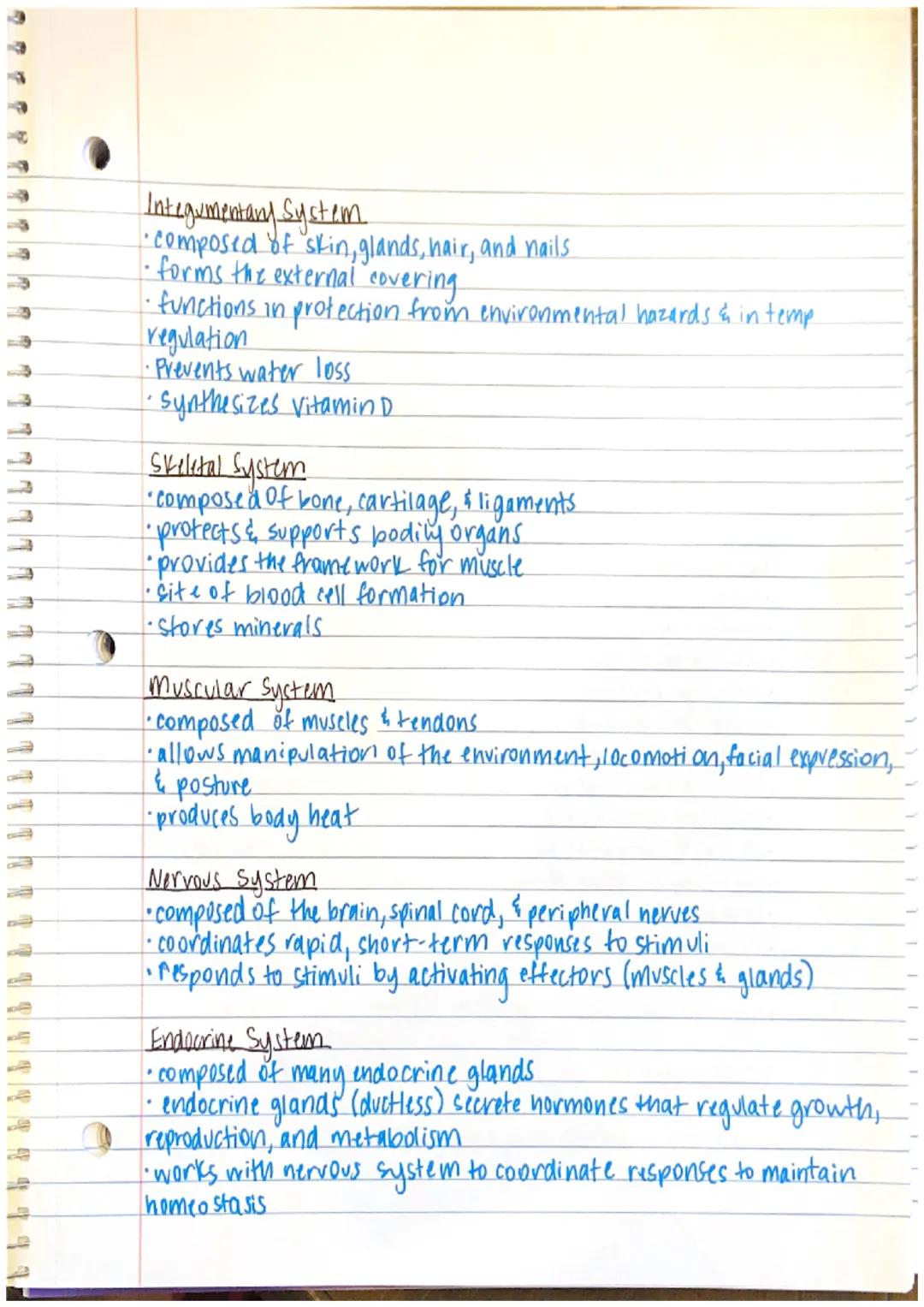
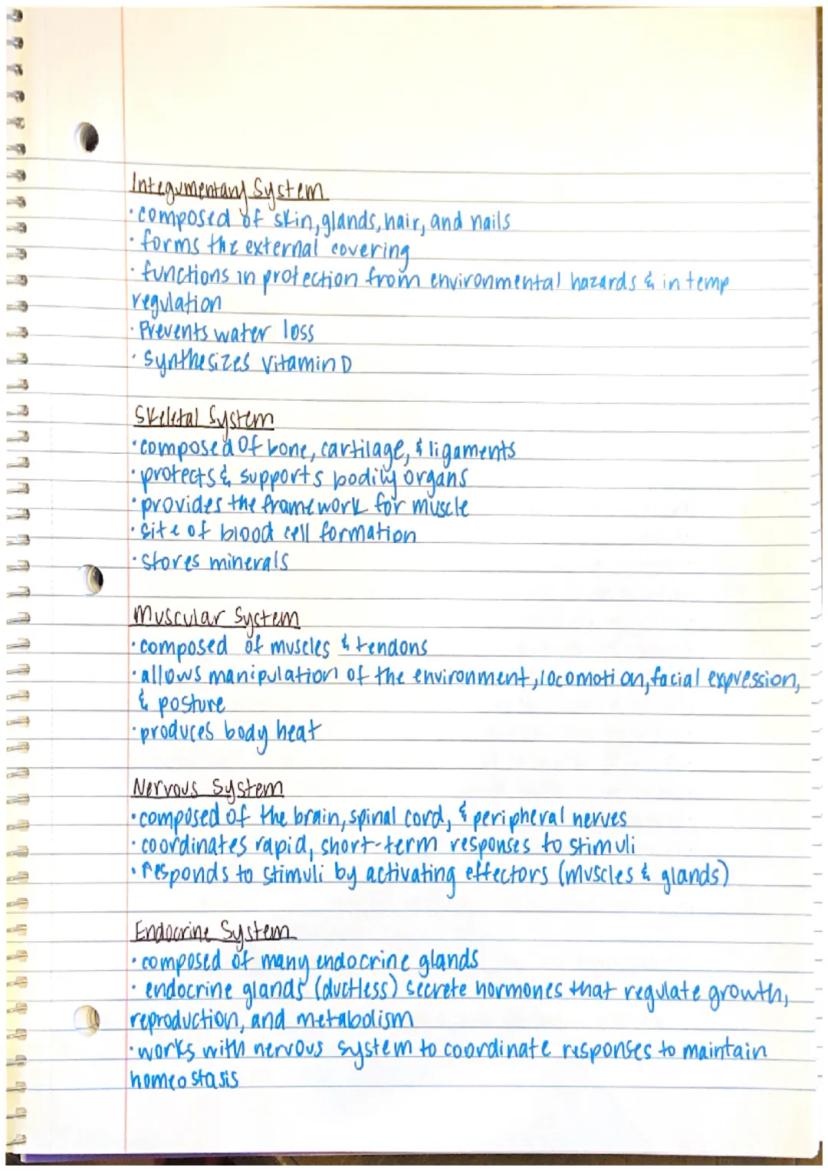
The integumentary system includes your skin, glands, hair, and nails. It's not just a covering—it protects you from environmental hazards, regulates temperature, prevents water loss, and even synthesizes vitamin D. This system is literally your first line of defense!
Your skeletal system consists of bones, cartilage, and ligaments. Beyond providing structural support and protection for organs, it serves as the framework for muscles to attach to, produces blood cells in bone marrow, and stores essential minerals.
The muscular system (muscles and tendons) does more than enable movement. It allows you to manipulate objects, walk around, create facial expressions, and maintain posture. An often overlooked function is that muscles generate much of your body heat.
Your nervous system (brain, spinal cord, and nerves) coordinates rapid, short-term responses to stimuli. It activates muscles and glands to create appropriate responses to both internal and external changes.
The endocrine system works through ductless glands that secrete hormones to regulate growth, reproduction, and metabolism. It collaborates with the nervous system to maintain homeostasis, but typically works more slowly and with longer-lasting effects.
Connection Point: Notice how these systems complement each other—your nervous system controls quick responses while your endocrine system handles longer-term regulation!
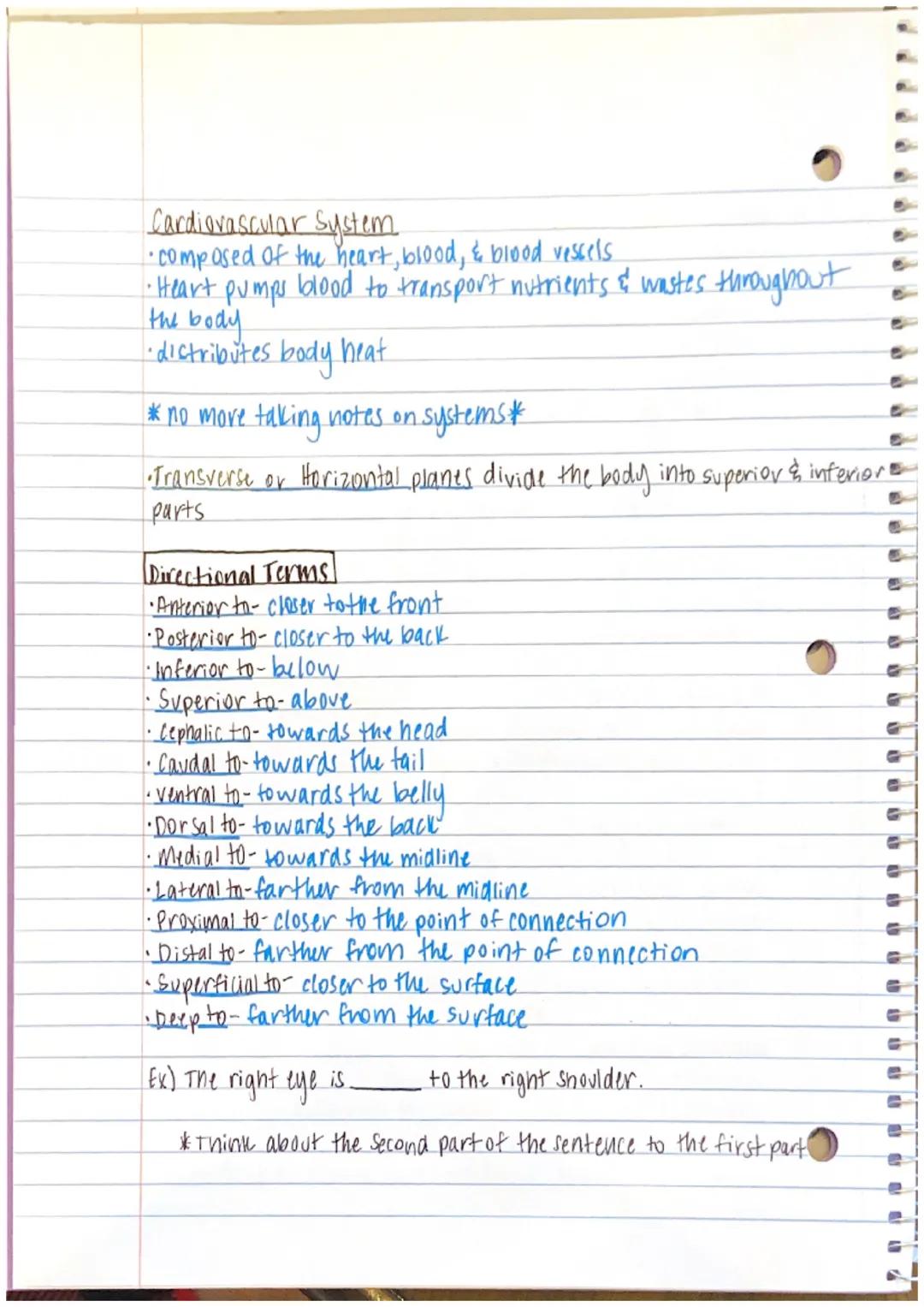
The cardiovascular system (heart, blood, and blood vessels) pumps blood throughout your body, transporting nutrients, oxygen, and wastes while distributing body heat. This incredible pump-and-pipe system works 24/7 without rest!
To describe locations in the body precisely, anatomists use standardized directional terms. Anterior means toward the front, while posterior refers to the back. Superior indicates above, and inferior means below. Medial points toward the midline of the body, while lateral directs away from it.
Additional directional terms include proximal (closer to the point of attachment) and distal (farther from attachment), which are especially useful when describing limbs. Superficial structures are closer to the skin surface, while deep structures lie farther from it.
When using these terms, always think about the relationship between two structures. For example, in "The right eye is superior to the right shoulder," you're describing where the eye is located in relation to the shoulder.
Pro Tip: When learning directional terms, use your own body as a reference. Point to different body parts and practice describing their relationships using these terms!
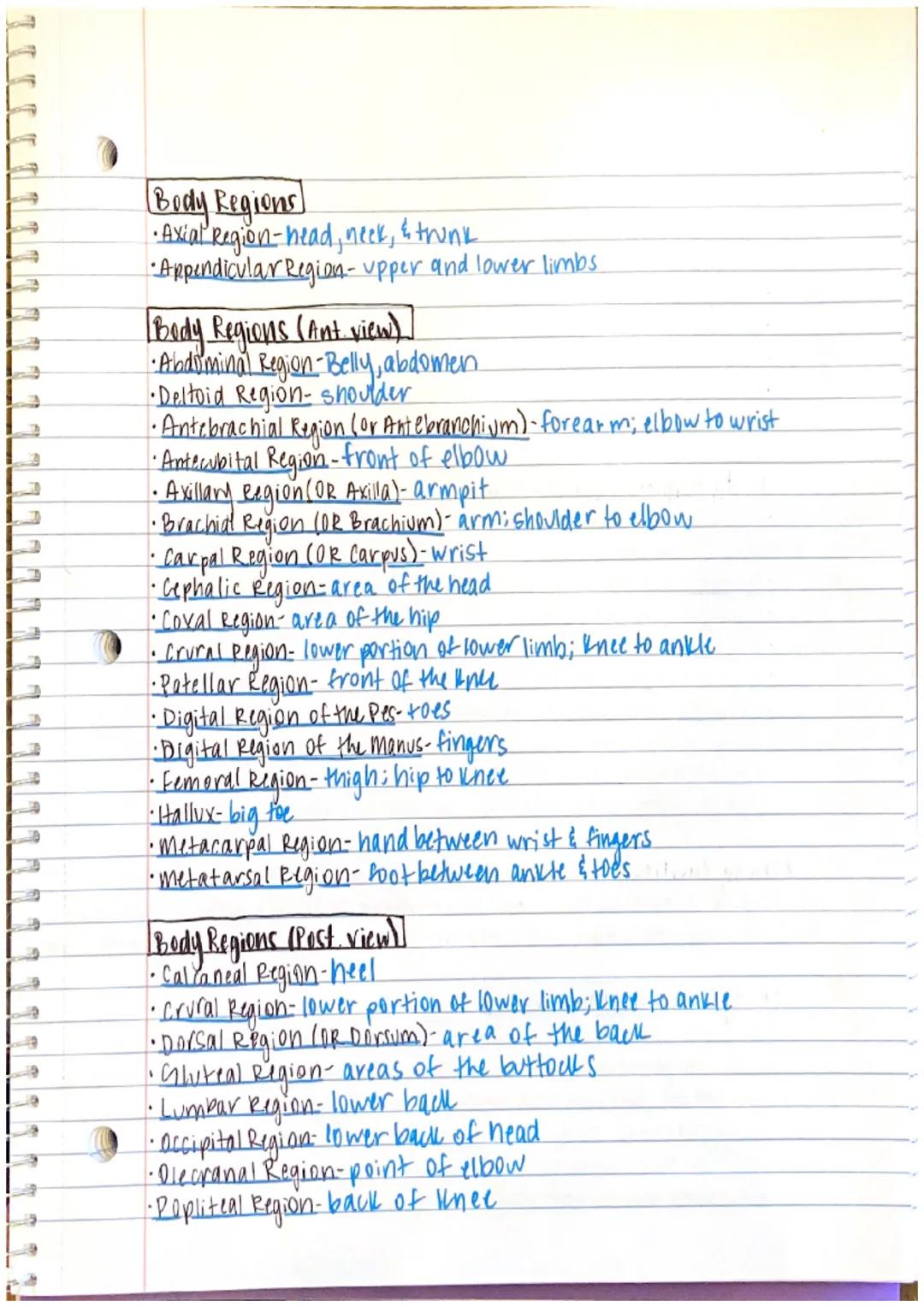
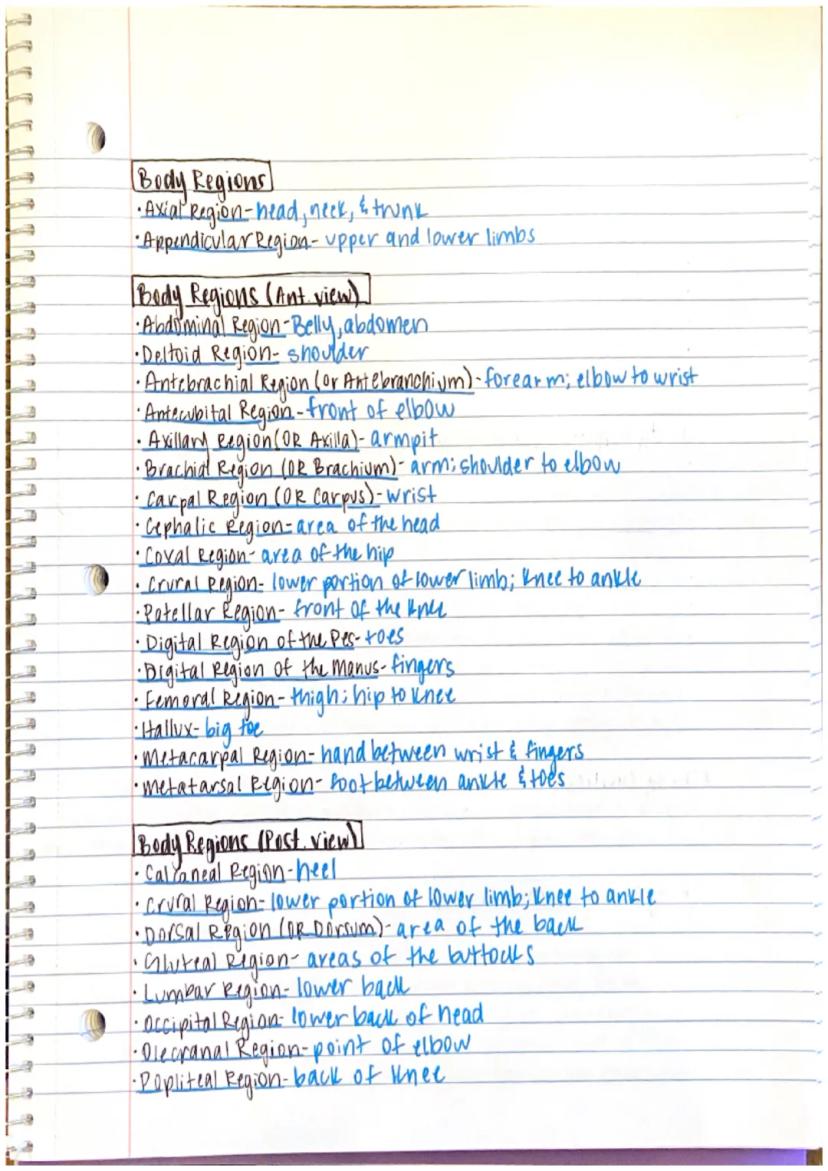
The human body is divided into two main regions: the axial region (head, neck, and trunk) and the appendicular region (upper and lower limbs). These divisions help us precisely locate and name body structures.
From the anterior (front) view, we can identify several specific regions. The abdominal region refers to the belly area, while the deltoid region indicates the shoulder. The arm is divided into the brachial region (shoulder to elbow) and the antebrachial region (forearm from elbow to wrist). The antecubital region specifically refers to the front of the elbow.
Hand regions include the carpal region (wrist), the metacarpal region (hand between wrist and fingers), and the digital region (fingers). In the lower limb, the femoral region is the thigh from hip to knee, the patellar region is the front of the knee, and the crural region is the lower leg from knee to ankle.
Other notable anterior regions include the cephalic region (head), axillary region (armpit), and coxal region (hip area). For the foot, we have the metatarsal region (between ankle and toes) and the digital region of the pes (toes), with the big toe specifically called the hallux.
Visual Tip: Try labeling a diagram of the human body with these region names to help memorize them. Creating a mental map will make learning anatomy much easier!
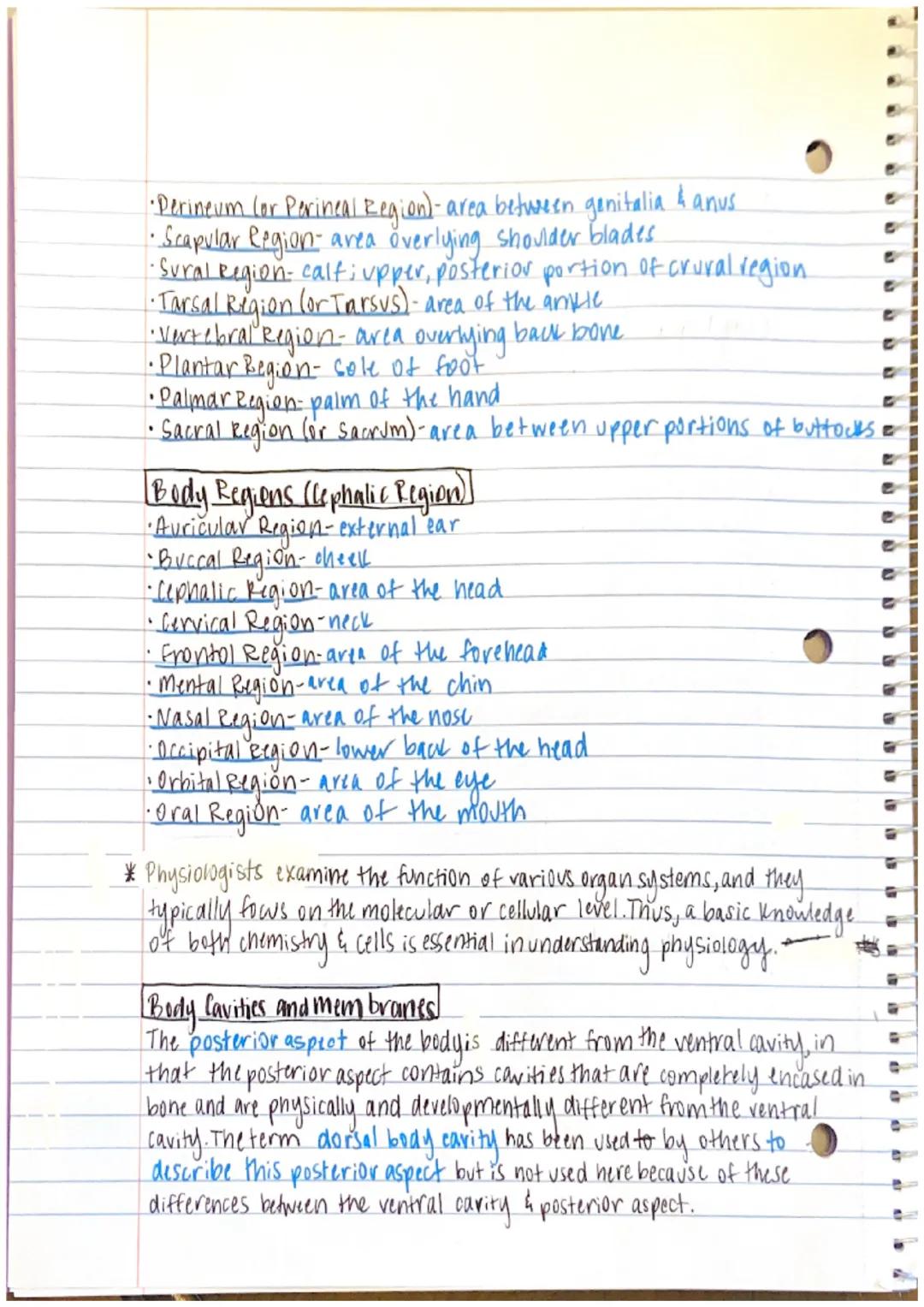
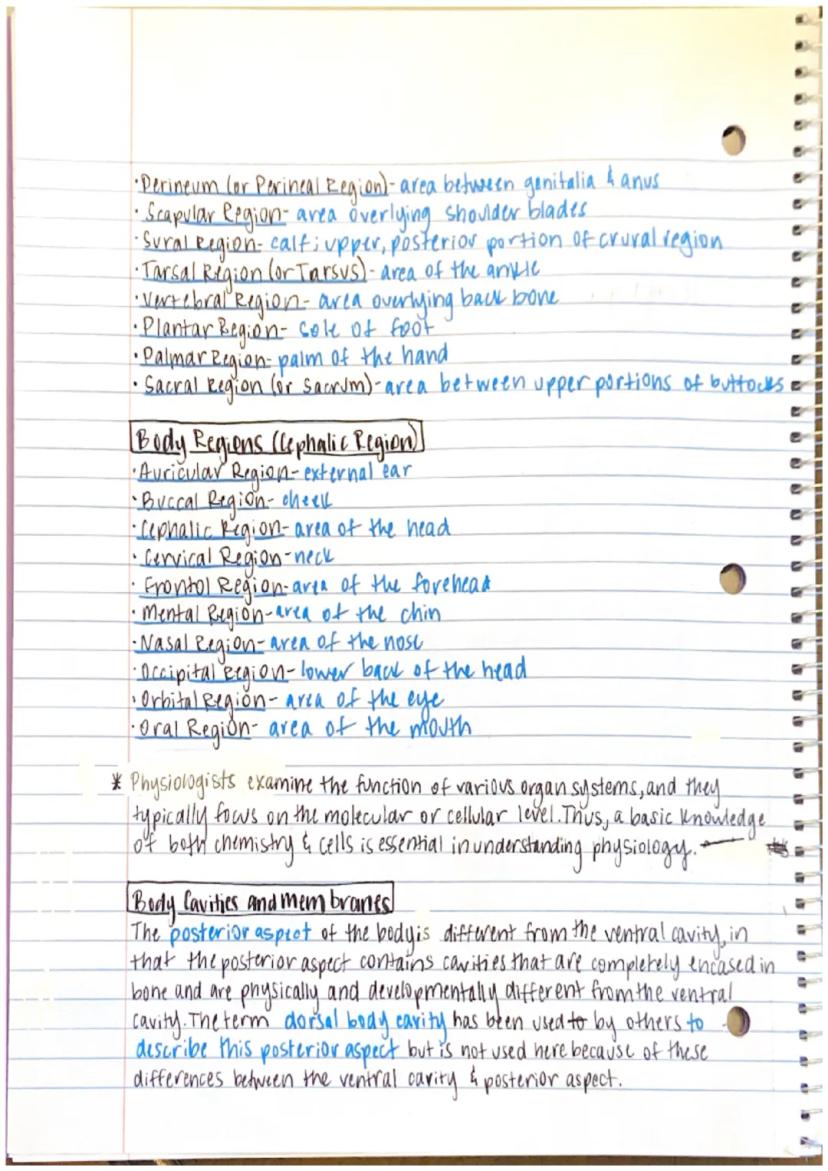
Looking at the posterior (back) view of the body reveals additional important regions. The dorsal region refers to the entire back area, with the lumbar region specifically indicating the lower back. The gluteal region refers to the buttocks, while the sacral region is the area between the upper portions of the buttocks.
The posterior leg includes the popliteal region (back of the knee), the sural region (calf), and the calcaneal region (heel). The olecranal region refers to the point of the elbow, and the scapular region is the area over the shoulder blades. The vertebral region runs along the backbone.
Focusing on the cephalic (head) region, we can identify several specific areas: the frontal region (forehead), orbital region (eyes), nasal region (nose), oral region (mouth), buccal region (cheeks), mental region (chin), and auricular region (external ear). The occipital region refers to the lower back of the head, while the cervical region is the neck.
Other noteworthy regions include the plantar region (sole of the foot), the palmar region (palm of the hand), and the perineum (area between genitalia and anus).
Clinical Connection: Healthcare professionals use these specific region names to precisely document injuries and communicate about patient conditions. Learning them now will prepare you for potential health careers!
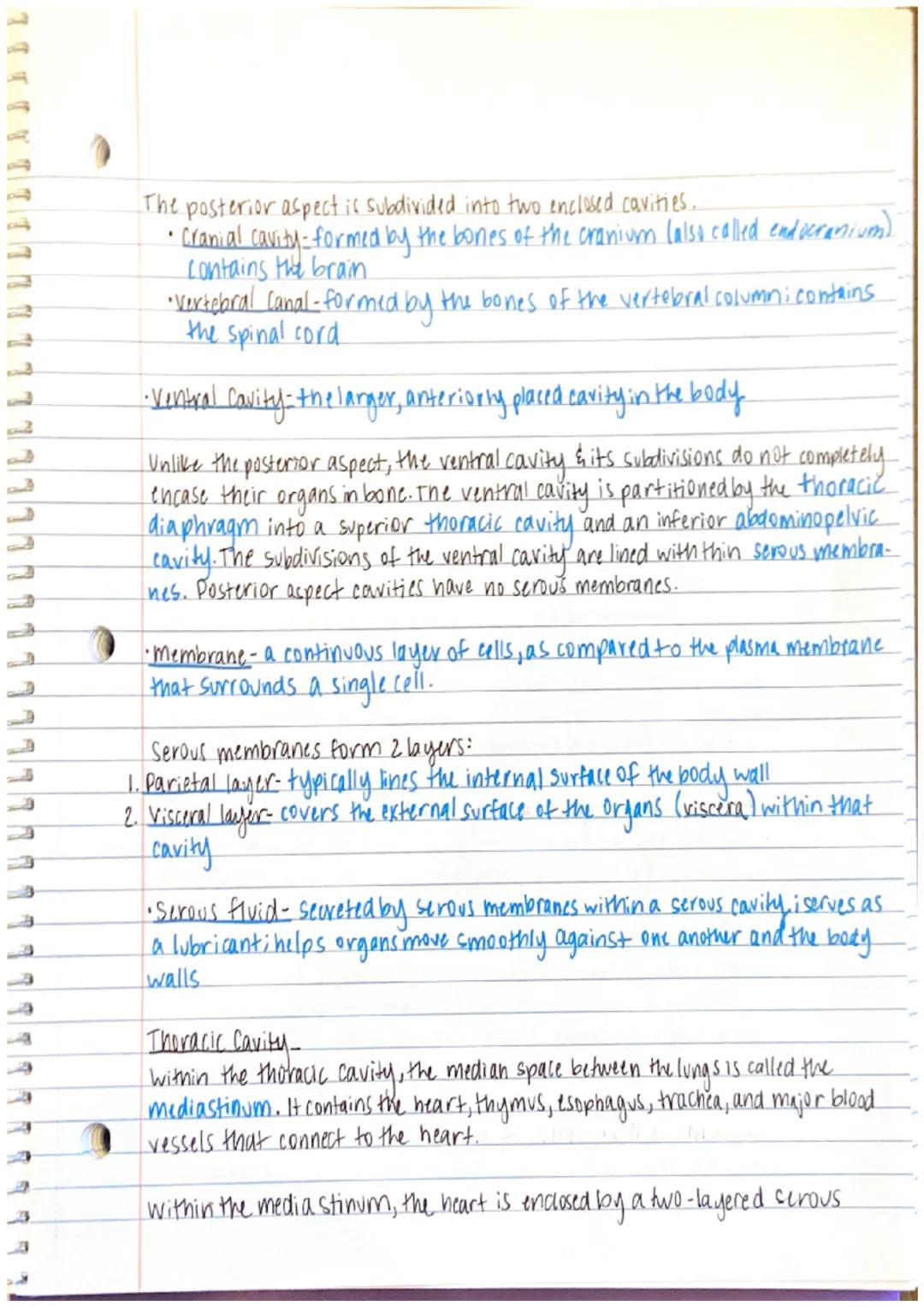
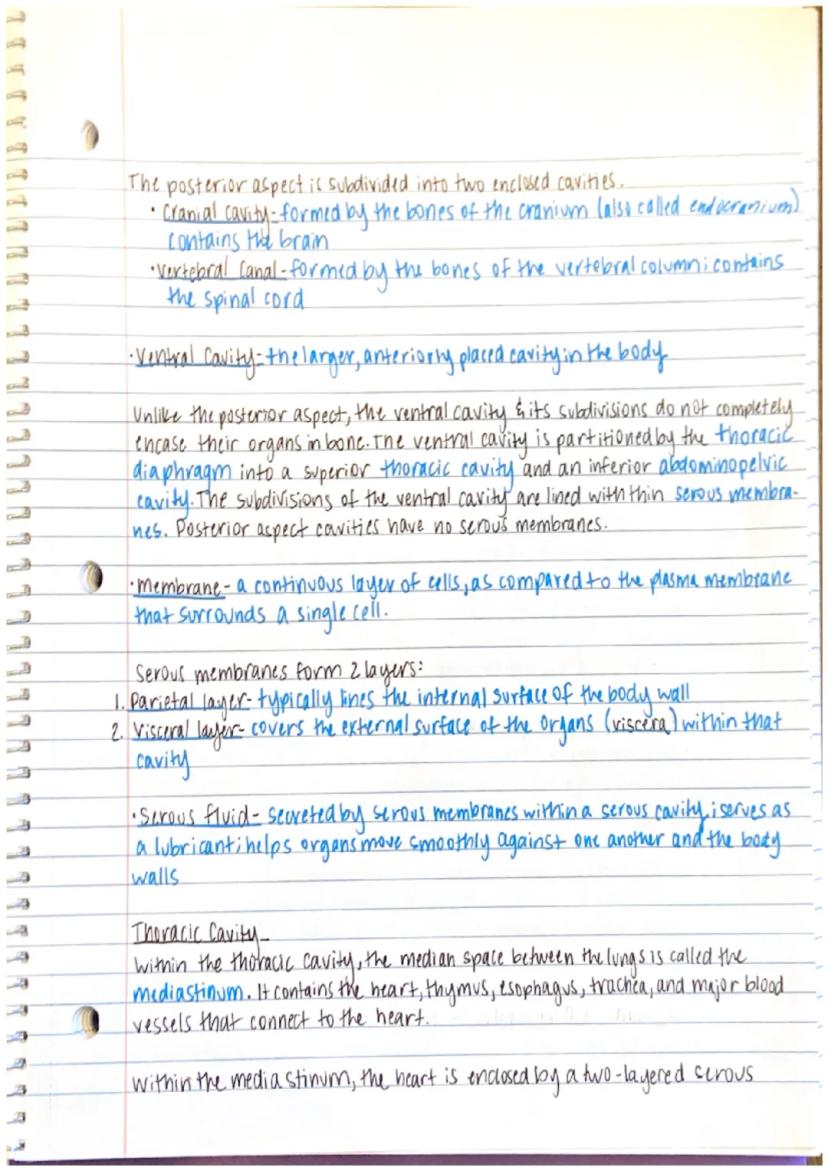
The human body contains several major cavities that house and protect organs. The posterior aspect of the body contains two enclosed cavities completely surrounded by bone: the cranial cavity (containing the brain) and the vertebral canal (containing the spinal cord).
Unlike the posterior cavities, the ventral cavity in the anterior part of the body doesn't completely encase organs in bone. The thoracic diaphragm divides the ventral cavity into the superior thoracic cavity and the inferior abdominopelvic cavity. These ventral subdivisions are lined with thin serous membranes that the posterior cavities lack.
Serous membranes form two layers: the parietal layer, which typically lines the internal surface of the body wall, and the visceral layer, which covers the external surface of organs (viscera). Between these layers, serous fluid acts as a lubricant, helping organs move smoothly against each other and the body walls.
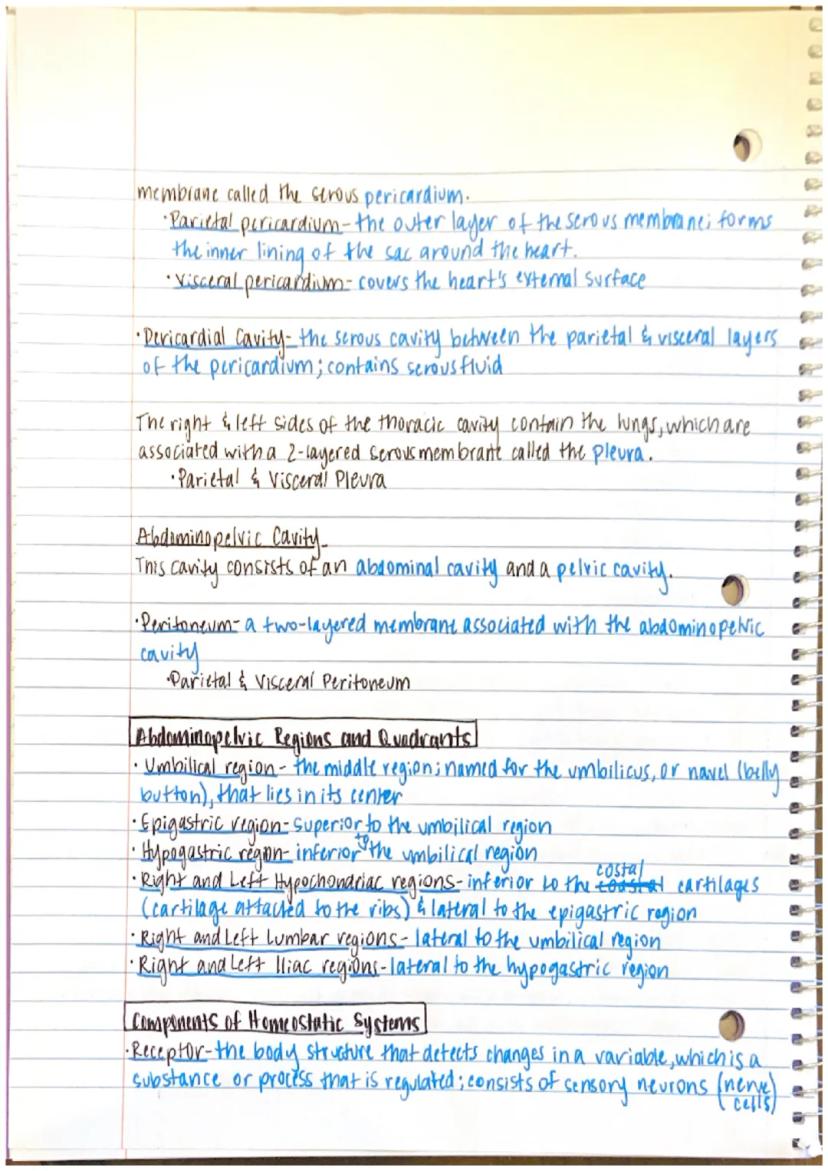
Within the thoracic cavity, the space between the lungs called the mediastinum contains vital structures including the heart, thymus, esophagus, trachea, and major blood vessels. The heart itself is enclosed by the serous pericardium, with a pericardial cavity containing serous fluid between its visceral and parietal layers.
Visualization Aid: Think of a serous membrane as being like your hand pushing into a partially inflated balloon. Your wrist is the organ, your hand is the visceral layer, the balloon surface is the parietal layer, and the space between is the serous cavity!
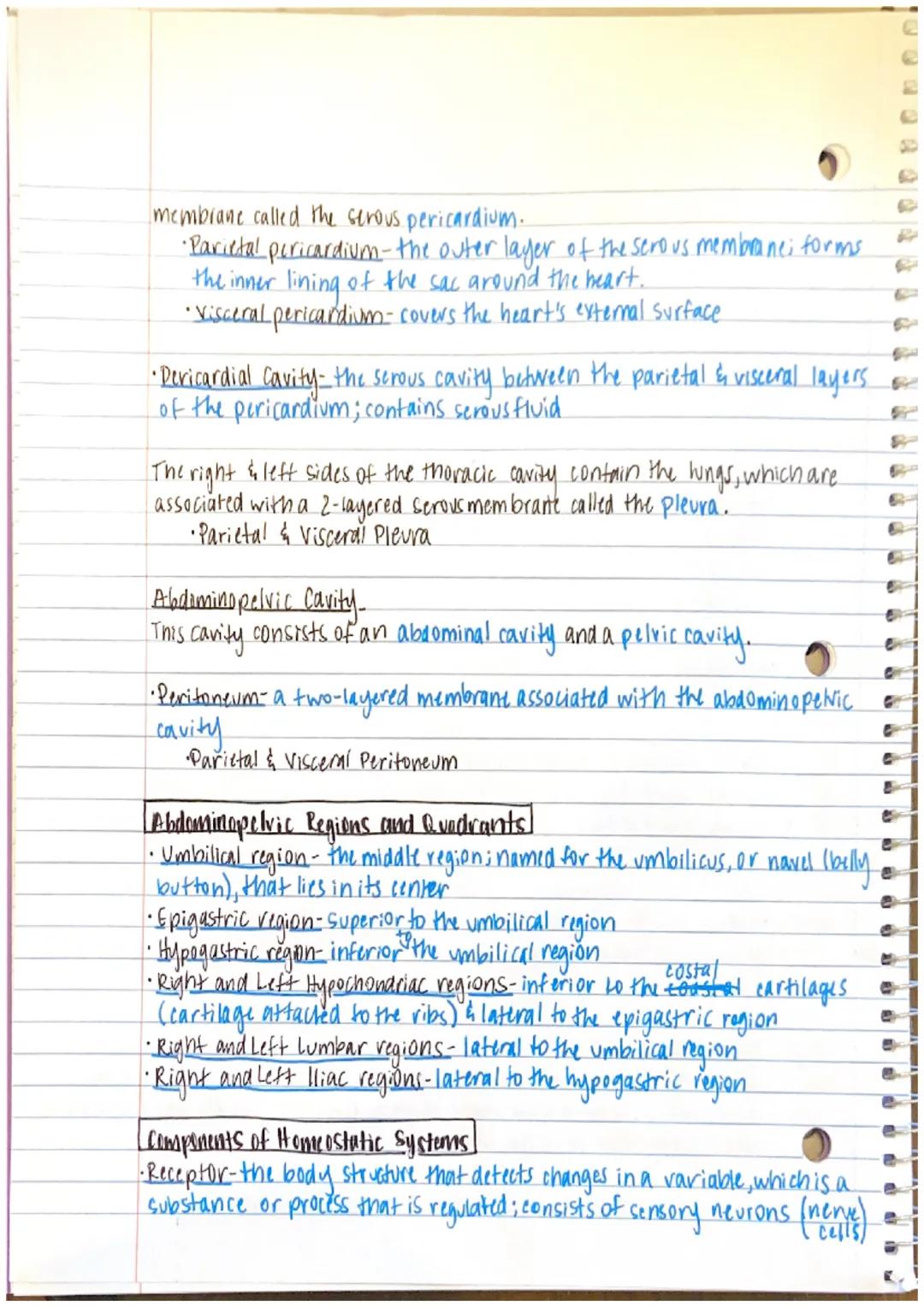
The abdominopelvic cavity contains the abdominal and pelvic cavities, lined with a two-layered membrane called the peritoneum. For clinical purposes, we divide this area into regions to precisely locate organs and conditions.
The central regions include the umbilical region (containing the navel), the epigastric region (superior to umbilical), and the hypogastric region (inferior to umbilical). Lateral regions include the right and left hypochondriac regions (under the ribs), lumbar regions (at waist level), and iliac regions (near the hip bones).
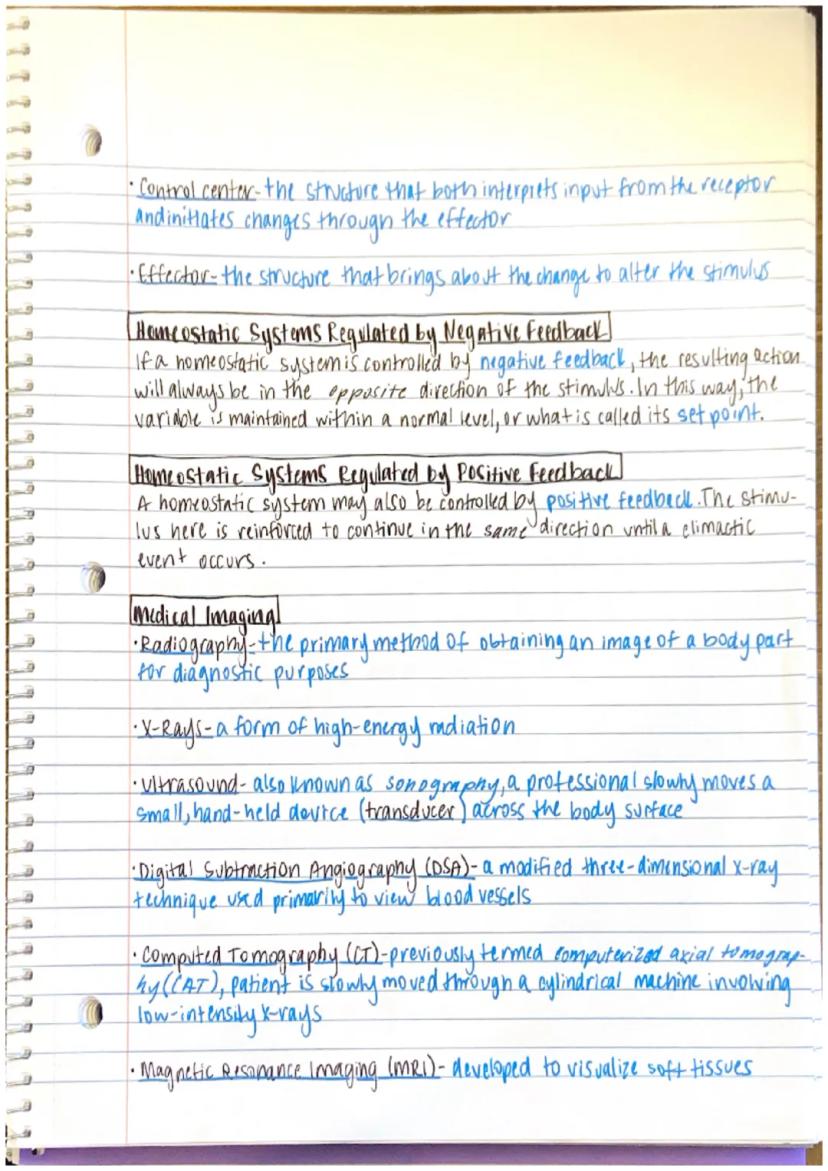
Homeostasis is the maintenance of relatively stable internal conditions despite changing external environments. Homeostatic systems have three key components: receptors that detect changes in variables, a control center that interprets input and initiates responses, and effectors that create the actual changes to address the stimulus.
Most homeostatic systems operate through negative feedback, where the resulting action opposes the initial stimulus to maintain variables within normal ranges (set points). For example, when body temperature rises, mechanisms activate to cool you down, and vice versa.
Some processes use positive feedback, where the stimulus is reinforced until a climactic event occurs. For instance, during childbirth, contractions stimulate more contractions until the baby is delivered, at which point the process stops.
Real-World Application: Diabetes involves problems with the negative feedback system that regulates blood glucose levels—understanding homeostasis helps explain why this condition requires careful management!
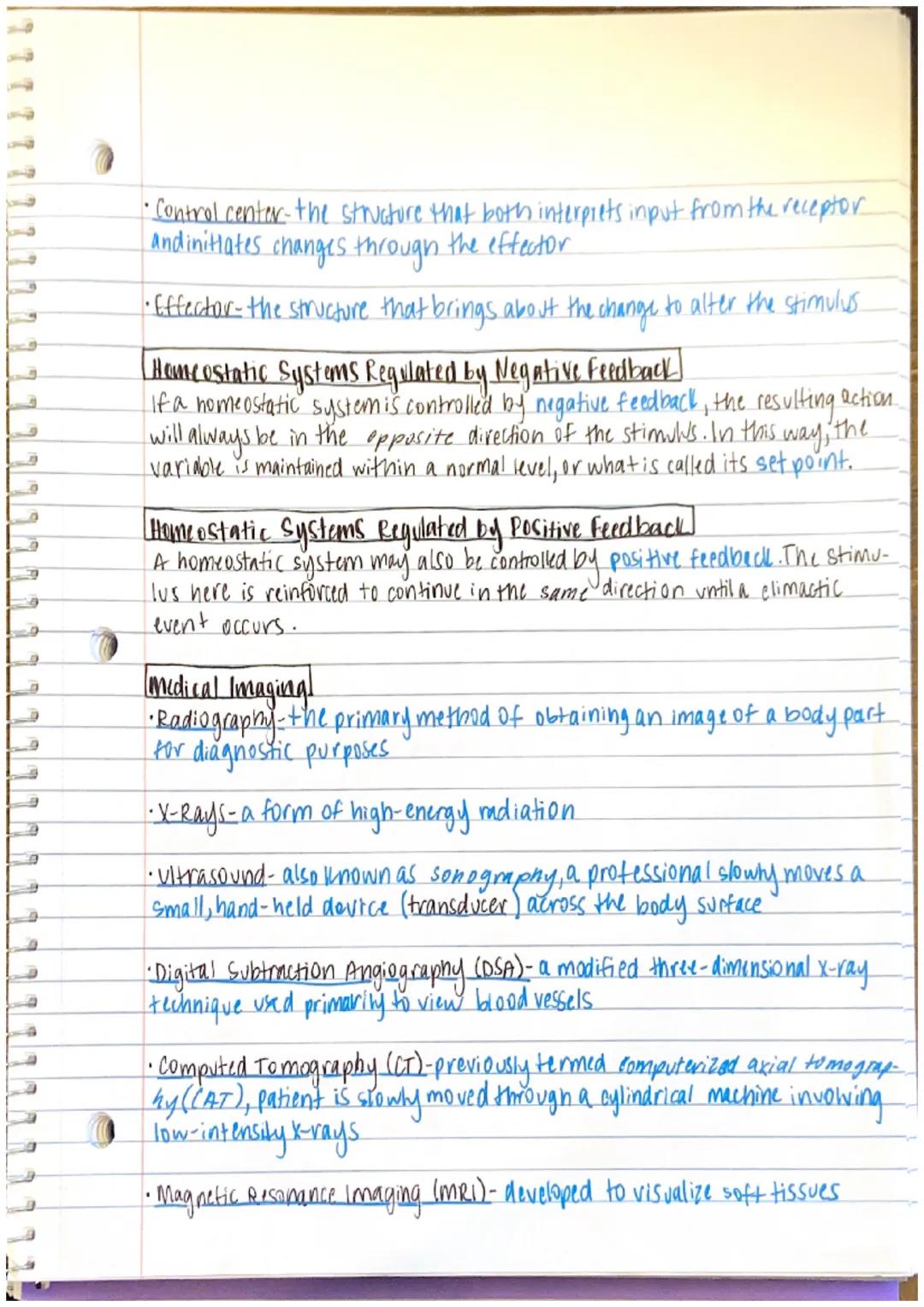
Modern medicine relies on various imaging technologies to visualize internal body structures non-invasively. Radiography, using X-rays, is the primary method for obtaining diagnostic images. X-rays are a form of high-energy radiation that pass through soft tissues but are blocked by denser structures like bones, creating detailed images.
Ultrasound (sonography) uses sound waves to create images. A technician moves a handheld transducer across the body surface, which emits and receives sound waves that bounce off internal structures. This technology is particularly valuable during pregnancy as it doesn't use radiation.
More advanced techniques include Digital Subtraction Angiography (DSA), a modified three-dimensional X-ray technique primarily used to visualize blood vessels. Computed Tomography (CT) scans (formerly called CAT scans) involve moving the patient through a cylindrical machine that takes multiple X-ray images from different angles to create detailed cross-sectional views.
Magnetic Resonance Imaging (MRI) was developed specifically to visualize soft tissues. Unlike CT scans, MRIs don't use radiation but instead employ strong magnetic fields and radio waves to produce detailed images, making them excellent for examining the brain, spinal cord, and joints.
Career Connection: The field of radiologic technology offers exciting career opportunities for those interested in both healthcare and technology. These professionals operate the imaging equipment that helps diagnose countless medical conditions!
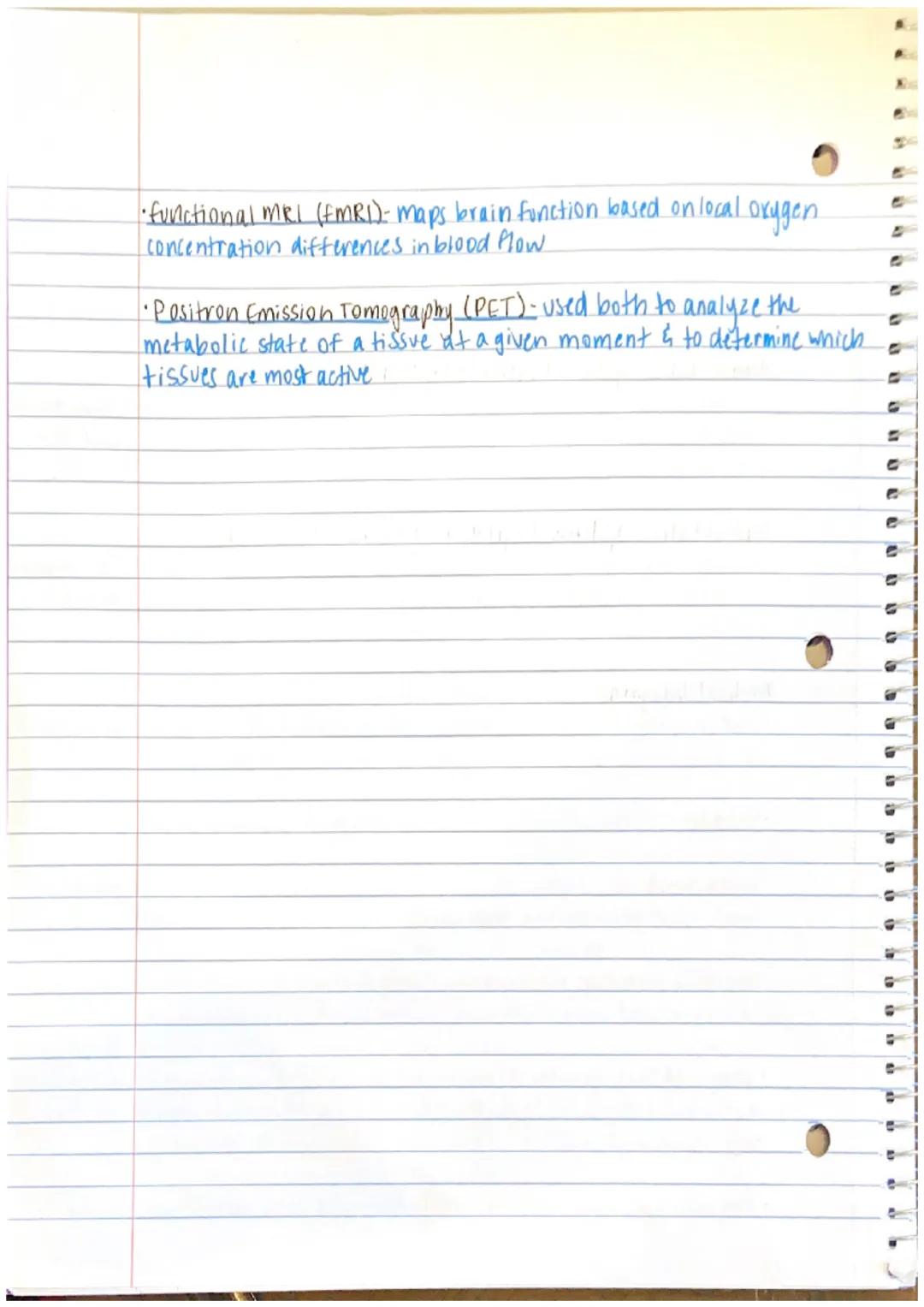
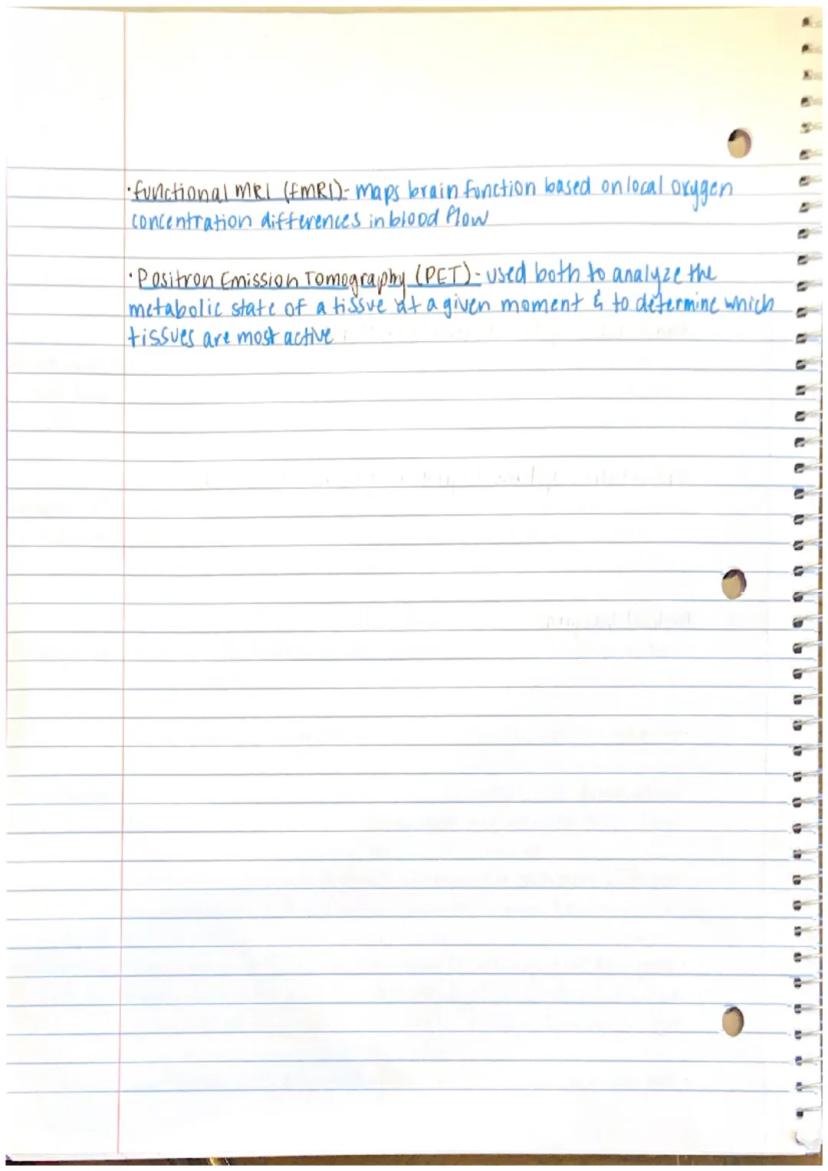
Modern medicine continues to develop increasingly sophisticated imaging technologies for both diagnosis and research. Functional MRI (fMRI) builds on traditional MRI technology to map brain function based on local oxygen concentration differences in blood flow. This allows researchers and clinicians to observe which parts of the brain are active during specific tasks or in response to stimuli.
Positron Emission Tomography (PET) offers unique insights by analyzing the metabolic state of tissues at a given moment and determining which areas are most active. During a PET scan, a radioactive tracer is introduced into the body, typically through injection. The scanner detects gamma rays produced when the tracer interacts with electrons in the body, creating detailed 3D images of functional processes.
These advanced imaging techniques have revolutionized our understanding of the human body, particularly the brain. They allow healthcare providers to observe not just anatomy but actual physiological processes as they occur, leading to better diagnoses and treatments for numerous conditions.
Future Focus: As imaging technology continues to advance, we're moving toward more personalized medicine where treatments can be tailored to an individual's unique anatomy and physiology. The future medical professionals among you may use technologies we can't even imagine today!
Our AI companion is specifically built for the needs of students. Based on the millions of content pieces we have on the platform we can provide truly meaningful and relevant answers to students. But its not only about answers, the companion is even more about guiding students through their daily learning challenges, with personalised study plans, quizzes or content pieces in the chat and 100% personalisation based on the students skills and developments.
You can download the app in the Google Play Store and in the Apple App Store.
That's right! Enjoy free access to study content, connect with fellow students, and get instant help – all at your fingertips.
App Store
Google Play
The app is very easy to use and well designed. I have found everything I was looking for so far and have been able to learn a lot from the presentations! I will definitely use the app for a class assignment! And of course it also helps a lot as an inspiration.
Stefan S
iOS user
This app is really great. There are so many study notes and help [...]. My problem subject is French, for example, and the app has so many options for help. Thanks to this app, I have improved my French. I would recommend it to anyone.
Samantha Klich
Android user
Wow, I am really amazed. I just tried the app because I've seen it advertised many times and was absolutely stunned. This app is THE HELP you want for school and above all, it offers so many things, such as workouts and fact sheets, which have been VERY helpful to me personally.
Anna
iOS user
I think it’s very much worth it and you’ll end up using it a lot once you get the hang of it and even after looking at others notes you can still ask your Artificial intelligence buddy the question and ask to simplify it if you still don’t get it!!! In the end I think it’s worth it 😊👍 ⚠️Also DID I MENTION ITS FREEE YOU DON’T HAVE TO PAY FOR ANYTHING AND STILL GET YOUR GRADES IN PERFECTLY❗️❗️⚠️
Thomas R
iOS user
Knowunity is the BEST app I’ve used in a minute. This is not an ai review or anything this is genuinely coming from a 7th grade student (I know 2011 im young) but dude this app is a 10/10 i have maintained a 3.8 gpa and have plenty of time for gaming. I love it and my mom is just happy I got good grades
Brad T
Android user
Not only did it help me find the answer but it also showed me alternative ways to solve it. I was horrible in math and science but now I have an a in both subjects. Thanks for the help🤍🤍
David K
iOS user
The app's just great! All I have to do is enter the topic in the search bar and I get the response real fast. I don't have to watch 10 YouTube videos to understand something, so I'm saving my time. Highly recommended!
Sudenaz Ocak
Android user
In school I was really bad at maths but thanks to the app, I am doing better now. I am so grateful that you made the app.
Greenlight Bonnie
Android user
I found this app a couple years ago and it has only gotten better since then. I really love it because it can help with written questions and photo questions. Also, it can find study guides that other people have made as well as flashcard sets and practice tests. The free version is also amazing for students who might not be able to afford it. Would 100% recommend
Aubrey
iOS user
Best app if you're in Highschool or Junior high. I have been using this app for 2 school years and it's the best, it's good if you don't have anyone to help you with school work.😋🩷🎀
Marco B
iOS user
THE QUIZES AND FLASHCARDS ARE SO USEFUL AND I LOVE Knowunity AI. IT ALSO IS LITREALLY LIKE CHATGPT BUT SMARTER!! HELPED ME WITH MY MASCARA PROBLEMS TOO!! AS WELL AS MY REAL SUBJECTS ! DUHHH 😍😁😲🤑💗✨🎀😮
Elisha
iOS user
This app is phenomenal down to the correct info and the various topics you can study! I greatly recommend it for people who struggle with procrastination and those who need homework help. It has been perfectly accurate for world 1 history as far as I’ve seen! Geometry too!
Paul T
iOS user
The app is very easy to use and well designed. I have found everything I was looking for so far and have been able to learn a lot from the presentations! I will definitely use the app for a class assignment! And of course it also helps a lot as an inspiration.
Stefan S
iOS user
This app is really great. There are so many study notes and help [...]. My problem subject is French, for example, and the app has so many options for help. Thanks to this app, I have improved my French. I would recommend it to anyone.
Samantha Klich
Android user
Wow, I am really amazed. I just tried the app because I've seen it advertised many times and was absolutely stunned. This app is THE HELP you want for school and above all, it offers so many things, such as workouts and fact sheets, which have been VERY helpful to me personally.
Anna
iOS user
I think it’s very much worth it and you’ll end up using it a lot once you get the hang of it and even after looking at others notes you can still ask your Artificial intelligence buddy the question and ask to simplify it if you still don’t get it!!! In the end I think it’s worth it 😊👍 ⚠️Also DID I MENTION ITS FREEE YOU DON’T HAVE TO PAY FOR ANYTHING AND STILL GET YOUR GRADES IN PERFECTLY❗️❗️⚠️
Thomas R
iOS user
Knowunity is the BEST app I’ve used in a minute. This is not an ai review or anything this is genuinely coming from a 7th grade student (I know 2011 im young) but dude this app is a 10/10 i have maintained a 3.8 gpa and have plenty of time for gaming. I love it and my mom is just happy I got good grades
Brad T
Android user
Not only did it help me find the answer but it also showed me alternative ways to solve it. I was horrible in math and science but now I have an a in both subjects. Thanks for the help🤍🤍
David K
iOS user
The app's just great! All I have to do is enter the topic in the search bar and I get the response real fast. I don't have to watch 10 YouTube videos to understand something, so I'm saving my time. Highly recommended!
Sudenaz Ocak
Android user
In school I was really bad at maths but thanks to the app, I am doing better now. I am so grateful that you made the app.
Greenlight Bonnie
Android user
I found this app a couple years ago and it has only gotten better since then. I really love it because it can help with written questions and photo questions. Also, it can find study guides that other people have made as well as flashcard sets and practice tests. The free version is also amazing for students who might not be able to afford it. Would 100% recommend
Aubrey
iOS user
Best app if you're in Highschool or Junior high. I have been using this app for 2 school years and it's the best, it's good if you don't have anyone to help you with school work.😋🩷🎀
Marco B
iOS user
THE QUIZES AND FLASHCARDS ARE SO USEFUL AND I LOVE Knowunity AI. IT ALSO IS LITREALLY LIKE CHATGPT BUT SMARTER!! HELPED ME WITH MY MASCARA PROBLEMS TOO!! AS WELL AS MY REAL SUBJECTS ! DUHHH 😍😁😲🤑💗✨🎀😮
Elisha
iOS user
This app is phenomenal down to the correct info and the various topics you can study! I greatly recommend it for people who struggle with procrastination and those who need homework help. It has been perfectly accurate for world 1 history as far as I’ve seen! Geometry too!
Paul T
iOS user
Makayla Lazorchak
@akaylaazorchak_zrwcv
Anatomy and Physiology are the foundation for understanding how our body works. Anatomy examines the structure of body parts, while physiology explores their functions. Together, they provide a roadmap to understanding the remarkable systems that keep us alive and functioning.
Access to all documents
Improve your grades
Join milions of students
Anatomy is the study of structure and form in the body, coming from the Greek word "anatome" which literally means "to cut apart or dissect." When paired with physiology (the study of body part functions), these disciplines give us a complete picture of how our bodies work.
Anatomy branches into several specialized fields. Cytology examines cells and their internal structures, while histology focuses on body tissues. Gross anatomy looks at structures visible to the naked eye and can be approached in different ways: studying body systems (systemic anatomy), examining specific regions (regional anatomy), or looking at surface features (surface anatomy).
Other important branches include comparative anatomy (examining similarities between species), embryology (development from conception to birth), and pathologic anatomy (studying changes caused by disease). Radiographic anatomy uses various scanning technologies to visualize internal structures non-invasively.
Quick Tip: Think of anatomy as the "what" (structure) and physiology as the "how" (function). You need both to truly understand the human body!
Access to all documents
Improve your grades
Join milions of students
All living organisms share several key characteristics. They demonstrate organization, engage in metabolism (the sum of all chemical reactions, including building up molecules through anabolism and breaking them down through catabolism), undergo growth and development, and show responsiveness to stimuli. They also maintain homeostasis through regulation and can reproduce.
The human body is organized in increasing levels of complexity. Starting with the chemical level (atoms and molecules), we move up to cells (over 200 types), tissues (groups of similar cells), organs (multiple tissues working together), and organ systems. These 11 systems—integumentary, skeletal, muscular, nervous, endocrine, cardiovascular, lymphatic, respiratory, digestive, urinary, and reproductive—function together to create a complete organism.
When studying the body, we use planes to divide it into sections. Transverse planes (also called horizontal planes) divide the body into superior (upper) and inferior (lower) parts, helping us visualize internal structures.
Remember This: The 11 organ systems don't work in isolation—they constantly communicate and coordinate with each other to maintain life!
Access to all documents
Improve your grades
Join milions of students
The integumentary system includes your skin, glands, hair, and nails. It's not just a covering—it protects you from environmental hazards, regulates temperature, prevents water loss, and even synthesizes vitamin D. This system is literally your first line of defense!
Your skeletal system consists of bones, cartilage, and ligaments. Beyond providing structural support and protection for organs, it serves as the framework for muscles to attach to, produces blood cells in bone marrow, and stores essential minerals.
The muscular system (muscles and tendons) does more than enable movement. It allows you to manipulate objects, walk around, create facial expressions, and maintain posture. An often overlooked function is that muscles generate much of your body heat.
Your nervous system (brain, spinal cord, and nerves) coordinates rapid, short-term responses to stimuli. It activates muscles and glands to create appropriate responses to both internal and external changes.
The endocrine system works through ductless glands that secrete hormones to regulate growth, reproduction, and metabolism. It collaborates with the nervous system to maintain homeostasis, but typically works more slowly and with longer-lasting effects.
Connection Point: Notice how these systems complement each other—your nervous system controls quick responses while your endocrine system handles longer-term regulation!
Access to all documents
Improve your grades
Join milions of students
The cardiovascular system (heart, blood, and blood vessels) pumps blood throughout your body, transporting nutrients, oxygen, and wastes while distributing body heat. This incredible pump-and-pipe system works 24/7 without rest!
To describe locations in the body precisely, anatomists use standardized directional terms. Anterior means toward the front, while posterior refers to the back. Superior indicates above, and inferior means below. Medial points toward the midline of the body, while lateral directs away from it.
Additional directional terms include proximal (closer to the point of attachment) and distal (farther from attachment), which are especially useful when describing limbs. Superficial structures are closer to the skin surface, while deep structures lie farther from it.
When using these terms, always think about the relationship between two structures. For example, in "The right eye is superior to the right shoulder," you're describing where the eye is located in relation to the shoulder.
Pro Tip: When learning directional terms, use your own body as a reference. Point to different body parts and practice describing their relationships using these terms!
Access to all documents
Improve your grades
Join milions of students
The human body is divided into two main regions: the axial region (head, neck, and trunk) and the appendicular region (upper and lower limbs). These divisions help us precisely locate and name body structures.
From the anterior (front) view, we can identify several specific regions. The abdominal region refers to the belly area, while the deltoid region indicates the shoulder. The arm is divided into the brachial region (shoulder to elbow) and the antebrachial region (forearm from elbow to wrist). The antecubital region specifically refers to the front of the elbow.
Hand regions include the carpal region (wrist), the metacarpal region (hand between wrist and fingers), and the digital region (fingers). In the lower limb, the femoral region is the thigh from hip to knee, the patellar region is the front of the knee, and the crural region is the lower leg from knee to ankle.
Other notable anterior regions include the cephalic region (head), axillary region (armpit), and coxal region (hip area). For the foot, we have the metatarsal region (between ankle and toes) and the digital region of the pes (toes), with the big toe specifically called the hallux.
Visual Tip: Try labeling a diagram of the human body with these region names to help memorize them. Creating a mental map will make learning anatomy much easier!
Access to all documents
Improve your grades
Join milions of students
Looking at the posterior (back) view of the body reveals additional important regions. The dorsal region refers to the entire back area, with the lumbar region specifically indicating the lower back. The gluteal region refers to the buttocks, while the sacral region is the area between the upper portions of the buttocks.
The posterior leg includes the popliteal region (back of the knee), the sural region (calf), and the calcaneal region (heel). The olecranal region refers to the point of the elbow, and the scapular region is the area over the shoulder blades. The vertebral region runs along the backbone.
Focusing on the cephalic (head) region, we can identify several specific areas: the frontal region (forehead), orbital region (eyes), nasal region (nose), oral region (mouth), buccal region (cheeks), mental region (chin), and auricular region (external ear). The occipital region refers to the lower back of the head, while the cervical region is the neck.
Other noteworthy regions include the plantar region (sole of the foot), the palmar region (palm of the hand), and the perineum (area between genitalia and anus).
Clinical Connection: Healthcare professionals use these specific region names to precisely document injuries and communicate about patient conditions. Learning them now will prepare you for potential health careers!
Access to all documents
Improve your grades
Join milions of students
The human body contains several major cavities that house and protect organs. The posterior aspect of the body contains two enclosed cavities completely surrounded by bone: the cranial cavity (containing the brain) and the vertebral canal (containing the spinal cord).
Unlike the posterior cavities, the ventral cavity in the anterior part of the body doesn't completely encase organs in bone. The thoracic diaphragm divides the ventral cavity into the superior thoracic cavity and the inferior abdominopelvic cavity. These ventral subdivisions are lined with thin serous membranes that the posterior cavities lack.
Serous membranes form two layers: the parietal layer, which typically lines the internal surface of the body wall, and the visceral layer, which covers the external surface of organs (viscera). Between these layers, serous fluid acts as a lubricant, helping organs move smoothly against each other and the body walls.
Within the thoracic cavity, the space between the lungs called the mediastinum contains vital structures including the heart, thymus, esophagus, trachea, and major blood vessels. The heart itself is enclosed by the serous pericardium, with a pericardial cavity containing serous fluid between its visceral and parietal layers.
Visualization Aid: Think of a serous membrane as being like your hand pushing into a partially inflated balloon. Your wrist is the organ, your hand is the visceral layer, the balloon surface is the parietal layer, and the space between is the serous cavity!
Access to all documents
Improve your grades
Join milions of students
The abdominopelvic cavity contains the abdominal and pelvic cavities, lined with a two-layered membrane called the peritoneum. For clinical purposes, we divide this area into regions to precisely locate organs and conditions.
The central regions include the umbilical region (containing the navel), the epigastric region (superior to umbilical), and the hypogastric region (inferior to umbilical). Lateral regions include the right and left hypochondriac regions (under the ribs), lumbar regions (at waist level), and iliac regions (near the hip bones).
Homeostasis is the maintenance of relatively stable internal conditions despite changing external environments. Homeostatic systems have three key components: receptors that detect changes in variables, a control center that interprets input and initiates responses, and effectors that create the actual changes to address the stimulus.
Most homeostatic systems operate through negative feedback, where the resulting action opposes the initial stimulus to maintain variables within normal ranges (set points). For example, when body temperature rises, mechanisms activate to cool you down, and vice versa.
Some processes use positive feedback, where the stimulus is reinforced until a climactic event occurs. For instance, during childbirth, contractions stimulate more contractions until the baby is delivered, at which point the process stops.
Real-World Application: Diabetes involves problems with the negative feedback system that regulates blood glucose levels—understanding homeostasis helps explain why this condition requires careful management!
Access to all documents
Improve your grades
Join milions of students
Modern medicine relies on various imaging technologies to visualize internal body structures non-invasively. Radiography, using X-rays, is the primary method for obtaining diagnostic images. X-rays are a form of high-energy radiation that pass through soft tissues but are blocked by denser structures like bones, creating detailed images.
Ultrasound (sonography) uses sound waves to create images. A technician moves a handheld transducer across the body surface, which emits and receives sound waves that bounce off internal structures. This technology is particularly valuable during pregnancy as it doesn't use radiation.
More advanced techniques include Digital Subtraction Angiography (DSA), a modified three-dimensional X-ray technique primarily used to visualize blood vessels. Computed Tomography (CT) scans (formerly called CAT scans) involve moving the patient through a cylindrical machine that takes multiple X-ray images from different angles to create detailed cross-sectional views.
Magnetic Resonance Imaging (MRI) was developed specifically to visualize soft tissues. Unlike CT scans, MRIs don't use radiation but instead employ strong magnetic fields and radio waves to produce detailed images, making them excellent for examining the brain, spinal cord, and joints.
Career Connection: The field of radiologic technology offers exciting career opportunities for those interested in both healthcare and technology. These professionals operate the imaging equipment that helps diagnose countless medical conditions!
Access to all documents
Improve your grades
Join milions of students
Modern medicine continues to develop increasingly sophisticated imaging technologies for both diagnosis and research. Functional MRI (fMRI) builds on traditional MRI technology to map brain function based on local oxygen concentration differences in blood flow. This allows researchers and clinicians to observe which parts of the brain are active during specific tasks or in response to stimuli.
Positron Emission Tomography (PET) offers unique insights by analyzing the metabolic state of tissues at a given moment and determining which areas are most active. During a PET scan, a radioactive tracer is introduced into the body, typically through injection. The scanner detects gamma rays produced when the tracer interacts with electrons in the body, creating detailed 3D images of functional processes.
These advanced imaging techniques have revolutionized our understanding of the human body, particularly the brain. They allow healthcare providers to observe not just anatomy but actual physiological processes as they occur, leading to better diagnoses and treatments for numerous conditions.
Future Focus: As imaging technology continues to advance, we're moving toward more personalized medicine where treatments can be tailored to an individual's unique anatomy and physiology. The future medical professionals among you may use technologies we can't even imagine today!
Our AI companion is specifically built for the needs of students. Based on the millions of content pieces we have on the platform we can provide truly meaningful and relevant answers to students. But its not only about answers, the companion is even more about guiding students through their daily learning challenges, with personalised study plans, quizzes or content pieces in the chat and 100% personalisation based on the students skills and developments.
You can download the app in the Google Play Store and in the Apple App Store.
That's right! Enjoy free access to study content, connect with fellow students, and get instant help – all at your fingertips.
3
Smart Tools NEW
Transform this note into: ✓ 50+ Practice Questions ✓ Interactive Flashcards ✓ Full Practice Test ✓ Essay Outlines
Understanding the language of anatomy and directional terms used to describe body structures and cavities for medical professionals and students.
 Health & Medicine
How the blood circulates through the body. Description of heart rates.
Health & MedicineRoutine Urinalysis
Health & Medicinemicrobiology history
Health & MedicineLearn the basic directional terms used in anatomy to describe the position of body structures.
Health & MedicineNotes about red blood cells, white blood cells, platelets, blood types.
Health & MedicineApp Store
Google Play
The app is very easy to use and well designed. I have found everything I was looking for so far and have been able to learn a lot from the presentations! I will definitely use the app for a class assignment! And of course it also helps a lot as an inspiration.
Stefan S
iOS user
This app is really great. There are so many study notes and help [...]. My problem subject is French, for example, and the app has so many options for help. Thanks to this app, I have improved my French. I would recommend it to anyone.
Samantha Klich
Android user
Wow, I am really amazed. I just tried the app because I've seen it advertised many times and was absolutely stunned. This app is THE HELP you want for school and above all, it offers so many things, such as workouts and fact sheets, which have been VERY helpful to me personally.
Anna
iOS user
I think it’s very much worth it and you’ll end up using it a lot once you get the hang of it and even after looking at others notes you can still ask your Artificial intelligence buddy the question and ask to simplify it if you still don’t get it!!! In the end I think it’s worth it 😊👍 ⚠️Also DID I MENTION ITS FREEE YOU DON’T HAVE TO PAY FOR ANYTHING AND STILL GET YOUR GRADES IN PERFECTLY❗️❗️⚠️
Thomas R
iOS user
Knowunity is the BEST app I’ve used in a minute. This is not an ai review or anything this is genuinely coming from a 7th grade student (I know 2011 im young) but dude this app is a 10/10 i have maintained a 3.8 gpa and have plenty of time for gaming. I love it and my mom is just happy I got good grades
Brad T
Android user
Not only did it help me find the answer but it also showed me alternative ways to solve it. I was horrible in math and science but now I have an a in both subjects. Thanks for the help🤍🤍
David K
iOS user
The app's just great! All I have to do is enter the topic in the search bar and I get the response real fast. I don't have to watch 10 YouTube videos to understand something, so I'm saving my time. Highly recommended!
Sudenaz Ocak
Android user
In school I was really bad at maths but thanks to the app, I am doing better now. I am so grateful that you made the app.
Greenlight Bonnie
Android user
I found this app a couple years ago and it has only gotten better since then. I really love it because it can help with written questions and photo questions. Also, it can find study guides that other people have made as well as flashcard sets and practice tests. The free version is also amazing for students who might not be able to afford it. Would 100% recommend
Aubrey
iOS user
Best app if you're in Highschool or Junior high. I have been using this app for 2 school years and it's the best, it's good if you don't have anyone to help you with school work.😋🩷🎀
Marco B
iOS user
THE QUIZES AND FLASHCARDS ARE SO USEFUL AND I LOVE Knowunity AI. IT ALSO IS LITREALLY LIKE CHATGPT BUT SMARTER!! HELPED ME WITH MY MASCARA PROBLEMS TOO!! AS WELL AS MY REAL SUBJECTS ! DUHHH 😍😁😲🤑💗✨🎀😮
Elisha
iOS user
This app is phenomenal down to the correct info and the various topics you can study! I greatly recommend it for people who struggle with procrastination and those who need homework help. It has been perfectly accurate for world 1 history as far as I’ve seen! Geometry too!
Paul T
iOS user
The app is very easy to use and well designed. I have found everything I was looking for so far and have been able to learn a lot from the presentations! I will definitely use the app for a class assignment! And of course it also helps a lot as an inspiration.
Stefan S
iOS user
This app is really great. There are so many study notes and help [...]. My problem subject is French, for example, and the app has so many options for help. Thanks to this app, I have improved my French. I would recommend it to anyone.
Samantha Klich
Android user
Wow, I am really amazed. I just tried the app because I've seen it advertised many times and was absolutely stunned. This app is THE HELP you want for school and above all, it offers so many things, such as workouts and fact sheets, which have been VERY helpful to me personally.
Anna
iOS user
I think it’s very much worth it and you’ll end up using it a lot once you get the hang of it and even after looking at others notes you can still ask your Artificial intelligence buddy the question and ask to simplify it if you still don’t get it!!! In the end I think it’s worth it 😊👍 ⚠️Also DID I MENTION ITS FREEE YOU DON’T HAVE TO PAY FOR ANYTHING AND STILL GET YOUR GRADES IN PERFECTLY❗️❗️⚠️
Thomas R
iOS user
Knowunity is the BEST app I’ve used in a minute. This is not an ai review or anything this is genuinely coming from a 7th grade student (I know 2011 im young) but dude this app is a 10/10 i have maintained a 3.8 gpa and have plenty of time for gaming. I love it and my mom is just happy I got good grades
Brad T
Android user
Not only did it help me find the answer but it also showed me alternative ways to solve it. I was horrible in math and science but now I have an a in both subjects. Thanks for the help🤍🤍
David K
iOS user
The app's just great! All I have to do is enter the topic in the search bar and I get the response real fast. I don't have to watch 10 YouTube videos to understand something, so I'm saving my time. Highly recommended!
Sudenaz Ocak
Android user
In school I was really bad at maths but thanks to the app, I am doing better now. I am so grateful that you made the app.
Greenlight Bonnie
Android user
I found this app a couple years ago and it has only gotten better since then. I really love it because it can help with written questions and photo questions. Also, it can find study guides that other people have made as well as flashcard sets and practice tests. The free version is also amazing for students who might not be able to afford it. Would 100% recommend
Aubrey
iOS user
Best app if you're in Highschool or Junior high. I have been using this app for 2 school years and it's the best, it's good if you don't have anyone to help you with school work.😋🩷🎀
Marco B
iOS user
THE QUIZES AND FLASHCARDS ARE SO USEFUL AND I LOVE Knowunity AI. IT ALSO IS LITREALLY LIKE CHATGPT BUT SMARTER!! HELPED ME WITH MY MASCARA PROBLEMS TOO!! AS WELL AS MY REAL SUBJECTS ! DUHHH 😍😁😲🤑💗✨🎀😮
Elisha
iOS user
This app is phenomenal down to the correct info and the various topics you can study! I greatly recommend it for people who struggle with procrastination and those who need homework help. It has been perfectly accurate for world 1 history as far as I’ve seen! Geometry too!
Paul T
iOS user