
Welcome to the Child and Adolescent Development journey! This course... Show more
 Health & Medicine
 Algebra
Sign up to see the contentIt's free!
Access to all documents
Improve your grades
Join milions of students
Knowunity AI
Subjects
Triangle Congruence and Similarity Theorems
Triangle Properties and Classification
Linear Equations and Graphs
Geometric Angle Relationships
Trigonometric Functions and Identities
Equation Solving Techniques
Circle Geometry Fundamentals
Division Operations and Methods
Basic Differentiation Rules
Exponent and Logarithm Properties
Show all topics
Human Organ Systems
Reproductive Cell Cycles
Biological Sciences Subdisciplines
Cellular Energy Metabolism
Autotrophic Energy Processes
Inheritance Patterns and Principles
Biomolecular Structure and Organization
Cell Cycle and Division Mechanics
Cellular Organization and Development
Biological Structural Organization
Show all topics
Chemical Sciences and Applications
Atomic Structure and Composition
Molecular Electron Structure Representation
Atomic Electron Behavior
Matter Properties and Water
Mole Concept and Calculations
Gas Laws and Behavior
Periodic Table Organization
Chemical Thermodynamics Fundamentals
Chemical Bond Types and Properties
Show all topics
European Renaissance and Enlightenment
European Cultural Movements 800-1920
American Revolution Era 1763-1797
American Civil War 1861-1865
Global Imperial Systems
Mongol and Chinese Dynasties
U.S. Presidents and World Leaders
Historical Sources and Documentation
World Wars Era and Impact
World Religious Systems
Show all topics
Classic and Contemporary Novels
Literary Character Analysis
Rhetorical Theory and Practice
Classic Literary Narratives
Reading Analysis and Interpretation
Narrative Structure and Techniques
English Language Components
Influential English-Language Authors
Basic Sentence Structure
Narrative Voice and Perspective
Show all topics
70
•
Feb 15, 2026
•
Romelyn Rebong
@romelynrebong
Welcome to the Child and Adolescent Development journey! This course... Show more
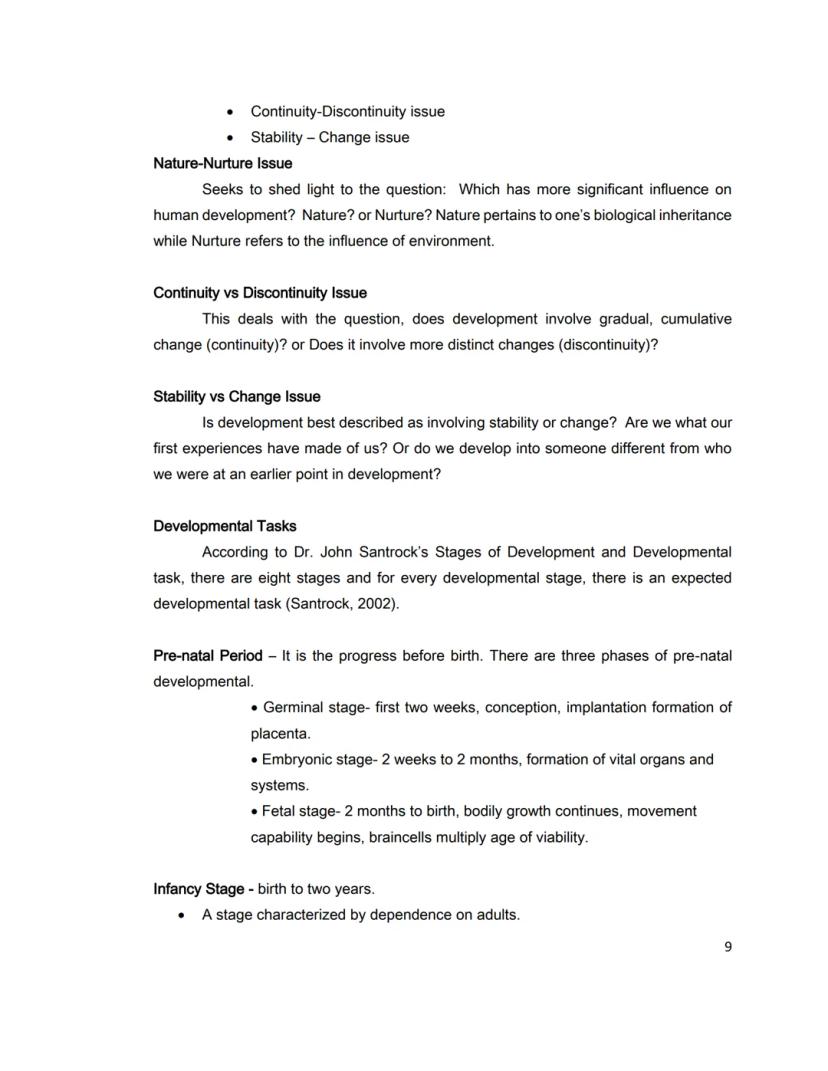
The study of child and adolescent development is essential for anyone entering the field of education. This course examines how children and adolescents grow, change, and learn from conception through adolescence.
You'll discover the normal milestones in physical, cognitive, social, and emotional development that shape how children learn and develop their personalities. Understanding these patterns will help you create more effective learning environments.
The course will connect developmental psychology directly to educational settings, giving you practical insights you can apply in your future classroom. You'll learn how to adapt your teaching approaches to match students' developmental needs.
Practical Application: Throughout this course, you'll not only learn theory but also how to design solutions for real challenges that occur at different developmental stages!
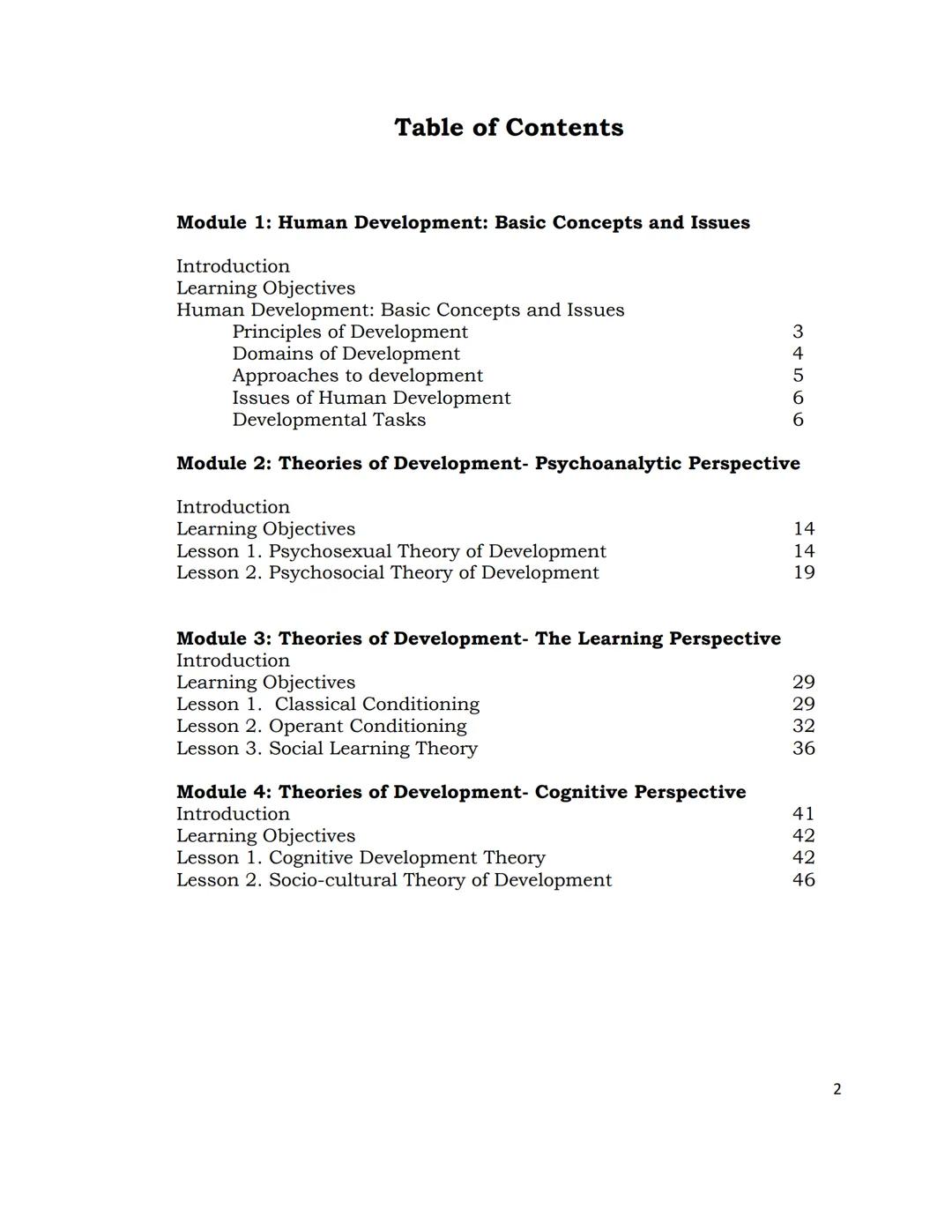
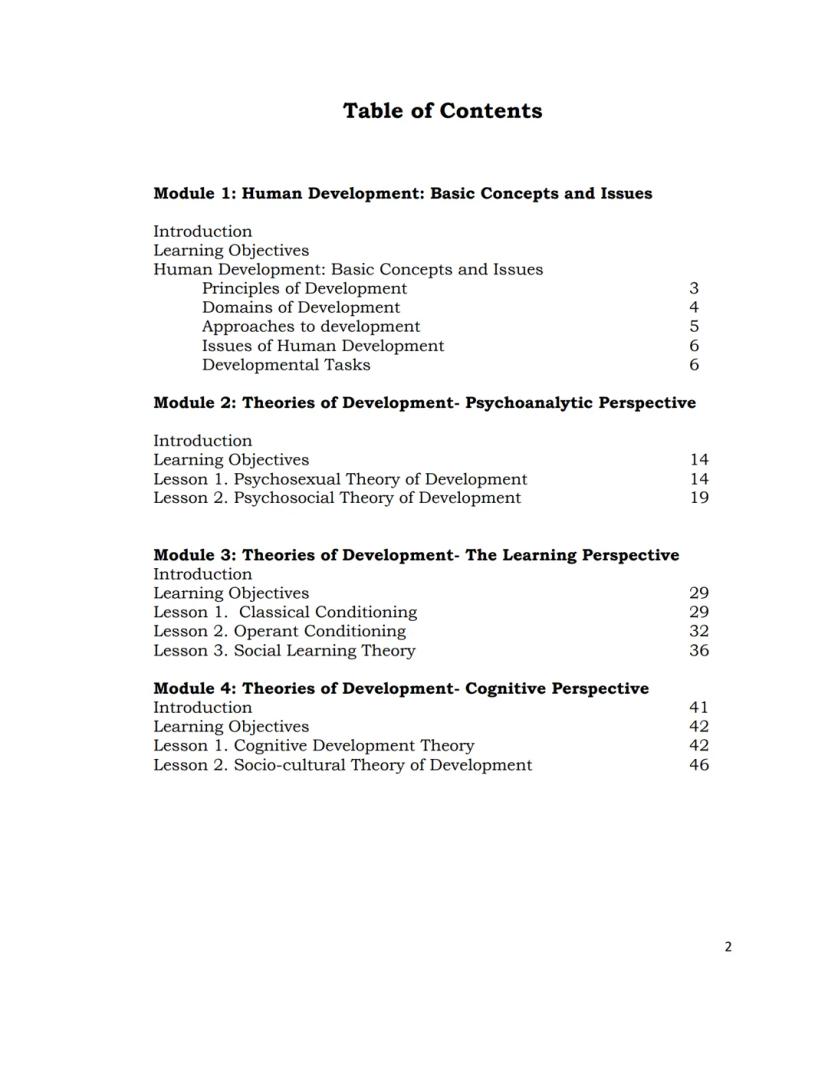
This course is organized into four key modules that build your understanding of human development from theoretical foundations to practical applications.
Module 1 introduces essential concepts about human development, including basic principles, developmental domains, and important theoretical approaches. This foundation helps you understand how children grow and change over time.
Modules 2-4 explore different theoretical perspectives that explain development. You'll examine the psychoanalytic perspective (including Freud's psychosexual theory and Erikson's psychosocial theory), the learning perspective (covering classical conditioning, operant conditioning, and social learning theory), and the cognitive perspective (featuring Piaget's cognitive development theory and Vygotsky's sociocultural theory).
Each module builds upon the previous one, giving you a comprehensive understanding of how various factors influence child and adolescent development. This knowledge is crucial for developing effective teaching strategies for different age groups.
Learning Tip: Pay special attention to how these different theoretical perspectives complement each other - no single theory explains everything about development!
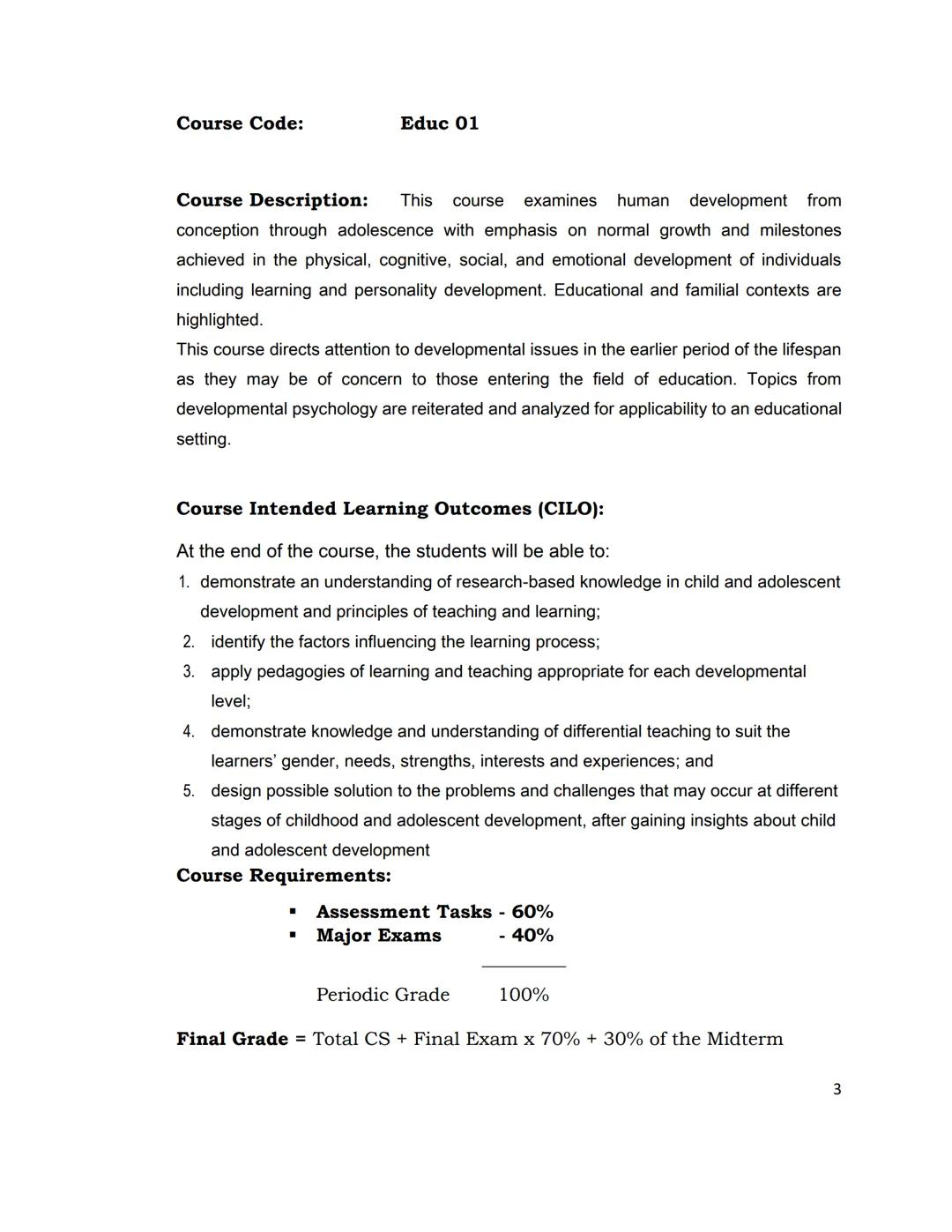
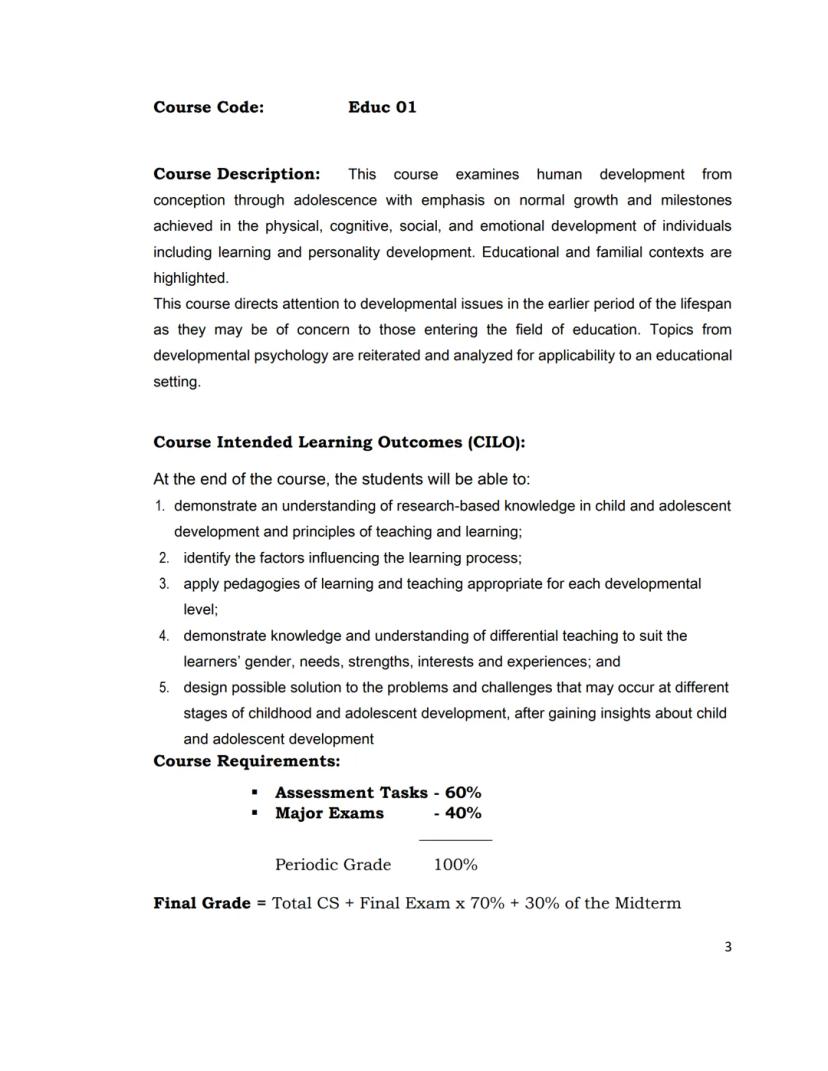
This course (Educ 01) examines human development from conception through adolescence with a focus on normal growth milestones. You'll learn how physical, cognitive, social, and emotional development unfolds in educational and family contexts.
By the end of this course, you'll be able to:
The course requirements include assessment tasks (60%) and major exams (40%), with your final grade calculated using a weighted formula that includes your midterm performance (30%) and comprehensive score (70%).
Success Strategy: Connect theoretical concepts to real classroom scenarios whenever possible. This will help you better retain information and prepare for both assessments and your future teaching career!
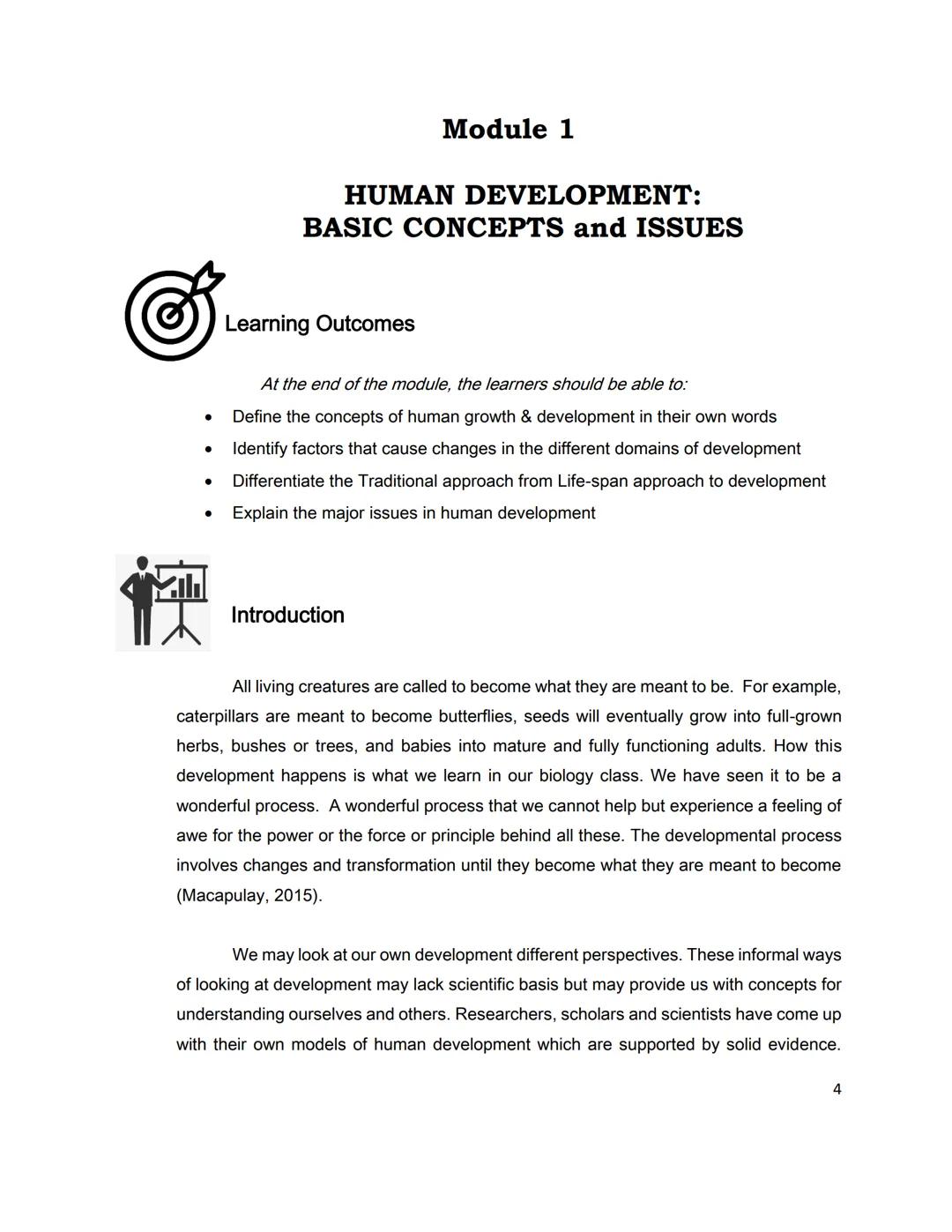
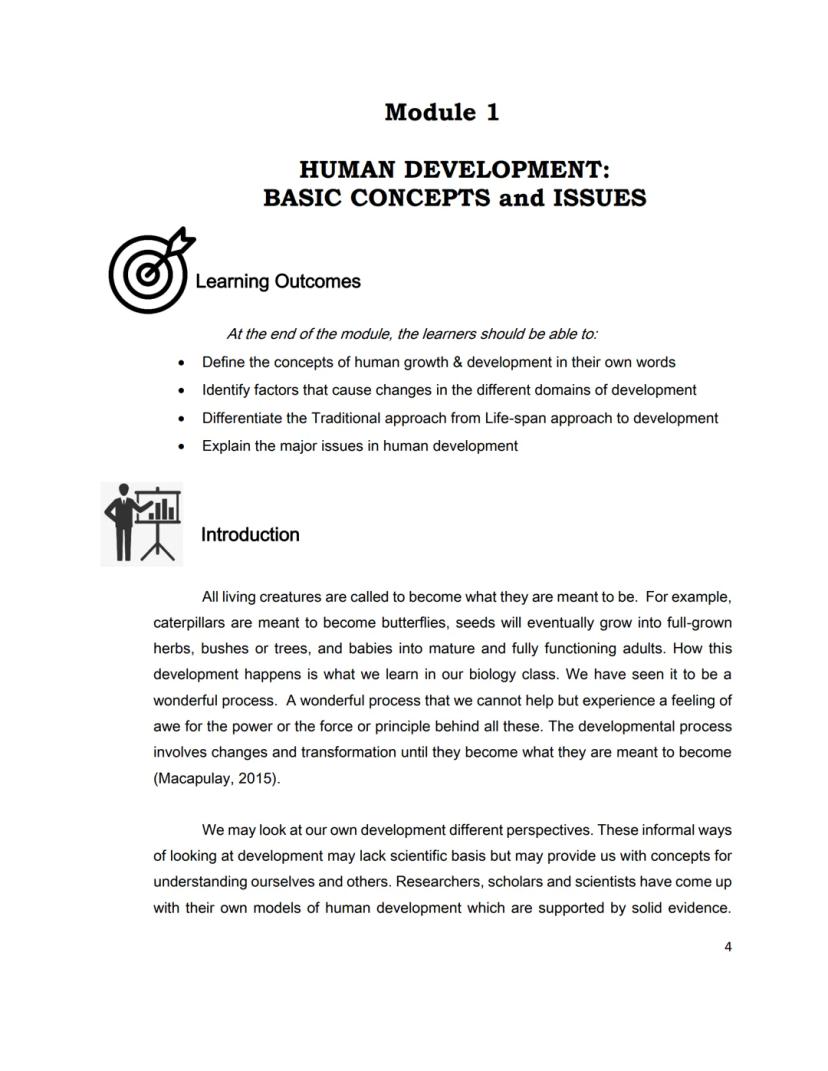
Have you ever wondered how a tiny infant develops into a complex adolescent? Just like caterpillars transform into butterflies, humans undergo an awe-inspiring developmental journey from conception to maturity.
Human development is a fascinating process of continuous change and transformation. While we all experience informal observations about how people grow and change, scientists and researchers have developed evidence-based models that help us understand this process more systematically.
This module introduces you to key concepts in human development that will help you understand your future students. You'll learn about growth versus development, important principles that govern developmental processes, and various perspectives on how humans change over time.
Think About It: Understanding developmental patterns helps teachers predict students' needs and design more effective teaching strategies. How might this knowledge change how you approach students of different ages?
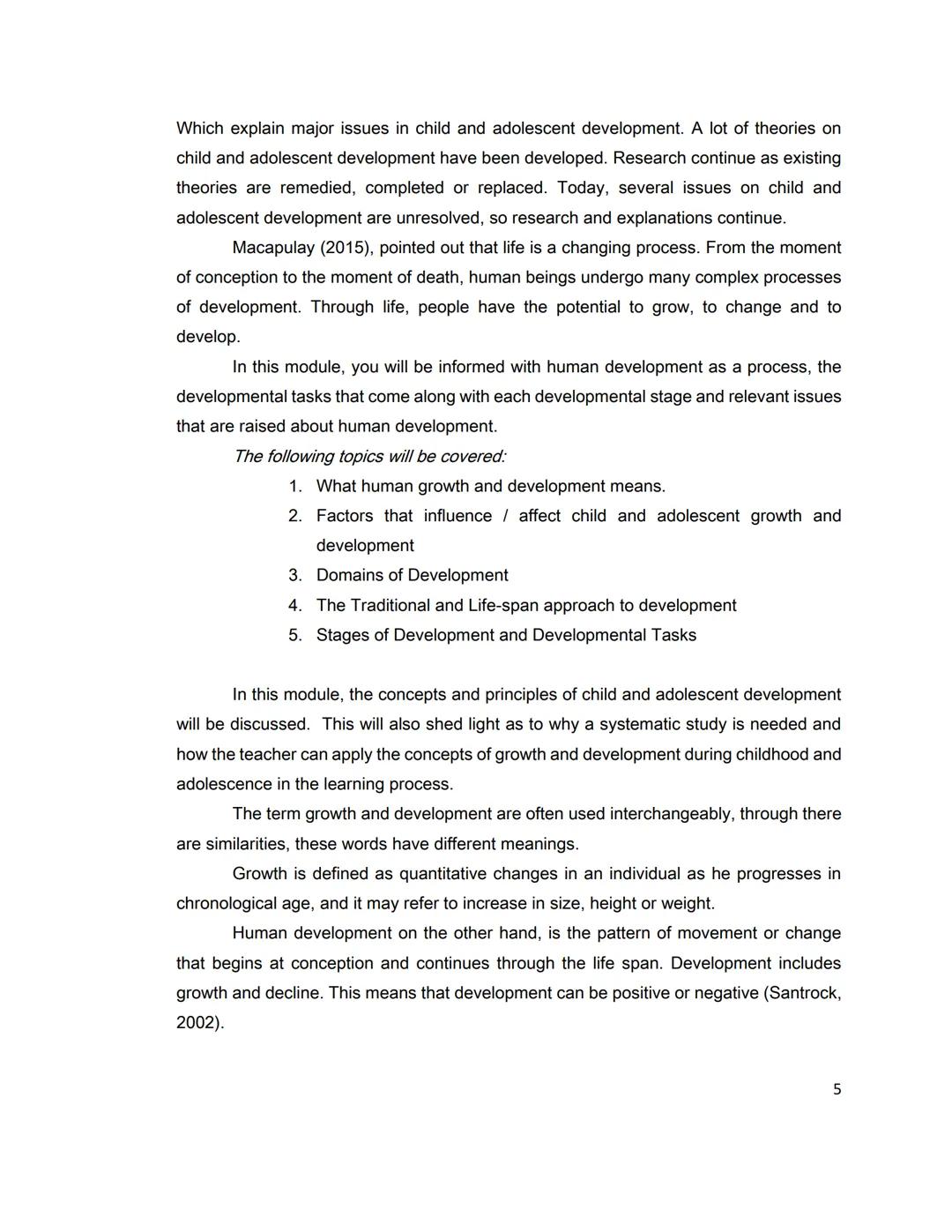
Though often used interchangeably, growth and development have distinct meanings that are important for educators to understand.
Growth refers specifically to quantitative changes in an individual's physical attributes like height and weight as they progress in chronological age. It's the measurable aspect of getting bigger or taller.
Development, however, is much broader. It encompasses the entire pattern of change that begins at conception and continues throughout the lifespan. Development includes both growth and decline, meaning it can be positive or negative as noted by Santrock (2002).
Two essential factors drive individual development:
Understanding this distinction helps educators recognize that while all students may be growing physically, their development in cognitive, social, and emotional domains may vary significantly.
Classroom Insight: When you observe uneven development across domains (like a student with advanced language but delayed social skills), you're seeing the complex interplay between maturation and learning in action!
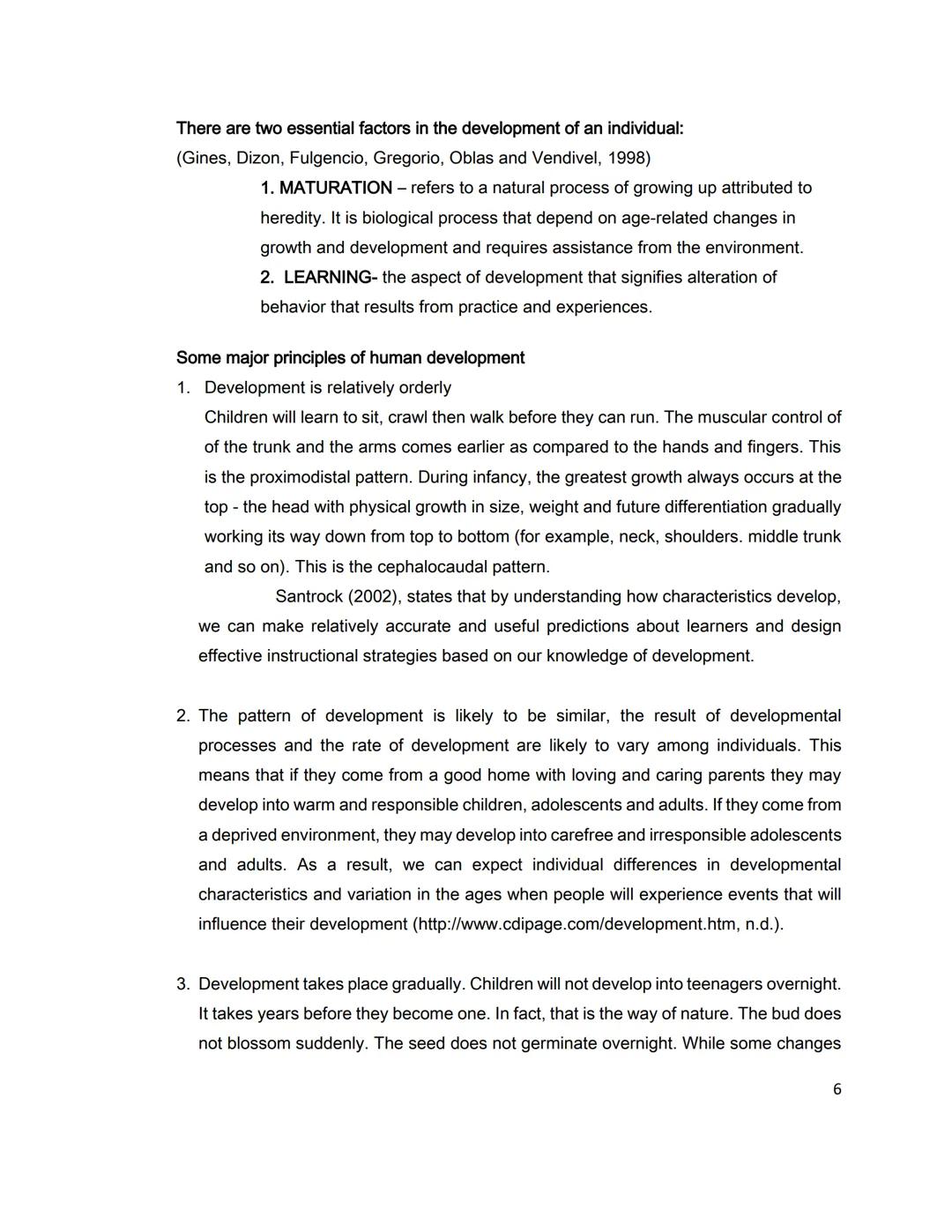
Development follows predictable patterns that help educators anticipate and support student growth. Here are key principles that govern how humans develop:
First, development is relatively orderly. Children master skills in a predictable sequence—sitting before walking, walking before running. Two important patterns emerge: the proximodistal pattern (control develops from the center of the body outward) and the cephalocaudal pattern (development proceeds from head to toe).
Second, while development follows similar patterns across individuals, the rate and results vary. Environmental factors like home life significantly influence outcomes. A nurturing environment typically fosters responsible development, while a deprived one may lead to different outcomes.
Third, development occurs gradually, not overnight. Just as seeds don't instantly become flowers, children don't suddenly become teenagers. Most developmental changes require weeks, months, or years to unfold completely.
Finally, development is complex because it integrates three key processes:
Teaching Application: Understanding these principles helps you set realistic expectations for your students. When you know development is orderly but varies in rate, you can provide appropriate support without labeling slower-developing students as "behind."
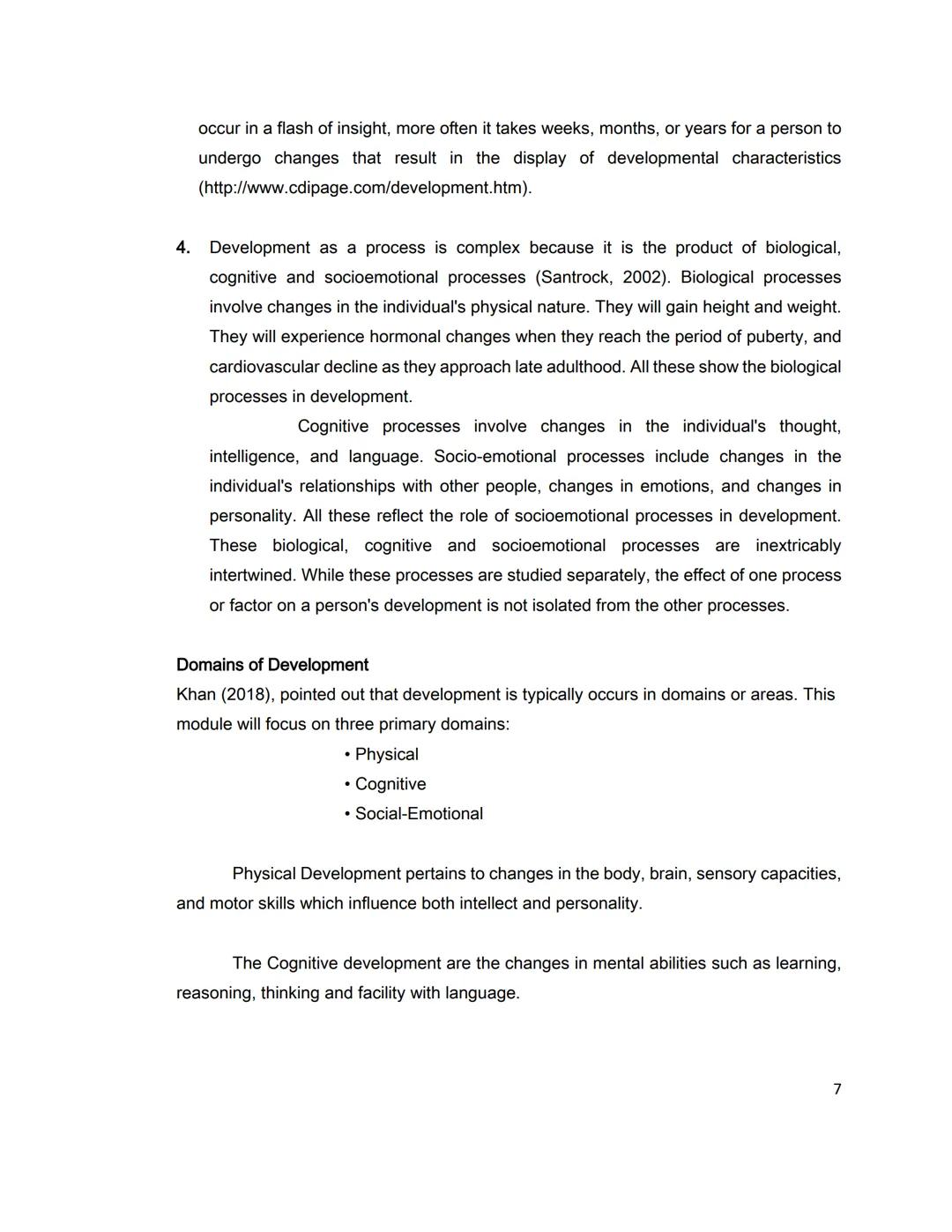
Human development doesn't happen in isolation—it occurs across multiple interconnected areas simultaneously. Understanding these domains helps educators create well-rounded learning experiences.
The physical domain encompasses all bodily changes, including brain development, sensory capabilities, and motor skills. This domain forms the biological foundation that influences both intellectual abilities and personality. Physical development includes obvious changes like height and weight but also invisible yet critical changes like neural connections in the brain.
The cognitive domain focuses on mental abilities like learning, reasoning, problem-solving, and language development. This domain explains how children's thinking evolves from concrete to more abstract reasoning as they mature.
The psychosocial domain addresses how individuals handle and express emotions and develop relationships with others. This domain covers everything from attachment to parents in infancy to peer relationships in adolescence and identity formation.
While we study these domains separately, remember that they're inextricably intertwined. A change in one domain typically triggers changes in others. For example, improved motor skills (physical domain) might allow a child to join team sports, leading to new friendships (social domain) and strategic thinking (cognitive domain).
Classroom Connection: The most effective teaching approaches address multiple domains simultaneously. When planning lessons, consider how your activities support physical, cognitive, AND social-emotional development.
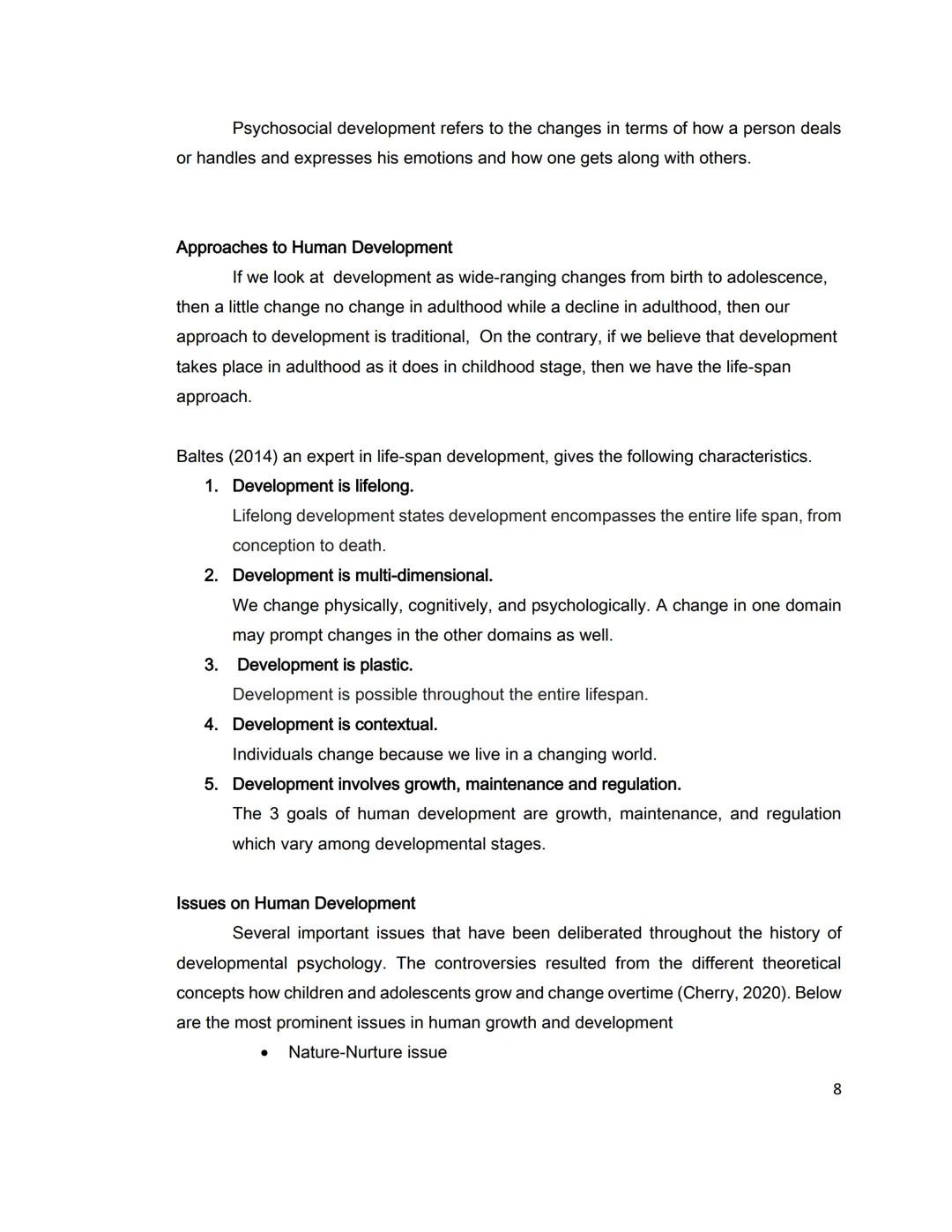
How we understand human development depends significantly on whether we view it as occurring primarily in childhood or continuing throughout life.
The traditional approach sees development as wide-ranging changes from birth through adolescence, with little to no change during adulthood, followed by decline in later years. This approach focuses primarily on childhood as the critical period for development.
In contrast, the life-span approach recognizes that significant development occurs throughout our entire lives. According to Baltes (2014), the life-span approach has five key characteristics:
The life-span approach provides a more comprehensive understanding of human development, recognizing that significant changes and growth continue well beyond adolescence.
Future Perspective: As a teacher, you'll continue developing throughout your career! The same plasticity that allows your students to learn also enables you to continually improve your teaching skills.
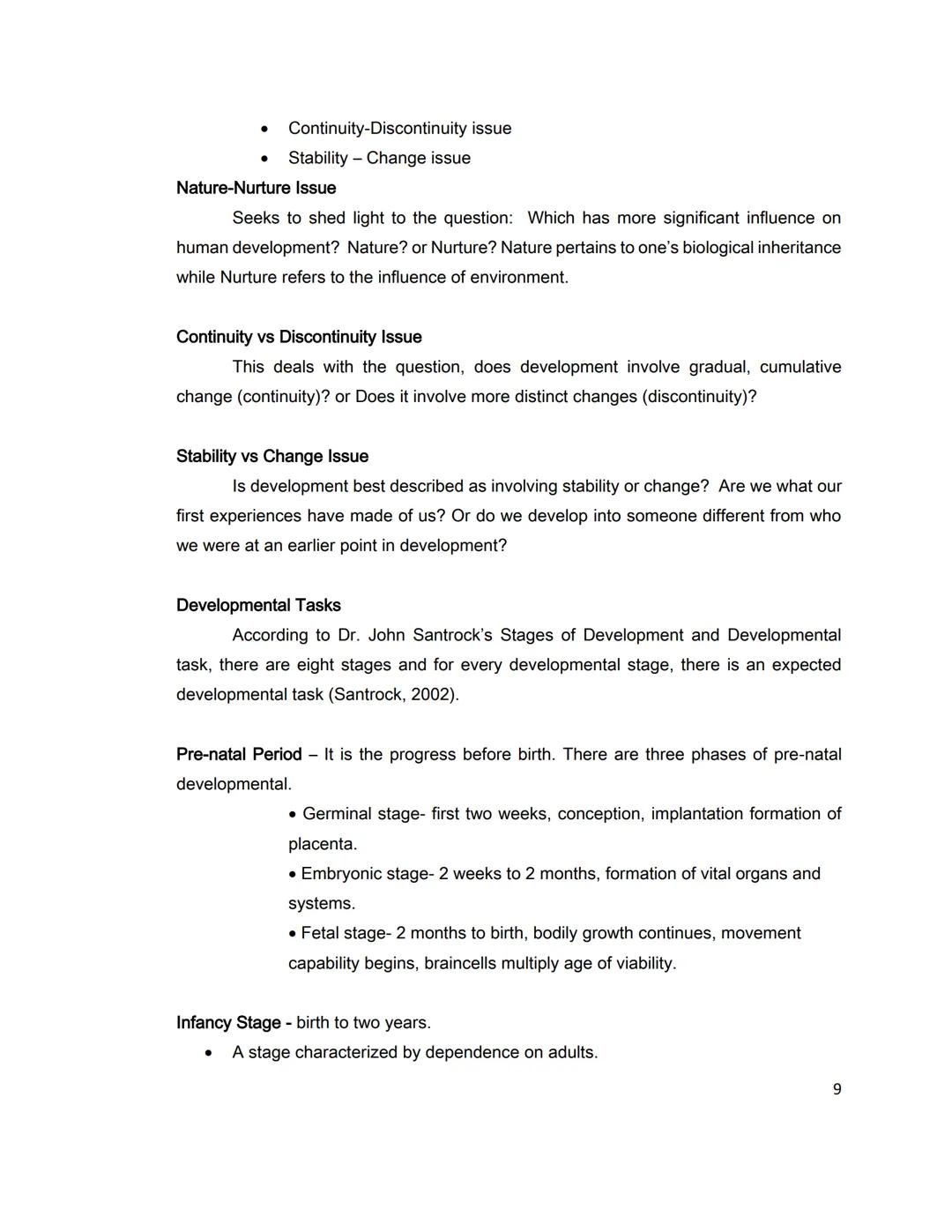
Throughout the history of developmental psychology, several important debates have shaped how we understand child and adolescent development. These unresolved issues continue to drive research and theory development.
The Nature-Nurture issue asks: Which has more significant influence on human development—biological inheritance (nature) or environmental factors (nurture)? Early theories often took extreme positions, but contemporary perspectives recognize that both genetics and environment interact in complex ways to shape development.
The Continuity-Discontinuity issue examines whether development involves gradual, cumulative change (continuity) or distinct stages with qualitative differences (discontinuity). Some theories, like Piaget's, suggest that children think in fundamentally different ways at different stages, while others emphasize smoother transitions.
The Stability-Change issue questions whether early experiences permanently determine who we become (stability) or if we can develop into someone different from who we were earlier (change). This debate has significant implications for education—if development is highly changeable, intervention programs may have greater potential impact.
Understanding these theoretical debates helps educators develop more nuanced perspectives on student development. Rather than seeking simple answers, recognizing the complexity of these issues allows for more flexible and responsive approaches to teaching.
Critical Thinking: Consider your own development—can you identify aspects that seem more influenced by nature versus nurture? Do you see evidence of both stability and change in your own life?
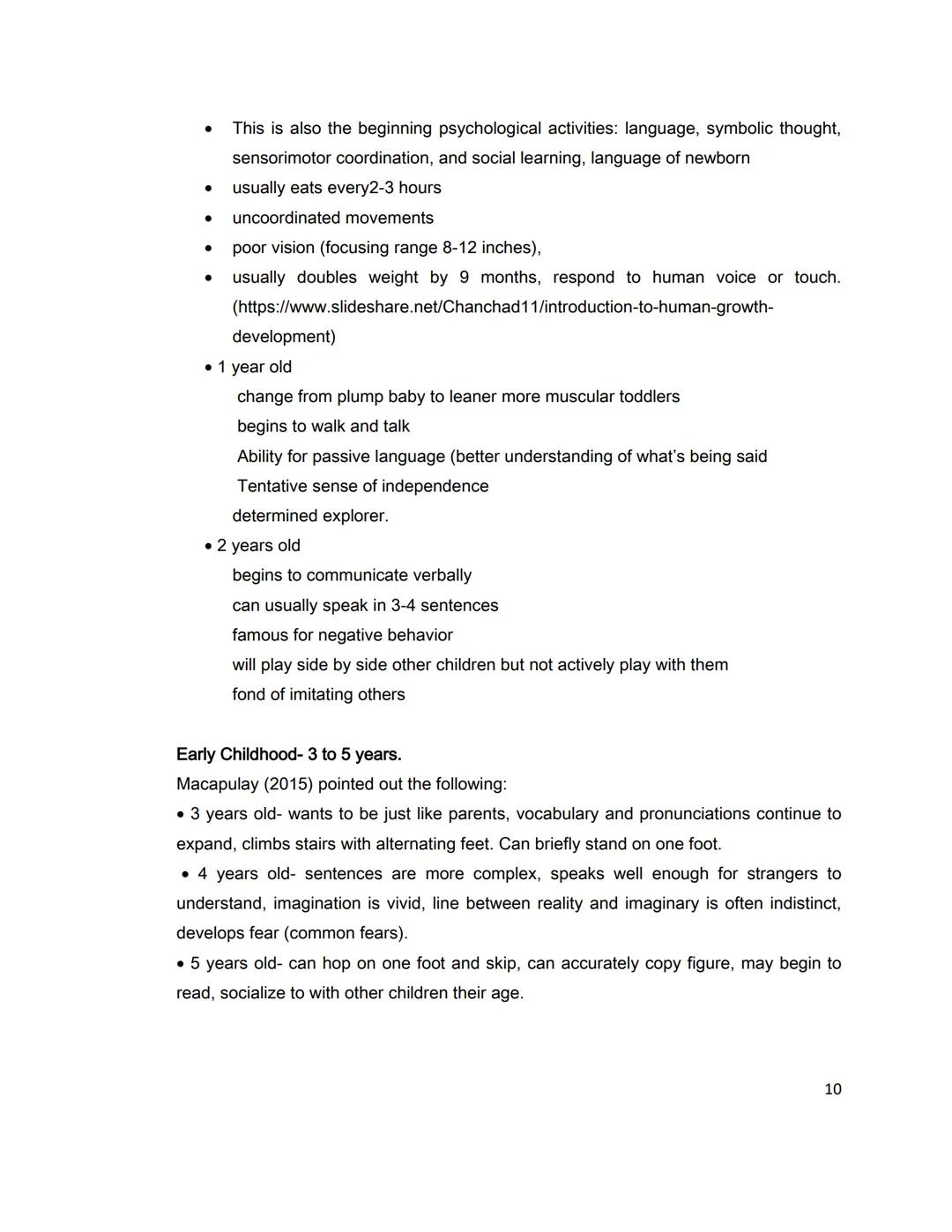
Each developmental stage presents unique challenges and expectations that individuals typically master before moving forward. Understanding these developmental tasks helps educators support appropriate growth.
During the prenatal period (conception to birth), development progresses through three phases:
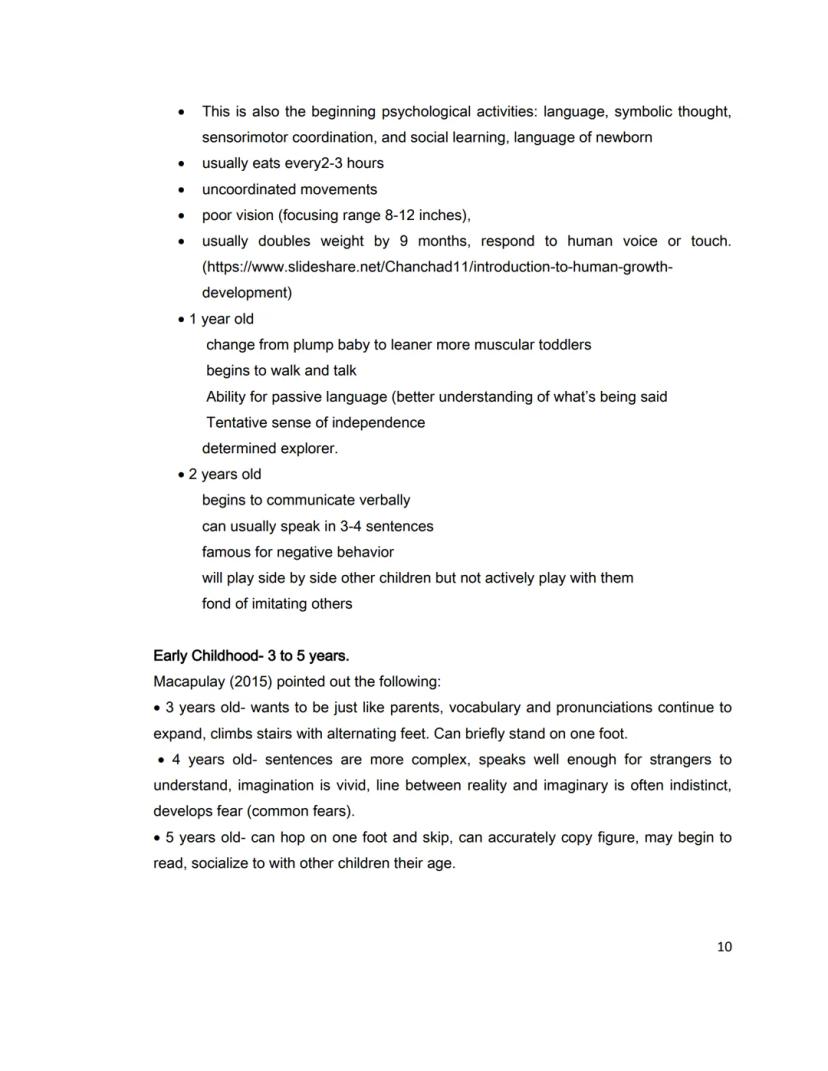
The infancy stage (birth to two years) is characterized by dependence on adults and rapid development across all domains. Infants progress from uncoordinated movements to walking and from crying to basic sentences. By age two, children begin communicating verbally, imitating others, and developing independence.
Early childhood brings explosive development in language and social skills. Three-year-olds imitate parents and expand vocabulary, four-year-olds develop vivid imaginations, and five-year-olds begin reading and socializing more effectively with peers.
These developmental milestones provide a roadmap for understanding typical growth patterns. However, remember that individual children may progress at different rates while still developing normally.
Observation Skill: Learning to recognize these developmental markers will help you quickly assess whether students are progressing typically or might benefit from additional support in certain areas.
Our AI companion is specifically built for the needs of students. Based on the millions of content pieces we have on the platform we can provide truly meaningful and relevant answers to students. But its not only about answers, the companion is even more about guiding students through their daily learning challenges, with personalised study plans, quizzes or content pieces in the chat and 100% personalisation based on the students skills and developments.
You can download the app in the Google Play Store and in the Apple App Store.
That's right! Enjoy free access to study content, connect with fellow students, and get instant help – all at your fingertips.
App Store
Google Play
The app is very easy to use and well designed. I have found everything I was looking for so far and have been able to learn a lot from the presentations! I will definitely use the app for a class assignment! And of course it also helps a lot as an inspiration.
Stefan S
iOS user
This app is really great. There are so many study notes and help [...]. My problem subject is French, for example, and the app has so many options for help. Thanks to this app, I have improved my French. I would recommend it to anyone.
Samantha Klich
Android user
Wow, I am really amazed. I just tried the app because I've seen it advertised many times and was absolutely stunned. This app is THE HELP you want for school and above all, it offers so many things, such as workouts and fact sheets, which have been VERY helpful to me personally.
Anna
iOS user
I think it’s very much worth it and you’ll end up using it a lot once you get the hang of it and even after looking at others notes you can still ask your Artificial intelligence buddy the question and ask to simplify it if you still don’t get it!!! In the end I think it’s worth it 😊👍 ⚠️Also DID I MENTION ITS FREEE YOU DON’T HAVE TO PAY FOR ANYTHING AND STILL GET YOUR GRADES IN PERFECTLY❗️❗️⚠️
Thomas R
iOS user
Knowunity is the BEST app I’ve used in a minute. This is not an ai review or anything this is genuinely coming from a 7th grade student (I know 2011 im young) but dude this app is a 10/10 i have maintained a 3.8 gpa and have plenty of time for gaming. I love it and my mom is just happy I got good grades
Brad T
Android user
Not only did it help me find the answer but it also showed me alternative ways to solve it. I was horrible in math and science but now I have an a in both subjects. Thanks for the help🤍🤍
David K
iOS user
The app's just great! All I have to do is enter the topic in the search bar and I get the response real fast. I don't have to watch 10 YouTube videos to understand something, so I'm saving my time. Highly recommended!
Sudenaz Ocak
Android user
In school I was really bad at maths but thanks to the app, I am doing better now. I am so grateful that you made the app.
Greenlight Bonnie
Android user
I found this app a couple years ago and it has only gotten better since then. I really love it because it can help with written questions and photo questions. Also, it can find study guides that other people have made as well as flashcard sets and practice tests. The free version is also amazing for students who might not be able to afford it. Would 100% recommend
Aubrey
iOS user
Best app if you're in Highschool or Junior high. I have been using this app for 2 school years and it's the best, it's good if you don't have anyone to help you with school work.😋🩷🎀
Marco B
iOS user
THE QUIZES AND FLASHCARDS ARE SO USEFUL AND I LOVE Knowunity AI. IT ALSO IS LITREALLY LIKE CHATGPT BUT SMARTER!! HELPED ME WITH MY MASCARA PROBLEMS TOO!! AS WELL AS MY REAL SUBJECTS ! DUHHH 😍😁😲🤑💗✨🎀😮
Elisha
iOS user
This app is phenomenal down to the correct info and the various topics you can study! I greatly recommend it for people who struggle with procrastination and those who need homework help. It has been perfectly accurate for world 1 history as far as I’ve seen! Geometry too!
Paul T
iOS user
The app is very easy to use and well designed. I have found everything I was looking for so far and have been able to learn a lot from the presentations! I will definitely use the app for a class assignment! And of course it also helps a lot as an inspiration.
Stefan S
iOS user
This app is really great. There are so many study notes and help [...]. My problem subject is French, for example, and the app has so many options for help. Thanks to this app, I have improved my French. I would recommend it to anyone.
Samantha Klich
Android user
Wow, I am really amazed. I just tried the app because I've seen it advertised many times and was absolutely stunned. This app is THE HELP you want for school and above all, it offers so many things, such as workouts and fact sheets, which have been VERY helpful to me personally.
Anna
iOS user
I think it’s very much worth it and you’ll end up using it a lot once you get the hang of it and even after looking at others notes you can still ask your Artificial intelligence buddy the question and ask to simplify it if you still don’t get it!!! In the end I think it’s worth it 😊👍 ⚠️Also DID I MENTION ITS FREEE YOU DON’T HAVE TO PAY FOR ANYTHING AND STILL GET YOUR GRADES IN PERFECTLY❗️❗️⚠️
Thomas R
iOS user
Knowunity is the BEST app I’ve used in a minute. This is not an ai review or anything this is genuinely coming from a 7th grade student (I know 2011 im young) but dude this app is a 10/10 i have maintained a 3.8 gpa and have plenty of time for gaming. I love it and my mom is just happy I got good grades
Brad T
Android user
Not only did it help me find the answer but it also showed me alternative ways to solve it. I was horrible in math and science but now I have an a in both subjects. Thanks for the help🤍🤍
David K
iOS user
The app's just great! All I have to do is enter the topic in the search bar and I get the response real fast. I don't have to watch 10 YouTube videos to understand something, so I'm saving my time. Highly recommended!
Sudenaz Ocak
Android user
In school I was really bad at maths but thanks to the app, I am doing better now. I am so grateful that you made the app.
Greenlight Bonnie
Android user
I found this app a couple years ago and it has only gotten better since then. I really love it because it can help with written questions and photo questions. Also, it can find study guides that other people have made as well as flashcard sets and practice tests. The free version is also amazing for students who might not be able to afford it. Would 100% recommend
Aubrey
iOS user
Best app if you're in Highschool or Junior high. I have been using this app for 2 school years and it's the best, it's good if you don't have anyone to help you with school work.😋🩷🎀
Marco B
iOS user
THE QUIZES AND FLASHCARDS ARE SO USEFUL AND I LOVE Knowunity AI. IT ALSO IS LITREALLY LIKE CHATGPT BUT SMARTER!! HELPED ME WITH MY MASCARA PROBLEMS TOO!! AS WELL AS MY REAL SUBJECTS ! DUHHH 😍😁😲🤑💗✨🎀😮
Elisha
iOS user
This app is phenomenal down to the correct info and the various topics you can study! I greatly recommend it for people who struggle with procrastination and those who need homework help. It has been perfectly accurate for world 1 history as far as I’ve seen! Geometry too!
Paul T
iOS user
Romelyn Rebong
@romelynrebong
Welcome to the Child and Adolescent Development journey! This course explores how humans grow and change from conception through adolescence, focusing on physical, cognitive, and social-emotional development. Understanding these developmental processes will help you become a more effective educator who... Show more
Access to all documents
Improve your grades
Join milions of students
The study of child and adolescent development is essential for anyone entering the field of education. This course examines how children and adolescents grow, change, and learn from conception through adolescence.
You'll discover the normal milestones in physical, cognitive, social, and emotional development that shape how children learn and develop their personalities. Understanding these patterns will help you create more effective learning environments.
The course will connect developmental psychology directly to educational settings, giving you practical insights you can apply in your future classroom. You'll learn how to adapt your teaching approaches to match students' developmental needs.
Practical Application: Throughout this course, you'll not only learn theory but also how to design solutions for real challenges that occur at different developmental stages!
Access to all documents
Improve your grades
Join milions of students
This course is organized into four key modules that build your understanding of human development from theoretical foundations to practical applications.
Module 1 introduces essential concepts about human development, including basic principles, developmental domains, and important theoretical approaches. This foundation helps you understand how children grow and change over time.
Modules 2-4 explore different theoretical perspectives that explain development. You'll examine the psychoanalytic perspective (including Freud's psychosexual theory and Erikson's psychosocial theory), the learning perspective (covering classical conditioning, operant conditioning, and social learning theory), and the cognitive perspective (featuring Piaget's cognitive development theory and Vygotsky's sociocultural theory).
Each module builds upon the previous one, giving you a comprehensive understanding of how various factors influence child and adolescent development. This knowledge is crucial for developing effective teaching strategies for different age groups.
Learning Tip: Pay special attention to how these different theoretical perspectives complement each other - no single theory explains everything about development!
Access to all documents
Improve your grades
Join milions of students
This course (Educ 01) examines human development from conception through adolescence with a focus on normal growth milestones. You'll learn how physical, cognitive, social, and emotional development unfolds in educational and family contexts.
By the end of this course, you'll be able to:
The course requirements include assessment tasks (60%) and major exams (40%), with your final grade calculated using a weighted formula that includes your midterm performance (30%) and comprehensive score (70%).
Success Strategy: Connect theoretical concepts to real classroom scenarios whenever possible. This will help you better retain information and prepare for both assessments and your future teaching career!
Access to all documents
Improve your grades
Join milions of students
Have you ever wondered how a tiny infant develops into a complex adolescent? Just like caterpillars transform into butterflies, humans undergo an awe-inspiring developmental journey from conception to maturity.
Human development is a fascinating process of continuous change and transformation. While we all experience informal observations about how people grow and change, scientists and researchers have developed evidence-based models that help us understand this process more systematically.
This module introduces you to key concepts in human development that will help you understand your future students. You'll learn about growth versus development, important principles that govern developmental processes, and various perspectives on how humans change over time.
Think About It: Understanding developmental patterns helps teachers predict students' needs and design more effective teaching strategies. How might this knowledge change how you approach students of different ages?
Access to all documents
Improve your grades
Join milions of students
Though often used interchangeably, growth and development have distinct meanings that are important for educators to understand.
Growth refers specifically to quantitative changes in an individual's physical attributes like height and weight as they progress in chronological age. It's the measurable aspect of getting bigger or taller.
Development, however, is much broader. It encompasses the entire pattern of change that begins at conception and continues throughout the lifespan. Development includes both growth and decline, meaning it can be positive or negative as noted by Santrock (2002).
Two essential factors drive individual development:
Understanding this distinction helps educators recognize that while all students may be growing physically, their development in cognitive, social, and emotional domains may vary significantly.
Classroom Insight: When you observe uneven development across domains (like a student with advanced language but delayed social skills), you're seeing the complex interplay between maturation and learning in action!
Access to all documents
Improve your grades
Join milions of students
Development follows predictable patterns that help educators anticipate and support student growth. Here are key principles that govern how humans develop:
First, development is relatively orderly. Children master skills in a predictable sequence—sitting before walking, walking before running. Two important patterns emerge: the proximodistal pattern (control develops from the center of the body outward) and the cephalocaudal pattern (development proceeds from head to toe).
Second, while development follows similar patterns across individuals, the rate and results vary. Environmental factors like home life significantly influence outcomes. A nurturing environment typically fosters responsible development, while a deprived one may lead to different outcomes.
Third, development occurs gradually, not overnight. Just as seeds don't instantly become flowers, children don't suddenly become teenagers. Most developmental changes require weeks, months, or years to unfold completely.
Finally, development is complex because it integrates three key processes:
Teaching Application: Understanding these principles helps you set realistic expectations for your students. When you know development is orderly but varies in rate, you can provide appropriate support without labeling slower-developing students as "behind."
Access to all documents
Improve your grades
Join milions of students
Human development doesn't happen in isolation—it occurs across multiple interconnected areas simultaneously. Understanding these domains helps educators create well-rounded learning experiences.
The physical domain encompasses all bodily changes, including brain development, sensory capabilities, and motor skills. This domain forms the biological foundation that influences both intellectual abilities and personality. Physical development includes obvious changes like height and weight but also invisible yet critical changes like neural connections in the brain.
The cognitive domain focuses on mental abilities like learning, reasoning, problem-solving, and language development. This domain explains how children's thinking evolves from concrete to more abstract reasoning as they mature.
The psychosocial domain addresses how individuals handle and express emotions and develop relationships with others. This domain covers everything from attachment to parents in infancy to peer relationships in adolescence and identity formation.
While we study these domains separately, remember that they're inextricably intertwined. A change in one domain typically triggers changes in others. For example, improved motor skills (physical domain) might allow a child to join team sports, leading to new friendships (social domain) and strategic thinking (cognitive domain).
Classroom Connection: The most effective teaching approaches address multiple domains simultaneously. When planning lessons, consider how your activities support physical, cognitive, AND social-emotional development.
Access to all documents
Improve your grades
Join milions of students
How we understand human development depends significantly on whether we view it as occurring primarily in childhood or continuing throughout life.
The traditional approach sees development as wide-ranging changes from birth through adolescence, with little to no change during adulthood, followed by decline in later years. This approach focuses primarily on childhood as the critical period for development.
In contrast, the life-span approach recognizes that significant development occurs throughout our entire lives. According to Baltes (2014), the life-span approach has five key characteristics:
The life-span approach provides a more comprehensive understanding of human development, recognizing that significant changes and growth continue well beyond adolescence.
Future Perspective: As a teacher, you'll continue developing throughout your career! The same plasticity that allows your students to learn also enables you to continually improve your teaching skills.
Access to all documents
Improve your grades
Join milions of students
Throughout the history of developmental psychology, several important debates have shaped how we understand child and adolescent development. These unresolved issues continue to drive research and theory development.
The Nature-Nurture issue asks: Which has more significant influence on human development—biological inheritance (nature) or environmental factors (nurture)? Early theories often took extreme positions, but contemporary perspectives recognize that both genetics and environment interact in complex ways to shape development.
The Continuity-Discontinuity issue examines whether development involves gradual, cumulative change (continuity) or distinct stages with qualitative differences (discontinuity). Some theories, like Piaget's, suggest that children think in fundamentally different ways at different stages, while others emphasize smoother transitions.
The Stability-Change issue questions whether early experiences permanently determine who we become (stability) or if we can develop into someone different from who we were earlier (change). This debate has significant implications for education—if development is highly changeable, intervention programs may have greater potential impact.
Understanding these theoretical debates helps educators develop more nuanced perspectives on student development. Rather than seeking simple answers, recognizing the complexity of these issues allows for more flexible and responsive approaches to teaching.
Critical Thinking: Consider your own development—can you identify aspects that seem more influenced by nature versus nurture? Do you see evidence of both stability and change in your own life?
Access to all documents
Improve your grades
Join milions of students
Each developmental stage presents unique challenges and expectations that individuals typically master before moving forward. Understanding these developmental tasks helps educators support appropriate growth.
During the prenatal period (conception to birth), development progresses through three phases:
The infancy stage (birth to two years) is characterized by dependence on adults and rapid development across all domains. Infants progress from uncoordinated movements to walking and from crying to basic sentences. By age two, children begin communicating verbally, imitating others, and developing independence.
Early childhood brings explosive development in language and social skills. Three-year-olds imitate parents and expand vocabulary, four-year-olds develop vivid imaginations, and five-year-olds begin reading and socializing more effectively with peers.
These developmental milestones provide a roadmap for understanding typical growth patterns. However, remember that individual children may progress at different rates while still developing normally.
Observation Skill: Learning to recognize these developmental markers will help you quickly assess whether students are progressing typically or might benefit from additional support in certain areas.
Our AI companion is specifically built for the needs of students. Based on the millions of content pieces we have on the platform we can provide truly meaningful and relevant answers to students. But its not only about answers, the companion is even more about guiding students through their daily learning challenges, with personalised study plans, quizzes or content pieces in the chat and 100% personalisation based on the students skills and developments.
You can download the app in the Google Play Store and in the Apple App Store.
That's right! Enjoy free access to study content, connect with fellow students, and get instant help – all at your fingertips.
4
Smart Tools NEW
Transform this note into: ✓ 50+ Practice Questions ✓ Interactive Flashcards ✓ Full Practice Test ✓ Essay Outlines
App Store
Google Play
The app is very easy to use and well designed. I have found everything I was looking for so far and have been able to learn a lot from the presentations! I will definitely use the app for a class assignment! And of course it also helps a lot as an inspiration.
Stefan S
iOS user
This app is really great. There are so many study notes and help [...]. My problem subject is French, for example, and the app has so many options for help. Thanks to this app, I have improved my French. I would recommend it to anyone.
Samantha Klich
Android user
Wow, I am really amazed. I just tried the app because I've seen it advertised many times and was absolutely stunned. This app is THE HELP you want for school and above all, it offers so many things, such as workouts and fact sheets, which have been VERY helpful to me personally.
Anna
iOS user
I think it’s very much worth it and you’ll end up using it a lot once you get the hang of it and even after looking at others notes you can still ask your Artificial intelligence buddy the question and ask to simplify it if you still don’t get it!!! In the end I think it’s worth it 😊👍 ⚠️Also DID I MENTION ITS FREEE YOU DON’T HAVE TO PAY FOR ANYTHING AND STILL GET YOUR GRADES IN PERFECTLY❗️❗️⚠️
Thomas R
iOS user
Knowunity is the BEST app I’ve used in a minute. This is not an ai review or anything this is genuinely coming from a 7th grade student (I know 2011 im young) but dude this app is a 10/10 i have maintained a 3.8 gpa and have plenty of time for gaming. I love it and my mom is just happy I got good grades
Brad T
Android user
Not only did it help me find the answer but it also showed me alternative ways to solve it. I was horrible in math and science but now I have an a in both subjects. Thanks for the help🤍🤍
David K
iOS user
The app's just great! All I have to do is enter the topic in the search bar and I get the response real fast. I don't have to watch 10 YouTube videos to understand something, so I'm saving my time. Highly recommended!
Sudenaz Ocak
Android user
In school I was really bad at maths but thanks to the app, I am doing better now. I am so grateful that you made the app.
Greenlight Bonnie
Android user
I found this app a couple years ago and it has only gotten better since then. I really love it because it can help with written questions and photo questions. Also, it can find study guides that other people have made as well as flashcard sets and practice tests. The free version is also amazing for students who might not be able to afford it. Would 100% recommend
Aubrey
iOS user
Best app if you're in Highschool or Junior high. I have been using this app for 2 school years and it's the best, it's good if you don't have anyone to help you with school work.😋🩷🎀
Marco B
iOS user
THE QUIZES AND FLASHCARDS ARE SO USEFUL AND I LOVE Knowunity AI. IT ALSO IS LITREALLY LIKE CHATGPT BUT SMARTER!! HELPED ME WITH MY MASCARA PROBLEMS TOO!! AS WELL AS MY REAL SUBJECTS ! DUHHH 😍😁😲🤑💗✨🎀😮
Elisha
iOS user
This app is phenomenal down to the correct info and the various topics you can study! I greatly recommend it for people who struggle with procrastination and those who need homework help. It has been perfectly accurate for world 1 history as far as I’ve seen! Geometry too!
Paul T
iOS user
The app is very easy to use and well designed. I have found everything I was looking for so far and have been able to learn a lot from the presentations! I will definitely use the app for a class assignment! And of course it also helps a lot as an inspiration.
Stefan S
iOS user
This app is really great. There are so many study notes and help [...]. My problem subject is French, for example, and the app has so many options for help. Thanks to this app, I have improved my French. I would recommend it to anyone.
Samantha Klich
Android user
Wow, I am really amazed. I just tried the app because I've seen it advertised many times and was absolutely stunned. This app is THE HELP you want for school and above all, it offers so many things, such as workouts and fact sheets, which have been VERY helpful to me personally.
Anna
iOS user
I think it’s very much worth it and you’ll end up using it a lot once you get the hang of it and even after looking at others notes you can still ask your Artificial intelligence buddy the question and ask to simplify it if you still don’t get it!!! In the end I think it’s worth it 😊👍 ⚠️Also DID I MENTION ITS FREEE YOU DON’T HAVE TO PAY FOR ANYTHING AND STILL GET YOUR GRADES IN PERFECTLY❗️❗️⚠️
Thomas R
iOS user
Knowunity is the BEST app I’ve used in a minute. This is not an ai review or anything this is genuinely coming from a 7th grade student (I know 2011 im young) but dude this app is a 10/10 i have maintained a 3.8 gpa and have plenty of time for gaming. I love it and my mom is just happy I got good grades
Brad T
Android user
Not only did it help me find the answer but it also showed me alternative ways to solve it. I was horrible in math and science but now I have an a in both subjects. Thanks for the help🤍🤍
David K
iOS user
The app's just great! All I have to do is enter the topic in the search bar and I get the response real fast. I don't have to watch 10 YouTube videos to understand something, so I'm saving my time. Highly recommended!
Sudenaz Ocak
Android user
In school I was really bad at maths but thanks to the app, I am doing better now. I am so grateful that you made the app.
Greenlight Bonnie
Android user
I found this app a couple years ago and it has only gotten better since then. I really love it because it can help with written questions and photo questions. Also, it can find study guides that other people have made as well as flashcard sets and practice tests. The free version is also amazing for students who might not be able to afford it. Would 100% recommend
Aubrey
iOS user
Best app if you're in Highschool or Junior high. I have been using this app for 2 school years and it's the best, it's good if you don't have anyone to help you with school work.😋🩷🎀
Marco B
iOS user
THE QUIZES AND FLASHCARDS ARE SO USEFUL AND I LOVE Knowunity AI. IT ALSO IS LITREALLY LIKE CHATGPT BUT SMARTER!! HELPED ME WITH MY MASCARA PROBLEMS TOO!! AS WELL AS MY REAL SUBJECTS ! DUHHH 😍😁😲🤑💗✨🎀😮
Elisha
iOS user
This app is phenomenal down to the correct info and the various topics you can study! I greatly recommend it for people who struggle with procrastination and those who need homework help. It has been perfectly accurate for world 1 history as far as I’ve seen! Geometry too!
Paul T
iOS user