
Human development is a fascinating journey through distinct life stages,... Show more
 Health & Medicine
 Algebra
Sign up to see the contentIt's free!
Access to all documents
Improve your grades
Join milions of students
Knowunity AI
Subjects
Triangle Congruence and Similarity Theorems
Triangle Properties and Classification
Linear Equations and Graphs
Geometric Angle Relationships
Trigonometric Functions and Identities
Equation Solving Techniques
Circle Geometry Fundamentals
Division Operations and Methods
Basic Differentiation Rules
Exponent and Logarithm Properties
Show all topics
Human Organ Systems
Reproductive Cell Cycles
Biological Sciences Subdisciplines
Cellular Energy Metabolism
Autotrophic Energy Processes
Inheritance Patterns and Principles
Biomolecular Structure and Organization
Cell Cycle and Division Mechanics
Cellular Organization and Development
Biological Structural Organization
Show all topics
Chemical Sciences and Applications
Atomic Structure and Composition
Molecular Electron Structure Representation
Atomic Electron Behavior
Matter Properties and Water
Mole Concept and Calculations
Gas Laws and Behavior
Periodic Table Organization
Chemical Thermodynamics Fundamentals
Chemical Bond Types and Properties
Show all topics
European Renaissance and Enlightenment
European Cultural Movements 800-1920
American Revolution Era 1763-1797
American Civil War 1861-1865
Global Imperial Systems
Mongol and Chinese Dynasties
U.S. Presidents and World Leaders
Historical Sources and Documentation
World Wars Era and Impact
World Religious Systems
Show all topics
Classic and Contemporary Novels
Literary Character Analysis
Rhetorical Theory and Practice
Classic Literary Narratives
Reading Analysis and Interpretation
Narrative Structure and Techniques
English Language Components
Influential English-Language Authors
Basic Sentence Structure
Narrative Voice and Perspective
Show all topics
122
•
Feb 23, 2026
•
nicole espano
@nicoleespano
Human development is a fascinating journey through distinct life stages,... Show more
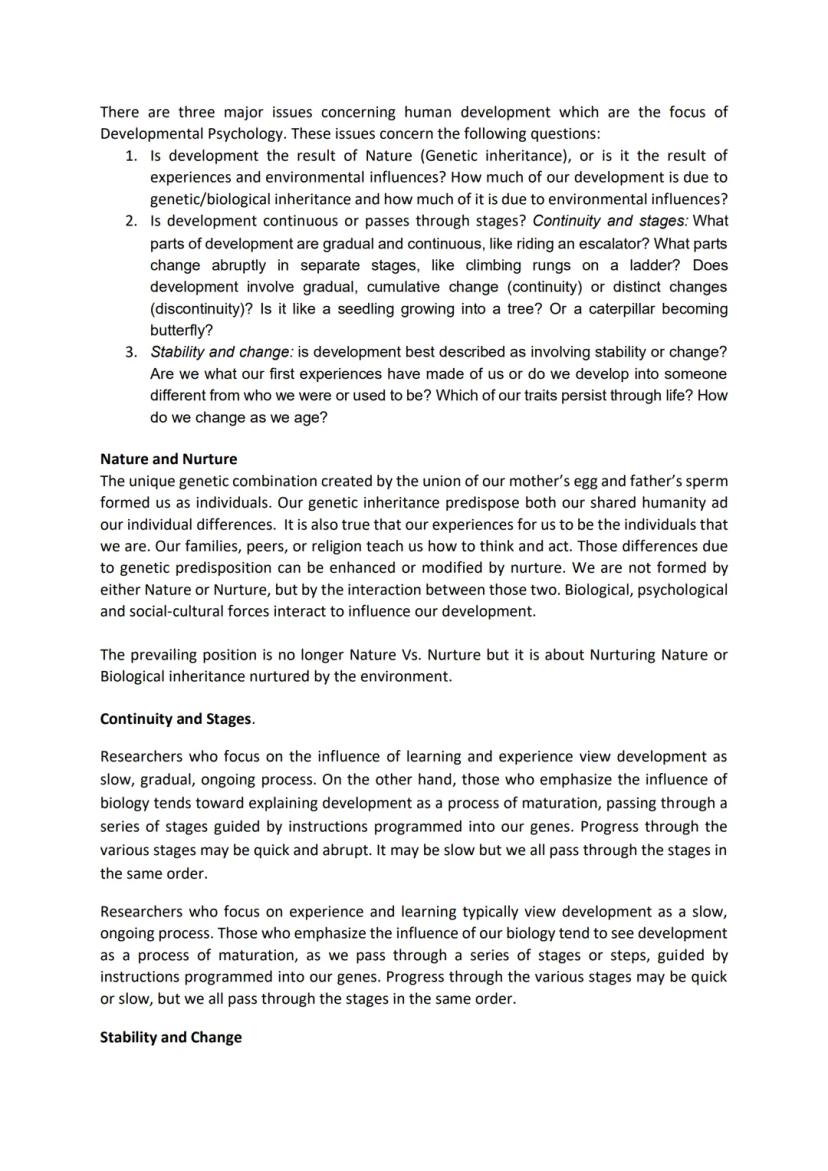
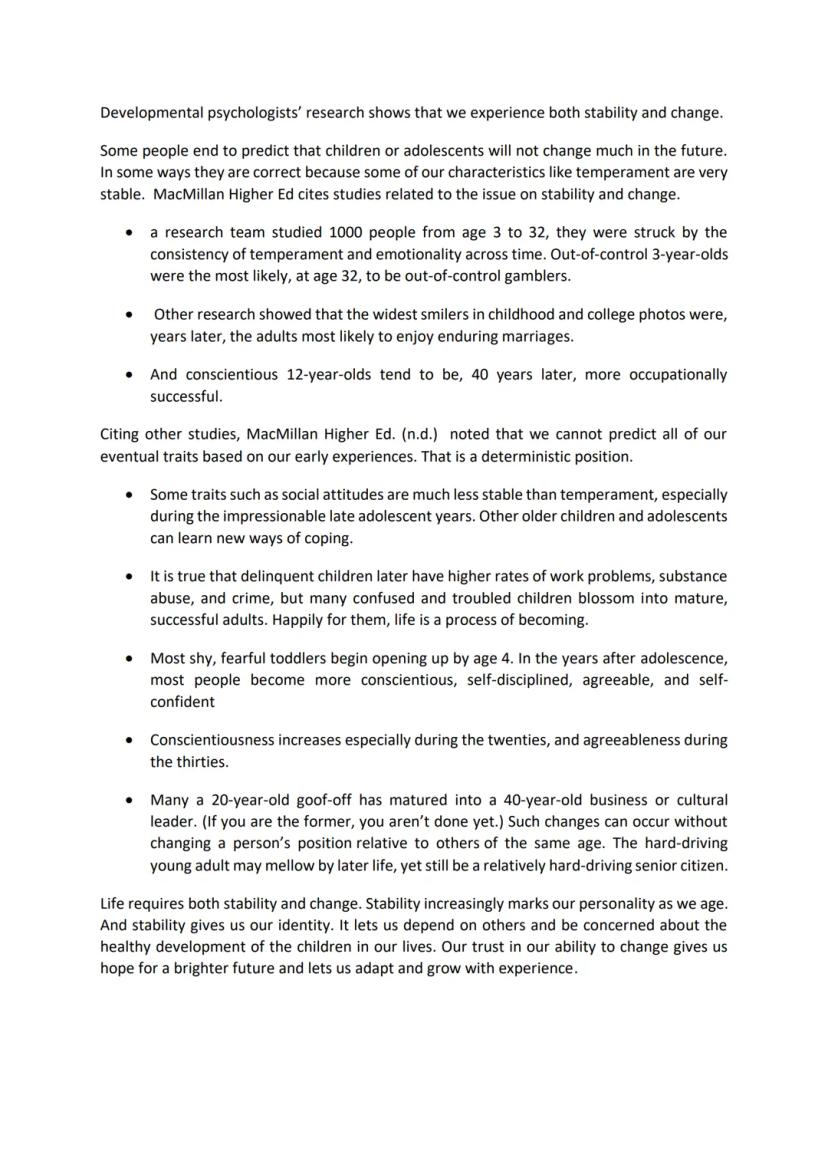

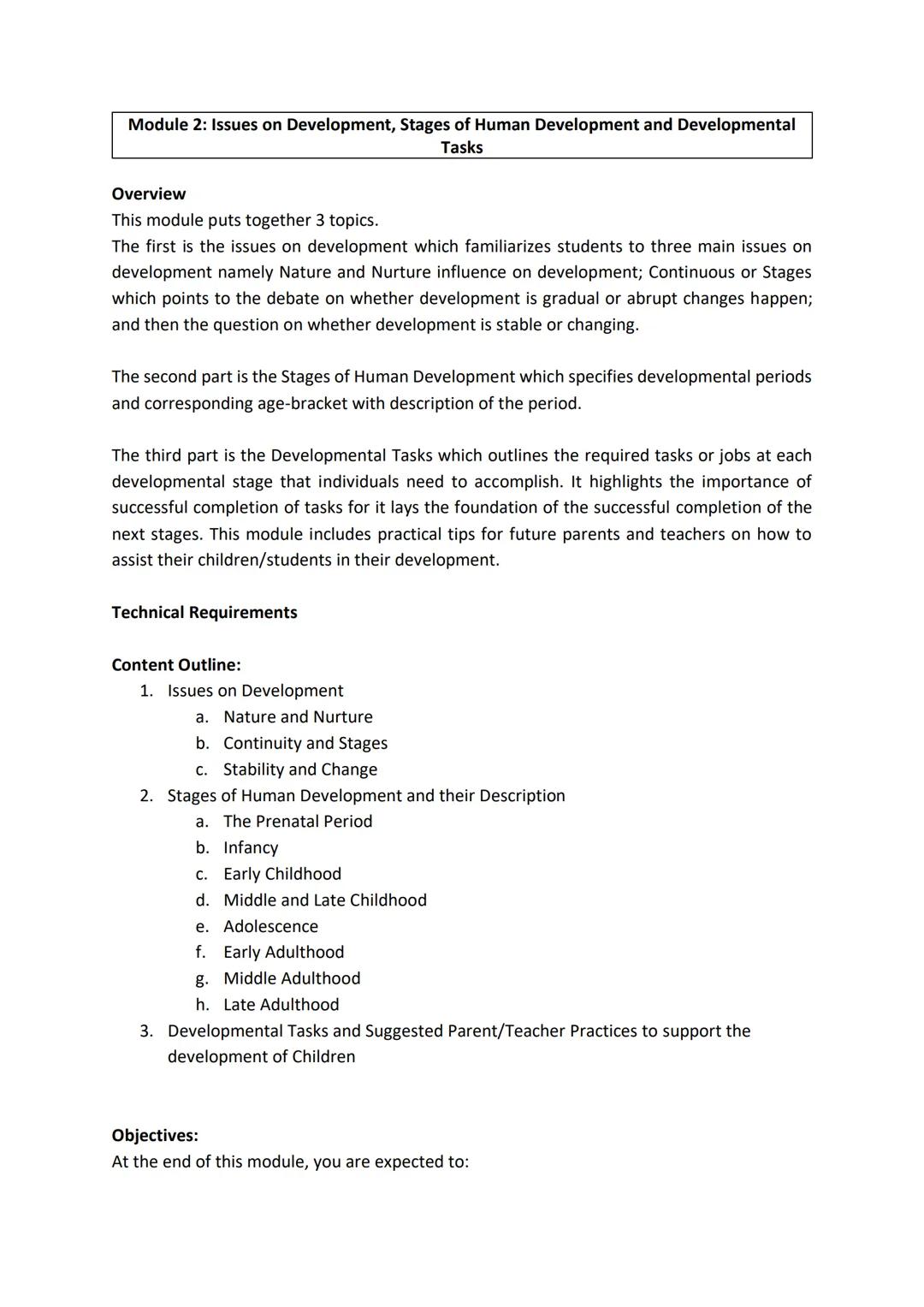
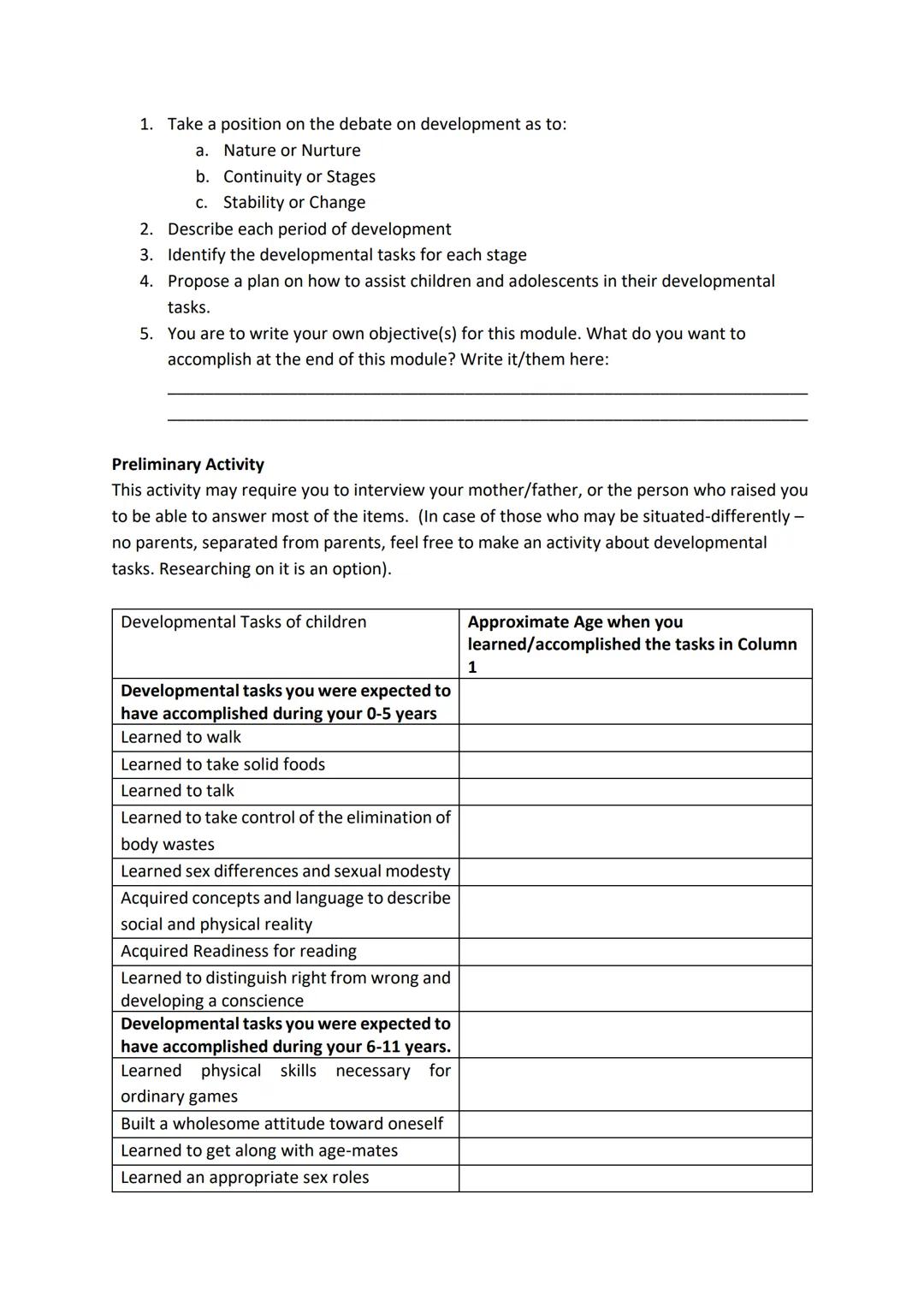
Ever wonder why some people seem born shy while others are outgoing from day one? Developmental psychology explores three key debates that explain how we grow and change:
Nature vs. Nurture: Are we shaped primarily by our genetic makeup or by our experiences? The current understanding is that it's not an either/or question—it's both. Our biological inheritance predisposes certain traits, but our environment can enhance or modify these predispositions. Think of it as "nurturing nature"—our genes and experiences constantly interact.
Continuity vs. Stages: Does development happen gradually like riding an escalator, or through distinct stages like climbing a ladder? Some researchers view development as a slow, ongoing process driven by learning and experience. Others see it as a series of programmed stages we all pass through in the same order, guided by our biology.
Did you know? While you might think someone who's shy at age 3 would always be shy, research shows many fearful toddlers begin opening up by age 4. Development involves both stability and potential for change!
Stability vs. Change: Do our early experiences permanently define us, or can we change throughout life? Research shows we experience both. Some traits like temperament tend to remain stable—studies found that out-of-control 3-year-olds were more likely to become impulsive adults decades later. Yet other characteristics, particularly social attitudes, can change dramatically, especially during adolescence.
Life requires both stability (giving us our sense of identity) and change (allowing us to adapt and grow). While some parts of who we are remain consistent, we all have the capacity to develop in new ways throughout life.
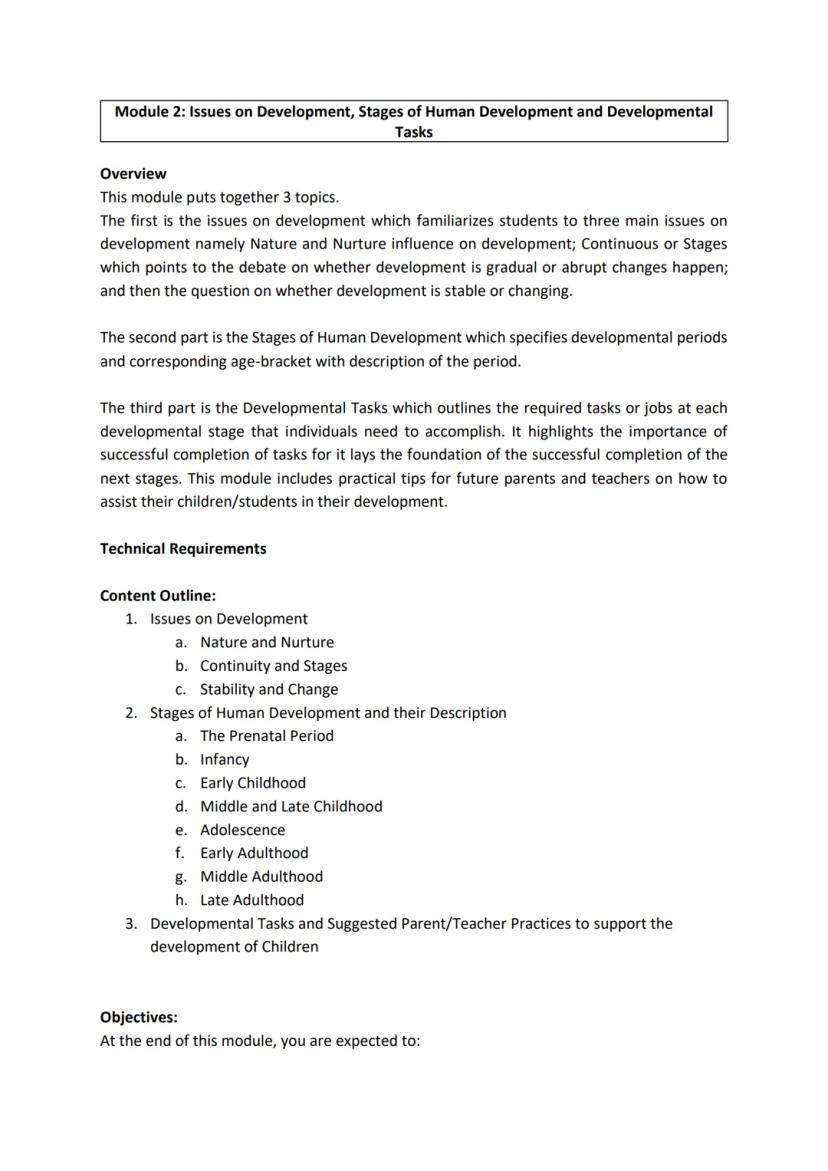
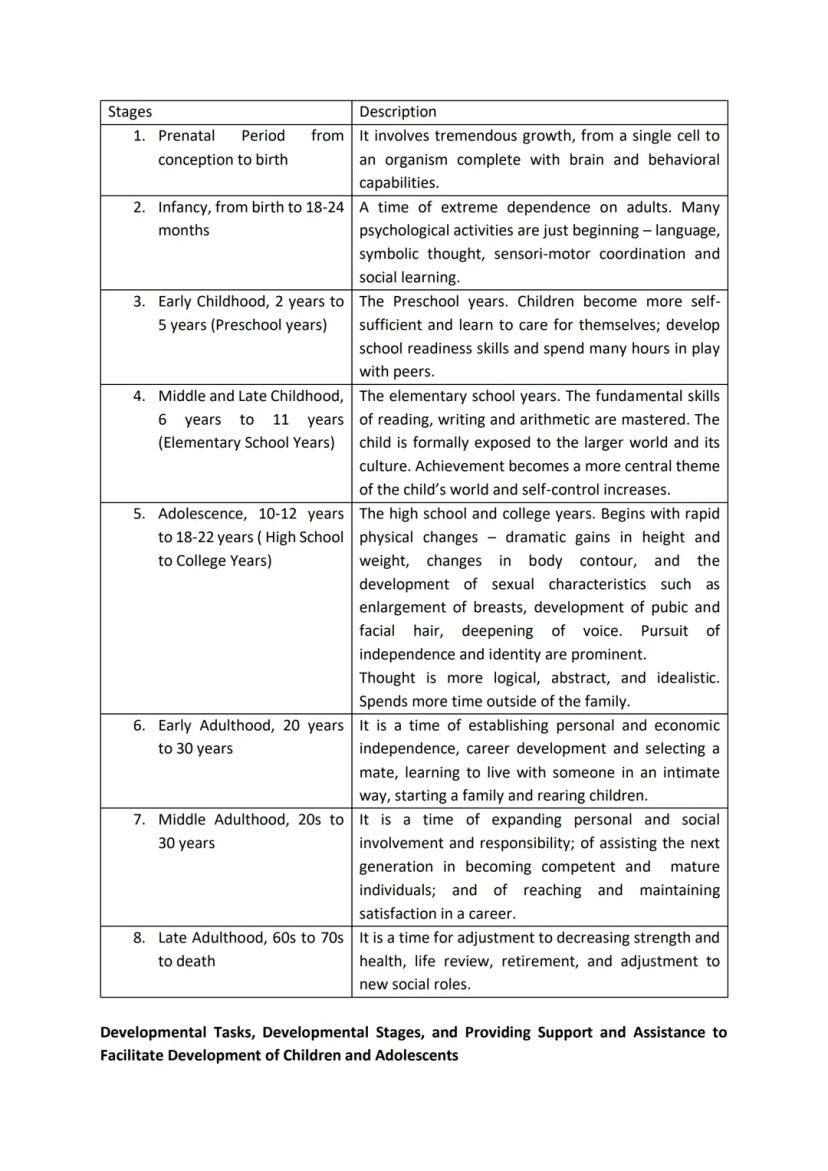
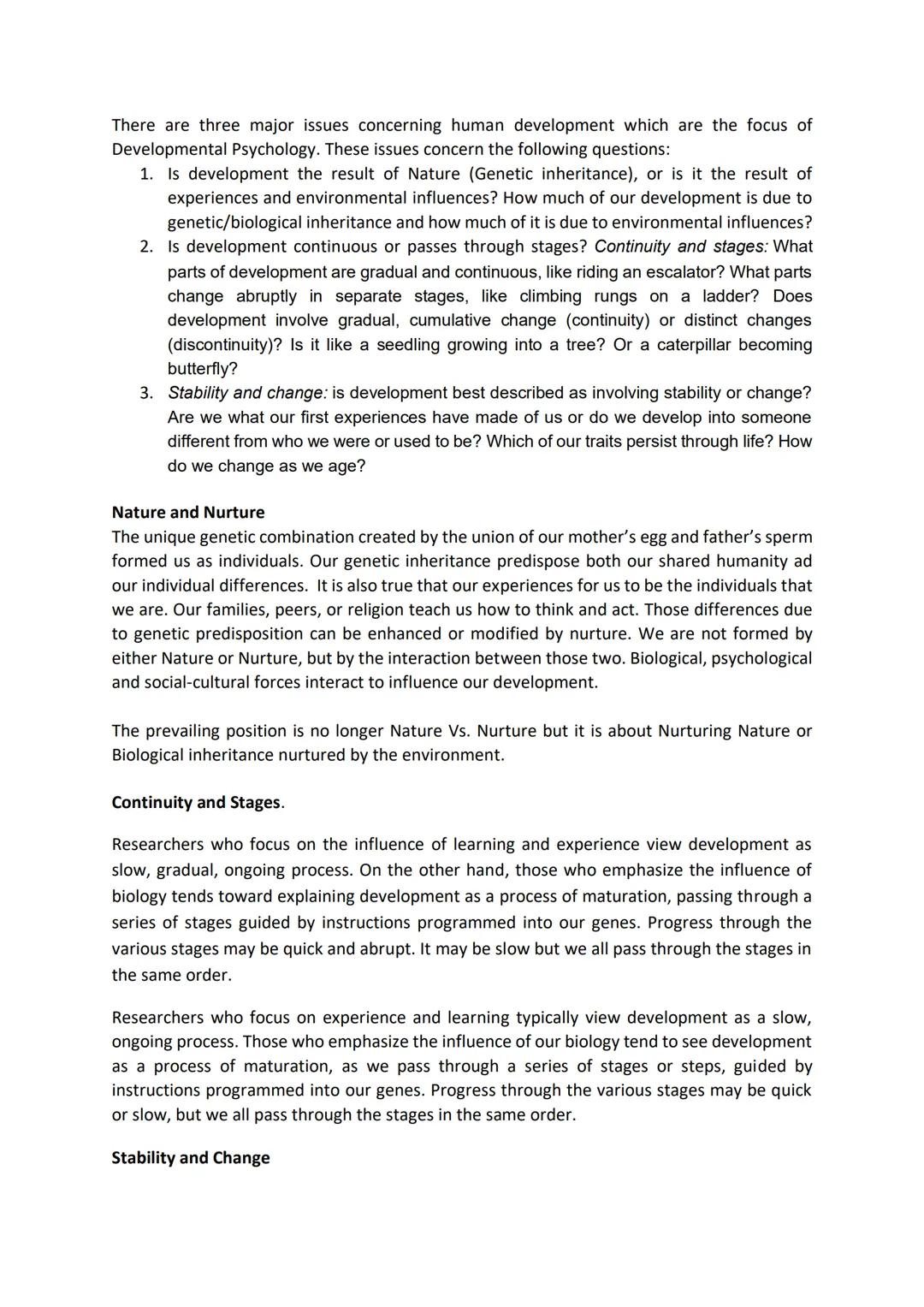
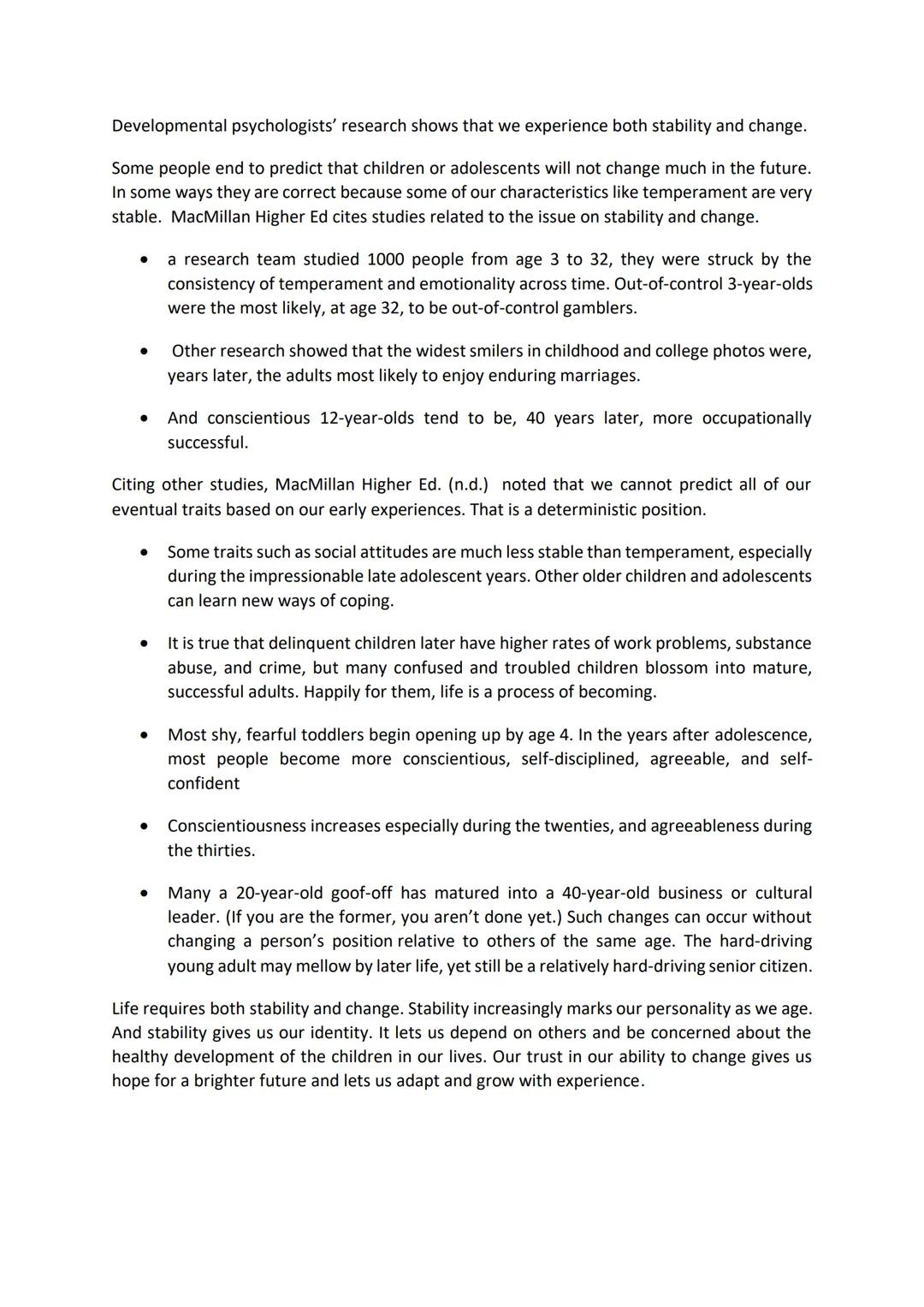
Your life journey follows a predictable path through eight key stages, each with its own challenges and achievements:
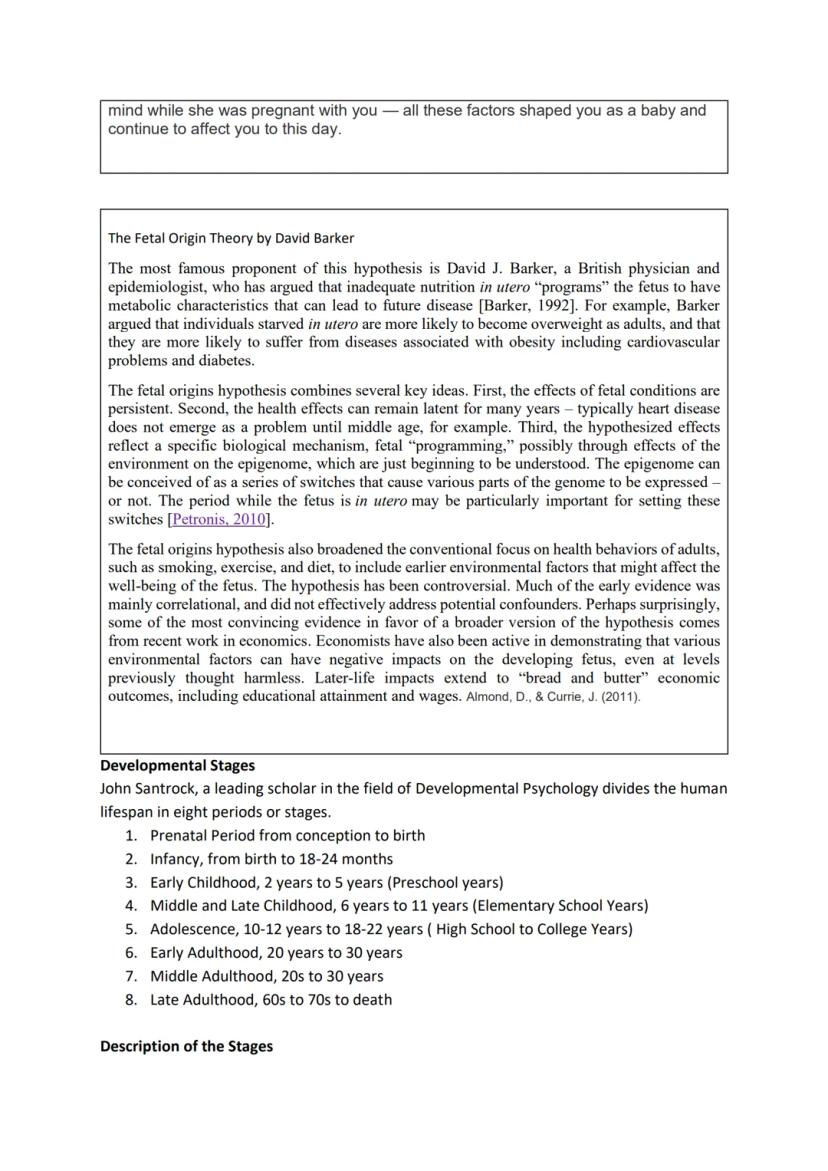
Prenatal Period (Conception to Birth) This foundational stage involves incredible transformation—from a single cell to a complete organism with brain and behavioral capabilities. Recent research highlights how this period shapes your entire life. David Barker's "Fetal Origin Theory" suggests that inadequate nutrition in the womb can "program" metabolic characteristics leading to future diseases like obesity and cardiovascular problems.
Infancy During this time of complete dependence, babies form crucial bonds with caregivers. They begin developing language, symbolic thought, sensorimotor coordination, and social learning. The quality of care during this period helps establish basic trust in the world.
Early Childhood Often called the "preschool years," children become increasingly self-sufficient. They develop school readiness skills and spend hours in imaginative play. This is when children begin distinguishing right from wrong and developing a conscience.
During the elementary school years, children master fundamental academic skills—reading, writing, and arithmetic. Their world expands dramatically as they're formally exposed to broader culture and society. Achievement becomes central to their identity, and self-control increases significantly.
Learning Tip: Children at this age are fascinated by rules and often rigidly follow them (though they may sometimes test boundaries). This is a perfect time to explain the "why" behind rules rather than just enforcing them!
Children in this stage are eager to develop new skills, especially social ones. They become more cooperative, develop reasoning abilities, and begin internalizing responsibility. Their play often revolves around games with formal rules, which helps them understand social structures.
Adolescence begins with dramatic physical changes—rapid height and weight gains, changing body contour, and sexual development including breast enlargement, pubic hair growth, and voice deepening. But the transformation goes far beyond the physical:
Teens experience a significant cognitive leap, developing more logical, abstract, and idealistic thinking. This explains their newfound passion for social causes and questioning of established norms. While they may suddenly become critical of everything their parents do, this is actually a healthy part of establishing their own identity.
The peer group becomes tremendously important, serving as a "security blanket" during this time of separation from parents. Friendships help teens navigate relationships that will serve them throughout life. Many teens reconnect with parents in late adolescence once they feel more secure in their own identities.
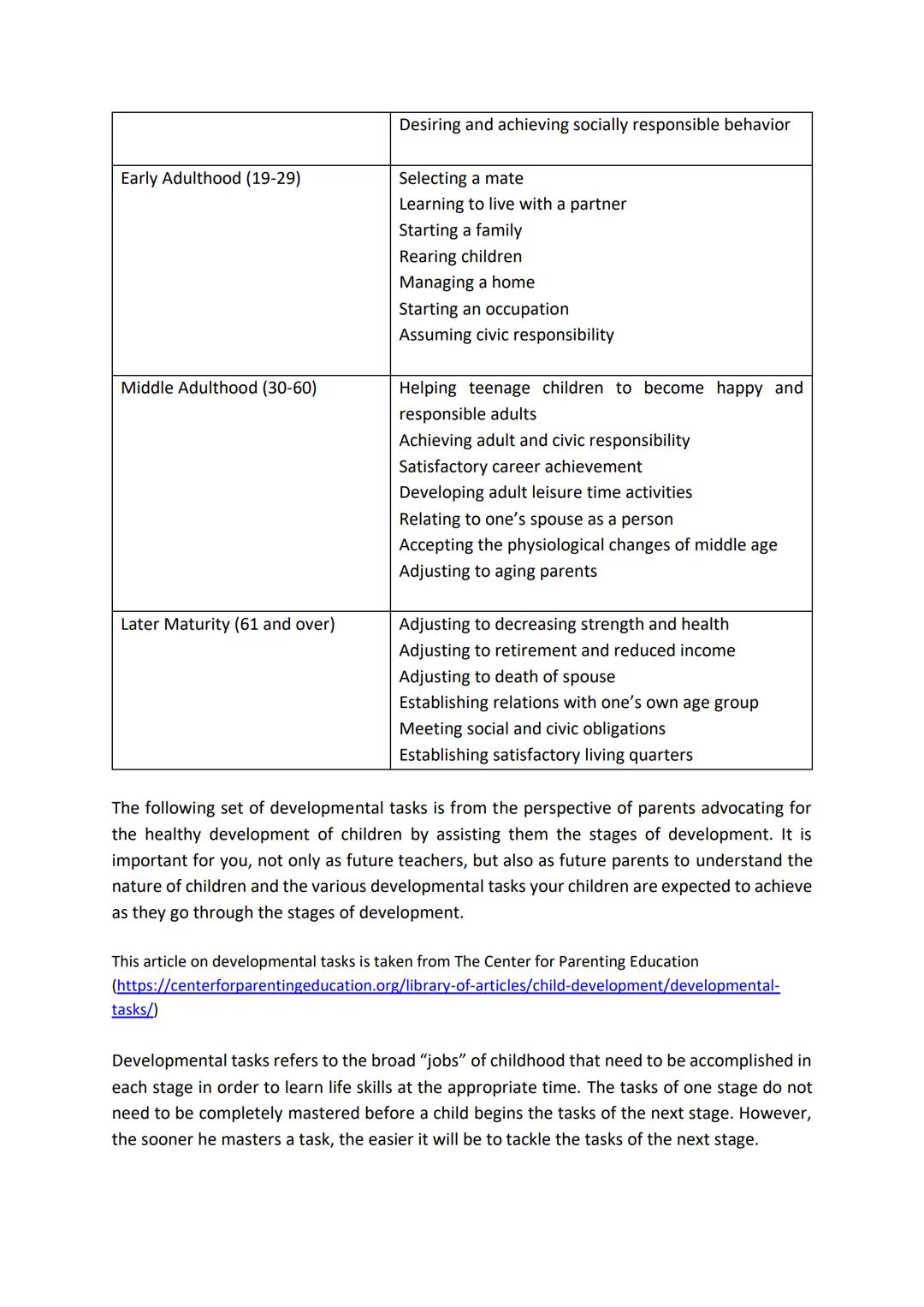
Early Adulthood This period focuses on establishing personal and economic independence, career development, and intimate relationships. Young adults select mates, start families, and learn to balance their new responsibilities. Despite common stereotypes, most people become more conscientious, self-disciplined, agreeable, and self-confident during their twenties.
Middle Adulthood The focus shifts to expanding social responsibilities, guiding the next generation, and maintaining career satisfaction. This stage often brings both peak productivity and a growing awareness of one's limited time.
Late Adulthood This final stage involves adjusting to decreasing strength and health, retirement, changing social roles, and reflecting on one's life. While physically challenging, this period can bring emotional wisdom and perspective.
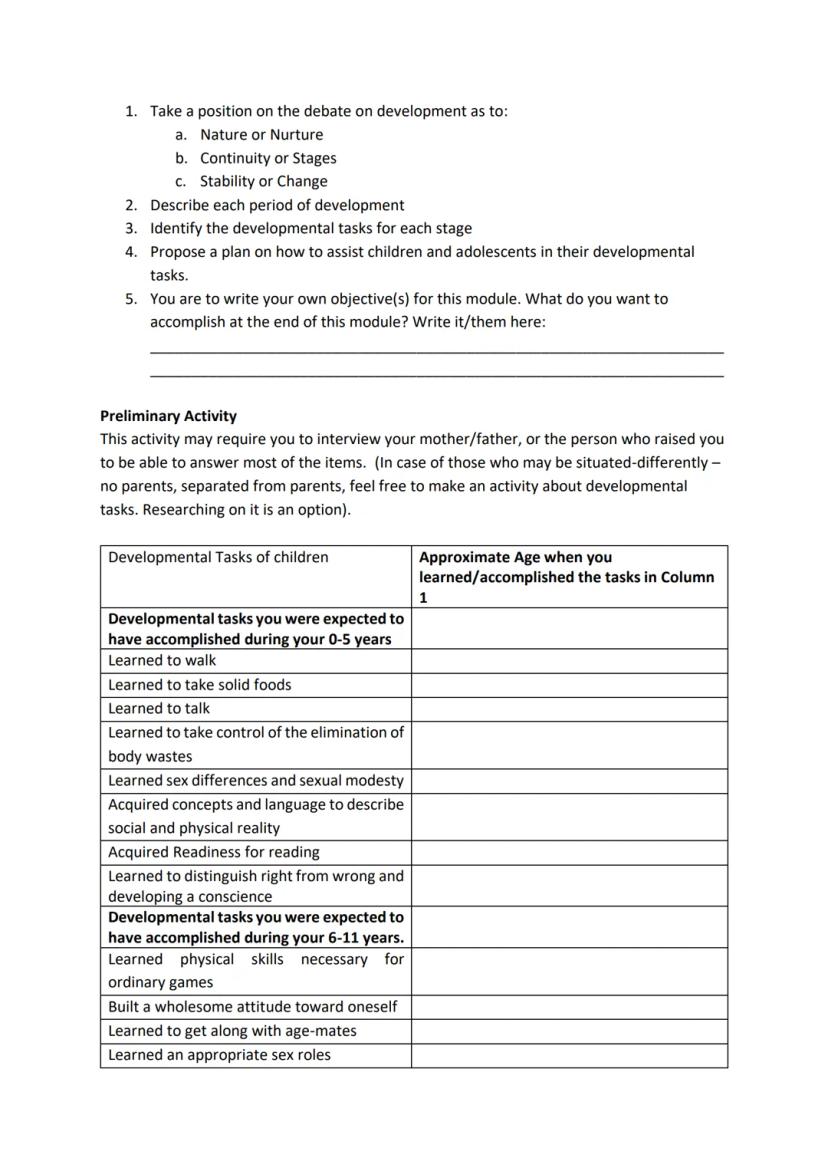
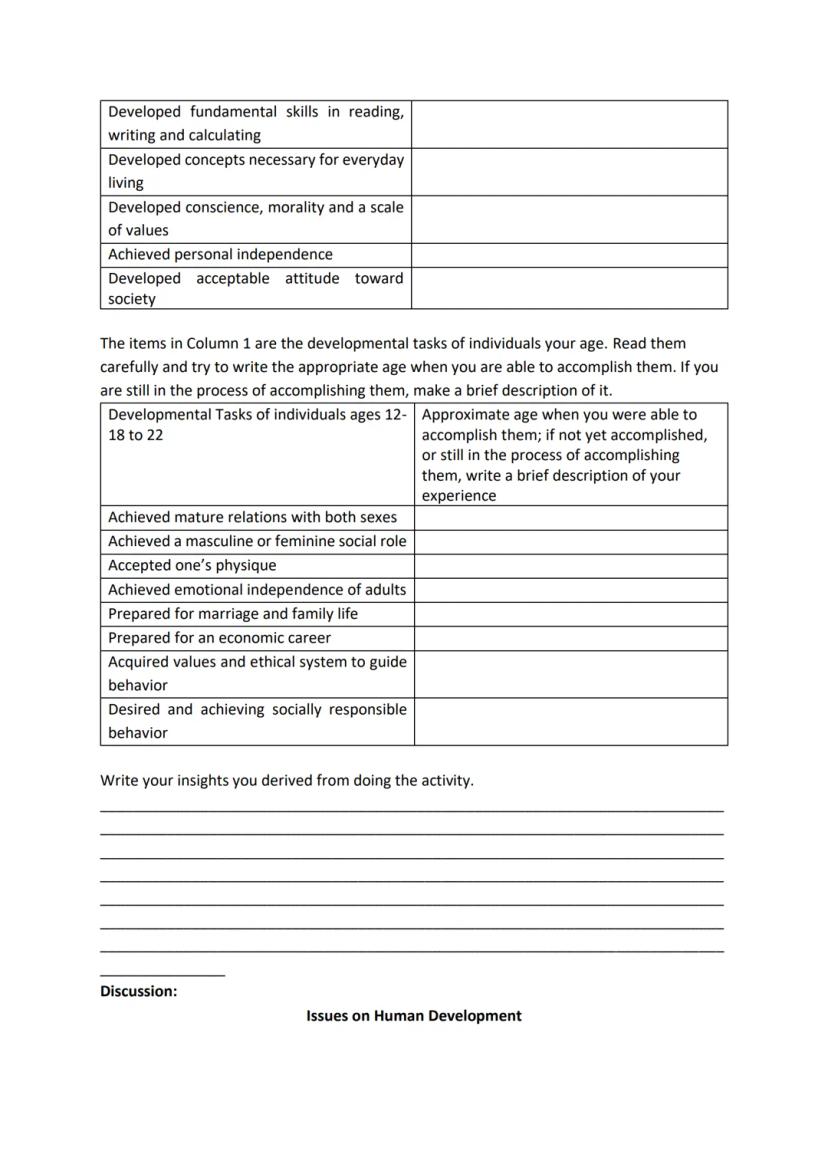
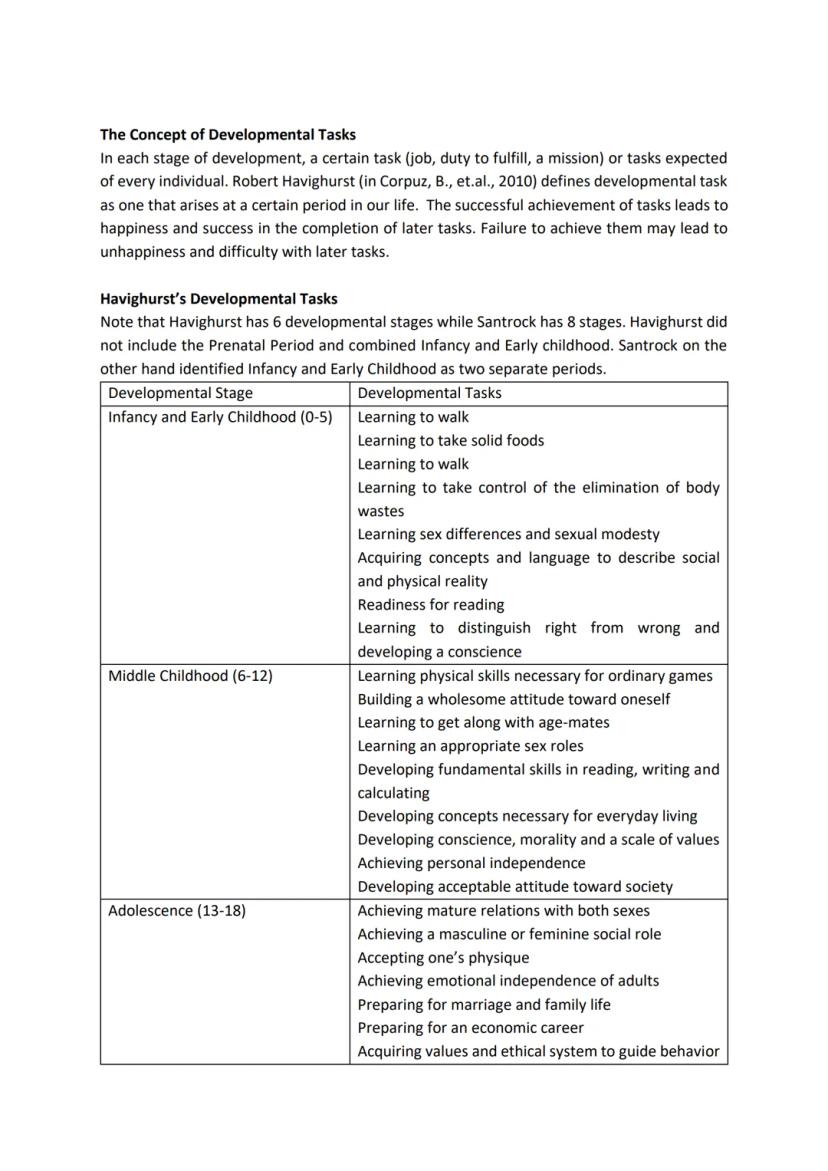
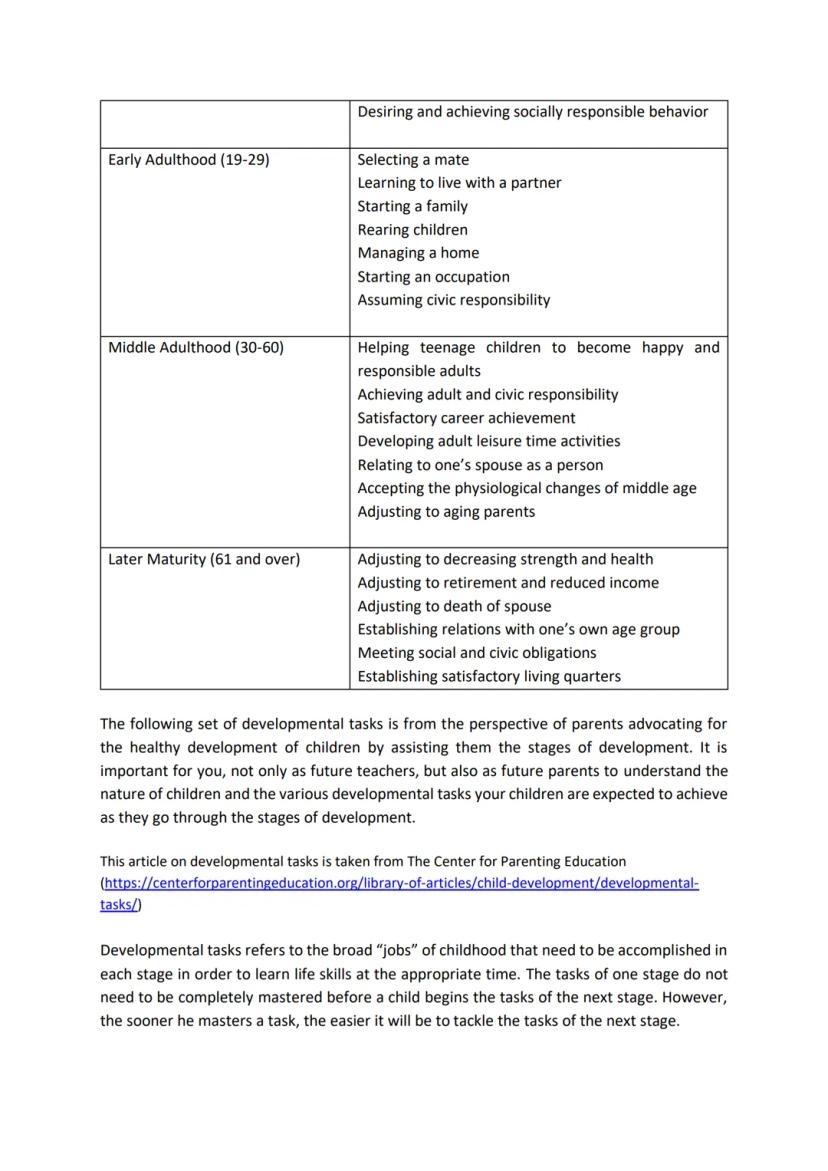
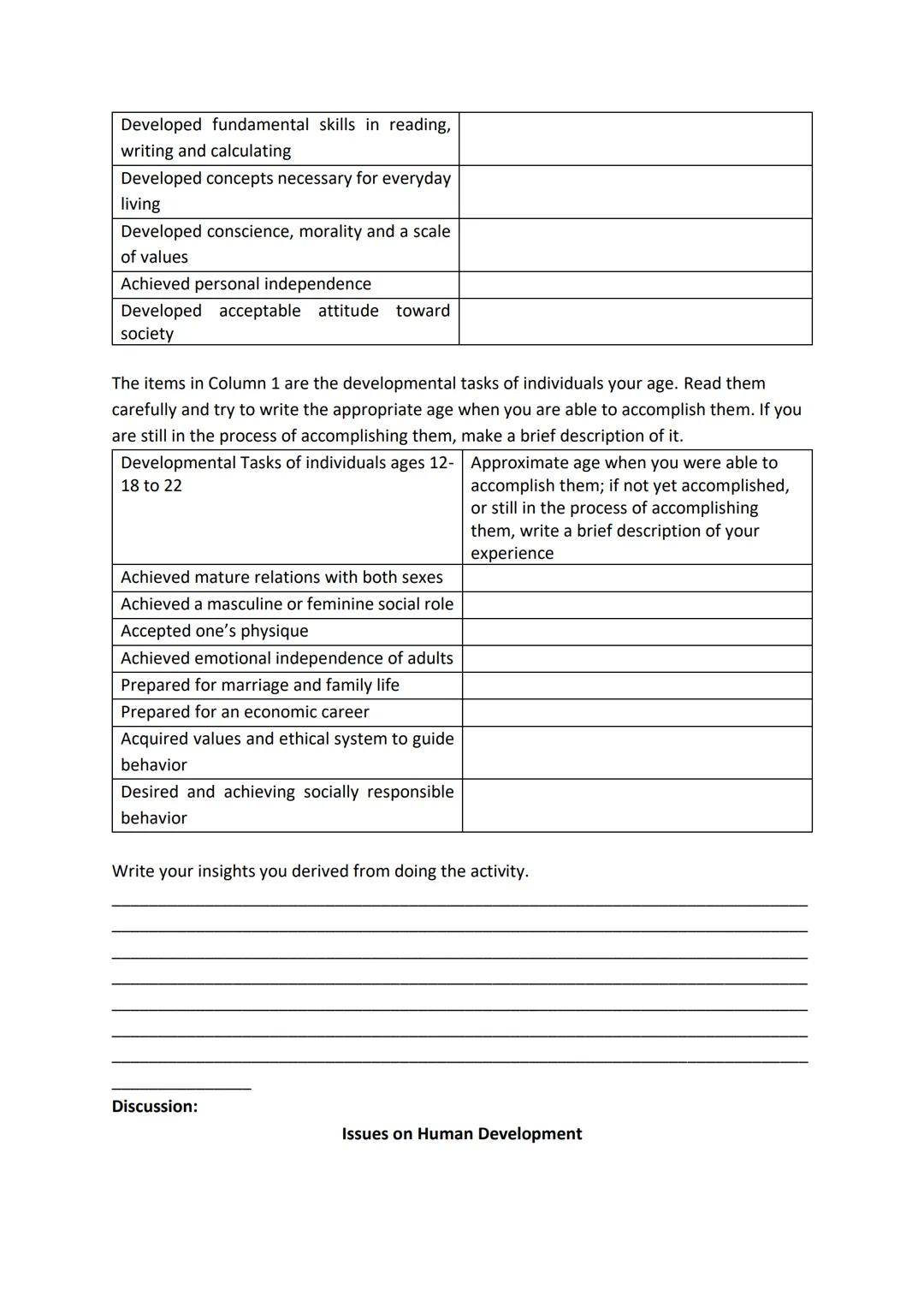
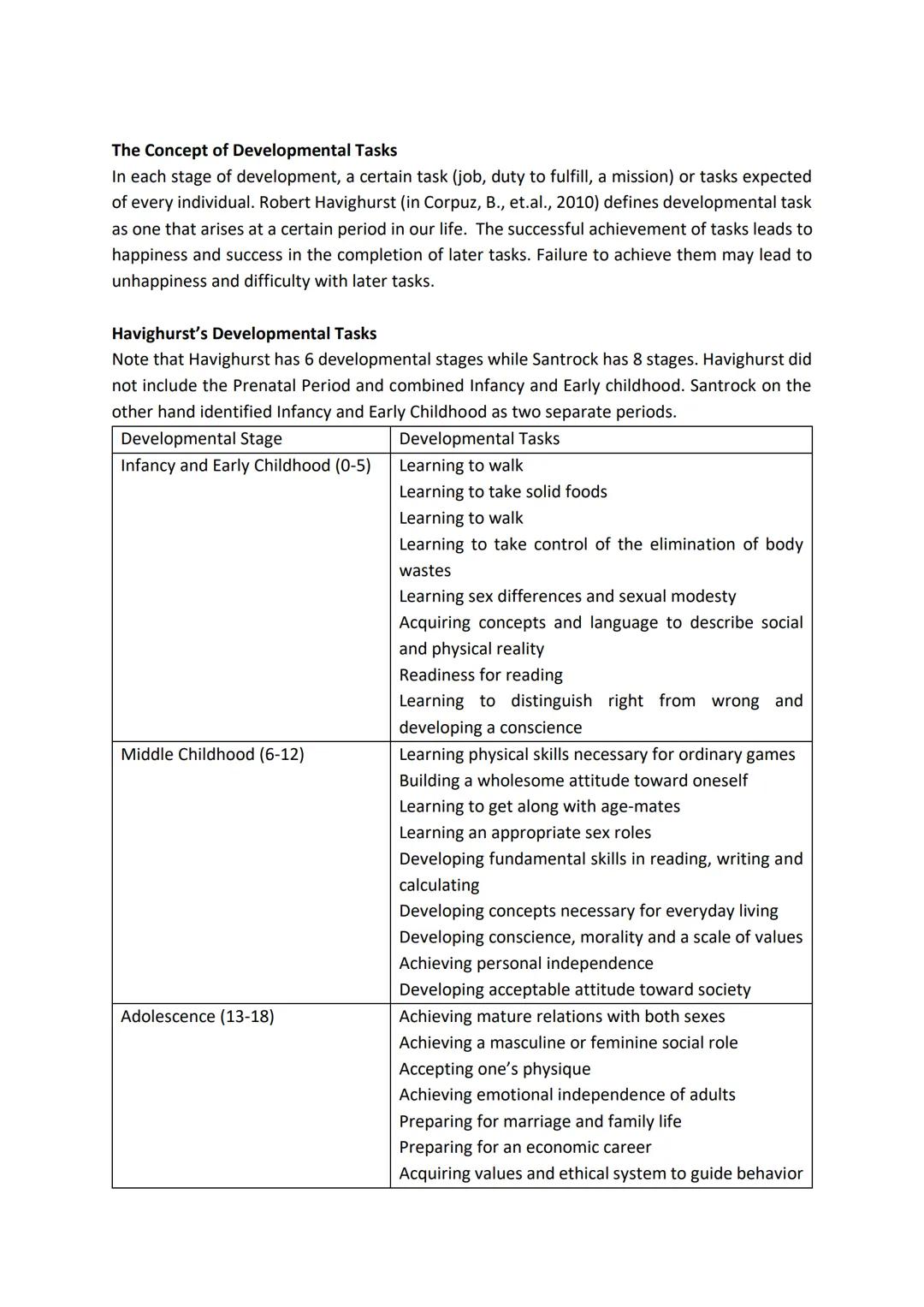
Every stage of development presents specific "jobs" or tasks that individuals need to accomplish. Robert Havighurst defines developmental tasks as challenges that arise at certain periods in our lives. Successfully achieving these tasks leads to happiness and creates a foundation for mastering future challenges. Failure may lead to unhappiness and difficulty with later tasks.
Infancy and Early Childhood Key tasks include:
Middle Childhood Children must focus on:
For Parents and Teachers: Children this age are fascinated by rules but don't always follow them! This contradiction is completely normal—they're testing boundaries as they learn to internalize values. Set clear limits but choose your battles wisely.
Adolescence Teens work on:
Understanding these tasks helps parents and teachers support children's development more effectively. When adults recognize that behaviors like a toddler's refusal to share or a teenager's criticism are actually signs of healthy development, they can respond with patience rather than frustration.
How can parents and teachers help children successfully complete their developmental tasks? Here are practical strategies for each stage:
For Infants Since babies are forming basic trust, focus on:
For Toddlers As children develop independence and separate themselves from parents:
For Preschoolers During this time of curiosity and role-playing:
For School-Age Children As they focus on mastering skills and understanding rules:
Remember that development is rarely linear—children may master some tasks ahead of schedule while needing more time with others. The goal isn't perfection but steady progress toward becoming independent, capable individuals who can form healthy relationships and contribute to society.

Our AI companion is specifically built for the needs of students. Based on the millions of content pieces we have on the platform we can provide truly meaningful and relevant answers to students. But its not only about answers, the companion is even more about guiding students through their daily learning challenges, with personalised study plans, quizzes or content pieces in the chat and 100% personalisation based on the students skills and developments.
You can download the app in the Google Play Store and in the Apple App Store.
That's right! Enjoy free access to study content, connect with fellow students, and get instant help – all at your fingertips.
App Store
Google Play
The app is very easy to use and well designed. I have found everything I was looking for so far and have been able to learn a lot from the presentations! I will definitely use the app for a class assignment! And of course it also helps a lot as an inspiration.
Stefan S
iOS user
This app is really great. There are so many study notes and help [...]. My problem subject is French, for example, and the app has so many options for help. Thanks to this app, I have improved my French. I would recommend it to anyone.
Samantha Klich
Android user
Wow, I am really amazed. I just tried the app because I've seen it advertised many times and was absolutely stunned. This app is THE HELP you want for school and above all, it offers so many things, such as workouts and fact sheets, which have been VERY helpful to me personally.
Anna
iOS user
I think it’s very much worth it and you’ll end up using it a lot once you get the hang of it and even after looking at others notes you can still ask your Artificial intelligence buddy the question and ask to simplify it if you still don’t get it!!! In the end I think it’s worth it 😊👍 ⚠️Also DID I MENTION ITS FREEE YOU DON’T HAVE TO PAY FOR ANYTHING AND STILL GET YOUR GRADES IN PERFECTLY❗️❗️⚠️
Thomas R
iOS user
Knowunity is the BEST app I’ve used in a minute. This is not an ai review or anything this is genuinely coming from a 7th grade student (I know 2011 im young) but dude this app is a 10/10 i have maintained a 3.8 gpa and have plenty of time for gaming. I love it and my mom is just happy I got good grades
Brad T
Android user
Not only did it help me find the answer but it also showed me alternative ways to solve it. I was horrible in math and science but now I have an a in both subjects. Thanks for the help🤍🤍
David K
iOS user
The app's just great! All I have to do is enter the topic in the search bar and I get the response real fast. I don't have to watch 10 YouTube videos to understand something, so I'm saving my time. Highly recommended!
Sudenaz Ocak
Android user
In school I was really bad at maths but thanks to the app, I am doing better now. I am so grateful that you made the app.
Greenlight Bonnie
Android user
I found this app a couple years ago and it has only gotten better since then. I really love it because it can help with written questions and photo questions. Also, it can find study guides that other people have made as well as flashcard sets and practice tests. The free version is also amazing for students who might not be able to afford it. Would 100% recommend
Aubrey
iOS user
Best app if you're in Highschool or Junior high. I have been using this app for 2 school years and it's the best, it's good if you don't have anyone to help you with school work.😋🩷🎀
Marco B
iOS user
THE QUIZES AND FLASHCARDS ARE SO USEFUL AND I LOVE Knowunity AI. IT ALSO IS LITREALLY LIKE CHATGPT BUT SMARTER!! HELPED ME WITH MY MASCARA PROBLEMS TOO!! AS WELL AS MY REAL SUBJECTS ! DUHHH 😍😁😲🤑💗✨🎀😮
Elisha
iOS user
This app is phenomenal down to the correct info and the various topics you can study! I greatly recommend it for people who struggle with procrastination and those who need homework help. It has been perfectly accurate for world 1 history as far as I’ve seen! Geometry too!
Paul T
iOS user
The app is very easy to use and well designed. I have found everything I was looking for so far and have been able to learn a lot from the presentations! I will definitely use the app for a class assignment! And of course it also helps a lot as an inspiration.
Stefan S
iOS user
This app is really great. There are so many study notes and help [...]. My problem subject is French, for example, and the app has so many options for help. Thanks to this app, I have improved my French. I would recommend it to anyone.
Samantha Klich
Android user
Wow, I am really amazed. I just tried the app because I've seen it advertised many times and was absolutely stunned. This app is THE HELP you want for school and above all, it offers so many things, such as workouts and fact sheets, which have been VERY helpful to me personally.
Anna
iOS user
I think it’s very much worth it and you’ll end up using it a lot once you get the hang of it and even after looking at others notes you can still ask your Artificial intelligence buddy the question and ask to simplify it if you still don’t get it!!! In the end I think it’s worth it 😊👍 ⚠️Also DID I MENTION ITS FREEE YOU DON’T HAVE TO PAY FOR ANYTHING AND STILL GET YOUR GRADES IN PERFECTLY❗️❗️⚠️
Thomas R
iOS user
Knowunity is the BEST app I’ve used in a minute. This is not an ai review or anything this is genuinely coming from a 7th grade student (I know 2011 im young) but dude this app is a 10/10 i have maintained a 3.8 gpa and have plenty of time for gaming. I love it and my mom is just happy I got good grades
Brad T
Android user
Not only did it help me find the answer but it also showed me alternative ways to solve it. I was horrible in math and science but now I have an a in both subjects. Thanks for the help🤍🤍
David K
iOS user
The app's just great! All I have to do is enter the topic in the search bar and I get the response real fast. I don't have to watch 10 YouTube videos to understand something, so I'm saving my time. Highly recommended!
Sudenaz Ocak
Android user
In school I was really bad at maths but thanks to the app, I am doing better now. I am so grateful that you made the app.
Greenlight Bonnie
Android user
I found this app a couple years ago and it has only gotten better since then. I really love it because it can help with written questions and photo questions. Also, it can find study guides that other people have made as well as flashcard sets and practice tests. The free version is also amazing for students who might not be able to afford it. Would 100% recommend
Aubrey
iOS user
Best app if you're in Highschool or Junior high. I have been using this app for 2 school years and it's the best, it's good if you don't have anyone to help you with school work.😋🩷🎀
Marco B
iOS user
THE QUIZES AND FLASHCARDS ARE SO USEFUL AND I LOVE Knowunity AI. IT ALSO IS LITREALLY LIKE CHATGPT BUT SMARTER!! HELPED ME WITH MY MASCARA PROBLEMS TOO!! AS WELL AS MY REAL SUBJECTS ! DUHHH 😍😁😲🤑💗✨🎀😮
Elisha
iOS user
This app is phenomenal down to the correct info and the various topics you can study! I greatly recommend it for people who struggle with procrastination and those who need homework help. It has been perfectly accurate for world 1 history as far as I’ve seen! Geometry too!
Paul T
iOS user
nicole espano
@nicoleespano
Human development is a fascinating journey through distinct life stages, each with unique characteristics and challenges. From conception to old age, we grow physically, cognitively, and socially while tackling specific developmental tasks at each stage. Understanding these processes helps us... Show more
Access to all documents
Improve your grades
Join milions of students
Ever wonder why some people seem born shy while others are outgoing from day one? Developmental psychology explores three key debates that explain how we grow and change:
Nature vs. Nurture: Are we shaped primarily by our genetic makeup or by our experiences? The current understanding is that it's not an either/or question—it's both. Our biological inheritance predisposes certain traits, but our environment can enhance or modify these predispositions. Think of it as "nurturing nature"—our genes and experiences constantly interact.
Continuity vs. Stages: Does development happen gradually like riding an escalator, or through distinct stages like climbing a ladder? Some researchers view development as a slow, ongoing process driven by learning and experience. Others see it as a series of programmed stages we all pass through in the same order, guided by our biology.
Did you know? While you might think someone who's shy at age 3 would always be shy, research shows many fearful toddlers begin opening up by age 4. Development involves both stability and potential for change!
Stability vs. Change: Do our early experiences permanently define us, or can we change throughout life? Research shows we experience both. Some traits like temperament tend to remain stable—studies found that out-of-control 3-year-olds were more likely to become impulsive adults decades later. Yet other characteristics, particularly social attitudes, can change dramatically, especially during adolescence.
Life requires both stability (giving us our sense of identity) and change (allowing us to adapt and grow). While some parts of who we are remain consistent, we all have the capacity to develop in new ways throughout life.
Access to all documents
Improve your grades
Join milions of students
Your life journey follows a predictable path through eight key stages, each with its own challenges and achievements:
Prenatal Period (Conception to Birth) This foundational stage involves incredible transformation—from a single cell to a complete organism with brain and behavioral capabilities. Recent research highlights how this period shapes your entire life. David Barker's "Fetal Origin Theory" suggests that inadequate nutrition in the womb can "program" metabolic characteristics leading to future diseases like obesity and cardiovascular problems.
Infancy During this time of complete dependence, babies form crucial bonds with caregivers. They begin developing language, symbolic thought, sensorimotor coordination, and social learning. The quality of care during this period helps establish basic trust in the world.
Early Childhood Often called the "preschool years," children become increasingly self-sufficient. They develop school readiness skills and spend hours in imaginative play. This is when children begin distinguishing right from wrong and developing a conscience.
During the elementary school years, children master fundamental academic skills—reading, writing, and arithmetic. Their world expands dramatically as they're formally exposed to broader culture and society. Achievement becomes central to their identity, and self-control increases significantly.
Learning Tip: Children at this age are fascinated by rules and often rigidly follow them (though they may sometimes test boundaries). This is a perfect time to explain the "why" behind rules rather than just enforcing them!
Children in this stage are eager to develop new skills, especially social ones. They become more cooperative, develop reasoning abilities, and begin internalizing responsibility. Their play often revolves around games with formal rules, which helps them understand social structures.
Access to all documents
Improve your grades
Join milions of students
Adolescence begins with dramatic physical changes—rapid height and weight gains, changing body contour, and sexual development including breast enlargement, pubic hair growth, and voice deepening. But the transformation goes far beyond the physical:
Teens experience a significant cognitive leap, developing more logical, abstract, and idealistic thinking. This explains their newfound passion for social causes and questioning of established norms. While they may suddenly become critical of everything their parents do, this is actually a healthy part of establishing their own identity.
The peer group becomes tremendously important, serving as a "security blanket" during this time of separation from parents. Friendships help teens navigate relationships that will serve them throughout life. Many teens reconnect with parents in late adolescence once they feel more secure in their own identities.
Early Adulthood This period focuses on establishing personal and economic independence, career development, and intimate relationships. Young adults select mates, start families, and learn to balance their new responsibilities. Despite common stereotypes, most people become more conscientious, self-disciplined, agreeable, and self-confident during their twenties.
Middle Adulthood The focus shifts to expanding social responsibilities, guiding the next generation, and maintaining career satisfaction. This stage often brings both peak productivity and a growing awareness of one's limited time.
Late Adulthood This final stage involves adjusting to decreasing strength and health, retirement, changing social roles, and reflecting on one's life. While physically challenging, this period can bring emotional wisdom and perspective.
Access to all documents
Improve your grades
Join milions of students
Every stage of development presents specific "jobs" or tasks that individuals need to accomplish. Robert Havighurst defines developmental tasks as challenges that arise at certain periods in our lives. Successfully achieving these tasks leads to happiness and creates a foundation for mastering future challenges. Failure may lead to unhappiness and difficulty with later tasks.
Infancy and Early Childhood Key tasks include:
Middle Childhood Children must focus on:
For Parents and Teachers: Children this age are fascinated by rules but don't always follow them! This contradiction is completely normal—they're testing boundaries as they learn to internalize values. Set clear limits but choose your battles wisely.
Adolescence Teens work on:
Understanding these tasks helps parents and teachers support children's development more effectively. When adults recognize that behaviors like a toddler's refusal to share or a teenager's criticism are actually signs of healthy development, they can respond with patience rather than frustration.
Access to all documents
Improve your grades
Join milions of students
How can parents and teachers help children successfully complete their developmental tasks? Here are practical strategies for each stage:
For Infants Since babies are forming basic trust, focus on:
For Toddlers As children develop independence and separate themselves from parents:
For Preschoolers During this time of curiosity and role-playing:
For School-Age Children As they focus on mastering skills and understanding rules:
Remember that development is rarely linear—children may master some tasks ahead of schedule while needing more time with others. The goal isn't perfection but steady progress toward becoming independent, capable individuals who can form healthy relationships and contribute to society.
Access to all documents
Improve your grades
Join milions of students
Access to all documents
Improve your grades
Join milions of students
Access to all documents
Improve your grades
Join milions of students
Access to all documents
Improve your grades
Join milions of students
Access to all documents
Improve your grades
Join milions of students
Our AI companion is specifically built for the needs of students. Based on the millions of content pieces we have on the platform we can provide truly meaningful and relevant answers to students. But its not only about answers, the companion is even more about guiding students through their daily learning challenges, with personalised study plans, quizzes or content pieces in the chat and 100% personalisation based on the students skills and developments.
You can download the app in the Google Play Store and in the Apple App Store.
That's right! Enjoy free access to study content, connect with fellow students, and get instant help – all at your fingertips.
2
Smart Tools NEW
Transform this note into: ✓ 50+ Practice Questions ✓ Interactive Flashcards ✓ Full Practice Test ✓ Essay Outlines
App Store
Google Play
The app is very easy to use and well designed. I have found everything I was looking for so far and have been able to learn a lot from the presentations! I will definitely use the app for a class assignment! And of course it also helps a lot as an inspiration.
Stefan S
iOS user
This app is really great. There are so many study notes and help [...]. My problem subject is French, for example, and the app has so many options for help. Thanks to this app, I have improved my French. I would recommend it to anyone.
Samantha Klich
Android user
Wow, I am really amazed. I just tried the app because I've seen it advertised many times and was absolutely stunned. This app is THE HELP you want for school and above all, it offers so many things, such as workouts and fact sheets, which have been VERY helpful to me personally.
Anna
iOS user
I think it’s very much worth it and you’ll end up using it a lot once you get the hang of it and even after looking at others notes you can still ask your Artificial intelligence buddy the question and ask to simplify it if you still don’t get it!!! In the end I think it’s worth it 😊👍 ⚠️Also DID I MENTION ITS FREEE YOU DON’T HAVE TO PAY FOR ANYTHING AND STILL GET YOUR GRADES IN PERFECTLY❗️❗️⚠️
Thomas R
iOS user
Knowunity is the BEST app I’ve used in a minute. This is not an ai review or anything this is genuinely coming from a 7th grade student (I know 2011 im young) but dude this app is a 10/10 i have maintained a 3.8 gpa and have plenty of time for gaming. I love it and my mom is just happy I got good grades
Brad T
Android user
Not only did it help me find the answer but it also showed me alternative ways to solve it. I was horrible in math and science but now I have an a in both subjects. Thanks for the help🤍🤍
David K
iOS user
The app's just great! All I have to do is enter the topic in the search bar and I get the response real fast. I don't have to watch 10 YouTube videos to understand something, so I'm saving my time. Highly recommended!
Sudenaz Ocak
Android user
In school I was really bad at maths but thanks to the app, I am doing better now. I am so grateful that you made the app.
Greenlight Bonnie
Android user
I found this app a couple years ago and it has only gotten better since then. I really love it because it can help with written questions and photo questions. Also, it can find study guides that other people have made as well as flashcard sets and practice tests. The free version is also amazing for students who might not be able to afford it. Would 100% recommend
Aubrey
iOS user
Best app if you're in Highschool or Junior high. I have been using this app for 2 school years and it's the best, it's good if you don't have anyone to help you with school work.😋🩷🎀
Marco B
iOS user
THE QUIZES AND FLASHCARDS ARE SO USEFUL AND I LOVE Knowunity AI. IT ALSO IS LITREALLY LIKE CHATGPT BUT SMARTER!! HELPED ME WITH MY MASCARA PROBLEMS TOO!! AS WELL AS MY REAL SUBJECTS ! DUHHH 😍😁😲🤑💗✨🎀😮
Elisha
iOS user
This app is phenomenal down to the correct info and the various topics you can study! I greatly recommend it for people who struggle with procrastination and those who need homework help. It has been perfectly accurate for world 1 history as far as I’ve seen! Geometry too!
Paul T
iOS user
The app is very easy to use and well designed. I have found everything I was looking for so far and have been able to learn a lot from the presentations! I will definitely use the app for a class assignment! And of course it also helps a lot as an inspiration.
Stefan S
iOS user
This app is really great. There are so many study notes and help [...]. My problem subject is French, for example, and the app has so many options for help. Thanks to this app, I have improved my French. I would recommend it to anyone.
Samantha Klich
Android user
Wow, I am really amazed. I just tried the app because I've seen it advertised many times and was absolutely stunned. This app is THE HELP you want for school and above all, it offers so many things, such as workouts and fact sheets, which have been VERY helpful to me personally.
Anna
iOS user
I think it’s very much worth it and you’ll end up using it a lot once you get the hang of it and even after looking at others notes you can still ask your Artificial intelligence buddy the question and ask to simplify it if you still don’t get it!!! In the end I think it’s worth it 😊👍 ⚠️Also DID I MENTION ITS FREEE YOU DON’T HAVE TO PAY FOR ANYTHING AND STILL GET YOUR GRADES IN PERFECTLY❗️❗️⚠️
Thomas R
iOS user
Knowunity is the BEST app I’ve used in a minute. This is not an ai review or anything this is genuinely coming from a 7th grade student (I know 2011 im young) but dude this app is a 10/10 i have maintained a 3.8 gpa and have plenty of time for gaming. I love it and my mom is just happy I got good grades
Brad T
Android user
Not only did it help me find the answer but it also showed me alternative ways to solve it. I was horrible in math and science but now I have an a in both subjects. Thanks for the help🤍🤍
David K
iOS user
The app's just great! All I have to do is enter the topic in the search bar and I get the response real fast. I don't have to watch 10 YouTube videos to understand something, so I'm saving my time. Highly recommended!
Sudenaz Ocak
Android user
In school I was really bad at maths but thanks to the app, I am doing better now. I am so grateful that you made the app.
Greenlight Bonnie
Android user
I found this app a couple years ago and it has only gotten better since then. I really love it because it can help with written questions and photo questions. Also, it can find study guides that other people have made as well as flashcard sets and practice tests. The free version is also amazing for students who might not be able to afford it. Would 100% recommend
Aubrey
iOS user
Best app if you're in Highschool or Junior high. I have been using this app for 2 school years and it's the best, it's good if you don't have anyone to help you with school work.😋🩷🎀
Marco B
iOS user
THE QUIZES AND FLASHCARDS ARE SO USEFUL AND I LOVE Knowunity AI. IT ALSO IS LITREALLY LIKE CHATGPT BUT SMARTER!! HELPED ME WITH MY MASCARA PROBLEMS TOO!! AS WELL AS MY REAL SUBJECTS ! DUHHH 😍😁😲🤑💗✨🎀😮
Elisha
iOS user
This app is phenomenal down to the correct info and the various topics you can study! I greatly recommend it for people who struggle with procrastination and those who need homework help. It has been perfectly accurate for world 1 history as far as I’ve seen! Geometry too!
Paul T
iOS user