Time Management Strategies
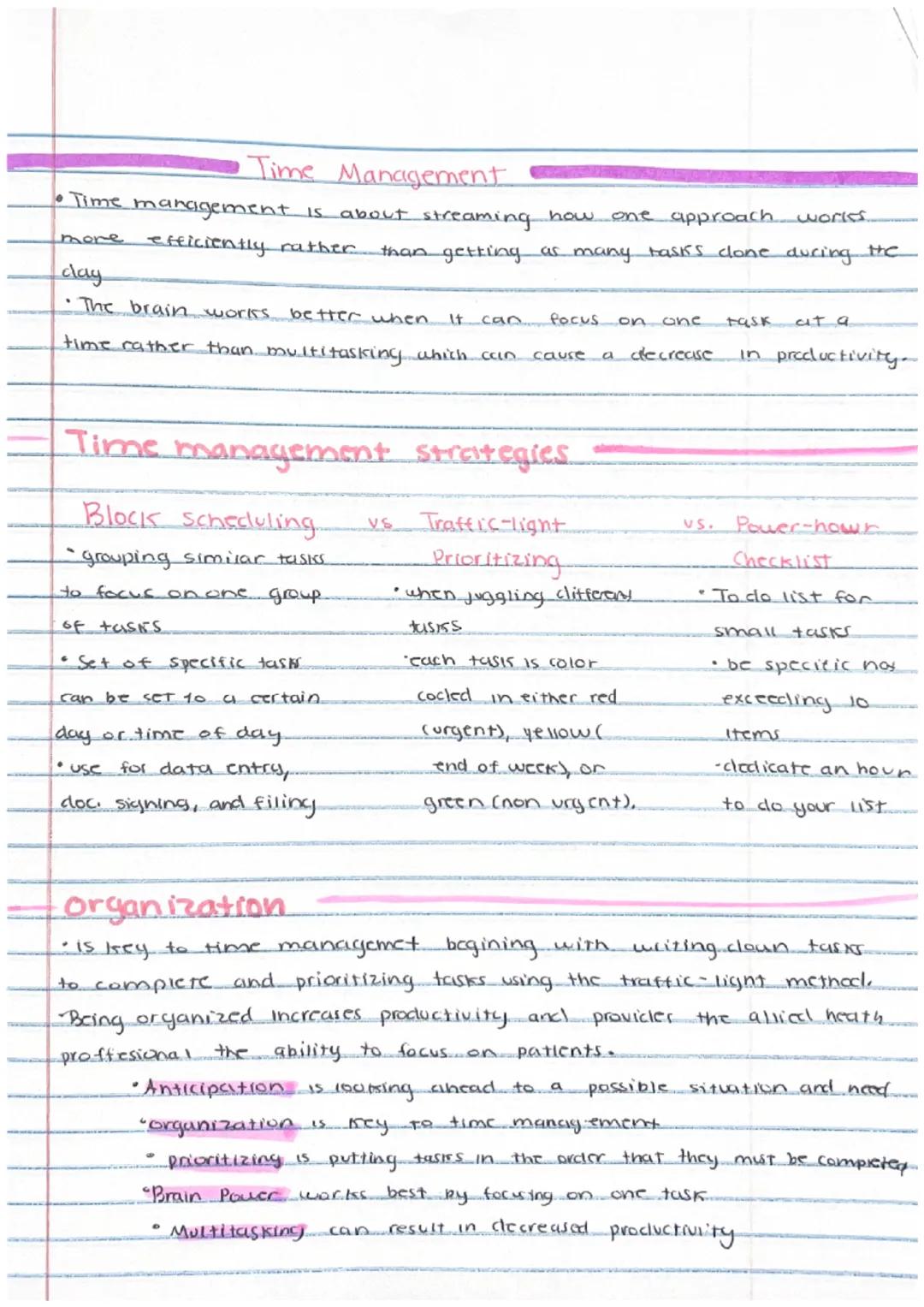
Ever feel like there aren't enough hours in the day? Time management isn't about doing more - it's about working smarter. Your brain actually performs better when focusing on one task at a time instead of multitasking, which can significantly reduce productivity.
Three key strategies can transform how you handle your workload. Block scheduling involves grouping similar tasks together (like data entry, document signing, or filing) so you can focus on one type of activity at a time. This approach allows your brain to stay in a consistent mode rather than constantly switching gears.
The traffic-light prioritizing system helps when juggling multiple responsibilities. Color-code each task as red (urgent), yellow (complete by end of week), or green non−urgent. This visual method makes it immediately clear where to focus your energy first.
For smaller tasks, try the power-hour checklist. Create a specific to-do list (keep it under 10 items) and dedicate one focused hour to complete them all. This approach gives you the satisfaction of checking off multiple items in a concentrated burst of productivity.
💡 Pro Tip: Organization forms the foundation of good time management. Start by writing down tasks and prioritizing them. This simple habit increases productivity and, for healthcare professionals, creates more mental space to focus on patients.
Being able to anticipate upcoming situations and needs is another valuable skill that complements your time management efforts. Remember that your brain power works best when channeled toward one task at a time - despite what you might think, multitasking usually leads to decreased productivity, not efficiency!



 Health
 Fun Stuff
 Algebra
 Overige
 Algebra 1
 Health & Social Care